

Pearlescent Pigment Market is estimated to be valued at USD 4.58 Bn in 2026 and is expected to reach USD 6.41 Bn in 2033, exhibiting a compound annual growth rate (CAGR) of 4.9% from 2026 to 2033.
Key Takeaways
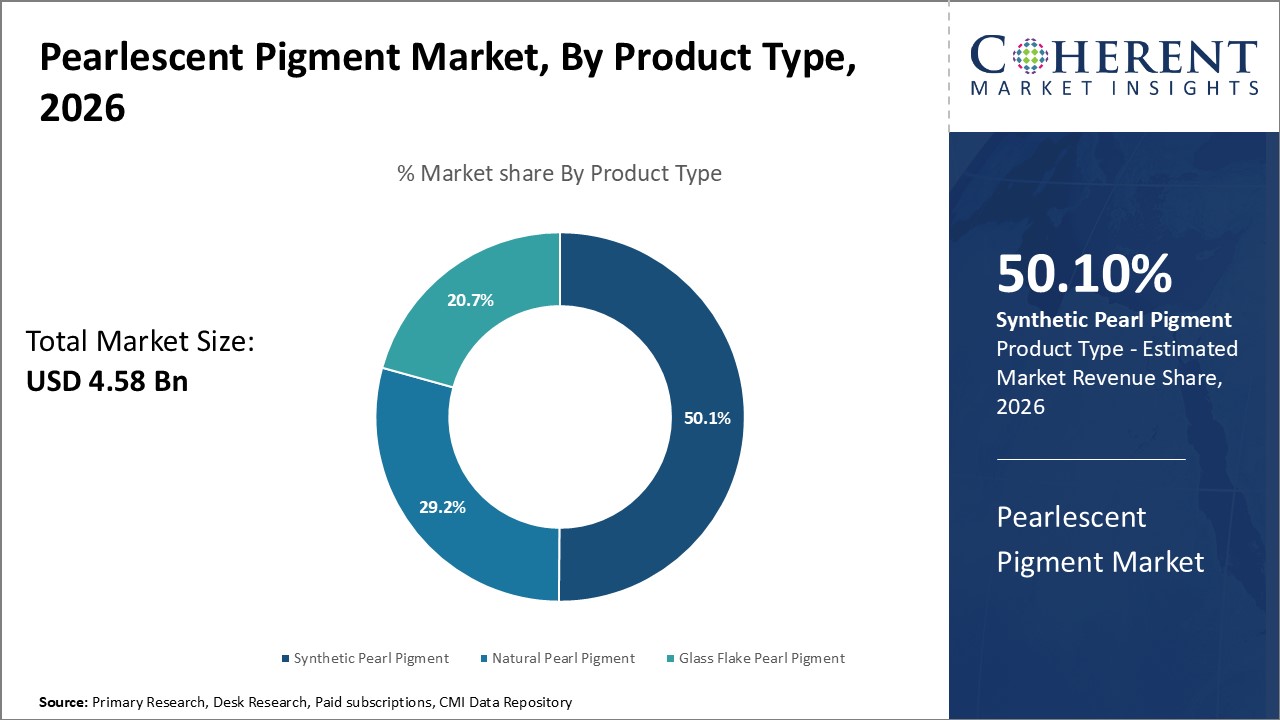
- Based on Product Type, Synthetic Pearl pigment segment is projected to dominate with a highest share in the market in 2026, owing to its consistent quality.
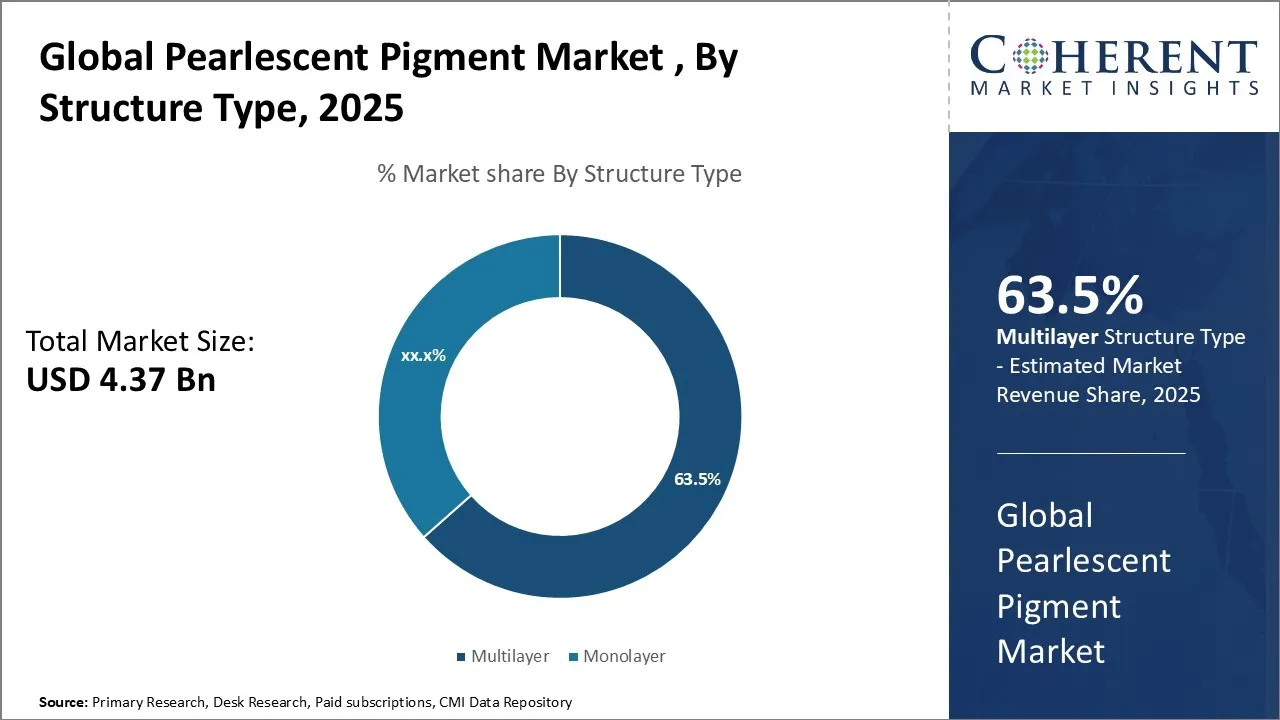
- Based on Structure Type, the Multilayer segment is expected to lead the market holding an estimated share of 60.6% in the market in 2026, owing to its ability to create a distinctive iridescent effect through optical interference.
- Based on End User Industry, Paints & Coatings segment is anticipated to capture the highest share in the market in 2026, owing to the shimmering effect it offers.
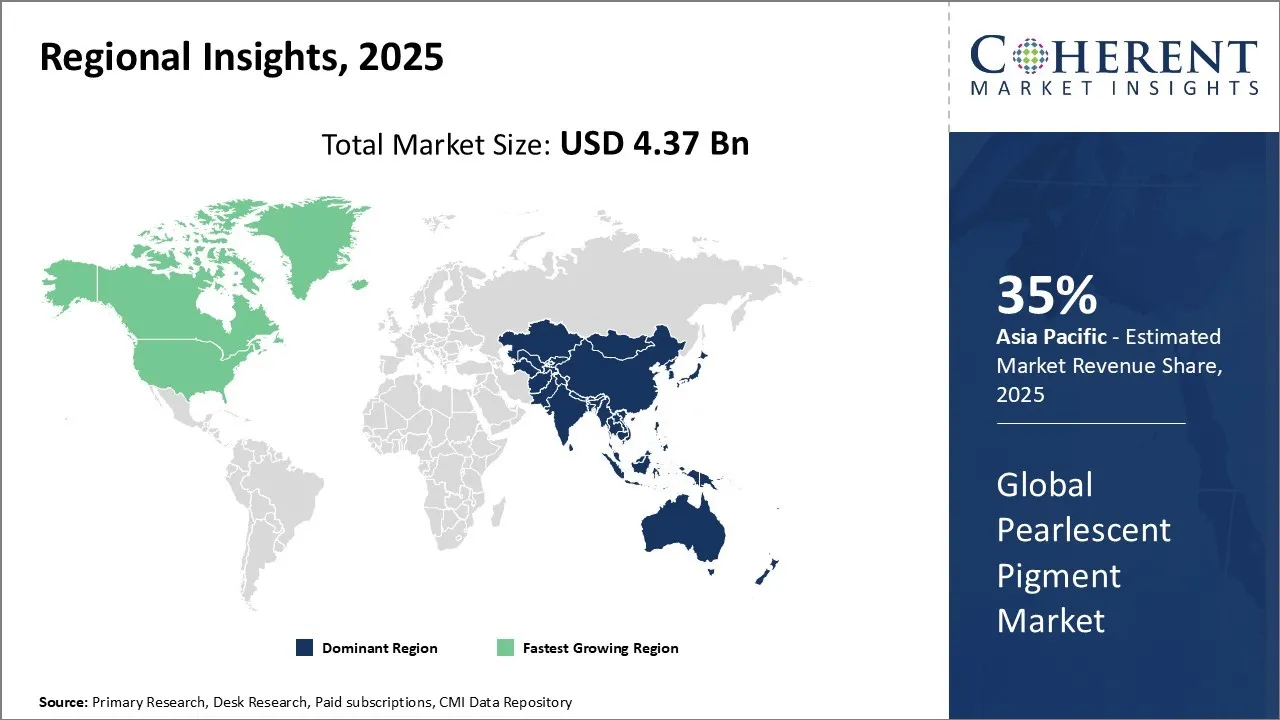
- Based on Region, Asia Pacific region is projected to dominate the market, accounting for 35% in of share in the market in 2026, owing to the increasing demand in the automotive paints. While, North America is the second largest region in the market, capturing 27% of the market share in 2026.
Market Overview
Pearlescent pigment is also referred as pearl pigment. This is a specialty colorant that creates a shimmering and iridescent effect by reflecting and refracting under light. These pigments have broad utility across industries including automotives, cosmetics, plastics, printing inks, and packaging. This pigment adds an aesthetic appeal and unique visual effects to the product. Rising focus of the manufacturer to increase the number of the production facility is estimated to drive the market growth over the forecast period.
Current Events and Its Impact
Current Events | Description and its Impact |
Regulatory Changes in the European Union |
|
Automotive Industry Demand Shifts |
|
Segmental Insights
- Current Industry Events of 2026
- Market Size Estimation
- Regional Breakdown
- Competitive Landscape
- Customer Intelligence
- Segmental Analysis
- Pricing Analysis
- Key Market Drivers, Challenges & Future Trends
- Customized Insights Section
Pearlescent Pigment Market Insights, By Structure Type - Multilayer Acquires the Largest Pearlescent Pigment Market Share on account of Distinctive Iridescent Effect
The multilayer segment of the global pearlescent pigment market is expected to hold the share of 60.6% in 2026, owing to its distinctive iridescent effect which give the pigment specific shimmer, color-shifting and depth-enhancing properties. They are popularly used as they enable high-performance, customizable visual effects while offering durability and versatility across various industries. The offers a overall premium appearance.
Chameleon pearlescent pigments are created using transparent sheets coated with multiple layers of metal oxide or non-metal oxide. The exact proportions of these materials must be carefully regulated to produce distinctive colors. The way light diffracts through the pigment creates a special visual effect on objects.
Pearlescent Pigment Market Insights, By Product Type - Synthetic Pearl Pigments Dominates the Overall Market Owing to the Consistent quality
The synthetic pearl pigment segment of the global pearlescent pigment market is expecting a significant growth, holding the largest share in 2026. The popular of synthetic pearl pigment is mostly observe due to its consistent quality, versatility, and ability to product vibrant effects. These properties make synthetic pearl pigment a preferred choice in application for cosmetics to automotive industry by the consumers. Moreover, the synthetic pearl pigments are used in paints and coatings, plastics, and printing inks industries.
For instance, scientists have engineered bacteria to produce synthetic mother-of-pearl, a material that is both strong and flexible.
Pearlescent Pigment Market Insights, By End User - Paints & Coatings Dominates the Market Owing to its Shimmering Effect
The Paints & Coating segment is projected to hold the dominating shares of the market in 2026, owing to the shimmering effects it offers. The pearl pigment is popular in paints and coating industry for its ability to create unique, lustrous and shimmering effects. This pigment enhances finish, making the product more attractive and stands out. Along with that, it also provides a life to the color, making its ideal in application in industries such as automotive, cosmetics and plastics.
In September 2024, Vibrantz technologies launched Pearls, a groundbreaking tinting system poised to transform the coating industry. this product is the first volumetrically dosed solid colorant solution for water-based paints. This offers a sustainable and efficient alternative to traditional liquid tinting technique.
Regional Analysis
Asia Pacific Pearlescent Pigment Market Analysis and Trends
Asia Pacific region is expected to dominate the global Pearlescent pigment market during the forecast period 2026-2032. Asia Pacific region is expected had the largest market share of 35% in 2026, owing to increasing demand for automotive paints. The top four manufacturers of passenger cars globally are China, Japan, India, and South Korea, and this increases demand for pearlescent pigments that are used in cars, especially luxury and premium models, to provide a metallic, chrome, and gloss look. Asia Pacific region has the largest paints and coatings market, with estimates share to be USD 89.4 billion. China is the leading country in paints and coating industry, followed by Japan and South Korea. In 2022, China produced approximately 26 million light vehicles, which BASF estimated would require around 400,000 tons of automotive coatings. This is further accelerating the pearlescent pigment market share.
North America Global Pearlescent Pigment Market Analysis and Trends
North America is considered to be the fastest growing region, capturing the share of 27% and is expected to grow during the forecast period. The predominate growth of North America region is fueled by the increasing demand of pearlescent pigment across various industries including cosmetics, automotives and packaging. North America is leading ground for automotive refinish coating industry driven by high vehicles ownership. In 2023, the United Sates had 284.6 million registered vehicles with trucks being the most popular 91.7% of Americans households own at least one vehicle. This number is anticipated to propel the pearlescent pigment industry growth.
Market Report Scope
Pearlescent Pigment Market Report Coverage
| Report Coverage | Details | ||
|---|---|---|---|
| Base Year: | 2025 | Market Size in 2026: | USD 4.58 Bn |
| Historical Data for: | 2020 To 2024 | Forecast Period: | 2026 To 2033 |
| Forecast Period 2026 to 2033 CAGR: | 4.9% | 2033 Value Projection: | USD 6.41 Bn |
| Geographies covered: |
| ||
| Segments covered: |
| ||
| Companies covered: | BASF SE, Sudarshan Chemical Industries Ltd., Merck KGaA, DIC Corporation, ALTANA AG, Fujian Kuncai Material Technology Co., Ltd., CRISTAL, Shanghai Zhuerna High-Tech Powder Material Co., Ltd., Oxen Special Chemicals Co., Ltd., Huaian Concord Industrial Product Co., Ltd., Spectra Colours Ltd., LANSCO COLORS, Aal Chem, Zhejiang Ruicheng Effect Pigment Co., Ltd, Sinpearl Pearlescent Pigment Co., Ltd., and Kolorjet Chemicals Pvt. Ltd. | ||
| Growth Drivers: |
| ||
| Restraints & Challenges: |
| ||
Pearlescent Pigment Market Driver
Increasing Demand for Premium and Luxury Vehicles
Increasing demand for premium and luxury vehicles among the consumer, owing to rising disposable income of the population is expected to drive the market growth. Increasing usage of pearlescent pigments in high luster and the premium finish product is further expected to drive the market growth. Using pearlescent pigments as an alternative to glitters and conventional solid colors in textiles, toys, and others is expected to drive the market growth.
Rising Concerns over Toxicology and Lead Compounds
Rising concerns regarding toxicology and lead compounds has boosted demand for alternative pigments in the paints and coatings industry, and this is expected to drive the market growth. India, China, and Mexico are the major consumer of pearlescent pigments in construction and automotive industry is also expected to drive the market growth of the pearlescent pigments. Moreover, rising demand for high-luster pigments is further expected to drive the market growth.
Recent Developments
- In May 2025, Sony launched a vibrant new “Iridescent Chroma” collection for the PS5 Slim and DualSense wireless controller. This special edition features a shimmering colour, designed inspired by pearlescent hues, offering a unique aesthetic upgrade for gaming enthusiast.
- In March 2025, CHANEL launched its Spring 2025 beauty lineups, the three innovative collections introduced this year is a blend of artistry with advanced skincare science. The release includes, Camélia Futura, Éclat Premier, and Sublimage. The ranges offer a glittering mauve grawy and sheer pink with pearlescence effect.
- In February 2025, One/Size, a beauty brand launched its latest skincare innovation, the Vitamin Pearl Serum, designed in a pill-shaped bottle. The Vitamin Pearl Serum is formulated to deliver essential nutrients to the skin. The aim is to enhance radiance and hydration. The encapsulated pearls pigment within the serum ensures to bring freshness.
- In October 2024, BASF's innovative automotive coating concept, Efflorescence, has been honored with a Red Dot Award for Product Design. This recognition underscores the company's commitment to integrating sustainability with cutting-edge design in the automotive sector. The monocoat combines all of its functionalities in a single layer – including a pearl-like visual effect without the use of traditional effect pigments.
Analyst Opinion
- Recent innovations in pigment technology are reshaping the market. For example, Pritty’s new ChromaPura pigments, which use borosilicate and offer vivid single-color interference effects, are helping manufacturers reduce pigment dosage by up to 30%. This not only cuts material costs but also enhances visual quality, especially in cosmetics and plastic applications. Similarly, advancements in nano-pearlescent pigments are opening new opportunities. These pigments now offer better dispersion and UV resistance, making them more suitable for use in areas like 3D-printed electronics and smart packaging. Analysts expect this segment to grow rapidly, potentially accounting for 15% of the industrial coatings market by 2030.
- Supply chain disruptions are creating challenges, particularly in the natural pigment sector. India’s recent 12% reduction in mica exports to China has tightened global supply, leading to an estimated 8–10% rise in pigment production costs. This has accelerated the shift toward synthetic mica alternatives. On the other hand, regulatory moves—especially from the EU—are pushing companies toward more ethical sourcing. New mandates requiring conflict-free mica have led manufacturers to turn to countries like Tanzania and Madagascar. While this change increases logistics expenses, it is improving environmental, social, and governance (ESG) compliance, particularly in the cosmetics industry.
Speak to the analyst
Want personalized insights?
Take the findings above to one of our principal consultants, or have the report rebuilt around the segments, geographies and competitors you actually track.
Market Segmentation
- Global Pearlescent Pigment Market, By Product Type (Revenue, USD Bn, 2021 - 2033)
- Natural Pearl Pigment
- Synthetic Pearl Pigment
- Glass Flake Pearl Pigment
- Global Pearlescent Pigment Market, By Structure Type (Revenue, USD Bn, 2021 - 2033)
- Substrate-free
- Monolayer
- Multilayer
- Global Pearlescent Pigment Market, By End Use Industry (Revenue, USD Bn, 2021 - 2033)
- Automotive Paints
- Paints & Coatings
- Personal Care
- Plastic
- Printing
- Others
- Global Pearlescent Pigment Market, By Region (Revenue, USD Bn, 2021 - 2033)
- North America
- U.S.
- Canada
- Latin America
- Brazil
- Argentina
- Mexico
- Rest of Latin America
- Europe
- Germany
- U.K.
- Spain
- France
- Italy
- Russia
- Rest of Europe
- Asia Pacific
- China
- India
- Japan
- Australia
- South Korea
- ASEAN
- Rest of Asia Pacific
- Middle East
- GCC Countries
- Israel
- Rest of Middle East
- Africa
- South Africa
- North Africa
- Central Africa
- North America
- Company Profiles
- BASF SE
- Sudarshan Chemical Industries Ltd.
- Merck KGaA
- DIC Corporation
- ALTANA AG
- Fujian Kuncai Material Technology Co., Ltd.
- CRISTAL
- Shanghai Zhuerna High-Tech Powder Material Co., Ltd.
- Oxen Special Chemicals Co., Ltd.
- Huaian Concord Industrial Product Co., Ltd.
- Spectra Colours Ltd.
- LANSCO COLORS
- Aal Chem
- Zhejiang Ruicheng Effect Pigment Co., Ltd
- Sinpearl Pearlescent Pigment Co., Ltd.
- Kolorjet Chemicals Pvt. Ltd.
Sources
Primary Research Interviews from the following stakeholders
Stakeholders
- Interviews with procurement managers at paint and coatings manufacturers, cosmetic product formulators, packaging designers, automotive color technicians, plastics compounders, and ink developers across major global markets.
Specific stakeholders
- Product innovation leads at personal care companies
- Coating and pigment procurement heads at automotive OEMs
- Packaging engineers and CMF (Color, Material, Finish) designers at FMCG and luxury packaging firms
- R&D specialists in polymer and plastic masterbatch companies
- Printing ink formulators and application chemists in decorative and industrial printing
- Sustainability and materials sourcing experts in home décor, fashion, and consumer electronics
Databases
- UN Comtrade Database
- World Trade Organization (WTO) Trade Statistics
- Eurostat – Pigments and Colorants Data
- U.S. Geological Survey (USGS) – Minerals Commodity Summaries
- Directorate General of Commercial Intelligence and Statistics (DGCIS), India
- China Customs Statistics – Pigment Exports and Imports
- Korea Trade-Investment Promotion Agency (KOTRA)
- Japan External Trade Organization (JETRO)
- U.S. Census Bureau – Economic Indicators (Coatings, Plastics, and Cosmetic Sectors)
Magazines
- Paint & Coatings Industry (PCI) Magazine
- SpecialChem Cosmetics & Personal Care Insights
- Plastics Today
- European Coatings Journal
- Packaging World
- Ink World
- HAPPI (Household and Personal Products Industry)
- Automotive Color Trends (OEM-specialized publications)
Journals
- Dyes and Pigments (Elsevier)
- Progress in Organic Coatings
- Journal of Coatings Technology and Research
- Color Research and Application
- Journal of Cosmetic Science
- Materials Today: Chemistry
- International Journal of Polymer Science
- Journal of Applied Polymer Science
Newspapers
- The Economic Times – Chemicals & Manufacturing
- The Wall Street Journal – Materials and Consumer Goods
- Financial Times – Chemicals and Automotive Section
- Nikkei Asia – Specialty Materials and Innovation
- Business Standard – Packaging, Cosmetics & FMCG
- South China Morning Post – Industrial Manufacturing and Trade
Associations
- Colour Society of India (CSI)
- European Association of Chemical Distributors (FECC)
- American Coatings Association (ACA)
- Society of Cosmetic Chemists (SCC)
- Society of Plastics Engineers (SPE)
- All India Plastics Manufacturers’ Association (AIPMA)
- Federation of Indian Chambers of Commerce and Industry (FICCI) – Chemicals Division
- Japan Paint Manufacturers Association (JPMA)
- China National Coatings Industry Association (CNCIA)
Public Domain Sources
- Ministry of Chemicals and Fertilizers (Government of India)
- Central Pollution Control Board (India) – Pigment Waste Guidelines
- U.S. Environmental Protection Agency (EPA) – Pigment and Coatings Emissions Reports
- REACH Database – European Chemicals Agency (ECHA)
- National Bureau of Statistics of China – Chemical Manufacturing Data
- NITI Aayog Reports on Specialty Chemicals
- Ministry of Economy, Trade and Industry (METI), Japan – Specialty Chemicals Reports
- India Brand Equity Foundation (IBEF) – Chemicals & Cosmetics Sector Briefs
- Department for Business and Trade (UK) – Pigments and Functional Materials
Proprietary Elements
- CMI Data Analytics Tool, and Proprietary CMI Existing Repository of information for last 8 years
*Definition: Pearlescent pigments are mainly micas that are basically coated with titanium dioxide or iron oxide. It offers excellent whiteness, brilliance, and exceptional different optical effects ranging from a fine-grained luster to a bold silvery-white sparkle. These pigments are widely used in packaging of plastics, personal care products, coatings, inks, and other applications. Pearlescent pigments are generally used where soft shine or a satin luster appearance is required. It can be produced by creating an in-situ TiO2 surface coating on mica along with a titanium chemical precursor.
Get access to 250+ pages report
Every segment, forecast, competitor profile and data table behind the analysis above — available for instant download.
- ESOMAR Member
- ISO 9001:2015 Certified
- D-U-N-S Registered
- GDPR & CCPA Compliant
Missing comfort of reading report in your local language? Find your preferred language:
Transform your Strategy with Exclusive Trending Reports
Frequently Asked Questions
The Pearlescent Pigment Market is estimated to be valued at USD 4.58 Bn in 2026, and is expected to reach USD 6.41 Bn by 2033.
The CAGR of the Pearlescent Pigment Market is projected to be 4.9% from 2026 to 2033.
Major players operating in the market include BASF SE, Sudarshan Chemical Industries Ltd., Merck KGaA, DIC Corporation, ALTANA AG, Fujian Kuncai Material Technology Co., Ltd., CRISTAL, Shanghai Zhuerna High-Tech Powder Material Co., Ltd., Oxen Special Chemicals Co., Ltd., Huaian Concord Industrial Product Co., Ltd., Spectra Colours Ltd., LANSCO COLORS, Aal Chem, Zhejiang Ruicheng Effect Pigment Co., Ltd, Sinpearl Pearlescent Pigment Co., Ltd., and Kolorjet Chemicals Pvt. Ltd.
The market is estimated to reach US$ 5.5 Bn by the end of 2033.
The increasing demand for premium and luxury vehicles, and rising concerns over toxicology and lead compounds are the factors that are expected to drive the market growth over the forecast period.
High cost of pearlescent pigments is one of the major factors that is expected to hinder the market growth over the forecast period.
Among region, Asia Pacific Pearlescent pigment market accounted for a largest market share in 2026, accounting for 35% share, in terms of revenue, followed by North America and Europe, respectively.