

Anti-Skinning Agents Market Size and Forecast — 2026 - 2033
The Global Anti-Skinning Agents Market size is estimated to be valued at USD 325 million in 2026 and is expected to reach USD 545 million by 2033, exhibiting a compound annual growth rate (CAGR) of 7.5% from 2026 to 2033.
Overview
The Anti-Skinning Agents market comprises chemical additives designed to prevent the formation of a surface skin or film on coatings, paints, and varnishes during storage. Key product categories include metallic driers, which accelerate curing in alkyd-based paints; synthetic anti-skinning agents suitable for waterborne formulations; and natural or bio-based additives catering to environmentally friendly coatings. These agents are utilized across decorative paints, industrial coatings, wood finishes, and automotive applications. Product selection depends on factors like resin type, drying mechanism, and application requirements. Continuous innovation focuses on enhancing compatibility, reducing VOC content, and improving storage stability to meet regulatory and performance demands.
Key Takeaways
The Architectural Coatings segment dominates the market, capturing over 45% of industry share, driven by expanding construction activities in emerging economies.
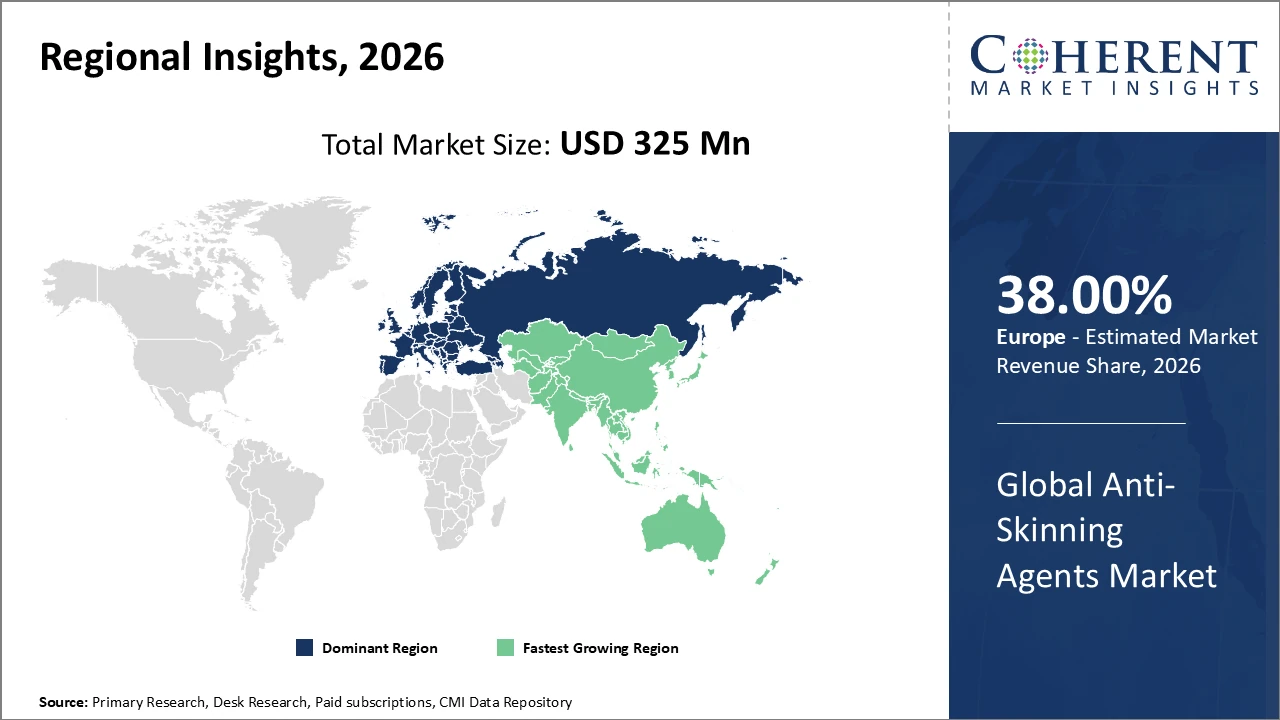
Europe represents a mature market, contributing around 38% of total revenue, backed by strict environmental regulations and well-established manufacturing infrastructure.
Asia Pacific is the fastest-growing region, with a CAGR of nearly 9%, fueled by China and India’s industrial expansion and government initiatives promoting eco-friendly coatings technologies.
Anti-Skinning Agents Market Segmentation Analysis
Anti-Skinning Agents Market Insights, By Product Type
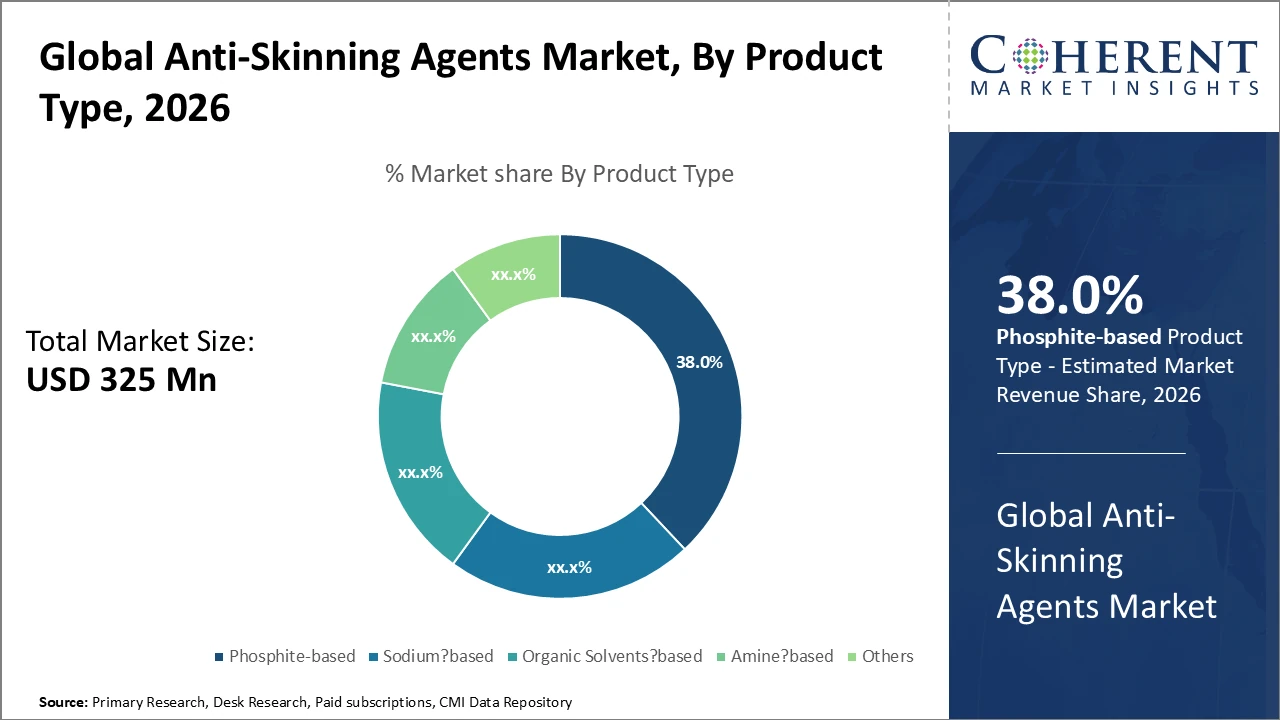
Phosphite-based anti-skinning agents dominate the market, capturing around 38% of total revenue due to their strong antioxidant properties and compatibility with various coating systems, effectively preventing surface skinning in waterborne and solvent-based paints. Regulatory pressures to reduce VOCs have increased their adoption, prompting reformulations for eco-compliance. The fastest-growing subsegment is sodium-based agents, valued for cost-effectiveness and suitability in industrial coatings, particularly in price-sensitive emerging regions. Organic solvent-based agents maintain steady demand in automotive coatings, while amine-based agents target specialized adhesives. The Others category includes bio-based and hybrid formulations, expanding as green chemistry advances.
Anti-Skinning Agents Market Insights, By Application
Architectural coatings lead the market with a 45% share, driven by expanding construction and renovation projects worldwide, particularly in Asia Pacific and Europe. The need for durable decorative and protective finishes fuels demand for anti-skinning agents that prolong shelf life and improve application performance. Industrial coatings are the fastest-growing segment, supported by sectors like marine, heavy machinery, and packaging, where high-performance additives are essential. Automotive coatings adopt multifunctional anti-skinning agents to meet strict OEM standards, while adhesives gain traction due to construction and automotive growth. The “others” segment includes wood finishing and consumer goods coatings, contributing to incremental market expansion.
Anti-Skinning Agents Market Insights, By End Use Industry
Construction dominates the market due to large-scale infrastructure projects and urbanization, driving demand for architectural and industrial coatings enhanced with anti-skinning agents. Eco-friendly, durable formulations that meet green building standards further boost additive adoption. The automotive sector is the fastest-growing subsegment, fueled by rising vehicle production and electric vehicle adoption, increasing demand for anti-skinning agents compatible with advanced resin systems and high-temperature conditions to meet OEM specifications. Marine coatings remain essential for corrosion and saltwater protection, while wood finishing grows steadily with furniture and flooring production. The “others” category, including aerospace and electronics coatings, expands gradually with tailored solutions.
Anti-Skinning Agents Market Trends
The market is increasingly shifting toward sustainable formulations due to stringent global environmental regulations.
In 2025, the EU’s VOC Solvents Emissions Directive intensified demand for low-VOC, eco-friendly anti-skinning agents.
Adoption of nanotechnology-based additives is rising, improving anti-skinning efficiency and extending coating shelf life, particularly in industrial applications.
Digital product lifecycle management tools are being implemented by manufacturers to optimize inventory, reduce waste, and streamline supply chains.
Overall, these trends reflect a convergence of environmental compliance, advanced material science, and operational efficiency shaping market dynamics.
Anti-Skinning Agents Market Insights, By Geography
Europe Anti-Skinning Agents Market Analysis and Trends
The Europe anti-skinning agents market shows strong growth driven by regulatory pressure, innovation in coatings, and steady demand from construction and industrial sectors. Europe accounts for nearly 38% of the global anti-skinning additives market, reflecting its leading position in adopting safer and compliant formulations. Strict environmental regulations such as REACH and EU Green Deal policies are key drivers, pushing manufacturers toward low-VOC and eco-friendly additives. Waterborne coatings already represent about 70% of decorative coatings volume in Europe, increasing demand for compatible anti-skinning agents.
Asia Pacific Anti-Skinning Agents Market Analysis and Trends
Asia Pacific is the fastest-growing region in the Anti-Skinning Agents market, with a CAGR approaching 9%, fueled by rapid industrialization, urbanization, and rising construction and automotive activities in China and India. Government initiatives promoting sustainable and eco-friendly coatings further accelerate adoption. Leading manufacturers such as Songwon Industrial and LANXESS Corporation are strategically expanding production facilities and distribution networks in the region to capitalize on growing demand. The region’s expanding middle class, increased disposable incomes, and infrastructural development contribute to heightened consumption of architectural and industrial coatings, making Asia Pacific a critical driver of global market growth.
Anti-Skinning Agents Market Outlook for Key Countries
USA Anti-Skinning Agents Market Analysis and Trends
The U.S. holds a dominant position in the Anti-Skinning Agents market, fueled by high demand from architectural and industrial coatings sectors. Stringent Environmental Protection Agency (EPA) regulations on VOC emissions have accelerated the adoption of advanced waterborne anti-skinning additives, driving approximately 8% market growth in 2024. Leading companies like BASF SE and Evonik Industries AG operate extensive production and R&D facilities in the country, advancing low-emission and high-performance additive technologies. Additionally, the post-2023 recovery of the automotive industry has increased demand for adhesives and specialty coatings, reinforcing revenue streams and solidifying the U.S. as a key regional market.
Germany Anti-Skinning Agents Market Analysis and Trends
Germany holds a significant share in the Anti-Skinning Agents market, supported by its advanced coatings and chemical manufacturing sectors. Stringent EU regulations on VOC emissions and environmental compliance drive demand for low-VOC and eco-friendly anti-skinning formulations. Architectural coatings dominate usage, fueled by ongoing urban development and renovation projects, while industrial coatings are gaining momentum in automotive, machinery, and packaging applications. Technological innovations, including phosphite-based and nanotechnology-enhanced additives, improve shelf life and prevent surface skinning. Major players, such as BASF SE, Lanxess, and Songwon Industrial, continue to invest in R&D and local production facilities, reinforcing Germany’s position as a key market in Europe.
Analyst Opinion
The rising adoption of environmentally compliant anti-skinning agents in waterborne paints drives demand. In 2024, over 60% of formulated paints in North America incorporated eco-friendly agents, reflecting a 12% year-over-year increase, projected to boost segment market share by 2026.
Supply chain optimization affects pricing strategies. Production expansions in Asia Pacific, particularly China and India, led to a 15% rise in global output in 2025, enabling competitive pricing and enhancing export potential, supporting downstream cost containment.
Application diversification, including adhesives for automotive and construction, shows 10% annual growth from 2023 to 2026, highlighting emerging revenue streams.
VOC-focused regulations intensify demand for low-emission, efficient anti-skinning solutions. In 2025, stringent EU rules contributed to a 9% market growth in compliant additive sales, emphasizing sustainability trends.
- Current Industry Events of 2026
- Market Size Estimation
- Regional Breakdown
- Competitive Landscape
- Customer Intelligence
- Segmental Analysis
- Pricing Analysis
- Key Market Drivers, Challenges & Future Trends
- Customized Insights Section
Market Scope
| Report Coverage | Details | ||
|---|---|---|---|
| Base Year: | 2025 | Market Size in 2026: | USD 325 million |
| Historical Data for: | 2020 To 2024 | Forecast Period: | 2026 To 2033 |
| Forecast Period 2026 to 2033 CAGR: | 7.5% | 2033 Value Projection: | USD 545 million |
| Geographies covered: |
| ||
| Segments covered: |
| ||
| Companies covered: | Clariant AG, BASF SE, Lanxess AG, SI Group Inc., Arkema SA, PMC Group, Solvay SA, Nouryon, Evonik Industries AG, Wacker Chemie AG | ||
| Growth Drivers: |
| ||
Anti-Skinning Agents Market Growth Factors
Several leading companies have pursued strategic initiatives to strengthen their Anti-Skinning Agents market presence. For example, BASF SE expanded its waterborne additive portfolio in 2025, integrating low-VOC and nanotechnology-enhanced anti-skinning agents, resulting in a 10% revenue uplift in Europe. Similarly, Songwon Industrial launched new phosphite-based anti-skinning formulations tailored for industrial coatings in Asia Pacific, increasing regional market share by 7% in 2025. Additionally, LANXESS Corporation focused on partnerships with architectural and automotive coatings manufacturers in North America, driving product adoption and enhancing distribution networks, which contributed to sustained competitive positioning and growth momentum across multiple geographies.
Anti-Skinning Agents Market Development
In October 2025, Gamma Chimica was one of the leading participants at Paint & Coatings, the premier Italian trade fair dedicated to paints, adhesives, and industrial coatings. The event provided a valuable opportunity to engage with customers, partners, and professionals in the CASE sector, and to unveil a new development for the European anti-skinning agents market.
Key Players
Leading Companies of the Market
Clariant AG
BASF SE
Lanxess AG
Arkema SA
Solvay SA
Nouryon
Wacker Chemie AG
Evonik Industries AG
SI Group Inc.
PMC Group
Several market players have strategically enhanced their product portfolios by ramping up R&D investments. For instance, BASF SE introduced novel phosphite-based additives in 2025, resulting in a 7% increase in market share by improving anti-skinning performance in waterborne systems. Similarly, Clariant AG partnered with automotive OEMs to develop customized adhesive additives, expanding their presence in industrial coatings applications and driving business growth across the Asia Pacific region. These initiatives highlight the focus on innovation and collaboration as key strategies for capturing market opportunities and strengthening competitive positioning in the evolving Anti-Skinning Agents landscape.
Anti-Skinning Agents Market Future Outlook
The Anti-Skinning Agents market is poised for steady growth driven by expanding paint and coatings industries globally, particularly in emerging economies. Increasing demand for waterborne and eco-friendly coatings is propelling innovation in low-VOC and bio-based anti-skinning solutions. Advances in chemical formulations are enhancing storage stability, curing efficiency, and compatibility with diverse resin systems. The growing automotive, construction, and industrial sectors are expected to sustain demand, while regulatory emphasis on environmental safety will favor greener alternatives. Additionally, technological integration in coating production, such as automated mixing and quality monitoring, will further optimize additive performance, supporting market expansion through 2033.
Anti-Skinning Agents Market Historical Analysis
The Anti-Skinning Agents market has experienced consistent growth over the past decade, driven by the expansion of global paints and coatings industries. Traditionally, metallic driers dominated the market due to their effectiveness in alkyd-based systems. However, the increasing adoption of waterborne and solvent-free coatings since the mid-2010s led to rising demand for synthetic and bio-based anti-skinning agents. Growth was further supported by industrial and decorative paint applications, particularly in Europe and North America, where stringent quality standards and long storage requirements necessitated reliable additives. Market evolution also reflected regulatory shifts toward low-VOC and environmentally friendly formulations, shaping product development strategies.
Sources
Primary Research Interviews:
Chemical engineers, formulation scientists, and R&D specialists working on anti-skinning additives and coating formulations.
Product managers, technical application experts, and regulatory affairs professionals from companies producing phosphite, sodium, organic solvent, and other anti-skinning agents.
Procurement managers, quality control heads, and production supervisors in architectural, industrial, and automotive coatings manufacturers.
Magazines:
Coatings World – Trends in coatings additives, formulation techniques, and regulatory updates.
Paint & Coatings Industry – Innovations in protective coatings and anti-skinning technologies.
Specialty Coatings Review – Performance optimization, market developments, and additive integration in coatings
Journals:
Progress in Organic Coatings – Research on additive performance, polymer interactions, and coating stability.
Journal of Coatings Technology and Research – Studies on anti-skinning efficiency and formulation strategies.
Surface & Coatings Technology – Innovations in industrial and architectural coatings and additives.
Industrial & Engineering Chemistry Research – Chemical characterization and process optimization of anti-skinning agents.
Newspapers:
The Wall Street Journal – Market trends, investments, and M&A activities in chemical and coatings sectors.
Financial Times – Global chemical industry developments, regulations, and sustainability initiatives.
Reuters Business – Product approvals, trade news, and chemical market updates.
Bloomberg Markets – Market analysis, company performance, and growth trends in coatings additives.
Associations:
American Coatings Association (ACA) – Guidelines for coatings formulations and additive safety.
European Coatings Association (ECA) – Standards, environmental compliance, and industry best practices.
Society of Coatings Technology (SCT) – Research and technical protocols for coating additives.
Get access to 250+ pages report
Every segment, forecast, competitor profile and data table behind the analysis above — available for instant download.
- ESOMAR Member
- ISO 9001:2015 Certified
- D-U-N-S Registered
- GDPR & CCPA Compliant
Missing comfort of reading report in your local language? Find your preferred language:
Transform your Strategy with Exclusive Trending Reports
Frequently Asked Questions
Leading companies include Clariant AG, BASF SE, Nouryon, and Lanxess AG, recognized for their extensive R&D, innovative product portfolios, and strategic partnerships in coatings and adhesives applications.
The market is projected to grow from USD 325 million in 2026 to USD 545 million by 2033, reflecting a CAGR of 7.5%, fueled by increasing demand for environmentally friendly and high-performance additive solutions.
Construction represent the largest segment, driven by rising construction, urbanization, and renovation activities worldwide.
Trends include adoption of multifunctional and bio-based anti-skinning agents, increasing waterborne coating applications, and digital tools optimizing formulation and supply chain efficiency.
The market is innovation-driven, focusing on new product launches and expanded applications, while challenges include meeting stringent environmental regulations and managing raw material price volatility.
Players emphasize strategic collaborations with coatings manufacturers, development of sustainable solutions, and supply chain optimization to increase market share and revenue.