

Global Pea Milk Market Size and Forecast – 2026-2033
The global pea milk market is estimated to be valued at USD 658.0 Mn in 2026 and is expected to reach USD 1015.8 Mn by 2033, exhibiting a compound annual growth rate (CAGR) of 6.4% from 2026 to 2033.
Key Takeaways of the Pea Milk Market
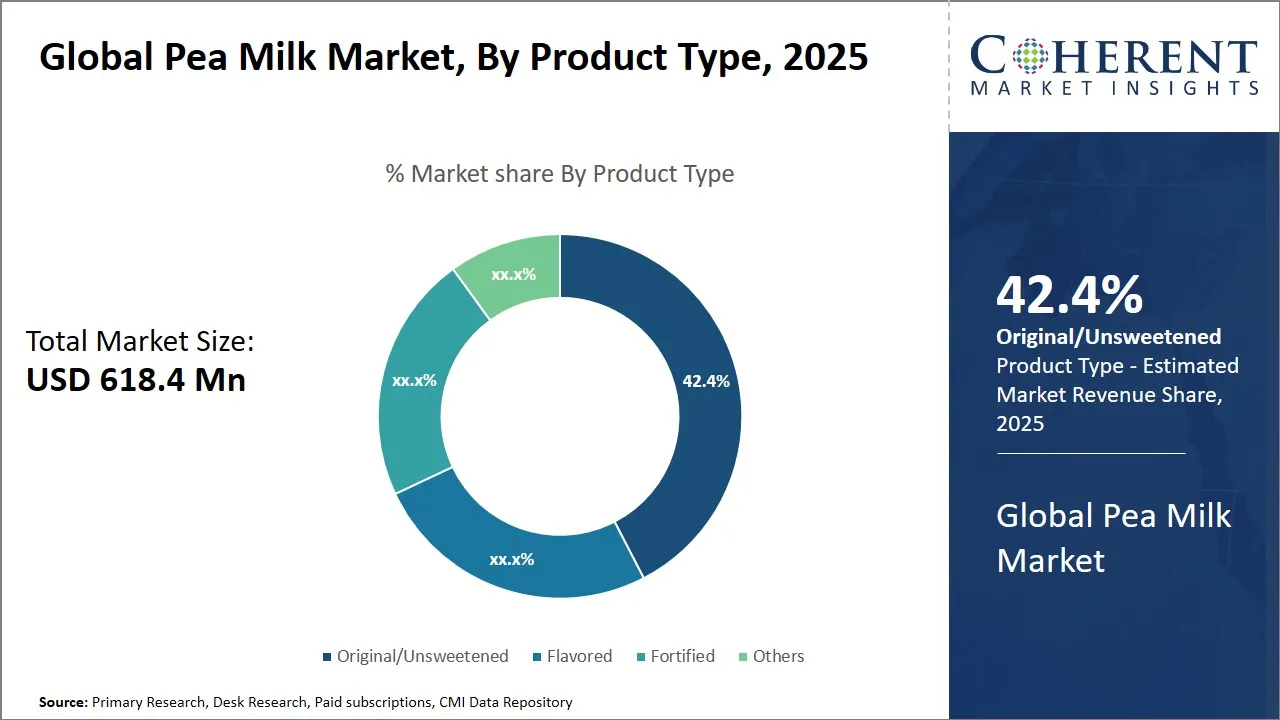
- The original/unsweetened segment is expected to hold 43.4% of the pea milk market share in 2026.
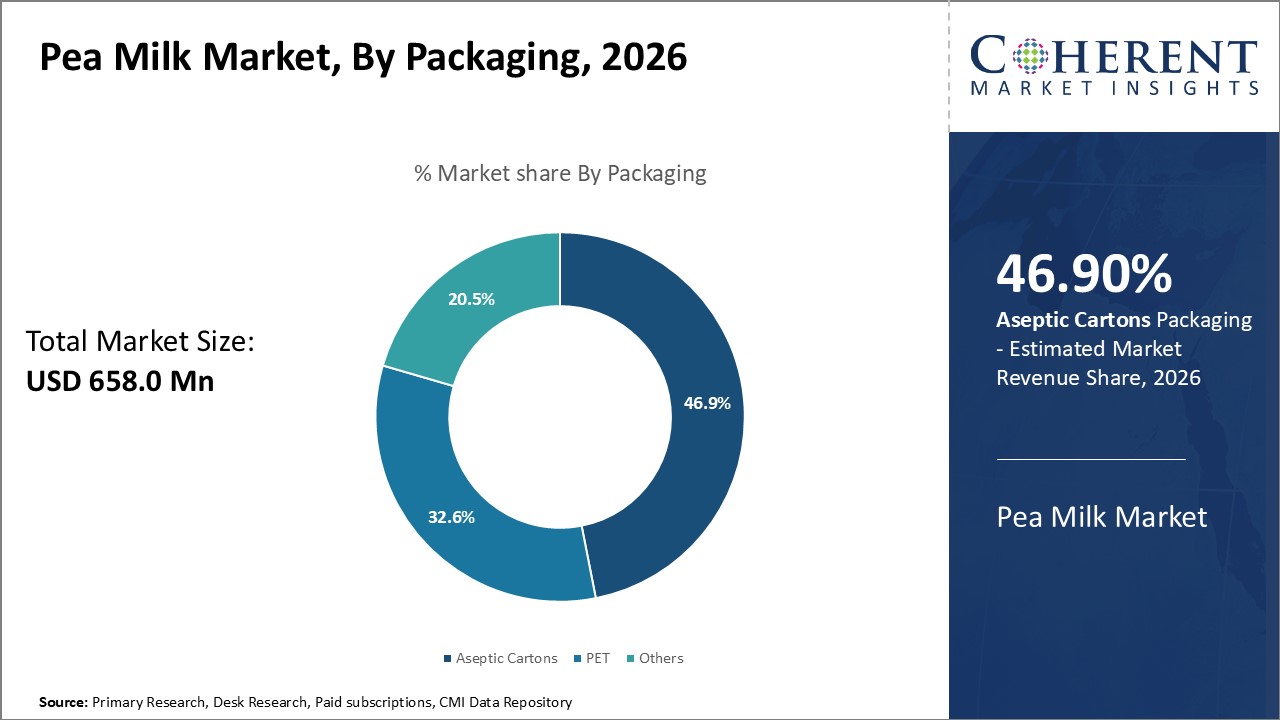
- The aseptic cartons segment is estimated to account for 46.9 % of the global pea milk market share in 2026.
- The individual consumers segment is projected to hold 35.7 % of the market share in 2026.
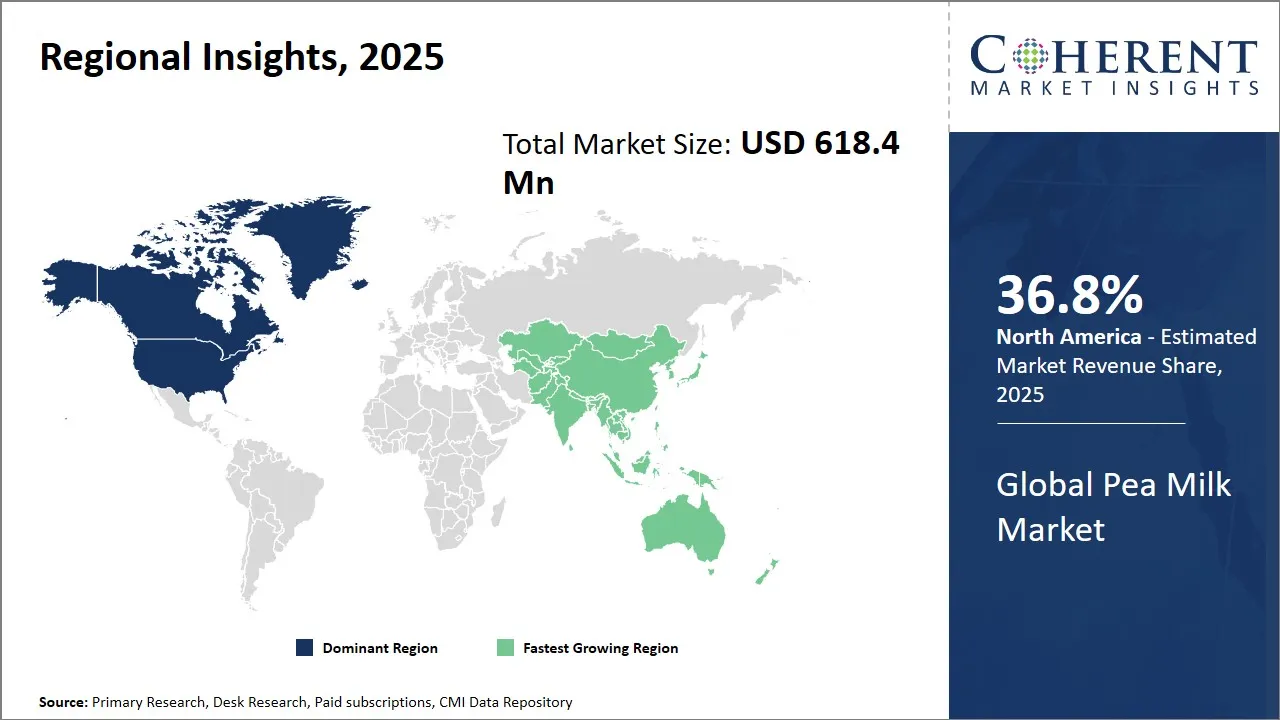
- North America will lead the pea milk market in 2026, accounting for around 36.8 %, driven by high awareness and a mature plant-based ecosystem. Asia Pacific will be the fastest-growing region, having 17.5% share in 2026, fueled by urbanization, rising vegan adoption, and expanding retail infrastructure.
Market Overview
A key market trend in the pea milk market is the increasing demand for sustainable and allergen-friendly dairy product alternatives among consumers. The nutritional profile of pea milk, including high functional protein content and low allergenicity, is driving its adoption among health-conscious and environmentally aware consumers. Further, innovations in flavor and formulation, along with aggressive marketing by key players, are accelerating the market penetration and fostering competition within the plant-based milk industry.
Current Events and Its Impact
Current Events | Description and its Impact |
Surge in import tensions and raw material shortages of yellow peas |
|
Consumer demand for sustainability and allergen‑friendly plant‑based proteins |
|
Segmental Insights
- Current Industry Events of 2026
- Market Size Estimation
- Regional Breakdown
- Competitive Landscape
- Customer Intelligence
- Segmental Analysis
- Pricing Analysis
- Key Market Drivers, Challenges & Future Trends
- Customized Insights Section
Pea Milk Market Insights, By Product Type - Original/Unsweetened Segment Dominates the Market due to Versatility & Culinary Use Cases
Original/Unsweetened segment is expected to contribute 43.4% of the pea milk market share in 2026, because consumers are more inclined towards natural and minimally processed alternatives. Original/Unsweetened pea milk holds a strong appeal among health-conscious buyers seeking to avoid added sugar, flavor, and artificial ingredients in their nutritional products. Indeed, it finds favor with those customers who prefer clean-label products that retain the inherent nutritional values of peas, including a high protein content and being allergen-free. Growing awareness regarding plant-based proteins and the need to avoid lactose and dairy-related allergens adds to the demand for the product type.
Pea Milk Market Insights, By Packaging - Aseptic Cartons Segment Dominates the Market due to its Extended Shelf ‑ Life & Ambient Storage
Aseptic cartons segment is projected to hold 46.9% of the global pea milk market share in 2026, driven by better capacity to preserve product freshness and extend shelf life at room temperature. The aseptic carton format helps balance convenience and sustainability, meeting the needs of both retailers and consumers. Because of this packaging solution, pea milk can be kept at room temperature for several months, further reducing logistics costs and issues such as product spoilage-thereby addressing key factors responsible for maintaining quality and safety. Consequently, retailers also face lesser hassles while storing and transporting the product, while consumers would be able to use long-lasting products without necessarily having to refrigerate them immediately.
Pea Milk Market Insights, By End User - Individual Consumers Segment Dominates the Market due to its Rising Health ‑ Consciousness Among Households
Individual consumers segment is expected to hold 35.7% of the market share in 2026, driven primarily by rising health awareness and lifestyle shifts towards plant-based diets. One of the main reasons for the shift from dairy to plant-based milk is the growing concern over milk consumption-related issues such as lactose intolerance, animal rights, and sustainability.
Apart from being a cause of allergies, dairy also bears a heavy burden when it comes to the environment. Pea milk, however, addresses these concerns, and thus, it won over the health-conscious and ethically-consumed crowd. The rising trend in flexible and vegan diets has greatly supported the approving individual consumer group, which as a result, has made an impact on the products that retailers and manufacturers offer.
Regional Insights
North America Pea Milk Market Analysis and Trends
The North America region is expected to be the market leader with a 36.8% share in 2026, thanks to factors such as an already established plant-based food ecosystem, high consumer awareness of health and sustainability matters, and government policies that support alternative dairy products. The area is served by a strong retail network, and pea milk products are available in most grocery stores.
Leading companies such as Ripple Foods, Good Karma Foods, and Bolthouse Farms have played a major role in developing formulas for lactose intolerant and vegan people. Moreover, the area’s efficient supply chains and trade agreements facilitate accessibility to pea protein, which further strengthens production capabilities. The increasing number of specialty beverage cafes and the popularity of clean-label ingredients are some of the factors that are helping North America to maintain its leadership in the market.
Asia Pacific Pea Milk Market Analysis and Trends
The Asia Pacific region is expected to show the fastest growth in the market, with a contribution of 17.5% share in 2026, due to rising health consciousness, increasing plant-based dietary preferences, and expanding urban middle classes. The fast adoption is seen in countries such as China, Japan, and South Korea, which are encouraged by government programs that support eco-friendly farming and giving preferential treatment to plant-based nutrition. The market ecosystem is undergoing changes here, with an influx of new companies as well as existing dairy firms diversifying their product lines to offer pea milk along with other products.
Among the companies are Vitasoy, OATLY, which is growing in the area, and Zhenmeat, a local brand that has created the market with flavors and products that match the taste of the consumers. Trade dynamics favor the region of Asia Pacific since it imports pea protein basically from North America and Europe, benefiting from improved trade relations and logistics infrastructure. Consumer education campaigns emphasizing pea milk’s allergen-friendly and eco-friendly attributes are driving faster adoption rates.
Global Pea Milk Market Outlook for Key Countries
U.S. Pea Milk Market Analysis and Trends
Although pea milk has lately gained popularity across the world, the U.S. remains a very important market, considering its early mover advantage in terms of plant-based lifestyles and wide-reaching distribution networks. The presence of big brands such as Ripple Foods, which focuses on sustainable pea protein farming and value-added milk alternatives, has improved product access. Government regulations that encourage intake of plant-based proteins and labeling transparency build consumer confidence in pea milk products.
Additionally, partnerships among dairy and plant-based companies are driving innovation and market penetration. The U.S. is also in the lead regarding research and development to enhance taste and nutritional values of pea milk, securing its position in the global marketplace.
China Pea Milk Market Analysis and Trends
China pea milk market is rapidly emerging. Government policies to target reduced meat consumption and environmental sustainability support the market. Businesses like Vitasoy have introduced pea milk variants that match local tastes and affordability, supplemented by plant-based startups. The country's expansive e-commerce platforms also allow for rapid access to and engagement with the market. The imports of pea protein and the transfer of know-how from Western markets, together with the growing awareness of food allergens and plant-based diets, will be the main factors pushing demand.
Canada Pea Milk Market Analysis and Trends
Canada remains on top in the North American pea milk arena with the focus on sustainability and eco-friendly food production. Among others, Good Karma Foods and Silk Canada play a big role offering enriched pea milk meeting both health and environmental concerns. Government support in the form of grants and incentives for plant-based food innovation encourages R&D investments. In addition, the country enjoys close trade relationships with the U.S. regarding ingredient sourcing and technology sharing. The diverse population adds to the demand for a range of products, from organic pea milk options to fortified beverages suitable for children and seniors.
Germany Pea Milk Market Analysis and Trends
The popularity of pea milk in the German market reflects the broader European plant-based movement-one driven by environmentalism, vegan lifestyles, and government agendas toward agricultural sustainability. Strongly present within the dairy industry of this country, companies such as The Simply Group and Rugenwalder Mühle are active investors in plant-based options, among them pea milk.
Across Germany, retailers are increasingly placing pea milk next to traditional dairy, backed by consumer preferences for allergen-free and GMO-free products. German government policies on sustainable agriculture and food innovation fund state-of-the-art developments; export-oriented businesses provide an opportunity to spread pea milk products beyond domestic borders.
Australia Pea Milk Market Analysis and Trends
Australia pea milk market is developing on the back of high demand for dairy alternatives from increasingly lactose-intolerant consumers. The country's plant-based ecosystem is bolstered by major players such as Dairy Farmers and Minor Figures expanding pea milk portfolios. Government initiatives toward increasing intake of plant protein and conserving the environment align with public health campaigns, fostering interest in pea milk. Australia's trade links, especially with North America and Europe, open a window to access quality pea protein and advanced technologies. Specialty cafes and health food stores are key points that enable entry into urban and peri-urban markets.
Packaging & Distribution Channel Analysis
Packaging Analysis
- CG and the On-the-Go segments are giving prominence to Bottles, making them the most favored packaging format. Convenience and attractiveness on store shelves are the benefits provided by these bottles made of either PET or glass.
- All changes in the packaging line include single-serve formats and resealable caps that are specifically aimed at reducing food waste and adapting to the lifestyle changes of the consumers.
- The major concern of the companies has been the packaging material that is eco-friendly, as the governments and the consumers are forcing them to come up with packaging materials that are biodegradable and compostable alternatives.
Distribution Channel Analysis
- Over 45% of global pea milk sales are generated through supermarkets and hypermarkets, which are the main distribution channels. Their vast reach and logistics efficiency make them very attractive to mainstream consumers.
- Their role is to provide premium and niche selections and to educate consumers at the same time through specialty and health food stores.
Market Players, Key Development, and Competitive Intelligence
Key Developments
- In August 2025, Sproud, a Swedish company specializing in pea-based milk alternatives, has been granted B Corp Certification. This award acknowledges that the company is meeting high social and environmental standards.
- In May 2025, Swedish agrifood company, Lantmännen, become a part-owner of Malmö-based pea milk maker Sproud, as part of its larger pea protein push. On the back of another year of sales growth, Swedish plant-based milk startup Sproud has gained the backing of the country’s largest farmer cooperative. Lantmännen Biorefineries, part of the namesake group, has acquired around a 10% stake in the pea milk maker, with further terms of the deal undisclosed.
Top Strategies Followed by Global Pea Milk Market Players
- The global pea milk market can be described as a highly competitive landscape where different market players from big ones to the small ones follow the different strategies to get and keep their market shares. The major companies in the market invest in a big way in research and development (R&D), which is one of the prerequisites for the company to be innovative and come up with high-performance pea milk products that not only the consumers but also the environment can be friendly. Companies are using this approach to continue to be ahead of their competitors with various factors such as innovation, scale, and reach.
- For instance, Ripple Foods, patented Ripptein technology which is used to make the pea milk creamy and smooth while increasing the protein content, thus making it a better alternative to almond and soy milk. Also, Danone enlarged its Alpro line to include unsweetened and barista-specific pea milk which is perfect for cafés and lactose-free drink trends
- The companies that are in the middle position as far as the global pea milk market is concerned prefer to apply a different method that is still the same as effective in achieving the goal of quality and affordability. These companies are becoming aware of the rising price consciousness in some groups of customers and thus they are providing low-cost peas that still have all the good attributes to the product such as nutrition and taste. Their business model is often based on lowering the cost of operations and investing in efficient production practices.
- To illustrate, Bolthouse Farms uses its current distribution network in North America to make pea milk more available and at the same time sell it at the same price as its competitors. These companies are concentrating on the efficiency of operations and forming private-label alliances with hypermarkets as their route to the price-conscious markets.
- The large-scale producers of pea milk wade through their niche, taking the customer-oriented specialty and creative product tailoring as their focal point, such as the certifications of organic, allergen-free variants, and functional enhancements like the addition of protein or vitamins. Being small, they can effortlessly adopt the latest technology, such as sophisticated methods of extraction or unique combinations of pea proteins, thus remaining competitive even though they have limited resources.
- For example, Vly Foods leverages AI-guided formulation tools to enhance the nutritional contents, thus incorporating data-based insights into research and development. Some new companies are also looking for very specific groups such as organic-certified or vitamin-fortified pea milk, positioning themselves as the ones giving the earth a hand and promoting health through their innovative products.
Market Report Scope
Pea Milk Market Report Coverage
| Report Coverage | Details | ||
|---|---|---|---|
| Base Year: | 2025 | Market Size in 2026: | USD 658.0 Mn |
| Historical Data for: | 2020 To 2024 | Forecast Period: | 2026 To 2033 |
| Forecast Period 2026 to 2033 CAGR: | 6.4% | 2033 Value Projection: | USD 1015.8 Mn |
| Geographies covered: |
| ||
| Segments covered: |
| ||
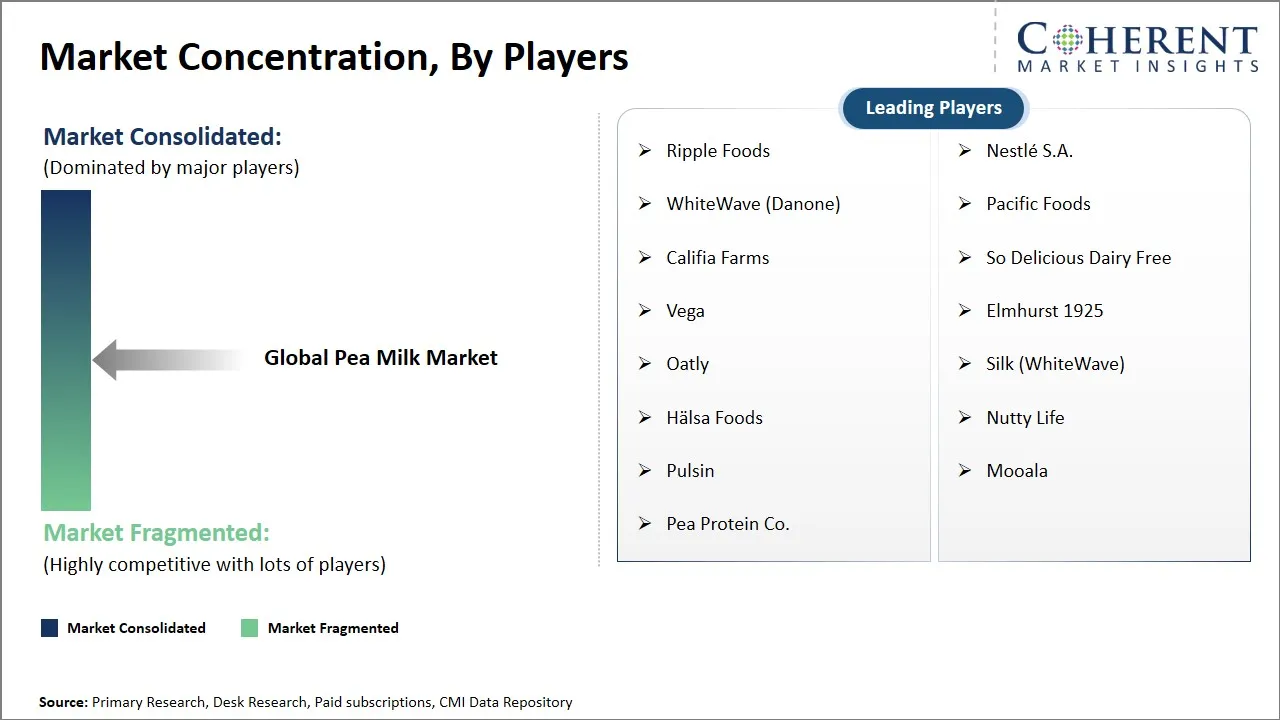
| Companies covered: | Ripple Foods, Nestlé S.A., WhiteWave (Danone), Pacific Foods, Califia Farms, So Delicious Dairy Free, Vega, Elmhurst 1925, Oatly, Silk (WhiteWave), Hälsa Foods, Nutty Life, Pulsin, Mooala, and Pea Protein Co. | ||
| Growth Drivers: |
| ||
| Restraints & Challenges: |
| ||
Pea Milk Market Dynamics
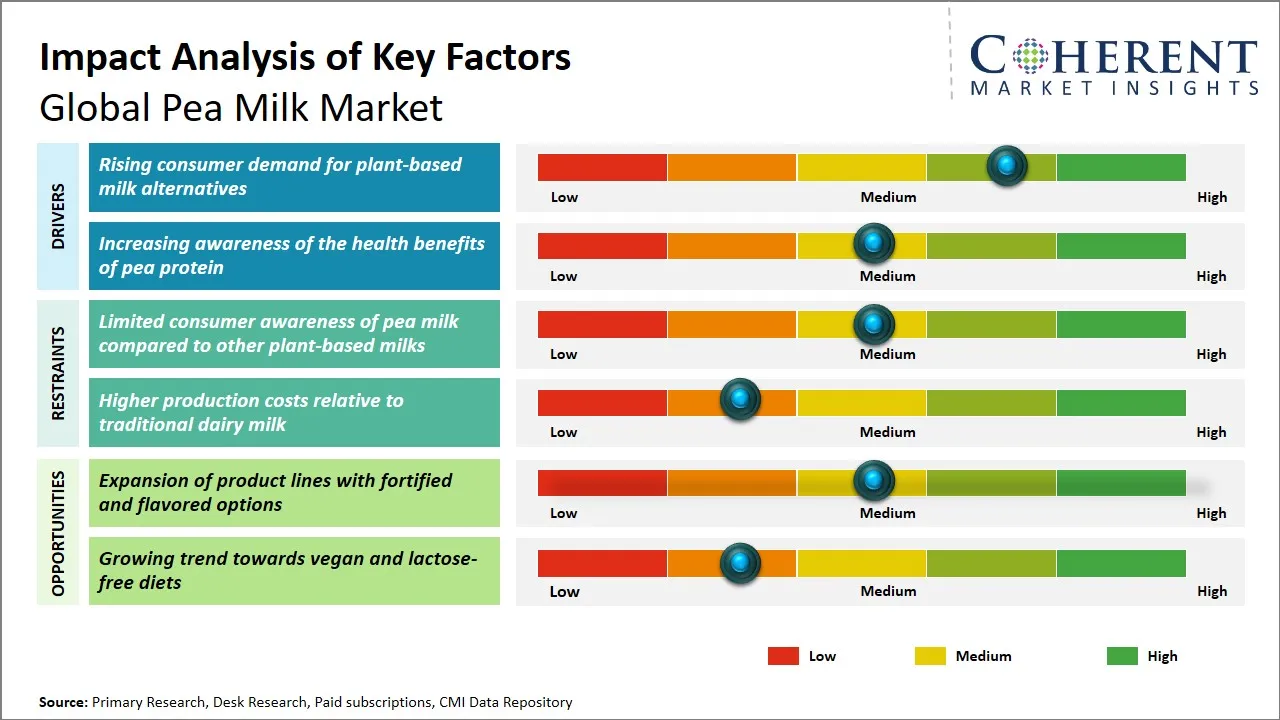
Pea Milk Market Driver - Rising Consumer Demand for Plant-Based Milk Alternatives
One paramount cause behind the expansion of the global pea milk market is the huge consumer migration from dairy to plants. The global awareness regarding health, the environment, and ethics is such that a good number of people are choosing to either cut down or completely get rid of dairy products in their diets and are looking for nutritious and non-allergenic substitutes. Yellow peas are the source of pea milk, which has a high protein content, smooth texture, and neutral taste, thus, it is an extremely good option for different categories of consumers; including vegans, lactose-intolerant people, and ones having nut allergies, it is very much acceptable for them all.
To illustrate, in Europe, Nestlé S.A. added pea-based milk as one of its main products in the “Wunda” brand's plant-based beverage portfolio. Flexitarian customers asking for environmentally friendly and non-allergic dairy substitutes were the ones the company pointed to as its main reason for growth in demand.
Pea Milk Market Opportunity - Expansion of Product Lines with Fortified and Flavored Options
The global pea milk market is the one that offers a very good chance for raising through the expansion of product lines that incorporate fortified and flavored options. The more the consumers get to know about plant-based nutrition, the more they prefer functional beverages that have enhanced health benefits besides basic nourishment. The process of fortifying pea milk with extra vitamins, minerals, and proteins can help to cover nutritional gaps and attract health-conscious consumers, particularly vegans, lactose-intolerant people, and those who have allergies and are looking for alternative products.
Among others, Ripple Foods, which is one of the major producers of pea milk in the U.S., had launched some fortified products like Ripple Kids (enriched with DHA and choline) and some flavored options including chocolate and vanilla pea milk.
Analyst Opinion (Expert Opinion)
- The pea milk market globally is going through a transition from a niche dairy alternative to a protein-first platform where functionality is the main focus and novelty is not in the picture. Crop-based formulations that provide 8 g+ protein, calcium and vitamin D fortification are among the leading players such as Ripple Foods and Nestlé-backed concepts that directly cater to performance, kids’ nutrition and barista applications instead of generic non-dairy shelves.
- The interest of investors and R&D continues to be at forums like Plant Based World Expo Europe where pea protein is recognized as a hero ingredient in next-gen beverages, and at Future Food-Tech summits where panels discuss masking off-notes, improving solubility and building cost-competitive, allergen-friendly milks.
- The live demonstrations at Food Tech Summit & Expo in Mexico City of high-protein chocolate pea drinks with improved mouthfeel showcase the ways in which flavor houses are taking away the risk of sensory barriers. The expansion of processing capacity for pea protein and pea cultivation in Europe and North America is a support for the scaling up and the improvement of the margin.
Speak to the analyst
Want personalized insights?
Take the findings above to one of our principal consultants, or have the report rebuilt around the segments, geographies and competitors you actually track.
Market Segmentation
- Product Type Insights (Revenue, USD Mn, 2021 - 2033)
- Original/Unsweetened
- Flavored
- Fortified
- Others
- Packaging Insights (Revenue, USD Mn, 2021 - 2033)
- Aseptic Cartons
- PET
- Others
- End User Insights (Revenue, USD Mn, 2021 - 2033)
- Individual Consumers
- HoReCa
- Gyms
- Cafes
- Regional Insights (Revenue, USD Mn, 2021 - 2033)
- North America
- U.S.
- Canada
- Latin America
- Brazil
- Argentina
- Mexico
- Rest of Latin America
- Europe
- Germany
- U.K.
- Spain
- France
- Italy
- Russia
- Rest of Europe
- Asia Pacific
- China
- India
- Japan
- Australia
- South Korea
- ASEAN
- Rest of Asia Pacific
- Middle East
- GCC Countries
- Israel
- Rest of Middle East
- Africa
- South Africa
- North Africa
- Central Africa
- North America
- Key Players Insights
- Ripple Foods
- Nestle S.A.
- WhiteWave (Danone)
- Pacific Foods
- Califia Farms
- So Delicious Dairy Free
- Vega
- Elmhurst 1925
- Oatly
- Silk (WhiteWave)
- Hälsa Foods
- Nutty Life
- Pulsin
- Mooala
- Pea Protein Co.
Sources
Primary Research Interviews
- R&D Director – Leading Plant-based Beverage Manufacturer
- Procurement Manager – Major Plant-based Milk Retailer
- Product Development Head – Well-Known Pea Milk Brand
- Sustainability Manager – Plant-based Beverage Certification Body
Stakeholders
- Manufacturers
- End-use Sectors
- Plant-based Milk Alternatives
- Dairy Replacement Drinks in Food & Beverage
- Vegan and Specialty Nutrition Brands
- Regulatory & Certification Bodies
- E-commerce Platforms and Retailers
- Technology Integration Players: AI-based product personalization providers for plant-based foods
Databases
- UN Comtrade Database
- India Import Export (EXIM) Database
Magazines
- Plant-based Foods Magazine – Trends in plant milk and pea-based beverages
- Food & Beverage Innovation – Innovations in alternative dairy markets
- Global Dairy Alternatives Insights – Consumer trends in plant-based milks
- Vegan Food Journal – Market updates and growth opportunities in pea milk
Journals
- Journal of Food Science & Technology – Pea milk formulation trends
- International Journal of Plant-based Nutrition – Nutritional benefits of pea milk
- Journal of Functional Foods – Health impacts of pea protein beverages
- Food Research International – Bioavailability and processing of pea milk
Newspapers
- The Financial Times – Market growth of plant-based and pea milks
- The Guardian – Consumer trends in plant-based dairy alternatives
- Asia Food Journal – Growth of pea milk consumption in Asia-Pacific
- European Food News – Regulation and policy for plant-based milks
Associations
- Plant-based Foods Association (PBFA)
- International Plant Protein Association (IPPA)
- American Vegan Society
- European Plant-based Food Association
- Clean Label Project
Public Domain Sources
- FDA – Guidelines for plant-based milk labeling and safety
- European Commission – Food Supplementation Regulation relevant for plant milks
- World Health Organization – Safety standards and health impact studies on plant proteins
Proprietary Elements
- CMI Data Analytics Tool, Proprietary CMI Existing Repository of information for last 8 years.
Get access to 250+ pages report
Every segment, forecast, competitor profile and data table behind the analysis above — available for instant download.
- ESOMAR Member
- ISO 9001:2015 Certified
- D-U-N-S Registered
- GDPR & CCPA Compliant
Missing comfort of reading report in your local language? Find your preferred language:
Transform your Strategy with Exclusive Trending Reports
Frequently Asked Questions
The global pea milk market is estimated to be valued at USD 658.0 Mn in 2026 and is expected to reach USD 1015.8 Mn by 2033.
The CAGR of the global pea milk market is projected to be 6.4% from 2026 to 2033.
Rising consumer demand for plant-based milk alternatives and increasing awareness of the health benefits of pea protein are the major factors driving the growth of the global pea milk market.
Limited consumer awareness of pea milk compared to other plant-based milks and higher production costs relative to traditional dairy milk are the major factors hampering the growth of the global pea milk market.
In terms of product type, the original/unsweetened segment is estimated to dominate the market revenue share in 2026.
Ripple Foods, Nestlé S.A., WhiteWave (Danone), Pacific Foods, Califia Farms, So Delicious Dairy Free, Vega, Elmhurst 1925, Oatly, Silk (WhiteWave), Hälsa Foods, Nutty Life, Pulsin, Mooala, and Pea Protein Co. are the major players.
North America is expected to lead the global pea milk market in 2026.