

Global Periodic Fever Market Size and Forecast: 2026 - 2033
According to Coherent Market Insights, the global periodic fever market is estimated to be valued at USD 724.6 Mn in 2026 and is expected to reach 1,006.07 Mn by 2033, exhibiting a compound annual growth rate (CAGR) of 4.8% from 2026 to 2033. This steady growth reflects increasing awareness, advancements in diagnostic tools, and rising demand for effective treatment options for periodic fever syndromes across various regions worldwide.
Key Takeaways of the Periodic Fever Market
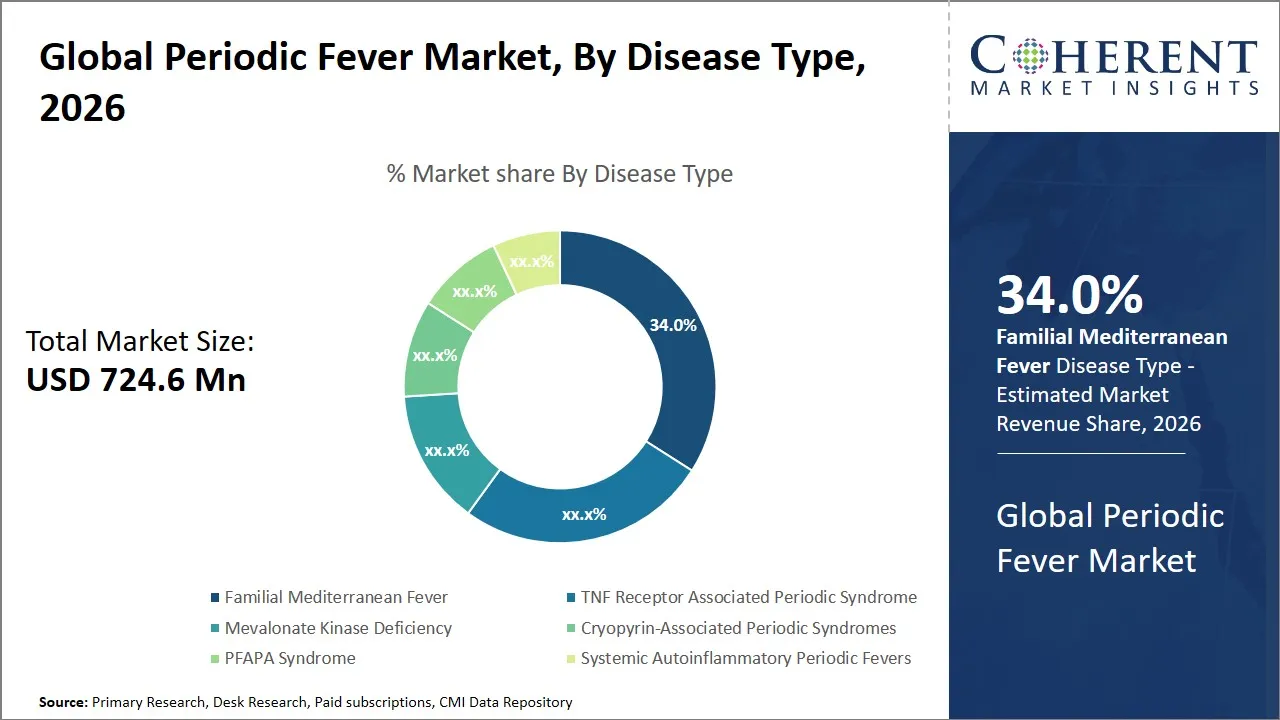
- Familial mediterranean fever segment is expected to lead the global periodic fever market, capturing 34% share in 2026.
- Biologic therapies segment is estimated to represent 38% of the market share in 2026.
- Injectable segment is projected to dominate with 48% of the periodic fever market share in 2026.
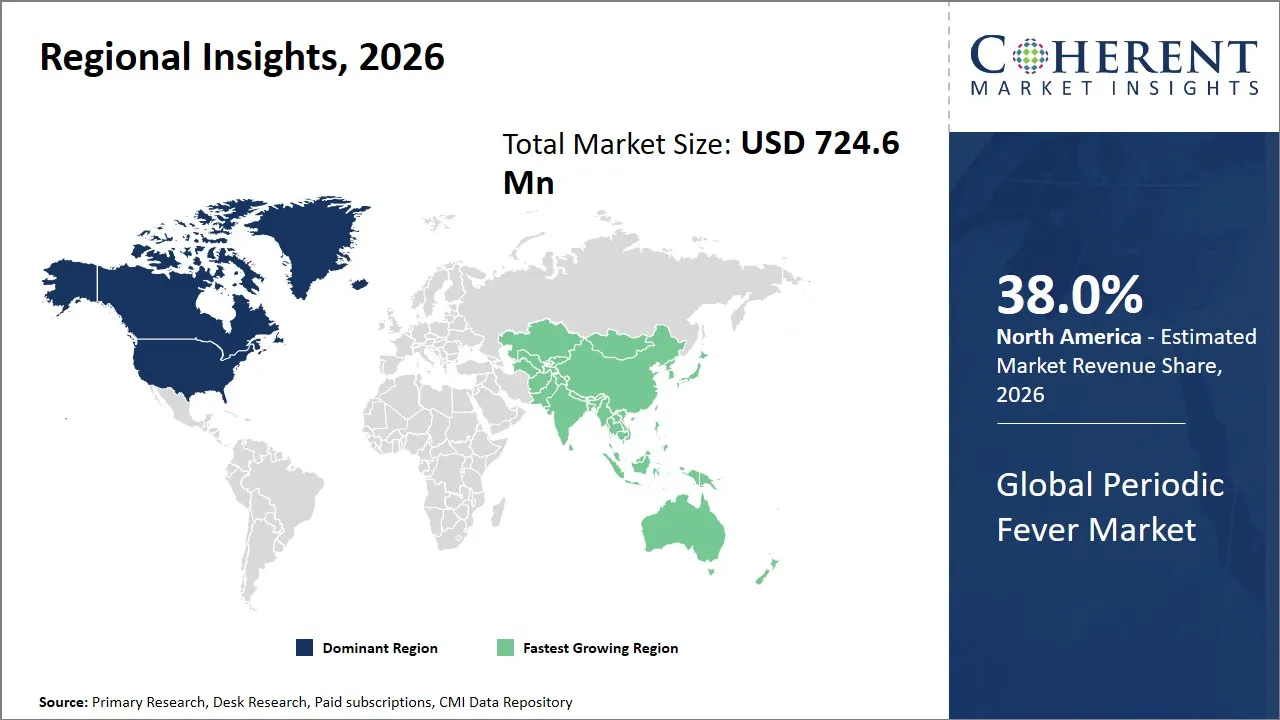
- North America is expected to lead the market, holding a share of 38% in 2026. Asia Pacific is anticipated to be the fastest-growing region, with 21% share in 2026
Market Overview
- Rising awareness and wider use of genetic testing are helping physicians identify periodic fever syndromes earlier, increasing the number of patients receiving proper long-term treatment.
- Biologic drugs targeting inflammatory pathways, especially IL-1 inhibitors, are increasingly used for patients not responding to traditional therapies, driving treatment market expansion.
- High biologic treatment costs and limited reimbursement policies in many countries continue to restrict therapy access, particularly in low- and middle-income healthcare systems.
- Growing recognition of periodic fever syndromes among pediatric specialists is leading to earlier intervention, resulting in long-term therapy adoption across childhood and adulthood.
Currents Events and Its Impact
Current Events | Description and its Impact |
Expansion of Genetic Testing Adoption in Rare Autoinflammatory Diseases |
|
Rising Adoption of IL-1 Inhibitor Biologics in Treatment Protocols |
|
Segmental Insights
- Current Industry Events of 2026
- Market Size Estimation
- Regional Breakdown
- Competitive Landscape
- Customer Intelligence
- Segmental Analysis
- Pricing Analysis
- Key Market Drivers, Challenges & Future Trends
- Customized Insights Section
Why Does the Familial Mediterranean Fever Segment Dominate the Global Periodic Fever Market in 2026?
The familial mediterranean fever segment is expected to hold the largest share of 34% in 2026, due to its significant genetic prevalence and well-documented clinical profile. Familial Mediterranean Fever (FMF) is a hereditary autoinflammatory disease, which mainly affects groups in the Mediterranean basin, such as persons of Middle Eastern, North African, Armenian, Turkish, and Jewish origin. The disease is hereditary and this means that it has a large and constant pool of patients who have to be managed, and this hence drives the market demand.
For instance, Colchicine remains the gold standard, first-line, and lifelong therapeutic agent for Familial Mediterranean Fever (FMF) globally, with major companies such as Hikma Pharmaceuticals (marketing products like Mitigare and Takeda supplying formulations across Europe, North America, and the Middle East/North Africa (MENA) region.
Why Does the Biologic Therapies Segment Dominate the Global Periodic Fever Market in 2026?
The biologic therapies segment is set to hold the largest share of 38% in 2026, driven by their targeted mechanism of action and efficacy in modulating immune system components implicated in periodic fever syndromes. Biologics signify a paradigm shift of the general contra inflammatory medications with the precision medicine methods that are selective in inhibiting pro-inflammatory cytokines including IL-1, IL-6, and TNF-alpha.
Also, the increased use of biologics can be highly promoted with regard to real-life evidence and clinical trial results indicating their safety, and long-term effectiveness. Numerous patients with debilitating symptoms in the past but with few treatment options are now beneficiaries of such therapies, hence increasing the number of patients and market demand.
For instance, the increasing adoption of canakinumab, developed by Novartis, which is prescribed for patients with periodic fever syndromes such as CAPS, TRAPS, and colchicine-resistant FMF, where targeted IL-1 inhibition has significantly reduced recurrence of inflammatory episodes and improved long-term disease management outcomes across specialized rheumatology treatment centers worldwide.
Injectable Segment Dominates the Global Periodic Fever Market
The injectable segment is expected to capture the highest share of 48% in 2026, driven by its advantages in delivering prompt therapeutic effects and ensuring high bioavailability of treatment agents. Subcutaneous and intramuscular injectable preparations are widely favored particularly with biologic preparations, which constitute a large proportion of prescribed treatments in periodic fever syndromes.
A major reason behind injectable delivery is the necessity to control the symptoms rapidly in case of an acute fever flare and to provide a constant level of the drug in the case of chronic management. Injectable biologics allow rapid systemic exposure in contrast to oral or intravenous routes, which can either be first-pass metabolism or have to be held in infusion over a longer period, respectively. This urgency is especially significant with the patients having a high frequency of severe inflammatory attacks, in which early treatment limits complications and improves clinical outcomes.
Genetic Testing Adoption Expanding Early Diagnosis and Treatment Access in Periodic Fever Disorders
| Event | Description | Impact of the event |
Increasing Adoption of Genetic Testing for Autoinflammatory Diseases | Healthcare systems are integrating multi-gene diagnostic panels enabling faster identification of periodic fever syndromes across pediatric and adult patients. | Early diagnosis expands the treated patient base leading to sustained therapy demand growth. |
Expansion of Biologic Therapy Usage in Treatment Guidelines | Physicians increasingly prescribe IL-1 inhibitor biologics for patients resistant to standard therapies due to strong clinical evidence. | Biologic therapies gain higher market share accelerating innovation and pharmaceutical investment. |
Biosimilar Entry Improving Therapy Affordability in Emerging Markets | Pharmaceutical manufacturers are launching biosimilar biologics in Asia Pacific and Latin America improving therapy affordability. | Greater affordability improves therapy accessibility resulting in higher treatment adoption rates. |
| Growth in Rare Disease Awareness and Referral Networks | Governments and hospitals are conducting awareness programs and strengthening specialist referral pathways for recurrent fever disorders. | Improved disease recognition increases diagnosis rates and long-term patient management demand. |
Regional Insights
North America Periodic Fever Market Analysis and Trends
The North America region is projected to lead the market with a 38% share in 2026, driven by a well-established healthcare infrastructure, high disease awareness, and significant investment in rare disease research. The availability of highly-developed diagnostic facilities and well-developed healthcare policies backing innovation enhances the use of new treatments of periodic fever syndromes.
Orphan drug acts and favorable reimbursement schemes are some of the government programs that dictate pharmaceutical entities to target this market. North America has an advantage of the high density of specialty clinics and research centers that specialize in autoinflammatory diseases. Significant players such as Novartis, Pfizer, and Swedish Orphan Biovitrum (Sobi) are prominent here and they are making contributions through state-of-the-art treatments and clinical trials on the periodic fever conditions.
For instance, Cincinnati Children’s Hospital has expanded specialized treatment access for children suffering from periodic fever and other autoinflammatory syndromes through its dedicated Autoinflammatory Disease Center. The center provides multidisciplinary expertise for accurate diagnosis and long-term management, supported by advanced genetic and immune testing technologies aimed at improving early detection and personalized treatment outcomes for affected pediatric patients.
Source - https://www.cincinnatichildrens.org/service/a/autoinflammatory-diseases
Asia Pacific Periodic Fever Market Analysis and Trends
The Asia Pacific region is expected to exhibit the fastest growth in the market contributing 21% share in 2026, due to expanding healthcare access, increasing disease awareness, and growing government support for rare diseases. The high rate of urbanization, better healthcare spending, and the increased availability of multinational pharmaceutical firms promote faster market growth. Genetic and immunological research is being made in many countries of this region and this supports the earlier diagnosis and improved management of periodic fever syndromes.
New regulatory reforms in such countries as Japan and South Korea have promoted innovative therapy entry into markets. Well established companies, such as Novartis, Takeda, local biopharma companies are also actively building their presence in this region via collaboration and clinical research.
Periodic Fever Market Outlook for Key Countries
What are the Current Trends Shaping the U.S. Periodic Fever Market?
The U.S. periodic fever market is characterized by well-developed healthcare infrastructure and pharmaceutical innovation. Regulatory systems that advance the development of orphan drugs and significant investment in rare diseases have created a competitive market among leading the pharmaceutical companies like Pfizer, Novartis, and Horizon Therapeutics. Some specific targeted therapies have been rolled out by these firms, and they are still in the process of conducting pivotal clinical trials. Moreover, there are a lot of specialty clinics and genetic testing facilities that help to identify a disease promptly and treat a patient.
How is Germany Helping in the Growth of the Periodic Fever Market?
Germany is a country with an efficient healthcare system and a high level of interest in researching rare diseases with the help of government-funded programs. The ecosystem of Integrated markets within the country entails partnerships among the academic institution, biotech startups, and pharmaceutical firms such as Sobi and Novartis. Such collaborations revolve around the creation of biologics and tailored treatment plans of periodic fever syndromes, and available healthcare and reimbursement policies guarantee access to innovation by patients.
Key Drivers for the Growth of the Japan Periodic Fever Market
Japan market exhibits a high growth rate due to government efforts to strengthen frameworks on rare diseases such as the provision of better diagnostic guidelines and facilitation of approval of orphan drugs. The local drug giants including Takeda Pharmaceuticals and Chugai Pharmaceutical are much engaged in development and commercialization of treatments that are specific to the Japanese. Focus on high-tech biotechnology and immunotherapy also contributes to the increase of the number of treatment opportunities of the patient of periodical fever in the country.
China Periodic Fever Market Trends
China is a fast-developing market as the level of healthcare amenities and awareness among the large population spreads. The regulatory changes made have helped ease the regulatory routes to innovative drug approvals not limited to global pharmaceutical firms, such as Novartis and Roche, but also local firms. Improving outcomes in disease management are being achieved due to the increasing genetic research and early diagnostic initiatives. There is also a potential to support growth of the market by the rise of the middle class as well as improved coverage of healthcare insurance.
Precision Medicine and Targeted Drug Innovation Transforming Periodic Fever Treatment
- Research in precision medicine is empowering clinicians to individually customize interventions against periodic fevers syndromes depending on genetic mutations and inflammatory pathway profiles. Better molecular diagnostics and the identification of biomarkers is currently giving the physician the ability to use therapies that specifically target the underlying immune dysregulation and not just symptom management.
- Meanwhile, drug firms are setting up molecularly targeted therapies targeting inflammasome and cytokine pathways, especially the IL-1 and associated immune mediators. These specific medications are also demonstrating better clinical results and lower occurrence of relapse, which contribute to the transition to individual long-term management of the disease in periodic fever treatment.
Market Players, Key Developments, and Competitive Intelligence
Key Developments
- Biotech companies including Secarna Pharmaceuticals and Aclaris Therapeutics advanced novel CAPS and periodic fever-related candidates through clinical development in 2025, highlighting increased R&D investment into inflammasome-targeted small molecules and biologics that may enter pivotal studies later in the decade.
- In May 2025, the U.S. FDA maintained a strong regulatory emphasis on novel biologics and targeted agents, particularly within the autoimmune and rare disease sectors, which directly impacted treatment landscapes for autoinflammatory conditions. The FDA accelerated several approvals for rare, serious disorders by emphasizing personalized, targeted therapies such as monoclonal antibodies and kinase inhibitors.
- In December 2024, Novartis reported Phase 3 CLUSTER study results in 2025 showing canakinumab’s long-term effectiveness and safety in MKD/HIDS patients supporting clinical adoption and guideline relevance in periodic fever syndromes.
Top Strategies Followed by Global Periodic Fever Market Players
Player Type | Strategic Focus | Examples |
Established Market Leaders | Leading companies strengthen their market position by investing in R&D to develop advanced diagnostic tools and targeted therapies while expanding global distribution through strategic partnerships and healthcare collaborations to improve treatment access and patient outcomes. | Novartis continues to expand the global adoption of its biologic therapy canakinumab through partnerships with healthcare providers and by strengthening treatment availability across North America, Europe, and emerging markets for autoinflammatory disease management. |
Mid-Level Players | Mid-level companies compete by offering affordable treatment and diagnostic solutions while forming manufacturing or technology partnerships to improve production efficiency and expand presence in price-sensitive and emerging healthcare markets. | Swedish Orphan Biovitrum Sobi focuses on expanding access to rare disease treatments through regional partnerships and targeted distribution strategies, making periodic fever therapies more accessible across Europe and developing healthcare markets. |
Small-Scale Players | Small-scale companies focus on niche innovations such as specialized diagnostics or targeted therapies, often partnering with research institutions or regional healthcare players to enter specific markets and address unmet needs in rare disease management. | Centogene develops specialized genetic testing solutions for rare autoinflammatory diseases, supporting early diagnosis of periodic fever syndromes through collaborations with hospitals and research centers worldwide. |
Market Report Scope
Periodic Fever Market Report Coverage
| Report Coverage | Details | ||
|---|---|---|---|
| Base Year: | 2025 | Market Size in 2026: | USD 724.6 Mn |
| Historical Data for: | 2020 To 2024 | Forecast Period: | 2026 To 2033 |
| Forecast Period 2026 to 2033 CAGR: | 4.8% | 2033 Value Projection: | USD 1,006.07 Mn |
| Geographies covered: |
| ||
| Segments covered: |
| ||
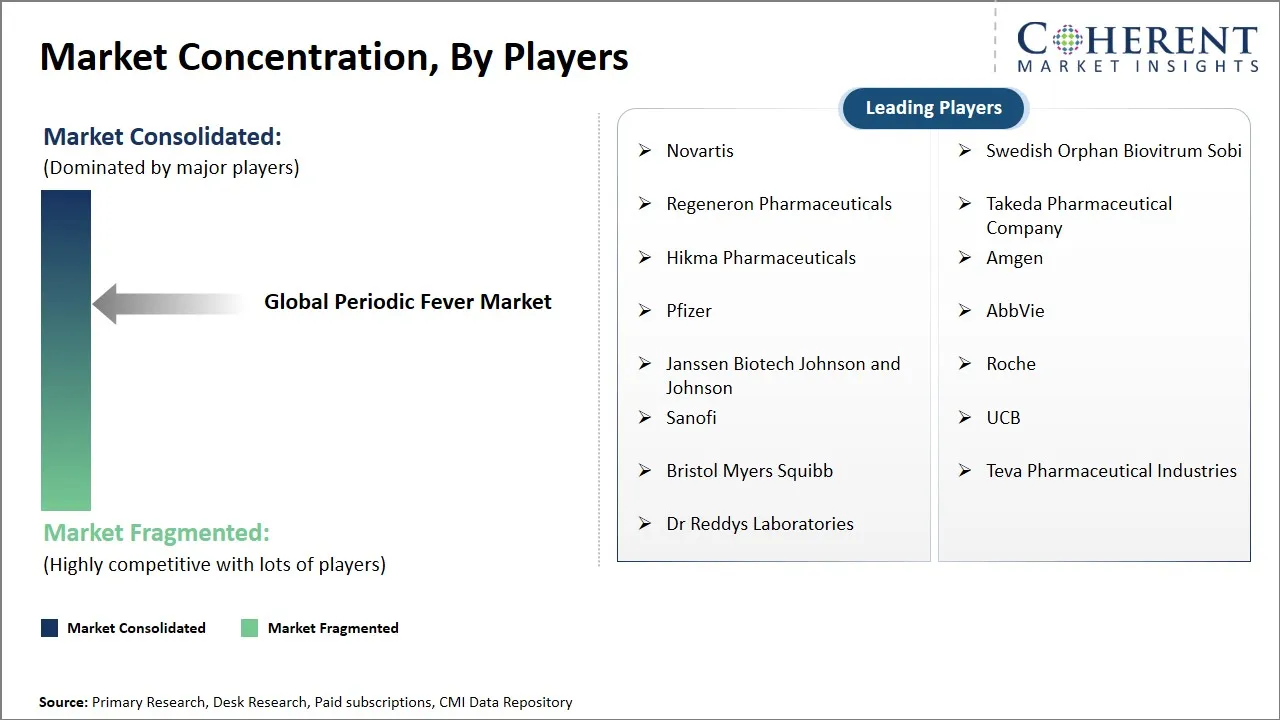
| Companies covered: | Novartis, Swedish Orphan Biovitrum Sobi, Regeneron Pharmaceuticals, Takeda Pharmaceutical Company, Hikma Pharmaceuticals, Amgen, Pfizer, AbbVie, Janssen Biotech Johnson and Johnson, Roche, Sanofi, UCB, Bristol Myers Squibb, Teva Pharmaceutical Industries, and Dr Reddys Laboratories | ||
| Growth Drivers: |
| ||
| Restraints & Challenges: |
| ||
Market Dynamics
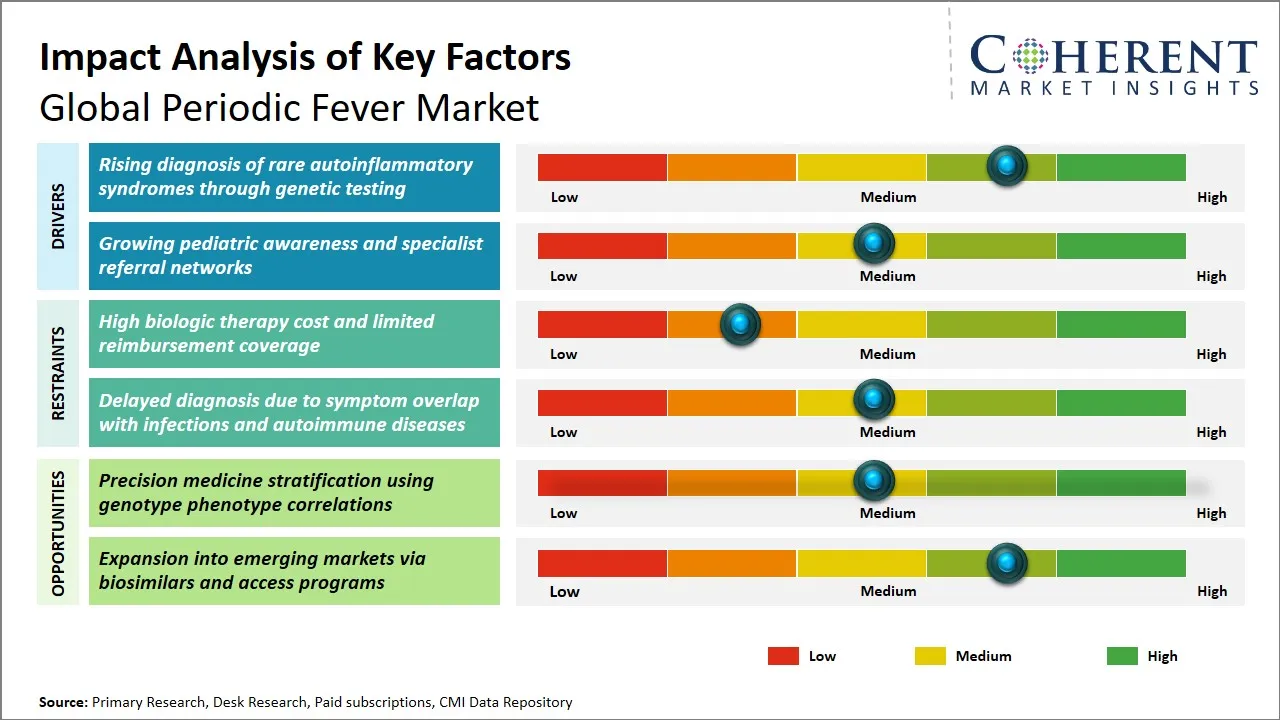
Periodic Fever Market Driver - Rising Diagnosis of Rare Autoinflammatory Syndromes Through Genetic Testing
Improved diagnosis of rare autoinflammatory syndromes which are the major causes of periodic fever conditions have largely become possible as a result of the increased availability and sophistication of genetic testing technologies. Increasingly affordable and extensively implemented in the healthcare environment, the genetic sequencing is helping physicians identify particular mutations on the genes that cause these syndromes. This enhanced diagnostic ability facilitates a better differentiation of periodic fever disorders and other febrile diseases, minimizes the misdiagnosis and permits specific treatment plans.
For instance, companies such as Illumina and Invitae are expanding clinical adoption of next-generation sequencing panels that enable earlier identification of hereditary periodic fever syndromes, supporting faster clinical confirmation and improved patient enrollment into targeted treatment pathways.
(Source - https://www.invitae.com/providers/test-catalog/test-04312)
Periodic Fever Market Opportunity - Precision Medicine Stratification Using Genotype-Phenotype Correlations
A great opportunity offered by the global periodic fever market is the development of precision medicine, especially the use of genotype-phenotype correlations to better stratify patients and provide specific treatments. Periodic fever syndromes, which are usually based on complex genetic mutations, manifest themselves in a variety of ways in the population of patients. As increasing genomics and bioinformatics has developed, there is a possibility to determine certain genetic identifiers and correlate with phenotypic manifestations, which provides a revolutionary avenue to diagnosis and treatment. Precision medicine eases the process of delivering personalized treatment interventions based on the genetic composition of a person, enhancing the effectiveness of the treatment and minimizing side effects.
For instance, the use of MEFV gene mutation analysis in Familial Mediterranean Fever patients, where clinicians tailor treatment intensity and biologic therapy decisions based on genotype severity, enabling specialized centers such as those in Turkey and Israel to optimize therapy selection and reduce recurrent inflammatory attacks through personalized disease management strategies.
(Source - https://pubmed.ncbi.nlm.nih.gov/18061974/)
Analyst Opinion (Expert Opinion)
- The periodic fever market is growing as improved genetic testing and rising awareness enable earlier diagnosis and faster treatment adoption, particularly through biologic therapies for patients unresponsive to conventional options. Regulatory support for rare disease drugs and expanding pediatric detection programs are creating growth opportunities, although high treatment costs and delayed diagnosis still limit broader access in many regions.
- Recent medical conferences such as the Pediatric Rheumatology European Society and American College of Rheumatology meetings have accelerated knowledge sharing on autoinflammatory diseases, while expanded genetic screening programs and collaborations between biotech companies and hospitals are improving treatment access and supporting development of targeted therapies, strengthening the long-term outlook of the periodic fever market
Speak to the analyst
Want personalized insights?
Take the findings above to one of our principal consultants, or have the report rebuilt around the segments, geographies and competitors you actually track.
Market Segmentation
- Disease Type Insights (Revenue, USD Mn, 2021 - 2033)
- Familial Mediterranean Fever
- TNF Receptor–Associated Periodic Syndrome
- Mevalonate Kinase Deficiency
- Cryopyrin-Associated Periodic Syndromes
- PFAPA Syndrome
- Systemic Autoinflammatory Periodic Fevers
- Treatment Type Insights (Revenue, USD Mn, 2021 - 2033)
- Biologic Therapies
- Corticosteroids
- Colchicine Therapy
- NSAIDs & Symptomatic Treatments
- Immunosuppressants
- Emerging Targeted Therapies & Gene-based Treatments
- Route of Administration Insights (Revenue, USD Mn, 2021 - 2033)
- Injectable
- Oral
- Intravenous Infusion
- Diagnosis Type Insights (Revenue, USD Mn, 2021 - 2033)
- Genetic Testing
- Laboratory & Biomarker Testing
- Clinical Diagnosis
- Imaging & Supportive Diagnostic Methods
- Patient Group Insights (Revenue, USD Mn, 2021 - 2033)
- Pediatric Patients
- Adult Patients
- End User Insights (Revenue, USD Mn, 2021 - 2033)
- Hospitals
- Specialty & Rheumatology Clinics
- Ambulatory Surgical Centers
- Homecare Settings
- Distribution Channel Insights (Revenue, USD Mn, 2021 - 2033)
- Online
- Offline
- Regional Insights (Revenue, USD Mn, 2021 - 2033)
- North America
- U.S.
- Canada
- Latin America
- Brazil
- Argentina
- Mexico
- Rest of Latin America
- Europe
- Germany
- U.K.
- Spain
- France
- Italy
- Russia
- Rest of Europe
- Asia Pacific
- China
- India
- Japan
- Australia
- South Korea
- ASEAN
- Rest of Asia Pacific
- Middle East
- GCC Countries
- Israel
- Rest of Middle East
- Africa
- South Africa
- North Africa
- Central Africa
- North America
- Key Players Insights
- Novartis
- Swedish Orphan Biovitrum Sobi
- Regeneron Pharmaceuticals
- Takeda Pharmaceutical Company
- Hikma Pharmaceuticals
- Amgen
- Pfizer
- AbbVie
- Janssen Biotech Johnson and Johnson
- Roche
- Sanofi
- UCB
- Bristol Myers Squibb
- Teva Pharmaceutical Industries
- Dr Reddys Laboratories
Source
Primary Research Interviews
Industry Stakeholders List
- Pharmaceutical manufacturers developing biologic therapies
- Biotechnology companies specializing in rare disease therapeutics
- Clinical genetic testing laboratories
- Rare disease drug development researchers
- Hospital rheumatology department heads
- Biologic therapy clinical trial investigators
End Users List
- Pediatric rheumatologists
- Adult immunologists and rheumatologists
- Hospital rare disease treatment centers
- Genetic diagnostic laboratories
- Specialty clinics treating autoinflammatory disorders
- Hospital pharmacy procurement departments
Government and International Databases
- World Health Organization WHO Database
- U.S. National Institutes of Health NIH Database
- Centers for Disease Control and Prevention CDC
- European Medicines Agency EMA Database
- U.S. Food and Drug Administration FDA Database
- Orphanet Rare Disease Database
Trade Publications
- Pharmaceutical Technology Magazine
- European Pharmaceutical Review
- BioPharma Dive
- Pharma Manufacturing Journal
- Clinical Trials Arena
- Drug Discovery World
Academic Journals
- The Lancet Rheumatology
- Annals of the Rheumatic Diseases
- Arthritis and Rheumatology Journal
- Journal of Autoimmunity
- Pediatric Rheumatology Journal
- Nature Reviews Rheumatology
Reputable Newspapers
- The New York Times Health Section
- The Guardian Health News
- The Washington Post Health Coverage
- Financial Times Healthcare Section
- The Wall Street Journal Health Section
- The Times Health Reporting
Industry Associations
- Autoinflammatory Alliance
- International Society for Systemic Auto-Inflammatory Diseases ISSAID
- American College of Rheumatology ACR
- European Alliance of Associations for Rheumatology EULAR
- Rare Diseases International RDI
- National Organization for Rare Disorders NORD
Public Domain Resources
- ClinicalTrials.gov
- MedlinePlus
- European Clinical Trials Register
- Open FDA Database
- Global Health Observatory WHO
Proprietary Elements
- CMI Data Analytics Tool: Proprietary analytics tool to analyze real-time market trends, consumer behavior, and technology adoption in market
- Proprietary CMI Existing Repository of Information for Last 8 Years
Get access to 250+ pages report
Every segment, forecast, competitor profile and data table behind the analysis above — available for instant download.
- ESOMAR Member
- ISO 9001:2015 Certified
- D-U-N-S Registered
- GDPR & CCPA Compliant
Missing comfort of reading report in your local language? Find your preferred language:
Transform your Strategy with Exclusive Trending Reports
Frequently Asked Questions
The global periodic fever market is estimated to be valued at USD 724.6 million in 2026 and is expected to reach USD 1,006.07 million by 2033.
The CAGR of global periodic fever market is projected to be 4.8% from 2026 to 2033.
Rising diagnosis of rare autoinflammatory syndromes through genetic testing and growing pediatric awareness and specialist referral networks are the major factors driving the growth of the global periodic fever market.
High biologic therapy cost and limited reimbursement coverage and delayed diagnosis due to symptom overlap with infections and autoimmune diseases are the major factors hampering the growth of the global periodic fever market
In terms of disease type, familial mediterranean fever is estimated to dominate the market revenue share in 2026.
Novartis, Swedish Orphan Biovitrum Sobi, Regeneron Pharmaceuticals, Takeda Pharmaceutical Company, Hikma Pharmaceuticals, Amgen, Pfizer, AbbVie, Janssen Biotech Johnson and Johnson, Roche, Sanofi, UCB, Bristol Myers Squibb, Teva Pharmaceutical Industries, and Dr Reddys Laboratories are the major players.
North America is expected to lead the global periodic fever market in 2026.