

Global Potato Protein Market Size and Forecast – (2026-2033)
According to Coherent Market Insights, the global potato protein market is estimated to be valued at USD 288.3 Mn in 2026 and is expected to reach USD 472.1 Mn by 2033, exhibiting a compound annual growth rate (CAGR) of 7.3% from 2026 to 2033.
Key Takeaways of the Potato Protein Market
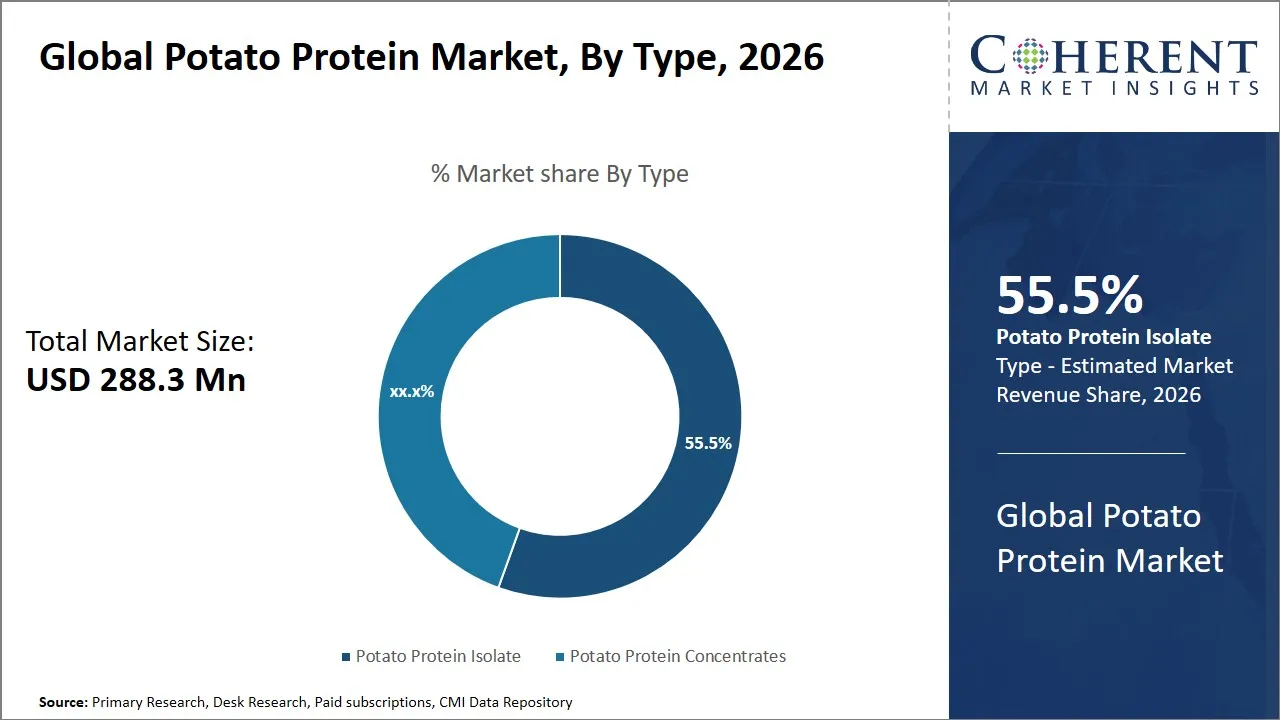
- The potato protein isolate segment is expected to account for 55.5 % of the global potato protein market share in 2026.
- The bakery & confectionery segment is projected to hold 34.8 % of the market share in 2026.
- Online retail segment is estimated to hold 32.5 % of the potato protein market share in 2026.
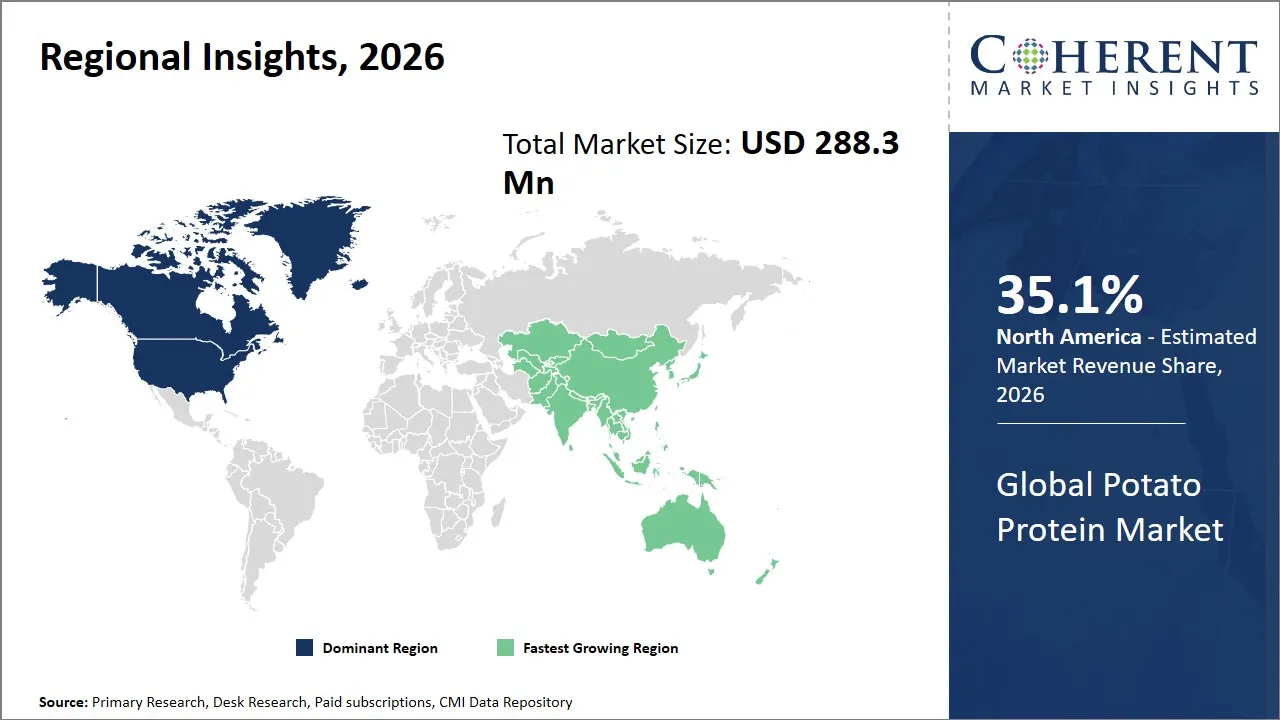
- North America is expected to dominate the market with a 35.1 % share in 2026.
- The Asia Pacific region is anticipated to experience the fastest market growth, capturing a 19.3 % share in 2026.
Market Overview
- A significant market trend is the growing adoption of potato protein as a clean-label, allergen-free ingredient in food and beverage applications.
- Innovations in extraction technologies have improved protein quality and functionality, enhancing its use in meat substitutes, sports nutrition, and dairy alternatives.
- Additionally, expanding awareness of its nutritional benefits and sustainability credentials is fueling end-user demand across regions, making potato protein a key focus for manufacturers aiming to capitalize on the plant-based protein movement.
Currents Events and Its Impact
Current Events | Description and its Impact |
China’s processing scale & sustainability push |
|
Innovation in high‑protein potato crops |
|
Segmental Insights
- Current Industry Events of 2026
- Market Size Estimation
- Regional Breakdown
- Competitive Landscape
- Customer Intelligence
- Segmental Analysis
- Pricing Analysis
- Key Market Drivers, Challenges & Future Trends
- Customized Insights Section
Why Does the Potato Protein Isolate Dominate the Global Potato Protein Market?
Potato protein isolate segment is expected to hold 55.5% of the market share in 2026, due to its concentrated protein content and diverse application potential. Isolates are purified proteins that provide a higher percentage of proteins and other components unlike potato protein concentrates that have a lower percentage of proteins and other components hence they are very effective to manufacturers who want to incorporate maximum protein content in their products. This purity is translated to cleaner flavors profiles and an increased solubility, which is very desirable in the food formulation and supplementation markets.
The Protein Brewery, a plant-based food company, launched a new line of protein snacks using potato protein isolate. This product line specifically targeted the growing market of health-conscious consumers seeking high-protein, clean-label, and plant-based options. The use of potato protein isolate helped to enhance the protein content, improve solubility, and maintain a clean flavor profile, making it a popular choice for both food formulations and dietary supplements.
Why is Bakery & confectionery Dominating the Potato Protein Market?
Bakery & confectionery segment is expected to capture 34.8% of the potato protein market share in 2026. As consumers become increasingly health-conscious, the preference for protein-enriched, nutritious snacks and baked goods has surged considerably. The potato protein is capable of satisfying this requirement because it is a functional ingredient that does not only enhance the protein level but also the texture, moisture retention and shelf life of the baked products.
Bakery industry greatly appreciates the use of potato protein in farming since it can replace animal-proteins without affecting the quality of the endpoint. Potato protein when added to bread, cookies and other confectionery products, increases the softness and volume as well as the crumb structure and offers a clean and mild taste. Such conformity to customizable bakery formulations, such as gluten-free and vegan products, facilitates increased adoption, especially with the increasing number of consumers who are allergy-sensitive, or who have specialty dietary requirements.
Online Retail Dominates the Global Potato Protein Market
Online retail segment is estimated to hold 32.5% of the global potato protein market share in 2026, propelled by changing consumer purchasing patterns and the rapid digital transformation of food and ingredient procurement. The convenience aspect is of the highest priority, individual health-conscious buyers and even the small-scale food producers will see the ease of access and speed of delivery as a cornerstone which online platforms offer with ease.
The wide variety of products and the availability of information on e-commerce sites allow consumers to make comparisons of products in terms of their types, sources, and brands of potato protein. Such transparency is important in a market where product purity, source and suitability of use are crucial factors. In addition, the possibility to check the feedback of the user and certification claims creates trust, which stimulates trial and re-buys in the online environment.
Regional Insights
North America Potato Protein Market Analysis and Trends
The North America region is projected to lead the market with a 35.1% share in 2026, driven by the region's advanced food processing capabilities and rising demand for plant-based proteins. The U.S. and Canada have properly established agricultural industries with a large production of potatoes which serves as a continuous source of raw materials in the production of potato protein. The additional market growth is further accelerated by the rising trend of consumers shifting towards plant-based diets, as well as the switch to the concept of sustainability.
Major corporations such as Idahoan Foods, a major player in the U.S. potato industry, launched a line of plant-based protein products in 2024, including potato protein-based snacks and meat alternatives. This product innovation was driven by the growing demand for plant-based options and the increasing trend towards clean-label, allergen-free foods. The strong trading systems of North America, especially with signing of agreements such as the U.S. MCA, promote regional cooperation and easy distribution, making the market dominant.
Source: https://idahoan.com/
Asia Pacific Potato Protein Market Analysis and Trends
The Asia Pacific region is expected to exhibit the fastest growth in the market contributing 19.3% share in 2026, propelled by rapidly rising demand for plant-based proteins among health-conscious consumers. Increasing urbanization, changing dietary preferences, and expanding awareness of sustainable nutrition encourage adoption of potato protein in food formulations. The growing urbanization rate, shifting food habits and the growing knowledge on sustainable nutritiousness are promoting the use of potato protein in food preparations. As well, the government-driven efforts to enhance food security in such nations as China or India, as well as to favor alternative sources of protein, continue to fuel the market.
The availability of the product and distribution channels is boosted by the growing number of global and regional players like Avebe India Pvt. Ltd. and Olam International. Increased investments in research and development and increased food processing infrastructure are also driving the development of the market in this region.
Global Potato Protein Market Outlook for Key Countries
Germany Potato Protein Market Trends
The potato protein market in Germany has an advantage of high consumer awareness of clean-label and vegetarian products and therefore, potato protein is a more desirable ingredient in alternative meat, snacks, and bakery products. The developed R&D of the country enables firms such as Avebe to develop localized potato protein isolates with respect to localized tastes and nutritional needs. Good regulatory measures can guarantee the safety of the product, and manufacturers and foodservice operators should use more plant proteins. The location of the Germanys is also central to Europe, which makes it easy to carry out export activities, making it more influential in the overall market ecosystem.
What are the Key Drivers Shaping the U.S. Potato Protein Market?
The U.S. potato protein market is driven by growing demand for allergen-free and plant-based protein alternatives in the food and beverage sector. Major ingredient suppliers and food companies actively engage in expanding product portfolios featuring potato protein, leveraging its hypoallergenic properties compared to soy or dairy proteins. The companies like Axiom Foods and Solanic help in increasing the supply capacity and penetration. Also, the changing consumer needs toward natural and sustainable ingredients facilitate constant innovation and implementation. The prospects of growth within the U.S. market are further supported by governmental assistance in the development of the alternative proteins by funding research programs.
China Potato Protein Market Trends
China can be seen as a fast-growing market, which is affected by the growing consumerism towards healthy and sustainable sources of protein due to the growth of health consciousness. The processing facilities and collaboration with the international suppliers and local manufacturers make it able to invest in the options of offering more products, particularly in big cities. Having more diverse protein supply chains is promoted by governments as a wider national food security policy, which indirectly promotes the adoption of potato protein. The major producers such as Olam International and Avebe have strategically entered to take advantage of the increasing opportunities and incorporate the local market experience with foreign expertise.
What are the Key Trends Driving the Growth of the India Potato Protein Market?
The potato protein market in India is characterized by the fact that the vegetarian population is large and that the move to more plant-based nutrition is on the rise, which contributes to making potato protein a promising alternative to the animal protein. Government programmes that support agricultural technologies and food processing prompt the use of new protein ingredients. Better market connectivity through the provision of better cold chain logistics and food supply infrastructure.
There are a number of regional and international firms that deal in the introduction of various protein product customizations that correspond with the local flavor and eating habits. The increasing consumer awareness of the topics of nutrition and sustainability makes their acceptance of the food based on potato protein more receptive.
Netherlands Potato Protein Market Trends
The Netherlands remains one of the production centers because of its strategic location and its control in the production and processing of potatoes and starch. Some of the best players are found in the country with one of them being Avebe that has developed a range of superior potato protein extraction and diversified its application into food, food, and industrial applications.
The availability of sustainable agriculture policies and circular economy policies that are favorable to the government creates an environment where innovation can be boosted regarding value-added potato protein products. With the large export infrastructure in the Netherlands, it is able to distribute to other European markets and beyond easily thus supporting its central position in determining the global protein landscape in potatoes.
Channel Revenue & Growth Elasticities (B2B vs. B2C)
Risk Factor | B2B Channel | B2C Channel |
Revenue Elasticity | Generally inelastic: Revenue growth is more stable, as large volume sales to businesses are less sensitive to price changes. | Elastic: Revenue can change significantly with shifts in consumer demand, promotions, or pricing strategies. |
Price Sensitivity | Low: Businesses are often more willing to pay higher prices for consistent quality and supply. | High: Consumers are more price-sensitive, and small price changes can significantly impact demand. |
Demand Sensitivity | Low to Moderate: B2B demand is driven by industry needs, with less fluctuation in the short term. | High: B2C demand can fluctuate significantly based on consumer trends, promotions, and seasonal demands. |
Supply Chain Risk & Raw Material Price Sensitivity Index
Risk Factor | Description | Impact on Pricing | Impact on Availability |
Potato Crop Variability | Fluctuations in potato yield due to weather conditions, pests, and diseases. | High: Price increases during low yield years. | Low: Reduced availability in poor harvest seasons. |
Government Policies & Subsidies | Policy changes affecting agriculture or subsidies for raw material production. | Policy changes affecting agriculture or subsidies for raw material production. | Low: Policy shifts may influence supply chain continuity but not drastically. |
Supply Chain Disruptions | Transport, labor strikes, or geopolitical issues affecting raw material logistics. | High: Disruptions can spike transportation costs, increasing final product prices. | High: Disruptions can lead to stock-outs and market shortages. |
Market Players, Key Development, and Competitive Intelligence
Key Developments
- In December 2023, Avebe, a Netherlands-based supplier of potato-based ingredients, announced the launch of a new generation of potato products called PerfectaSOL. This offering can be used in alt dairy, confectionery, and other food products. Properties of the novel product include a neutral white color, smoothness, emulsification, and smoothness.
- In July 2023, Brenntag, a distribution company, announced its deal with Avebe that enables Brenntag to distribute Avebe's products, such as potato starch and protein ingredients, in Turkey.
Top Strategies Followed by Global Potato Protein Market Players
Player Type | Strategic Focus | Example |
Established Market Leaders | Heavy investment in R&D and innovation | For example, Kerry Group has put significant investments in creating plant-based proteins that have better taste and texture in response to the rising demand of plant-based foods. |
Mid-Level Players | Cost-effective solutions with balanced quality | Roquette, has established itself as one of the pioneers of cost-effective production of potato proteins through simplifying their production line and applying effective sourcing technologies to their raw materials. |
Small-Scale Players | Niche specialization & innovative variants | For example, the Green Protein focuses on extracting high-quality potato proteins that are especially amenable to use in high-protein nutritional products, and Solanic focuses on selling protein isolates with specific functional advantages, such as better solubility and emulsification properties to use in both food and cosmetic formulations. |
Market Report Scope
Global Potato Protein Market Report Coverage
| Report Coverage | Details | ||
|---|---|---|---|
| Base Year: | 2025 | Market Size in 2026: | USD 288.3 Mn |
| Historical Data for: | 2020 To 2024 | Forecast Period: | 2025 To 2032 |
| Forecast Period 2026 to 2033 CAGR: | 7.3% | 2033 Value Projection: | USD 472.1 Mn |
| Geographies covered: |
| ||
| Segments covered: |
| ||
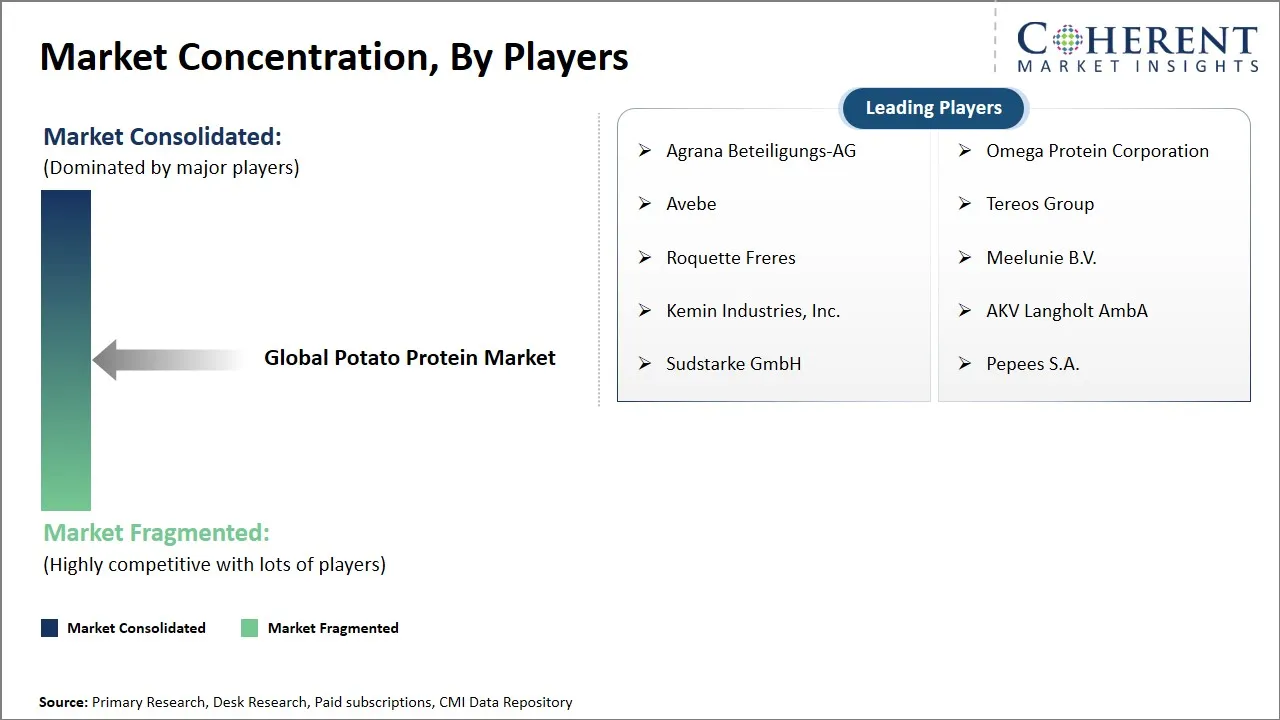
| Companies covered: | Agrana Beteiligungs-AG, Omega Protein Corporation, Avebe, Tereos Group, Roquette Freres, Meelunie B.V., Kemin Industries, Inc., AKV Langholt AmbA, Sudstarke GmbH, and Pepees S.A. | ||
| Growth Drivers: |
| ||
| Restraints & Challenges: |
| ||
Potato Protein Market Dynamics
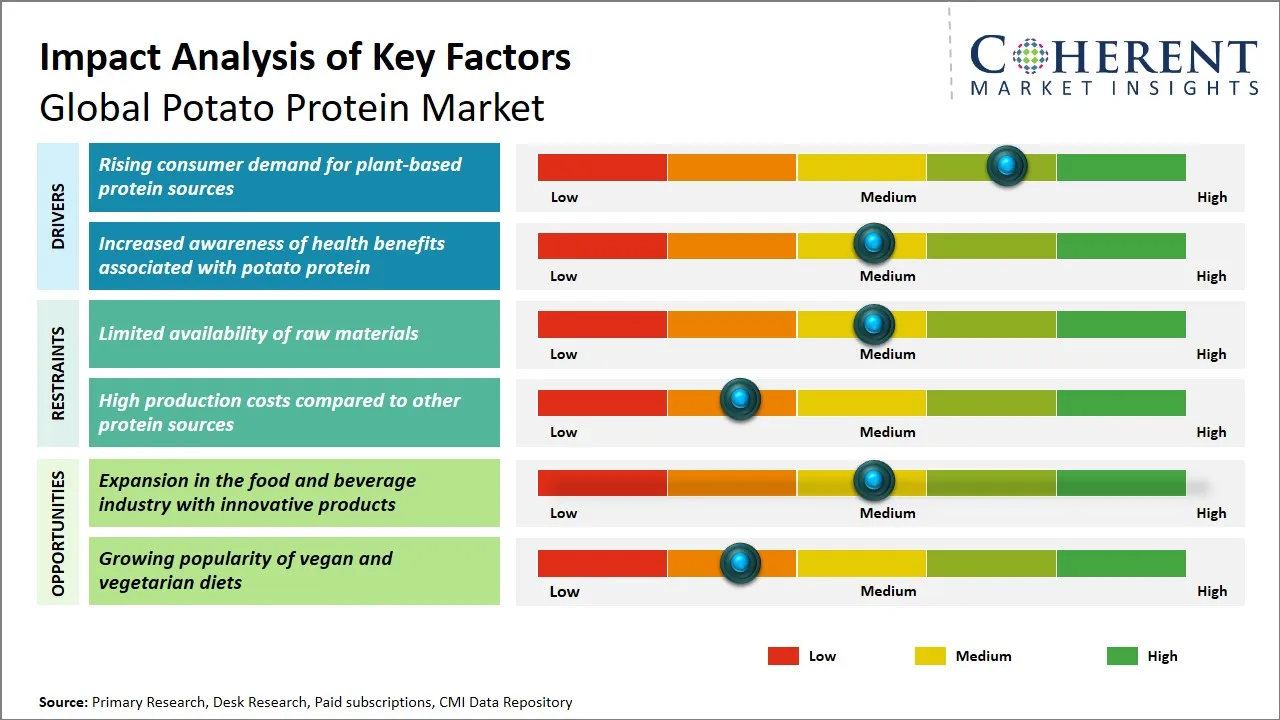
Potato Protein Market Driver - Rising Consumer Demand for Plant-Based Protein Sources
High demand of potato protein as plant-based sources of protein has been largely influenced by the trend of increasing consumer demand to consumptively healthy and sustainable dietary patterns. The rise in the usage of plant-based ingredients is due to the increased awareness of the environmental effects of animal farming, and the increase in concerns regarding animal welfare. Modern consumers are actively searching the options that can deliver not only the necessary nutrients but also correspond with clean label tendencies and allergen-free characteristics. Potential protein which is admired due to its high digestibility and balanced composition of amino acid fits these consumer expectations well.
For example, Kelloggs introduction of the new plant-based products under the brand Plant-Based Protein Line, where potato protein is one of the main components of the new products. To address increasing consumer demand of products with sustainability and health-conscious diet, they added potato protein to meat products such as MorningStar Farms plant-based nuggets and patties.
Source: https://www.kelloggs.co.uk/en_GB/press-release/kelloggs-goes-organic.html
Potato Protein Market Opportunity - Expansion in the Food and Beverage Industry with Innovative Products
The international potato protein market offers a huge opportunity because of its growth in the food and beverage sector due to the increase in the consumption of plant-based and clean-label ingredients by consumers. Potato protein, with good nutritional value, functional characteristics, and allergen-free, is being added to new food formulation, such as meat analogs, dairy alternatives, nutritional bars, and baked goods. The emulsification, water-binding and foaming properties of potato protein are also being capitalized upon by food manufacturers to promote texture and shelf life of foods and potato protein is also being touted as an overall ingredient in product development.
For example, Ingredion, a multinational ingredient solutions firm, has launched a range of VITESSENCE potato protein items that can be used in meat items, nutritional bars, and sports nutrition foods. The potato protein products of the company are in response to the increasing need of clean-label and allergen-free products in the food and beverage sector with the ability of the food manufacturers to address the dietary demands of the consumers who want to eat healthier and greener products.
Source: https://www.ingredion.com/emea/en-uk/news-events/news/pea-protein-isolate-launch
Analyst Opinion (Expert Opinion)
- The market for potato protein is in the active phase of development that was preconditioned by the growing demand towards plant-based sources of proteins and clean-label food products. Reflections on the International Food Protein Conference (2023) and the Plant-Based Foods Expo (2022) highlighted the major developments with companies such as Kraft Heinz and Roquette at the forefront of innovations in the extraction and formulation of potato protein.
- The recent introduction of a new high-quality potato protein isolate by Roquettes targeting the sports nutrition market is an indication of the attention that the industry has given to offering alternative animal proteins with functions and nutrition value. Conversations during these conferences highlighted the increased consumer demand of sustainable, allergen-free protein options, especially in a changing dietary trend where people now tend to eat plant-based food.
- The barriers that were often reported included high cost of production and the necessity to educate consumers about the nutritional value of potato protein. Firms that target at improving production efficiencies and communicating the advantages of potato protein in an acceptable manner will find easy entry in the market. Finally, the market for potato protein will continue to grow depending on its capacity to continuously innovate and keep pace with the changing consumer needs of healthy, sustainable, and multi-purpose sources of protein in the food industry.
Speak to the analyst
Want personalized insights?
Take the findings above to one of our principal consultants, or have the report rebuilt around the segments, geographies and competitors you actually track.
Market Segmentation
- Type Insights (Revenue, USD Mn, 2021 - 2033)
- Potato Protein Isolate
- Potato Protein Concentrates
- Application Insights (Revenue, USD Mn, 2021 - 2033)
- Bakery & Confectionary
- Dairy Alternative
- Meat Analogue
- Sports Nutrition
- Animal Feed
- Others
- Distribution Channel Insights (Revenue, USD Mn, 2021 - 2033)
- Online Retail
- Supermarkets and Hypermarkets
- Specialty Stores
- Direct Sales
- Regional Insights (Revenue, USD Mn, 2021 - 2033)
- North America
- U.S.
- Canada
- Latin America
- Brazil
- Argentina
- Mexico
- Rest of Latin America
- Europe
- Germany
- U.K.
- Spain
- France
- Italy
- Russia
- Rest of Europe
- Asia Pacific
- China
- India
- Japan
- Australia
- South Korea
- ASEAN
- Rest of Asia Pacific
- Middle East
- GCC Countries
- Israel
- Rest of Middle East
- Africa
- South Africa
- North Africa
- Central Africa
- North America
- Key Players Insights
- Agrana Beteiligungs-AG
- Omega Protein Corporation
- Avebe
- Tereos Group
- Roquette Freres
- Meelunie B.V.
- Kemin Industries, Inc.
- AKV Langholt AmbA
- Sudstarke GmbH
- Pepees S.A.
Sources
Primary Research Interviews
- CEO – Leading Potato Protein Producer (e.g., Royal Avebe or Emsland Group equivalent)
- Supply Chain Director – Major Plant Protein Distributor
- Production Lead – Potato Starch By-Product Processor
- Sustainability Officer – Plant-Based Protein Certification Authority
Stakeholders
- Manufacturers
- End-use Sectors:
- Food & Beverage (Dairy Alternatives, Meat Substitutes)
- Animal Feed Producers
- Nutraceuticals & Supplements
- Regulatory & Certification Bodies (e.g., EFSA for novel foods, FDA for protein ingredients, EUVEPRO)
- E-commerce Platforms and Retailers (Alibaba, Ingredion Suppliers, Avebe Online)
- Technology Integration Players: Plant-based ingredient innovators and extrusion processors
Databases
- UN Comtrade Database
- FAO Potato Production Statistics
- Eurostat Agri-Food Trade Statistics
- USITC Import Export Data (Potato Proteins)
- Potatoes USA Economics Reports
Magazines
- Food Processing Magazine – Trends in plant proteins
- Feed International – Potato protein in animal nutrition
- Nutraceuticals World – Emerging vegetable proteins
- Ingredients Network – Potato by-product valorization
- Food Navigator – Plant-based protein innovations
Journals
- Journal of Food Science – Potato protein functionality
- Food Chemistry – Extraction and nutritional profiles of potato proteins
- Trends in Food Science & Technology – Plant protein applications
- Journal of Agricultural and Food Chemistry – Potato protein hydrolysates
- Potato Journal – Potato processing by-products
Newspapers
- The Wall Street Journal – Plant protein market demand
- Business Standard (India) – Potato processing growth in Asia
- Food Dive – Sustainability in protein sourcing
- Reuters – Price trends in vegetable proteins
- Financial Times – Alternative proteins investment
Associations
- European Vegetable Protein Association (EUVEPRO)
- National Potato Council
- International Potato Center (CIP)
- United Potato Growers of America
- Plant Based Foods Association
Public Domain Sources
- EFSA – Guidelines for potato protein as novel food
- FDA – Protein ingredient safety standards
- World Health Organization – Plant protein nutrition guidelines
- USDA – Potato by-product utilization reports
Proprietary Elements
- CMI Data Analytics Tool
- Proprietary CMI Existing Repository of information for last 8 years.
Get access to 250+ pages report
Every segment, forecast, competitor profile and data table behind the analysis above — available for instant download.
- ESOMAR Member
- ISO 9001:2015 Certified
- D-U-N-S Registered
- GDPR & CCPA Compliant
Missing comfort of reading report in your local language? Find your preferred language:
Transform your Strategy with Exclusive Trending Reports
Frequently Asked Questions
The global potato protein market is estimated to be valued at USD 288.3 Mn in 2026 and is expected to reach USD 472.1 Mn by 2033.
The CAGR of global potato protein market is projected to be 7.3% from 2026 to 2033.
Rising consumer demand for plant-based protein sources and increased awareness of health benefits associated with potato protein are the major factors driving the growth of the global potato protein market.
Limited availability of raw materials and high production costs compared to other protein sources are the major factors hampering the growth of the global potato protein market.
In terms of type, potato protein isolate is estimated to dominate the market revenue share in 2026.
Agrana Beteiligungs-AG, Omega Protein Corporation, Avebe, Tereos Group, Roquette Freres, Meelunie B.V., Kemin Industries, Inc., AKV Langholt AmbA, Sudstarke GmbH, and Pepees S.A. are the major players.
North America is expected to lead the global potato protein market in 2026.