

Global Rail Certification Market Size and Forecast – 2026-2033
The Global Rail Certification Market is estimated to be valued at USD 1.59 Bn in 2026 and is expected to reach USD 2.50 Bn by 2033, exhibiting a compound annual growth rate (CAGR) of 6.7% from 2026 to 2033.
Key Takeaways of the Rail Certification Market
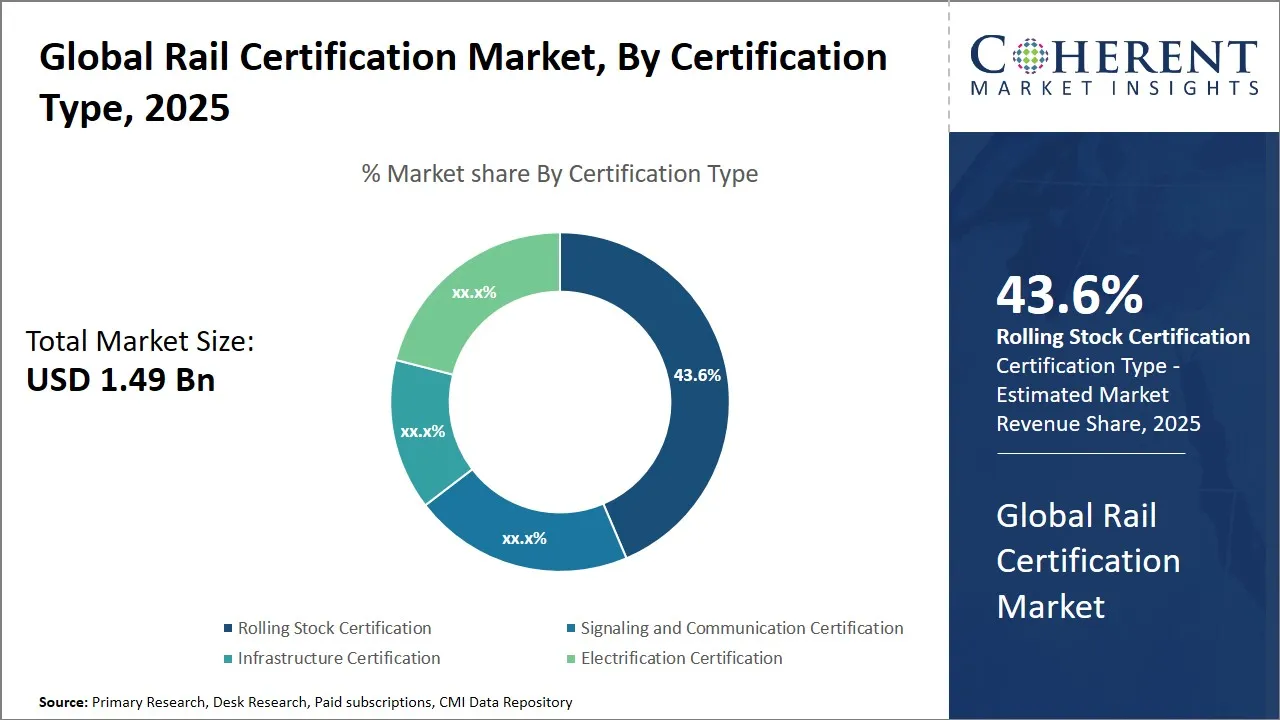
- The Rolling Stock Certification segment leads the market holding an estimated share of 44.6 % in 2026.
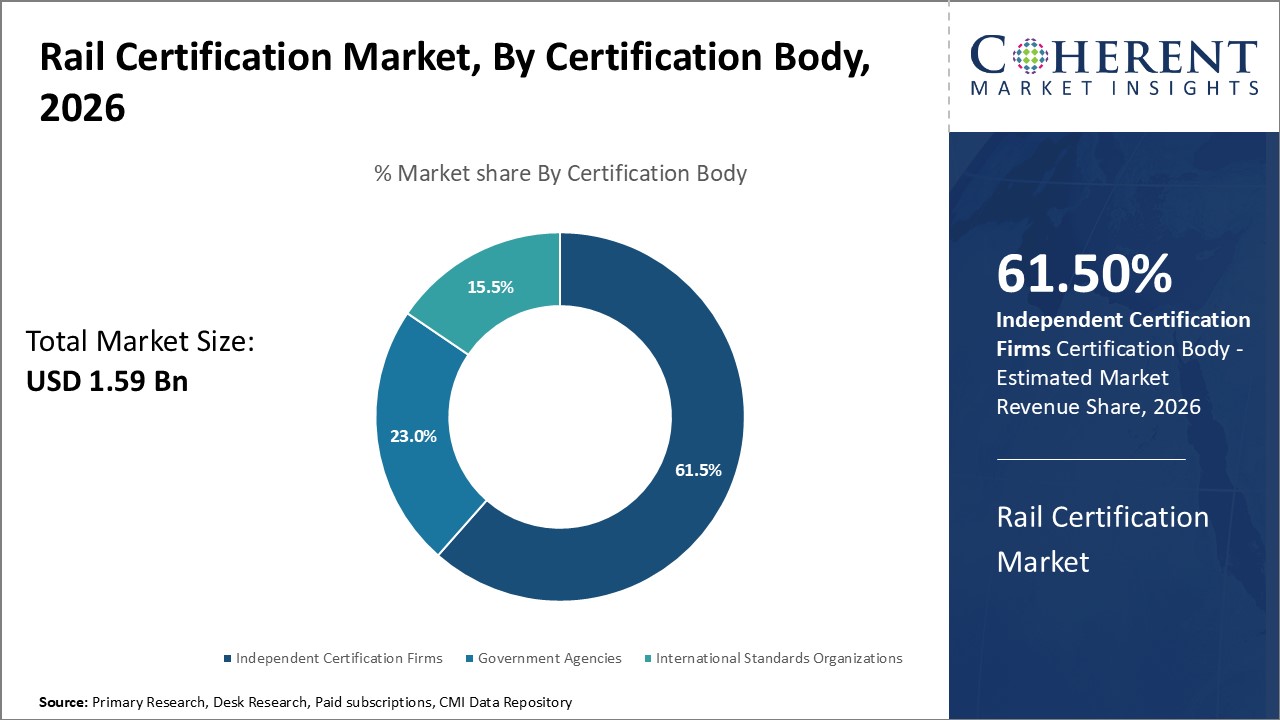
- The Independent Certification Firms segment leads the market holding an estimated share of 61.5 % in 2026.
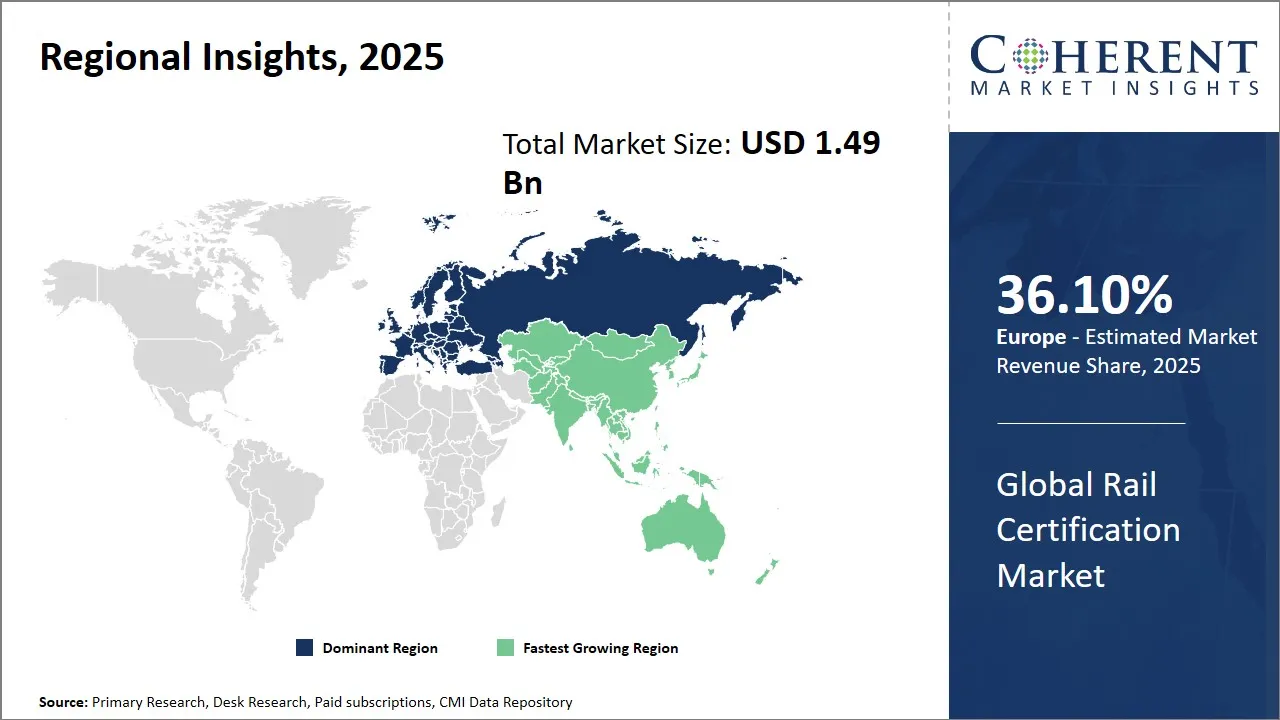
- Europe is estimated to lead the market with a share of 36.1 % in 2026.
- Asia Pacific, holding a share of 24.2 % in 2026, is projected to be the fastest growing region.
Market Overview
The market is seeing the integration of advanced digital technologies such as IoT and AI to streamline inspection and compliance processes. Also, growing environmental concerns and stringent safety regulations are pushing rail operators to opt for comprehensive certification programs. There can also be seen a rising focus on high-speed rail networks and urban transit systems, which creates the need for rigorous certification standards. These factors collectively are fostering innovation and encouraging stakeholders to prioritize certification services, driving the market’s evolution.
Current Events and Its Impact
Current Events | Description and Impact |
Geopolitical and Trade Developments |
|
European Railway Regulatory Shifts |
|
Asia Pacific Railway Expansion |
|
Digital Transformation Initiatives |
|
Sustainability and Net-Zero Goals |
|
Supply Chain Resilience Measures |
|
Cybersecurity Regulations in Rail |
|
Segmental Insights
- Current Industry Events of 2026
- Market Size Estimation
- Regional Breakdown
- Competitive Landscape
- Customer Intelligence
- Segmental Analysis
- Pricing Analysis
- Key Market Drivers, Challenges & Future Trends
- Customized Insights Section
Global Rail Certification Market Insights, by Certification Type – Rolling Stock Certification Leads Due to Enhanced Safety and Technological Innovation Demands
Rolling stock certification segment is expected to hold a share of 44.6% in 2026. Rolling stock, including locomotives, passenger coaches, freight wagons, and other rail vehicles, must adhere to stringent standards to make sure operational reliability and passenger safety. The increasing focus on modernizing rail fleets worldwide, along with the growing adoption of advanced technologies such as IoT integration, predictive maintenance systems, and energy-efficient components, creates need for comprehensive certification processes before deployment.
Governments and regulatory bodies have put in place rigorous certification requirements for rolling stock to prevent accidents, reduce failures, and enhance overall rail service quality. This has added to the need for detailed inspections, testing, and validation of mechanical and electronic systems within rail vehicles. Alstom's Coradia Stream high-speed electric trains, designed for cross-border operations in Italy and the Netherlands, have gone through comprehensive rolling stock certification to meet both countries’ national safety and interoperability
Global Rail Certification Market Insights, by Certification Body – Independent Certification Firms Lead Due to Their Specialized Expertise and Unbiased Evaluation Services
Independent Certification Firms are projected to hold the largest market share of 61.5% in the global rail certification market in 2026. Unlike government agencies or international organizations, independent certifiers offer a flexible, client-focused approach that caters to the diverse needs of rail manufacturers, operators, and infrastructure developers.
A key driver behind the dominance of independent certification bodies is their extensive technical expertise and capability to handle complex certification requirements across multiple domains—rolling stock, signaling, infrastructure, and electrification. These firms often employ multidisciplinary teams with the deep knowledge of evolving industry standards, cutting-edge technologies, and compliance regulations.
Additionally, independent firms generally provide faster turnaround times compared to government agencies, which may be constrained by bureaucratic processes. The agility of independent bodies enables manufacturers and rail operators to expedite product launches, infrastructure upgrades, and rail expansions while maintaining compliance with safety and quality standards.
Another important factor contributing to their market share is the growing trend of outsourcing certification to third-party specialists to avoid conflicts of interest and ensure unbiased validation. Independent firms are perceived as neutral entities, which enhances credibility and trust among stakeholders including regulators, financiers, and end users.
Impact of AI on the Rail Certification Market
AI technologies are increasingly being integrated into rail systems for predictive maintenance, real-time diagnostics, autonomous train operations, and safety monitoring. This evolution necessitates new certification protocols to ensure that AI-based subsystems meet strict reliability, safety, and interoperability standards. Certification bodies must now evaluate not just hardware, but also AI algorithms, data handling processes, and machine learning models used in mission-critical rail applications. For instance, AI-driven condition monitoring systems that predict axle failures or brake wear need to be rigorously tested and certified to comply with safety assurance levels set by regulators like the European Union Agency for Railways (ERA) or ISO/TS standards.
Deutsche Bahn has collaborated with Siemens Mobility and NVIDIA, where AI is used in autonomous train operations and computer vision for obstacle detection. The project, part of the "Digital Rail Germany" initiative, has prompted regulators and independent certification firms to explore new frameworks for validating AI behavior in dynamic and high-risk environments.
Regional Insights
Europe Rail Certification Market Analysis and Trends
Europe, holding an estimated share of 36.1% in 2026, dominates the global rail certification market, driven by a well-established rail infrastructure and comprehensive regulatory frameworks that emphasize safety, interoperability, and environmental compliance. European governments strongly support the modernization and expansion of their rail networks through stringent certification requirements, which in turn fuel demand for advanced certification services. The presence of major industry players such as TÜV SÜD, SGS, and Bureau Veritas, all of which have deep expertise and established certification bodies within the region, reinforces Europe's leading position.
Additionally, pan-European initiatives like the European Union Agency for Railways (ERA) promote harmonized rail standards, further consolidating Europe's market dominance. The mature ecosystem, with a dense network of manufacturers, operators, and maintenance providers, ensures continuous demand for certification to meet evolving safety and technical standards.
Asia Pacific Rail Certification Market Analysis and Trends
Asia Pacific region, holding an estimated share of 24.2% in 2026, exhibits the fastest growth in the global rail certification market due to rapid urbanization, large-scale investments in rail transport, and aggressive government policies aimed at expanding high-speed rail networks and urban transit systems. Countries such as China, India, and Japan are expanding their rail capabilities extensively, requiring robust certification services to ensure safety, quality, and regulatory compliance in these highly complex projects.
Industry presence is expanding with global and regional certification providers including Intertek, Kiwa, and Bureau Veritas actively increasing their footprint to serve rising demand in this region. Favorable trade dynamics, including export opportunities for rail technology and components within Asia, also necessitate standardized certification. Public-private partnerships and government initiatives focused on sustainable transportation further stimulate the market's fast growth in Asia Pacific.
Global Rail Certification Market Outlook for Key Countries
China Rail Certification Market Analysis and Trends
China is marked by its ambitious development of one of the world’s largest high-speed rail networks. The government enforces strict certification and compliance protocols to ensure safety and interoperability as this infrastructure expands. Chinese firms like CRRC Corporation collaborate with international certification bodies to meet global standards, while foreign companies establish local partnerships to tap into this booming sector. The scale and pace of rail development, combined with massive exports of rail-related technology, drive continuous demand for certification services.
Germany Rail Certification Market Analysis and Trends
Germany continues to lead through its advanced engineering base and longstanding rail industry presence. With companies like Deutsche Bahn and Siemens Mobility at its core, Germany places significant emphasis on certifications that meet rigorous technical and safety standards. Certification providers such as TÜV Rheinland and SGS play key roles in supporting innovation within rail technology, ensuring compliance with both national and EU-wide regulations.
India Rail Certification Market Analysis and Trends
India is evolving rapidly as it undertakes substantial expansions in urban transit and high-speed rail projects. The government’s initiatives such as the Dedicated Freight Corridor and National Rail Plan promote modernization that relies heavily on certified safety protocols and quality assurance systems. Indian Railways, one of the world’s largest rail networks, increasingly partners with global certification companies to enhance standards.
U.K. Rail Certification Market Analysis and Trends
The U.K. benefits from a mature regulatory environment shaped by bodies like the Office of Rail and Road (ORR). The country’s rail certification needs are largely driven by modernization programs like HS2 and efforts to upgrade aging infrastructure. Companies such as Lloyd’s Register and Bureau Veritas play significant roles in certifying new technologies and infrastructure projects. Brexit introduced new complexities in regulatory alignment with the EU, which has elevated the demand for specialized certification expertise to maintain market access and compliance.
Japan Rail Certification Market Analysis and Trends
Japan rail certification market is influenced by its world-renowned safety standards and extensive high-speed rail (Shinkansen) system. Japanese railway operators and manufacturers strictly adhere to certification processes that emphasize precision and reliability. Certification firms such as JQA (Japan Quality Assurance Organization) collaborate closely with government bodies to ensure compliance with stringent national and international standards. The country’s continual innovation in rail technologies, including magnetic levitation trains, sustains strong demand for specialized certification services.
Market Players, Key Developments, and Competitive Intelligence
Key Developments
- In January 2025, Rail Vision Ltd., a technology company at the forefront of revolutionizing railway safety and the data-related market, announced the signing of a binding Memorandum of Understanding (MOU) with Sujan Ventures, a division of the esteemed Sujan Group, a premier technology and components supplier to the Indian rail industry. Indian Railways, which operates India's national railway system, boasts one of the largest rail networks in the world, with approximately 15,000 locomotives.
- In January 2025, Rail Vision Ltd. has received a purchase order for its MainLine product from one of the leading Central America freight operators. This purchase order will support a proof of concept (POC) aimed at demonstrating the MainLine’s advanced capabilities in enhancing rail safety and operational efficiency. The freight operator operates a vast fleet of locomotives across extensive rail networks.
- In September 2024, RailPulse, formed by a coalition of rail industry leaders, announced the launch of its new technology infrastructure that provides near real-time data and insights across the North American freight railcar fleet. The platform leverages GPS and other telematics technologies to monitor the location, condition, and health of railcars, aiming to enhance safety, efficiency and visibility for rail shippers, railroads and railcar owners.
- In September 2024, BNSF Railway, one of North America’s leading transportation companies, announced the launch of its new shortline program, Shortline Select. The Class I railroad is partnering with Genesee & Wyoming’s Alabama & Gulf Coast Railway (AGR) as the first shortline railroad to participate. The program combines the benefit of shortline customized service with BNSF’s vast network reach, which spans 32,500 miles, 28 states and three Canadian provinces.
Top Strategies Followed by Rail Certification Market Players
- Established market leaders prioritize heavy investments in research and development (R&D) to drive innovation, aiming to create high-performance and technologically advanced certification solutions that align with evolving rail industry standards
- TÜV SÜD has significantly invested in its Rail R&D Center in Görlitz, Germany, focusing on advanced digital simulation, predictive diagnostics, and AI-integrated certification tools
- Mid-level players in the rail certification market adopt a different strategic approach, focusing primarily on providing cost-effective yet reliable certification services that appeal to price-sensitive segments within the rail industry
- Applus+ has strategically expanded into India and Southeast Asia, offering modular and scalable TIC services for rolling stock and signaling certification. By adapting services to local rail standards and pricing structures, Applus+ is able to serve public-sector clients with limited budgets while meeting international compliance norms
- Small-scale players within the rail certification sector carve out sustainable niches by focusing on specialized certification features or innovative, tailor-made products that address unique client requirements
- Certifer has carved a niche by specializing in urban tram and metro system certification, particularly in complex, multi-jurisdictional environments like Morocco, Vietnam, and Qatar
Market Report Scope
Rail Certification Market Report Coverage
| Report Coverage | Details | ||
|---|---|---|---|
| Base Year: | 2025 | Market Size in 2026: | USD 1.59 Bn |
| Historical Data for: | 2020 To 2024 | Forecast Period: | 2026 To 2033 |
| Forecast Period 2026 to 2033 CAGR: | 6.7% | 2033 Value Projection: | USD 2.50 Bn |
| Geographies covered: |
| ||
| Segments covered: |
| ||
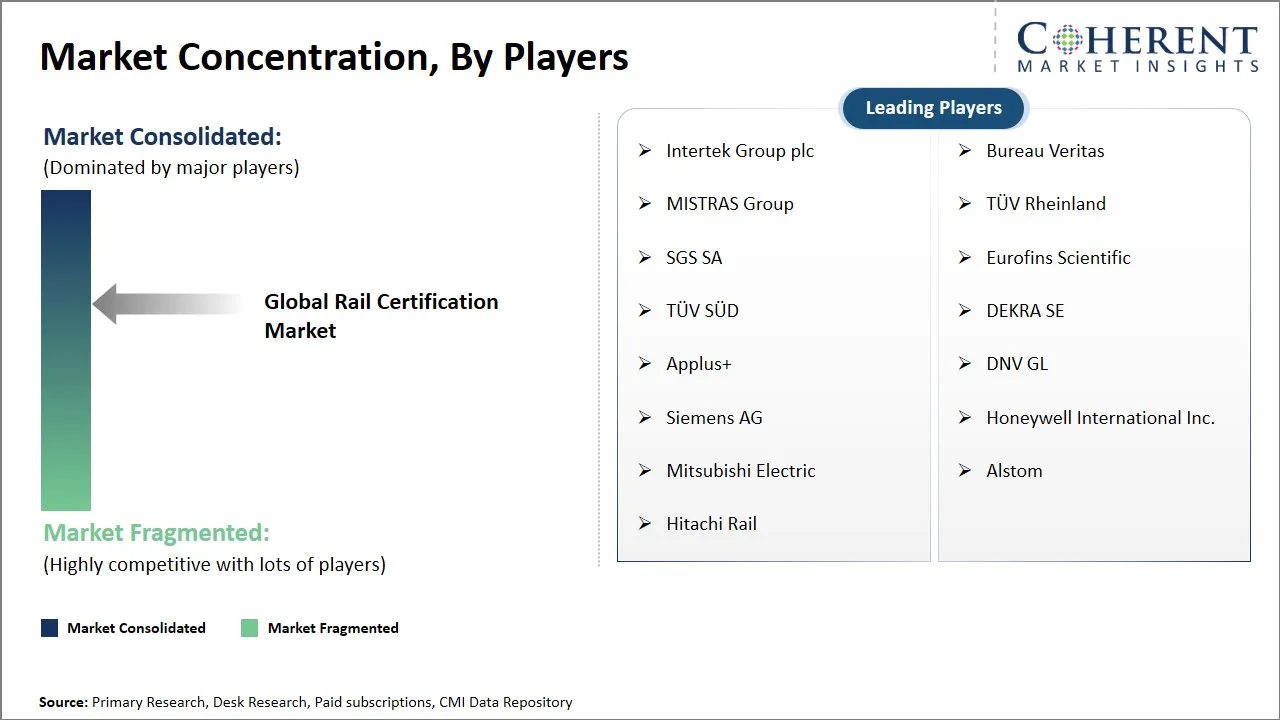
| Companies covered: | Intertek Group plc, Bureau Veritas, MISTRAS Group, TÜV Rheinland, SGS SA, Eurofins Scientific, TÜV SÜD, DEKRA SE, Applus+, DNV GL, Siemens AG, Honeywell International Inc., Mitsubishi Electric, Alstom, and Hitachi Rail | ||
| Growth Drivers: |
| ||
| Restraints & Challenges: |
| ||
Market Dynamics
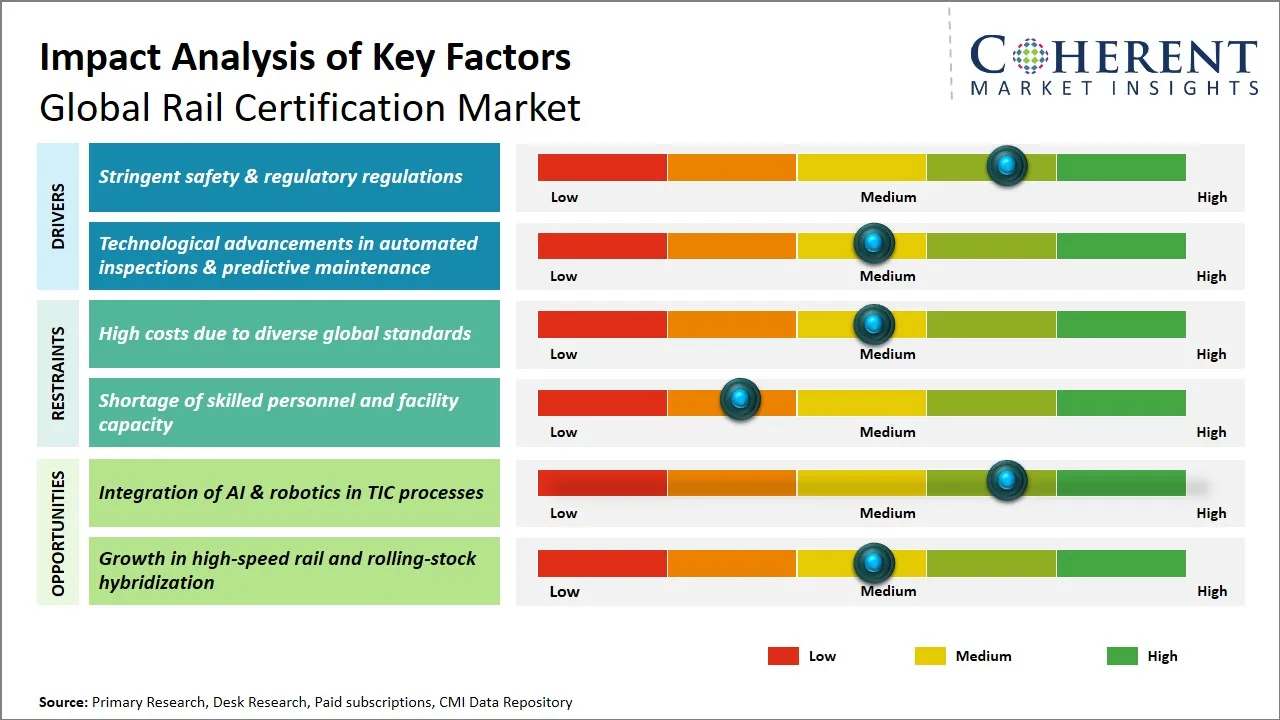
Global Rail Certification Market Driver – Stringent Safety & Regulatory Regulations
Governments and international regulatory bodies have implemented rigorous standards to mitigate risks associated with rail operations, including passenger safety, environmental concerns, and infrastructure reliability. These stringent regulations require rail operators, manufacturers, and service providers to adhere to comprehensive certification processes that validate the safety, quality, and performance of rail equipment and systems. For instance, the EU Fourth Railway Package, which became fully applicable in 2020, mandates standardized safety certifications and interoperability assessments across all EU member states. This regulation requires all new rolling stock and infrastructure projects to undergo harmonized third-party certifications through approved bodies (NoBos, DeBos, and AsBos).
Moreover, the growing adoption of advanced technologies, such as high-speed trains and automated signaling systems, further intensifies the need for thorough certification to ensure interoperability and safety across varying environments.
Global Rail Certification Market Opportunity – Integration of AI & Robotics in TIC Processes
As rail networks continue to expand and evolve, the complexity and volume of safety and compliance assessments increase correspondingly. Incorporating AI-driven analytics enables more precise and faster data processing, which enhances the accuracy and reliability of defect detection and risk assessment in rail components and infrastructure. Robotics, on the other hand, facilitates automated inspections in challenging or hazardous environments such as tunnels, bridges, and remote tracks, minimizing human error and ensuring consistency across large-scale operations. For instance, DEKRA is deploying AI-enabled drones and robots for inspecting hard-to-reach or hazardous rail components such as overhead lines, bridges, and undercarriages.
Furthermore, AI-powered predictive maintenance models allow for the proactive identification of potential failures before they manifest, thereby improving overall rail safety and operational efficiency. The convergence of AI and robotics within TIC fosters the development of smarter certification protocols tailored to contemporary rail technologies, including high-speed trains and advanced signaling systems.
Analyst Opinion (Expert Opinion)
- The integration of AI-driven systems for condition monitoring, fault prediction, and autonomous operations is pushing certification bodies to evolve beyond traditional safety checks. Regulatory frameworks are being retooled to validate not just physical hardware but the decision-making algorithms themselves.
- As the rail sector pivots toward zero-emission solutions like hydrogen fuel cells and advanced battery systems, existing certification models are being stretched. There's a growing need for specialized testing standards covering thermal safety, refueling infrastructure, and energy management systems.
- With the digitalization of rail signaling, control, and communication systems, cybersecurity has become a top priority. New mandates like Europe’s NIS2 Directive are triggering demand for certification of digital safety protocols, secure software updates, and penetration-tested control networks.
Speak to the analyst
Want personalized insights?
Take the findings above to one of our principal consultants, or have the report rebuilt around the segments, geographies and competitors you actually track.
Market Segmentation
- Certification Type Insights (Revenue, USD Bn, 2021 - 2033)
- Rolling Stock Certification
- Signaling and Communication Certification
- Infrastructure Certification
- Electrification Certification
- Certification Body Insights (Revenue, USD Bn, 2021 - 2033)
- Independent Certification Firms
- Government Agencies
- International Standards Organizations
- Regional Insights (Revenue, USD Bn, 2021 - 2033)
- North America
- U.S.
- Canada
- Latin America
- Brazil
- Argentina
- Mexico
- Rest of Latin America
- Europe
- Germany
- U.K.
- Spain
- France
- Italy
- Russia
- Rest of Europe
- Asia Pacific
- China
- India
- Japan
- Australia
- South Korea
- ASEAN
- Rest of Asia Pacific
- Middle East
- GCC Countries
- Israel
- Rest of Middle East
- Africa
- South Africa
- North Africa
- Central Africa
- North America
- Key Players Insights
- Intertek Group plc
- Bureau Veritas
- MISTRAS Group
- TUV Rheinland
- SGS SA
- Eurofins Scientific
- TUV SUD
- DEKRA SE
- Applus+
- DNV GL
- Siemens AG
- Honeywell International Inc.
- Mitsubishi Electric
- Alstom
- Hitachi Rail
Sources
Primary Research Interviews
Stakeholders
- National Railway Operators and Authorities
- Rolling Stock Manufacturers
- Certification and Testing Bodies
- Railway Infrastructure Developers and Civil Engineering Contractors
- Technology Providers for AI, IoT & Autonomous Rail Systems
- Regulatory Experts and Government Transport Officials
- Environmental Compliance Auditors and Sustainability Officers
Databases
- International Railway Statistics Bureau (IRSB)
- EU Rail Certification Registry (EU-RCR)
- World Urban Transit Observatory
- American Transportation Certification Archive (ATCA)
Magazines
- Railway Gazette International
- Global Rail Review
- Train Technology & Innovation Magazine
- Automated Transport Systems Quarterly
- Infrastructure Today
Journals
- Journal of Rail and Rapid Transit Engineering
- International Journal of Transport and Infrastructure Engineering
- Railway Technology Research Review
- Transportation Safety and Certification Journal
- Journal of Advanced Railway Systems
Newspapers
- Rail News Network (RNN)
- The Infrastructure Post (UK)
- Asia Rail Times
- Transport Daily (Europe)
- The Economic Times (India)
Associations
- International Union of Railways (UIC)
- European Union Agency for Railways (ERA)
- Railway Industry Association (RIA – UK)
- Asia Rail Industry Consortium (ARIC)
- National Institute of Railway Technology (NIRT – India)
- American Railway Engineering and Maintenance-of-Way Association (AREMA)
Public Domain Sources
- U.S. Department of Transportation (DOT)
- EUROSTAT
- United Nations Economic Commission for Europe (UNECE)
- World Bank
- ResearchGate
- OECD Transport Statistics
Proprietary Elements
- CMI Data Analytics Tool, Proprietary CMI Existing Repository of information for last 8 years
Get access to 250+ pages report
Every segment, forecast, competitor profile and data table behind the analysis above — available for instant download.
- ESOMAR Member
- ISO 9001:2015 Certified
- D-U-N-S Registered
- GDPR & CCPA Compliant
Missing comfort of reading report in your local language? Find your preferred language:
Transform your Strategy with Exclusive Trending Reports
Frequently Asked Questions
The global rail certification market is estimated to be valued at USD 1.59 billion in 2026 and is expected to reach USD 2.50 billion by 2033.
The CAGR of global rail certification market is projected to be 6.7% from 2026 to 2033.
Stringent safety & regulatory regulations and technological advancements in automated inspections & predictive maintenance are the major factors driving the growth of the global rail certification market.
High costs due to diverse global standards and shortage of skilled personnel and facility capacity are the major factors hampering the growth of the global rail certification market.
In terms of Certification Type, Rolling Stock Certification segment is estimated to dominate the market revenue share in 2026.
Intertek Group plc, Bureau Veritas, MISTRAS Group, TÜV Rheinland, SGS SA, Eurofins Scientific, TÜV SÜD, DEKRA SE, Applus+, DNV GL, Siemens AG, Honeywell International Inc., Mitsubishi Electric, Alstom, and Hitachi Rail are the major players.
Emerging technologies like AI, IoT, and hydrogen propulsion require new certification protocols to ensure safety, reliability, and regulatory compliance, significantly expanding the scope of testing and inspection services.