

Global Residential Greenhouse Market Size and Forecast – 2026-2033
The Global Residential Greenhouse Market is estimated to be valued at USD 7.42 Bn in 2026 and is expected to reach USD 12.55 Bn by 2033, exhibiting a compound annual growth rate (CAGR) of 7.8% from 2026 to 2033.
Key Takeaways of the Residential Greenhouse Market
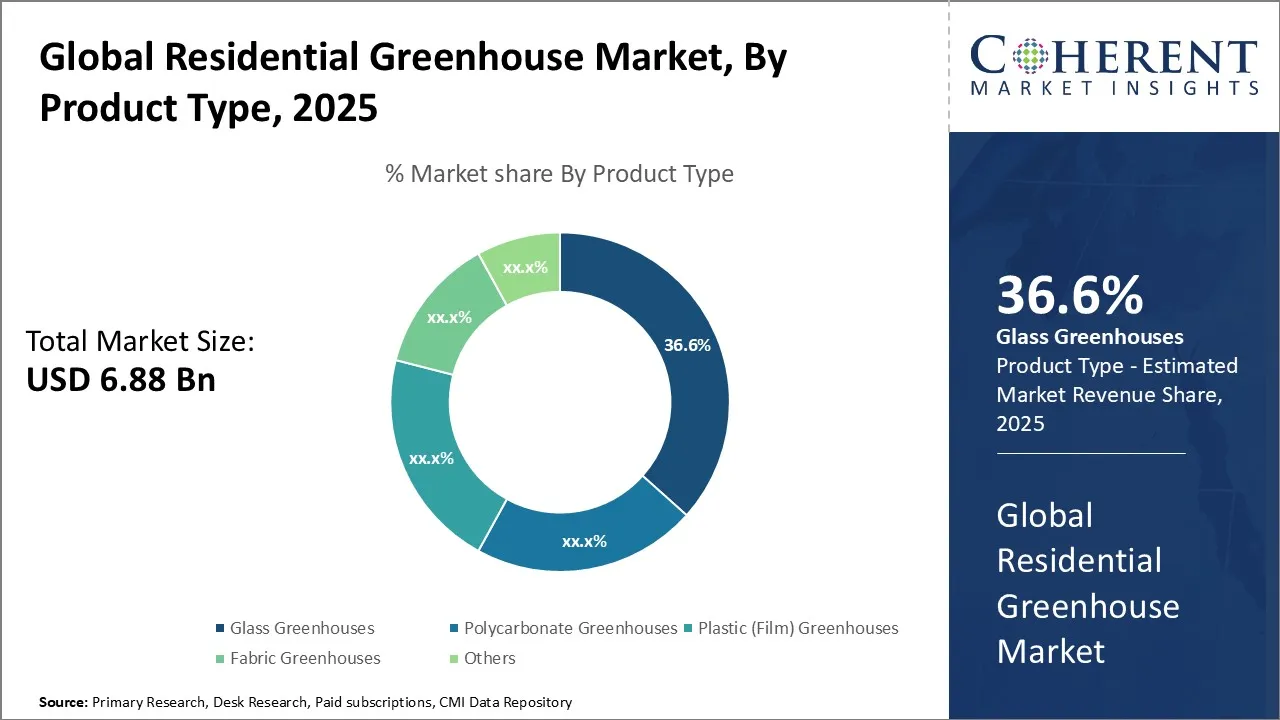
- The glass greenhouses segment is expected to hold 37.6% share of the residential greenhouse market in 2026, due to their superior clarity and durability.
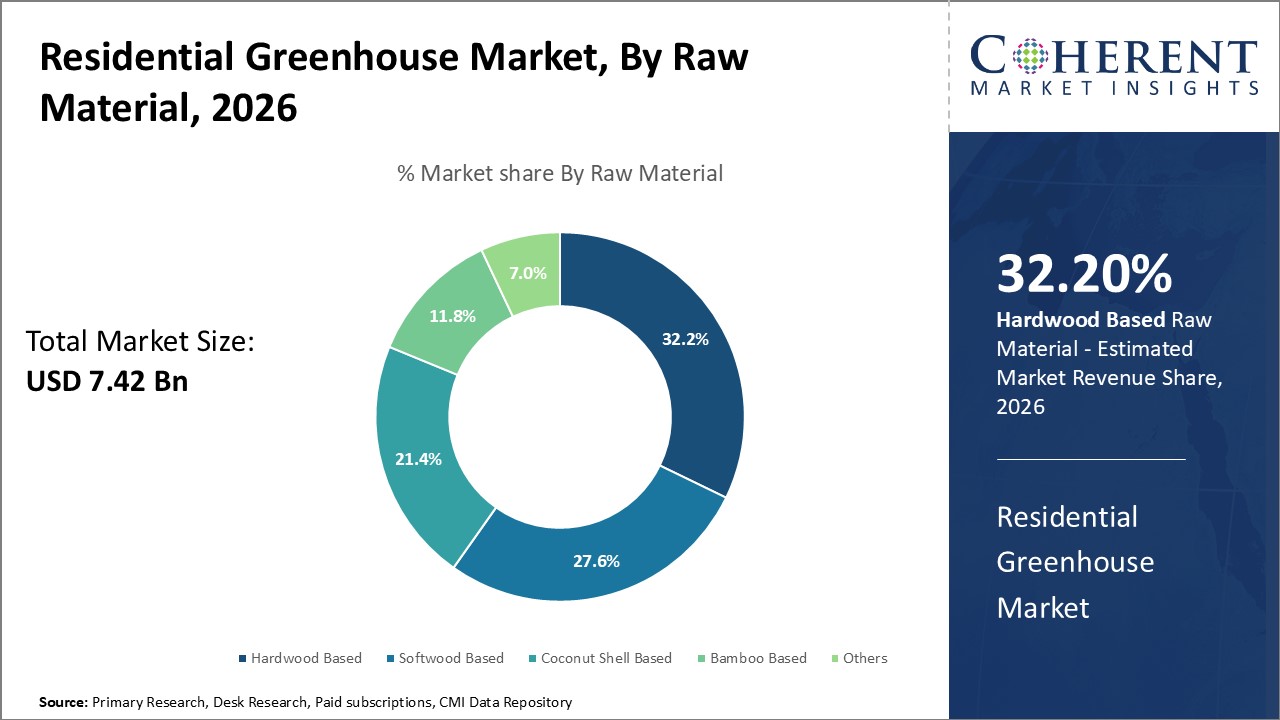
- The hardwood based segment is expected to account for 32.2% of the market share in 2026, driven by their exceptional physical properties and environmental benefits.
- The freestanding greenhouses segment is expected to hold 36.1% of the market share in 2026, driven by the flexibility and spatial freedom they provide homeowners.
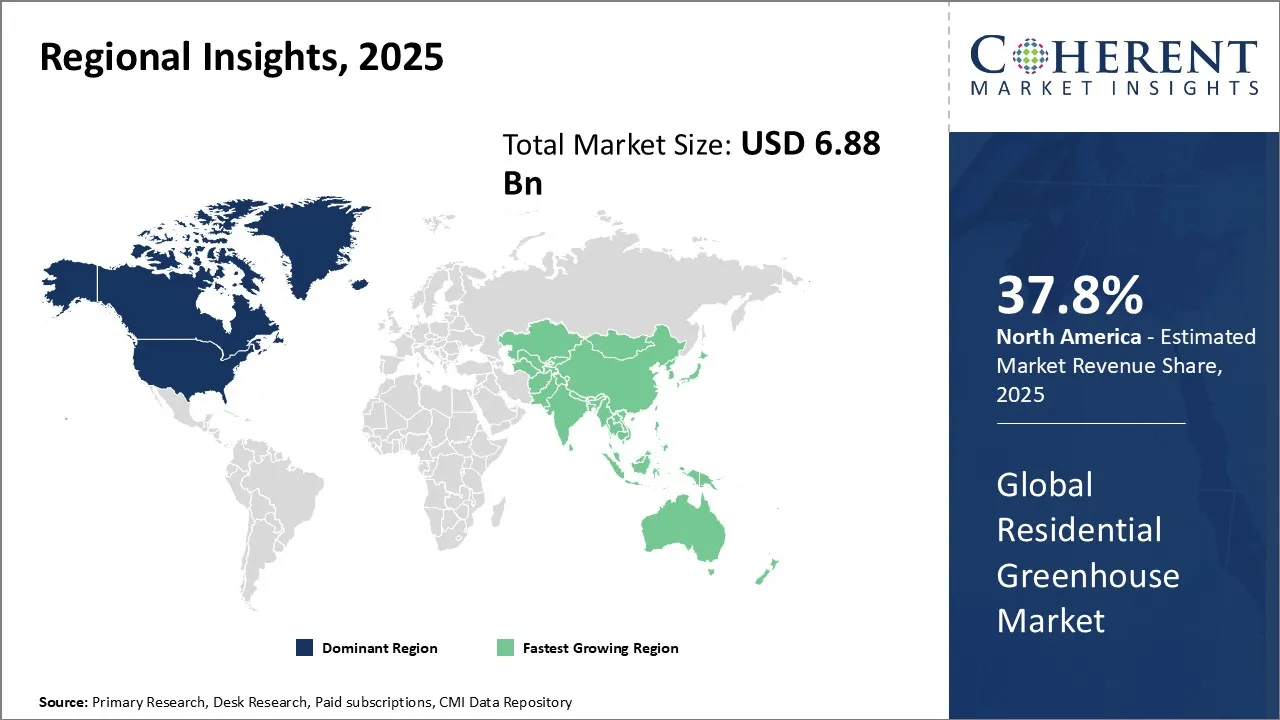
- North America is set to lead the global residential greenhouse market in 2026 with a 37. 8% share, driven by the increasing consumer demand for sustainable living, advanced greenhouse technologies, and a growing interest in home gardening. Asia Pacific, with a 11.5% share in 2026, will be the fastest-growing region, fueled by rapid urbanization, increasing disposable incomes, and a rising trend of urban farming and home gardening, as well as government initiatives promoting sustainable living and self-sufficiency in food production.
Market Overview
Market trends indicate a growing adoption of technologically advanced residential greenhouses featuring automated climate control, energy-efficient materials, and smart monitoring systems. Consumers are increasingly investing in these greenhouses, including smart indoor gardening systems and hydroponics, to ensure year-round crop production despite environmental challenges. Additionally, the integration of IoT and AI in greenhouse management is transforming traditional gardening into a more efficient, data-driven activity, enhancing productivity and user convenience. This shift towards innovation, coupled with environmental consciousness, continues to shape the residential greenhouse market’s evolution.
Current Events and Its Impact
Current Events | Description and its impact |
Surge in Urban Gardening |
|
Technological Advancements in Greenhouse Systems |
|
Segmental Insights
- Current Industry Events of 2026
- Market Size Estimation
- Regional Breakdown
- Competitive Landscape
- Customer Intelligence
- Segmental Analysis
- Pricing Analysis
- Key Market Drivers, Challenges & Future Trends
- Customized Insights Section
Residential Greenhouse Market Insights, By Product Type - The Glass Greenhouses Segment Leads the Market Due to Glass Transparency, Allowing Maximum Sunlight for Enhanced Plant Growth, Coupled with Improved Energy Efficiency and Durability
Glass greenhouses segment is expected to contribute 37.6% share of the residential greenhouse market in 2026, primarily because they offer unmatched clarity and longevity compared to other product types. The transparency of glass allows maximum sunlight penetration, which is critical for promoting photosynthesis and plant growth. This superior light transmission creates an optimal environment for gardeners seeking to cultivate a variety of plants year-round, enhancing productivity and plant health. Moreover, glass’s resistance to yellowing and degradation over time, unlike plastic films or polycarbonate, ensures that the greenhouse maintains its efficiency and appearance for many years.
Residential Greenhouse Market Insights, By Raw Material - The Hardwood-based Greenhouses Segment Dominates Due to the Natural Strength and Durability of Hardwood, which Offers Superior Structural Support
The hardwood based segment is expected to account for a 32.2% share of the market in 2026, driven by its exceptional physical properties and the environmental benefits it offers as a raw material. Hardwoods, such as oak, teak, and cedar, are known for their density and durability, which translate into robust greenhouse frames capable of withstanding variable climatic conditions. Their natural resistance to pests, decay, and moisture reduces the need for chemical treatments, an important consideration for residential customers seeking sustainable and low-maintenance solutions.
Residential Greenhouse Market Insights, By Structure - The Freestanding Greenhouses segment Dominates due to their Flexibility in Installation, Offering Easy Mobility and Customization
The freestanding greenhouses segment is expected to hold a 36.1% share of the market in 2026, driven by their flexibility and the spatial freedom they provide to homeowners. Unlike attached greenhouses, freestanding units are independent structures that can be placed anywhere in the garden or yard, freeing users from constraints related to existing building layouts or orientations. This independence allows for optimal positioning based on sun exposure, wind patterns, and available space, which ultimately enhances plant growth conditions.
Regional Insights
North America Residential Greenhouse Market Analysis and Trends
The North America region is projected to lead the market with a 37.8% share in 2026 driven by high demand for sustainable living, technological advancements, and urban gardening. The U.S. and Canada have seen growth in greenhouse adoption due to increased interest in home-grown organic produce and self-sufficiency.
Government incentives for energy efficiency and sustainable farming, along with companies like Husqvarna, Palram Industries, and The Gardener’s Supply Company, support the market. Urban farming and community gardening programs in cities like New York and Toronto further boost adoption. Advanced greenhouse technologies and a strong retail network ensure widespread accessibility.
Asia Pacific Residential Greenhouse Market Analysis and Trends
The Asia Pacific region is expected to exhibit the fastest growth in the market contributing 11.5% share in 2026, propelled by rapid urbanization, rising disposable incomes, and increased interest in sustainable living among the expanding middle class. Key countries, such as China, Japan, India, and South Korea, are witnessing heightened demand driven by changing lifestyles and government measures supporting agricultural modernization and food security.
For example, China’s recent regulations emphasize green technologies and urban farming, stimulating residential greenhouse adoption. The burgeoning presence of local and international manufacturers, like Xiaomi’s smart gardening solutions and Japan’s Sekisui Chemical Co., enhances market offerings. Trade dynamics, characterized by growing regional manufacturing hubs and exports, further accelerate accessibility to advanced greenhouse technologies across the region.
Global Residential Greenhouse Market Outlook for Key Countries
U.S. Residential Greenhouse Market Trends
The U.S. residential greenhouse market benefits from a mature gardening culture and strong environmental consciousness among consumers. Government programs that encourage home-based food production and sustainability initiatives boost demand. Prominent companies such as The Greenhouse People and Rion reflect a diversified product range from portable greenhouses to elaborate setups, catering to different consumer segments. The industry thrives on technological integration, including smart greenhouse features that appeal to tech-savvy homeowners.
Germany Residential Greenhouse Market Trends
Germany residential greenhouse market due to a combination of stringent environmental policies, high homeowner interest in sustainable living, and strong manufacturing capabilities. German companies like Palram Europe and Vitavia focus on delivering high-quality, energy-efficient greenhouse solutions. The country’s advanced infrastructure supports broad distribution and export, while research institutions collaborate with industry leaders to develop innovative materials and automation technologies that keep the market competitive.
China Residential Greenhouse Market Trends
China residential greenhouse market displays significant momentum, driven by government emphasis on urban agriculture and food safety. Government programs incentivize innovative urban farming solutions, including residential greenhouses adapted for compact urban spaces. Key players, such as Xiaomi, have introduced smart gardening products that integrate IoT capabilities, attracting younger consumers. The expanding middle-class demand and rapid infrastructure development further underpin market growth, as does the increasing local production capacity that lowers costs and improves availability.
Japan Residential Greenhouse Market Trends
Japan residential greenhouse market is marked by its focus on technological sophistication and space-efficient designs, responding to limited urban space. Government support for smart agriculture and sustainability promotes the adoption of innovative products. Companies like Sekisui Chemical Co. and Fujitsu are prominent for integrating automation and data analytics into greenhouse solutions, catering to a consumer base that prioritizes convenience and quality. The country’s well-developed retail and e-commerce channels facilitate product accessibility nationwide.
Macro and Micro Economic Factors Impacting the Residential Greenhouse Market
Macro-Economic Factors
- Economic Growth & Disposable Income: Rising incomes and economic growth, especially in North America and Asia Pacific, boost consumer spending on home gardening and greenhouse solutions.
- Urbanization: Increasing urban populations drive the demand for compact, space-efficient greenhouse models, supporting market expansion in cities.
- Government Policies & Incentives: Subsidies, grants, and favorable zoning laws encourage greenhouse adoption, while tariffs on materials can impact costs.
- Technological Advancements: Innovations in automation, climate control, and energy-efficient materials enhance product appeal and market growth.
Micro-Economic Factors
- Initial Investment & Operational Costs: High setup costs for advanced greenhouses and ongoing expenses for energy and maintenance can be barriers for consumers.
- Consumer Preferences: Shifts toward organic produce and locally grown food influence purchasing decisions and product development.
- Labor Market: Rising wages for skilled labor in installation and maintenance affect pricing and profit margins.
- Competition: Alternatives like vertical farming and traditional gardening methods present competition, influencing market strategies.
Market Players, Key Development, and Competitive Intelligence
Company Insights
- Stuppy Greenhouse, a family-owned company with over 150 years of experience, offers a comprehensive range of greenhouse solutions tailored for residential and educational markets. its offerings include customizable greenhouse structures, advanced climate control systems, and specialized growing technologies. These solutions are designed to meet the unique needs of home gardeners, educational institutions, and small-scale commercial growers.
- Gothic Arch Greenhouses is a prominent player in the residential greenhouse market, offering a wide range of high-quality, durable greenhouses designed for home gardeners and hobbyists. Its greenhouses feature galvanized steel frames and polycarbonate panels, which provide excellent insulation, UV protection, and durability. The company specializes in custom-built greenhouses, allowing homeowners to tailor their structures according to specific needs, such as size, style, and layout.
Top Strategies Followed by Global Residential Greenhouse Market Players
- Established players typically lead the market by investing heavily in research and development (R&D) to innovate high-performance, energy-efficient, and user-friendly greenhouse products. This continuous innovation cycle enables them to introduce advanced features such as climate control systems, automation, and sustainable materials, which meet evolving consumer demands.
- For example, companies like Vitavia and Husqvarna (Gardena brand) frequently form strategic partnerships with original equipment manufacturers (OEMs) and other major industry players to enhance their product offerings and strengthen supply chains. For example, Husqvarna’s collaboration with technology providers enables them to incorporate advanced automation features, such as automated wagering systems, into their greenhouse products.
- Mid-level players occupy a distinctive position in the global residential greenhouse market by focusing primarily on cost-effective solutions that strike a balance between quality and affordability. Their target audience is largely composed of price-sensitive consumers who seek reliable, functional products without premium pricing. To compete effectively, mid-level companies often leverage collaborations with technology providers or manufacturing partners to improve production efficiencies and incorporate relevant innovations that enhance product appeal.
- For example, Rion Greenhouses, has partnered with several local distributors in North America and Europe to offer efficient and affordable solutions. They target regional markets like Canada and France, where competitive pressures from global giants like Husqvarna are less intense.
- Small-scale players in the residential greenhouse market carve out niche positions by specializing in unique features or pioneering innovative product designs that distinguish them from larger competitors. These companies often adopt cutting-edge technologies such as smart sensors, IoT integration, and modular designs to develop tailored solutions that appeal to specific consumer segments, such as hobbyists or eco-conscious gardeners.
- For example, UrbanGreens is a small-scale player specializing in eco-friendly, modular greenhouses that use recycled materials and integrate smart sensors for monitoring temperature and humidity levels. This company appeals to eco-conscious gardeners and hobbyists who prioritize sustainability and innovation in their gardening practices.
Market Report Scope
Residential Greenhouse Market Report Coverage
| Report Coverage | Details | ||
|---|---|---|---|
| Base Year: | 2025 | Market Size in 2026: | USD 7.42 Bn |
| Historical Data for: | 2020 To 2024 | Forecast Period: | 2026 To 2033 |
| Forecast Period 2026 to 2033 CAGR: | 7.8% | 2033 Value Projection: | USD 12.55 Bn |
| Geographies covered: |
| ||
| Segments covered: |
| ||
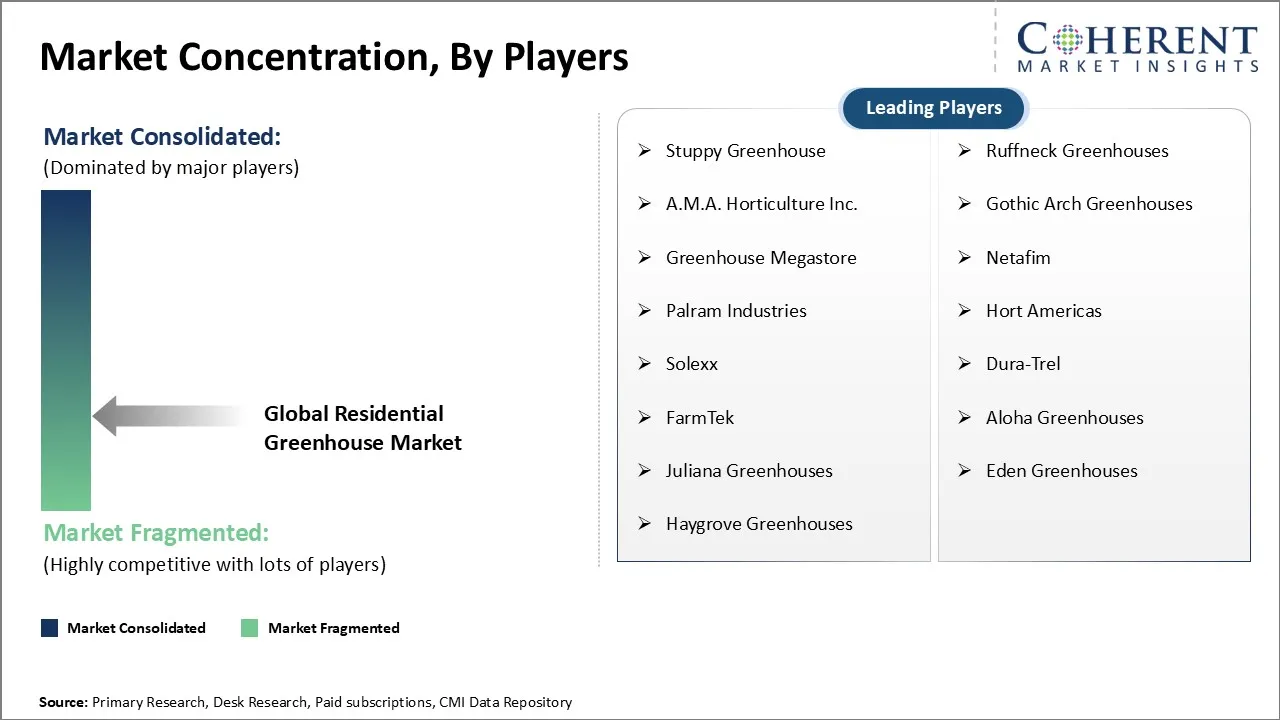
| Companies covered: | Stuppy Greenhouse, Ruffneck Greenhouses, A.M.A. Horticulture Inc., Gothic Arch Greenhouses, Greenhouse Megastore, Netafim, Palram Industries, Hort Americas, Solexx, Dura-Trel, FarmTek, Aloha Greenhouses, Juliana Greenhouses, Eden Greenhouses, and Haygrove Greenhouses | ||
| Growth Drivers: |
| ||
| Restraints & Challenges: |
| ||
Residential Greenhouse Market Dynamics
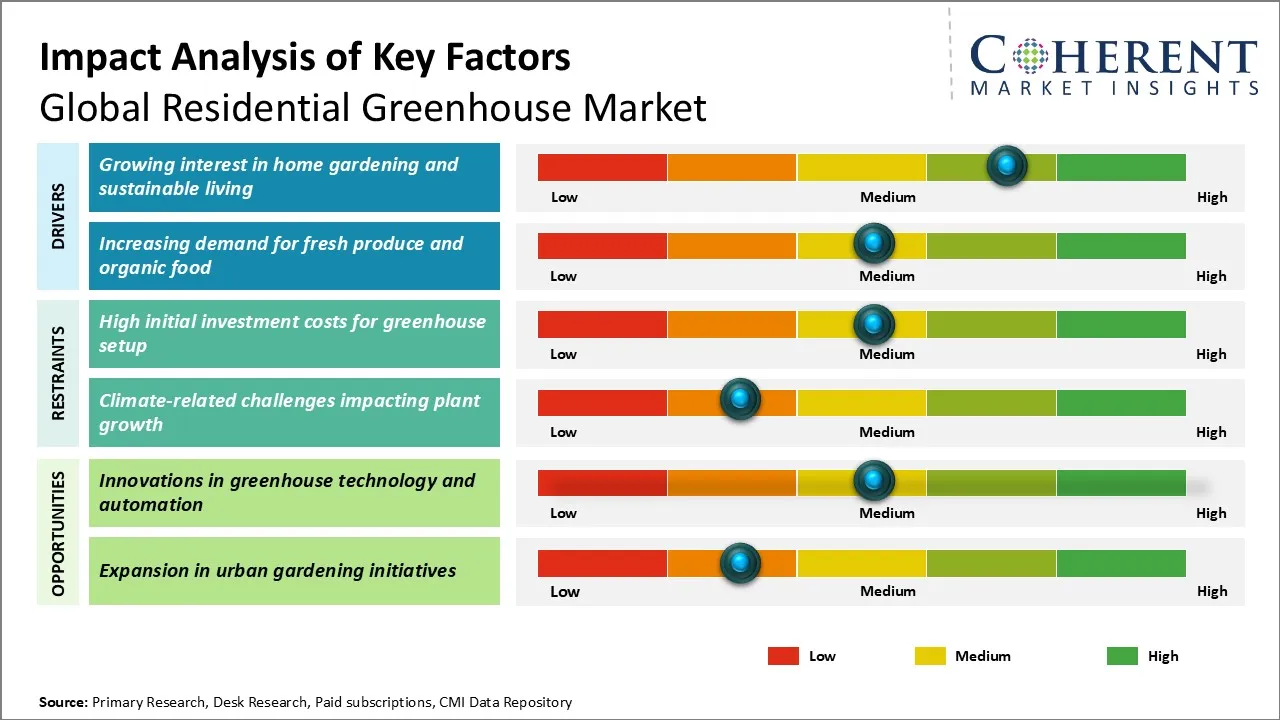
Residential Greenhouse Market Driver - Growing Interest in Home Gardening and Sustainable Living
The increasing inclination towards home gardening and sustainable living has emerged as a significant driver for the residential greenhouse market. As more individuals seek to cultivate their own fresh produce, herbs, and flowers within the comfort of their homes, residential greenhouses offer a controlled environment that extends growing seasons and enhances plant health. This trend is fueled by a growing awareness of environmental issues, the desire to reduce carbon footprints, and the appeal of self-sufficiency in food production.
For instance, companies like Palram Industries and The Gardener’s Supply Company have introduced a variety of greenhouse kits that cater to the rising demand for home gardening solutions. In North America, urban gardening programs in cities like New York and Los Angeles have witnessed a surge in greenhouse adoption, driven by both sustainability concerns and the desire to have access to fresh, homegrown produce.
Residential Greenhouse Market Opportunity - Innovations in Greenhouse Technology and Automation
The global residential greenhouse market presents significant growth opportunities driven by rapid advancements in greenhouse technology and automation. As consumers increasingly prioritize sustainability and year-round cultivation of fresh produce, innovative solutions such as climate control systems, automated irrigation, and smart sensors are transforming traditional greenhouses into highly efficient growing environments. These technologies enable precise regulation of temperature, humidity, and light, optimizing plant growth and reducing resource waste. Moreover, integration with Internet of Things (IoT) platforms allows homeowners to monitor and manage their greenhouses remotely via smartphones or computers, enhancing convenience and accessibility.
For example, systems such as Hydroponics and Aquaponics are becoming increasingly popular, where automated irrigation ensures water is used efficiently, reducing waste and lowering water consumption. Brands like Gardena have incorporated such technologies into their greenhouse offerings.
Analyst Opinion (Expert Opinion)
- The global residential greenhouse market is on an upward trajectory, fueled by a growing interest in sustainable living and home gardening. Companies like Gardener's Supply Company and Greenhouse Megastore are leading the charge with innovative designs that enhance energy efficiency and user accessibility.
- Recent events, such as the National Garden Festival (2023) and the Greenhouse Grower Conference (2022), have spotlighted successful projects where homeowners have integrated advanced hydroponic systems and climate control technologies into their greenhouses, resulting in increased yields and reduced resource consumption. These conferences have also emphasized the importance of community engagement and education in promoting residential gardening practices.
- As more consumers seek to reduce their carbon footprints and grow their own food, the global residential greenhouse market is well-positioned for substantial growth, driven by innovations that cater to the needs of modern gardeners.
Speak to the analyst
Want personalized insights?
Take the findings above to one of our principal consultants, or have the report rebuilt around the segments, geographies and competitors you actually track.
Market Segmentation
- Product Type Insights (Revenue, USD Bn, 2021 - 2033)
- Glass Greenhouses
- Polycarbonate Greenhouses
- Plastic (Film) Greenhouses
- Fabric Greenhouses
- Others
- Raw Material Insights (Revenue, USD Bn, 2021 - 2033)
- Hardwood Based
- Softwood Based
- Coconut Shell Based
- Bamboo Based
- Others
- Structure Insights (Revenue, USD Bn, 2021 - 2033)
- Freestanding Greenhouses
- Attached Greenhouses
- Portable Greenhouses
- End User Insights (Revenue, USD Bn, 2021 - 2033)
- Homeowners
- Urban Gardeners
- Others
- Regional Insights (Revenue, USD Bn, 2021 - 2033)
- North America
- U.S.
- Canada
- Latin America
- Brazil
- Argentina
- Mexico
- Rest of Latin America
- Europe
- Germany
- U.K.
- Spain
- France
- Italy
- Russia
- Rest of Europe
- Asia Pacific
- China
- India
- Japan
- Australia
- South Korea
- ASEAN
- Rest of Asia Pacific
- Middle East
- GCC Countries
- Israel
- Rest of Middle East
- Africa
- South Africa
- North Africa
- Central Africa
- North America
- Key Players Insights
- Stuppy Greenhouse
- Ruffneck Greenhouses
- M.A. Horticulture Inc.
- Gothic Arch Greenhouses
- Greenhouse Megastore
- Netafim
- Palram Industries
- Hort Americas
- Solexx
- Dura-Trel
- FarmTek
- Aloha Greenhouses
- Juliana Greenhouses
- Eden Greenhouses
- Haygrove Greenhouses
Sources
Primary Research Interviews
- Product Development Manager – Leading Greenhouse Manufacturer
- Retail Manager – Major Garden Supplies Retailer
- Sustainability Officer – Eco-Friendly Greenhouse Solutions Provider
- Urban Agriculture Expert – Community Garden Program Coordinator
Stakeholders
- Manufacturers of Greenhouses and Materials (Glass, Polycarbonate, PVC, etc.)
- End-use Sectors:
- Residential Greenhouse Owners (Home Gardening Enthusiasts)
- DIY Gardeners and Hobbyists
- Urban Farmers & Community Gardens
- Regulatory & Certification Bodies:
- Environmental Certification Bodies (e.g., Clean Energy Council)
- Green Building Standards (e.g., LEED, BREEAM)
- Retailers and E-commerce Platforms:
- Garden Centers and Home Improvement Stores (e.g., Home Depot, Lowe's)
- Online Greenhouse Retailers (e.g., Gardener’s Supply Company)
Databases
- UN Comtrade Database
- Global Trade Information Services (GTIS)
- National Gardening Survey Database (US)
Magazines
- Greenhouse Management Magazine – Innovations in greenhouse technology and industry trends
- Horticulture Week – Residential greenhouse cultivation techniques and trends
- Organic Gardening Magazine – Insights on growing organic produce in residential greenhouses
- Home and Garden Business – Market analysis and retail opportunities in residential greenhouses
- Garden Design Journal – Consumer trends in backyard gardening and greenhouse setups
Journals
- International Journal of Horticultural Science – Impact of greenhouses on plant growth and sustainability
- Journal of Agricultural and Food Chemistry – Studies on plant health in controlled environments
- Environmental Sustainability Journal – Eco-friendly solutions for greenhouse operations
Newspapers
- The New York Times – Trends in home gardening and the growth of urban greenhouses
- The Guardian – Impact of sustainability on residential greenhouse adoption
- The Financial Times – Market outlook for greenhouse technologies and materials
- Home & Garden News – Consumer trends in home-based gardening and greenhouse usage
Associations
- National Greenhouse Manufacturers Association (NGMA)
- International Society for Horticultural Science (ISHS)
- American Society for Horticultural Science (ASHS)
- Greenhouse Growers Association (GGA)
Public Domain Sources
- US Department of Agriculture (USDA) – Guidelines on urban agriculture and greenhouse farming
- European Commission – Policies on sustainable agriculture and greenhouses
- World Green Building Council – Green building standards and their integration into residential greenhouses
Proprietary Elements
- CMI Data Analytics Tool, Proprietary CMI Existing Repository of information for last 8 years.
Get access to 250+ pages report
Every segment, forecast, competitor profile and data table behind the analysis above — available for instant download.
- ESOMAR Member
- ISO 9001:2015 Certified
- D-U-N-S Registered
- GDPR & CCPA Compliant
Missing comfort of reading report in your local language? Find your preferred language:
Transform your Strategy with Exclusive Trending Reports
Frequently Asked Questions
The global residential greenhouse market is estimated to be valued at USD 7.42 Bn in 2026 and is expected to reach USD 12.55 Bn by 2033.
The CAGR of the global residential greenhouse market is projected to be 7.8% from 2026 to 2033.
Growing interest in home gardening and sustainable living and increasing demand for fresh produce and organic food are the major factors driving the growth of the global residential greenhouse market.
High initial investment costs for greenhouse setup and climate-related challenges impacting plant growth are the major factors hampering the growth of the global residential greenhouse market.
In terms of product type, glass greenhouses is estimated to dominate the market revenue share in 2026.
Stuppy Greenhouse, Ruffneck Greenhouses, A.M.A. Horticulture Inc., Gothic Arch Greenhouses, Greenhouse Megastore, Netafim, Palram Industries, Hort Americas, Solexx, Dura-Trel, FarmTek, Aloha Greenhouses, Juliana Greenhouses, Eden Greenhouses, and Haygrove Greenhouses are the major players.
North America is expected to lead the global residential greenhouse market in 2026.