

Global Rotavirus Vaccine Market Size and Forecast – 2026 to 2033
The global rotavirus vaccine market is estimated to be valued at USD 2.73 Bn in 2026 and is expected to reach USD 4.93 Bn by 2033, exhibiting a compound annual growth rate (CAGR) of 8.8% from 2026 to 2033. This significant growth is driven by increasing awareness about the benefits of vaccination, rising prevalence of rotavirus infections among infants and young children, and expanding immunization programs worldwide, particularly in developing regions with high disease burden.
Key Takeaways of the Global Rotavirus Vaccine Market
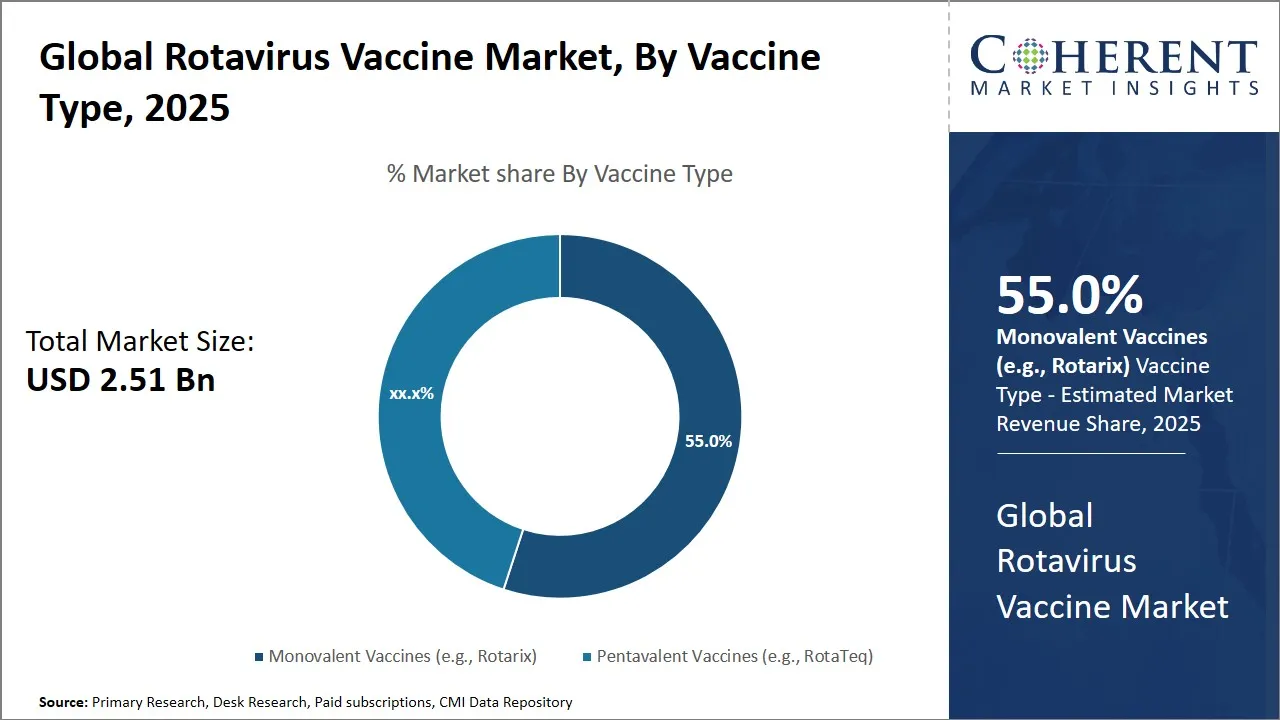
- The monovalent vaccines (e.g., Rotarix) segment is expected to lead the global rotavirus vaccine market, capturing a 56.0 % share in 2026.
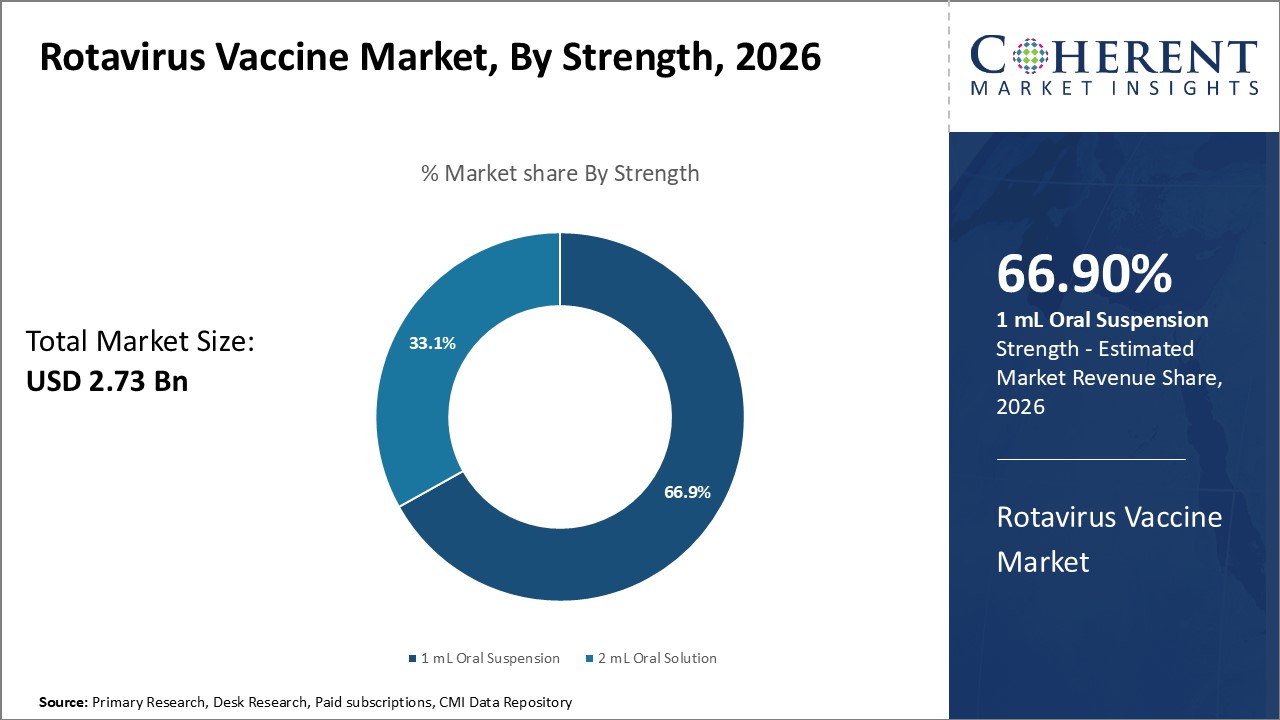
- The 1 mL oral suspension segment is anticipated to dominate, holding a 66.9 % market share in 2026.
- The 2-dose segment is projected to have the largest share of the global rotavirus vaccine market, accounting for 71.5 % in 2026.
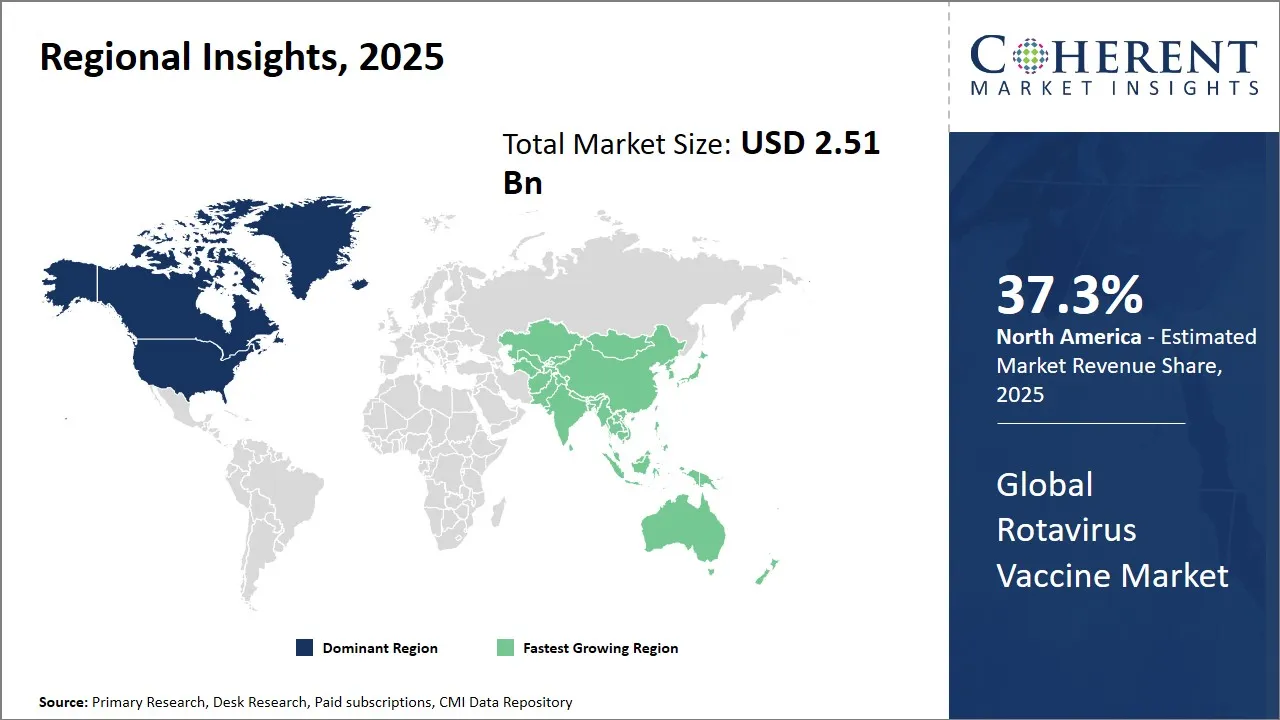
- North America is expected to lead the market, holding a share of 37.3 % in 2026. Asia Pacific is anticipated to be the fastest-growing region, with an estimated market share of 24.3% in 2026.
Market Overview
Current market trends indicate a growing emphasis on developing next-generation rotavirus vaccines with improved efficacy and broader strain coverage. Additionally, there is increased adoption of combination vaccines that protect against multiple diseases simultaneously, which enhances compliance and reduces healthcare costs. Government initiatives, public-private partnerships, and advancements in vaccine delivery technologies are also accelerating market growth, making rotavirus vaccination a key focus in pediatric healthcare globally.
Current Events and Its Impact
Current Events | Description and its Impact |
Path's Clinical Trial for Injectable Rotavirus Vaccine |
|
WHO Prequalification of New Manufacturers |
|
Segmental Insights
- Current Industry Events of 2026
- Market Size Estimation
- Regional Breakdown
- Competitive Landscape
- Customer Intelligence
- Segmental Analysis
- Pricing Analysis
- Key Market Drivers, Challenges & Future Trends
- Customized Insights Section
Rotavirus Vaccine Market Insights, by Vaccine Type - Preference for Monovalent Vaccines(e.g., Rotarix) Segment is Driven by Targeted Efficacy and Ease of Administration
The monovalent vaccines (e.g., Rotarix) segment is projected to account for 56.0% of the market share in 2026. Monovalent vaccines are designed to protect against a single predominant strain of rotavirus, which aligns well with the most common circulating strains worldwide. This targeted approach enhances vaccine efficacy, fostering greater acceptance among healthcare providers and public health programs. The high immunogenicity and well-documented safety profile of monovalent vaccines contribute to their prominent adoption.
Another significant driver behind the dominance of monovalent vaccines is the simpler manufacturing process compared to pentavalent alternatives, allowing for more cost-effective production and scalable supply. This affordability factor is particularly crucial in low- and middle-income countries where rotavirus infection remains a leading cause of severe diarrhea in children under five years. Public health initiatives in these regions often focus on affordable, efficacious solutions, thereby favoring monovalent vaccines.
Rotavirus Vaccine Market Insights, by Strength - Dominance of 1 mL Oral Suspension Segment Owing to Administration Convenience and Patient Compliance
The 1 mL oral suspension segment is projected to hold 66.9% share in 2026, predominantly because it offers practical advantages aligned with pediatric vaccination protocols. The 1 mL dosage format strikes a balance between providing an effective immunogenic dose and maintaining ease of administration, which is critical when vaccinating infants and young children. Packaging in easily measurable and swallow-friendly volumes enhances dosing accuracy and reduces the risk of administration errors, a vital consideration in large-scale immunization programs.
The 1 mL oral suspension also supports better patient compliance. Infants and toddlers are more likely to tolerate smaller volumes of oral vaccines without distress, improving overall vaccination rates. From the healthcare provider perspective, this smaller volume facilitates faster administration during immunization drives, boosting efficiency and throughput, especially in resource-constrained settings.
Rotavirus Vaccine Market Insights, by Dosing Regimen - Prevalence of the 2-Dose Segment is Supported by Simplified Immunization Schedules and Improved Uptake
The 2-dose segment is expected to capture 71.5% share in 2026. Its prevalence is largely attributed to the streamlined immunization process it offers, which aligns well with routine infant vaccination programs worldwide. A 2-dose regimen reduces the number of healthcare visits required, minimizing the burden on families and healthcare systems alike.
This simplified dosing schedule improves adherence and completion rates, a vital factor in ensuring full immunological protection. Fewer doses mean a lower chance of missed or delayed vaccinations, which directly translates into broader population coverage and more effective disease control. For public health authorities, this creates an easier framework to integrate rotavirus vaccination into existing childhood immunization schedules without complicating the calendar.
Pricing Analysis of Rotavirus Vaccine
- The pricing of rotavirus vaccines in USD for 2025-2026 shows that RotaTeq, a live oral pentavalent vaccine by Merck, is priced at approximately USD 84.02 per oral dose for both 10-pack and 25-pack presentations, with private sector prices reaching USD 98.82 per dose.
- On the other hand, Rotarix, a live oral monovalent vaccine by GlaxoSmithKline, is priced higher at around USD 111.72 per oral dose for the 10-pack, with private sector prices up to USD 147.02 per dose. These prices reflect typical contract listings and private sector pricing in the U.S. market during this period.
Regional Insights
North America Rotavirus Vaccine Market Analysis and Trends
The North America region is projected to lead the market with a 37.3% share in 2026 driven by substantial government investments, and the presence of leading pharmaceutical companies specializing in vaccine development. The region benefits from robust immunization programs supported by agencies like the Centers for Disease Control and Prevention (CDC) and the U.S. Food and Drug Administration (FDA), which facilitate stringent regulatory approvals and promote vaccine accessibility. Additionally, extensive public-private partnerships enhance research and development activities targeting rotavirus vaccines.
According to U.S Centers for Disease Control and Prevention in April 2024, Rotavirus is the leading cause of severe gastroenteritis in infants and young children, with nearly universal infection by age 5. It was first identified as a cause of diarrhea in 1973 and was responsible for up to 500,000 diarrheal deaths worldwide annually before vaccines were introduced. The virus is highly stable and can remain viable in the environment for weeks or months without proper disinfection. The most common strains causing infection include G1 and G12, with G1P[8] being the dominant strain in the U.S. prior to the emergence of G12P[8]. Vaccines have significantly reduced rotavirus-related deaths and hospitalizations, transforming its epidemiology.
Asia Pacific Rotavirus Vaccine Market Analysis and Trends
Asia Pacific is expected to exhibit the fastest growth attributed to increasing healthcare awareness with a share of 24.3% in 2026, expanding immunization programs, rising population, and improving infrastructure in emerging economies like India and China. Government initiatives such as India’s Universal Immunization Programme and China’s expanded vaccine inclusion policies are pivotal in driving adoption.
Growing partnerships between local manufacturers and multinational vaccine producers have also catalyzed market expansion. The region’s favorable trade policies and increasing affordability of vaccines due to competitive local production contribute to accelerated uptake.
In March 2021, Médecins Sans Frontières (MSF), a medical humanitarian organization, welcomed GSK's commitment to supply rotavirus vaccines at a lower price through the Humanitarian Mechanism. This initiative aims to increase access to vaccines in low- and middle-income countries, where high vaccine prices and limited availability have previously left many children unprotected against rotavirus. MSF's Access Campaign has long advocated for affordable vaccines to prevent diseases like rotavirus, which is a leading cause of severe diarrhea in young children.
Rotavirus Vaccine Market Outlook for Key Countries
U.S. Rotavirus Vaccine Market Analysis and Trends
The U.S. rotavirus vaccine market is spearheaded by strong governmental support and advanced healthcare facilities. The CDC's recommendations for rotavirus vaccination coverage coupled with widespread insurance reimbursement frameworks have ensured high vaccine penetration rates. Merck & Co. and GSK are key contenders, with Merck’s Rotateq being a leading vaccine in the market. Continuous investments in vaccine research and adaptation to changing epidemiological patterns maintain the U.S. as a central player in global vaccine innovation.
In August 2020, the U.S. FDA approved a new vaccine to prevent rotavirus gastroenteritis in infants, specifically the RotaTeq vaccine. First launched in 2006, RotaTeq is designed to protect infants from severe diarrhea caused by rotavirus, a leading cause of gastroenteritis in young children. The approval aims to reduce hospitalizations and fatalities related to rotavirus infections.
India Rotavirus Vaccine Market Analysis and Trends
India represents a critical growth market supported by government-led immunization drives aimed at reducing infant mortality due to rotavirus infections. The involvement of local manufacturers like Bharat Biotech, which developed a domestically produced rotavirus vaccine, has significantly improved market dynamics. Collaborations with global pharmaceutical firms further enhance the supply chain and vaccine awareness. Public health campaigns and increasing cold chain capabilities also bolster vaccine adoption, particularly in rural and semi-urban areas.
In August 2021, Bharat Biotech announced that its rotavirus vaccine, Rotavac 5D, received WHO Prequalification. This new formulation of Rotavac does not require a buffer and has a low dose volume (0.5 mL), which simplifies logistics, cold chain management, and reduces biomedical waste disposal after vaccination. Rotavac 5D is designed to prevent rotavirus diarrhea, especially in infants and young children. WHO Prequalification allows agencies like UNICEF and PAHO to procure the vaccine, accelerating global access to this life-saving solution.
China Rotavirus Vaccine Market Analysis and Trends
China’s expanding healthcare infrastructure and government focus on preventive medicine underpin its growing rotavirus vaccine market. Local biotech companies alongside multinational corporations like GSK have introduced vaccines tailored to local needs. The National Immunization Program’s gradual inclusion of rotavirus vaccines amplifies demand. Additionally, China’s strategic investments in domestic vaccine manufacturing and quality control ensure competitive pricing and availability, fostering wider acceptance.
In March 2024, SINOVAC, a China-based leading biopharmaceutical company, announced the beginning of clinical trials for its reassortant hexavalent rotavirus vaccine. This new vaccine candidate is designed to protect against six rotavirus serotypes: G1, G2, G3, G4, G9, and P1A[8]. It is one of the few rotavirus vaccines offering broad-spectrum protection against multiple strains. The clinical trial aims to evaluate the safety, immunogenicity, and efficacy of the vaccine in providing comprehensive protection against rotavirus gastroenteritis.
Germany Rotavirus Vaccine Market Analysis and Trends
Germany continues to lead the Europe rotavirus vaccine market with a robust healthcare system and strong regulatory environment. The government’s endorsement of immunization programs and reimbursement policies has facilitated high vaccine coverage. Key pharmaceutical companies such as GSK and Merck maintain significant presence through active distribution and innovation. Germany's emphasis on vaccine safety and efficacy standards supports consumer confidence and market stability.
In August 2024, a study from Georgia State University found that the composition of gut bacteria can affect how well the rotavirus vaccine works. Researchers discovered that children with different gut bacteria responses had varying levels of protection from the vaccine. Mice receiving gut bacteria from children who responded well to the vaccine showed strong immune responses, while those from less responsive children had weaker protection. This study suggests that gut bacteria may play a role in how effective the rotavirus vaccine is, especially in low-income countries.
End User Feedback and Unmet Needs - Global Rotavirus Vaccine Market
- End user feedback from key sectors such as healthcare providers, government bodies, and NGOs reveals a mixture of satisfaction and concern regarding the global rotavirus vaccine market. On the positive side, many healthcare professionals have praised the oral administration feature of rotavirus vaccines, particularly those like Rotarix, for being easier to administer compared to injectable alternatives. In low-resource settings, this has made a notable impact on vaccination rates, as it eliminates the need for specialized training or equipment. Government bodies have also reported success in streamlined vaccination programs, citing improvements in child health and a decrease in rotavirus-related hospitalizations, especially in regions with high disease burdens like South and Southeast Asia. However, challenges remain, particularly in the affordability and availability of vaccines in low-income countries. Rotavirus vaccines can still be out of reach for many families due to cost, despite efforts from initiatives like Gavi, the Vaccine Alliance, to provide subsidies.
- A frequently cited concern among healthcare providers and policymakers is the vaccine distribution and storage challenges, especially in remote or conflict-affected regions where infrastructure is weak. The need for cold chain management and the reliability of supply chains has been a significant operational barrier. Even vaccines with lower storage requirements have faced challenges, particularly in rural areas where electricity and refrigeration can be inconsistent. These logistical hurdles create a gap in accessibility, particularly during outbreaks or emergency responses when timely immunization is critical. Addressing these unmet needs, such as improving vaccine affordability, developing stable formulations that do not require strict cold chain conditions, and expanding distribution networks, would not only drive the market growth but also ensure more equitable access to life-saving vaccines. By focusing on these areas, manufacturers, developers, and policymakers can foster innovation and increase customer retention through more accessible and reliable vaccine deployment.
Market Players, Key Developments, and Competitive Intelligence
Key Developments
- In July 2025, the Ministry of Health and UNICEF concluded their successful two-month nationwide media campaign, "Protect Your Baby from the First Steps," which significantly increased public awareness and supported the successful rollout of the rotavirus vaccine under the National Expanded Programme on Immunization (NEPI) across 41 provinces and cities, the campaign aimed to educate parents and caregivers about rotavirus, a leading cause of severe diarrhea in young children, and the importance of timely vaccination.
- In June 2025, Emory University and Micron Biomedical launched the first-ever clinical trial of a next-generation rotavirus vaccine (CC24) delivered using dissolvable microarray technology. This groundbreaking trial, sponsored by the CDC, marks the first clinical evaluation of a vaccine delivered via a "patch" technology. The vaccine, CC24, is an inactivated rotavirus vaccine designed to offer an alternative to existing oral vaccines, which are less effective in certain low- and middle-income countries.
- In November 2022, the U.S. FDA approved a new fully liquid formulation of GlaxoSmithKline plc.’s ROTARIX vaccine, designed to prevent rotavirus gastroenteritis. This new liquid presentation removes the need for reconstitution, making it more convenient for healthcare providers. Clinical trials showed that the liquid formulation is non-inferior in immunogenicity and has similar safety and tolerability compared to the original lyophilized version. ROTARIX has been approved since 2008, and the liquid version is expected to begin shipping in early 2023.
- In March 2021, MSF, Save the Children, UNICEF, and WHO announced a new agreement with GSK to provide affordable rotavirus vaccines to children in humanitarian crises. This deal, part of the Humanitarian Mechanism, ensures that vaccines are available at low prices in refugee camps and displaced communities, where diarrheal diseases are a leading cause of death. It marks the second vaccine available through the scheme, following the pneumococcal vaccine. This initiative aims to protect vulnerable children, making vaccines more accessible in emergency situations.
Market Report Scope
Rotavirus Vaccine Market Report Coverage
| Report Coverage | Details | ||
|---|---|---|---|
| Base Year: | 2025 | Market Size in 2026: | USD 2.73 Bn |
| Historical Data for: | 2020 To 2024 | Forecast Period: | 2026 To 2033 |
| Forecast Period 2026 to 2033 CAGR: | 8.8% | 2033 Value Projection: | USD 4.93 Bn |
| Geographies covered: |
| ||
| Segments covered: |
| ||
| Companies covered: | GlaxoSmithKline plc and Merck & Co., Inc. | ||
| Growth Drivers: |
| ||
| Restraints & Challenges: |
| ||
Rotavirus Vaccine Market Dynamics
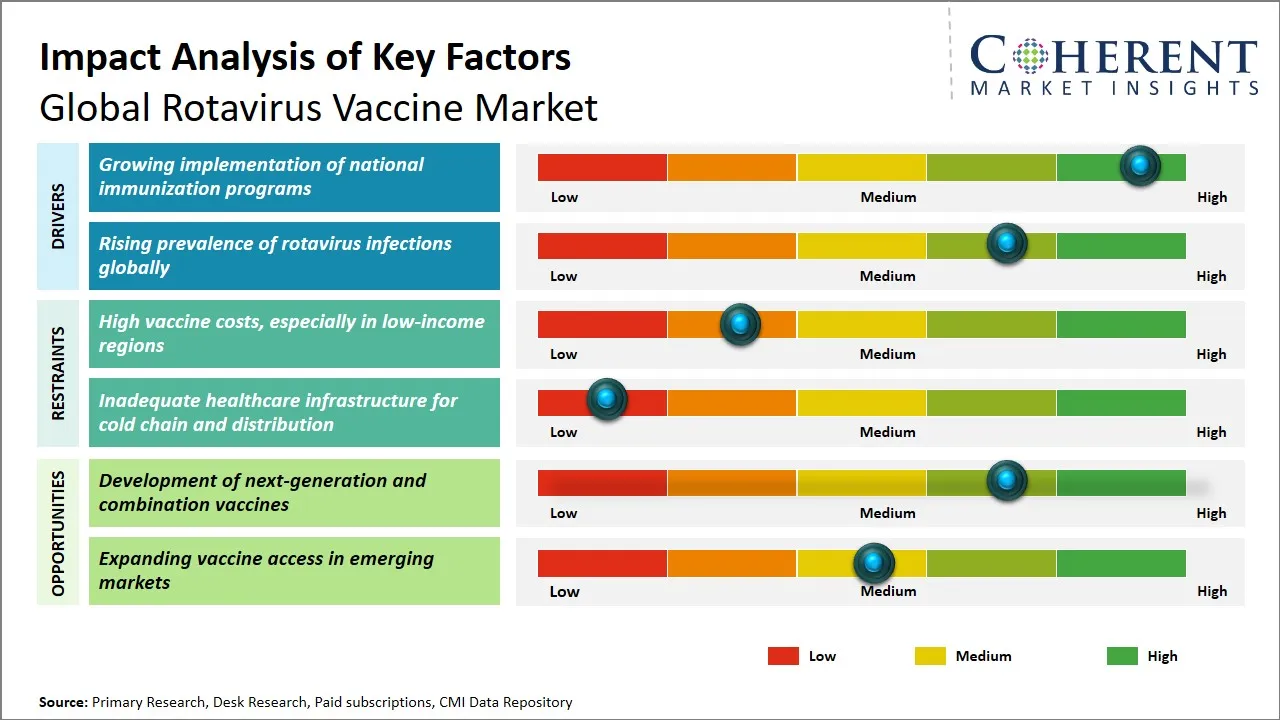
Rotavirus Vaccine Market Driver - Growing Implementation of National Immunization Programs
The expanding adoption of national immunization programs across developing and developed countries is significantly driving the uptake of rotavirus vaccines globally. Governments are increasingly prioritizing vaccine-preventable diseases within their public health agendas, recognizing rotavirus as a leading cause of severe diarrhea and mortality among children under five years. These immunization initiatives are bolstered by policy frameworks that facilitate wide-scale distribution and administration of vaccines, especially in regions with high disease burden. Collaborative efforts between international health organizations and national health ministries have improved vaccine accessibility, affordability, and awareness, enabling more comprehensive coverage.
The growing implementation of national immunization programs, particularly the expansion of rotavirus vaccination, plays a crucial role in reducing vaccine-preventable diseases globally. WHO recommends including rotavirus vaccines like Rotarix and RotaTeq in national immunization programs, especially in regions such as South and Southeast Asia and sub-Saharan Africa, where the burden of diarrheal diseases is higher. As noted by the Center for American Progress on January 2025, childhood vaccination has saved 154 million lives globally since the 20th century, with 95% of those saved being children under the age of 5. This underscores the ongoing effectiveness and impact of routine immunizations in improving global health.
Rotavirus Vaccine Market Opportunity - Development of Next-Generation and Combination Vaccines
The global rotavirus vaccine market presents significant growth potential through the development of next-generation and combination vaccines. Innovations in vaccine technology are enabling the creation of more effective and broader-spectrum immunizations that can target multiple strains of rotavirus or other pathogens simultaneously. This advancement addresses critical challenges such as vaccine efficacy variations across different geographic regions and the need for improved immunogenicity in vulnerable populations, including infants in low-income countries. The integration of rotavirus vaccines with other routine immunizations, such as those targeting pneumococcal or influenza infections, offers a promising avenue to enhance vaccination coverage and compliance by reducing the number of injections required. Additionally, next-generation vaccines employing novel delivery mechanisms, such as oral or mucosal formulations, can improve ease of administration and accessibility, particularly in remote or resource-limited settings. Pharmaceutical companies and biotech firms investing in research and development of these advanced vaccines stand to capitalize on rising global demand driven by increasing awareness of rotavirus-associated morbidity and mortality.
Analyst Opinion (Expert Opinion)
- The global rotavirus vaccine market is experiencing significant growth, driven by several key factors, including ongoing technological advancements, enhanced regulatory support, and rising public and private investments. The development of new and more effective vaccines, coupled with regulatory initiatives like the WHO’s Global Immunization Strategy, is fostering greater accessibility and affordability, particularly in emerging markets. The push for universal immunization programs by global health bodies and government authorities, combined with the growing recognition of rotavirus as a leading cause of child mortality, has created a robust demand for vaccines. Additionally, ongoing research and development efforts to improve vaccine efficacy and reduce side effects are opening new opportunities for market players. However, challenges such as vaccine hesitancy, distribution logistics, and the affordability in low-income regions remain significant obstacles that the industry must address to sustain growth.
- Several conferences and initiatives have contributed to the momentum of the rotavirus vaccine market. For instance, the World Health Organization’s World Immunization Week and the Global Vaccines Summit have served as critical platforms for knowledge exchange, promoting policy alignment and increasing awareness about the need for expanded vaccine access. On the ground, countries like India have rolled out extensive vaccination programs, which have shown promising results in reducing rotavirus-related mortality. These initiatives are helping shape the future trajectory of the market, demonstrating how targeted vaccination campaigns can transform public health outcomes while driving industry growth.
Speak to the analyst
Want personalized insights?
Take the findings above to one of our principal consultants, or have the report rebuilt around the segments, geographies and competitors you actually track.
Market Segmentation
- Vaccine Type Insights (Revenue, USD Bn, 2021 - 2033)
- Monovalent Vaccines (e.g., Rotarix)
- Pentavalent Vaccines (e.g., RotaTeq)
- Strength Insights (Revenue, USD Bn, 2021 - 2033)
- 1 mL Oral Suspension
- 2 mL Oral Solution
- Dosing Regimen Insights (Revenue, USD Bn, 2021 - 2033)
- 2-dose
- 3-dose
- Patient Age Group Insights (Revenue, USD Bn, 2021 - 2033)
- Infants (2-6 months)
- Preterm Infants
- Older Infants/Children (7 months and above)
- End User Insights (Revenue, USD Bn, 2021 - 2033)
- Pediatric Hospitals
- Pediatric Clinics
- Vaccination Centers
- Community Health Centers
- Academic and Research Institutions
- Distribution Channel Insights (Revenue, USD Bn, 2021 - 2033)
- Public (Government) Distribution
- Private Distribution
- International Agencies (e.g., UNICEF, Gavi, WHO procurement)
- Regional Insights (Revenue, USD Bn, 2021 - 2033)
- North America
- U.S.
- Canada
- Latin America
- Brazil
- Argentina
- Mexico
- Rest of Latin America
- Europe
- Germany
- U.K.
- Spain
- France
- Italy
- Russia
- Rest of Europe
- Asia Pacific
- China
- India
- Japan
- Australia
- South Korea
- ASEAN
- Rest of Asia Pacific
- Middle East
- GCC Countries
- Israel
- Rest of Middle East
- Africa
- South Africa
- North Africa
- Central Africa
- North America
- Key Players Insights
- GlaxoSmithKline plc
- Merck & Co., Inc.
Sources
Primary Research Interviews
- Industry Stakeholders
- UNICEF Supply Division
- PATH
- End Users
- World Health Organization (WHO)
- Médecins Sans Frontières (MSF)
Government and International Databases
- WHO Immunization Data Portal
- UNICEF Immunization Coverage Estimates
- Centers for Disease Control and Prevention (CDC) Pink Book
- Gavi, the Vaccine Alliance
- U.S. Food and Drug Administration (FDA)
- European Medicines Agency (EMA)
Trade Publications
- Vaccine
- The Lancet Infectious Diseases
- Journal of Infectious Diseases
- Pediatric Infectious Disease Journal
- Global Health Action
- Human Vaccines & Immunotherapeutic
Academic Journals
- Cellular and Molecular Gastroenterology and Hepatology
- Clinical Infectious Diseases
- Vaccine
- Pediatrics
- The Lancet Global Health
- Journal of Clinical Microbiology
Reputable Newspapers
- The New York Times
- The Guardian
- BBC News
- Reuters
- Associated Press (AP)
- The Washington Post
Industry Associations
- International Federation of Pharmaceutical Manufacturers & Associations (IFPMA)
- International Vaccine Institute (IVI)
- Global Health Council
- World Vaccine Congress
- International Society for Vaccines
- Global Alliance for Vaccines and Immunization (GAVI)
Public Domain Resources
- WHO Global Vaccine Safety
- UNICEF Supply Division
- CDC Vaccine Safety
- PATH Vaccine Resource Library
- Gavi Vaccine Library
- MSF Access Campaign
Proprietary Elements
- CMI Data Analytics Tool: Proprietary analytics tool to analyze real-time market trends, consumer behavior, and technology adoption in market
- Proprietary CMI Existing Repository of Information for Last 8 Years
Get access to 250+ pages report
Every segment, forecast, competitor profile and data table behind the analysis above — available for instant download.
- ESOMAR Member
- ISO 9001:2015 Certified
- D-U-N-S Registered
- GDPR & CCPA Compliant
Missing comfort of reading report in your local language? Find your preferred language:
Transform your Strategy with Exclusive Trending Reports
Frequently Asked Questions
The global rotavirus vaccine market is estimated to be valued at USD 2.73 Bn in 2026 and is expected to reach USD 4.93 Bn by 2033.
The CAGR of the global rotavirus vaccine market is projected to be 8.8% from 2026 to 2033.
Increasing prevalence of liver diseases and rising health consciousness and preventive healthcare focus are the major factors driving the growth of the global rotavirus vaccine market.
Lack of clinical evidence for supplement efficacy and poor regulatory oversight and product standardization are the major factors hampering the growth of the global rotavirus vaccine market.
In terms of vaccine type, the monovalent vaccines (e.g., Rotarix) segment is estimated to dominate the market revenue share in 2026.
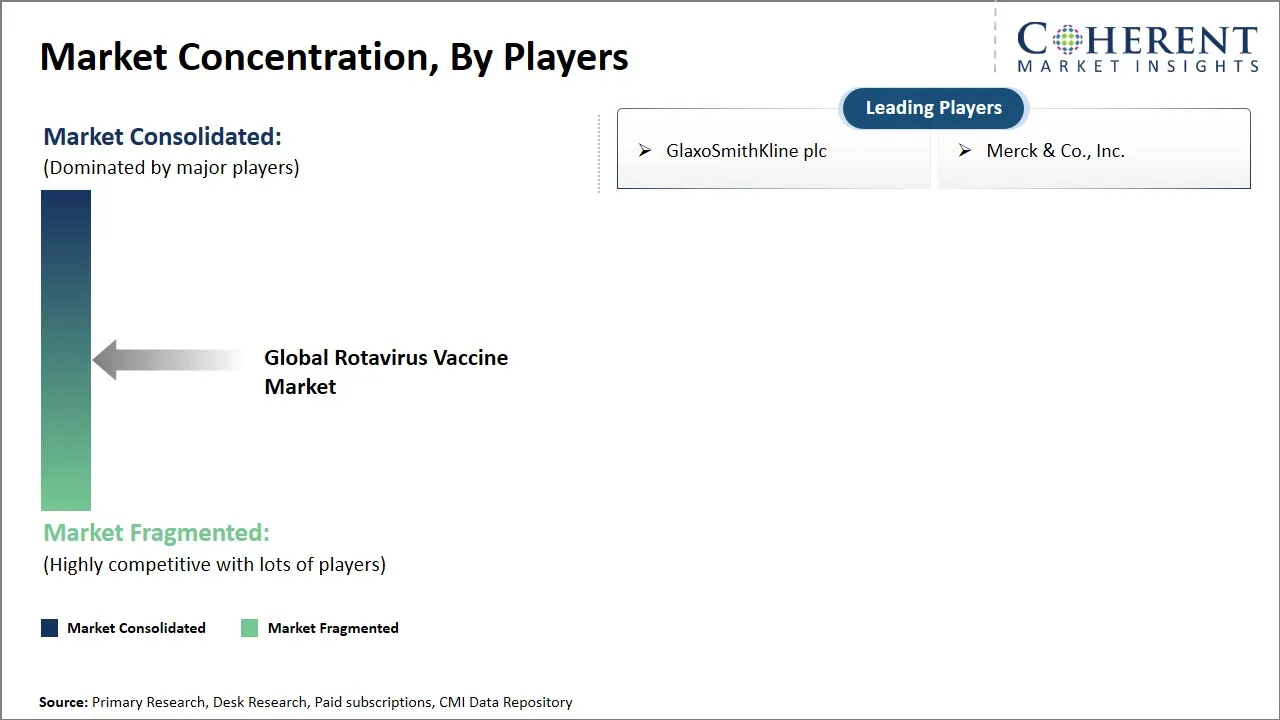
GlaxoSmithKline plc and Merck & Co., Inc. are the major players.
North America is expected to lead the global rotavirus vaccine market in 2026.