

Global Sclerotherapy Market Size and Forecast – 2026 to 2033
The global sclerotherapy market is estimated to be valued at USD 1.32 Bn in 2026 and is expected to reach USD 2.02 Bn by 2033, exhibiting a compound annual growth rate (CAGR) of 6.3% from 2026 to 2033. This steady growth reflects increasing the demand for minimally invasive surgery for varicose veins and spider veins, driven by rising awareness and advancements in sclerotherapy formulations and delivery techniques.
Key Takeaways of the Global Sclerotherapy Market
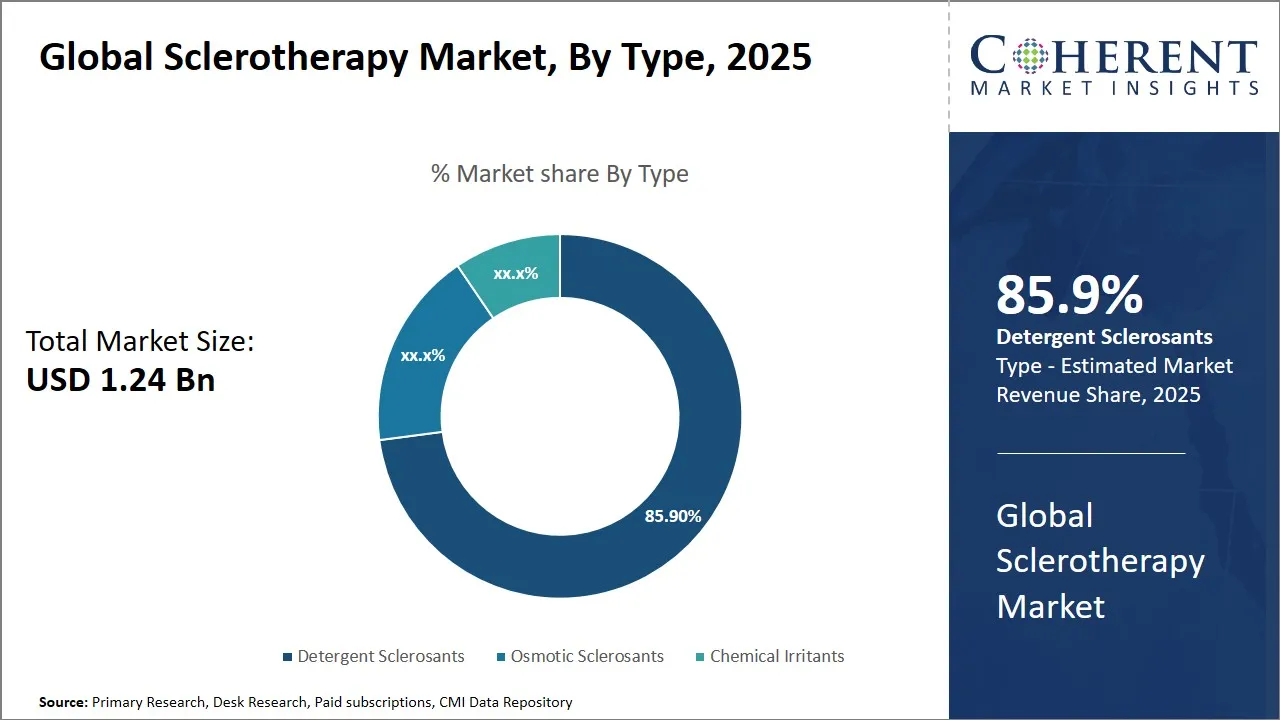
- In the global sclerotherapy market, the detergent sclerosants segment is expected to lead the market with a 86.9 % share in 2026.
- The varicose veins segment is expected to account for the largest portion of the market by indication, holding a 41.3 % share in 2026.
- The liquid segment is projected to account for 46.9 % of the market share in 2026.
- North America is expected to lead the market, holding a share of 39.4 % in 2026. Asia Pacific is anticipated to be the fastest-growing region, with a market share of 23.4% in 2026.
Market Overview
A key market trend is the growing preference for non-surgical cosmetic procedures, fueled by improved patient outcomes and reduced recovery times. Additionally, technological innovations such as foam sclerosants and ultrasound-guided sclerotherapy methods are enhancing treatment efficacy, further boosting adoption. Increasing prevalence of venous thromboembolism across aging populations worldwide also supports sustained the market expansion during the forecast period.
Current Events and Its Impact
Current Events | Description and its Impact |
Technological Advancements in Sclerosants and Foam Generation |
|
Rising Medical Tourism for Aesthetic Vein Treatments |
|
Segmental Insights
- Current Industry Events of 2026
- Market Size Estimation
- Regional Breakdown
- Competitive Landscape
- Customer Intelligence
- Segmental Analysis
- Pricing Analysis
- Key Market Drivers, Challenges & Future Trends
- Customized Insights Section
Sclerotherapy Market Insights, By Type - Detergent Sclerosants Dominate In The Global Sclerotherapy Market Due To Their High Safety Profile and Patient Tolerance.
Detergent sclerosants are highly active in the type segment with an estimated market share of 86.9% in 2026, because the market has witnessed their effectiveness and their many uses in the treatment of different venous disorders. Detergent sclerosants like Sodium Tetradecyl Sulfate (STS) and Polidocanol have high safety profile and are highly tolerated by patients, and thus are the most preferred among all clinicians in the world. These agents destroy the vein endothelium, which results in closure and resorption a well-established and accepted clinical practice mechanism.
Sodium tetradecyl sulfate (STS) is a popular one because it is fast acting, effective and with few side effects. Polidocanol is a sclerosant and a local anesthetic that enhances patient comfortable feeling. Ethanolamine oleate and sodium morrhuate are other agents that provide a range of diversity with regard to regional or clinical applications.
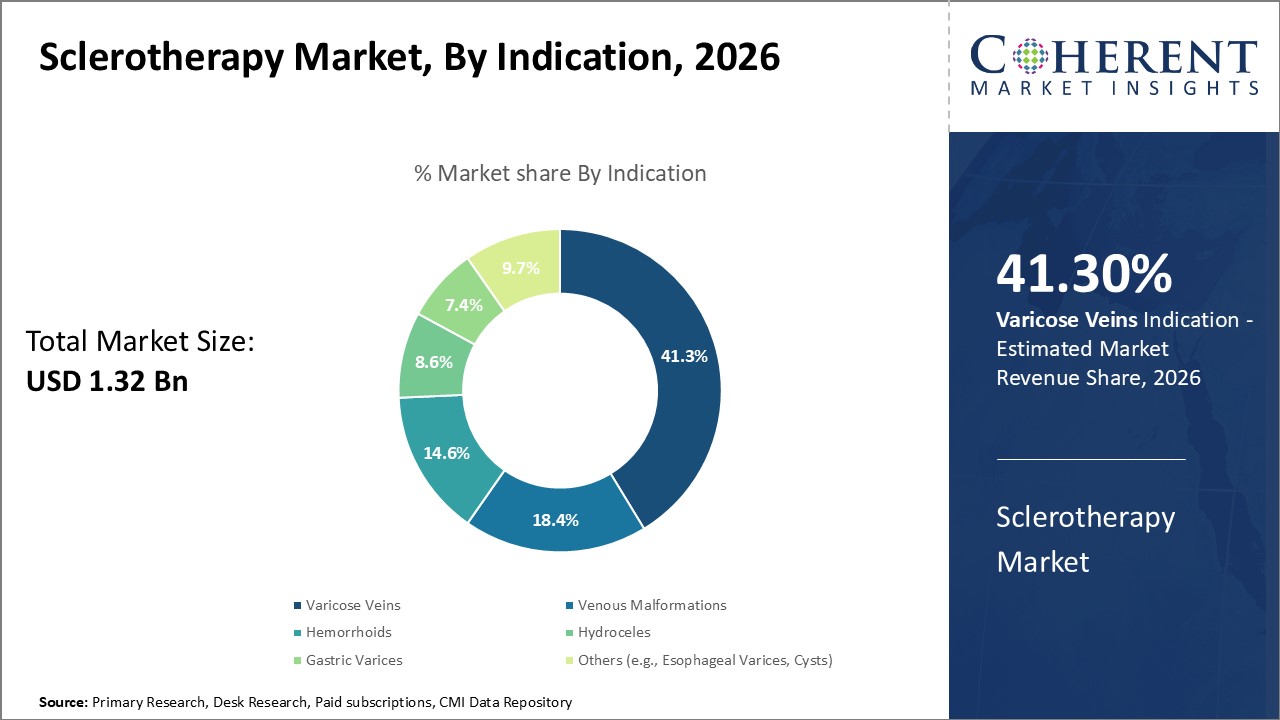
Sclerotherapy Market Insights, By Indication- Varicose Veins Segment Dominates in Sclerotherapy Market Due To the High Prevalence and Growing Awareness of Venous Diseases.
Varicose veins form the leading segment in the global sclerotherapy market, capturing an estimated 41.3% of the market share in 2026, driven by the high prevalence of the condition and growing patient awareness of treatment options. Varicose veins, which are superficial veins that appear as twists and enlarged, are not only aesthetically problematic, but have such symptoms as pain, edema, and alterations affecting the skin that affect the quality of life.
In August 2024, researchers from Umm Al-Qura University in Makkah published a cross-sectional study in Cureus examining the prevalence of varicose veins among surgeons working in public hospitals in Makkah, Saudi Arabia. The study, which included 192 surgeons across various specialties, found that 14.6% showed signs of varicose veins, with the highest prevalence among thoracic (50%) and pediatric (42.9%) surgeons.
Sclerotherapy Market Insights, By Delivery Form - Dominance of Liquid Segment due to Precision and Practitioner Preference
The liquid segment is projected to account for 46.9% of the market share in 2026, which has managed to retain its position due to its ease of application and flexibility in clinical practice. Liquid sclerotherapy is done by injecting the solution in the affected veins where the sclerosant kills the vein walls resulting in fibrosis and vein closure. Liquid form is an appealing initial choice among most physicians, often in a setting where few of the more specialized devices required to prepare foam or offered microfoam forms are available.
In September 2025, Kafrelsheikh University, a leading Egyptian medical research institution, launched a clinical trial titled Foam and Liquid Sclerotherapy with or without Herbal Gel for Small Vein Treatment (ELF-HTR) to evaluate the safety and effectiveness of different sclerotherapy techniques for telangiectasias and reticular veins. Led by researcher Mohamed Ahmed Gaheed, the study compares liquid and foam sclerotherapy using agents such as sodium tetradecyl sulfate and polidocanol, with and without herbal gel application.
Role of Artificial Intelligence in the Global Sclerotherapy Market
- The global sclerotherapy market is being transformed by Artificial Intelligence (AI), which is now at the forefront of the revolution with its advanced imaging, predictive analytics, and automation. Double-powered ultrasound and vein-mapping tools diagnose and plan treatments accurately; simultaneously, machine-learning algorithms come to the rescue by predicting patient outcomes and improving the precision of injections. Siemens Healthineers and GE Healthcare are some of the companies that have resorted to AI to improve the safety of vascular imaging and the whole procedure, hence cutting operational costs and boosting efficiency.
- AI, at least in part, is responsible for the personalization and remote care movement as it makes the treatment plans specific to each patient and post-procedure monitoring more convenient through digital platforms. The likes of Boston Scientific and AbbVie are bringing AI into patient management and follow-up systems making patient engagement and outcomes better. Though the cost and data security issues still weigh upon AI, its role in accuracy improvement, error reduction, and enabling of scalable, data-driven treatment still makes it a significant growth factor for the sclerotherapy industry.
Regional Insights
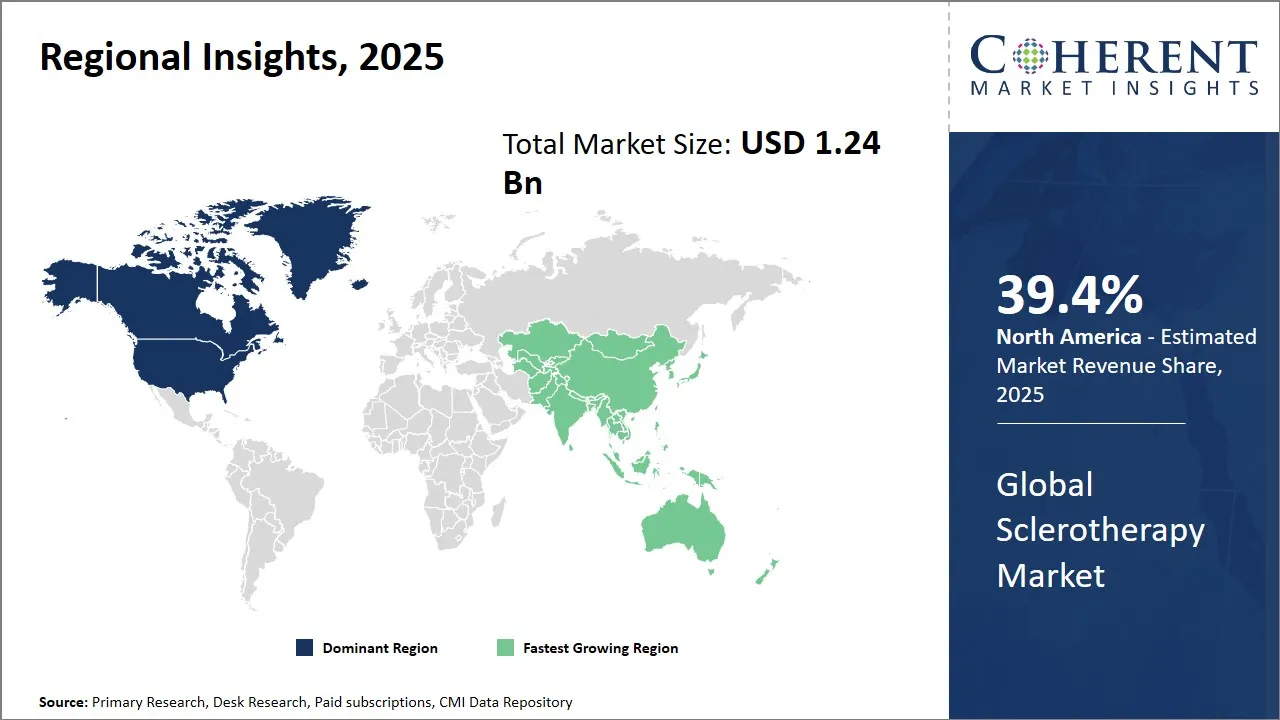
North America Sclerotherapy Market Analysis and Trends
The North America region is projected to lead the market with a 39.4% share in 2026, due to the region’s medical ecosystem being the most influenced by minuscule medical procedures as well as having a professional infrastructure that is highly developed. Apart from that the region is also the beneficiary of large healthcare costs and excellent reimbursement policies, particularly in the U.S. and Canada, that allow quick patient access to sclerotherapy treatments. The government support for the safety and effectiveness of minimally invasive procedures has had a significant impact on the demand.
North American players include AngioDynamics Inc., Merz Aesthetics, VASCULAR SOLUTIONS LLC (a Teleflex company), and BTG Specialty Pharmaceuticals. AngioDynamics leads in catheter-based vein ablation and sclerotherapy systems used in outpatient settings. Merz Aesthetics drives adoption through its FDA-approved Asclera (polidocanol) product line. Teleflex’s vascular division supports the market with vein access and closure solutions integrated into sclerotherapy procedures.
Asia Pacific Sclerotherapy Market Analysis and Trends
The Asia Pacific region quickly inherited the leading position of the global sclerotherapy market with an estimated share of 23.4% in 2026, due to the increasing healthcare infrastructure investments and the rising number of chronic venous diseases that resulted from changing lifestyles and aging populations. The developing countries of India, China, Japan, and South Korea are the ones that suffer the least from the changes linked to healthcare access expansion and the rise of the private sector.
The major players in the Asia Pacific sclerotherapy market are Kaken Pharmaceutical Co., Ltd. (Japan), Nihon Pharmaceutical Co., Ltd., Troikaa Pharmaceuticals Ltd. (India), Relemac Technologies Pvt. Ltd. (India), and Shandong Weigao Group Medical Polymer Co., Ltd. (China). Kaken and Nihon concentrate on the development of new sclerosant formulas and the expansion of the clinical trial process in Japan’s elderly population.
Sclerotherapy Market Outlook for Key Countries
U.S. Sclerotherapy Market Analysis and Trends
The U.S sclerotherapy market is the largest in North America, due to its advanced medical system, a great deal of research and development investments, and a wide presence of the main industry players such as Medtronic and AngioDynamics, it remains the largest market. The main reason to support the strong demand for the market is the strong focus on the cosmetic and minimal invasive cardiovascular treatment among the consumers. Reimbursement policies that are attractive for the country allow for wider access of patients while the innovation in the sclerotherapy agents is the sustaining factor of the manufacturers’ competitive edge.
For example, in February 2026, Advanced Vein and Laser Center (AVLC), a U.S.-based clinic specializing in vein and vascular care, highlighted the growing adoption of ultrasound-guided sclerotherapy, a precise and minimally invasive treatment for varicose and spider veins.
Germany Sclerotherapy Market Analysis and Trends
Germany sclerotherapy market is characterized by its robust healthcare infrastructure and supportive regulatory frameworks that encourage medical device and pharmaceutical innovation. Prominent European market players, including Becton Dickinson and smaller specialized firms, will keep a solid base here by taking advantage of Germany's reputation as a healthcare innovation hub.
For example, Vascular Center Munich, a leading German clinic specializing in vascular and laboratory diagnostics, announced the availability of advanced sclerotherapy treatments for spider veins at its two medical practices in Promenadeplatz and Münchner Freiheit. The center uses ethoxysclerol-based sclerotherapy, a proven method in Germany for over five decades, alongside laser therapy for patients seeking cosmetic and therapeutic solutions
China Sclerotherapy Market Analysis and Trends
China is the main market of Asia Pacific due to its rapid growth and during the process of making treatments more accessible through the healthcare reforms that are fast becoming the standard. While the government's support for cutting-edge therapeutic methods helps to increase the visibility and consequently acceptance of the sclerotherapy treatment, multinational corporations like Johnson & Johnson and Medtronic have already established local partnership as a tactical move to push their product line and to comply with local regulations in this market.
For example, in May 2026, Initia Ltd., an Israel-based global leader in non-invasive shockwave and laboratory therapy systems, announced a strategic partnership with Shanghai Taiyuan Life Science Ltd., a Chinese medical technology company, to expand access to shockwave and sclerotherapy-related vascular treatments across China.
India Sclerotherapy Market Analysis and Trends
India sclerotherapy market has been on the rise due to the increasing health consciousness among the middle-class population and the expansive healthcare infrastructure. Sclerotherapy is among the procedures that patients are willing to undergo due to the government’s focus on making healthcare services available and affordable. The market is characterized by the existence of regional companies along with global firms like Becton Dickinson, which enables a highly competitive market environment that is primarily directed toward cost-effective treatments.
For example, in June 2024, Fortis Healthcare, one of India’s leading multispecialty hospital networks, highlighted sclerotherapy as a gold-standard, minimally invasive treatment for varicose and spider veins. The procedure involves injecting sclerosing agents such as polidocanol or sodium tetradecyl sulfate to close damaged veins, improving circulation and appearance without anesthesia or hospitalization.
Market Players, Key Developments, and Competitive Intelligence
Key Developments
- In May 2025, Initia Ltd., an Israel-based global leader in non-invasive shockwave and laboratory therapy systems, announced a strategic partnership with Shanghai Taiyuan Life Science Ltd., a Chinese medical technology company, to expand access to shockwave and sclerotherapy-related vascular treatments across China.
- In July 2024, Swizton Medcare, a healthcare provider under 98 Farenheit, partnered with Medtronic, a global leader in medical technology and laboratory solutions, to open India’s first specialized clinic for varicose vein treatment, offering advanced diagnostic and therapeutic care for venous disorders
- In July 2024, Medtronic, a global leader in medical technology and laboratory equipment, and Swizton Medcare, a healthcare provider under 98 Farenheit, jointly opened India’s first specialized vein clinic at Aveksha Hospital in Bengaluru. The clinic aims to improve access to advanced varicose vein treatments, combining Medtronic’s adhesive and radiofrequency ablation technologies with Swizton Medcare’s sclerotherapy expertise.
- In August 2023, Viatris Inc., a U.S.-based global pharmaceutical company, and Mapi Pharma Ltd., an Israel-based drug development firm, announced that the U.S. Food and Drug Administration had accepted their New Drug Application for GA Depot, a long-acting glatiramer acetate formulation designed to treat relapsing multiple sclerosis.
Top Strategies Followed by Global Sclerotherapy Market Players
- The market leaders did not rest on their laurels and instead, they have put a lot of money in research and development with the aim of coming up with innovative and better sclerotherapy products. These companies are steadily enhancing the efficacy and safety of their treatments and thereby keeping their competitive edge through the modernization of the formulations, delivery systems, and technologies used in the procedures. The large market players, besides this, are also entering into partnerships and alliances with key industry players and OEMs to strengthen their presence in the market.
- Boston Scientific Corporation and Medtronic plc exemplify large players investing heavily in R&D to enhance sclerotherapy technologies. Boston Scientific has advanced catheter-based delivery systems improving precision during venous treatments, while Medtronic focuses on safety-enhancing innovations in minimally invasive varicose vein procedures
- Mid-level players competing in the sclerotherapy market mainly concentrate on the products that are cost-effective but at the same time of good quality and they try to find the target consumers who are highly price sensitive and also the doctors in the devolving areas where the budget pressure is very high.
- BTG plc (now part of Boston Scientific but historically independent) and Troikaa Pharmaceuticals Ltd. represent mid-sized firms emphasizing affordability and broad access. Troikaa develops cost-efficient sclerosant formulations targeting emerging markets in Asia and Africa. These companies balance quality and price, catering to developing economies where cost-sensitive healthcare infrastructure dominates.
- Small players in the market are usually startups or specialized manufacturers and they take a very different route by focusing on special features or unique product variations that meet a certain clinical need or a patient’s particular condition. These innovative companies use advanced technologies such as new sclerosant compounds, biodegradable delivery systems, or digital integration to stand out in a crowded marketplace.
- STEMBRIDGE Therapeutics and Fibrovein Ltd. illustrate agile niche manufacturers specializing in differentiated sclerosant compounds and improved formulation stability. Fibrovein, for example, focuses on polidocanol-based innovations suited for precision treatment and minimal post-procedural side effects.
Market Report Scope
Sclerotherapy Market Report Coverage
| Report Coverage | Details | ||
|---|---|---|---|
| Base Year: | 2025 | Market Size in 2026: | USD 1.32 Bn |
| Historical Data for: | 2020 To 2024 | Forecast Period: | 2026 To 2033 |
| Forecast Period 2026 to 2033 CAGR: | 6.3% | 2033 Value Projection: | USD 2.02 Bn |
| Geographies covered: |
| ||
| Segments covered: |
| ||
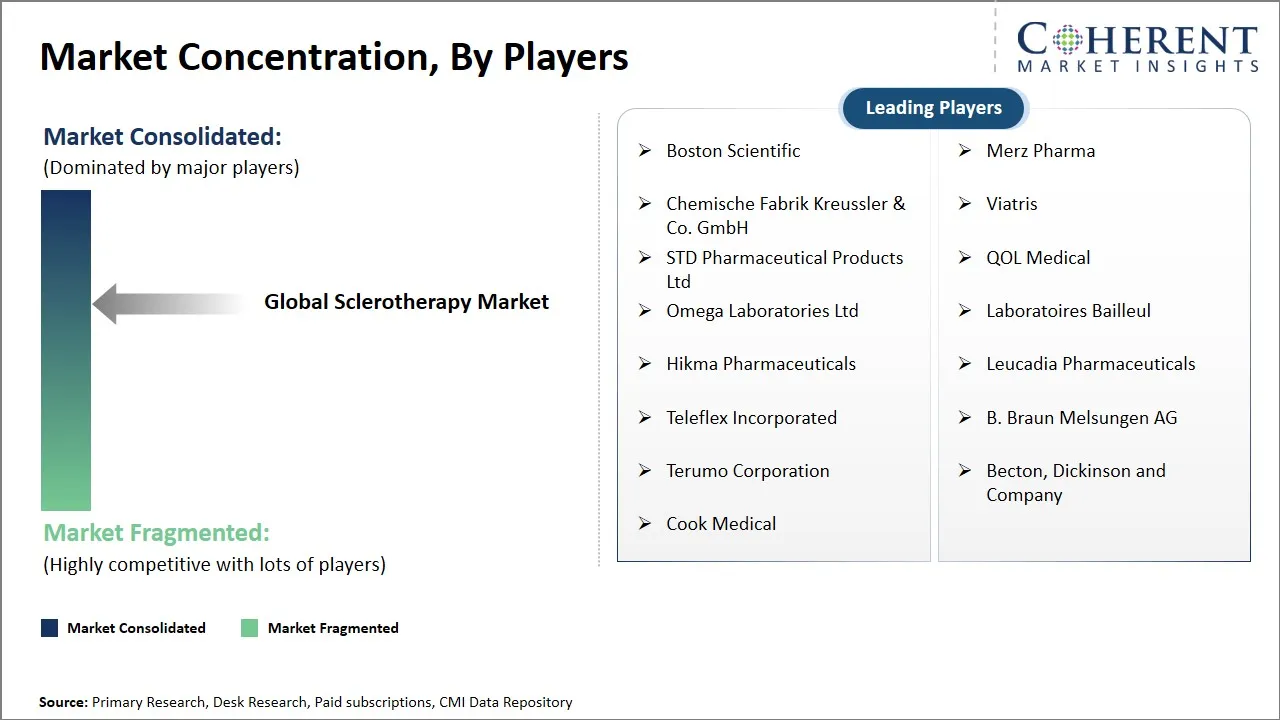
| Companies covered: | Boston Scientific, Merz Pharma, Chemische Fabrik Kreussler & Co. GmbH, Viatris, STD Pharmaceutical Products Ltd, QOL Medical, Omega Laboratories Ltd, Laboratoires Bailleul, Hikma Pharmaceuticals, Leucadia Pharmaceuticals, Teleflex Incorporated, B. Braun Melsungen AG, Terumo Corporation, Becton, Dickinson and Company, and Cook Medical | ||
| Growth Drivers: |
| ||
| Restraints & Challenges: |
| ||
Sclerotherapy Market Dynamics
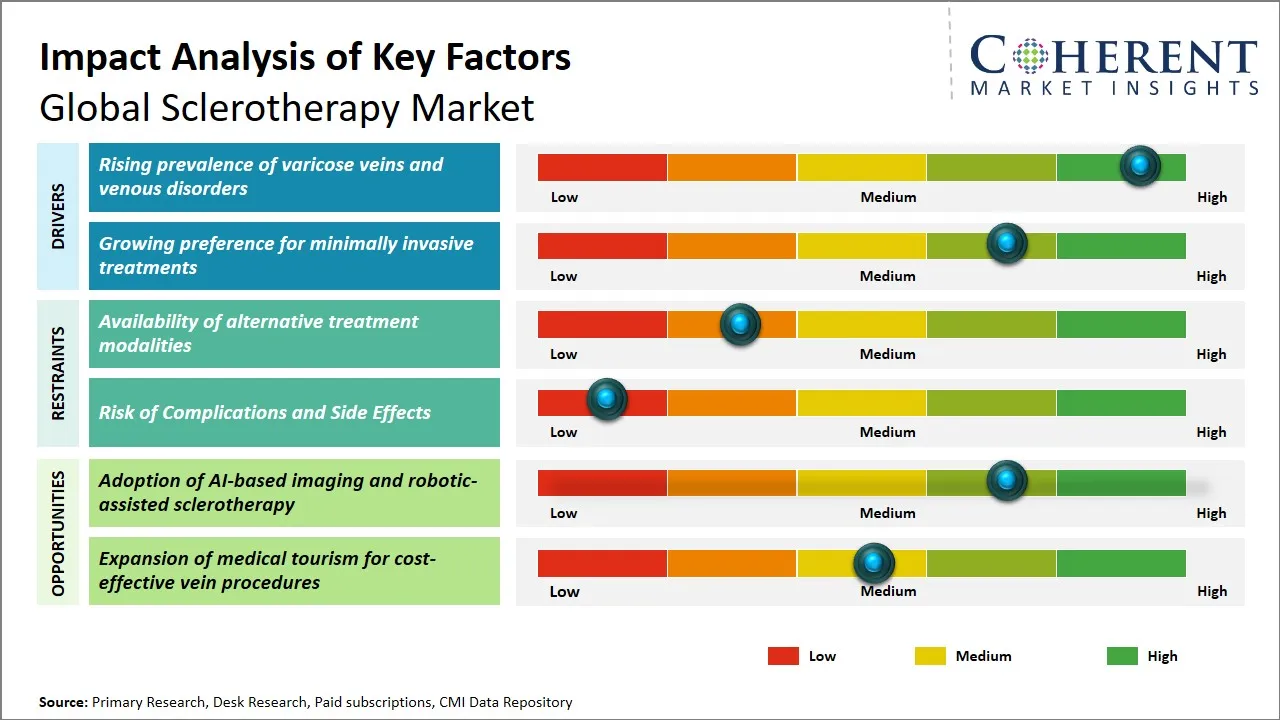
Sclerotherapy Market Driver - Rising Prevalence of Varicose Veins and Venous Disorders
The one significant reason that is pushing the use of sclerotherapy treatments very fast is the rise in the number of people suffering from varicose veins and other venous disorders. Along with the elderly, the population that does not engage in physical activities is also getting bigger. Consequently, the number of people suffering from chronic venous insufficiency has gone up. This condition is usually manifested in the form of varicose veins, spider veins, and their complications. These people do not only mind how they look but also suffer from discomfort, pain, and in extreme cases, the development of ulcers and thrombophlebitis which are some of the reasons why they are looking for treatment options like sclerotherapy that are less invasive and effective.
In July 2025, Medtronic, a global leader in medical technology and laboratory equipment, launched the #KabTakKarogeIgnore campaign in India to raise awareness about varicose veins and promote early medical intervention. The initiative highlights that nearly 15–20% of adults are at risk, yet awareness remains low compared to other cardiovascular diseases.
Sclerotherapy Market Opportunity - Adoption of AI-Based Imaging and Robotic-Assisted Sclerotherapy
The combination of AI-based imaging technologies and robotic-assisted systems opens a big door for the sclerotherapy market to grow. The use of AI in imaging improves the detection of veins to a point where doctors can now boldly identify and treat the varicose and spider veins. With this technology, patients get better treatment results, and the time span of the procedure is shortened, along with that making the whole process easier for the patient, thus satisfaction is increased among patients overall. Moreover, robotic-assisted sclerotherapy systems provide higher precision and control in vein treatment allowing for more consistent and lesser human error performed minimally invasive procedures.
In March 2025, Dr. Smile Medical Group, a healthcare provider specializing in vascular and laboratory diagnostics, introduced VaricoSeek 1.0, an AI-powered platform developed with Tencent’s AI team to assist patients with varicose veins. The tool offers instant, research-based insights, multilingual support, and secure, anonymous access to help users make informed decisions about vein health. Designed to complement professional consultations, VaricoSeek provides 24/7 guidance on venous conditions, marking a major step in digital healthcare innovation.
Analyst Opinion (Expert Opinion)
- The global sclerotherapy market is on the rise as there is an increasing need for minimally invasive treatments for varicose and spider veins. The development of new sclerosant formulations, ultrasound-guided techniques, and the growing awareness of aesthetic and venous health procedures have all played a part in boosting the market. The approval of new foam-based agents for medical use and the expansion of insurance coverage in developed areas are also factors in the widespread use of sclerotherapy. On the downside, the lack of availability of skilled professionals in the emerging markets and the different reimbursement frameworks are still major obstacles to the sclerotherapy market.
- The market has recently passed through a number of transformations that have made it even more dynamic. Better formulations of sclerosants are being developed by companies like BTG International, Asclera by Merz Pharmaceuticals, and Kreussler Pharma, which is aimed at providing not only better patient safety but also better treatment outcomes. National healthcare systems in the U.S. and Europe are investing in vein disorder awareness campaigns, while pilot screening programs in Asia-Pacific are conducive to early diagnosis and therefore procedural adoption.
Speak to the analyst
Want personalized insights?
Take the findings above to one of our principal consultants, or have the report rebuilt around the segments, geographies and competitors you actually track.
Market Segmentation
- Type Insights (Revenue, USD Bn, 2021 - 2033)
- Detergent Sclerosants
- Sodium Tetradecyl Sulfate (STS)
- Polidocanol
- Ethanolamine Oleate
- Others (e.g., Sodium Morrhuate)
- Osmotic Sclerosants
- Hypertonic Saline
- Sclerodex (dextrose/saline solution)
- Chemical Irritants
- Chromated Glycerin
- Polyiodinated Iodine
- Detergent Sclerosants
- Indication Insights (Revenue, USD Bn, 2021 - 2033)
- Varicose Veins
- Venous Malformations
- Hemorrhoids
- Hydroceles
- Gastric Varices
- Others (e.g., Esophageal Varices, Cysts)
- Delivery Form Insights (Revenue, USD Bn, 2021 - 2033)
- Liquid
- Foam (physician-compounded)
- Packaged microfoam (device-based)
- Care Setting Insights (Revenue, USD Bn, 2021 - 2033)
- Hospital outpatient departments
- Ambulatory surgical centers
- Specialty Clinics
- Dermatology/aesthetic clinics
- Regional Insights (Revenue, USD Bn, 2021 - 2033)
- North America
- U.S.
- Canada
- Latin America
- Brazil
- Argentina
- Mexico
- Rest of Latin America
- Europe
- Germany
- U.K.
- Spain
- France
- Italy
- Russia
- Rest of Europe
- Asia Pacific
- China
- India
- Japan
- Australia
- South Korea
- ASEAN
- Rest of Asia Pacific
- Middle East
- GCC Countries
- Israel
- Rest of Middle East
- Africa
- South Africa
- North Africa
- Central Africa
- North America
- Key Players Insights
- Boston Scientific
- Merz Pharma
- Chemische Fabrik Kreussler & Co. GmbH
- Viatris
- STD Pharmaceutical Products Ltd
- QOL Medical
- Omega Laboratories Ltd
- Laboratoires Bailleul
- Hikma Pharmaceuticals
- Leucadia Pharmaceuticals
- Teleflex Incorporated
- Braun Melsungen AG
- Terumo Corporation
- Becton, Dickinson and Company
- Cook Medical
Sources
Primary Research Interviews
Industry Stakeholders List
- Vascular surgeons
- Pharmaceutical manufacturing executives
- Medical device distributors
- Hospital procurement managers
- R&D directors in aesthetic medicine
- Clinical trial coordinators
End Users List
- Dermatologists
- Cosmetic clinics
- Hospitals and specialty clinics
- Ambulatory surgical centers
- Vein treatment centers
- Academic and research laboratories
Government and International Databases
- World Health Organization (WHO)
- U.S. Food and Drug Administration (FDA)
- European Medicines Agency (EMA)
- Centers for Disease Control and Prevention (CDC)
- National Institutes of Health (NIH)
- Organization for Economic Co-operation and Development (OECD)
Trade Publications
- Fierce Biotech
- MedTech Dive
- Pharmaceutical Technology
- BioPharma Dive
- Medical Device Network
- Drug Development & Delivery
Academic Journals
- Journal of Vascular Surgery
- Phlebology
- Journal of Cosmetic Dermatology
- Aesthetic Surgery Journal
- Journal of Clinical and Aesthetic Dermatology
- International Journal of Dermatology
Reputable Newspapers
- The Guardian
- The New York Times
- Financial Times
- Reuters Health
- The Wall Street Journal
- The Economic Times
Industry Associations
- American Vein and Lymphatic Society (AVLS)
- European Venous Forum (EVF)
- American Society for Dermatologic Surgery (ASDS)
- International Union of Phlebology (UIP)
- Medical Device Manufacturers Association (MDMA)
- International Society for Aesthetic Plastic Surgery (ISAPS)
Public Domain Resources
- PubMed Central
- ClinicalTrials.gov
- OpenAIRE
- World Bank Data
- HealthData.gov
- U.S. National Library of Medicine
Proprietary Analytical Tools
- Refinitiv Eikon
- Elsevier Scopus
- IBM SPSS Statistics
- Clarivate Analytics Web of Science
- MATLAB Statistical Toolbox
Proprietary Elements
- CMI Data Analytics Tool: Proprietary analytics tool to analyze real-time market trends, consumer behavior, and technology adoption in market
- Proprietary CMI Existing Repository of Information for Last 8 Years
Get access to 250+ pages report
Every segment, forecast, competitor profile and data table behind the analysis above — available for instant download.
- ESOMAR Member
- ISO 9001:2015 Certified
- D-U-N-S Registered
- GDPR & CCPA Compliant
Missing comfort of reading report in your local language? Find your preferred language:
Transform your Strategy with Exclusive Trending Reports
Frequently Asked Questions
The global sclerotherapy market is estimated to be valued at USD 1.32 Bn in 2026 and is expected to reach USD 2.02 Bn in 2033.
The CAGR of the global sclerotherapy market is projected to be 6.3% from 2026 to 2033.
Rising prevalence of varicose veins and venous disorders and growing preference for minimally invasive treatments are the major factors driving the growth of the global sclerotherapy market.
Availability of alternative treatment modalities and risk of complications and side effects are the major factors hampering the growth of the global sclerotherapy market.
Technological advancements, including the use of ultrasound and digital imaging, have improved the precision and effectiveness of sclerotherapy treatments.
Sodium tetradecyl sulfate (STS) is the most commonly used sclerotherapy agent due to its high safety and effectiveness.
In terms of type, the detergent sclerosants segment is estimated to dominate the market revenue share in 2026.