

Global Shale Gas Market Size and Forecast – 2026-2033
The Global Shale Gas Market is estimated to be valued at USD 94.57 Bn in 2026 and is expected to reach USD 142.20 Bn by 2033, exhibiting a compound annual growth rate (CAGR) of 6.0% from 2026 to 2033.
Key Takeaways of the Shale Gas Market:
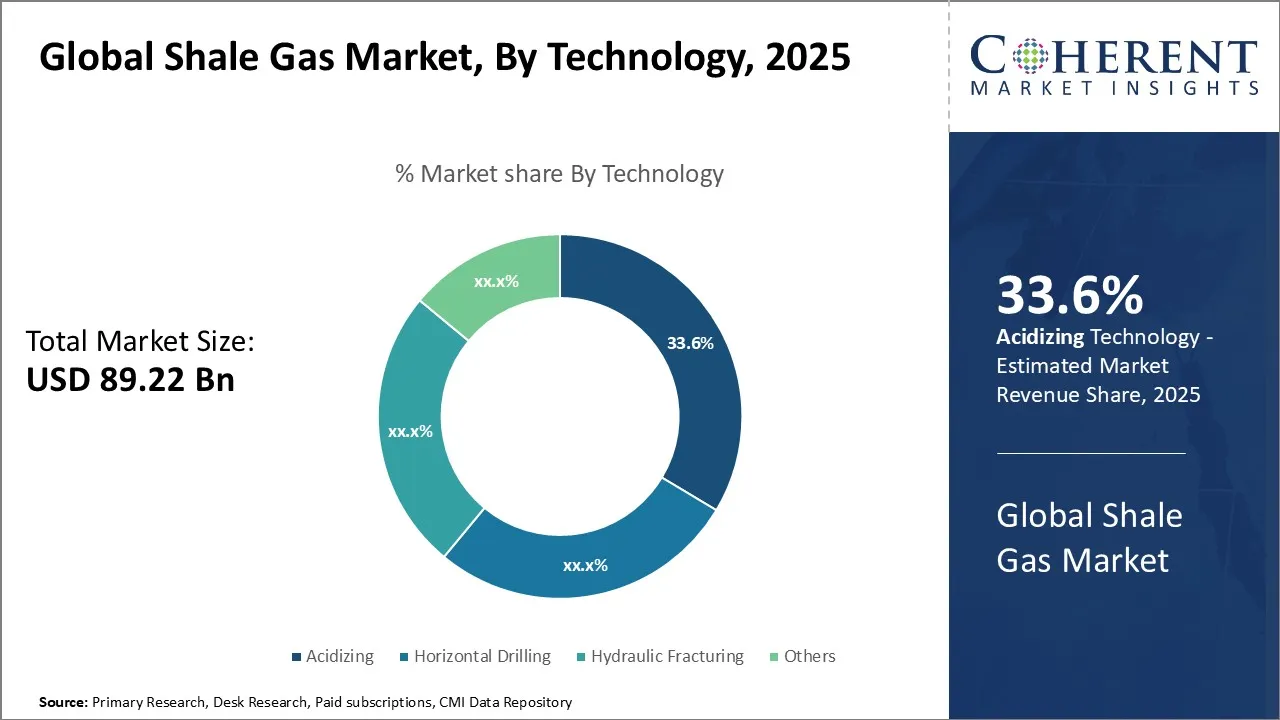
- The acidizing segment is expected to account for 34.6% of the market share in 2026, driven by its ability to improve the productivity of shale gas wells.
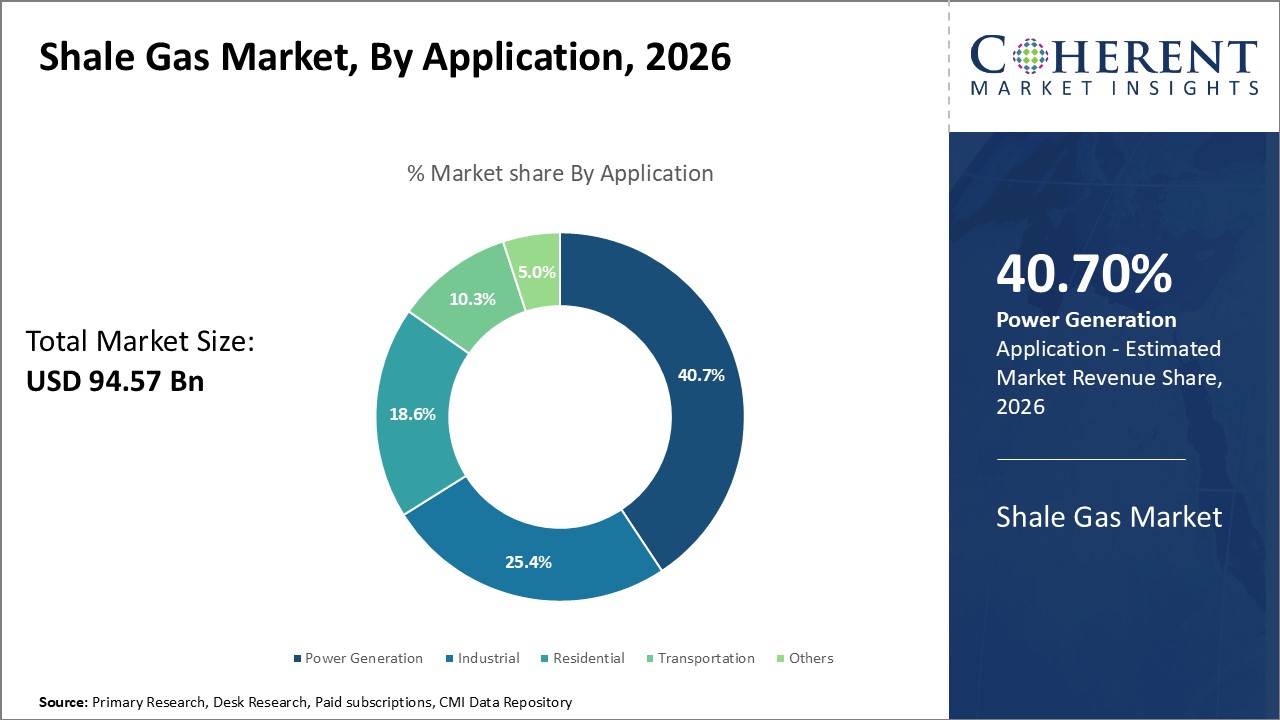
- The power generation segment is projected to hold a 40.7 % market share in 2026, driven by the increasing demand for cleaner and more efficient energy sources.
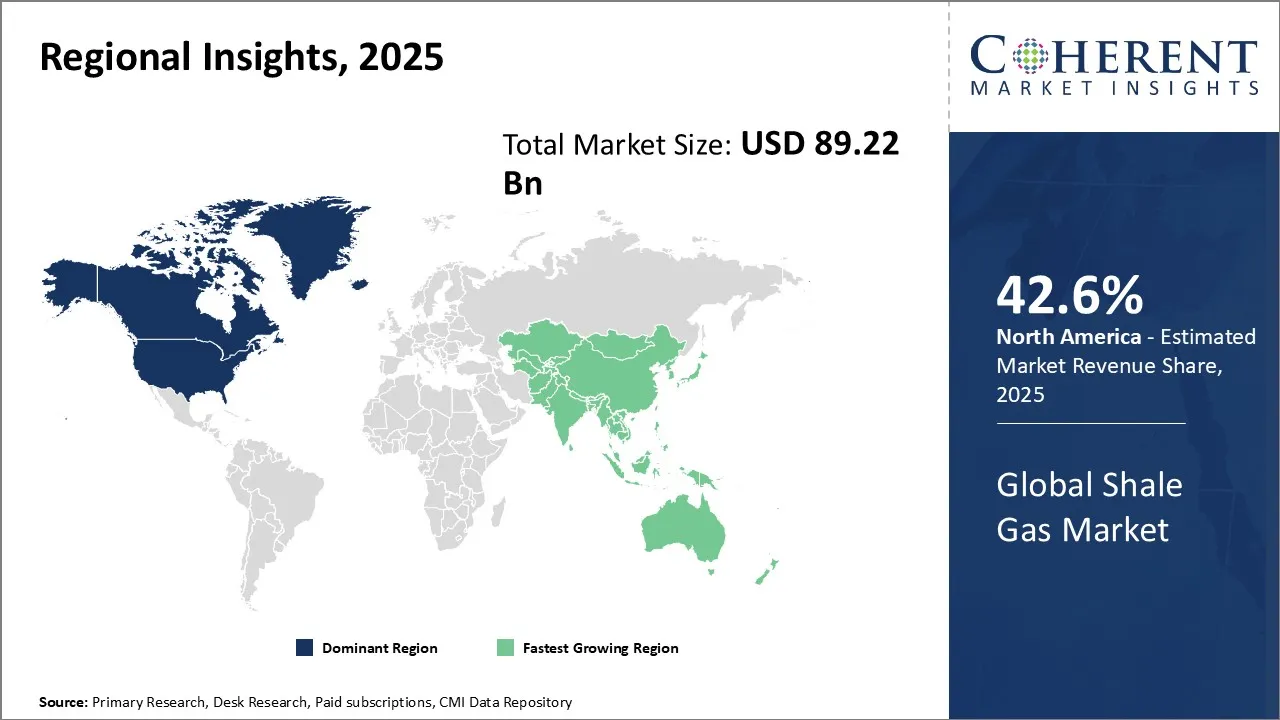
- North America will lead the global shale gas market in 2026 with a 42.6 % share, driven by technological advancements and high demand for natural gas. Asia Pacific, growing at 11.5% in 2026, will be the fastest-growing region due to rising energy consumption and increased investments in shale gas in China and India.
Market Overview:
The shale gas market is experiencing a significant trend towards the adoption of horizontal drilling and hydraulic fracturing, which have revolutionized the extraction process and made previously inaccessible reserves economically viable. Additionally, the growing demand for natural gas in various sectors, such as power generation, transportation, and industrial applications, is further propelling the market growth. However, environmental concerns regarding the potential impact of shale gas extraction on water resources and the release of methane during production pose challenges to the market's growth.
Currents Events and their Impact
Current Events | Description and its impact |
OPEC+ Oil Price Strategy |
|
Advancements in Shale Gas Extraction Technologies |
|
Segmental Analysis
- Current Industry Events of 2026
- Market Size Estimation
- Regional Breakdown
- Competitive Landscape
- Customer Intelligence
- Segmental Analysis
- Pricing Analysis
- Key Market Drivers, Challenges & Future Trends
- Customized Insights Section
Shale Gas Market Insights, By Technology – The acidizing segment leads the market, driven by the increasing demand for shale gas
The acidizing segment is expected to contribute 34.6% share of the market in 2026, owing to its effectiveness in enhancing the productivity of shale gas wells. Acidizing is a well-stimulation technique that involves pumping acid into the wellbore to dissolve and remove any damage or debris that may be blocking the flow of gas. This process helps increase the permeability of the shale formation, allowing for greater gas production.
Another factor contributing to the growth of the acidizing segment is the advancements in technology that have made the process more efficient and cost-effective. In recent years, there have been significant improvements in the types of acids used, as well as the methods for delivering them into the wellbore. These advancements have helped to reduce the time and cost associated with acidizing, making it a more attractive option for shale gas producers.
Shale Gas Market Insights, By Application - The power generation segment is driving the demand for shale gas, fueled by the growing need for cleaner energy sources and more reliable power generation methods
The power generation segment is expected to contribute 40.7% share of the market in 2026, as the demand for cleaner and more efficient energy sources continues to grow. Shale gas has emerged as a key player in the power generation sector due to its abundance, affordability, and lower carbon emissions compared to coal.
One of the main factors driving the use of shale gas in power generation is the shift towards cleaner energy sources. Governments and utilities around the world are setting ambitious targets for reducing greenhouse gas emissions and increasing the use of renewable energy. Shale gas, while still a fossil fuel, offers a cleaner-burning alternative to coal and can serve as a bridge fuel in the transition to a low-carbon future.
Regional Insights:
North America Shale Gas Market Analysis and Trends
The North America region is projected to lead the market with a 42.6% share in 2026. The region's vast shale gas reserves, particularly in the U.S., have been a major driver of growth. The well-established oil and gas industry infrastructure, coupled with advanced drilling technologies like horizontal drilling and hydraulic fracturing, has enabled efficient extraction of shale gas.
Supportive government policies, such as tax incentives and favorable regulations, have further encouraged investments in shale gas exploration and production. Major players in the region, including ExxonMobil, Chevron, and ConocoPhillips, have been actively involved in shale gas projects, leveraging their expertise and resources to capitalize on the market potential.
Asia Pacific Shale Gas Market Analysis and Trends
The Asia Pacific region is expected to exhibit the fastest growth in the market contributing 11.5% share in 2026. The increasing energy demand, driven by rapid industrialization, urbanization, and population growth, has propelled the exploration and development of shale gas resources in the region. Countries like China and Australia have significant shale gas reserves and have been actively investing in their development. China, in particular, has implemented supportive government policies such as research and development support.
The government funds research initiatives aimed at improving extraction technologies and reducing the cost of production. and has set ambitious targets for shale gas production. The country has collaborated with international oil and gas companies to acquire technology and expertise in shale gas extraction. Additionally, the growing emphasis on cleaner energy sources and the need to reduce dependence on coal have further fueled the growth of the shale gas market in the Asia Pacific region.
Global Shale Gas Market Outlook for Key Countries:
U.S. Shale Gas Market Trends
The U.S. shale gas market has been at the forefront of the shale gas revolution. With abundant shale gas reserves, particularly in the Marcellus, Permian, and Haynesville basins, the country has experienced a significant increase in shale gas production. The presence of major oil and gas companies, such as ExxonMobil and Chevron, along with a favorable regulatory environment, has driven investments in shale gas exploration and production. The availability of advanced drilling technologies and a well-developed pipeline infrastructure have further supported the growth of the market in the U.S.
China Shale Gas Market Trends
China shale gas market holds immense potential for shale gas development. The country possesses vast shale gas reserves, primarily located in the Sichuan Basin and the Tarim Basin. The Chinese government has prioritized shale gas exploration and has set ambitious production targets to reduce dependence on coal and meet the growing energy demand. International oil and gas companies, such as Shell and BP, have formed partnerships with Chinese state-owned enterprises to develop shale gas projects. However, challenges such as complex geology, water scarcity, and limited infrastructure have hindered the pace of development in China's shale gas market.
Canada Shale Gas Market Trends
Canada continues to be a significant player in the global shale gas market. The country's shale gas reserves, mainly located in the Montney and Duvernay formations, have attracted investments from both domestic and international companies. The Canadian government has supported the development of shale gas through favorable policies and regulations. Companies like Encana and Tourmaline Oil have been actively involved in shale gas exploration and production in Canada. The country's proximity to the U.S. and the existing pipeline infrastructure have facilitated the export of shale gas to its southern neighbor.
Argentina Shale Gas Market Trends
Argentina shale gas market has gained attention due to its vast shale gas potential, particularly in the Vaca Muerta formation. The government has implemented policies to attract foreign investments and has offered incentives to encourage shale gas exploration and production. International oil and gas companies, such as Chevron and ExxonMobil, have partnered with Argentina's state-owned company, YPF, to develop shale gas projects in the country. However, challenges related to infrastructure, logistics, and economic instability have impacted the pace of development in the Argentina shale gas market.
Environmental Impact of Shale Gas Production:
Emissions:
- Air Emissions: Shale gas extraction and processing release air pollutants, including methane (a potent greenhouse gas), volatile organic compounds (VOCs), nitrogen oxides (NOx), and particulate matter. Methane leaks during well completions, production, and transport contribute to climate change and can be harmful to local air quality.
- Greenhouse Gases: The full lifecycle emissions of shale gas—including extraction, processing, and combustion—can be significant. While shale gas is often touted as a cleaner alternative to coal, its climate impact is debated due to fugitive methane emissions.
Water Consumption:
- Water Contamination: Risks include accidental spills, leaks, and improper disposal of wastewater, which can contaminate groundwater and surface water with chemicals, heavy metals, and radioactive materials.
- Wastewater Management: The safe disposal or treatment of flowback and produced water is a major challenge, with potential for environmental harm if not managed properly.
Market Players, Key Development, and Competitive Intelligence:
Key Developments:
- In May 2025, Sinopec made a significant breakthrough in shale gas exploration, enhancing gas reserves and production efficiency in China's Puguang area. The company announced that its Tiebei 1HF well, part of the Project Deep Earth in the Sichuan and Chongqing Natural Gas Base, successfully reached a vertical depth of over 5,300 meters. This achievement sets a new record for the deepest vertical shale gas well ever drilled in China, marking a key milestone in the country’s shale gas exploration capabilities.
- In November 2024, Exxon Mobil Corporation announced a USD 1 Bn agreement to divest its conventional oil drilling assets in the Permian Basin to Hilcorp Energy. This strategic decision supports Exxon’s shift toward high-growth shale operations and a gradual move away from aging assets. The portfolio includes mainly vertical wells, with an estimated output of around 26,000 barrels of oil equivalent per day. The deal is expected to close in the first half of 2025, highlighting a broader industry trend of offloading mature oilfields.
- In December 2023, the U.K. government introduced a new set of initiatives to uphold its commitment to supporting shale gas development, as outlined in its manifesto. The measures include the creation of a dedicated Shale Environmental Regulator and the launch of a Planning Brokerage Service aimed at streamlining the planning process.
- In August 2023, Falcon Oil & Gas, in collaboration with joint venture partner, Tamboran Resources, reported a significant dry gas presence during the drilling of the Shenandoah South 1H (SS1H) shale exploration well in Australia’s Beetaloo Sub-basin
- In October 2022, Sinopec announced a major shale gas discovery in the Sichuan Basin, marking a step toward achieving an annual production capacity of 100 Bn cubic meters of gas in southwest China
Top Strategies Followed by Global Shale Gas Market Players
- Established players in the global shale gas market are focusing on extensive research and development to innovate high-performance products. These companies are investing heavily in R&D to develop advanced extraction techniques, such as horizontal drilling and hydraulic fracturing, to maximize shale gas production efficiency. Moreover, they are forming strategic partnerships with major industry players or original equipment manufacturers (OEMs) to solidify their market presence.
- For example, companies like Chevron and Shell have formed strategic partnerships with equipment manufacturers like Schlumberger and Halliburton, leveraging complementary expertise to optimize drilling techniques and enhance operational efficiency.
- Mid-level players in the global shale gas market are concentrating on delivering cost-effective solutions to attract price-sensitive consumers. These companies are optimizing their production processes and leveraging economies of scale to offer quality products at competitive prices.
- For instance, EOG Resources, a mid-sized shale gas producer, has optimized its production processes by using innovative technologies like multi-stage fracturing and automated monitoring systems, which have allowed them to reduce production costs while improving gas output. These companies are also engaging in collaborations with technology providers to enhance their technological capabilities.
- Small-scale players in the global shale gas market are targeting niche markets by offering specialized products with unique features or innovative technologies. These companies are focusing on specific market segments where they can differentiate themselves from larger competitors. Additionally, they are adopting cutting-edge technologies, such as advanced data analytics and automation, to enhance their operational efficiency and remain competitive in the market.
- For example, Comstock Resources has implemented advanced data analytics and real-time monitoring systems to optimize its production processes and reduce operational costs.
Market Report Scope
Market Report Scope Report Coverage
| Report Coverage | Details | ||
|---|---|---|---|
| Base Year: | 2025 | Market Size in 2026: | USD 94.57 Bn |
| Historical Data for: | 2020 To 2024 | Forecast Period: | 2026 To 2033 |
| Forecast Period 2026 to 2033 CAGR: | 6.0% | 2033 Value Projection: | USD 142.20 Bn |
| Geographies covered: |
| ||
| Segments covered: |
| ||
| Companies covered: | ExxonMobil, Chevron Corporation, Royal Dutch Shell, BP plc, TotalEnergies, ConocoPhillips, EOG Resources, Range Resources, Chesapeake Energy, Anadarko Petroleum, Devon Energy, Cabot Oil & Gas, Marathon Oil, Pioneer Natural Resources, and Southwestern Energy | ||
| Growth Drivers: |
| ||
| Restraints & Challenges: |
| ||
Shale Gas Market Dynamics
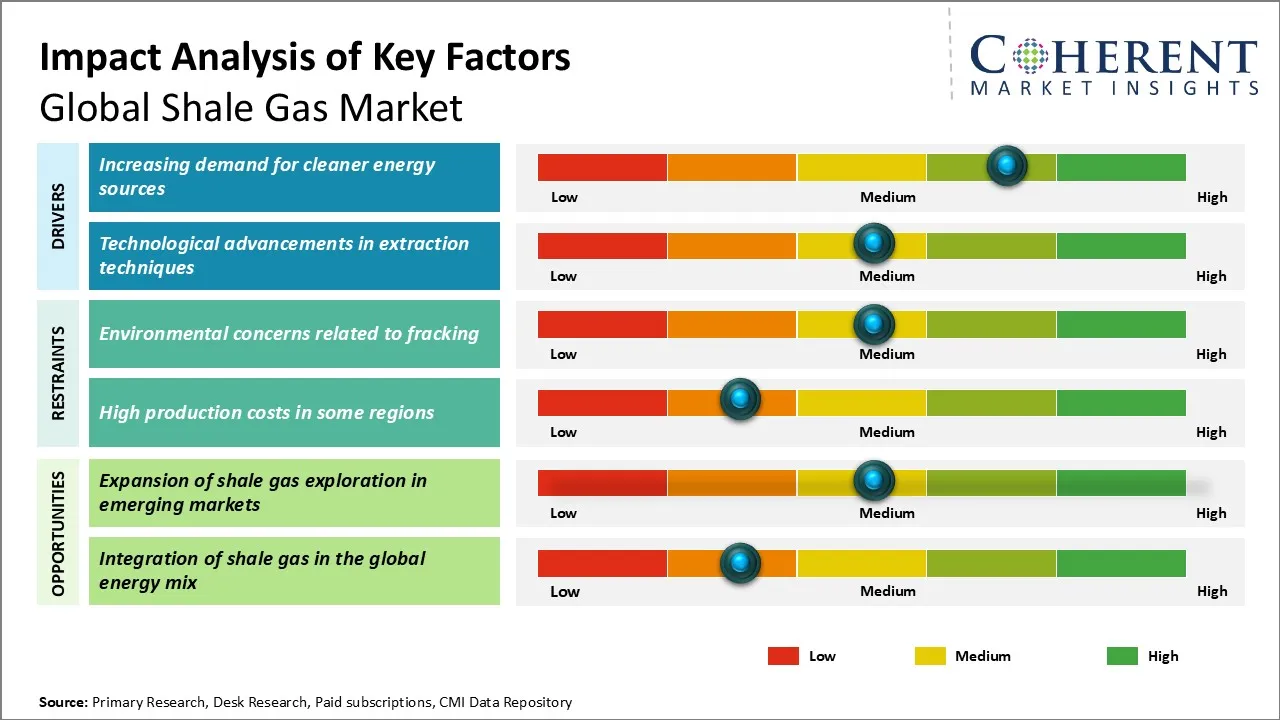
Shale Gas Market Driver - Increasing Demand for Cleaner Energy Sources
The global shale gas market is experiencing a significant driver in the form of increasing demand for cleaner energy sources. As environmental concerns continue to rise and governments worldwide implement stricter regulations to combat climate change, the focus on reducing carbon emissions has intensified. Shale gas, being a relatively cleaner-burning fossil fuel compared to coal and oil, has emerged as a viable alternative to bridge the gap between traditional energy sources and renewable energy. The lower carbon footprint reduction associated with shale gas combustion has made it an attractive option for countries seeking to reduce their greenhouse gas emissions while still meeting their energy demands.
For instance, according to the U.S. Energy Information Administration (EIA), shale gas has helped reduce U.S. carbon dioxide emissions by nearly 30% since 2005, as power plants that previously burned coal have switched to using natural gas, which emits roughly half the CO2 per unit of energy produced compared to coal.
Shale Gas Market Opportunity - Expansion of Shale Gas Exploration in Emerging Markets
The expansion of shale gas exploration in emerging markets presents a significant opportunity for the global shale gas market. Many countries, such as China, Argentina, and Mexico, have vast untapped shale gas reserves that could potentially revolutionize their energy sectors and reduce their dependence on imported energy sources. These emerging markets are increasingly investing in shale gas exploration and production technologies, creating new opportunities for international oil and gas companies, as well as equipment and service providers
These emerging markets are driven by the increasing demand for clean and affordable energy sources, as well as the desire to reduce dependence on imported fossil fuels. For instance, according to the U.S. Energy Information Administration (EIA), China holds the world's largest technically recoverable shale gas reserves, estimated at 1,115 trillion cubic feet as of 2020. This immense resource potential, coupled with supportive government policies and investments in infrastructure, positions China as a key player in the future of the shale gas market.
Analyst Opinion (Expert Opinion):
- The global shale gas market is poised for transformative growth, driven by technological advancements in hydraulic fracturing and horizontal drilling that enhance extraction efficiencies. Companies like EOG Resources are setting benchmarks with innovative practices that not only increase production but also reduce environmental impacts. Recent conferences, such as the Shale Gas World Conference (2022) and the North American Gas Forum (2023), have provided vital platforms for industry leaders to discuss the latest developments, regulatory challenges, and market dynamics.
- These events highlight the critical need for sustainable practices and the role of shale gas in achieving energy independence. As global energy demands shift towards cleaner options, the shale gas market is expected to expand significantly, supported by ongoing innovations and a growing emphasis on environmental responsibility within the sector.
Speak to the analyst
Want personalized insights?
Take the findings above to one of our principal consultants, or have the report rebuilt around the segments, geographies and competitors you actually track.
Market Segmentation
- Technology Insights (Revenue, USD Bn, 2021 - 2033)
- Acidizing
- Horizontal Drilling
- Hydraulic Fracturing
- Others
- Application Insights (Revenue, USD Bn, 2021 - 2033)
- Power Generation
- Industrial
- Residential
- Transportation
- Others
- Regional Insights (Revenue, USD Bn, 2021 - 2033)
- North America
- U.S.
- Canada
- Latin America
- Brazil
- Argentina
- Mexico
- Rest of Latin America
- Europe
- Germany
- U.K.
- Spain
- France
- Italy
- Russia
- Rest of Europe
- Asia Pacific
- China
- India
- Japan
- Australia
- South Korea
- ASEAN
- Rest of Asia Pacific
- Middle East
- GCC Countries
- Israel
- Rest of Middle East
- Africa
- South Africa
- North Africa
- Central Africa
- North America
- Key Players Insights
- ExxonMobil
- Chevron Corporation
- Royal Dutch Shell
- BP plc
- TotalEnergies
- ConocoPhillips
- EOG Resources
- Range Resources
- Chesapeake Energy
- Anadarko Petroleum
- Devon Energy
- Cabot Oil & Gas
- Marathon Oil
- Pioneer Natural Resources
- Southwestern Energy
Sources:
Primary Research Interviews:
- Shale Gas Exploration Manager – Leading Oil & Gas Company
- Procurement Manager – Natural Gas Utility
- Environmental Impact Officer – Shale Gas Regulatory Authority
- Energy Policy Analyst – National Energy Research Institute
Stakeholders:
- Exploration & Production Companies: Companies focused on drilling, extraction, and production of shale gas resources.
- Government Regulatory Bodies: Key institutions that oversee drilling regulations, safety standards, and energy policies.
- End-use Industries
- Energy Providers – Natural gas suppliers, power generation plants.
- Industrial Sector – Industries utilizing natural gas as a raw material or energy source (e.g., petrochemicals, fertilizers).
Databases:
- U.S. Energy Information Administration (EIA)
- World Bank Energy Data
Magazines:
- Oil & Gas Journal – Key trends in shale gas production, technology advancements.
- Natural Gas World – Market reports on natural gas, including shale gas developments.
- Energy Intelligence – Global shale gas policy updates, production data, and forecasts.
- Shale Energy Insider – Industry news on shale gas exploration and market dynamics.
Journals:
- Journal of Petroleum Technology – Exploration, extraction, and technological developments in shale gas.
- Energy Economics – Economic analysis of shale gas production, pricing, and market effects.
- Energy Policy Journal – Research on the impact of government policies on shale gas markets.
- Journal of Cleaner Production – Environmental implications and sustainable practices in shale gas extraction.
Newspapers
- The Wall Street Journal
- Financial Times
- The New York Times
- The Guardian – Environmental Section
Associations:
- American Gas Association – Provides data and policy advocacy on the natural gas industry, including shale gas.
- International Association of Oil and Gas Producers (IOGP) – Industry-specific data, policy reports, and statistics on shale gas.
- Shale Gas Environmental Advocacy Network – Research and reports on the environmental impact of shale gas drilling.
- National Petroleum Council – Provides insights into the energy sector and shale gas development trends.
Public Domain Sources
- U.S. Environmental Protection Agency (EPA) – Regulations on hydraulic fracturing (fracking) and environmental safety standards.
- U.S. Department of Energy (DOE) – Shale gas production forecasts and technological advancements.
- International Energy Agency (IEA) – Global shale gas market outlook, energy supply dynamics.
- Federal Energy Regulatory Commission (FERC) – Regulations and policy updates related to shale gas and natural gas pipelines.
- OECD – Energy Markets and Policy – Global trends and regulatory frameworks affecting shale gas development.
Proprietary Elements:
- CMI Data Analytics Tool, Proprietary CMI Existing Repository of information for last 8 years.
Get access to 250+ pages report
Every segment, forecast, competitor profile and data table behind the analysis above — available for instant download.
- ESOMAR Member
- ISO 9001:2015 Certified
- D-U-N-S Registered
- GDPR & CCPA Compliant
Missing comfort of reading report in your local language? Find your preferred language:
Transform your Strategy with Exclusive Trending Reports
Frequently Asked Questions
The global shale gas market is estimated to be valued at USD 94.57 Bn in 2026 and is expected to reach USD 142.20 Bn by 2033.
The CAGR of the global shale gas market is projected to be 6.0% from 2026 to 2033.
Increasing demand for cleaner energy sources and technological advancements in extraction techniques are the major factors driving the growth of the global shale gas market.
Environmental concerns related to fracking and high production costs in some regions are the major factors hampering the growth of the global shale gas market.
In terms of technology, acidizing is estimated to dominate the market revenue share in 2026.
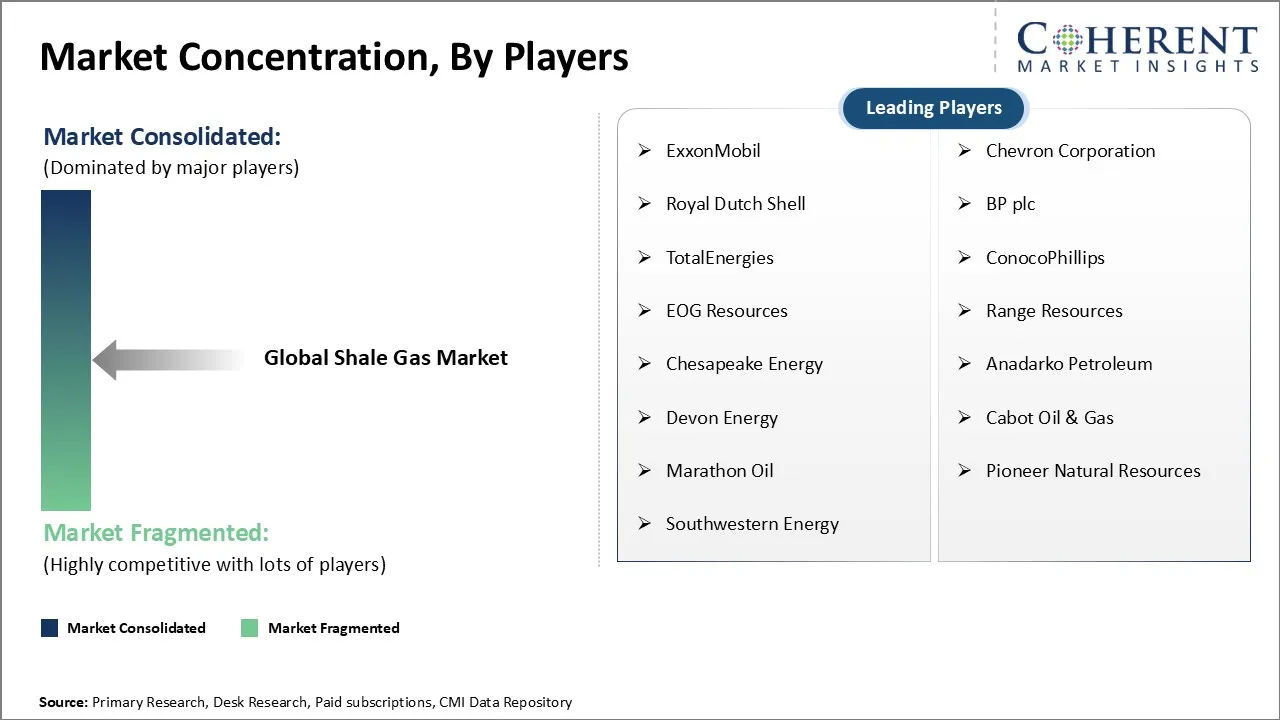
ExxonMobil, Chevron Corporation, Royal Dutch Shell, BP plc, TotalEnergies, ConocoPhillips, EOG Resources, Range Resources, Chesapeake Energy, Anadarko Petroleum, Devon Energy, Cabot Oil & Gas, Marathon Oil, Pioneer Natural Resources, and Southwestern Energy are the major players.
North America is expected to lead the global shale gas market in 2026.