

Sleep Apnea Implants Market Size and Forecast — 2026-2033
The Global Sleep Apnea Implants Market is estimated to be valued at USD 471.3 Mn in 2026 and is expected to reach USD 1,216.0 Mn by 2033, exhibiting a compound annual growth rate (CAGR) of 14.5% from 2026 to 2033.
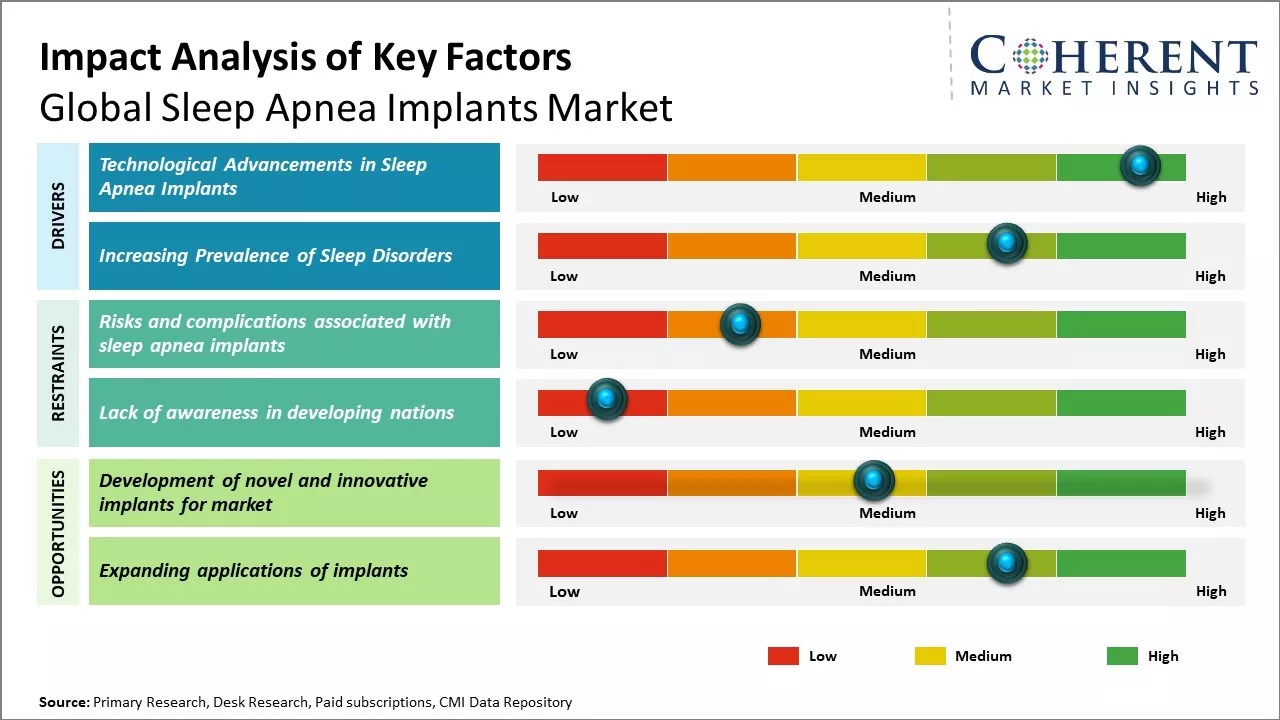
The sleep apnea implants market is expected to grow at a steady pace during the forecast period. This can be attributed to the rising prevalence of sleep apnea worldwide coupled with growing awareness about the available treatment options. According to recent studies, sleep apnea affects over 936 million people globally. With growing health concerns and better diagnostics, a greater number of patients are opting for surgical treatments using implants. Moreover, development of innovative implant technologies with minimum invasiveness is further supporting the market growth. However, availability of alternative oral appliances and issues associated with the surgery may hinder the market expansion to some extent during the forecast years.
Technological Advancements in Sleep Apnea Implants
Over the past few decades, notable innovations have been brought about in sleep apnea implants that have helped address some of the limitations associated with traditional Continuous Positive Airway Pressure (CPAP) therapy. Significant advancements in areas like biomaterial engineering, miniaturization of implantable components, smart sensor technology, and refined surgical techniques have enhanced the safety, efficacy, and patient comfort with these implant devices. For instance, novel polymers that are biocompatible, durable, and replicate natural tissues have facilitated the development of flexible implant platforms that cause minimal discomfort or damage to delicate airways. Advances in 3D printing and nanotechnology enabled the manufacture of ultra-thin, customized implants tailored to an individual's unique anatomy. Implants are now smaller in size and less invasive to place due to advancements in micro-level machining and assembly techniques. The integration of smart sensors and networked connectivity further fueled new opportunities. These allow real-time monitoring of breathing patterns and apnea incidents from implants. The recorded data can be communicated to doctors wirelessly to aid remote follow ups and personalized therapy adjustments for optimal outcomes. These emerging technologies have made sleep apnea surgery less intimidating, shifted patient preferences towards implants, and boosted industry sales. Moving forward, ongoing R&D in new biomaterials, miniaturization trends, and intelligence augmentation is expected to further enhance implant-based sleep apnea management standards.
By Product
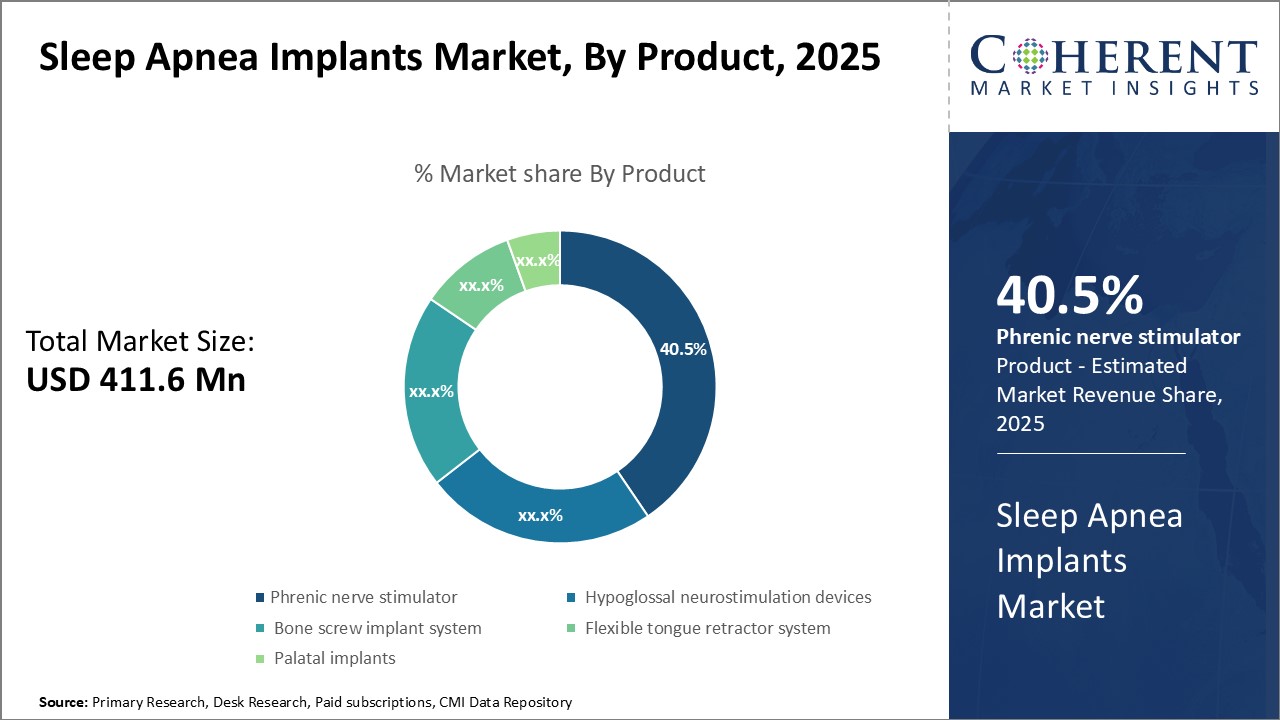
By Product - Technological Advancements Drive Growth of Phrenic Nerve Stimulator
In terms of Product, Phrenic nerve stimulator is estimated to contribute the highest share of the market, with 41.5% in 2026 owing to continuous technological advancements. Phrenic nerve stimulator helps in treating central sleep apnea by stimulating diaphragm through electrodes implanted near the phrenic nerve. Intensive research and development activities from market players have led to development of innovative phrenic nerve stimulator devices with enhanced accuracy and efficiency. For instance, some devices are now equipped with closed-loop feedback systems that can automatically adjust stimulation based on patients breathing pattern. Design improvements have also made the devices compact and comfortable for patients to wear while sleeping. Growing adoption of minimally invasive surgical procedures for implanting phrenic nerve stimulators is another key factor fueling their demand.
By Indication
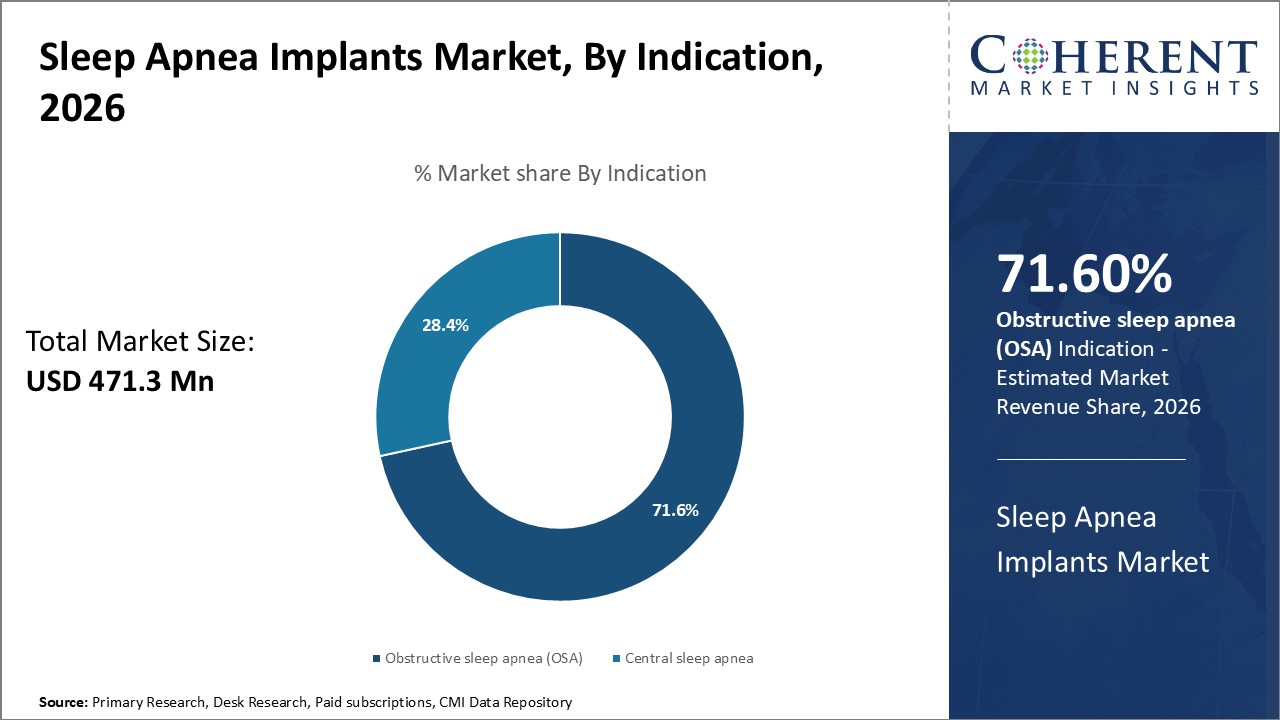
By Indication - Rising Prevalence of Obstructive Sleep Apnea Drives Growth
In terms of Indication, Obstructive sleep apnea (OSA) is estimated to contribute the highest share of the market, with 71.6% in 2026 owing to its rising prevalence globally. OSA occurs due to repeated collapse of the upper airway during sleep causing interrupted breathing. Risk factors such as obesity, genetics, and age have contributed to surge in OSA cases in recent years. Left untreated, OSA can increase risk of serious health issues like heart disease and diabetes. Thus, growing awareness among patients and healthcare providers regarding ill-effects of untreated OSA is driving demand for effective treatment options like sleep apnea implants. Favorable reimbursement policies for implantation procedures in developed countries have further boosted adoption of OSA implants.
By End User
By End User - Ambulatory Surgical Centers Witness Strong Growth
In terms of End User, Ambulatory surgical centers is estimated to contribute the highest share of the market, with 41.5% in 2026 owing to their numerous advantages. The shift from in-patient to outpatient surgeries has boosted popularity of ambulatory surgical centers for implantation procedures. They provide services similar to hospitals at much lower costs and are highly convenient for patients. Implantation surgeries performed at ambulatory centers have lower risks of hospital acquired infections and patients recover faster. They also help reduce long waiting periods unlike hospitals. Further, availability of private insurance coverage and favorable reimbursement for procedures at ambulatory surgical centers have augmented their revenue growth in the sleep apnea implants market.
Regional Insights
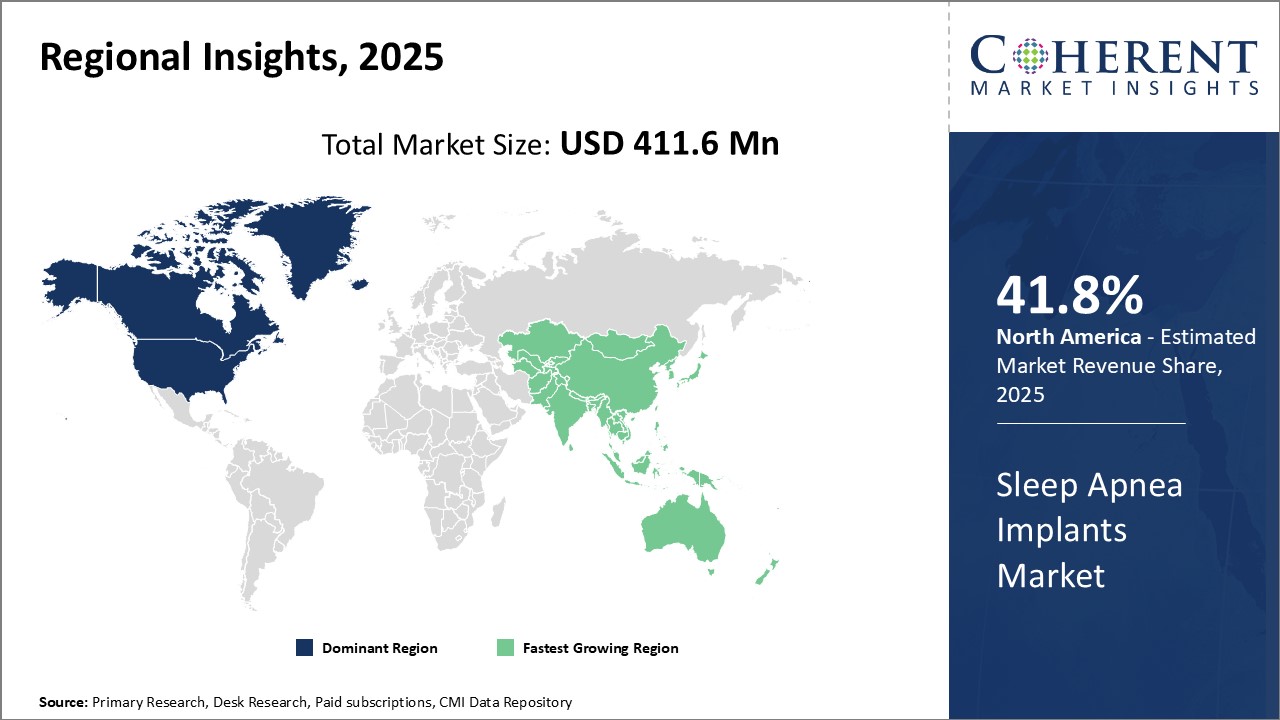
North America dominates the global sleep apnea implants market with an estimated share of 41.8% in 2026 owing to factors such as the presence of major market players, advanced healthcare infrastructure, and high adoption rate of medical devices and implants in the region. The U.S. alone accounts for over 60.5% share of the North American sleep apnea implants market. This can be attributed to the strong presence of major manufacturers such as ResMed, Fisher & Paykel Healthcare, and Inspire Medical Systems which are based in the region. These companies contribute significantly to the regional exports while catering to the domestic demand as well. In addition, favorable reimbursement policies and awareness among physicians and patients regarding sleep disorders have resulted in the wider acceptance of implantable devices in the region over the last decade.
The Asia Pacific region has emerged as the fastest growing market for sleep apnea implants globally. Factors such as increasing healthcare expenditures, growing population with sleep disorders due to changing lifestyles, and rising per capita incomes are driving the growth. Rapid economic development in countries such as China and India have simultaneously led to shift in dietary patterns and work environments which have substantially increased the risk of sleep disorders among the people. Both China and Japan are dominant importers of sleep apnea implants. Regional players are also expected to exploit the opportunities by offering cost-effective implant solutions in near future. This will further propel the market growth in Asia Pacific region.
Market Players, Key Development, and Competitive Intelligence
Increasing Prevalence of Sleep Disorders
The global burden of sleep disorders has been increasing at an alarming rate over the past few decades. Sleep apnea, in particular, has emerged as one of the most common disorders affecting people globally. It is estimated that over 936 million adults around the globe suffer from obstructive sleep apnea according to the latest data. The primary reason for this rising prevalence is the evolving lifestyle patterns and increasing levels of stress in modern society. Sedentary jobs requiring prolonged sitting hours, reliance on digital gadgets, and screens before bedtime, irregular sleep-wake cycles, and an unhealthy diet have severely disrupted peoples' natural sleep patterns. Consumption of caffeine, alcohol, and smoking right before sleeping further aggravates the condition. The rising levels of obesity and associated health issues have also fueled the cases of sleep apnea. Genetic predisposition also plays a role in increased susceptibility to sleep disorders in some individuals. The aging global population is another major demographic driver contributing to the growing patient pool. With advancing age comes a greater likelihood of developing breathing issues during sleep due to weakening of respiratory muscles and loss of muscle tone in the airways. These factors together have initiated a disturbing upward trend in sleep apnea cases reported worldwide.
Key Developments
- On March 20, 2024, LivaNova PLC, a global medical technology company, announced that its OSPREY clinical study on the aura6000 Hypoglossal Nerve Stimulator System for obstructive sleep apnea (OSA) had achieved a positive predictive outcome and will end enrollment early. The study shows over a 97.5% chance of meeting its primary endpoint. LivaNova has informed the FDA and trial sites of this milestone.
- In June, 2023, Inspire Medical Systems gained FDA approval for an expanded use of its Inspire nerve-stimulating implant, which helps treat obstructive sleep apnea by stimulating a jaw nerve to keep the airway open. The device is controlled by the patient via a remote.
- In November, 2023, Tampa General Hospital (TGH) achieved a significant milestone by performing Florida's first pediatric Inspire implant surgery. This landmark procedure, conducted at TGH's renowned ENT Institute, was for a young patient with Down syndrome and sleep apnea, highlighting the hospital's commitment to multidisciplinary pediatric care.
*Definition: The global sleep apnea implants market consists of medical device companies that manufacture various implantable devices used in the treatment of sleep apnea. This includes implants designed to support the soft palate like palatal implants, as well as implants placed in the tongue like hypoglossal nerve stimulation devices. These implants are surgically placed to open the airway and reduce apnea events during sleep, helping improve sleep quality for patients suffering from mild to severe obstructive sleep apnea.
- Current Industry Events of 2026
- Market Size Estimation
- Regional Breakdown
- Competitive Landscape
- Customer Intelligence
- Segmental Analysis
- Pricing Analysis
- Key Market Drivers, Challenges & Future Trends
- Customized Insights Section
Market Report Scope
Sleep Apnea Implants Market Report Coverage
| Report Coverage | Details | ||
|---|---|---|---|
| Base Year: | 2025 | Market Size in 2026: | USD 471.3 Mn |
| Historical Data for: | 2020 To 2024 | Forecast Period: | 2026 To 2033 |
| Forecast Period 2026 to 2033 CAGR: | 14.5% | 2033 Value Projection: | USD 1,216.0 Mn |
| Geographies covered: |
| ||
| Segments covered: |
| ||
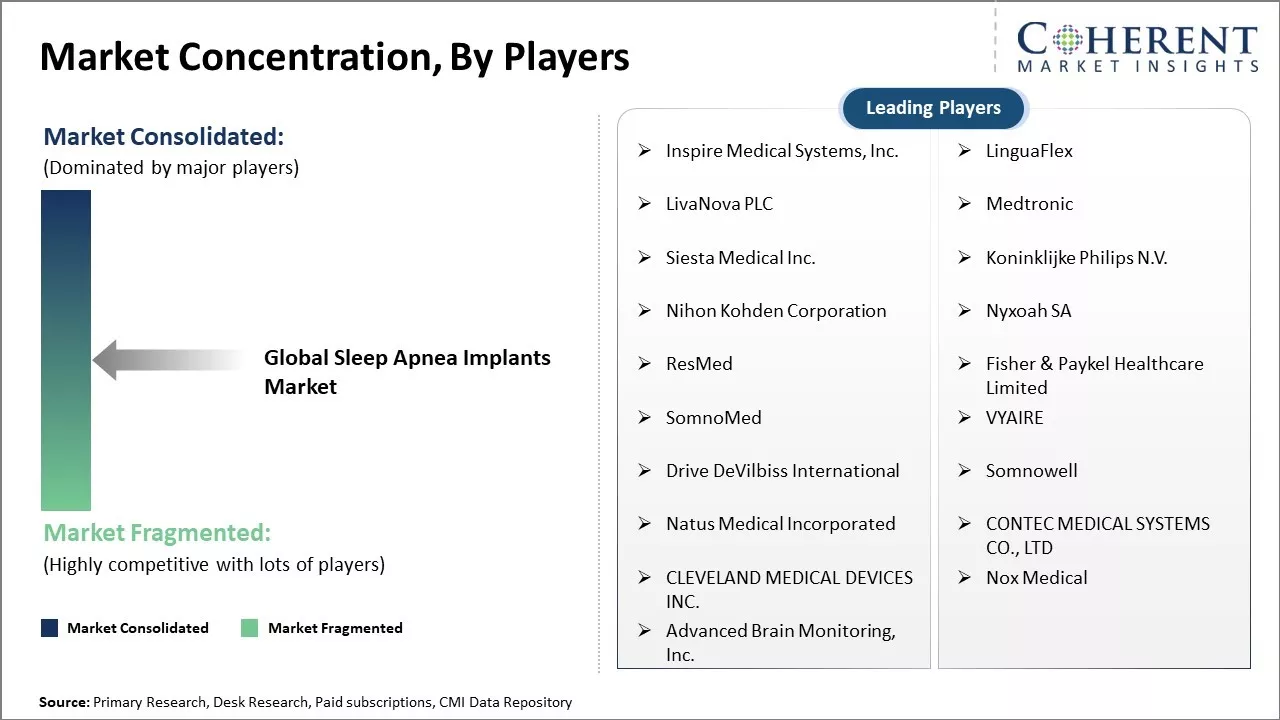
| Companies covered: | Inspire Medical Systems, Inc., LinguaFlex, LivaNova PLC, Medtronic, Siesta Medical Inc., Koninklijke Philips N.V., Nihon Kohden Corporation, Nyxoah SA, ResMed, Fisher & Paykel Healthcare Limited, SomnoMed, VYAIRE, Drive DeVilbiss International, Somnowell, Natus Medical Incorporated, CONTEC MEDICAL SYSTEMS CO., LTD, CLEVELAND MEDICAL DEVICES INC., Nox Medical, Advanced Brain Monitoring, Inc. | ||
| Growth Drivers: |
| ||
| Restraints & Challenges: |
| ||
Analyst Opinion (Expert Opinion)
Key Takeaways from Analyst:
[The global sleep apnea implants market is expected to see steady growth over the next five years. The increasing awareness about sleep disorders and their treatment options among the general public will drive more patients to seek treatment. Moreover, the growing geriatric population prone to sleep apnea further increases the potential patient pool.
However, stringent regulatory approvals for new implants and high costs of the surgical procedures could hamper market growth to some extent. The implant procedures require specialized doctors and facilities, increasing the overall costs. Additionally, in many developing nations, the lack of comprehensive health insurance still poses affordability challenges.
Among regions, North America is expected to continue dominating the global market owing to the large patient population, favorable reimbursements, and widespread adoption of new technologies. However, Asia Pacific is likely to see the fastest growth led by countries like China and India. Rising incomes are increasing healthcare spending and access in the region.
Overall, with increasing awareness and improved access to care, the sleep apnea implants market is set for steady long-term expansion. Ongoing R&D for less invasive procedures and surgeon training programs would further aid market growth. Collaborations between device makers and sleep clinics for custom-fitted solutions according to patient anatomy also present new opportunities.]
Market Challenges: Risks and complications associated with sleep apnea implants
There are several risks and complications associated with sleep apnea implants that could hamper the growth of the global sleep apnea implants market. One of the major risks is device failure or malfunctioning. Since these implants are inserted inside the body, any defect or issues with the device could lead to severe health complications or side effects for patients. Device failure rates ranging from 2-10% have been reported in various clinical studies. Similarly, surgeries to implant these devices also carry risks of injury, infection, bleeding, and other procedure-related complications. Post-surgery, patients may also experience discomfort, respiratory issues or swallowing difficulties until full recovery. Regulatory risks around clinical trial data, safety, and efficacy could also impact product approvals and market access. The complications and risks associated with currently available implants have resulted in lower patient satisfaction levels and reluctance among severe sleep apnea patients to opt for surgical options. Addressing these risks and improving clinical outcomes would be essential for stakeholders to boost confidence in these therapies.
Market Opportunities: Development of novel and innovative implants for market
The global sleep apnea implants market represents significant opportunity for companies that are engaged in developing novel and innovative implant devices and technologies. With growing understanding about sleep-disordered breathing and its health impacts, the demand for effective yet minimally invasive therapy options is on the rise. Stakeholders should focus on R&D to design implants using advanced materials and methods that are safer, cause minimal trauma, and have reduced risk of complications. Novel implant designs, delivery mechanisms, and coatings that enable less invasive insertion procedures could vastly improve patient acceptance. Adoption of 3D printing, bioresorbable materials, and sensors may lead to customized, smart implants of the future. Development of implantable neural stimulators regulated by feedback algorithms also holds promise. With continuous innovation, a wider variety of implants suited for varying anatomy and degrees of sleep apnea could gain popularity. This will subsequently help expand the patient pool and market potential globally.
Speak to the analyst
Want personalized insights?
Take the findings above to one of our principal consultants, or have the report rebuilt around the segments, geographies and competitors you actually track.
Market Segmentation
- Product Insights (Revenue, USD Mn, 2021 - 2033)
- Phrenic nerve stimulator
- Hypoglossal neurostimulation devices
- Bone screw implant system
- Flexible tongue retractor system
- Palatal implants
- Indication Insights (Revenue, USD Mn, 2021 - 2033)
- Central sleep apnea
- Obstructive sleep apnea (OSA)
- End User Insights (Revenue, USD Mn, 2021 - 2033)
- Hospitals & Clinics
- Ambulatory surgical centers
- Home care settings
- Diagnostic Laboratories
- Office based clinics
- Regional Insights (Revenue, USD Mn, 2021 - 2033)
- North America
- U.S.
- Canada
- Latin America
- Brazil
- Argentina
- Mexico
- Rest of Latin America
- Europe
- Germany
- U.K.
- Spain
- France
- Italy
- Russia
- Rest of Europe
- Asia Pacific
- China
- India
- Japan
- Australia
- South Korea
- ASEAN
- Rest of Asia Pacific
- Middle East
- GCC Countries
- Israel
- Rest of Middle East
- Africa
- South Africa
- North Africa
- Central Africa
- North America
- Key Players Insights
- Inspire Medical Systems, Inc.
- LinguaFlex
- LivaNova PLC
- Medtronic
- Siesta Medical Inc.
- Koninklijke Philips N.V.
- Nihon Kohden Corporation
- Nyxoah SA
- ResMed
- Fisher & Paykel Healthcare Limited
- SomnoMed
- VYAIRE
- Drive DeVilbiss International
- Somnowell
- Natus Medical Incorporated
- CONTEC MEDICAL SYSTEMS CO., LTD
- CLEVELAND MEDICAL DEVICES INC.
- Nox Medical
- Advanced Brain Monitoring, Inc.
Get access to 250+ pages report
Every segment, forecast, competitor profile and data table behind the analysis above — available for instant download.
- ESOMAR Member
- ISO 9001:2015 Certified
- D-U-N-S Registered
- GDPR & CCPA Compliant