

Global Smart Healthcare Market Size and Forecast – 2026 - 2033
The Global Smart Healthcare Market is estimated to be valued at USD 227.51 billion in 2026 and is expected to reach USD 333.59 billion by 2033, exhibiting a compound annual growth rate (CAGR) of 5.6% from 2026 to 2033.
Key Takeaways of the Global Smart Healthcare Market:
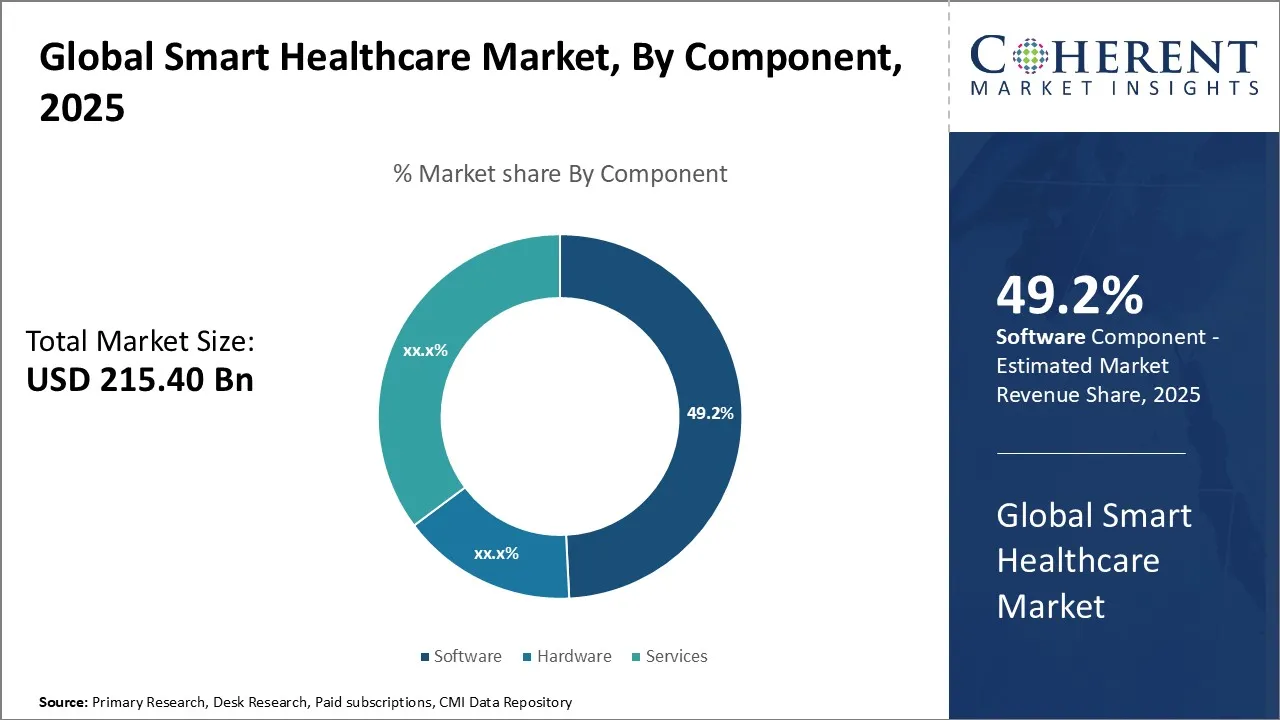
- The software segment is expected to hold the largest market share of 50.2% in 2026
- On-premises deployment segment is projected to lead the market with a 64.2% share in 2026
- Telehealth and telemedicine segment is estimated to capture the highest market share of 33.3% in 2026
- North America is expected to lead the market, holding a share of 40.3% in 2026. Asia Pacific is anticipated to be the fastest-growing region, with a market share of 26.4% in 2026.
Market Overview:
The smart healthcare market is experiencing significant growth, driven by the increasing adoption of digital technologies such as artificial intelligence (AI), the Internet of Things (IoT), and big data analytics. These technologies are revolutionizing healthcare by enhancing operational efficiency, improving patient outcomes, and enabling personalized care. For instance, in November 2024, Oura, a leading wearable technology company, partnered with Dexcom, a provider of continuous blood glucose monitoring systems, to integrate glucose biosensor data with the Oura Ring, which tracks sleep, heart rate, and activity. Oura also raised USD 75 million in Series D funding to support its international expansion and mergers and acquisitions (M&A) activities. Governments and healthcare organizations are also investing in the development of smart healthcare infrastructure to improve patient outcomes and streamline healthcare delivery processes.
Currents Events and Its Impact
Current Events | Description and its impact |
U.K. AI investment boost & announcement of AI lab |
|
Surge in smart hospital adoption |
|
Segmental Analysis
- Current Industry Events of 2026
- Market Size Estimation
- Regional Breakdown
- Competitive Landscape
- Customer Intelligence
- Segmental Analysis
- Pricing Analysis
- Key Market Drivers, Challenges & Future Trends
- Customized Insights Section
Smart Healthcare Market Insights, By Component – Software leads the way in healthcare by enhancing integration and improving operational efficiency, enabling seamless workflows.
Based on Component, the software segment is expected to contribute the highest market share of 50.2% in 2026, owing to its pivotal role in enabling the seamless integration and operation of various smart healthcare solutions. The increasing adoption of digital technologies in the healthcare sector has fueled the demand for robust, secure, and scalable software platforms that can streamline workflows, enhance patient care, and improve overall operational efficiency.
One of the key factors driving the growth of the software segment is the rising need for interoperability among disparate healthcare systems. As healthcare organizations strive to break down data silos and facilitate the smooth exchange of patient information, software solutions that adhere to industry standards and enable seamless data sharing have become indispensable.
For example, in November 2024, Apple Inc., the global tech leader recognized for its integrated hardware-software ecosystem, plans to enter the smart home camera market by 2026, targeting annual shipments of more than 10 million units. The wireless camera will feature deep integration with Apple Intelligence and Siri. Additionally, Apple plans to reposition its AirPods to highlight health-focused features, expanding its wellness strategy following the success of the Apple Watch.
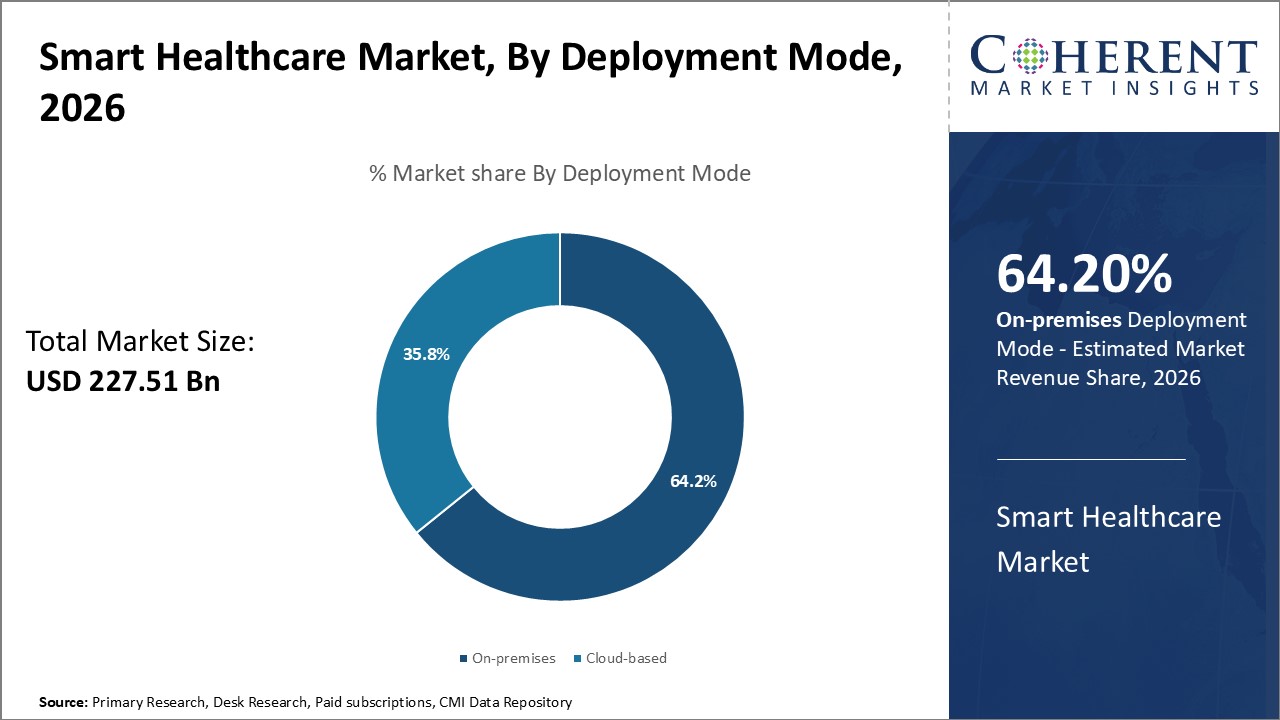
Smart Healthcare Market Insights, By Deployment Mode - On-Premises Solutions Lead Due to Enhanced Data Security and Control
In terms of Deployment Mode, the On-premises segment is estimated to account for the highest market share of 64.2% in 2026, primarily due to the heightened concerns over data privacy and security in the healthcare sector. As healthcare organizations handle highly sensitive patient information, many opt for on-premises deployment to maintain complete control over their data and infrastructure. One of the primary drivers of on-premises deployment is the stringent regulatory requirements surrounding patient data protection.
Healthcare organizations are subject to various regulations, such as HIPAA in the U.S. and GDPR in Europe, which mandate strict safeguards for patient data. By deploying smart healthcare solutions on-premises, organizations can ensure compliance with these regulations and implement robust security measures tailored to their specific needs.
Smart Healthcare Market Insights, By Product Type - Telehealth and Telemedicine Lead Due to Remote Care and Chronic Disease Management
In terms of Product Type, the Telehealth and Telemedicine segment is estimated to account for the highest market share of 33.3% in 2026, driven by the increasing demand for remote healthcare services and need to improve access to care. The pandemic has further accelerated the adoption of telehealth and telemedicine solutions, as healthcare organizations seek to provide safe and convenient care options to patients.
One of the key factors propelling the growth of telehealth and telemedicine segment is the rising prevalence of chronic diseases and the growing need for continuous monitoring and management. Through remote consultations, virtual check-ups, and real-time monitoring, telehealth solutions enable healthcare providers to deliver timely and personalized care to patients with chronic conditions, regardless of their location.
For instance, in October 2024, AMD Global Telemedicine partnered with Carefluence, an innovator in interoperability solutions, to enhance its telehealth services, aiming to improve continuity of care and clinical outcomes.
Role of Artificial Intelligence (AI) in the Global Smart Healthcare Market
- Artificial Intelligence (AI) is revolutionizing the global smart healthcare market by enabling data-driven decision-making, process automation, and personalized healthcare experiences. AI enhances predictive analytics, allowing healthcare providers to anticipate patient needs, improve treatment outcomes, and optimize resource allocation. It also facilitates cost reductions through automation in administrative tasks and diagnostic processes. AI-powered tools such as virtual health assistants, remote monitoring devices, and AI-driven diagnostic tools are transforming patient care, leading to better efficiency and operational improvements. Emerging opportunities include innovative business models, such as AI-based healthcare platforms and services, which are giving companies a competitive edge by offering more personalized and efficient healthcare solutions.
- One prime example of AI’s impact in this sector is IBM Watson Health, which leverages AI to analyze large amounts of healthcare data, helping clinicians make more informed decisions. IBM Watson’s AI-driven platform assists in diagnosing diseases, personalizing medicine treatment plans, and streamlining operations within hospitals. By combining AI with vast data sets, IBM Watson is enhancing patient care and reducing operational inefficiencies, offering a clear pathway for healthcare providers to improve patient outcomes while cutting costs.
Regional Insights:
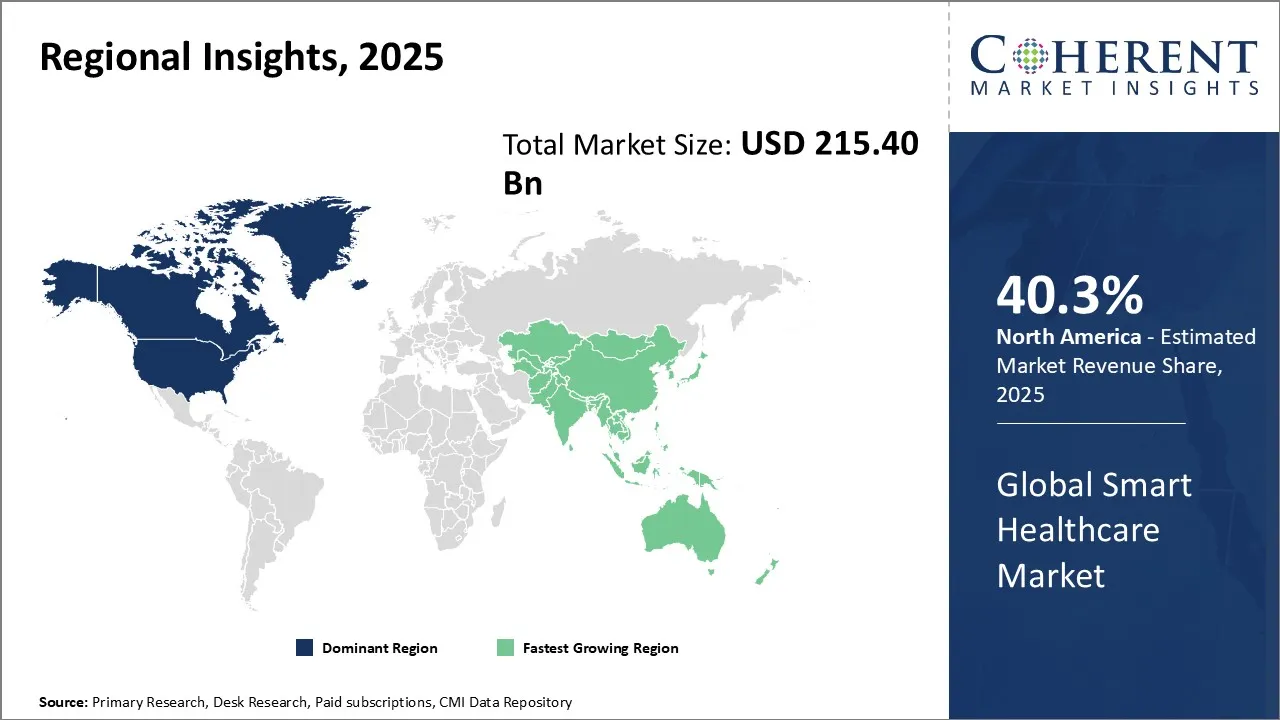
North America Smart Healthcare Market Analysis and Trends
North America, holding an estimated share of 40.3% in 2026, dominates the global smart healthcare market. The growth can be attributed to the robust healthcare infrastructure, coupled with the high adoption rates of advanced medical technologies. The presence of leading healthcare IT companies, such as Epic Systems, Cerner, and AllScripts, has significantly contributed to the market's growth. These companies have been at the forefront of developing and implementing innovative smart healthcare solutions, including electronic health records (EHRs), telemedicine platforms, and AI-powered diagnostic tools. For Example, Cerner Corporation: Known for its EHR systems and health information technology, Cerner plays a pivotal role in transforming healthcare through the use of data analytics, telemedicine solutions, and AI-powered tools for predictive healthcare management.
Asia Pacific Smart Healthcare Market Analysis and Trends
Asia Pacific exhibits the fastest growth in the global smart healthcare market with an estimated share of 26.4% in 2026. The region's rapid economic development, coupled with increasing healthcare expenditure and improving healthcare infrastructure, has created a conducive environment for the adoption of smart healthcare solutions.
The Chinese government's "Healthy China 2030" plan, for instance, has prioritized the integration of technology in healthcare, leading to the emergence of numerous digital health startups and collaborations with international players.
For instance, in October 2024 – the Federation of Indian Chambers of Commerce and Industry (FICCI) released a report outlining USD 15 million in Taiwanese investments across five Indian manufacturing sectors, including smart healthcare devices such as fitness trackers and heart rate monitors.
Global Smart Healthcare Market Outlook for Key Countries:
U.S. Smart Healthcare Market Trends
The U.S. smart healthcare market is characterized by a strong emphasis on interoperability, data security, and patient-centric care. Leading players like Epic Systems, Cerner, and Teladoc have been instrumental in shaping the market through their comprehensive EHR systems, telemedicine platforms, and AI-powered analytics tools. The country's focus on value-based care and the shift towards remote monitoring and virtual consultations have further propelled the adoption of smart healthcare solutions.
For instance, in March 2026 – Florida State University (FSU) and Samsung Electronics America partnered to launch the Smart Health Home Initiative at Latitude Margaritaville Watersound, a 55+ community in Florida, U.S.
Canada Smart Healthcare Market Trends
The country is witnessing rapid growth in wearable technology, driven by increasing health awareness and advancements in sensor technologies for remote monitoring. Government entities like Canada Health Infoway continue to play a crucial role by supporting digital health projects, including electronic health records, to improve patient care and system efficiency. However, the rising adoption of digital health technologies has raised concerns around data security and privacy, with Canadians expressing heightened concerns over the collection and sharing of health data.
For instance, in January 2026 – Predictmedix AI Inc., a Canada based provider of AI-powered health screening solutions, closed the final tranche of its private placement, raising CAD 100,000 With strong insider participation—USD 90,000 from Sheldon Kales and Dr. Rahul Kushwah—the company issued 5 million units at USD 0.02 each, including warrants exercisable at USD 0.05. The funding supports the launch of Predictmedix’s Smart Health AI Stations, reinforcing its innovation-driven growth strategy.
China Smart Healthcare Market Trends
China smart healthcare market is driven by the government's push towards digital health, the rise of tech giants in the healthcare space, and the growing need to address the healthcare needs of its vast population. Companies like Alibaba Health, Ping An Good Doctor, and WeDoctor have revolutionized the market with their integrated digital health platforms, offering a wide range of services, including online consultations, prescription delivery, and AI-assisted diagnosis.
For instance, in December 2024, AUO (AU Optronics Corporation), a global leader in display and sensing technologies, showcased its smart healthcare ecosystem at the 2024 Healthcare+ Expo Taiwan. Alongside its subsidiaries ADP (AUO Display Plus), AUO Health, and DentLabX, and 15 strategic partners, AUO unveiled innovations in 3D surgical imaging, AI (Artificial Intelligence) diagnostics, and digital Traditional Chinese Medicine (TCM).
India Smart Healthcare Market Trends
India smart healthcare market is characterized by the rapid adoption of digital health solutions, driven by the increasing penetration of smartphones, the rise of health-tech startups, and the government's push towards accessible and affordable healthcare. Companies like Practo, 1mg, and PharmEasy have transformed the market by offering digital platforms for doctor consultations, medicine delivery, and diagnostic services. The government's "National Digital Health Mission" aims to create a unified health interface, further accelerating the growth of the smart healthcare market in the country.
For instance, in December 2024, the Indian Medical Association (IMA), India’s largest voluntary doctors’ organization, completed the pilot phase of its “IMA AMR Smart Hospital Project” aimed at combating Antimicrobial Resistance (AMR). The initiative promotes advanced Antimicrobial Stewardship (AMS) and Infection Prevention and Control (IPC) in hospitals nationwide.
Market Players, Key Developments, and Competitive Intelligence:
Key Developments:
- In April 2025, Baby & Mom Retail, a leading India-based lifestyle brand group, launched CORVELL, a smart healthcare brand focused on affordable, made-in-India medical devices. The brand debuts with a smart nebulizer for respiratory care and aims to address rising health needs post-COVID. CORVELL products will be available on major e-commerce platforms.
- In February 2025, MediBuddy, India’s leading digital healthcare platform, partnered with Japan-based electronics firm ELECOM, to launch smart health IoT devices in India. The collaboration aims to boost preventive healthcare access, particularly in rural areas, by integrating ELECOM’s digital health products into MediBuddy’s platform. With non-communicable diseases causing 52% of deaths in India, the initiative focuses on early health monitoring and management.
- In January 2025, Microware Group Limited, a Hong Kong-based IT solutions provider, announced a strategic partnership with GAREA TECH to integrate AI into medical practices, aiming to enhance healthcare precision and global service quality.
- In November 2024, the Alliance for Smart Healthcare Excellence, a newly established non-profit organization, was launched to accelerate the adoption of smart hospitals across the U.S. Supported by care.ai (now part of Stryker) and developed in collaboration with CHIME, the Alliance advocates for the Smart Hospital Maturity Model (SHMM)—a framework designed to help hospitals evaluate and enhance their use of smart technologies in areas such as people, environments, and processes.
Top Strategies Followed by Global Smart Healthcare Market Players
- Established players in the global smart healthcare market are focusing on extensive research and development to innovate high-performance products. These companies invest heavily in R&D to stay ahead of the competition and offer cutting-edge solutions to their customers. They also form strategic partnerships with major industry players or original equipment manufacturers (OEMs) to solidify their market presence.
- In January 2025 – IntelligentDX, a healthcare tech company in Maharashtra, India, launched an AI-powered software to transform EHR/EMR systems and revenue cycle management (RCM) in the U.S. healthcare market. The deep learning-based solution aims to streamline operations, reduce insurance claim denials, and improve efficiency, positioning IntelligentDX as a key innovator in healthcare IT.
- Mid-level players in the global smart healthcare market are focusing on delivering high-quality, affordable products to cater to price-sensitive consumers, ensuring cost-effectiveness without compromising on performance. They are also forming partnerships to enhance their technology, production capabilities, and market presence.
- In January 2023, Avery Dennison, a global leader in adhesive technologies, announced the opening of a new manufacturing facility in Mexico to expand its production capacity.
- Small-scale players in the global smart healthcare market often focus on niche markets by offering innovative products or unique features. They specialize in specific areas, providing tailored solutions to meet the unique needs of their target customers. To stay competitive and differentiate themselves from larger players, these companies adopt cutting-edge technologies.
- In October 2023, Cedars-Sinai, a prominent medical center, launched the Cedars-Sinai Connect app, using AI to offer virtual care, including same-day primary care scheduling and 24/7 access to specialists.
Market Report Scope
Smart Healthcare Market Report Coverage
| Report Coverage | Details | ||
|---|---|---|---|
| Base Year: | 2025 | Market Size in 2026: | USD 227.51 Bn |
| Historical Data for: | 2020 To 2024 | Forecast Period: | 2026 To 2033 |
| Forecast Period 2026 to 2033 CAGR: | 5.6% | 2033 Value Projection: | USD 333.59 Bn |
| Geographies covered: |
| ||
| Segments covered: |
| ||
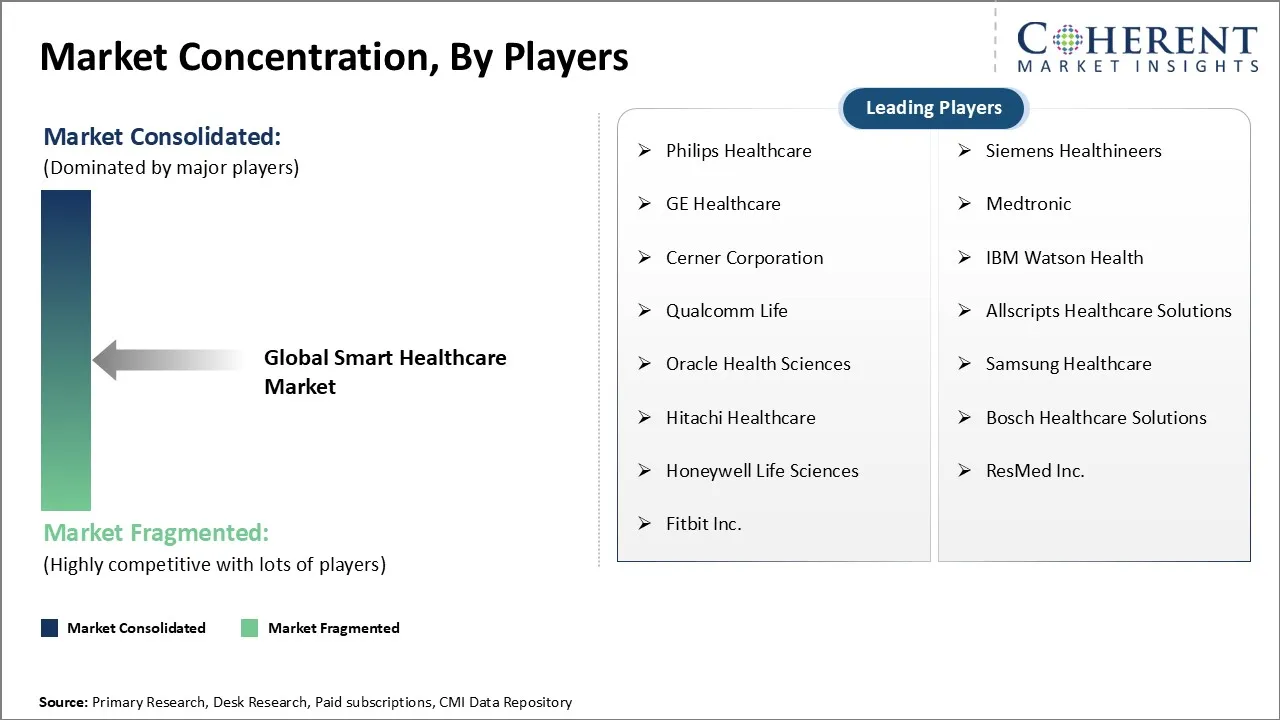
| Companies covered: | Philips Healthcare, Siemens Healthineers, GE Healthcare, Medtronic, Cerner Corporation, IBM Watson Health, Qualcomm Life, Allscripts Healthcare Solutions, Oracle Health Sciences, Samsung Healthcare, Hitachi Healthcare, Bosch Healthcare Solutions, Honeywell Life Sciences, ResMed Inc., Fitbit Inc. | ||
| Growth Drivers: |
| ||
| Restraints & Challenges: |
| ||
Smart Healthcare Market Dynamics
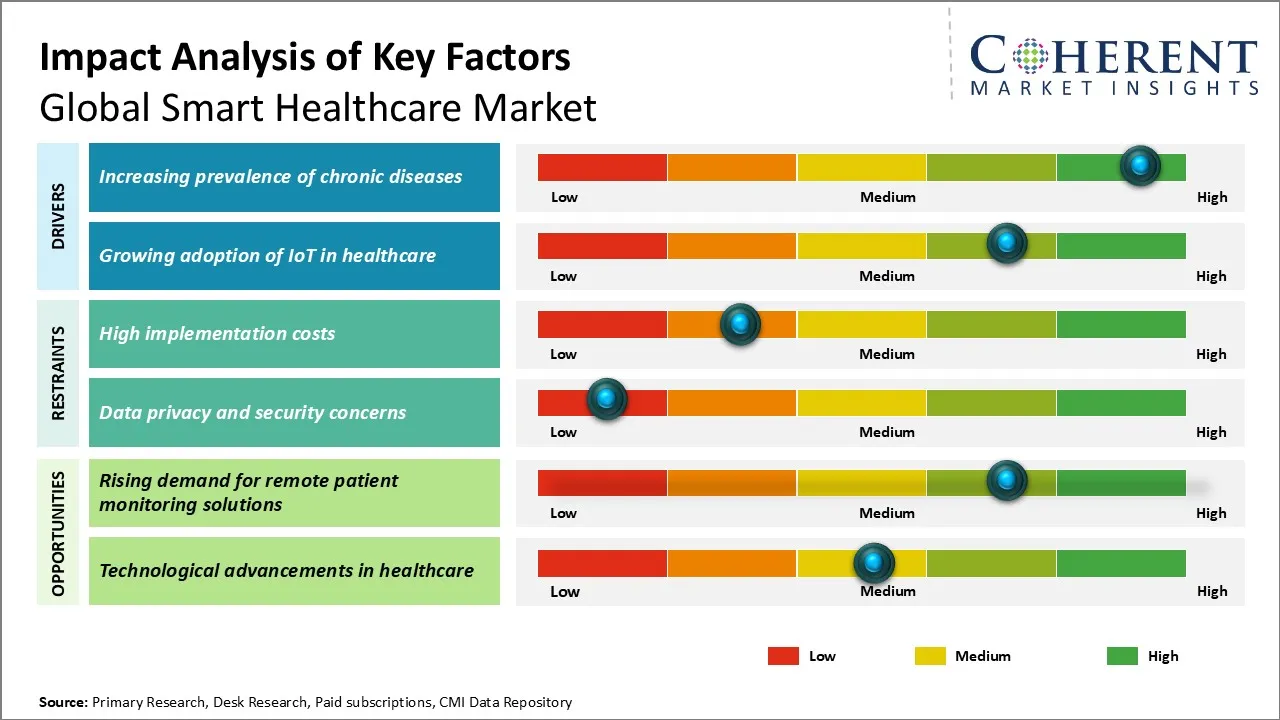
Smart Healthcare Market Driver - Increasing Prevalence of Chronic Diseases
The growing prevalence of chronic diseases across the globe is a significant driver for the global smart healthcare market. As the world population ages and adopts unhealthy lifestyles, the incidence of chronic conditions such as diabetes, cardiovascular diseases, respiratory disorders, and cancer continues to rise. This trend has created a pressing need for smart healthcare solutions that can effectively manage and monitor these diseases, improving patient outcomes and reducing healthcare costs.
Smart healthcare technologies, including wearable devices, remote monitoring systems, and telemedicine platforms, enable healthcare providers to continuously track patient health data, facilitate early diagnosis, and provide timely interventions. These technologies also empower patients to take a more active role in managing their conditions, promoting self-care and adherence to treatment plans.
For instance, in October 2024, the Centers for Disease Control and Prevention (CDC) reported that chronic diseases such as heart disease, cancer, and diabetes are the leading causes of illness, disability, and death in the U.S. These conditions contribute to USD 4.5 trillion in annual healthcare costs. Additionally, 6 out of 10 Americans suffer from at least one chronic disease, with preventable behaviors like smoking, poor diet, and lack of physical activity being key contributors. Certain populations are disproportionately affected due to barriers preventing them from making healthy choices.
Smart Healthcare Market Opportunity: Rising Demand for Remote Patient Monitoring Solutions
The global smart healthcare market is witnessing a significant opportunity in the rising demand for remote patient monitoring solutions. With the increasing prevalence of chronic diseases and the growing elderly population, there is a pressing need for healthcare services that can be delivered remotely, reducing the burden on healthcare facilities and improving patient outcomes. Remote patient monitoring solutions, powered by IoT devices, wearable technology, and telehealth platforms, enable healthcare providers to continuously monitor patients' vital signs, symptoms, and medication adherence from a distance. This not only enhances patient convenience and comfort but also allows for the early detection of potential health issues, prompt intervention, and personalized care plans.
For instance, in May 2025, Vivalink teamed up with Amazon Web Services (AWS) to introduce the Vivalink Biometrics Data Platform (VBDP), a cloud-based system designed for continuous remote patient monitoring. The platform combines Vivalink's medical-grade sensors with AWS's cloud infrastructure, offering scalable, real-time access to patient data. Supporting over 60 types of medical devices, it integrates seamlessly with various applications, sensors, and AI-based analytics tools.
Market Segmentation
- Component Insights (Revenue, USD Bn, 2021 - 2033)
- Software
- Hardware
- Services
- Deployment Mode Insights (Revenue, USD Bn, 2021 - 2033)
- On-premises
- Cloud-based
- Product Type Insights (Revenue, USD Bn, 2021 - 2033)
- Telehealth and Telemedicine
- Wearable Devices
- Mobile Health (mHealth)
- Electronic Health Records (EHR)
- RFID System
- Others (Smart Pills, etc.)
- Application Insights (Revenue, USD Bn, 2021 - 2033)
- Chronic Disease Management
- Medication Management
- Health Monitoring
- Storage and Inventory Management
- Clinical Workflow Management
- Others
- End User Insights (Revenue, USD Bn, 2021 - 2033)
- Healthcare Providers
- Hospitals
- Clinics
- Ambulatory Surgical Centers
- Healthcare Payers
- Insurance Providers
- Government Health Organizations
- Patients
- Individuals using Smart Health Devices
- Caregivers
- Homecare Settings
- Research Institutions
- Healthcare Providers
- Regional Insights (Revenue, USD Bn, 2021 - 2033)
- North America
- U.S.
- Canada
- Latin America
- Brazil
- Argentina
- Mexico
- Rest of Latin America
- Europe
- Germany
- U.K.
- Spain
- France
- Italy
- Russia
- Rest of Europe
- Asia Pacific
- China
- India
- Japan
- Australia
- South Korea
- ASEAN
- Rest of Asia Pacific
- Middle East
- GCC Countries
- Israel
- Rest of Middle East
- Africa
- South Africa
- North Africa
- Central Africa
- North America
- Key Players Insights
- Philips Healthcare
- Siemens Healthineers
- GE Healthcare
- Medtronic
- Cerner Corporation
- IBM Watson Health
- Qualcomm Life
- Allscripts Healthcare Solutions
- Oracle Health Sciences
- Samsung Healthcare
- Hitachi Healthcare
- Bosch Healthcare Solutions
- Honeywell Life Sciences
- ResMed Inc.
- Fitbit Inc.
Sources
Primary Research Interviews:
- Healthcare professionals (Doctors, Nurses, Medical Technicians)
- Hospital administrators and healthcare facility managers
- Patients and caregivers
- Industry experts and thought leaders
- Technology developers in healthcare
Databases:
- World Health Organization (WHO)
- U.S. Centers for Disease Control and Prevention (CDC)
- National Institutes of Health (NIH)
- European Medicines Agency (EMA)
- Food and Drug Administration (FDA)
- World Bank Health Data
- Health Data Research UK
Magazines:
- Healthcare IT News
- Healthcare Innovation
- Medical Device and Diagnostic Industry (MD+DI)
- HIT Consultant
- Health Affairs Journal
- Journal of Medical Internet Research (JMIR)
- Medical Design & Outsourcing
Journals:
- Journal of Healthcare Engineering
- Journal of Medical Systems
- IEEE Journal of Biomedical and Health Informatics
- Health Informatics Journal
- Computers in Biology and Medicine
- Journal of Telemedicine and Telecare
Newspapers:
- The New York Times (Health Section)
- The Guardian (Healthcare Coverage)
- BBC Health
- The Wall Street Journal (Healthcare Section)
- Reuters Health
- The Financial Times (Health Industry Coverage)
Associations:
- American Medical Association (AMA)
- Healthcare Information and Management Systems Society (HIMSS)
- International Federation for Medical and Biological Engineering (IFMBE)
- Association for the Advancement of Medical Instrumentation (AAMI)
- American Telemedicine Association (ATA)
- European Society of Telemedicine and eHealth (ESTeH)
- Global Healthcare Information Technology Association (GHITA)
Public Domain Sources:
- National Library of Medicine (NLM)
- ClinicalTrials.gov
- OpenFDA
- Government Health and Social Care Data (e.g., UK Government Data)
Proprietary Elements:
- CMI Data Analytics Tool: Proprietary analytics tool to analyze real-time market trends, consumer behavior, and technology adoption in market
- Proprietary CMI Existing Repository of Information for Last 8 Years
Get access to 250+ pages report
Every segment, forecast, competitor profile and data table behind the analysis above — available for instant download.
- ESOMAR Member
- ISO 9001:2015 Certified
- D-U-N-S Registered
- GDPR & CCPA Compliant
Missing comfort of reading report in your local language? Find your preferred language:
Transform your Strategy with Exclusive Trending Reports
Frequently Asked Questions
The global smart healthcare market is estimated to be valued at USD 227.51 Bn in 2026 and is expected to reach USD 333.59 Bn by 2033.
The CAGR of global smart healthcare market is projected to be 5.6% from 2026 to 2033.
The increasing prevalence of chronic diseases and the growing adoption of IoT in healthcare are the major factors driving the growth of Global Smart Healthcare Market.
High implementation costs and data privacy and security concerns are the major factor hampering the growth of Global Smart Healthcare Market.
In terms of component, the software segment is estimated to dominate the market revenue share in 2026.
Philips Healthcare, Siemens Healthineers, GE Healthcare, Medtronic, Cerner Corporation, IBM Watson Health, Qualcomm Life, Allscripts Healthcare Solutions, Oracle Health Sciences, Samsung Healthcare, Hitachi Healthcare, Bosch Healthcare Solutions, Honeywell Life Sciences, ResMed Inc., and Fitbit Inc. are the major players.
North America is expected to lead the global smart healthcare market in 2026.