

Global Specialty Coffee Market Size and Forecast – 2026-2033
The global specialty coffee market is estimated to be valued at USD 11.34 Bn in 2026 and is expected to reach USD 23.55 Bn by 2033, exhibiting a compound annual growth rate (CAGR) of 11.0% from 2026 to 2033.
Key Takeaways of the Specialty Coffee Market
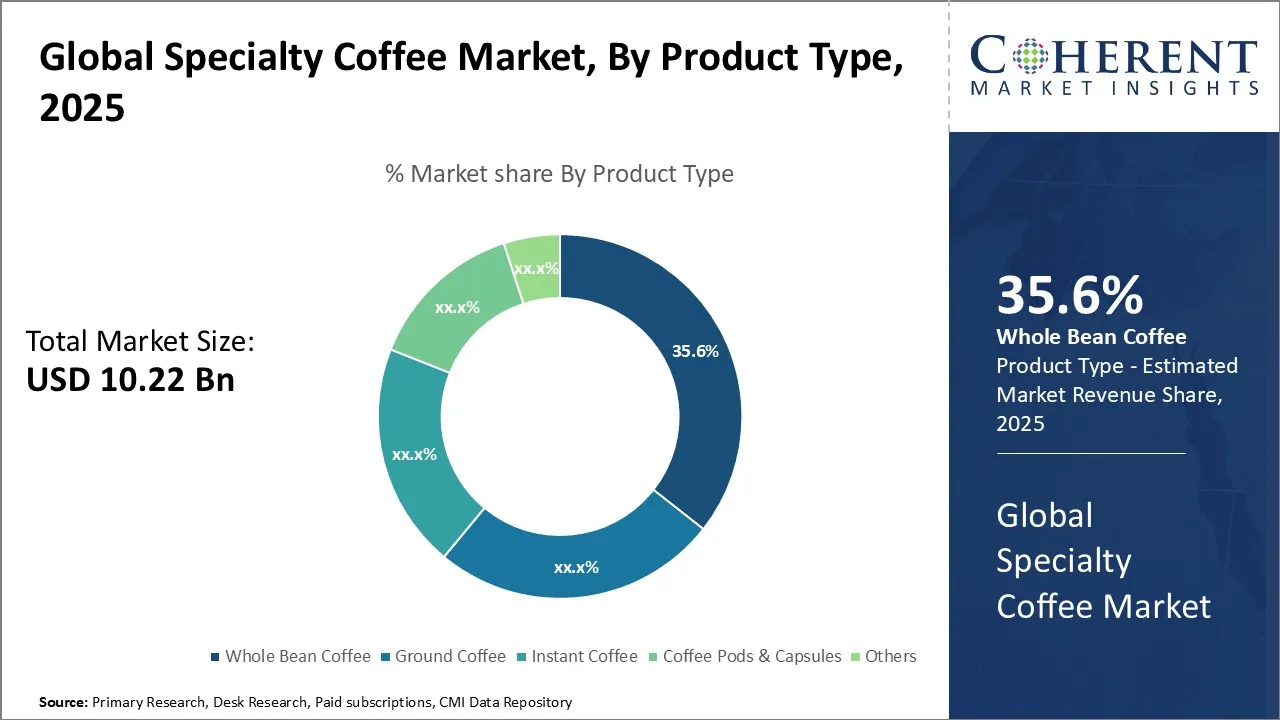
- The whole bean coffee segment is projected to capture 36.6% of the market share in 2026.
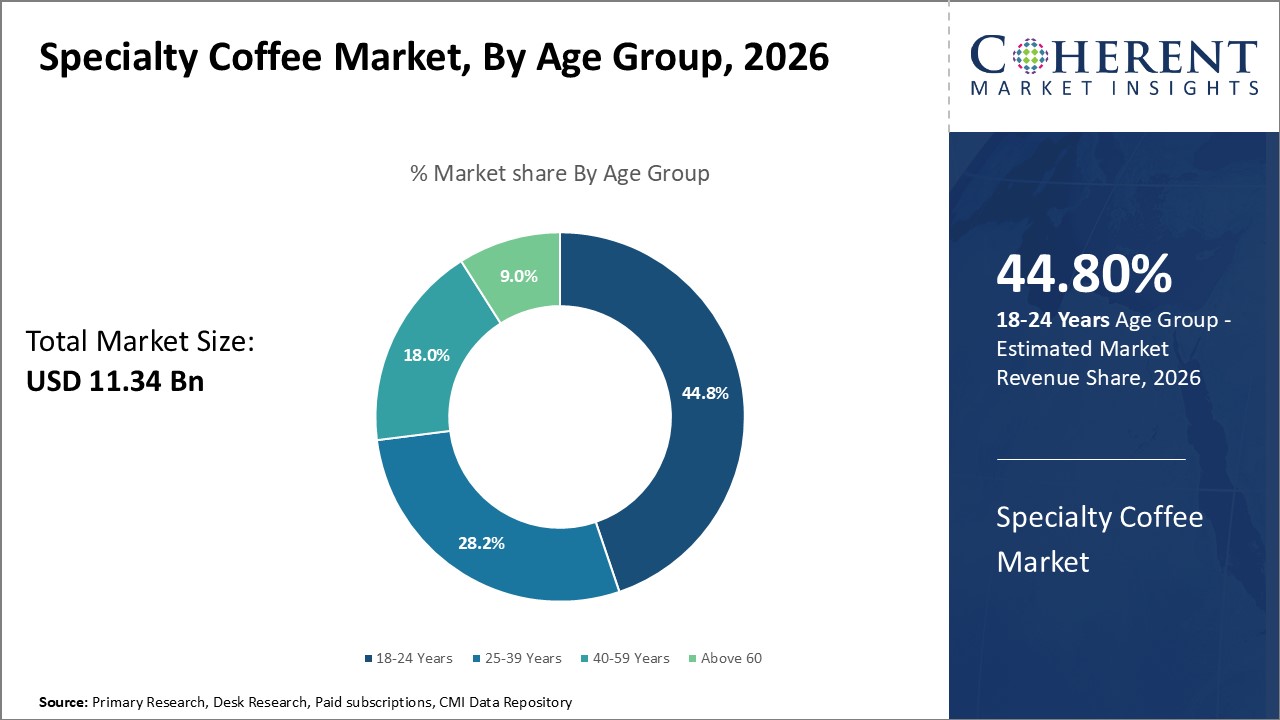
- The 18–24 years segment is expected to account for 44.8% of the market share in 2026.
- The away from home segment is projected to hold 70.8% share in 2026.
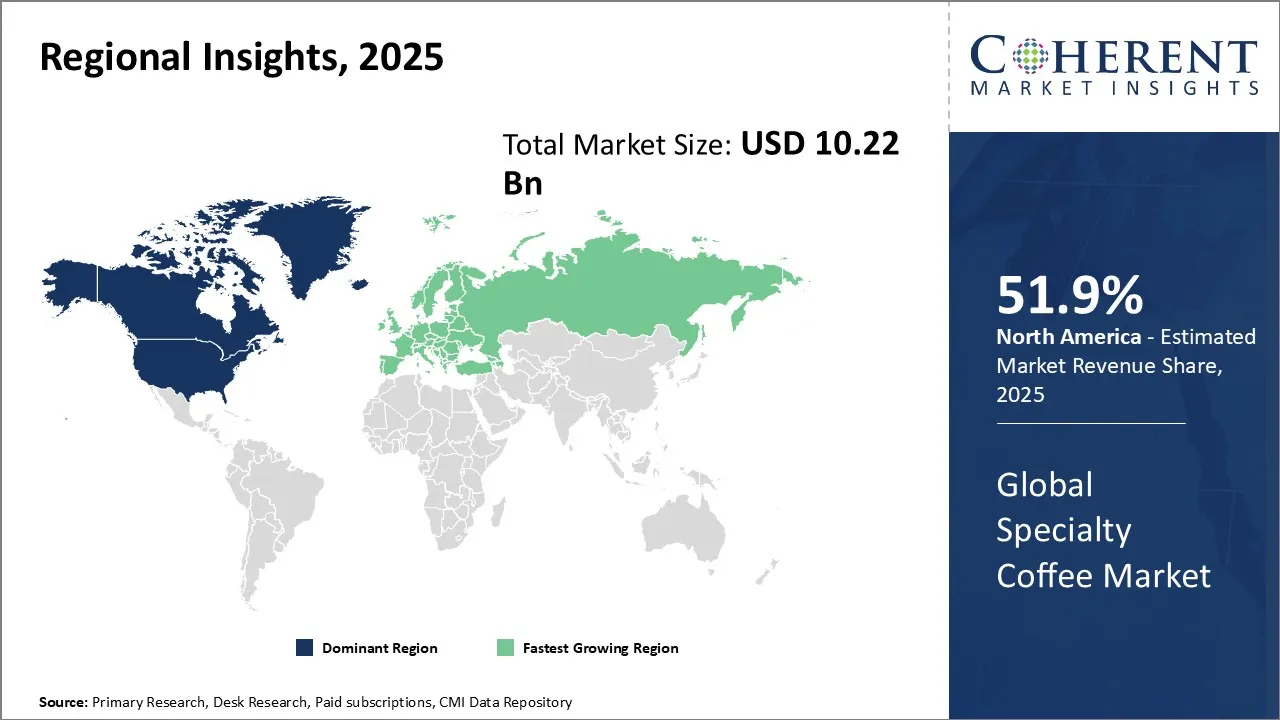
- North America is expected to lead the global specialty coffee market in 2026 with a 51.9% share in 2026. Europe, with an estimated share of 29.5% in 2026, is expected to be the fastest-growing region.
Market Overview
A dominant trend shaping the specialty coffee market is the growing the demand for sustainably sourced and ethically produced coffee beans, as consumers become more conscious about environmental and social impacts. Additionally, the surge in specialty coffee consumption among millennials and Gen Z, fueled by social media influence and specialty coffee shops, is propelling market dynamics.
Technological advancements in coffee brewing equipment and the rise of e-commerce platforms for coffee products also enhance accessibility and convenience, reinforcing sustained market growth. Another factor supporting expansion is the rising popularity of instant coffee among busy consumers seeking convenience. At the same time, overall coffee culture continues to evolve globally, with premiumization trends encouraging greater consumer willingness to pay for quality and unique experiences.
Current Events and Its Impact
Current Events | Description and its Impact |
Rising Sustainability Regulations in Europe |
|
Technological Advancements in Brewing Equipment |
|
Segmental Insights
- Current Industry Events of 2026
- Market Size Estimation
- Regional Breakdown
- Competitive Landscape
- Customer Intelligence
- Segmental Analysis
- Pricing Analysis
- Key Market Drivers, Challenges & Future Trends
- Customized Insights Section
Specialty Coffee Market Insights, by Product Type - Whole Bean Coffee Segment Dominates the Market due to Premium Quality and Freshness
Whole bean coffee segment is estimated to hold 36.6% of the market share in 2026, because consumers increasingly prioritize quality, freshness, and the authentic coffee experience. Whole bean coffee allows consumers to grind the beans just before brewing, which preserves the coffee’s aromatic oils and complex flavor profiles that are often lost in pre-ground varieties. This freshness is a crucial factor for specialty coffee enthusiasts who seek a rich, nuanced cup that showcases the unique characteristics of the bean’s origin, roast level, and processing method.
For example, Blue Bottle Coffee, a specialty roaster in the U.S., emphasizes whole bean offerings across its online and offline channels. The company highlights freshness by shipping beans within 24 hours of roasting, which has resonated strongly with premium coffee consumers seeking a superior brewing experience at home.
Specialty Coffee Market Insights, by Age Group - 18-24 Years Segment Dominates the Market due to Youth Preference and Lifestyle Trends
The 18-24 years segment is projected to account for 44.8% share in 2026, driven by distinct lifestyle preferences and a strong inclination towards premium coffee experiences. Younger consumers are often more experimental and open to exploring new flavors, quality grades, and coffee origin stories, which aligns well with the specialty coffee ethos. This age group tends to favor artisanal brands that emphasize ethical sourcing, authenticity, and unique taste profiles, placing specialty coffee ahead of mass-market alternatives.
Specialty Coffee Market Insights, By Distribution Channel - Away from Home Segment Dominates the Market due to Convenience and Experience
The away from home segment is expected to capture 70.8% share in 2026. This dominance is propelled by consumers’ desire for convenience combined with premium coffee experiences outside the home. The away-from-home segment offers access to expertly brewed specialty coffees that consumers may find difficult to replicate at home, especially for those with busy lifestyles or limited brewing equipment.
A principal driver in this segment is the growing culture of on-the-go consumption and urbanization, where time-pressed consumers rely on cafes and coffee shops for their daily caffeine fix. The specialty coffee movement has elevated these venues to destinations where consumers not only purchase coffee but also enjoy an experiential environment, complete with skilled baristas, trendy ambiance, and innovative drink menus. This experiential element creates brand loyalty and builds a close connection between consumers and specialty coffee culture.
Regional Insights
North America Specialty Coffee Market Analysis and Trends
The North America region is projected to lead the market with a 51.9% share in 2026, driven by a mature market ecosystem with a high consumer preference for premium, ethically sourced coffee. The region benefits from established retail infrastructure, widespread specialty coffee culture, and a strong presence of leading coffeehouse chains and roasters. Government policies promoting sustainable agriculture and fair-trade practices have further supported growth by encouraging ethical sourcing.
Additionally, North America's extensive import capabilities and trade relationships ensure a diverse supply of specialty coffee beans. Key players such as Starbucks Corporation and Keurig Dr Pepper significantly shape consumer trends by innovating product offerings, enhancing customer experience, and investing in sustainability initiatives. These companies also emphasize technological adoption, such as advanced brewing methods and mobile order platforms, cementing the region’s leadership.
Europe Specialty Coffee Market Analysis and Trends
The Europe region is expected to exhibit the fastest growth in the market contributing 29.5% share in 2026, driven by a long-standing café culture, high consumer awareness, and strong demand for premium and artisanal coffee products. The region benefits from a deeply rooted tradition of espresso-based beverages, particularly in countries such as Italy, France, and Spain, while Northern and Western Europe—including Germany, the U.K., and the Nordic countries—are witnessing surging interest in third-wave coffee movements.
The competitive landscape is diverse, with local artisanal roasters and independent cafés thriving alongside international giants. Notable companies such as Costa Coffee, Illycaffè, and Groupe SEB’s Nespresso (Switzerland/France) are investing heavily in innovation, including digital ordering platforms, capsule systems, and eco-friendly packaging solutions. Simultaneously, niche players like Five Elephant and Tim Wendelboe are gaining traction by emphasizing quality, traceability, and unique single-origin offerings. This blend of tradition, innovation, and consumer sophistication ensures Europe remains a critical hub for specialty coffee market growth and evolving trends.
Global Specialty Coffee Market Outlook for Key Countries
U.S. Specialty Coffee Market Analysis and Trends
The U.S. continues to lead the specialty coffee market with a sophisticated consumer base and a dense network of specialty coffee shops. Major players like Starbucks and Peet’s Coffee drive innovation through personalized beverages and ethical sourcing programs. The U.S. specialty coffee market also witnesses notable contributions from independent roasters and third-wave coffee shops like Stumptown Coffee Roasters, emphasizing direct-trade practices. Government initiatives supporting small and medium enterprises help cultivate an environment for artisanal coffee brands to thrive, while trade policies ensure access to premium coffee varieties worldwide.
China Specialty Coffee Market Analysis and Trends
China specialty coffee market is expanding rapidly due to increasing urbanization and a rising middle class seeking new lifestyle experiences. Brands such as Luckin Coffee have disrupted the traditional sector by leveraging technology to offer convenience and affordability. The government is supportive of coffee cultivation, particularly in Yunnan province, which enhances domestic supply chain potential. Combined with growing interest in quality and origin transparency, China specialty coffee market is evolving from instant coffee dominance to premium specialty coffee consumption, supported by an increasing number of local roasters and café chains.
Brazil Specialty Coffee Market Analysis and Trends
Brazil, as a historic coffee producer, plays a crucial role by contributing a significant share of specialty coffee beans globally. The country’s market benefits from government agriculture programs aimed at enhancing coffee quality and sustainability. Leading companies such as Starbucks and Nestlé source Brazilian specialty coffees extensively, supporting local producers through certification programs. Brazil’s domestic specialty coffee consumption is also rising, driven by improved coffee culture and expanding café networks across urban centers.
South Korea Specialty Coffee Market Analysis and Trends
South Korea’s vibrant specialty coffee scene is characterized by strong consumer demand for artisanal and premium coffee experiences. The government’s support for small-scale coffee businesses and barista training programs bolsters industry growth. International chains coexist with local players such as Coffee Libre and Anthracite Coffee Roasters, which emphasize craft roasting and unique flavor profiles. South Korea’s coffee culture is further enriched by innovative café concepts and social media influence, making it a key market in the Asia Pacific specialty coffee expansion.
Italy Specialty Coffee Market Analysis and Trends
Italy remains a hub of traditional coffee culture while adapting to the specialty coffee trend by integrating modern roasting techniques and third-wave coffee concepts. The country’s market is supported by its strong heritage in espresso and artisan coffee making. Companies like Illycaffè and Lavazza invest substantially in quality improvement and sustainability, maintaining Italy’s relevance in the global specialty coffee market. Government initiatives that promote Italian food and beverage exports help these companies expand specialty coffee worldwide while evolving local industry standards to reflect specialty coffee’s quality-driven ethos.
Consumer Behavior Analysis in the Specialty Coffee Market
Demographic Drivers and Preferences
- Specialty coffee consumption is dominated by Millennials and Generation Z, who value premium beverage experiences, sustainability, and continuous experimentation with brewing techniques like cold brew and pour-over.
- These consumers seek out flavor differentiation, unique sensory experiences, and crave information about bean origins and preparation methods, driving the demand for education and transparency in branding.
Experiential and Social Aspects
- Café culture is pivotal—a large share of specialty coffee spending occurs in cafes, third-wave coffee shops, or social settings where customers value interaction, atmosphere, and hands-on barista service.
- The rise of the at-home barista has also spiked demand; consumers invest in premium beans and artisanal brewing technology to replicate café experiences at home.
Sustainability, Ethics, and Certifications
- Ethical sourcing considerations, such as Fair Trade and Rainforest Alliance certifications, are main influencers in purchasing decisions.
- Environmentally friendly production (shade-grown, organic, waste reduction) resonates strongly, further propelling specialty coffee’s appeal among socially conscious buyers.
Price and Purchase Channels
- While price can be a consideration, many specialty coffee consumers are willing to pay a premium for perceived quality, traceability, and a more immersive experience.
- Sales channels are diverse: although e-commerce provides convenience and variety, physical cafes remain central for experiential engagement and social interaction.
Sensory and Product Motivators
- Core motivators for consumption include curiosity, sensory experience, flavor, aroma, and quality—with these factors far outweighing traditional considerations like brand or packaging for specialty buyers.
- Innovations such as cold brews, nitro coffees, and ready-to-drink formats appeal especially to younger groups, reflecting broader taste diversification and willingness to try novel products.
Market Players, Key Development, and Competitive Intelligence
Key Developments
- In August 2024, specialty coffee brand AbCoffee entered into a partnership with Shoppers Stop to set up in-store coffee outlets across the country. As part of this collaboration, three new coffee decks have been launched in Delhi, Bengaluru, and Mumbai. The alliance not only boosts AbCoffee’s brand visibility and expands its customer base through Shoppers Stop’s high footfall but also enhances the shopping experience by offering customers convenient in-store dining options.
- In December 2023, Bellwether Coffee marked its entry into the European market by installing its first roaster in collaboration with Hagen, a premium specialty coffee company based in London. This expansion strengthens Bellwether’s global footprint and positions it to capitalize on the growing the demand for sustainable coffee roasting solutions in Europe. Through this partnership, Bellwether gains access to eco-conscious consumers while reinforcing its brand presence in the specialty coffee segment.
Top Strategies Followed by Global Specialty Coffee Market Players
- Established market leaders typically invest heavily in research and development to drive innovation in high-performance coffee products and equipment. These companies prioritize developing advanced brewing technologies, sustainable packaging solutions, and unique flavor profiles to maintain their competitive edge. Such alliances enable them to enhance product offerings, optimize supply chains, and access complementary expertise.
- For example, Starbucks, pioneered sustainable packaging solutions through its “NextGen Cup Challenge” and is expanding its portfolio with plant-based and ethically sourced coffee lines. Nespresso has focused on precision brewing technologies with its Vertuo system and invested in recycling programs to address sustainability concerns.
- Mid-level players in the specialty coffee market typically adopt strategies centered around offering cost-effective solutions that balance quality with affordability. Targeting price-sensitive yet discerning consumers, these companies emphasize value-driven products that meet essential quality standards without the premium pricing associated with top-tier brands. To bolster their market position, mid-level players frequently engage in collaborations and partnerships aimed at enhancing production efficiency, integrating new technologies, and expanding the market reach.
- For example, Lavazza (Italy) and Peet’s Coffee (U.S.) exemplify the strategies of mid-scale players. Lavazza balances quality with affordability by offering consumer-friendly products such as coffee pods and capsules that are positioned below premium pricing.
- Small-scale players in the specialty coffee segment employ distinct strategies to differentiate themselves within a crowded marketplace. These companies often focus on niche offerings characterized by specialized features, such as single-origin beans, organic certifications, unique roasting profiles, or novel brewing methods. Innovation is a cornerstone of their approach, leveraging cutting-edge technologies like precision roasting equipment, AI-enabled quality control, or digitally enhanced customer engagement platforms to stay competitive.
- For example, Blue Bottle Coffee, carved out a premium identity by emphasizing single-origin beans and meticulous roasting methods, often using AI-enabled roasting equipment to maintain consistency.
Market Report Scope
Specialty Coffee Market Report Coverage
| Report Coverage | Details | ||
|---|---|---|---|
| Base Year: | 2025 | Market Size in 2026: | USD 11.34 Bn |
| Historical Data for: | 2020 To 2024 | Forecast Period: | 2026 To 2033 |
| Forecast Period 2026 to 2033 CAGR: | 11.0% | 2033 Value Projection: | USD 23.55 Bn |
| Geographies covered: |
| ||
| Segments covered: |
| ||
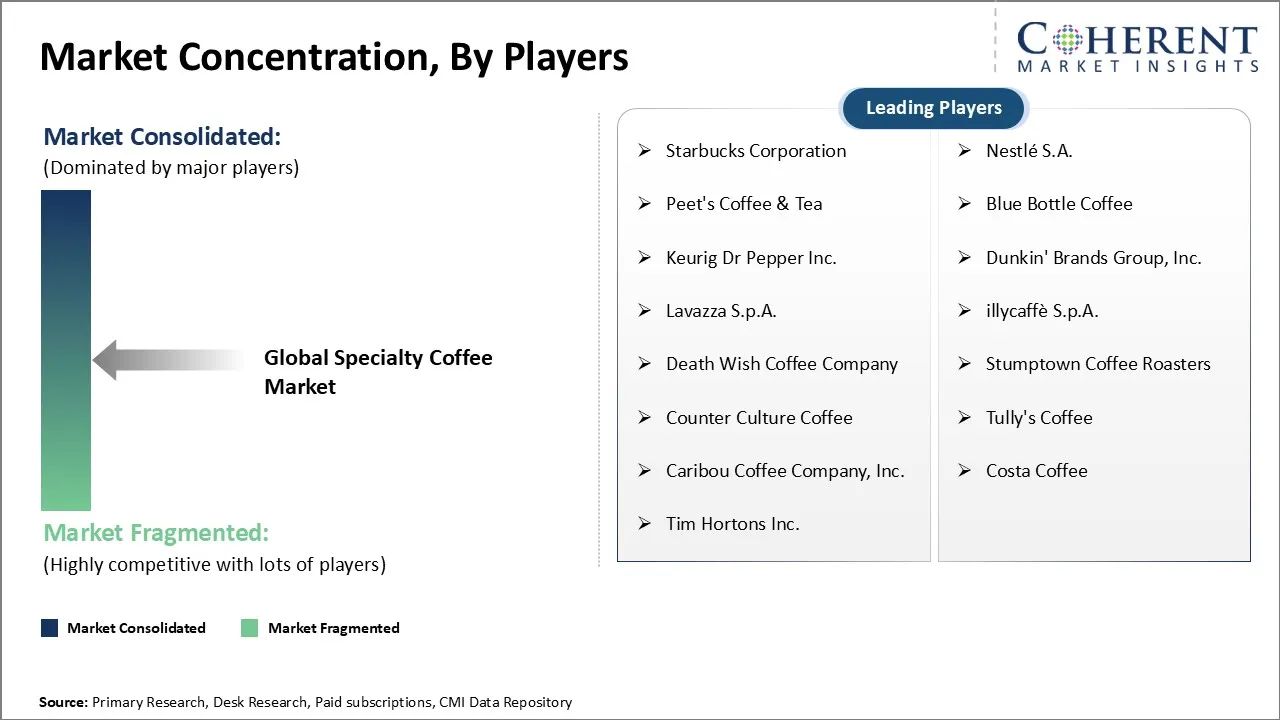
| Companies covered: | Starbucks Corporation, Nestlé S.A., Peet's Coffee & Tea, Blue Bottle Coffee, Keurig Dr Pepper Inc., Dunkin' Brands Group, Inc., Lavazza S.p.A., illycaffè S.p.A., Death Wish Coffee Company, Stumptown Coffee Roasters, Counter Culture Coffee, Tully's Coffee, Caribou Coffee Company, Inc., Costa Coffee, and Tim Hortons Inc. | ||
| Growth Drivers: |
| ||
| Restraints & Challenges: |
| ||
Specialty Coffee Market Dynamics
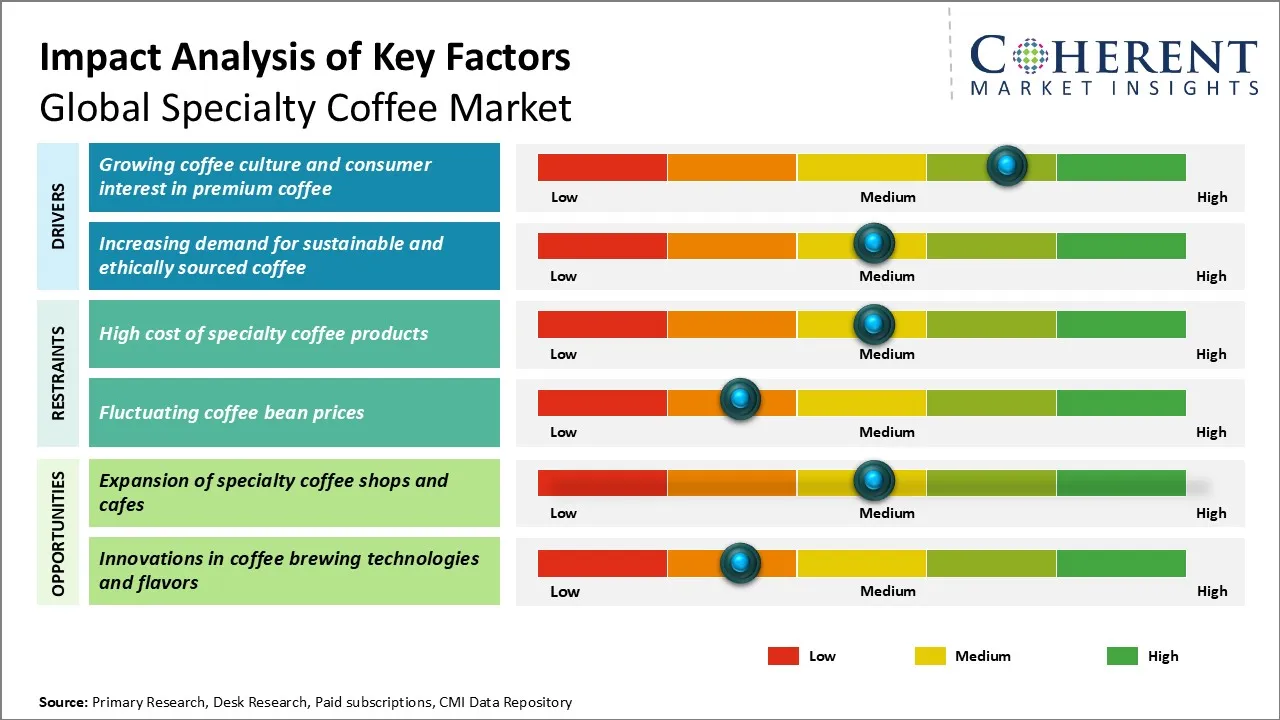
Specialty Coffee Market Driver - Growing Coffee Culture and Consumer Interest in Premium Coffee
The expanding coffee culture worldwide has significantly contributed to the burgeoning demand for specialty coffee, driven by consumers’ growing preference for high-quality, artisanal brews over conventional options. Increasing exposure to diverse coffee varieties, brewing methods, and origin stories has heightened consumer awareness and a willingness to explore unique flavor profiles, turning coffee consumption into a more experiential and personalized activity. This shift is further fueled by younger demographics and urban dwellers who view specialty coffee not just as a beverage but as an integral part of their lifestyle and social identity.
Specialty cafés often showcase beans from unique origins such as Kenya’s AA Arabica or Costa Rica’s Tarrazú, paired with advanced brewing techniques like siphon, cold brew, or AeroPress. For example, brands like Intelligentsia Coffee in the U.S. or Toby’s Estate in Australia have cultivated loyal followings by offering educational tasting sessions and farm-to-cup transparency.
Specialty Coffee Market Opportunity - Expansion of Specialty Coffee Shops and Cafes
The global specialty coffee market presents a significant opportunity through the rapid expansion of specialty coffee shops and cafes across both developed and emerging economies. Increasing consumer preference for high-quality, ethically sourced, and artisanal coffee has driven the demand for unique coffee experiences, encouraging entrepreneurial ventures and established brands to invest heavily in specialty outlets. Urbanization and rising disposable incomes, particularly among millennials and Gen Z, are fueling foot traffic in specialty cafes that offer not only premium coffee but also sophisticated ambiance and lifestyle appeal.
For instance, Starbucks Reserve Roasteries in cities like Shanghai and Milan have redefined the coffeehouse concept by combining immersive café experiences with small-batch specialty offerings. Similarly, Blue Bottle Coffee’s expansion across Japan highlights how global brands are capitalizing on consumer appetite for curated coffee experiences.
Analyst Opinion (Expert Opinion)
- The global specialty coffee market is experiencing robust growth, driven by evolving consumer preferences toward quality and sustainability. Insights from the Specialty Coffee Association Expo (2023) and the Global Coffee Innovation Summit (2022) highlighted significant trends, with companies like Blue Bottle Coffee and Stumptown Coffee Roasters leading the charge in premium offerings and direct trade sourcing.
- Blue Bottle's recent launch of single-origin coffees with detailed traceability reflects a growing consumer desire for transparency and ethical sourcing, setting a high standard within the industry. Discussions at these events emphasized the importance of sustainability practices and innovative brewing methods, appealing particularly to younger consumers who prioritize quality over quantity. However, challenges such as the rising costs of high-quality beans and supply chain disruptions due to climate change were identified as potential barriers.
- Companies that invest in R&D to enhance flavor profiles and sustainable farming practices will likely secure a competitive edge. Additionally, collaborations with local roasters can facilitate market expansion. Ultimately, the specialty coffee market’s trajectory will hinge on its ability to innovate while meeting the demands of discerning coffee aficionados.
Speak to the analyst
Want personalized insights?
Take the findings above to one of our principal consultants, or have the report rebuilt around the segments, geographies and competitors you actually track.
Market Segmentation
- Product Type Insights (Revenue, USD Bn, 2021 - 2033)
- Whole Bean Coffee
- Ground Coffee
- Instant Coffee
- Coffee Pods & Capsules
- Others
- Age Group Insights (Revenue, USD Bn, 2021 - 2033)
- 18-24 Years
- 25-39 Years
- 40-59 Years
- Above 60
- Distribution Channel Insights (Revenue, USD Bn, 2021 - 2033)
- Away From Home
- Supermarkets & Hypermarkets
- Convenience Stores
- Online
- Others
- Retail
- Coffee Shops and Cafes
- Hotels And Restaurants
- Others
- Regional Insights (Revenue, USD Bn, 2021 - 2033)
- North America
- U.S.
- Canada
- Latin America
- Brazil
- Argentina
- Mexico
- Rest of Latin America
- Europe
- Germany
- U.K.
- Spain
- France
- Italy
- Russia
- Rest of Europe
- Asia Pacific
- China
- India
- Japan
- Australia
- South Korea
- ASEAN
- Rest of Asia Pacific
- Middle East
- GCC Countries
- Israel
- Rest of Middle East
- Africa
- South Africa
- North Africa
- Central Africa
- North America
- Key Players Insights
- Starbucks Corporation
- Nestlé S.A.
- Peet's Coffee & Tea
- Blue Bottle Coffee
- Keurig Dr Pepper Inc.
- Dunkin' Brands Group, Inc.
- Lavazza S.p.A.
- illycaffe S.p.A.
- Death Wish Coffee Company
- Stumptown Coffee Roasters
- Counter Culture Coffee
- Tully's Coffee
- Caribou Coffee Company, Inc.
- Costa Coffee
- Tim Hortons Inc.
Sources
Primary Research Interviews
- Coffee Procurement Manager – Leading Specialty Coffee Chain
- Head of Product Development – Global Coffee Roaster
- Sustainability Director – Fair-Trade & Organic Coffee Certification Body
- Marketing Head – Premium Café Chain
Stakeholders
- Manufacturers & Producers: Specialty coffee growers, roasters, and exporters
- End Use Sectors:
- Coffee Shops & Cafés (independent and branded chains)
- Retail Chains & Supermarkets (private-label specialty coffee brands)
- E-commerce Platforms specializing in premium coffee
- Regulatory & Certification Bodies: Fairtrade International, Rainforest Alliance, USDA Organic, EU Organic
- Technology Integration Players: Digital platforms for direct trade, blockchain traceability in coffee supply chains
Databases
- International Coffee Organization (ICO) Statistics
- UN Comtrade Database (Coffee trade flows)
- ITC Trade Map (Specialty coffee exports/imports)
- India Export Import (EXIM) Database
Magazines
- Roast Magazine – Specialty coffee roasting and trends
- Barista Magazine – Specialty coffee shops and barista innovations
- Coffee & Cocoa International – Market updates in global coffee industry
- Tea & Coffee Trade Journal – Specialty coffee processing and trade insights
- Caffeine Magazine – Consumer culture and specialty coffee consumption trends
Journals
- Journal of Coffee Research – Specialty coffee quality, processing, and consumer studies
- Food Research International – Coffee flavor chemistry and health studies
- Journal of Sustainable Agriculture – Coffee farming sustainability
- Beverages (MDPI Journal) – Research on coffee consumption and market trends
Newspapers
- The Financial Times – Premiumization trend in global coffee consumption
- The Guardian – Ethical sourcing and fair-trade coffee coverage
- Bloomberg – Specialty coffee retail and café chain expansion
- The New York Times – Consumer preference shifts towards specialty and artisanal coffee
- Nikkei Asia – Coffee consumption growth in Asia-Pacific markets
Associations
- Specialty Coffee Association (SCA)
- Coffee Quality Institute (CQI)
- International Coffee Organization (ICO)
- European Coffee Federation (ECF)
- National Coffee Association (NCA, USA)
Public Domain Sources
- FAO – Coffee production and sustainability studies
- World Bank – Coffee value chain and economic impact
- European Commission – Coffee trade regulations (tariffs, sustainability)
- U.S. Department of Agriculture (USDA) – Coffee imports, certification, and consumption trends
Proprietary Elements
- CMI Data Analytics Tool, Proprietary CMI Existing Repository of information for last 8 years.
Get access to 250+ pages report
Every segment, forecast, competitor profile and data table behind the analysis above — available for instant download.
- ESOMAR Member
- ISO 9001:2015 Certified
- D-U-N-S Registered
- GDPR & CCPA Compliant
Missing comfort of reading report in your local language? Find your preferred language:
Transform your Strategy with Exclusive Trending Reports
Frequently Asked Questions
The global specialty coffee market is estimated to be valued at USD 11.34 Bn in 2026 and is expected to reach USD 23.55 Bn by 2033.
The CAGR of the global specialty coffee market is projected to be 11.0% from 2026 to 2033.
Growing coffee culture and consumer interest in premium coffee and increasing demand for sustainable and ethically sourced coffee are the major factors driving the growth of the global specialty coffee market.
High cost of specialty coffee products and fluctuating coffee bean prices are the major factors hampering the growth of the global specialty coffee market.
In terms of product type, the whole bean coffee segment is estimated to dominate the market revenue share in 2026.
Starbucks Corporation, Nestlé S.A., Peet's Coffee & Tea, Blue Bottle Coffee, Keurig Dr Pepper Inc., Dunkin' Brands Group, Inc., Lavazza S.p.A., illycaffè S.p.A., Death Wish Coffee Company, Stumptown Coffee Roasters, Counter Culture Coffee, Tully's Coffee, Caribou Coffee Company, Inc., Costa Coffee, and Tim Hortons Inc. are the major players.
North America is expected to lead the global specialty coffee market in 2026.