

Body Worn Insect Repellent Products Market Size and Forecast — 2026-2033
The Global Body Worn Insect Repellent Products Market size is estimated to be valued at USD 1.96 billion in 2026 and is expected to reach USD 3.51 billion by 2033, exhibiting a compound annual growth rate (CAGR) of 8.7% from 2026 to 2033.
Overview
Body-worn insect repellent products are designed to provide personal protection against mosquito, tick, and other insect bites through topical or wearable formulations. These include sprays, creams, lotions, patches, wristbands, and roll-ons infused with active repellents such as DEET, picaridin, or natural plant-based oils like citronella and eucalyptus. The products form a protective barrier on the skin or clothing to repel insects effectively.
With growing health awareness and rising vector-borne diseases, manufacturers are focusing on developing non-toxic, hypoallergenic, and long-duration repellents suitable for adults, children, and outdoor enthusiasts.
Key Takeaways
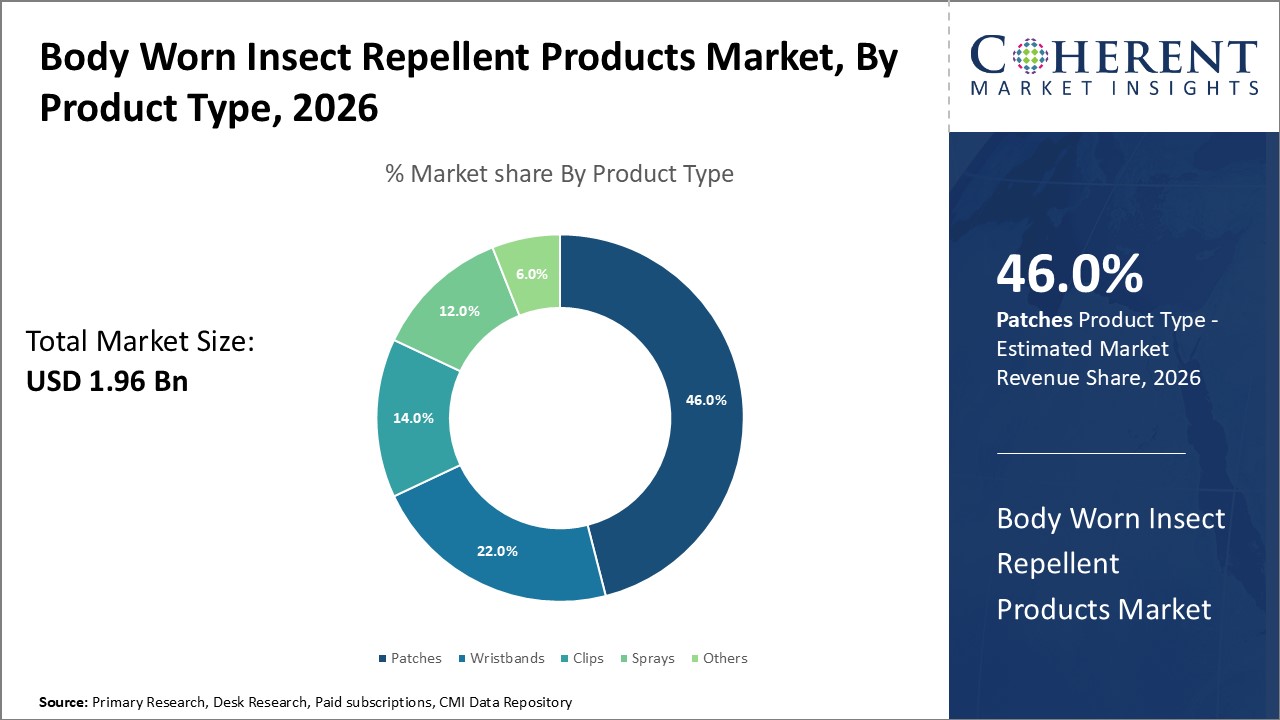
The Patches segment dominates the product type category with a commanding market share of 46%, driven by consumer preference for convenience and long-lasting effect. Wristbands and clips are rapidly evolving as the fastest-growing subsegments due to their ease of reuse and vibrant designs appealing to younger demographics.
DEET remains the leading active ingredient due to its proven efficacy and is projected to maintain dominance in the ingredient segment, but the natural extracts subsegment is witnessing the fastest growth, encouraged by increasing eco-conscious consumer trends globally.
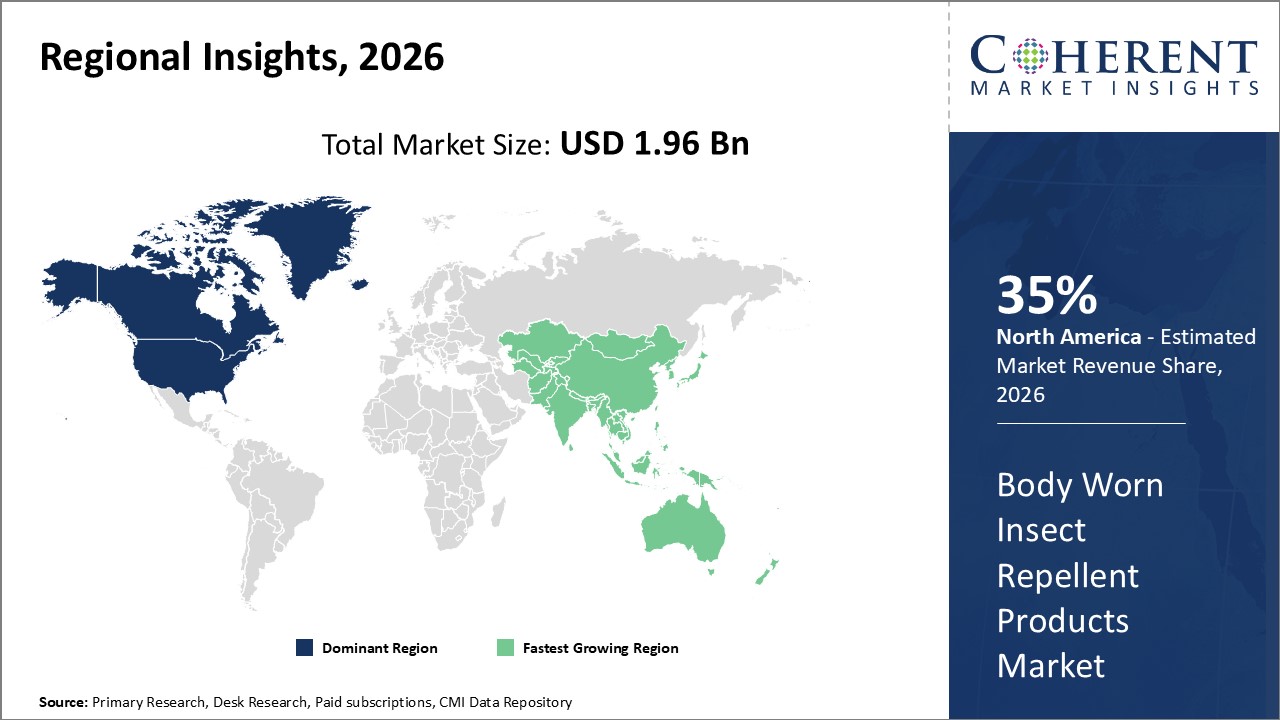
The North American region captures the largest market share, accounting for approximately 35% of the market revenue in 2026, fueled by strong healthcare infrastructure and high consumer awareness. Meanwhile, the Asia Pacific demonstrates the fastest CAGR, supported by government health initiatives and an expanding middle class.
Europe shows promising growth, boosted by regulatory approvals encouraging safer product development and robust outdoor leisure activities, contributing significantly to market expansion.
Body Worn Insect Repellent Products Market Segmentation Analysis
Body Worn Insect Repellent Products Market Insights, By Product Type
Patches dominate the market share at 46%. Consumer preference leans toward patches due to their ease of application, discrete usage, and prolonged protection period, making them a staple for day-long outdoor activities. Wristbands represent the fastest growing subsegment by capitalizing on reusable designs and fashionable aesthetics coupled with multi-sensory appeal. Clips maintain moderate demand as portable options with moderate longevity, while sprays continue catering to traditional preferences for immediate area coverage.
Body Worn Insect Repellent Products Market Insights, By Active Ingredient
DEET remains the dominant ingredient owing to its recognized broad-spectrum efficacy and historical acceptance, supporting the bulk of market share in medical and outdoor professional applications. Natural Extracts are the fastest-growing due to increasing consumer demand for chemical-free solutions and sustainability drives, especially in North America and Europe. Picaridin and IR3535 hold steady as favorable alternatives, balancing efficacy with a lower safety risk profile. The Others segment includes novel compounds under clinical testing, highlighting ongoing innovation in ingredient technology.
Body Worn Insect Repellent Products Market Insights, By Distribution Channel
Supermarkets and Hypermarkets dominate, offering extensive visibility and immediate access to consumers, especially in urban regions.
Body Worn Insect Repellent Products Market Trends
Recent market trends include a clear pivot towards eco-conscious formulations and wearable technology integration, facilitating enhanced user experience and safety.
The surge in natural repellents, marked by a 30% sales increase in North America during 2025, underscores changing consumer preferences.
Further, companies employing digital platforms for consumer engagement have reported expedited adoption rates of new repellent products, especially in younger demographics.
Mergers and acquisitions are reshaping the competitive landscape, with notable partnerships in the Asia-Pacific region expanding access to emerging markets.
Body Worn Insect Repellent Products Market Insights, By Geography
North America Body Worn Insect Repellent Products Market Analysis and Trends
In North America, the dominance in the Body Worn Insect Repellent Products Market stems from advanced healthcare infrastructure, high consumer awareness about vector-borne diseases, and a well-established retail ecosystem. The U.S. government’s public health campaigns and robust outdoor lifestyle trends contribute markedly, supporting approximately 35% of the total market share in 2026. Leading companies have concentrated product launches and marketing efforts in this region, ensuring steady industry revenue growth despite regional market challenges.
Asia Pacific Body Worn Insect Repellent Products Market Analysis and Trends
Meanwhile, the Asia Pacific exhibits the fastest growth with an anticipated CAGR of over 9.5% through 2033. Factors driving this include widespread government initiatives to combat mosquito-borne diseases, growing urbanization, and increasing disposable incomes. Countries like India and China have seen significant expansions in consumer bases for body-worn insect repellent products, aided by favorable regulatory reforms and expanding retail networks. Multinational market players have strategically invested in manufacturing hubs and regional marketing within the Asia-Pacific, enhancing their market growth strategies.
Body Worn Insect Repellent Products Market Outlook for Key Countries
USA Body Worn Insect Repellent Products Market Analysis and Trends
The USA market emphasizes innovation in long-lasting wearable insect repellents, supported by substantial government health funding and broad consumer acceptance. In 2025, the U.S. accounted for nearly 60% of North America’s market revenue, led by strong demand from the outdoor recreation and military sectors. Major players such as SC Johnson and Avon have introduced tech-enabled repellents and diversified product portfolios to capture evolving consumer needs. The U.S. market’s mature retail infrastructure and widespread e-commerce adoption further reinforce business growth prospects and robust market revenue streams.
India Body Worn Insect Repellent Products Market Analysis and Trends
India’s market growth is propelled by rising public awareness campaigns and government subsidies for vector control measures. With increasing urban population densities and a surge in summer mosquito-borne outbreaks reported in 2025, demand for body-worn repellent products has accelerated significantly. Leading companies have enhanced distribution across rural and urban settings, leveraging localized partnerships and affordable product variations. This has resulted in a doubling of the market share by the natural extracts subsegment within domestic sales channels, signaling a critical shift in consumer behavior and market analysis insights.
Analyst Opinion
The steadily increasing incidence of mosquito-borne diseases has directly influenced the demand for body-worn insect repellents. In 2025 alone, the World Health Organization reported a 13% rise in dengue cases globally compared to the previous year, signaling heightened demand for personal protective products. This disease burden is a critical market driver and influences market share expansion for advanced repellent formulations.
Pricing dynamics in emerging economies are affecting supply-side trends significantly. For instance, India’s public health initiatives have subsidized insect repellent products, contributing to an estimated 16% price reduction in 2025, boosting accessibility and consumer penetration rates in rural areas. Such economic strategies directly impact market growth strategies tailored by market players.
Demand-side indicators reveal that the application of body-worn insect repellents has diversified beyond traditional outdoor use. In the U.S., corporate wellness programs now promote repellent patches for employees working in pest-prone outdoor sites, causing a 21% year-over-year rise in corporate bulk imports of such products during 2025. This diversification addresses new use cases, contributing positively to overall market revenue.
Production capacity for body-worn repellents is rapidly scaling with technological innovation. A major manufacturer in Southeast Asia expanded its facility in late 2023, increasing output by 31%. Concurrently, enhanced formulations that extend efficacy duration to 12 hours have gained prominence, making these high-performance products critical in increasing market size and refining market segmentation strategies.
- Current Industry Events of 2026
- Market Size Estimation
- Regional Breakdown
- Competitive Landscape
- Customer Intelligence
- Segmental Analysis
- Pricing Analysis
- Key Market Drivers, Challenges & Future Trends
- Customized Insights Section
Market Scope
| Report Coverage | Details | ||
|---|---|---|---|
| Base Year: | 2025 | Market Size in 2026: | USD 1.96 billion |
| Historical Data for: | 2020 To 2024 | Forecast Period: | 2026 To 2033 |
| Forecast Period 2026 to 2033 CAGR: | 8.7% | 2033 Value Projection: | USD 3.51 billion |
| Geographies covered: |
| ||
| Segments covered: |
| ||
| Companies covered: | Avon Products Inc., SC Johnson & Son, Inc., REPEL Insect Repellent, Coleman Company Inc., Godrej Consumer Products Limited, SCENTRI USA, Bioesque Solutions, Thermacell Corporation, Bayer AG, Reckitt Benckiser Group Plc, Avon Naturals, Koppert Biological Systems, Murphy’s Naturals. | ||
| Growth Drivers: |
| ||
Body Worn Insect Repellent Products Market Growth Factors
The growing prevalence of vector-borne diseases globally remains a foremost market driver, with the Centers for Disease Control and Prevention noting a 9% rise in reported Zika virus cases in 2025, urging consumers to adopt personal protective measures. Rising outdoor lifestyle activities, including hiking, camping, and sports, particularly in North America and Europe, are creating consistent demand for portable and user-friendly insect repellents. Another driver is technological advancement in product formulations, with natural and long-lasting repellents gaining traction due to shifting consumer preferences toward eco-friendly solutions observed in 2025 sales data. Lastly, increased government efforts and public health campaigns in Latin America and the Asia-Pacific to reduce disease transmission are directly stimulating market growth strategies and encouraging wider product adoption.
Body Worn Insect Repellent Products Market Development
In June 2026, Mimikai, a startup founded by researchers from North Carolina State University, introduced a line of DEET-free insect and tick repellent sprays and lotions derived from compounds found in wild tomato plants. The proprietary ingredient, identified as “2-undecanone,” is registered with the U.S. Environmental Protection Agency (EPA) and offers up to eight hours of protection against mosquitoes and ticks. The launch represents one of the first commercial uses of a naturally occurring compound developed entirely through academic research and university commercialization programs.
In May 2026, Bite Block launched the "Mosquito Band," a wearable, chemical-free wristband infused with citronella, lemongrass, and lavender essential oils to naturally repel mosquitoes for hours. The product targets growing consumer interest in plant-based, wearable repellents as a DEET-free, gentle, and skin-friendly alternative for both adults and children, avoiding issues like skin irritation and strong chemical odors.
Key Players
Leading companies of the market:
Avon Products Inc.
SC Johnson & Son, Inc.
REPEL Insect Repellent
Coleman Company Inc.
Godrej Consumer Products Limited
SCENTRI USA
Thermacell Corporation
Bayer AG
Reckitt Benckiser Group Plc
Avon Naturals
Koppert Biological Systems
Murphy’s Naturals
Leading market players have predominantly focused on product innovation and diversification strategies. For instance, SC Johnson introduced a novel wearable repellent wristband in 2025, achieving a 26% increase in market revenue within six months due to effective user convenience and longer protection time. Meanwhile, Godrej Consumer Products expanded distribution partnerships in Southeast Asia, augmenting its regional market share by 19% within the last fiscal year by tapping into varying consumer preferences and leveraging localized marketing strategies.
Body Worn Insect Repellent Products Market Future Outlook
In the future, the market is expected to be driven by innovations in long-lasting, non-toxic formulations and wearable technologies integrated with microencapsulation and slow-release systems. Consumer preference will continue shifting toward plant-based and dermatologically safe repellents suitable for all age groups. E-commerce growth and rising public health campaigns will enhance accessibility in both developed and developing regions. Additionally, collaborations between healthcare agencies and FMCG manufacturers may foster large-scale distribution during disease outbreaks, boosting market expansion.
Body Worn Insect Repellent Products Market Historical Analysis
The body-worn insect repellent products market has grown in response to rising incidences of vector-borne diseases such as malaria, dengue, and Zika virus. Historically, DEET-based repellents dominated the market due to their proven effectiveness, but growing consumer concerns about chemical exposure spurred demand for natural and organic alternatives. Over the past decade, manufacturers diversified their product portfolios to include sprays, lotions, roll-ons, and wearable devices like wristbands and patches. Increased outdoor recreational activities, travel trends, and heightened public health awareness further supported product demand.
Sources
Primary Research interviews:
Public Health Officers
Product Development Chemists
FMCG Product Managers
Outdoor Equipment Retailers
Databases:
Centers for Disease Control and Prevention (CDC)
World Health Organization (WHO) Vector Control Database
U.S. Environmental Protection Agency (EPA)
Global Insecticide Resistance Database
Magazines:
Outdoor Life
Prevention Magazine
Health & Wellness Today
Consumer Reports
Journals:
Journal of Medical Entomology
PLOS Neglected Tropical Diseases
Parasites & Vectors
Journal of Vector Ecology
Newspapers:
The Washington Post (Health)
The Times of India (Health & Lifestyle)
The Hindu (Science & Health)
BBC News (Global Health)
Associations:
American Mosquito Control Association (AMCA)
World Health Organization (Vector Control Division)
Global Health Council
International Society for Infectious Diseases (ISID)
Get access to 250+ pages report
Every segment, forecast, competitor profile and data table behind the analysis above — available for instant download.
- ESOMAR Member
- ISO 9001:2015 Certified
- D-U-N-S Registered
- GDPR & CCPA Compliant
Missing comfort of reading report in your local language? Find your preferred language:
Transform your Strategy with Exclusive Trending Reports
Frequently Asked Questions
The market’s dominant companies include well-established entities such as Avon Products Inc., SC Johnson & Son, Inc., and Godrej Consumer Products Limited, recognized for their extensive product portfolios and innovative repellent technologies.
The market size is forecasted to grow from USD 1.96 billion in 2026 to USD 3.51 billion by 2033, reflecting robust demand and evolving product innovations in line with rising vector-borne disease cases.
Emerging trends such as the infusion of natural ingredients, wearable tech-enabled repellents, and e-commerce expansion will largely shape market development, driving increased customization and consumer reach.
The market is highly competitive with a growing focus on innovation and sustainability. Key challenges include regulatory hurdles and balancing efficacy with consumer safety preferences.
Strategies primarily entail product innovation, strategic regional partnerships, targeted digital marketing, and diversification through eco-friendly product lines to cater to wider consumer segments.