

After-sun Products Market Size and Forecast — 2026-2033
The Global After-sun Products Market size is estimated to be valued at USD 1.42 billion in 2026 and is expected to reach USD 2.37 billion by 2033, exhibiting a compound annual growth rate (CAGR) of 7.6% from 2026 to 2033.
Overview
After-sun products are specialized skincare formulations designed to soothe, hydrate, and repair the skin after exposure to sunlight and UV radiation. These products help alleviate redness, irritation, and inflammation while replenishing lost moisture and preventing peeling or long-term sun damage. Common formats include lotions, gels, sprays, creams, and serums, often featuring cooling agents like aloe vera, cucumber extract, menthol, and panthenol.
Modern after-sun products also incorporate hyaluronic acid and ceramides to restore the skin barrier and improve elasticity. Additionally, several brands now offer natural, reef-safe, and vegan options to cater to environmentally conscious consumers, emphasizing skin recovery and comfort after sun exposure.
Key Takeaways
The lotion segment dominates product type with 43% industry share, driven by superior mass-market appeal and ease of formulation integration, while gels are the fastest growing subsegment, fueled by their cooling and quick absorption properties preferred in tropical climates.
Specialty stores account for 34% of the distribution channel market share, reflecting consumer trust and expert product guidance, whereas online retailing is the fastest-growing channel leveraging e-commerce expansion and direct marketing.
Adult end-users overwhelmingly dominate due to higher disposable income and exposure rate, while children's products register growing demand driven by heightened parental concerns.
Geographically, North America leads the market with the highest market share, benefiting from advanced retail infrastructure and regulatory frameworks promoting skin health awareness.
Asia Pacific exhibits the fastest growth due to increasing urban populations and rising disposable income, particularly in India and China.
After-Sun Products Market Segmentation Analysis
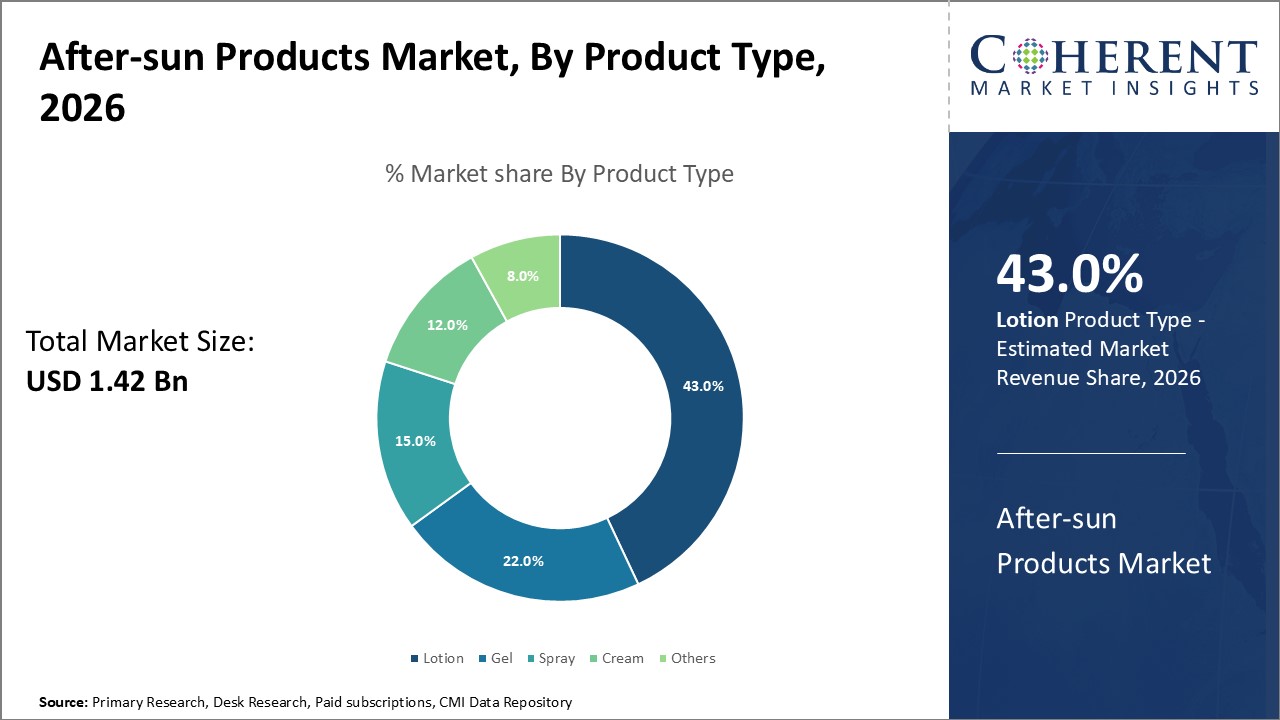
After-Sun Products Market Insights, By Product Type
Lotion’s dominance is attributed to its balanced texture, providing hydration while being easily absorbed, making it ideal for widespread consumer use. It is widely favored due to its versatility across skin types and climates, supported by strong marketing and product innovation. The fastest growing subsegment is Gel, which is acclaimed for its cooling effect and lighter formula, especially preferred in hot, humid geographies, leading to higher consumer adoption in Asia Pacific and Latin America.
After-sun Products Market Insights, By Distribution Channels
Specialty Stores dominate the market share, benefiting from expert consultation and product variety that draws consumers seeking premium after-sun care. The emphasis on product education and tailored solutions in specialty channels enhances consumer trust and repeat sales, particularly in North America and Europe. Online Retail is the fastest growing subsegment, propelled by rising internet penetration and the convenience of doorstep delivery coupled with virtual product trials and personalized recommendations, thus disrupting traditional retail models.
After-Sun Products Market Insights, By End-User
Adult consumers often seek multifunctional and premium after-sun products that align with lifestyle and health trends. The Children subsegment is expanding rapidly as parental concern over children’s skin vulnerability grows, with demand for gentle, hypoallergenic formulations increasing in Europe and North America. The Baby segment, while smaller in market share, is buoyed by increasing births and parental preferences for organic, natural skincare solutions in key markets. This segment offers significant potential for innovation in sensitive skincare and safe ingredient formulations, contributing to emerging market dynamics.
After-Sun Products Market Trends
Market trends in the After-sun Products sector highlight the surge in clean beauty products and the strategic use of digital platforms for consumer engagement.
For example, in 2025, companies leveraging influencer marketing reported a 21% increase in direct-to-consumer sales.
Additionally, regulatory enforcement in regions like Europe has accelerated innovation in non-chemical UV-repair ingredients, enhancing product efficacy and consumer confidence.
After-Sun Products Market Insights, By Geography
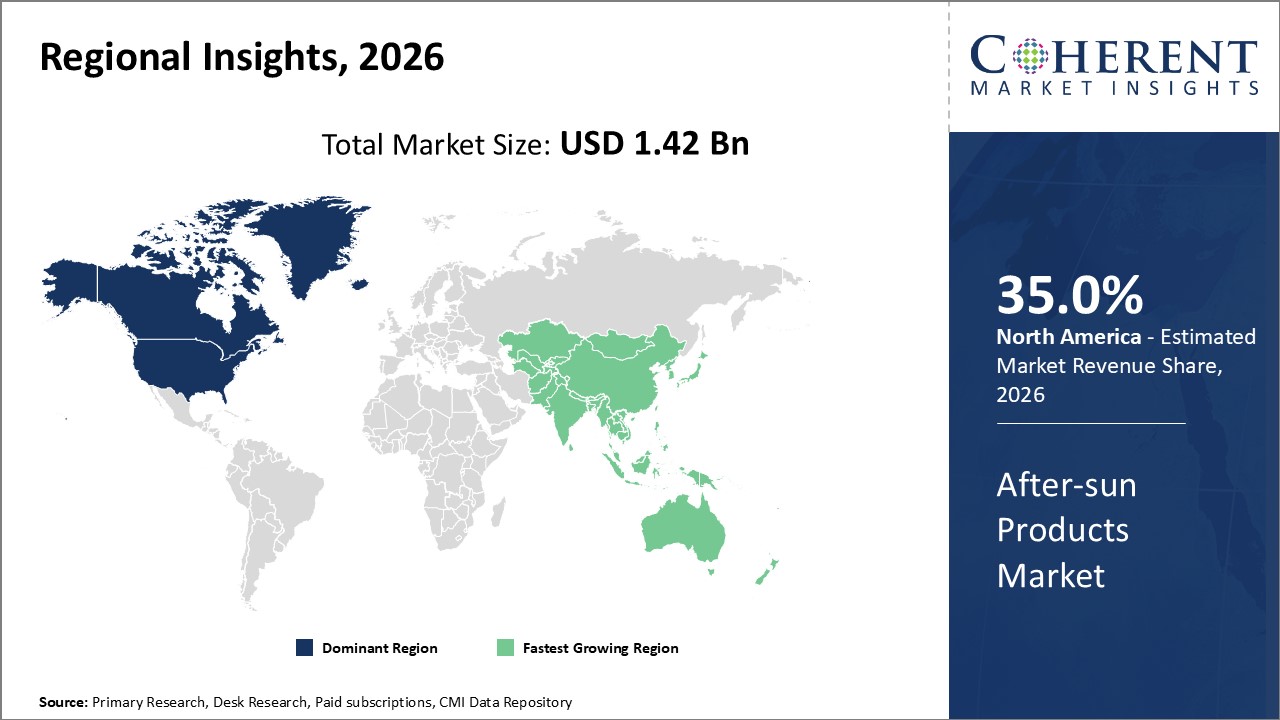
North America After-Sun Products Market Analysis and Trends
In North America, the dominance in the After-sun Products market is driven by a sophisticated consumer base, stringent regulations fostering product safety, and a dense retail infrastructure incorporating specialty skincare stores. The region accounts for over 35% market share supported by robust e-commerce penetration and widespread skin health awareness campaigns, particularly across the U.S. market. Notable companies such as Johnson & Johnson and L'Oréal have expanded R&D facilities here, nurturing continuous innovation and product launches.
Asia Pacific After-sun Products Market Analysis and Trends
Meanwhile, the Asia Pacific exhibits the fastest growth with a CAGR exceeding 9%, propelled by rapid urbanization, rising disposable incomes, and increasing solar exposure. Governments in countries like India and China are endorsing skincare awareness programs, incentivizing consumer uptake. Market players like Amorepacific and Shiseido have capitalized on this growth by localizing product lines and investing in omnichannel distribution.
After-sun Products Market Outlook for Key Countries
USA After-sun Products Market Analysis and Trends
The USA’s market stands out due to its extensive demand for premium and multifunctional after-sun products, accounting for nearly 28% of global market revenue in 2025. Leading companies such as Johnson & Johnson and Neutrogena have leveraged advanced product innovation including cooling gels and antioxidant-enriched lotions that saw sales growth over 15% year-on-year. Regulatory frameworks encouraging sun safety awareness campaigns further fuel market size expansion. E-commerce growth and product customization software are also shaping consumer engagement trends.
India After-sun Products Market Analysis and Trends
India’s after-sun products market reflects one of the fastest growing single-country opportunities in Asia Pacific, driven by rising skin care awareness and increased outdoor activity in urban centers. Domestic brands and multinational companies, including Amorepacific and L’Oréal, have introduced region-specific formulations catering to climate and skin type diversity, enhancing local market expansion. Additionally, digital retail channels have grown by double digits since 2023, reflecting a new distribution paradigm facilitating accessibility in tier 2 and tier 3 cities.
Analyst Opinion
Increasing consumer inclination towards plant-based and organic after-sun components is a pivotal demand-side indicator influencing market share. For instance, natural cooling ingredients such as aloe vera and chamomile have contributed to a 16% adoption increase in 2025 among premium market players, reflecting product differentiation and market revenue growth.
The supply-side landscape is marked by progressive advances in bioactive compound manufacturing, which boosted production capacity by approximately 19% in 2025, enabling manufacturers to meet increasing seasonal demand peaks efficiently. Moreover, pricing strategies have adapted to consumer willingness to pay premiums for natural formulations, supporting overall market growth.
Emerging use cases across lifestyle and wellness sectors have expanded after-sun product penetration. Usage has transcended traditional beachwear consumers to include urban populations increasingly exposed to environmental stressors, accentuating market dynamics and fostering a 13% rise in imports of specialized after-sun components in key geographies during early 2026.
Regional export patterns elucidate micro-indicators such as trade volume surges from Asia Pacific manufacturers, accounting for an 11% increase in exports to North America and Europe in 2025. This reflects shifts in production hubs and strategic sourcing, impacting market size and competitive positioning globally.
- Current Industry Events of 2026
- Market Size Estimation
- Regional Breakdown
- Competitive Landscape
- Customer Intelligence
- Segmental Analysis
- Pricing Analysis
- Key Market Drivers, Challenges & Future Trends
- Customized Insights Section
Market Scope
| Report Coverage | Details | ||
|---|---|---|---|
| Base Year: | 2025 | Market Size in 2026: | USD 1.42 billion |
| Historical Data for: | 2020 To 2024 | Forecast Period: | 2026 To 2033 |
| Forecast Period 2026 to 2033 CAGR: | 7.6% | 2033 Value Projection: | USD 2.37 billion |
| Geographies covered: |
| ||
| Segments covered: |
| ||
| Companies covered: | Beiersdorf AG, L'Oréal S.A., Johnson & Johnson Services, Inc., The Estee Lauder Companies Inc., Unilever PLC, Shiseido Company, Limited, Amorepacific Corporation, Kao Corporation, Pierre Fabre Group, Elizabeth Arden, Inc., La Roche-Posay (subsidiary of L’Oréal), Curel Corporation, Neutrogena (Johnson & Johnson). | ||
| Growth Drivers: |
| ||
After-Sun Products Market Growth Factors
The significant increase in global UV exposure due to climate changes is intensifying demand for after-sun products, supported by rising skin cancer awareness campaigns that improved product adoption by 25% in Europe during 2025. Growing urbanization and disposable income in Asia Pacific have escalated demand by accelerating lifestyle-focused skincare consumption, particularly in countries like India and China.
Advances in skincare technology enabling multifunctional after-sun formulations targeting hydration, repair, and anti-aging properties are boosting market revenue and penetration, reflecting a 10% increase in product innovation patent filings in 2026. Finally, the accelerating shift toward e-commerce and omni-channel retail strategies is expanding accessibility, especially in emerging markets, resulting in online after-sun product sales growing at a CAGR of 11.2% in the last two years.
After-Sun Products Market Development
In February 2026, Kao Corporation unveiled a novel formulation technology aimed at improving user comfort in high UVA/UVB exposure + humid / sweaty conditions. The technology involves agar hydrogel capsules with UV absorbers and moisture-retaining polymers in a light, airy oil-in-water formulation that adapts with changes in humidity. While this is technically a sun protection / UV protection innovation, it relates strongly to after-sun care by addressing discomfort post sun-exposure and promoting reapplication / more consistent protection.
In April 2026, BASF rolled out an enhanced version of its Sunscreen Simulator, which is a digital lab tool used for developing and optimizing sun protection and by extension, after-sun or sun exposure-related formulations. The updated simulator offers new technical features (e.g. selecting different formulation chassis such as oil-in-water or water-in-oil) and improved calculations. This helps formulation scientists better predict performance under various conditions including after sun exposure
Key Players
Leading Companies of the Market
Beiersdorf AG
L'Oréal S.A.
Johnson & Johnson Services, Inc.
Unilever PLC
Shiseido Company, Limited
Amorepacific Corporation
Kao Corporation
Pierre Fabre Group
Elizabeth Arden, Inc.
La Roche-Posay (subsidiary of L’Oréal)
Curel Corporation
Neutrogena (Johnson & Johnson)
Several market companies have leveraged acquisition strategies to enhance their product portfolio and geographic outreach. For example, L’Oréal’s acquisition of specialized dermocosmetic brands in 2025 expanded its presence in the natural after-sun segment by 23% revenue share. Likewise, Johnson & Johnson’s increased investment in R&D led to launching innovative cooling gel formulations that captured 18% market share growth in North America within one year.
After-Sun Products Market Future Outlook
In the future, the after-sun products market is expected to benefit from continued innovation in multifunctional skincare solutions that combine hydration, repair, and protection in one formulation. Growing consumer preference for organic, vegan, and cruelty-free skincare will drive the demand for natural botanical-based products. Manufacturers are also expected to focus on sustainable and eco-friendly packaging to meet environmental expectations. With the increase in global temperatures and expanding tourism in tropical destinations, the use of after-sun products is anticipated to become more habitual. Moreover, digital beauty trends and influencer-led marketing campaigns are likely to enhance consumer engagement and accelerate brand visibility in both premium and mass-market categories.
After-Sun Products Market Historical Analysis
The after-sun products market has its roots in the skincare and personal care industry, initially driven by consumer awareness of the harmful effects of ultraviolet (UV) exposure and sunburn. In earlier decades, the market mainly featured basic soothing gels and moisturizers formulated with ingredients like aloe vera and vitamin E to reduce irritation and redness. With the rise of global travel and outdoor recreation in the late 20th century, after-sun products became an essential part of holiday skincare. Over the past decade, the segment evolved rapidly as dermatologists and cosmetic chemists began introducing formulations enriched with antioxidants, peptides, and natural oils for comprehensive skin recovery. Marketing strategies emphasizing sun safety, coupled with rising incidences of photoaging and skin damage, also played a crucial role in expanding the category’s appeal.
Sources
Primary Research interviews:
Dermatologists
Skincare Product Developers
Cosmetic Chemists
Retail Beauty Experts
Databases:
Euromonitor Beauty & Personal Care
Global Cosmetic Industry Database
Magazines:
Vogue Beauty
Elle Skincare
Beauty Packaging
Cosmetics & Toiletries
Journals:
Journal of Cosmetic Dermatology
Skin Research & Technology
International Journal of Cosmetic Science
Photodermatology Research
Newspapers:
The Guardian (Lifestyle)
The Economic Times (Beauty & Wellness)
The New York Times (Style)
Hindustan Times (Fashion & Care)
Associations:
Cosmetic Toiletry and Perfumery Association (CTPA)
Personal Care Products Council (PCPC)
Skin Cancer Foundation
American Academy of Dermatology (AAD)
Get access to 250+ pages report
Every segment, forecast, competitor profile and data table behind the analysis above — available for instant download.
- ESOMAR Member
- ISO 9001:2015 Certified
- D-U-N-S Registered
- GDPR & CCPA Compliant
Missing comfort of reading report in your local language? Find your preferred language:
Transform your Strategy with Exclusive Trending Reports
Frequently Asked Questions
The dominant players include Beiersdorf AG, L'Oréal S.A., Johnson & Johnson, and The Estee Lauder Companies, which have maintained robust market shares through innovation,
What will be the size of the After-sun Products market in the coming years?
Which end-user industry has the largest growth opportunity?
How will market development trends evolve over the next five years?
What is the nature of the competitive landscape and challenges in the After-sun Products market?
What go-to-market strategies are commonly adopted in the After-sun Products market?