

Global Surgical Drains Market Size and Forecast – 2026 to 2033
The Global Surgical Drains Market is estimated to be valued at USD 3.07 Bn in 2026 and is expected to reach USD 4.86 Bn by 2033, exhibiting a compound annual growth rate (CAGR) of 6.8% from 2026 to 2033. This growth is driven by the rising number of surgical procedures worldwide, increasing demand for minimally invasive surgeries, and advancements in surgical drain technologies, which collectively enhance patient recovery and reduce complications.
Key Takeaways of the Global Surgical Drains Market
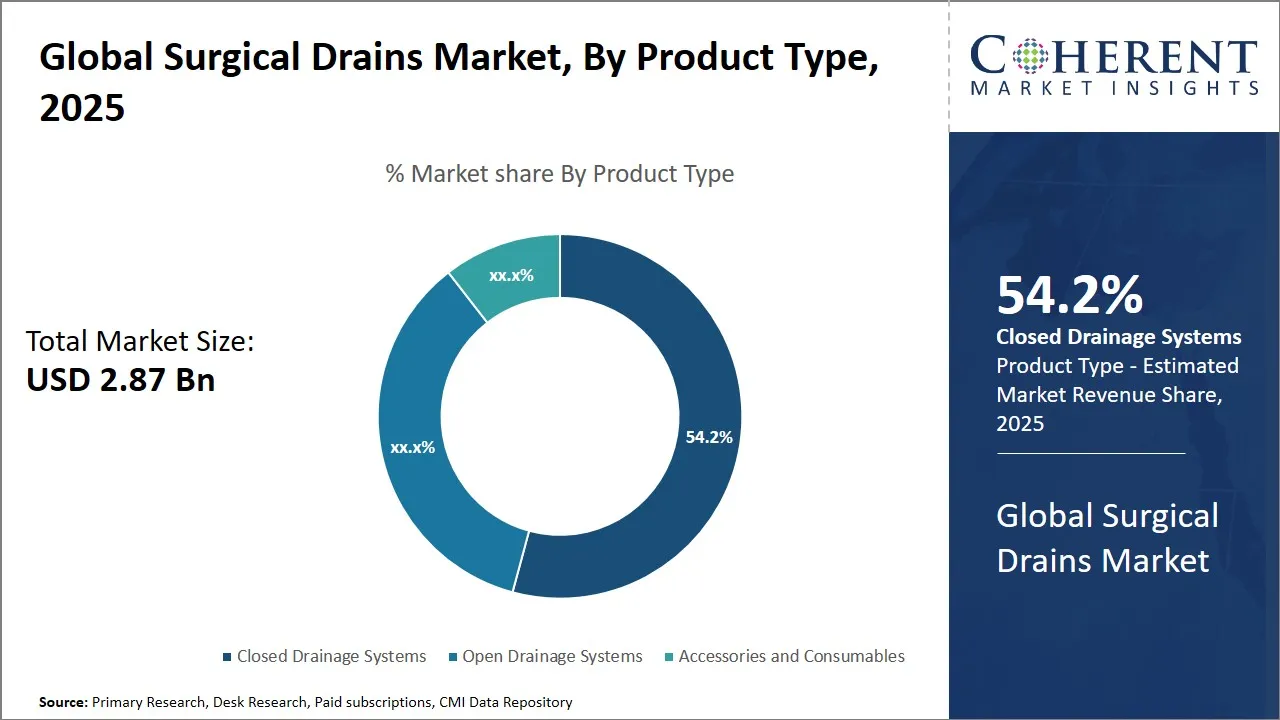
- Closed drainage systems lead the global surgical drains market by product type, accounting for an estimated 55.2 % of the market share in 2026.
- Passive drains are projected to hold the dominant position with a 66.1 % share in 2026 due to their simple and effective mechanism.
- General surgery remains the largest application segment in the market, representing an estimated 24.4 % of the market share in 2026.
- North America is expected to lead the market, holding a share of 40.3 % in 2026. Asia Pacific is anticipated to be the fastest-growing region, with a market share of 25.3% in 2026.
Market Overview
The market trend indicates a significant shift towards the adoption of advanced, biocompatible, and smart surgical drains that offer better fluid management and infection control. Additionally, growing awareness among healthcare professionals and patients about post-surgical care and the integration of digital monitoring systems in surgical drains are fueling the market expansion. Furthermore, emerging economies are witnessing increased healthcare investments, which is further supporting the demand for surgical drains in both hospital and outpatient settings.
Current Events and Its Impact
Current Events | Description and its Impact |
Accelerated Adoption of Advanced Surgical Drains |
|
Surge in Complex Surgeries Worldwide |
|
Segmental Insights
- Current Industry Events of 2026
- Market Size Estimation
- Regional Breakdown
- Competitive Landscape
- Customer Intelligence
- Segmental Analysis
- Pricing Analysis
- Key Market Drivers, Challenges & Future Trends
- Customized Insights Section
Surgical Drains Market Insights, By Product Type - Closed drainage systems contribute the highest market share owing to enhanced safety and infection control benefits
Closed drainage systems are expected to hold the largest share of 55.2% in 2026. These drains prevent infection and offer the best fluid management during the postoperative phase.
In contrast to open drainage systems, closed systems eliminate any external contaminant that may get into the wound site, which is very vital in minimizing the occurrence of postoperative complications like surgical site infections (SSIs).
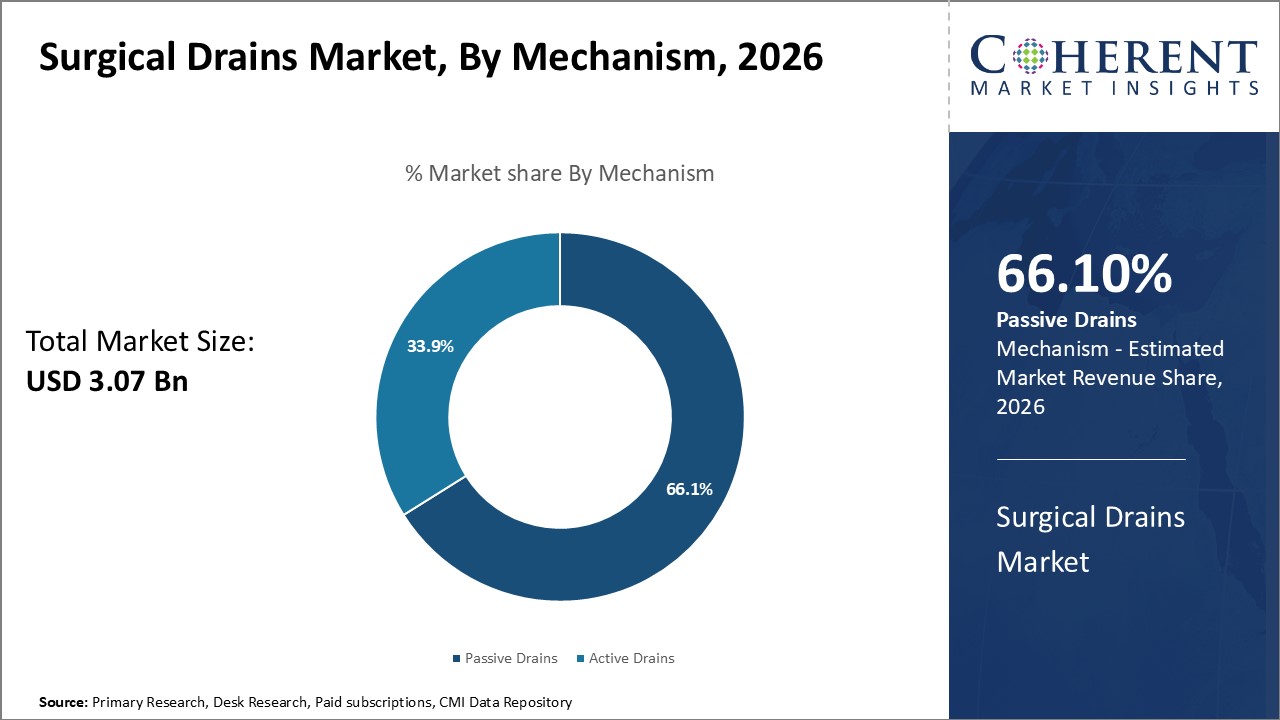
Surgical Drains Market Insights, By Mechanism - Passive drains contribute the highest market share due to their reliability, simplicity, and broad surgical applicability
The reason passive drains retain the leading position in the surgical drains market, with an estimated share of 66.1% in 2026, is their simple mechanism of action. They use natural pressure differentials and gravity to evacuate surgical sites of fluids. Such drains are not necessarily connected to external suction machines and this makes them simpler to use between the surgeons and the nursing staff in perioperative care units.
Passive drainage systems are highly used because of the reliability of the system. They are simply designed in tubular or flat form, enabling fluid to pass spontaneously which reduces mechanical failures and facilitates easy maintenance.
Surgical Drains Market Insights, By Application - General surgery contributes the highest market share driven by the diverse range of procedures and frequent postoperative drainage needs
The most successful application segment in the surgical drains market is general surgery, with an estimated share of 24.4% in 2026. This success is due to the wide range of both routine and multifaceted surgical procedures that require efficient management of wound drainage. Hernia repairs, appendectomies, cholecystectomies, and gastrointestinal surgeries fall under this specialty in which all of these procedures tend to cause fluid retention at the surgical site which requires the use of drains.
In June 2025, PolyPid, a biopharmaceutical company focused on localized drug delivery solutions, reported positive Phase 3 results for its D-PLEX100 therapy, showing strong effectiveness in preventing surgical site infections following abdominal colorectal surgery.
Regulatory Pathways for Surgical Drains
Country/Region | Regulatory Authority | Approval Pathway | Device Classification | Key Regulatory Focus Areas | Example (Device) |
U.S. | U.S. Food and Drug Administration (FDA) | 510(k) Premarket Notification: Required for moderate-risk (Class II) devices proving substantial equivalence to an existing product. Premarket Approval (PMA): Required for high-risk or novel smart-enabled surgical drain systems. | Class II – General & Plastic Surgery Devices (21 CFR 878.4200) | Biocompatibility and sterility testing. Mechanical safety and drain performance. Demonstration of substantial equivalence. | Jackson-Pratt Hemaduct Wound Drain Allegiance Healthcare Corp. (510(k) No. K973703) |
European Union | European Medicines Agency (EMA) and Notified Bodies under Medical Device Regulation (MDR 2017/745) | CE Mark Certification: Issued after conformity assessment confirming compliance with MDR safety, performance, and risk standards. | Class IIa or IIb Medical Device (depending on duration and invasiveness) | • Clinical safety and performance validation. • Risk management and biocompatibility assessment. • Post-Market Clinical Follow-up (PMCF) | Blake Drainage |
Reimbursement Scenarios and Market Implications
Country/Region | Reimbursement Authority | Reimbursement System | Impact on Hospital Purchasing Decisions |
U.S. | Centers for Medicare & Medicaid Services (CMS) | Reimbursement through Healthcare Common Procedure Coding System (HCPCS) and Diagnosis-Related Group (DRG) codes. Promotes Value-Based Purchasing (VBP) models. | Hospitals prioritize outcome-driven, cost-efficient drains that reduce infection risk and hospital stay. Demand rising for pre-assembled drain kits and smart suction systems. |
Japan | Ministry of Health, Labour and Welfare (MHLW) | Technical Fee-Based Reimbursement System with predefined device cost limits. Uses National Health Insurance (NHI) pricing for approved medical devices. | Hospitals select devices showing clinical efficacy and economic value. Preference for domestically produced, reusable, or biodegradable drains to meet budget and sustainability targets. |
European Union | National Health Authorities/Public Payers | Reimbursement via DRG-based or Bundled Care Payment systems. Supports Value-Based Healthcare (VBHC) frameworks. | Hospitals favor CE-certified drains with proven clinical benefits and cost savings. Procurement decisions driven by infection control, faster recovery, and total treatment cost reduction. |
Regional Insights
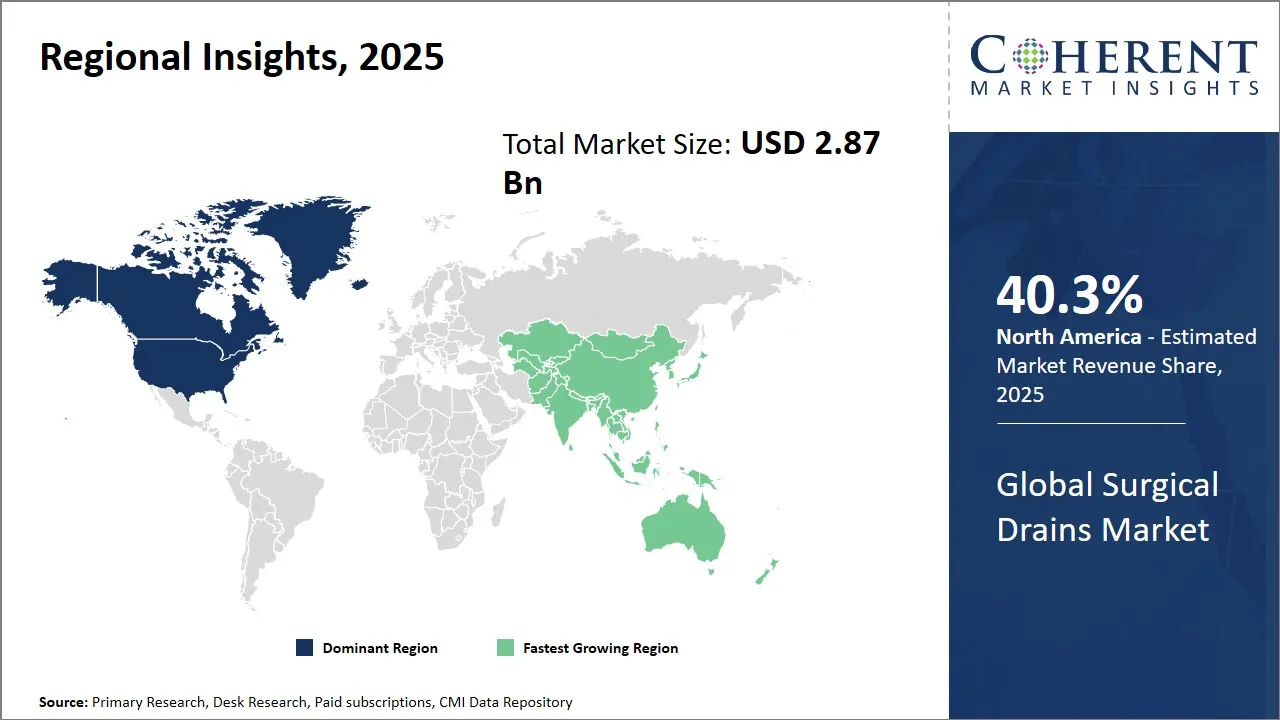
North America Surgical Drains Market Analysis and Trends
North America is expected to dominate the global surgical drains market, holding the largest share of 40.3% in 2026. This is due to its strong healthcare spending, positive reimbursement policy, and extensive use of minimally invasive and post-operative care methods which extensively use surgical drain solutions. The availability of large medical equipment companies drives competitive product development through improvement in product offerings in terms of innovative designs of drains and bio-compatible materials.
For example, in September 2024, Baxter International Inc., a global medtech company, launched The Vest APX System for patients with chronic lung conditions, enhancing comfort and airway clearance efficiency. The company also continues advancing its surgical drains portfolio to improve post-operative fluid management and infection control.
Asia Pacific Surgical Drains Market Analysis and Trends
Asia Pacific is expected to experience the fastest growth in the global surgical drains market, with a share of 25.3% in 2026. This growth is driven by a rising patient base, increasing healthcare awareness, and a higher number of surgical procedures in emerging economies like China, India, Japan, and South Korea.
Governments in these countries, including China, India, and Japan, are focusing on developing healthcare infrastructure and improving accessibility. They are also promoting domestic production through policies and incentives aimed at fostering the growth of the local industry.
Global Surgical Drains Market Outlook for Key Countries
U.S. Surgical Drains Market Trends
The U.S. is still a key market given its developed healthcare delivery system and current use of the newest technologies in surgical procedures. The key players, including Medtronic, Ethicon (Johnson & Johnson), and 3M, are focused on research and development to create advanced surgical drainage systems that reduce the risk of infection and promote faster recovery.
In December 2024, U.S.-based, ViaLase Inc. partnered with the John A. Moran Eye Center to advance glaucoma research using its ViaLuxe laser and iPerfusion technology. The company’s focus on fluid drainage aligns with growing advancements in surgical drains improving post-operative recovery and infection control.
Germany Surgical Drains Market Trends
Germany is one of the industry leaders in the Europe surgical drains market, which has a developed healthcare sector and focuses on the development of medical devices. The presence of companies such as B. Braun Melsunge and Karl Storz is large, and they have brought innovative solutions that could suit different surgical requirements.
In June 2024, B. Braun Interventional Systems, a global medical technology company, introduced its ACCEL All-Purpose and Biliary Drainage Catheters, featuring TrueGlide Hydrophilic Coating to improve catheter performance and ease of use in drainage procedures.
China Surgical Drains Market Trends
China is a dynamic and quickly developing market because of the activities of the government, which is intended to develop healthcare facilities and make access to surgical care more accessible in both urban and rural areas. The presence of domestic companies as well as multinational companies such as Stryker and Medtronic are increasing their competition by forming strategic partnerships and local manufacturing units to ensure that the increasing demand is fulfilled at a reasonable price.
In August 2023, Brain Navi, a China-based medical robotics firm, showcased its NaoTrac neurosurgical robot and KrystoLens neuro-endoscope at global conferences, highlighting precision in brain procedures like external ventricular drainage. The progress aligns with advancements in surgical drains improving post-surgery recovery and infection control.
India Surgical Drains Market Trends
The surgical drains market in India is growing due to the increasing number of surgical cases due to population shift, growing number of chronic diseases that need surgery, and government impetus on enhancing healthcare accessibility through initiatives such as Ayushman Bharat.
Key players in India’s surgical drains market include Poly Medicure Ltd, Hindustan Syringes & Medical Devices Ltd, Global Medikit Ltd, and Angiplast Pvt. Ltd, all offering cost-effective drainage systems for hospitals. Global firms such as Medtronic plc and Teleflex Incorporated are also expanding locally with advanced vacuum-assisted surgical drain solutions.
Usage Frequency, Cost Dynamics in Surgical Drains Market
- Abdominal surgery (approximately 65-80%) and orthopedic surgery (approximately 50-55%) have the highest and moderate drain usage, respectively, with joint replacements and trauma care being the most common procedures. Drains are applied selectively in cardiothoracic and neurosurgical disciplines depending on the risks of fluid or pressure. Closed-suction or vacuum-assisted systems are becoming more popular than the use of the gravity drain among hospitals and surgeons because they offer a superior level of infection control and a quantifiable fluid management compared to gravity drains.
- The average replacement cost per patient is USD 30,150, which varies depending on the type of material and brand used. Vacuum assisted drains are the most common in complex or high risk operations whereas gravity drains are used in low cost simple surgeries with short duration. Procurement trends are currently inclined towards disposable and pre-assembled systems with benchmarks in terms of safety, cost, and efficiency.
Market Players, Key Developments, and Competitive Intelligence
Key Developments
- On October 09, 2025, Los Angeles Rhinoplasty Pros, a cosmetic surgery education platform, launched an online resource to guide nasal surgery patients in Los Angeles and Beverly Hills. The platform offers verified insights into rhinoplasty techniques, recovery, and candidacy while emphasizing the importance of surgical drains in managing post-operative fluid buildup and improving healing outcomes.
- In August 2025, Himachal Pradesh introduced its first robotic surgery facility at the Atal Super Speciality Institute in Shimla, marking a major step toward advanced healthcare delivery. The new system integrates precision tools and surgical drains to minimize complications, enhance fluid management, and reduce recovery time for patients.
- In August 2025, Iantrek Inc., a U.S.-based medical technology company specializing in micro- and bio-interventional eye surgery, raised USD 42 million in Series C funding to support the launch of its AlloFlo Uveo glaucoma device. Like advanced surgical drain systems, the device focuses on improving natural fluid drainage pathways, helping manage intraocular pressure in glaucoma patients.
- In September 2024, Vetlen, a veterinary medical device company, launched a 5 mL version of its USFDA-designated Vetlen Pouch for localized antibiotic therapy in animals. The innovation, similar in function to surgical drains, ensures controlled medication delivery at wound sites, promoting faster healing and reducing infection risks.
Top Strategies Followed by Global Surgical Drains Market Players
- Certain research and development (R&D) activities are usually undertaken by the established market leaders in order to come up with high performance surgical drain products that will meet the emerging clinical demands. They are oriented to the use of advanced materials, design changes, and the use of smart technologies to drive product differentiation and allow these companies to have a technological advantage.
- Leaders such as B. Braun, Johnson and Johnson (Ethicon), and Smith and Nephew invest in the sphere of research and development and introduce the following advanced systems: Blake Drains, Redon Drainage, to be used in efficient wound care. The PICO negative pressure system of Smith and Nephew combines intelligent sensors that keep track of drainage in real time to reinforce clinical outcomes and product differentiation.
- Mid-level players in the surgical drains market are more cost-conscious, and they aim to offer low-end products that are reliable but affordable to the price-sensitive consumers such as smaller hospitals and clinics in developed and developing nations. These firms invest in streamlining their production lines as well as cost bases in order to strike a balance between quality and cheapness and in this way to make them accessible without affecting the fundamental performance of the products.
- Companies including Medline Industries, Teleflex, and ConvaTec specialize in economical, dependable drainage products such as Jackson-Pratt and Silicone Suction Drains that aim at mid-sized hospitals and regional distributors. Their business action plan focuses on low-cost innovation and optimized manufacturing to target the high-volume markets in Asia and Latin America.
- Small players in the surgical drains market tend to cut niche markets, and focus on specialized product attributes or product innovations that fit a given clinical use. Such companies often use the latest technologies, including bioresorbable materials, or minimal invasive designs to create a distinction between their products and attract a specific customer segment that aims to find new solutions.
- Specialty or niche offerings such as bioresorbable materials, micro-drain catheters, and infection-resistant silicone drains are offered by companies such as Romsons, Polymed, and Vygon India. Specialist clinical and hospital demands are also investigated in start-ups such as SmartDrain Tech which look into IoT-enabled systems in remote monitoring.
Market Report Scope
Surgical Drains Market Report Coverage
| Report Coverage | Details | ||
|---|---|---|---|
| Base Year: | 2025 | Market Size in 2026: | USD 3.07 Bn |
| Historical Data for: | 2020 To 2024 | Forecast Period: | 2026 To 2033 |
| Forecast Period 2026 to 2033 CAGR: | 6.8% | 2033 Value Projection: | USD 4.86 Bn |
| Geographies covered: |
| ||
| Segments covered: |
| ||
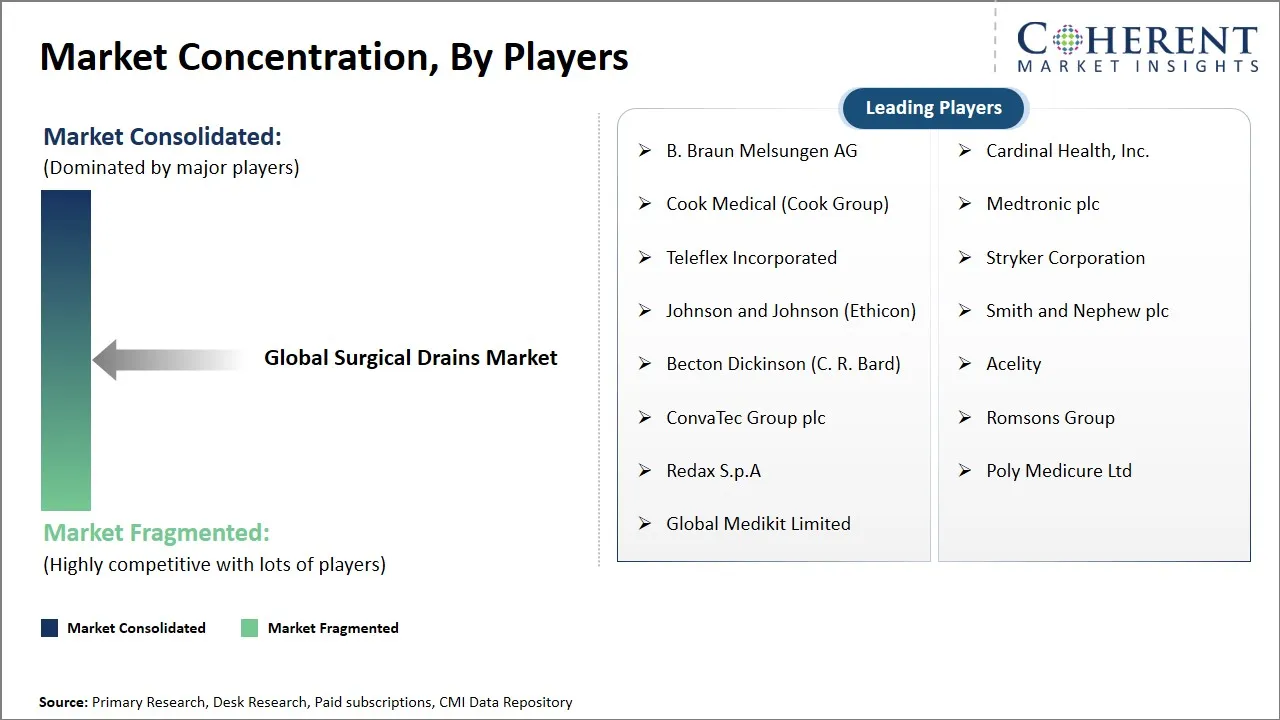
| Companies covered: | B. Braun Melsungen AG, Cardinal Health, Inc., Cook Medical (Cook Group), Medtronic plc, Teleflex Incorporated, Stryker Corporation, Johnson and Johnson (Ethicon), Smith and Nephew plc, Becton Dickinson (C. R. Bard), Acelity, ConvaTec Group plc, Romsons Group, Redax S.p.A, Poly Medicure Ltd, and Global Medikit Limited | ||
| Growth Drivers: |
| ||
| Restraints & Challenges: |
| ||
Surgical Drains Market Dynamics
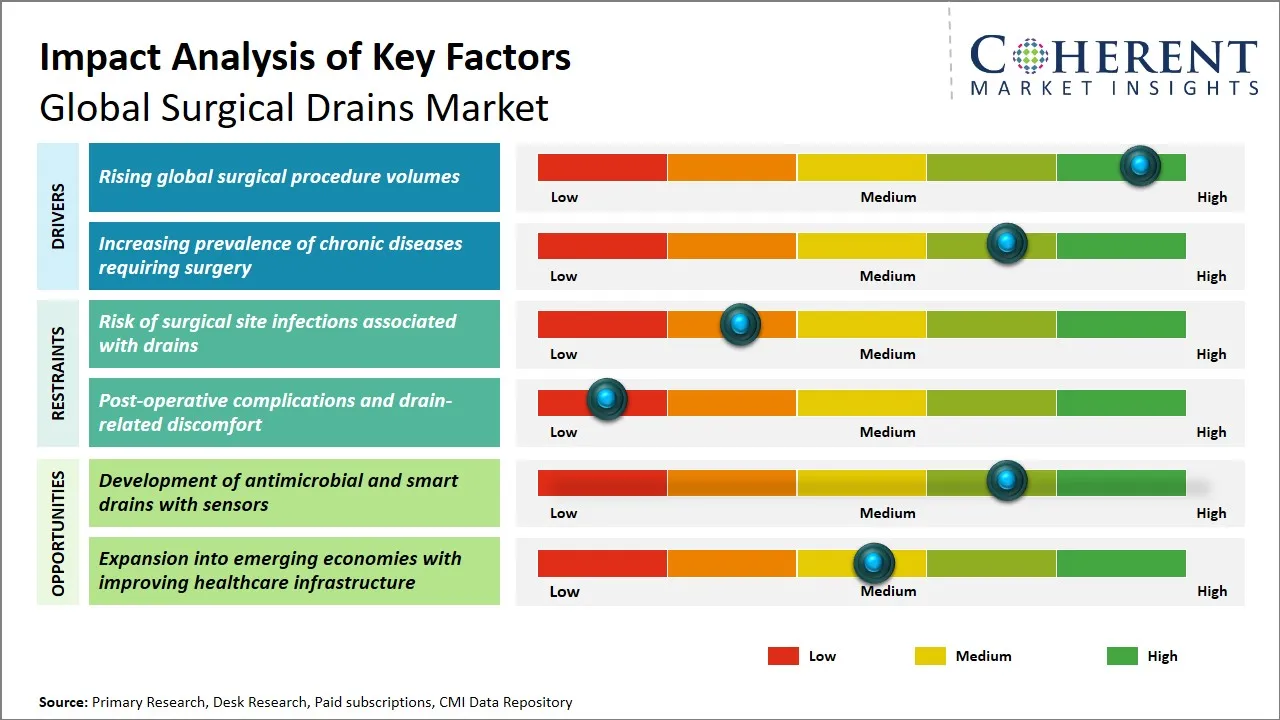
Surgical Drains Market Driver - Rising Global Surgical Procedure Volumes
The growing number of surgical operations carried out in the world is also a strong force that is fueling the market for surgical drains. With the increasing quality of healthcare facilities and availability of modern medical services, the number of patients seeking surgical procedures in different specialties increases in orthopedics, general surgery, cardiovascular, and oncology, among others. This explosion of surgical cases can be directly associated with an increase in demand for effective post-operative care interventions, such as the application of surgical drains to address the issue of fluid build-up, infection prevention, and wound recovery.
In January 2024, Truist Securities, the investment research division of Truist Financial Corporation, released a quarterly hospital survey, highlighting a steady rise in U.S. surgical procedure volumes. The firm’s analysts found that procedures grew 2–3% over the previous quarter, with interventional cardiology leading the increase. Medtronic, Boston Scientific, and Edwards Lifesciences are expected to benefit from higher cardiology volumes, while Intuitive Surgical may gain from stronger bariatric surgery demand and a 3.5% rise in hospital capital spending.
Surgical Drains Market Opportunity - Development of Antimicrobial and Smart Surgical Drains with Integrated Sensors
There is a revolutionary opportunity being experienced in the global surgical drains market through the introduction of antimicrobial and smart surgical drains with advanced sensor technology. Although traditional surgical drains are effective in fluid removal and preventing complications after surgery, they have limitations, including the risk of infection, inefficient monitoring of drain patency, and inaccurate drain output assessment. The development of antimicrobial-coated or antimicrobial-material surgical drains is crucial, as it minimizes the risk of infection at the surgical site, which can otherwise lead to prolonged hospital stays and higher medical expenses
In September 2025, FluidAI Medical, a Canadian healthtech firm, gained the USFDA 510(k) clearance for its Origin device, which enables real-time monitoring of surgical drains. The system tracks biochemical data like pH at the bedside, supporting faster recovery and fewer readmissions through AI-assisted clinical insights.
Analyst Opinion (Expert Opinion)
- The surgical drains market will continue to grow due to the development of smart drainage system, real-time monitoring as well as biocompatible materials that enhance the recovery and prevention of infection during postoperative procedures. The adoption is being fueled by increasing volumes of surgical procedures, the regulatory backing of new devices, and the trend by hospitals to adopt connected care. Nevertheless, higher cost and strict approval cycle are still the main challenges to small-scale manufacturers.
- New healthcare events such as MEDICA, Arab Health, and FIME have indicated the new drainage technologies and global partnerships. Significant efforts like the USFDA-approved Origin system of FluidAI Medical and pilot programs of smart drains at the hospital level are changing the nature of recovery management, indicating a shift towards intelligent, result-driven care.
Speak to the analyst
Want personalized insights?
Take the findings above to one of our principal consultants, or have the report rebuilt around the segments, geographies and competitors you actually track.
Market Segmentation
- Product Type Insights (Revenue, USD Bn, 2021 - 2033)
- Closed Drainage Systems
- Open Drainage Systems
- Accessories and Consumables
- Mechanism Insights (Revenue, USD Bn, 2021 - 2033)
- Passive Drains
- Active Drains
- Application Insights (Revenue, USD Bn, 2021 - 2033)
- General Surgery
- Cardiac and Thoracic Surgery
- Orthopedic Surgery
- Obstetrics and Gynecology
- Neurosurgery/Neurosurgical Procedures
- Abdominal/Visceral Surgery
- Plastic and Reconstructive Surgery
- Other Miscellaneous Surgeries
- End User Insights (Revenue, USD Bn, 2021 - 2033)
- Hospitals
- Ambulatory Surgical Centers (ASCs)
- Clinics and Outpatient Facilities
- Home Care Settings
- Others
- Material Insights (Revenue, USD Bn, 2021 - 2033)
- Silicone
- PVC (Polyvinyl Chloride)
- Rubber
- Other Polymers
- Regional Insights (Revenue, USD Bn, 2021 - 2033)
- North America
- U.S.
- Canada
- Latin America
- Brazil
- Argentina
- Mexico
- Rest of Latin America
- Europe
- Germany
- U.K.
- Spain
- France
- Italy
- Russia
- Rest of Europe
- Asia Pacific
- China
- India
- Japan
- Australia
- South Korea
- ASEAN
- Rest of Asia Pacific
- Middle East
- GCC Countries
- Israel
- Rest of Middle East
- Africa
- South Africa
- North Africa
- Central Africa
- North America
- Key Players Insights
- B. Braun Melsungen AG
- Cardinal Health, Inc.
- Cook Medical (Cook Group)
- Medtronic plc
- Teleflex Incorporated
- Stryker Corporation
- Johnson and Johnson (Ethicon)
- Smith and Nephew plc
- Becton Dickinson (C. R. Bard)
- Acelity
- ConvaTec Group plc
- Romsons Group
- Redax S.p.A
- Poly Medicure Ltd
- Global Medikit Limited
Sources
Primary Research Interviews
Industry Stakeholders
- Regulatory Affairs Specialists – Medical Device Manufacturers
- Procurement Heads – Multispecialty Hospitals
- R&D Directors – Surgical Equipment Companies
- Clinical Engineers – Medical Device Innovation Centers
- Distribution Partners – Surgical and Postoperative Care Supplies
End Users
- General Surgeons
- Orthopedic Surgeons
- Plastic and Reconstructive Surgeons
- Cardiothoracic Surgeons
- Hospital Nursing Supervisors – Postoperative Care Units
- Biomedical Technicians – Hospital Equipment Departments
Government and International Databases
- U.S. Food and Drug Administration (FDA)
- European Medicines Agency (EMA)
- World Health Organization (WHO)
- U.S. Centers for Medicare & Medicaid Services (CMS)
- Ministry of Health, Labour and Welfare (MHLW) – Japan
- National Health Service (NHS) – U.K.
Trade Publications
- Medical Device and Diagnostic Industry (MD+DI)
- MedTech Insight
- Fierce Biotech
- Medical Design & Outsourcing
- MassDevice
- Healthcare Purchasing News
Academic Journals
- Journal of the American College of Surgeons
- International Journal of Surgery
- Journal of Wound Care
- Annals of Surgery
- The Lancet Surgery
- Journal of Biomedical Materials Research
Reputable Newspapers
- The Wall Street Journal – Health Section
- The Guardian – Healthcare & Science
- The New York Times – Health
- Financial Times – Medical Technology Coverage
- Reuters Health
- Bloomberg Health
Industry Associations
- Advanced Medical Technology Association (AdvaMed)
- Medical Device Manufacturers Association (MDMA)
- American College of Surgeons (ACS)
- European Society for Surgery (ESS)
- Association for the Advancement of Medical Instrumentation (AAMI)
- International Wound Healing Association (IWHA)
Public Domain Resources
- ScienceDirect Open Access
- National Center for Biotechnology Information (NCBI)
- World Bank Open Data
- OECD Health Data
Proprietary Elements
- CMI Data Analytics Tool: Proprietary analytics tool to analyze real-time market trends, consumer behavior, and technology adoption in market
- Proprietary CMI Existing Repository of Information for Last 8 Years
Get access to 250+ pages report
Every segment, forecast, competitor profile and data table behind the analysis above — available for instant download.
- ESOMAR Member
- ISO 9001:2015 Certified
- D-U-N-S Registered
- GDPR & CCPA Compliant
Missing comfort of reading report in your local language? Find your preferred language:
Transform your Strategy with Exclusive Trending Reports
Frequently Asked Questions
The global surgical drains market is estimated to be valued at USD 3.07 Bn in 2026 and is expected to reach USD 4.86 Bn by 2033.
The CAGR of the global surgical drains market is projected to be 6.8% from 2026 to 2033.
Emerging trends include smart drains with digital fluid monitoring, antimicrobial materials, self-suction regulation, and sensor-enabled wireless output tracking for real-time post-operative management.
Disposable drains dominate due to infection control and regulatory compliance; though reusable systems reduce unit cost, sterilization logistics and contamination risk limit adoption.
Key types include Jackson-Pratt, Hemovac, Blake, Redon, Penrose, and Pigtail drains—categorized as active (suction-based) or passive (gravity-based).
A closed suction drain uses negative pressure created by a compressible reservoir (e.g., Jackson-Pratt bulb) to draw fluids into a sealed container, maintaining sterility and reducing infection risk.
A surgical drain is a medical device used to remove pus, blood, or other fluids from a wound or surgical site to prevent infection and promote healing.