

Global Surgical Dressing Market Size and Forecast – 2026 to 2033
The Global Surgical Dressing Market is estimated to be valued at USD 6.21 Bn in 2026 and is expected to reach USD 9.30 Bn by 2033, exhibiting a compound annual growth rate (CAGR) of 6.0% from 2026 to 2033. This growth is driven by increasing incidences of chronic wounds, technological advancements in dressing materials, and rising healthcare expenditures worldwide. The expanding geriatric population and growing awareness about advanced wound care products also significantly contribute to market expansion during this period.
Key Takeaways of the Global Surgical Dressing Market
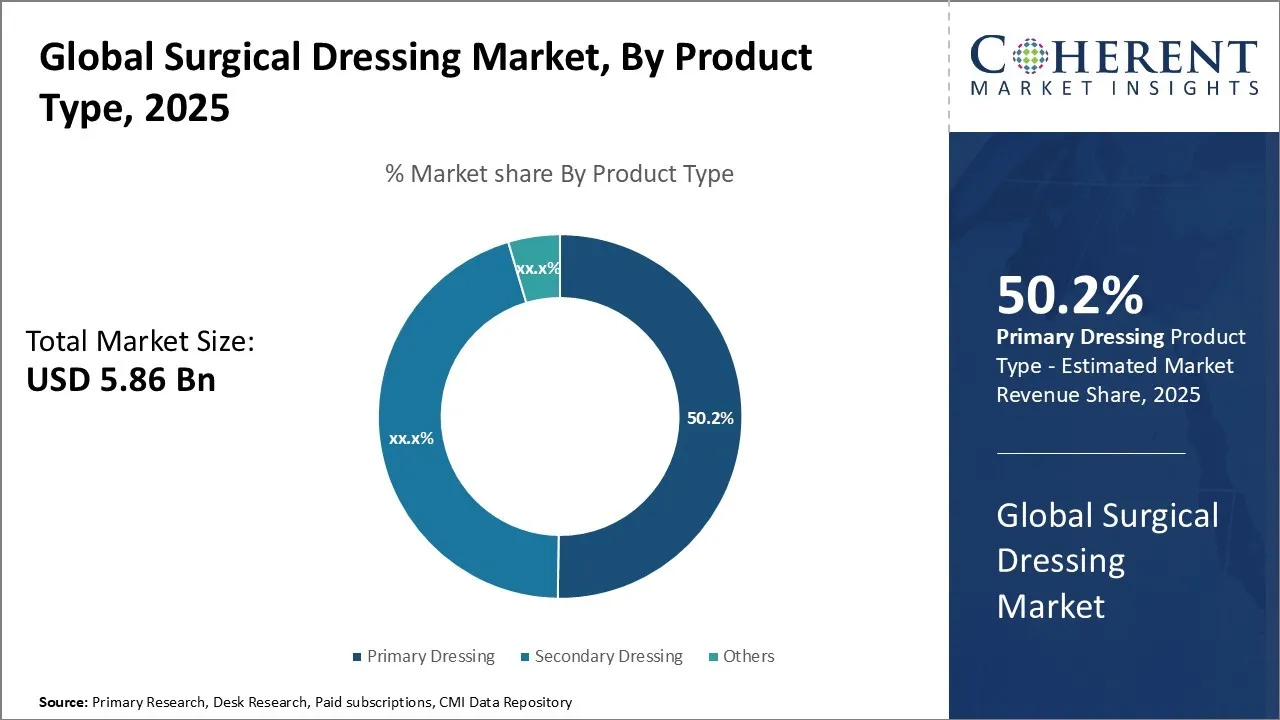
- Primary dressings, applied directly to the wound, are crucial in surgical procedures, holding an estimated share of 51.2% market share in 2026.
- Specialized dressings for burn wounds, which balance moisture and support skin regeneration, make up an estimated 31.2% of the market share
- Natural material-based dressings remain dominant, with an estimated 39.2% of the market share, due to their proven performance and long-standing medical use.
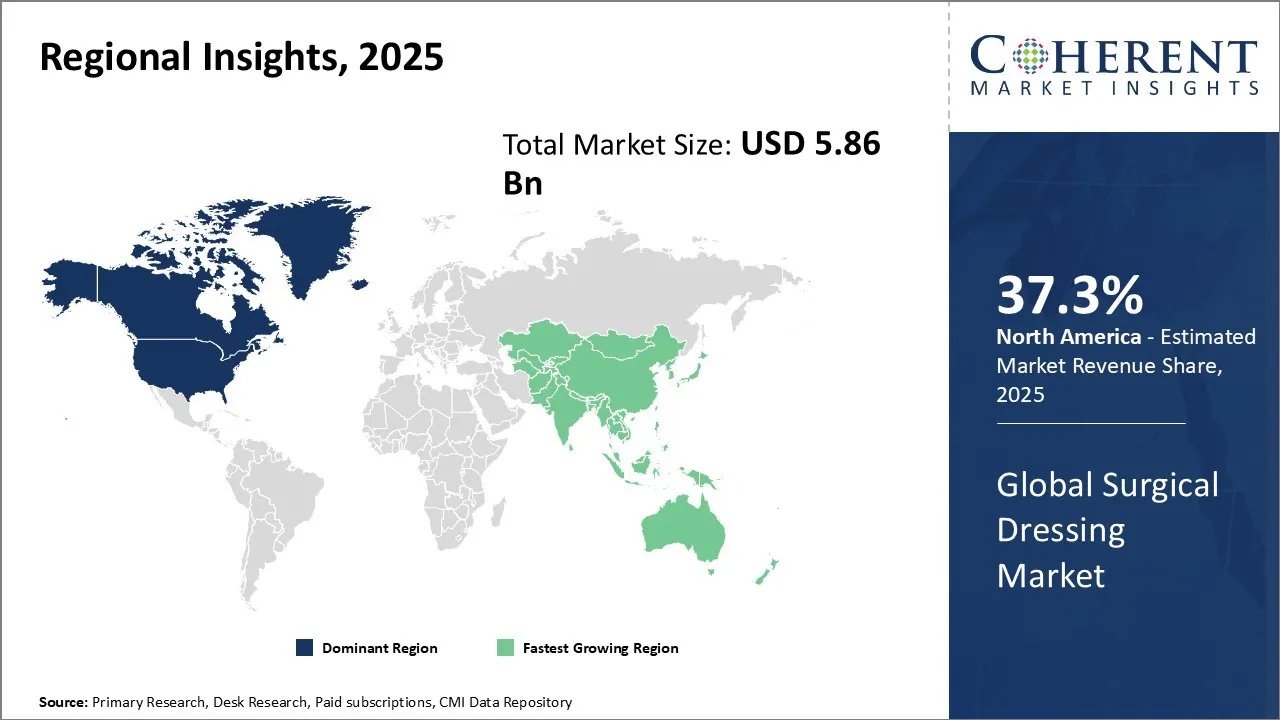
- North America is expected to lead the market, holding an estimated share of 37. 3% in 2026. Asia Pacific is anticipated to be the fastest-growing region, with a market share of 24.5% in 2026.
Market Overview
Current market trends indicate a strong shift towards the adoption of bioactive and antimicrobial surgical dressings that promote faster healing and reduce infection risks. Additionally, innovations focusing on smart dressings with sensors for real-time wound monitoring are gaining traction. The demand for customizable and comfortable dressing options further fuels product development, while increasing investments in research and development by key players underscore the market’s evolving landscape, underscoring a move towards more efficient and patient-centric wound management solutions.
Currents Events and their Impact
Current Events | Description and its impact |
Integration of Negative Pressure Wound Therapy (NPWT) |
|
Growth of Home Healthcare and Outpatient Care |
|
Segmental Insights
- Current Industry Events of 2026
- Market Size Estimation
- Regional Breakdown
- Competitive Landscape
- Customer Intelligence
- Segmental Analysis
- Pricing Analysis
- Key Market Drivers, Challenges & Future Trends
- Customized Insights Section
Surgical Dressing Market Insights, By Product Type - Primary dressing contributes the highest share of the market owing to its critical role in wound care and versatility across various surgical applications
Primary dressings serve as the first layer applied directly to the wound, making them essential in surgical procedures, with a projected market share of 51.2% in 2026. Their primary responsibility is to protect the wound bed while promoting an optimal environment for healing. Innovations in material science have allowed primary dressings to be engineered from highly biocompatible substances such as soft silicone and foam, which reduce trauma during dressing changes and improve patient comfort.
In June 2022, Collagen Matrix, a leader in advanced biomaterial solutions, announced that it had received U.S. FDA 510(k) clearance for its new fibrillar collagen wound dressing. This innovative product is designed to absorb wound exudate and effectively control minor bleeding, making it a valuable addition to wound care management.
Moreover, the convenience and efficiency of primary dressings in operative and postoperative care drive their substantial market share. Surgeons and healthcare providers prefer dressings that can reduce dressing change frequency while maintaining a sterile barrier against contaminants. Primary dressings meet these demands, thereby minimizing hospital stays and complications associated with wound infections. The integration of novel materials that balance moisture vapor transmission and fluid management enhances the healing process, which is particularly valuable in critical care units and outpatient settings.
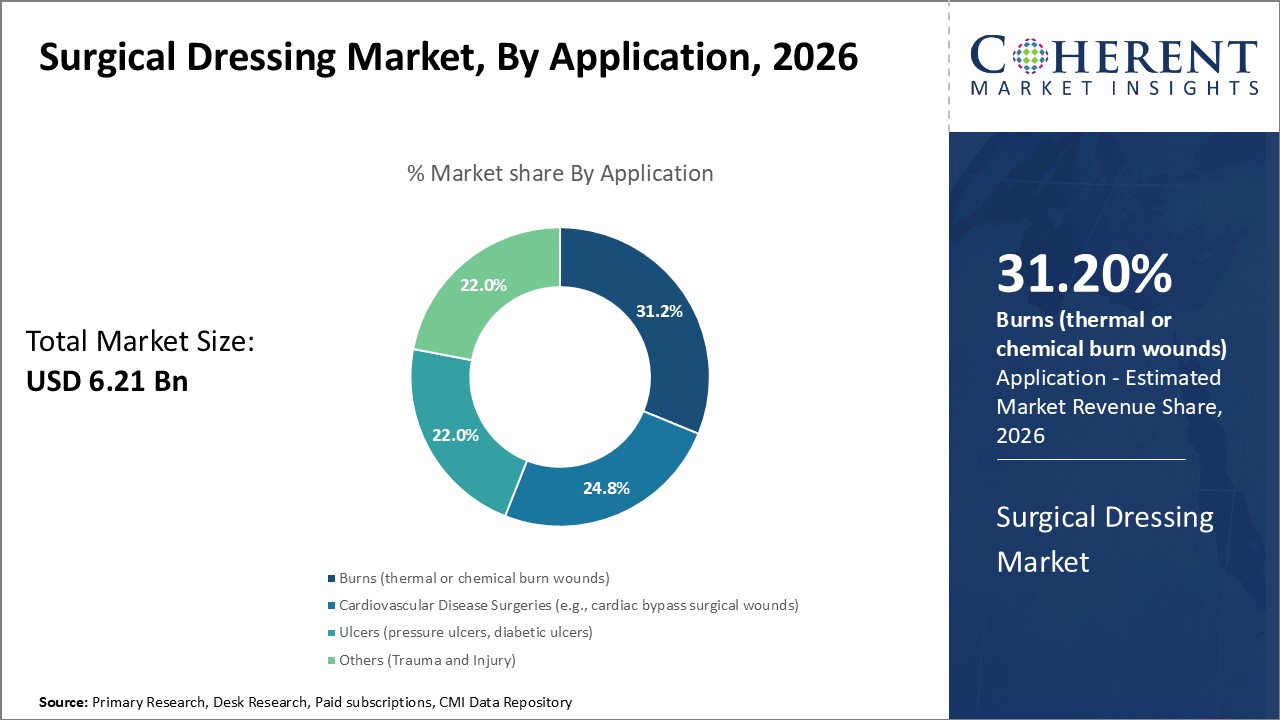
Surgical Dressing Market Insights, By Application - Burns (thermal or chemical burn wounds) contribute the highest share due to the increasing prevalence of burn injuries and the complex requirements of burn wound management
Burn wounds require specialized surgical dressings that not only protect against infection but also help maintain the moisture balance and promote cellular growth necessary for skin regeneration, accounting for an estimated 31.2% of the market share in 2026. This heightened demand is driven by factors such as industrialization, urbanization, and accidental injuries which have led to an increase in burn incidence worldwide. The severity and susceptibility of burn wounds to complications like infection, dehydration, and scarring necessitate advanced dressing materials designed specifically for burn care. These dressings often incorporate antimicrobial agents and moisture-retentive properties to prevent bacterial colonization while facilitating optimal wound healing conditions.
The burn care segment’s dominance is also linked to the development of innovative dressing technologies aimed at reducing pain and trauma associated with dressing changes, which are frequent in burn treatment. For example, hydrogel and alginate dressings have gained prominence for their hydrating capabilities and excellent conformability, important for second and third-degree burns. Such dressings help maintain a moist wound environment, which is critical for epithelialization and minimizing tissue necrosis. The increased awareness among healthcare providers and caregivers about the importance of early and specialized burn wound interventions further supports market demand.
Surgical Dressing Market Insights, By Material Type - Natural materials (cotton, gauze, alginate) hold the highest market share driven by their biocompatibility, cost-effectiveness, and established clinical efficacy
Surgical dressings made from natural materials continue to lead the market, owing to their long-established use in medical applications and proven performance, with an estimated share of 39.2% in 2026. Cotton, gauze, and alginate—the primary natural materials used—are favored for their excellent absorbency, breathability, and ability to support wound healing by facilitating gaseous exchange while protecting against microbial invasion. Their inherent biocompatibility significantly reduces the risk of allergic reactions and promotes gentle interaction with sensitive or fragile skin. These factors make natural materials an appealing choice for a wide spectrum of surgical wound types, from minor cuts to complex ulcers.
Cost-effectiveness plays a crucial role in the preference for natural materials, particularly in resource-constrained healthcare settings. Compared to synthetic or biodegradable alternatives, cotton and gauze-based dressings are more accessible and easier to produce at scale. This factor becomes vital in developing regions where affordability and availability directly impact patient outcomes. The simplicity and versatility of natural dressings also allow for their use in combination with other advanced materials, which enhances their functional properties without compromising their core benefits.
Regional Insights
North America Surgical Dressing Market Analysis and Trends
In North America, the dominance in the global surgical dressing market is driven by a highly developed healthcare infrastructure with an estimated share of 37.3% in 2026, substantial government expenditure on healthcare, and a robust ecosystem of medical device manufacturers. The presence of leading companies such as 3M, Medline Industries, and Smith & Nephew bolsters product innovation and availability. Regulatory frameworks administered by the U.S. FDA ensure high standards, fostering trust in advanced surgical dressing products.
Additionally, a high prevalence of surgeries, rising chronic wound cases, and a large geriatric population create sustained demand. The integration of cutting-edge technologies such as antimicrobial and bioactive dressings further enhances market competitiveness.
Asia Pacific Surgical Dressing Market Analysis and Trends
Meanwhile, the Asia Pacific region is expected to exhibit the fastest growth in the global surgical dressing market with a share of 24.5% in 2026 due to expanding healthcare infrastructure, increasing government initiatives to improve healthcare access, and rising awareness of wound care management. Rapid urbanization and growing medical tourism contribute to heightened demand for surgical dressings. Countries like China and India have witnessed a surge in private healthcare providers and investment in hospital expansions. The market ecosystem benefits from both multinational corporations establishing regional hubs and the emergence of local players such as Johnson & Johnson Medical India and Taizhou Hengkang Medical Devices. Trade liberalization policies and favorable regulatory reforms are further catalyzing growth.
In September 2024, HCAH, a provider of out-of-hospital healthcare solutions in India, launched a new initiative to enhance patient recovery through advanced wound care, including surgical dressings. Partnering with Aroa Biosurgery, a New Zealand-based company specializing in soft tissue regeneration, the collaboration introduces products for treating complex vascular and diabetic wounds. As part of the initiative, HCAH launched the “WOW Nurses” program to prevent and treat bedsores, a common complication for patients with limited mobility.
Global Surgical Dressing Market Outlook for Key Countries
U.S. Surgical Dressing Market Trends
The U.S. surgical dressing market is characterized by advanced healthcare facilities and stringent regulatory oversight by the U.S. FDA, promoting innovation and safety in surgical dressing products. Major players like 3M and ConvaTec dominate, introducing technologically advanced dressings such as hydrocolloid and foam variants. The country’s strong focus on research and development, coupled with significant healthcare spending, supports a competitive and mature market landscape catering to diverse surgical needs.
In October 2021, Healthium Medtech launched TRUSHIELD NXT, a surgical wound dressing featuring a 3D hydro cellular substrate and patented infection-prevention technology. This addition to its wound care portfolio aims to increase market penetration. Healthium, independent medical device company, is known for its global presence in surgical consumables, with products used in one in five surgeries worldwide. The company holds 21 patents in India and 11 in the U.S.
Germany Surgical Dressing Market Trends
Germany’s surgical dressing market benefits from a well-established healthcare system fueled by high healthcare expenditure and a broad network of hospitals and clinics. The country hosts key multinational companies including Hartmann Group and B. Braun Melsungen, which have a strong presence in wound care and surgical dressings. Germany’s supportive reimbursement policies and emphasis on quality and patient safety maintain market stability, while ongoing innovations in dressing materials drive demand.
In June 2023, Evonik’s JeNaCell, a leading developer of biosynthetic cellulose for medical applications, introduced epicite balance a wound dressing designed for chronic wounds with low to medium exudation, such as venous leg ulcers and diabetic foot ulcers. Made from biosynthetic cellulose, it promotes superior wound cleansing and healing. Available in Germany through Coopmed ApS, the dressing offers a new treatment option for chronic wounds, particularly in elderly patients. JeNaCell specializes in biosynthetic cellulose for medical devices and drug delivery.
China Surgical Dressing Market Trends
China stands as a rapidly expanding market supported by government initiatives such as “Healthy China 2030” that prioritize improved healthcare access and quality. The country witnesses heightened investment in healthcare infrastructure and increasing surgeries, resulting in growing demand for surgical dressings. Both international companies like Smith & Nephew and prominent domestic firms such as Acelity leverage the large patient base. Regulatory reforms shaping faster approval processes and increasing manufacturing capabilities enhance market penetration.
In January 2022, researchers from the University of Electronic Science and Technology of China introduced a programmable, skin-temperature-triggered wound dressing that accelerates healing. The innovative dressing features a sandwich structure made from deformable material, antibacterial film, and encapsulation layers, allowing it to adapt to irregular skin surfaces.
India Surgical Dressing Market Trends
India’s surgical dressing market growth is propelled by increasing healthcare spending, a growing middle-class population, and rising incidence of chronic wounds requiring advanced wound care. The healthcare ecosystem benefits from rising private sector investments and government efforts to expand healthcare infrastructure. Companies like Johnson & Johnson Medical India and Welllead Medical Group drive product availability. Trade policies favor imports of sophisticated medical supplies, while local manufacturing scales to meet domestic needs.
For instance, in February 2024, according to the Indian Department of Science & Technology (DST), Indian scientists have developed an innovative, eco-friendly wound dressing made from banana fibers, offering a sustainable solution for wound care. Researchers at the Institute of Advanced Study in Science and Technology (IASST) have utilized discarded banana pseudo stems, which are abundant in India, to create a biodegradable, multifunctional patch.
End User Feedback and Unmet Needs in the Global Surgical Dressing Market
- End users in the global surgical dressing market have consistently shared feedback about both positive and negative experiences with these products. One of the most common positive responses comes from healthcare providers using hydrocolloid dressings for chronic wound care. These dressings are highly appreciated for their ability to maintain a moist healing environment, reducing discomfort and speeding up recovery, especially for diabetic ulcers. The ease of application and reduced frequency of dressing changes have been major factors contributing to patient satisfaction and improved compliance. On the downside, a recurring concern is the high cost of advanced wound care products, especially those incorporating silver or antimicrobial agents. This has been particularly problematic for smaller hospitals and clinics, particularly in developing regions, where affordability is a significant barrier to providing optimal care.
- These challenges have highlighted several unmet needs in the market. One critical gap is the lack of customization in surgical dressings to cater to different wound types, such as those requiring both high absorbency and gentle removal. Additionally, affordability remains a pressing issue, with many end-users citing the expense of advanced dressings as a barrier to widespread adoption. Addressing these gaps could present significant growth opportunities for manufacturers by developing cost-effective, customizable products. Focusing on innovation and improving product accessibility could not only help improve customer retention but also drive the development of new, more efficient solutions for a wider range of applications.
Market Players, Key Developments, and Competitive Intelligence
Key Developments
- In May 2025, Summit Products Group, a new healthcare solutions provider, announced its official launch alongside a strategic partnership with NovaBone Products, a leader in regenerative medicine biomaterials. Summit aims to transform surgical and regenerative wound care by offering precision-engineered products designed for operating room and procedural settings. The company is focused on bridging the gap between innovation and practical application, providing end-to-end solutions that streamline access to advanced technologies for healthcare providers.
- In January 2025, Beiersdorf is a global leader in skincare introduced its next-generation surgical dressings under the Hansaplast, Elastoplast, and CURITAS brands, featuring advanced hydrocolloid technology. The new Second Skin Protection Plaster provides professional treatment for everyday minor wounds. The plaster is designed to offer superior protection, comfort, and moisture retention, ensuring optimal healing.
- In September 2024, Solventum introduced the V.A.C. Peel and Place Dressing, an innovative solution in Negative Pressure Wound Therapy. Designed for easy application, it can be placed in under two minutes and worn for up to seven days. This all-in-one dressing reduces the time and complexity involved in traditional therapies, with a built-in perforated layer that minimizes tissue ingrowth and pain during removal.
- In August 2023, Medela announced the launch of its new Invia Integrated Dressing, expanding its negative pressure wound therapy (NPWT) portfolio. The sterile dressing, approved by the U.S. FDA, is suitable for all wound types, including closed surgical incisions, and can be used at home or in a hospital for up to seven days. It features a three-layer fluid handling pad with a skin-friendly silicone adhesive border and a Quick-connector for easy pump-to-dressing connections.
Top Strategies Followed by Global Surgical Dressing Market Players
- Established companies dominate the market through substantial investments in research and development (R&D), new product launches driving continuous innovation of high-performance and advanced wound care products. These innovations often include antimicrobial dressings, hydrocolloid and hydrogel materials, and bioengineered skin substitutes that address diverse clinical needs. By leveraging their robust R&D pipelines, these players consistently enhance product efficacy while ensuring regulatory compliance across regions.
- In October 2024, Imbed Biosciences, a company specializing in advanced wound care solutions, received U.S. FDA 510(k) clearance for its Microlyte Ag/Lidocaine surgical wound dressing. This innovative antimicrobial dressing integrates lidocaine for pain management, alongside ionic and metallic silver for antimicrobial protection. The dressing is indicated for managing various partial- and full-thickness wounds, including venous stasis ulcers, pressure sores, surgical wounds, and burns, under healthcare professional supervision.
- Mid-level players in the surgical dressing market adopt a different approach, focusing primarily on cost-effectiveness while maintaining a reasonable quality threshold to appeal to price-sensitive consumers, especially in developing economies. Their product portfolios often emphasize functionality and affordability without compromising basic clinical performance, making them attractive options for healthcare institutions with budget constraints.
- For example, Molnlycke Health Care offers a variety of affordable dressing solutions like Mepilex designed for everyday wound care, appealing to institutions looking for cost-effective, high-quality options.
- Small-scale players typically operate in specialized or regional segments of the surgical dressing market, leveraging innovation and agility to compete with larger entities. By focusing on niche features—such as eco-friendly materials, customized dressings for specific wound types, or technologically advanced products incorporating sensors for wound monitoring—they differentiate themselves from mass-market competitors.
- In April 2025, Gruppo San Donato launched its Wound Care Network, a multidisciplinary model for treating chronic wounds. The network includes two HUB hospitals and several Spoke Centers, aiming to improve patient care and reduce public health burdens. It will utilize advanced treatments like hydrocolloid and foam dressings, VAC therapy, and phototherapy to enhance healing outcomes.
Market Report Scope
Surgical Dressing Market Report Coverage
| Report Coverage | Details | ||
|---|---|---|---|
| Base Year: | 2025 | Market Size in 2026: | USD 6.21 Bn |
| Historical Data for: | 2020 To 2024 | Forecast Period: | 2026 To 2033 |
| Forecast Period 2026 to 2033 CAGR: | 6.0% | 2033 Value Projection: | USD 9.30 Bn |
| Geographies covered: |
| ||
| Segments covered: |
| ||
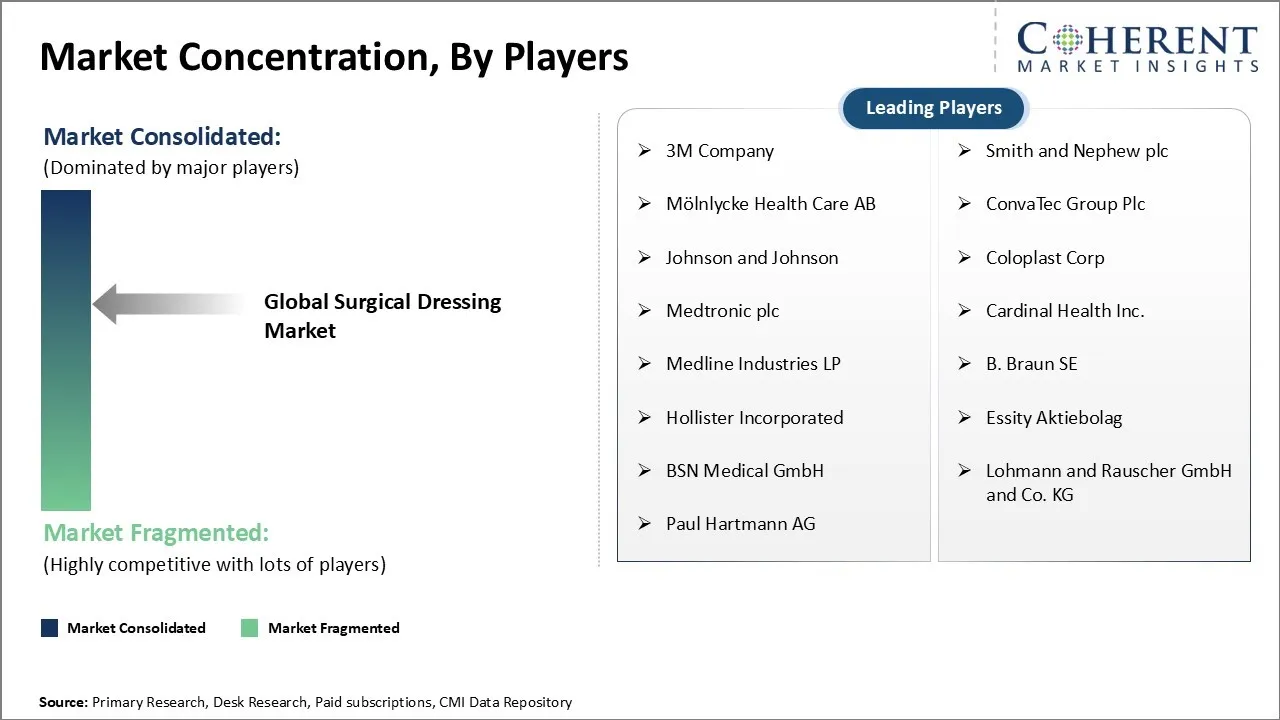
| Companies covered: | 3M Company, Smith and Nephew plc, Mölnlycke Health Care AB, ConvaTec Group Plc, Johnson and Johnson, Coloplast Corp, Medtronic plc, Cardinal Health Inc., Medline Industries LP, B. Braun SE, Hollister Incorporated, Essity Aktiebolag, BSN Medical GmbH, Lohmann and Rauscher GmbH and Co. KG, and Paul Hartmann AG | ||
| Growth Drivers: |
| ||
| Restraints & Challenges: |
| ||
Surgical Dressing Market Dynamics
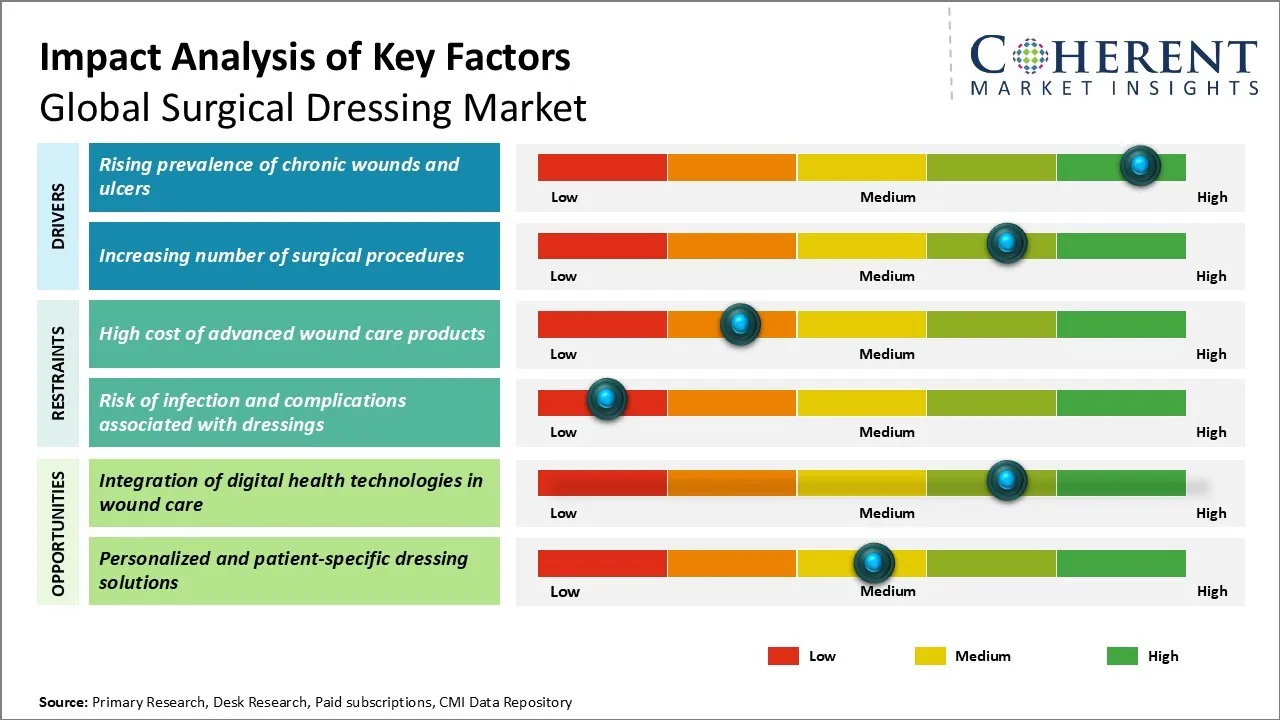
Surgical Dressing Market Driver - Rising Prevalence of Chronic Wounds and Ulcers
The increasing incidence of chronic wounds and ulcers, including diabetic foot ulcers, pressure ulcers, and venous leg ulcers, is significantly propelling the global demand for surgical dressings. As populations age and the prevalence of lifestyle-related diseases such as diabetes and obesity continues to rise, the burden of long-lasting, non-healing wounds has become more pronounced. These chronic wounds require specialized care to prevent infections, promote healing, and improve patient outcomes, which in turn boosts the adoption of advanced surgical dressings incorporating antimicrobial properties, moisture retention, and enhanced biocompatibility. Moreover, the complexity of treating such wounds necessitates innovative dressing solutions that can effectively manage exudate, reduce dressing change frequency, and provide a protective barrier against pathogens. Healthcare providers are increasingly focused on improving wound management protocols to reduce hospitalization and complications, further encouraging the integration of sophisticated surgical dressings into standard care practices globally.
In December 2023, a study published in the Journal of Assessment of Chronic Wound Patients' Journey in India evaluated the challenges and unmet needs in managing chronic wounds, as reported by healthcare professionals (HCPs) and patients in India. The survey, which involved 100 HCPs and 30 patients, highlighted major challenges such as high treatment costs and limited healthcare access for patients, while HCPs cited high treatment costs and lack of awareness as significant issues. Both groups identified affordable treatment options and improved awareness as key unmet needs. The study concluded that early treatment initiation and the use of adapted products can accelerate wound healing and reduce costs. Between 2014 and 2019, the number of Medicare beneficiaries with chronic wounds or ulcers rose from 8.2 million (14.5% of Medicare patients) to 10.5 million (16.4%), marking a 13% overall increase in prevalence.
Surgical Dressing Market Opportunity - Integration of Digital Health Technologies in Wound Care
The global surgical dressing market is poised to benefit significantly from the integration of digital health technologies in wound care, presenting a compelling growth opportunity. Digital innovations such as smart dressings embedded with sensors, wearable devices, and mobile health applications are revolutionizing wound management by enabling real-time monitoring of wound conditions like moisture levels, temperature, and infection markers. These technologies facilitate early detection of complications, reduce the frequency of hospital visits, and enable personalized treatment protocols, thereby improving patient outcomes and lowering healthcare costs. Additionally, the integration of telemedicine platforms allows healthcare providers to remotely assess wounds and adjust treatment plans efficiently, which is particularly advantageous in rural and underserved regions with limited access to specialist care.
In October 2024, Swift Medical, a leader in digital wound care, introduced the Skin & Wound 2 platform, powered by artificial intelligence (AI). Designed for patient assessments in home health, ambulatory, acute, and skilled nursing settings, the platform integrates with EMR systems for fast, accurate evaluations. With over 22 peer-reviewed publications backing its effectiveness, Skin & Wound 2 ensures equitable AI use and improves healing rates. This innovation offers a user-friendly interface to enhance wound care accuracy and efficiency.
Analyst Opinion (Expert Opinion)
- The surgical dressing market has been experiencing robust growth driven by several factors, including technological advancements in wound care materials and increasing awareness about hygiene and infection control in healthcare settings. Regulatory support, especially from global health bodies like the U.S. FDA and WHO, has played a significant role in ensuring the safety and efficacy of these products, further driving market demand. As the global burden of chronic diseases and surgeries increases, the need for advanced surgical dressings that enhance healing and reduce complications is rising. However, challenges such as the rising cost of raw materials and regulatory hurdles around product approvals continue to impact market players. Nevertheless, opportunities in the form of eco-friendly dressings and smart wound care products are emerging, positioning the market for future growth.
- Notable events in the past few years, like the World Health Organization’s Global Health Forum and the International Conference on Wound Care and Tissue Repair, have fostered knowledge-sharing and collaboration in the field of surgical dressing. These conferences have highlighted the growing importance of advanced wound care technologies and smart dressings, driving the adoption of innovative solutions. A key example includes the collaboration between major healthcare companies and research institutions to develop biodegradable and antimicrobial surgical dressings, expected to impact the market's future trajectory. Additionally, national initiatives like the U.S. National Institutes of Health (NIH) funding for advanced wound care technology research are contributing to shaping future market dynamics.
Speak to the analyst
Want personalized insights?
Take the findings above to one of our principal consultants, or have the report rebuilt around the segments, geographies and competitors you actually track.
Market Segmentation
- Product Type Insights (Revenue, USD Bn, 2021 - 2033)
- Primary Dressing
- Foam Dressing
- Alginate Dressing
- Soft Silicone Dressing
- Composite Dressing
- Hydrogel Dressing
- Hydrocolloid Dressing
- Film Dressing
- Secondary Dressing
- Absorbents
- Bandages
- Muslin Bandage Rolls
- Elastic Bandage Rolls
- Triangular Bandages
- Orthopedic Bandages
- Elastic Plaster Bandages
- Other Bandages
- Adhesive Tapes
- Protectives
- Others
- Primary Dressing
- Application Insights (Revenue, USD Bn, 2021 - 2033)
- Burns (thermal or chemical burn wounds)
- Cardiovascular Disease Surgeries (e.g., cardiac bypass surgical wounds)
- Ulcers (pressure ulcers, diabetic ulcers)
- Others (Trauma and Injury)
- Material Type Insights (Revenue, USD Bn, 2021 - 2033)
- Natural Materials (Cotton, Gauze, Alginate)
- Synthetic Materials (Hydrocolloid, Polyurethane)
- Biodegradable Materials
- Wound Type Insights (Revenue, USD Bn, 2021 - 2033)
- Acute Wounds
- Chronic Wounds
- End User Insights (Revenue, USD Bn, 2021 - 2033)
- Hospitals
- Specialty Clinics
- Home Healthcare
- Ambulatory Surgery Centers
- Others (long-term care facilities, nursing homes)
- Regional Insights (Revenue, USD Bn, 2021 - 2033)
- North America
- U.S.
- Canada
- Latin America
- Brazil
- Argentina
- Mexico
- Rest of Latin America
- Europe
- Germany
- U.K.
- Spain
- France
- Italy
- Russia
- Rest of Europe
- Asia Pacific
- China
- India
- Japan
- Australia
- South Korea
- ASEAN
- Rest of Asia Pacific
- Middle East
- GCC Countries
- Israel
- Rest of Middle East
- Africa
- South Africa
- North Africa
- Central Africa
- North America
- Key Players Insights
- 3M Company
- Smith and Nephew plc
- Mölnlycke Health Care AB
- ConvaTec Group Plc
- Johnson and Johnson
- Coloplast Corp.
- Medtronic plc
- Cardinal Health Inc.
- Medline Industries LP
- Braun SE
- Hollister Incorporated
- Essity Aktiebolag
- BSN Medical GmbH
- Lohmann and Rauscher GmbH and Co. KG
- Paul Hartmann AG
Sources
Primary Research Interviews
- Industry Stakeholders
- MedTech Europe
- International Federation of Pharmaceutical Manufacturers & Associations (IFPMA)
- End-users
- Healthcare Cost and Utilization Project (HCUP)
- European Wound Management Association (EWMA)
Databases
- World Health Organization (WHO)
- Centers for Disease Control and Prevention (CDC)
- National Institutes of Health (NIH)
- U.S. Food and Drug Administration (FDA)
- European Medicines Agency (EMA)
- National Health Service (NHS)
Magazines
- Wound Care Journal
- Journal of Wound Care
- Wounds International
- Journal of Tissue Viability
- Modern Healthcare
Journals
- Biomaterials
- Journal of Clinical Wound Care
- International Journal of Pharmaceutics
- Journal of Controlled Release
- Materials Science and Engineering
Newspapers
- The New York Times
- The Guardian
- The Wall Street Journal
- The Financial Times
- The Times of India
Associations
- Wound, Ostomy, and Continence Nurses Society (WOCN)
- European Wound Management Association (EWMA)
- International Society for Biofabrication (ISBF)
- National Pressure Injury Advisory Panel (NPIAP)
- American Academy of Wound Management (AAWM)
Public Domain Sources
- WHO Global Health Observatory
- U.S. National Library of Medicine
Proprietary Elements
- CMI Data Analytics Tool Proprietary analytics tool to analyze real-time market trends, consumer behavior, and technology adoption in market
- Proprietary CMI Existing Repository of Information for Last 8 Years
Get access to 250+ pages report
Every segment, forecast, competitor profile and data table behind the analysis above — available for instant download.
- ESOMAR Member
- ISO 9001:2015 Certified
- D-U-N-S Registered
- GDPR & CCPA Compliant
Missing comfort of reading report in your local language? Find your preferred language:
Transform your Strategy with Exclusive Trending Reports
Frequently Asked Questions
The global surgical dressing market is estimated to be valued at USD 6.21 Bn in 2026 and is expected to reach USD 9.30 Bn by 2033.
The CAGR of global surgical dressing market is projected to be 6.0% from 2026 to 2033.
Rising prevalence of chronic wounds and ulcers and Increasing number of surgical procedures are the major factor driving the growth of global surgical dressing market.
High cost of advanced wound care products and Risk of infection and complications associated with dressings are the major factor hampering the growth of Global Surgical Dressing Market.
In terms of product type, primary dressing is estimated to dominate the market revenue share in 2026.
3M Company, Smith and Nephew plc, Mölnlycke Health Care AB, ConvaTec Group Plc, Johnson and Johnson, Coloplast Corp, Medtronic plc, Cardinal Health Inc., Medline Industries LP, B. Braun SE, Hollister Incorporated, Essity Aktiebolag, BSN Medical GmbH, Lohmann and Rauscher GmbH and Co. KG, and Paul Hartmann AG are the major players.
North America is expected to lead the global surgical dressing market in 2026.