

Wound Dressing Market Size and Share Analysis - Growth Trends and Forecast (2026 - 2033)
The Wound Dressing Market is forecasted to expand with a Compound Annual Growth Rate (CAGR) of 6.2%. The market size was projected to be valued at USD 11,255.9 Mn in 2026 and to reach a size of USD 17,149.5 Mn by 2033. Some factors fueling the market's expansion include the rising occurrence of chronic wounds, diabetic foot ulcers, pressure ulcers, and surgical wounds.
Key Takeaways from the Wound Dressing Market Report
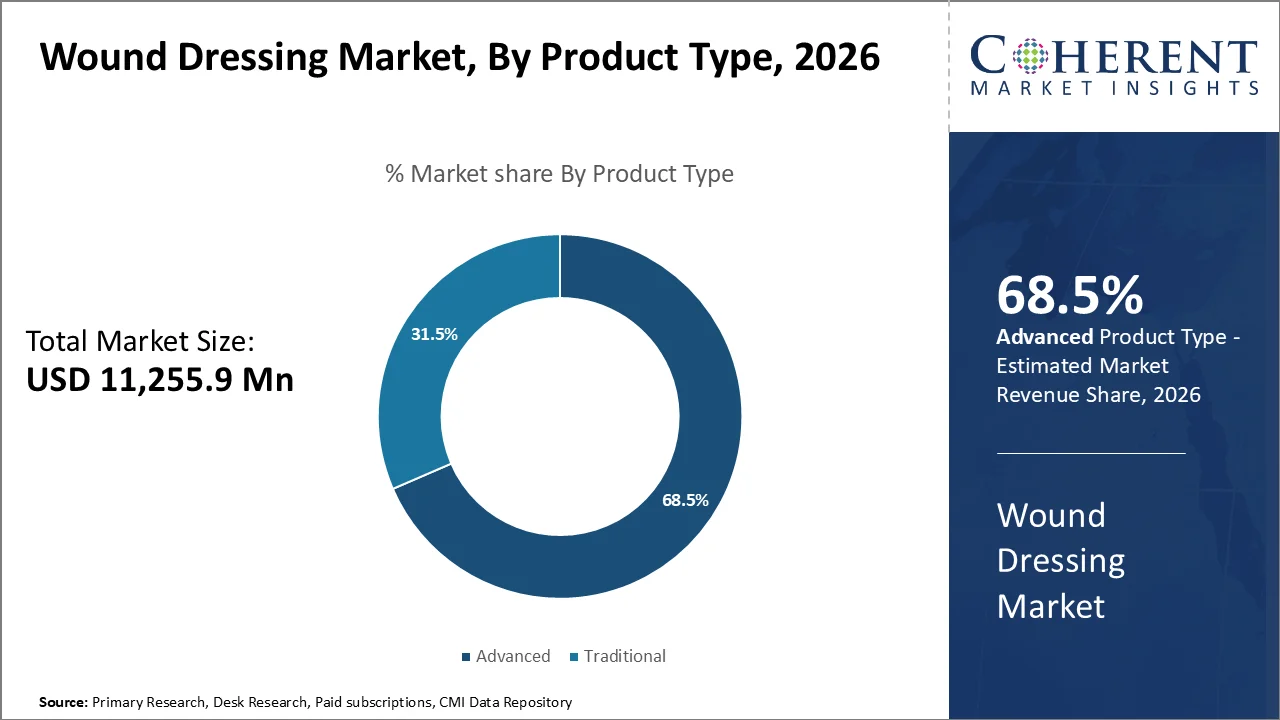
- The Advanced Wound Dressings segment is anticipated to dominate the global market share of 68.5% by 2026, driven by better wound healing properties and infection prevention abilities, among others. Approximately 10.5 million Medicare beneficiaries are estimated to suffer from chronic wounds, which clearly illustrates increasing demand for more sophisticated wound care techniques.
- Antimicrobial Wound Dressings are expected to capture 57.3% of the global wound care market share by 2026. Healthcare facilities are increasingly focusing on preventing wound infections due to an increase in chronic wound infections, diabetes, and infections.
- Chronic Wounds segment is anticipated to capture the maximum market share of 41.6% in 2026 owing to rising incidence rate of chronic wounds such as diabetic foot ulcers, pressure ulcers, and venous leg ulcers. Chronic wounds affect approximately 2.5% of the U.S. population, particularly elderly patients.
- Hospitals segment holds a major market share of 54.2% in 2026 due to the high number of surgical cases, wound treatment technologies, and wound management services in hospitals. As per the report published by the World Health Organization (WHO), the number of people around the world over 60 years of age is projected to rise from 1 billion in 2020 to 1.4 billion in 2030.
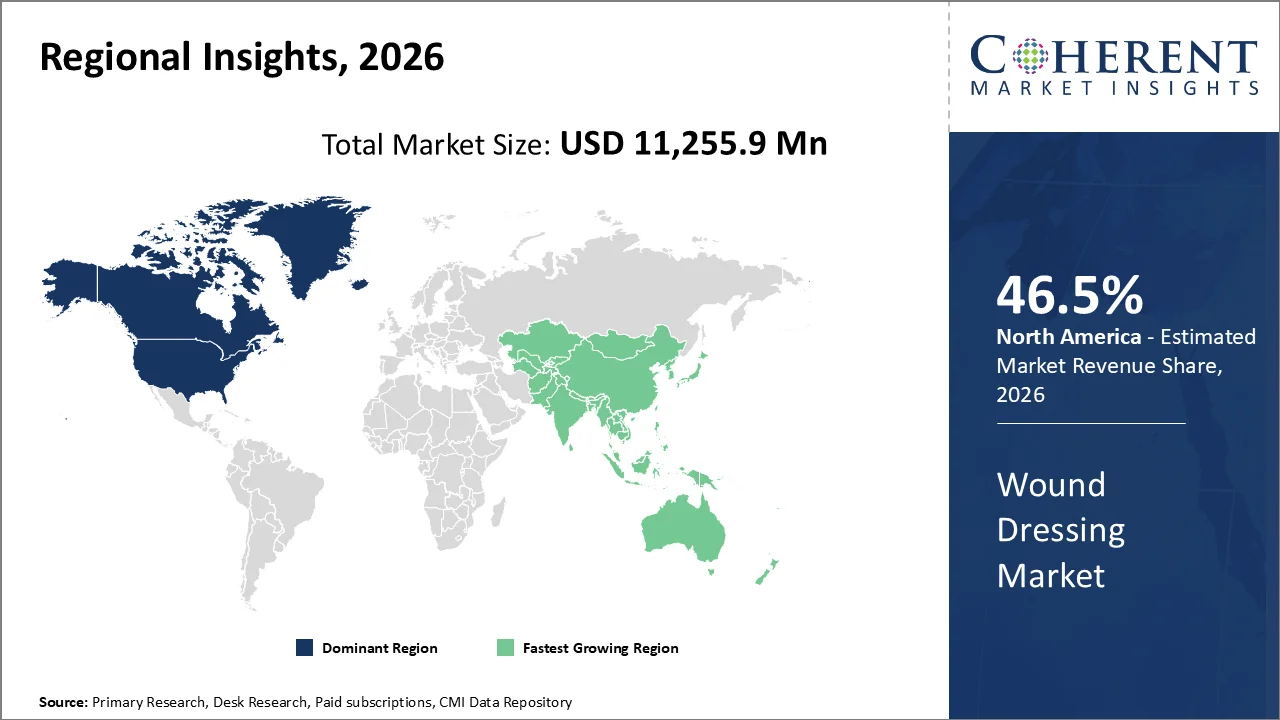
- North America is anticipated to hold the largest share in the global wound dressings market of 46.5% by 2026. A peer-reviewed study on Medicare data showed that 15% of patients under the Medicare scheme had wounds and/or infections related to wound conditions. The estimated Medicare budget for wound management ranged from USD 28.1 billion to 96.8 billion per year.
Segmental Insights
Why are Advanced Wound Dressings Acquiring the Largest Market Share?
Advanced wound dressings are estimated to be the leading segment in the market for wound dressings and expected to have a market share of about 68.5% in the year 2026. The major factor contributing to this is the efficacy of advanced wound dressings in terms of wound healing, effective moisture retention, infection prevention and control, and rising usage in managing chronic and complex wounds. Some examples of advanced wound dressings include foam dressings, antimicrobial dressings, hydrocolloid dressings, alginate dressings, and collagen dressings.
In April 2025, Convatec received regulatory approval in Europe and the United Kingdom for ConvaNiox, the first nitric oxide-generating multimodal dressing designed for the treatment of hard-to-heal wounds, including diabetic foot ulcers.
- Current Industry Events of 2026
- Market Size Estimation
- Regional Breakdown
- Competitive Landscape
- Customer Intelligence
- Segmental Analysis
- Pricing Analysis
- Key Market Drivers, Challenges & Future Trends
- Customized Insights Section
Why are Antimicrobial Dressings Dominating the Market by Property?
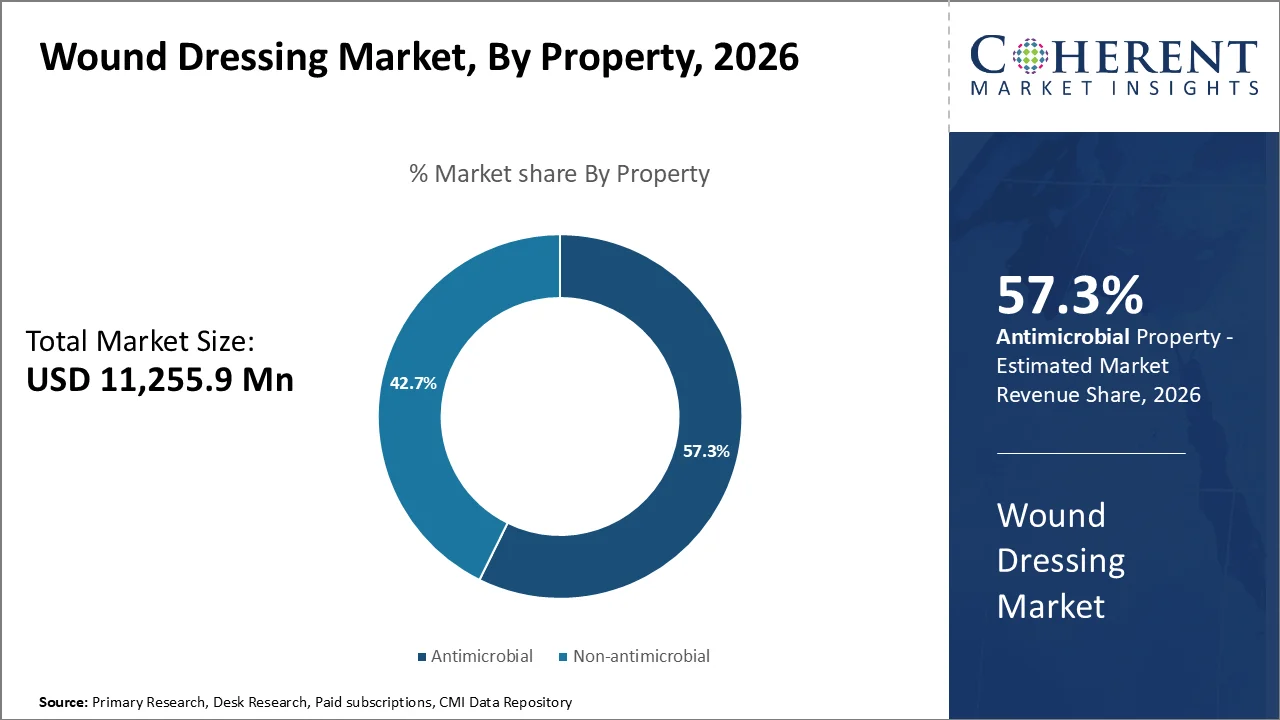
The Antimicrobial Dressings segment is predicted to have the highest market share of 57.3%, owing to rising focus on preventing infections, managing antimicrobial resistance, and minimizing health-care associated infections. Antimicrobial dressings use active elements like silver, iodine, and PHMB to prevent the proliferation of microbes.
The increasing focus on reducing wound-related infections, minimizing hospital stays, and lowering healthcare costs continues to support adoption of antimicrobial wound care products across hospitals and outpatient care settings.
In October 2025, Bravida Medical launched Silverlon NPD-212, the first silver-plated antimicrobial contact layer specifically designed for use with incisional negative pressure wound therapy (NPWT) systems.
Why are Chronic Wounds Acquiring the Largest Market Share by Application?
Chronic Wounds is forecasted to hold a major share of 41.6% in 2026 owing to the growing number of cases of diabetic foot ulcers, pressure ulcers, venous leg ulcers, and other types of hard-to-treat wounds. Chronic wounds typically take a long time to treat, thus, there will be a greater demand for wound management products.
Healthcare providers increasingly utilize advanced wound dressings to improve healing rates, reduce infection risks, and prevent costly complications such as amputations and hospital readmissions.
In September 2025, Convatec received regulatory approval in the U.K. and Europe for ConvaMatrix, a porcine placenta-derived skin substitute wound dressing developed for the management of hard-to-heal chronic wounds, including diabetic foot ulcers (DFUs) and venous leg ulcers (VLUs).
Which End User Segment Dominates the Market?
Hospitals account for the largest share of the wound dressing industry, contributing 54.2% in 2026. Hospitals occupy such a prominent position because they have well-established facilities for providing proper wound treatment, specialists available to offer wound care treatment, and numerous surgeries carried out in hospitals.
As indicated by the American Hospital Association, the number of hospitals in the country is about 6,100, offering a variety of healthcare services, thus contributing to the need for wound dressing products. Hospitals continue to be the key places where the process of handling complicated wounds occurs through the use of dressings.
Rising Burden of Diabetes and Chronic Wounds is Accelerating Growth in the Wound Dressing Market
The rising incidence of diabetes as well as chronic wounds is one of the significant contributors towards growth witnessed in the wound dressings market. Patients suffering from diabetes have a high risk of developing diabetic foot ulcers, pressure ulcers, and venous leg ulcers, for which there is a need for prolonged management of the wound using advanced wound dressings.
Based on figures released by the International Diabetes Federation, there are an estimated 589 million adults, aged between 20-79 years, suffering from diabetes worldwide as at 2024, while this number is expected to hit 853 million by 2050.
Technological advancements in advanced wound care products are driving market expansion
Innovations in wound care material technology and dressings are shaping the global wound dressing industry. There are ongoing developments in advanced dressings based on anti-microbial, bio-active, collagen, hydrofiber, and foam dressings, which are helping to heal wounds faster. Such dressings assist healthcare practitioners in managing difficult wounds while decreasing treatment duration and hospitalization. Increased demand for advanced wound care products has been contributing to the growth of the market.
The statistics provided by the World Health Organization state that the number of people in the world aged above 60 will grow from 1 billion in 2020 to 1.4 billion in 2030.
Current Events and Their Impact
Current Event | Description and its Impact |
2026 Medicare Coverage Expansion for Advanced Wound Care Products in the U.S. |
|
Increasing Regulatory Focus on Infection Prevention and Antimicrobial Stewardship |
|
Wound Dressing Market Trends
- The increasing use of innovative wound dressings, such as foam, hydrocolloid, alginate, and collagen dressings, is enhancing patient outcomes and decreasing the time taken to treat chronic and acute wounds.
- The rising interest in home health care and the out-patient wound care market has fueled the adoption of innovative and user-friendly wound dressings that can stay on for longer periods without changing often.
- The phenomenon of population aging is generating a high demand for products related to wound care. As per the report by the United Nations, the number of people aged 65 years and above will increase from 857 million in 2021 to 1.6 billion by 2050 worldwide.
- The growing surgical burden worldwide continues to support demand for post-operative wound care products. According to the World Health Organization, more than 300 million major surgical procedures are performed globally each year, creating sustained demand for advanced wound dressing products used in surgical wound management.
- Digital methods of assessing wounds and telemedicine technologies of wound monitoring have become an essential component of wound care management. They allow health care professionals to evaluate wound healing remotely and make treatment decisions accordingly.
Regional Insights
North America Wound Dressing Market Trends
The North American region is anticipated to hold the largest market share at 46.5% in the global wound dressings market by 2026 on account of its huge prevalence of chronic wounds, well-established healthcare infrastructure, and adoption of advanced wound management techniques.
Technological innovation is another key growth driver. For instance, in March 2026, Smith+Nephew officially launched ALLEVYN COMPLETE CARE Foam Dressing, a next-generation advanced wound care product designed for high-performance wound management and pressure injury prevention.
Asia Pacific Wound Dressing Market Trends (Fastest Growing Region)
Asia-Pacific market projected to be the fastest-growing one between 2026 and 2033 due to the rapid development of healthcare infrastructure, growing number of surgeries, and prevalence of diabetes.
Growth is also being fueled by solid investments in healthcare by governments and the availability of surgery. For instance, countries like China and India are increasing hospitals' networks and wound specialist units, enhancing access to sophisticated treatments of wounds.
Technological advancements are also emerging rapidly in the region. In November 2025, the Government of India’s Department of Atomic Energy introduced ColoNoX, a nitric oxide–releasing advanced wound dressing developed by the Bhabha Atomic Research Centre (BARC) for diabetic foot ulcer treatment.
Growing Chronic Disease Burden is Accelerating the Wound Dressing Market Demand in the United States
The United States wound dressing market is growing at an exponential rate owing to the high occurrence of conditions such as diabetes, obesity, vascular disorders, and increasing numbers of surgeries. The US has one of the biggest populations of patients suffering from chronic wounds in the world, especially diabetic foot ulcers, pressure ulcers, and venous leg ulcers.
A key recent development strengthening this trend is the launch of next-generation foam dressing technologies designed to improve healing outcomes and reduce hospital-acquired pressure injuries. According to the Smith+Nephew clinical publication, pressure injuries affect up to 1 in 10 hospitalized patients in the U.S., significantly increasing healthcare costs and length of hospital stay.
Japan Wound Dressing Market Trends
The Japan wound dressing market is expected to experience steady growth, owing to the presence of one of the fastest aging populations along with a high prevalence of chronic disorders requiring prolonged treatment for wounds. Over 30% of the Japanese population is composed of people aged 65 years or above, which is a highly super-aged society among many other countries around the globe.
The World Bank reports that Japan has one of the highest ratios of elderly populations in the world, thereby maintaining an ongoing need for more sophisticated wound care products.
Who are the Major Companies in Wound Dressing Industry
Some of the major key players in Wound Dressing are 3M Company, Coloplast A/S, Derma Sciences, Inc., Smith & Nephew Plc, Mölnlycke Healthcare, Medtronic Plc, Medline Industries, Inc., Organogenesis Inc., Integra LifeSciences Corporation, and MiMedx Group, Inc.
Key News
- In March 2026, Smith+Nephew launched ALLEVYN COMPLETE CARE Foam Dressing in the United States. The dressing features a five-layer structure for advanced exudate management and pressure injury prevention.
- In October 2025, Medline (via partnership announcement with Sonoma Pharmaceuticals) launched a new HOCl-based wound cleanser designed to reduce bacterial burden and support wound healing in chronic and surgical wounds.
Market Report Scope
Wound Dressing Market Report Coverage
| Report Coverage | Details | ||
|---|---|---|---|
| Base Year: | 2025 | Market Size in 2026: | USD 11,255.9 Mn |
| Historical Data for: | 2020 To 2024 | Forecast Period: | 2026 To 2033 |
| Forecast Period 2026 to 2033 CAGR: | 6.2% | 2033 Value Projection: | USD 17,149.5 Mn |
| Geographies covered: |
| ||
| Segments covered: |
| ||
| Companies covered: | 3M Company, Coloplast A/S, Derma Sciences, Inc., Smith & Nephew Plc, Mölnlycke Healthcare, Medtronic Plc, Medline Industries, Inc., Organogenesis Inc., Integra LifeSciences Corporation, and MiMedx Group, Inc. | ||
| Growth Drivers: |
| ||
| Restraints & Challenges: |
| ||
Analyst Opinion
- Wound dressing demand is inherently driven by medical need, as opposed to optional health-care expenditure. The requirement for ongoing treatment for chronic wounds like diabetic ulcers, pressure ulcers, and venous ulcers renders the market inherently robust.
- Increasing numbers of elderly individuals continue to swell the patient base for wound treatment. It is expected that one out of six people in the world would reach the age of 60 years old by 2030 according to the World Health Organization.
- Advanced dressings have replaced traditional gauze owing to better results achieved using them. These dressings include foam dressings, hydrocolloid dressings, hydrogel dressings, and antimicrobial dressings. They are more popular because of their effectiveness in maintaining moisture, reducing infections, and promoting healing.
- The chronic wound care market has become a long-term, consumable care category. The need for ongoing dressings changes for weeks or even months can create multiple repeat purchases, thus leading to steady market growth.
- Advances in bioactive and antimicrobial technologies are changing the market dynamics. The use of silver dressings, nitric oxide-releasing dressings, and collagen matrices is helping wounds heal faster and encouraging the use of premium products.
- Despite strong innovation, affordability and reimbursement limitations remain key barriers. Adoption of advanced wound dressings is still uneven across emerging markets due to cost sensitivity and limited insurance coverage.
Speak to the analyst
Want personalized insights?
Take the findings above to one of our principal consultants, or have the report rebuilt around the segments, geographies and competitors you actually track.
Market Segmentation
- By Product Type (Revenue, USD Mn, 2021-2033)
- Traditional
- Advanced
- Alginates
- Collagens
- Films
- Foams
- Hydrocolloids
- Hydrogels
- Wound Contact Layers
- By Property (Revenue, USD Mn, 2021-2033)
- Antimicrobial
- Non-antimicrobial
- By Application (Revenue, USD Mn, 2021-2033)
- Surgery
- Trauma
- Burns
- Chronic Wounds
- Others
- By End User (Revenue, USD Mn, 2021-2033)
- Hospitals
- Clinics
- Ambulatory Surgical Centers
- Others
- Global Wound Dressing Market, By Region: (Revenue, USD Mn, 2021-2033)
- North America
- U.S.
- Canada
- Latin America
- Brazil
- Mexico
- Argentina
- Rest of Latin America
- Europe
- Germany
- U.K.
- France
- Italy
- Spain
- Russia
- Rest of Europe
- Asia Pacific
- China
- India
- Japan
- Australia
- South Korea
- ASEAN
- Rest of Asia Pacific
- Middle East
- GCC
- Israel
- Rest of Middle East
- Africa
- South Africa
- Central Africa
- North Africa
- North America
- Key Players
- 3M Company
- Coloplast A/S
- Derma Sciences, Inc.
- Smith & Nephew Plc
- Mölnlycke Health Care
- Medtronic Plc
- Medline Industries, Inc.
- Organogenesis Inc.
- Integra LifeSciences Corporation
- MiMedx Group, Inc.
Sources
Primary Research Interviews
- Dermatologists
- Wound care specialists
- General surgeons
- Hospital administrators
- Ambulatory surgical center (ASC) managers
- Medical device distributors
- Key opinion leaders (KOLs) in wound care and advanced wound management
Databases
- World Health Organization (WHO)
- Centers for Disease Control and Prevention (CDC)
- National Institutes of Health (NIH)
- Organisation for Economic Co-operation and Development (OECD)
- International Diabetes Federation (IDF)
Magazines
- Wound Care Today
- Journal of Wound Care (JWC)
- Wounds International
- Advanced Wound Care Journal
Journals
- Journal of Wound Care
- Wound Repair and Regeneration
- International Wound Journal
- Burns & Trauma Journal
- Advances in Skin & Wound Care
Newspapers
- The New York Times
- The Guardian
- The Wall Street Journal
- Financial Times
Associations
- World Union of Wound Healing Societies (WUWHS)
- European Wound Management Association (EWMA)
- Wound Healing Society (WHS)
- American Professional Wound Care Association (APWCA)
- European Tissue Repair Society (ETRS)
Public Domain Sources
- Company annual reports and investor presentations (3M, Smith+Nephew, Mölnlycke, Coloplast, Medtronic, etc.)
- Government health ministry publications (US HHS, NHS, EU Health Reports, India MoHFW)
- Clinical trial registries such as ClinicalTrials.gov
- World Bank health and population datasets
- WHO Global Health Observatory
Proprietary Elements
- CMI Data Analytics Tool
- Proprietary CMI wound care market repository (last 10 years of structured industry data and forecasts)
Get access to 250+ pages report
Every segment, forecast, competitor profile and data table behind the analysis above — available for instant download.
- ESOMAR Member
- ISO 9001:2015 Certified
- D-U-N-S Registered
- GDPR & CCPA Compliant
Missing comfort of reading report in your local language? Find your preferred language:
Transform your Strategy with Exclusive Trending Reports
Frequently Asked Questions
The Wound Dressing Market is expected to reach USD 17,149.5 Mn by 2033, growing from USD 11,255.9 Mn in 2026.
High cost of advanced wound dressings, limited reimbursement in developing regions, and lack of awareness about advanced wound care solutions restrict market growth.
Rising chronic wounds (diabetic foot ulcers, pressure ulcers), increasing diabetes prevalence, aging population, and growing number of surgeries are key growth drivers.
The Wound Dressing Market is anticipated to grow at a CAGR of 6.2% between 2026 and 2033.
North America is expected to account for the largest market share in the global wound dressing market during the forecast period.
Asia Pacific is expected to be the fastest-growing region due to rising chronic disease burden, healthcare expansion, and increasing surgical procedures.
Wound dressing refers to medical materials used to cover and protect wounds, promote healing, prevent infection, and absorb exudate. It includes products such as foam, hydrocolloid, hydrogel, alginate, and antimicrobial dressings.