

Global Synthetic Leather Market Size and Forecast – 2026-2033
The global synthetic leather market is estimated to be valued at USD 49.75 Bn in 2026 and is expected to reach USD 107.60 Bn by 2033, exhibiting a compound annual growth rate (CAGR) of 11.7% from 2026 to 2033.
Key Takeaways of the Synthetic Leather Market
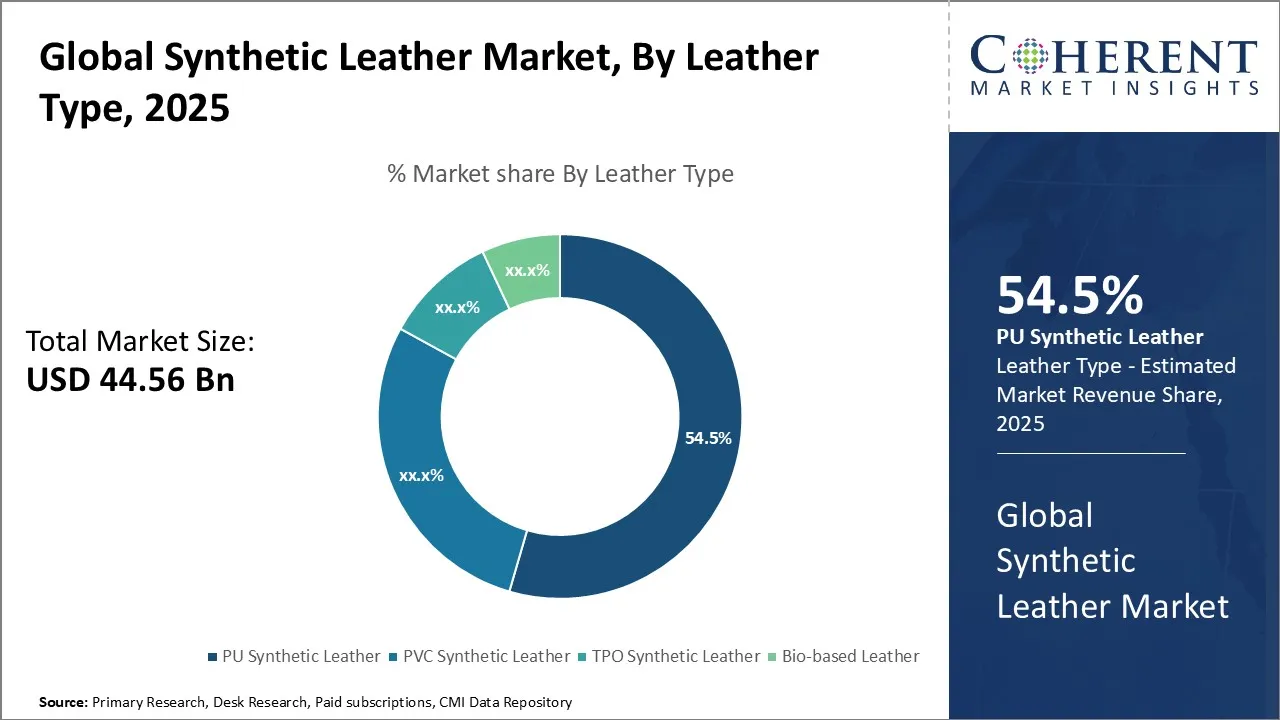
- The PU synthetic leather segment is projected to capture 55.5% share in 2026.
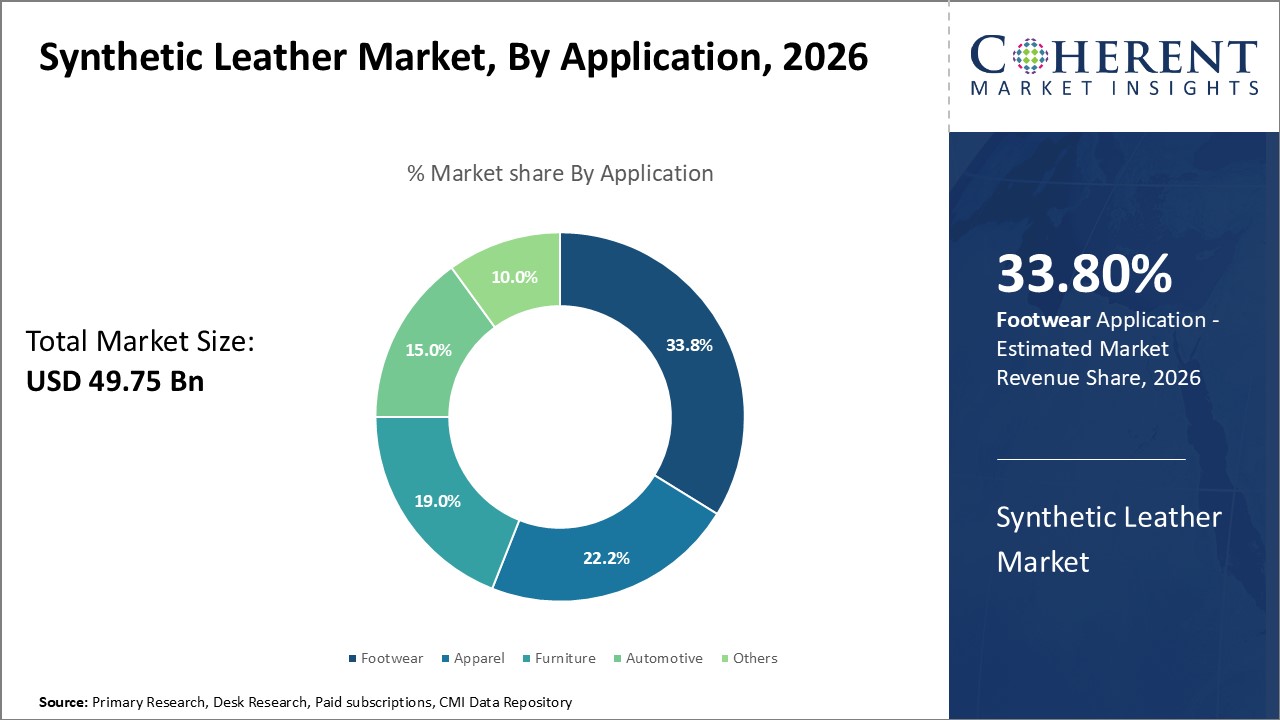
- The footwear segment is projected to capture a 33.8% share of the global synthetic leather market in 2026, driven by a range of interconnected factors that align with both consumer preferences and industry demands.
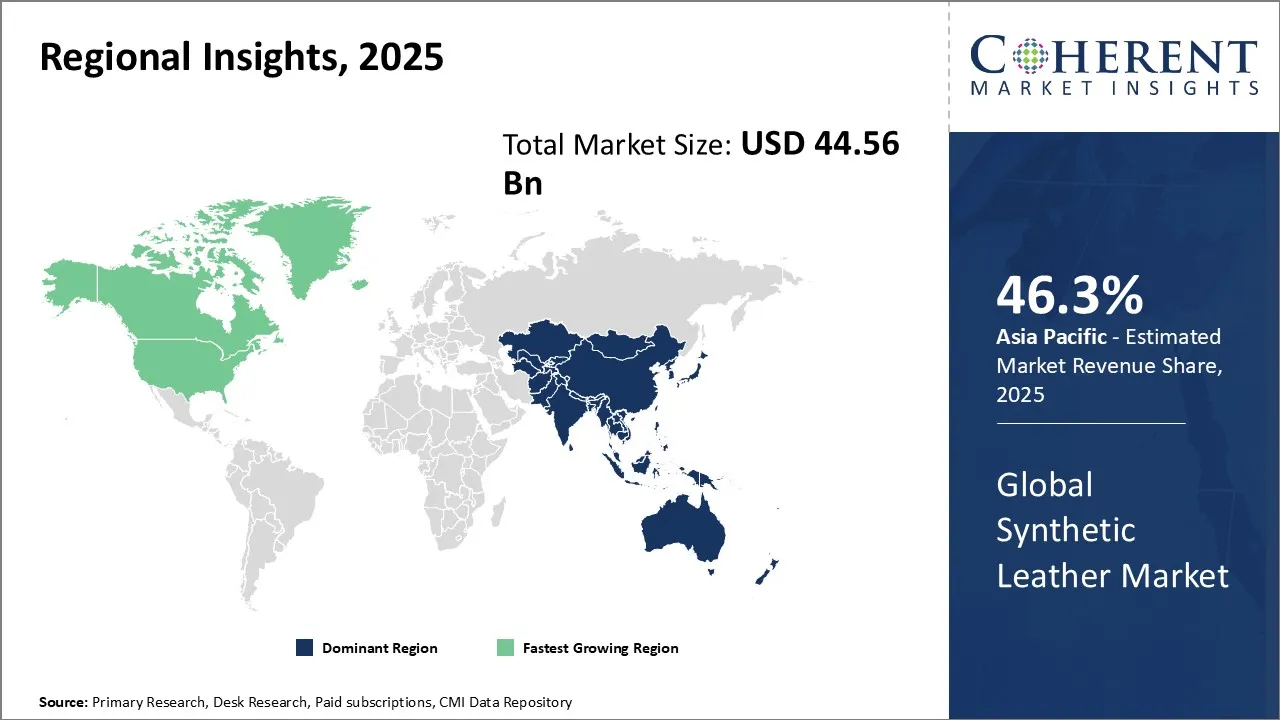
- Asia Pacific is projected to lead the global synthetic leather market in 2026 with a 46.3 % share. North America, with an estimated share of 22.5% in 2026, is projected to be the fastest-growing region.
Market Overview
Market trends indicate a strong shift toward eco-friendly and high-performance synthetic leather products, driven by advancements in bio-based and recycled materials. The growing adoption of synthetic leather in leather goods, including handbags, footwear, and apparel, is further accelerating this transition. Additionally, manufacturers are increasingly investing in innovative technologies to enhance durability, texture, and environmental impact. The use of microfiber synthetic leather is also gaining traction, known for its lightweight properties and superior quality. Furthermore, the growing adoption of synthetic leather in emerging markets, coupled with stringent regulations on animal cruelty and VOC emissions, further propels the market growth, positioning synthetic leather as a viable and desirable alternative in multiple application sectors.
Current Events and Its Impact
Current Events | Description and its Impact |
Sustainable Material Innovations (2024–2025) |
|
Fashion & Automotive Industry Adoption |
|
Segmental Insights
- Current Industry Events of 2026
- Market Size Estimation
- Regional Breakdown
- Competitive Landscape
- Customer Intelligence
- Segmental Analysis
- Pricing Analysis
- Key Market Drivers, Challenges & Future Trends
- Customized Insights Section
Synthetic Leather Market Insights, by Leather Type - PU Synthetic Leather Segment Dominates the Market Due to its Superior Versatility and Eco-Friendly Appeal
The PU synthetic leather segment is expected to hold 55.5% share in 2026 due to a combination of performance, environmental considerations, and aesthetic flexibility. One of the primary factors driving the growth of this segment is the material’s ability to closely mimic the texture, flexibility, and durability of natural leather while offering enhanced customization options. PU synthetic leather can be manufactured in a wide array of finishes, colors, and thicknesses, which appeals strongly to industries such as fashion, automotive, and furniture, where design precision and appearance are critical.
In the fashion industry, PU synthetic leather is widely used for the production of high-end handbags and accessories, such as those created by brands like Michael Kors and Coach. These brands have adopted PU leather not only for its look and feel but also due to the growing demand for sustainable and cruelty-free materials. The versatility of PU leather in providing a premium look, without the environmental impact of animal leather, aligns perfectly with the brand’s eco-conscious initiatives.
Synthetic Leather Market Insights, by Application – Footwear Segment Dominates the Market Due to Increasing Consumer Demand for Stylish, Durable, and Affordable Alternatives to Natural Leather Shoes
The footwear segment is expected to hold 33.8% share of the global synthetic leather market in 2026, due to several interrelated factors that align with consumer preferences and industry requirements. Primarily, synthetic leather offers footwear manufacturers a unique combination of durability, design flexibility, and economic efficiency that natural leather often cannot match. This makes it an ideal material for producing a wide variety of footwear products, including casual shoes, sports shoes, and everyday wear.
One of the key growth drivers in this segment is the rising global trend toward athleisure and sportswear, where synthetic leather’s lightweight and water-resistant properties are particularly beneficial. Consumers increasingly seek footwear that provides comfort, breathability, and resistance to wear and tear, particularly in active lifestyles. PU synthetic leather, widely used in footwear, meets these needs effectively by enhancing shoe performance without sacrificing style.
Regional Insights
Asia Pacific Synthetic Leather Market Analysis and Trends
The Asia Pacific region is projected to lead the market with a 46.3% share in 2026, due to rapid urbanization, expanding middle-class populations, and increasing the demand from automotive, footwear, and furniture sectors. The regional market is supported by a burgeoning manufacturing base across China, India, Japan, and South Korea with substantial government support for industrial modernization accelerates the market expansion.
Policies aimed at supporting sustainable materials and reducing dependency on traditional leather are gaining momentum, encouraging synthetic leather adoption. The presence of notable companies such as Toray Industries (Japan), Kolon Industries (South Korea), and numerous Chinese manufacturers fuels innovation and production capacity. Moreover, the region’s extensive labor force and growing domestic markets provide a fertile ground for the market growth. Trade dynamics, including export capabilities and regional trade agreements, further facilitate the market penetration and regional connectivity.
North America Synthetic Leather Market Analysis and Trends
The North America region is expected to exhibit the fastest growth in the market contributing 22.5% share in 2026, driven by strong demand from the automotive, footwear, and upholstery sectors, with rising consumer preference for sustainable and cruelty-free alternatives. The U.S. and Canada lead in R&D, focusing on bio-based and recycled materials. Key players like Kuraray, Mayur Uniquoters, and Nan Ya Plastics expand through collaborations with OEMs and fashion brands. Strict quality standards, eco-conscious consumers, and robust e-commerce networks further support market growth, positioning North America as a key global growth hub.
Global Synthetic Leather Market Outlook for Key Countries
Germany Synthetic Leather Market Analysis and Trends
Germany synthetic leather market thrives on its highly developed automotive and luxury goods industries, which prioritize innovation and sustainability. Leading companies like BASF and Covestro support market growth through advanced material research focused on durability and environmental compliance. Germany’s proactive government policies promoting eco-friendly manufacturing and stringent emission standards encourage synthetic leather adoption, making it a critical player in the Europe synthetic leather market.
China Synthetic Leather Market Analysis and Trends
China is a pivotal force in the synthetic leather market, fueled by massive-scale manufacturing capacity and strong demand from the automotive, footwear, and furniture industries. The government’s push towards sustainable industrial practices and investments in advanced manufacturing technologies enhance product quality and reduce environmental impact. Chinese companies dominate domestic production while also expanding exports. Players such as Huafon Group and Wanhua Chemical play a key role in scaling production and innovation, further solidifying China’s impact on global supply chains.
U.S. Synthetic Leather Market Analysis and Trends
The U.S. synthetic leather market is shaped by a combination of stringent environmental regulations and a growing consumer preference for sustainable and vegan products. The U.S. automotive and fashion industries actively incorporate synthetic leather due to both performance needs and consumer demand. Major global players like Spradling International and Gebrüder Weiss leverage robust distribution networks to serve diverse industries. Government initiatives supporting green materials and sustainability certifications enhance the market growth dynamics.
Italy Synthetic Leather Market Analysis and Trends
Italy synthetic leather market benefits from a traditional yet innovative fashion and luxury industrial base that values craftsmanship alongside sustainability. Italian companies such as Miko and Italvelluti distinguish themselves by producing high-quality synthetic leather for premium footwear and accessories while ensuring environmentally responsible production. Government support for sustainable manufacturing and the region’s strong export focus create favorable market conditions, maintaining Italy’s relevance in the global value chain.
India Synthetic Leather Market Analysis and Trends
India synthetic leather market is expanding rapidly, supported by a large domestic consumer base and growing industrial sectors like automotive and footwear. Government policies aimed at reducing hazardous waste and promoting eco-friendly alternatives encourage market adoption. India hosts a variety of manufacturers and suppliers focusing on affordable yet durable synthetic leather, which suits the price-sensitive and diverse market segments. Key players include Ajit Industries and Miracle Industries, which bolster local production and cater to both domestic and export demands.
Macro and Micro Economic Factors Impacting the Synthetic Leather Market Growth
Macro-Economic Factors
- Global Economic Growth and Disposable Income: Expanding middle-class populations in Asia-Pacific, strong urbanization, and increased disposable income fuel demand for affordable, stylish goods like synthetic leather-based footwear and apparel.
- Regulatory Trends and Sustainability Mandates: Stricter environmental norms (notably in the EU/U.S.) pressure manufacturers to shift towards water-based PU and bio-based synthetics and phase out polluting PVC leather, prompting green investments.
- Raw Material Volatility: Synthetic leather production heavily relies on petrochemical derivatives (PU, PVC, bio-polymers), whose prices are sensitive to oil markets, geopolitical events, and supply-chain disruptions.
- Technology Innovation: Advances in manufacturing (e.g., solvent-free PU and bio-based materials from apple peels, pineapple fibers, and mushrooms) accelerate market expansion and support environment-friendly practices.
- Global Trade and Automotive Sector: Demand for synthetic leather in vehicle interiors grows with automotive sector expansion, especially as manufacturers reduce reliance on animal products for sustainability.
Micro Economic Factors
- Consumer Shifts and Fashion Trends: Rising veganism and ethical consumerism drive fashion brands and footwear makers to launch cruelty-free, vegan synthetic leather products, strongly influencing purchasing.
- Environmental Concerns and Brand Strategy: Growing awareness of pollution from PVC-based synthetic leather and disposal issues affects consumer choices and encourages brands to market bio-based and greener alternatives.
- Production Costs and Profitability: High R&D and compliance costs for sustainable, bio-based leathers can erode profitability, especially for smaller firms unable to scale investments; conventional PVC/PUs remain cheaper but less future-proof.
- Customization and Application Diversity: Synthetic leather's versatility in design, color, texture, and adaptation from bags to upholstery and sports gear creates strong niche-driven growth opportunities for manufacturers.
- E-Commerce and Marketing: The rise of online retail, particularly for fashion and footwear, enables wider exposure for synthetic leather goods—environmental messaging further differentiates offerings.
Market Players, Key Development, and Competitive Intelligence
Key Developments
- In June 2025, a team of designers from De La Salle-College of Saint Benilde (DLS-CSB) and De La Salle University Manila unveiled banana leather, a sustainable alternative to synthetic leather. The material, highlighted in Martin Javier’s “Game Changer” segment on 24 Oras, is produced from banana waste such as peels and chunks, with faculty member Tal de Guzman emphasizing its potential as an eco-friendly fashion material.
- In April 2025, BASF showcased its latest innovation, Haptex, a sustainable synthetic leather solution, at PU TECH 2025. Haptex eliminates the wet line process, resulting in 52% lower greenhouse gas emissions, over 20% energy savings, and 30% less water consumption compared to conventional solvent-based polyurethane leather. This development reflects the broader the market shift toward eco-friendly synthetic leather, fueled by rising consumer expectations and tightening regulatory standards.
- In June 2024, Germany’s DITF and FILK unveiled a sustainable synthetic leather made entirely from bio-based Polybutylene Succinate (PBS), used for both the fiber substrate and the coating. The uniform material structure enables efficient recycling, overcoming limitations of traditional synthetic leathers that often combine multiple non-biodegradable materials.
- In October 2024, Mitsubishi Chemical Group Corporation announced that its plant-derived polyol, BioPTMG, adopted by Kahei Co., Ltd. for use in bio-synthetic leather applications. This innovation marks a step toward sustainable materials, as BioPTMG enables the production of leather alternatives derived from plant-based resources. Leveraging this material, Kahei has developed small consumer items such as shoulder bags and wet tissue cases. These products will be marketed under “tonto”, a sustainable lifestyle brand managed by Triple A Co., Ltd., further promoting eco-friendly consumer goods in the accessories market.
Top Strategies Followed by Global Synthetic Leather Market Players
- Established players in this market leverage substantial investments in research and development to continually innovate and introduce high-performance synthetic leather products that meet evolving consumer demands. These innovations often focus on improving durability, texture, and eco-friendliness, aligning with the rising global emphasis on sustainability. Furthermore, global expansion remains a crucial strategy; these companies broaden their distribution networks and manufacturing bases to penetrate emerging markets in Asia Pacific, Latin America, and Africa, where demand for synthetic leather is growing rapidly.
- For example, Freudenberg has pioneered the development of bio-based synthetic leathers and durable materials, helping it meets the rising global demand for sustainable products. Additionally, these companies expand their global reach by broadening distribution networks and setting up manufacturing bases in emerging markets such as Asia-Pacific, Latin America, and Africa
- Mid-level players in the synthetic leather market primarily focus on offering cost-effective solutions that strike a balance between quality and affordability, catering to price-sensitive consumer segments. Their strategic initiatives often revolve around optimizing production costs while maintaining acceptable standards of product performance and aesthetic appeal. To amplify their market presence and capabilities, many mid-tier companies actively collaborate with technology providers and manufacturing partners. These collaborations enable them to access advanced production technologies and scale up operations without the significant R&D expenditure that larger players sustain.
- For example, Foss Manufacturing Company, based in Hampton, New Hampshire, is a prominent player in the synthetic leather market, specializing in nonwoven fabrics and specialty synthetic fibers. The company employs advanced needlepunch technology to produce high-quality synthetic materials, catering to various industries, including automotive, flooring, and technical applications. Foss's commitment to sustainability is evident in its use of recycled polyester bottles as a primary raw material, aligning with the growing demand for eco-friendly alternatives in synthetic leather production.
- Small-scale players, while limited in resources, adopt innovative approaches to carve out niche segments within the synthetic leather market. These companies often focus on specialized product features such as unique textures, sustainable materials, or tailored applications that differentiate them from mass-produced offerings. Embracing cutting-edge technologies like bio-based polymers or 3D printing, small-scale manufacturers strive to stay relevant and competitive despite market constraints.
- For example, Cork Leather, a niche manufacturer that creates synthetic leather from cork, offering unique textures and sustainable solutions. Cork Leather targets markets that demand sustainable, innovative materials for fashion, upholstery, and automotive applications. By focusing on these sustainable and eco-friendly features, the company sets itself apart from larger, mass-production competitors.
Market Report Scope
Synthetic Leather Market Report Coverage
| Report Coverage | Details | ||
|---|---|---|---|
| Base Year: | 2025 | Market Size in 2026: | USD 49.75 Bn |
| Historical Data for: | 2020 To 2024 | Forecast Period: | 2026 To 2033 |
| Forecast Period 2026 to 2033 CAGR: | 11.7% | 2033 Value Projection: | USD 107.60 Bn |
| Geographies covered: |
| ||
| Segments covered: |
| ||
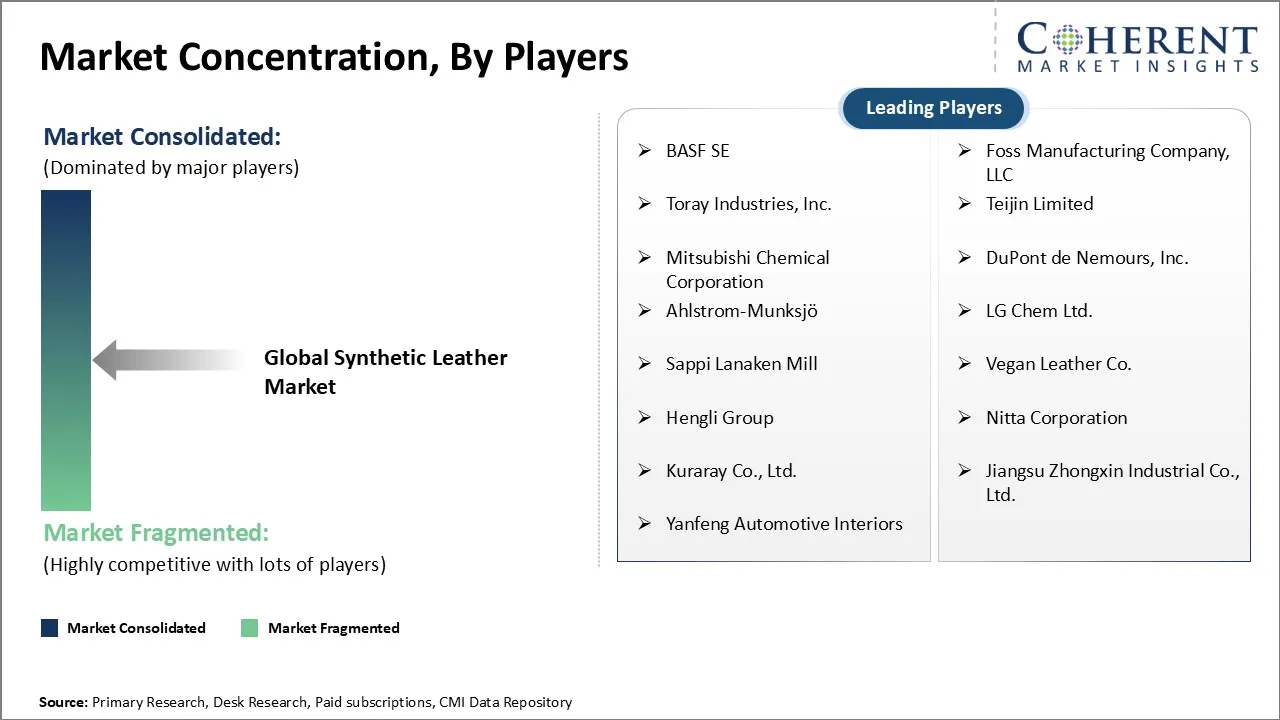
| Companies covered: | BASF, Foss Manufacturing Company, LLC, Toray Industries, Inc., Teijin Limited, Mitsubishi Chemical Corporation, DuPont de Nemours, Inc., Ahlstrom-Munksjö, LG Chem Ltd., Sappi Lanaken Mill, Vegan Leather Co., Hengli Group, Nitta Corporation, Kuraray Co., Ltd., Jiangsu Zhongxin Industrial Co., Ltd., and Yanfeng Automotive Interiors | ||
| Growth Drivers: |
| ||
| Restraints & Challenges: |
| ||
Synthetic Leather Market Dynamics
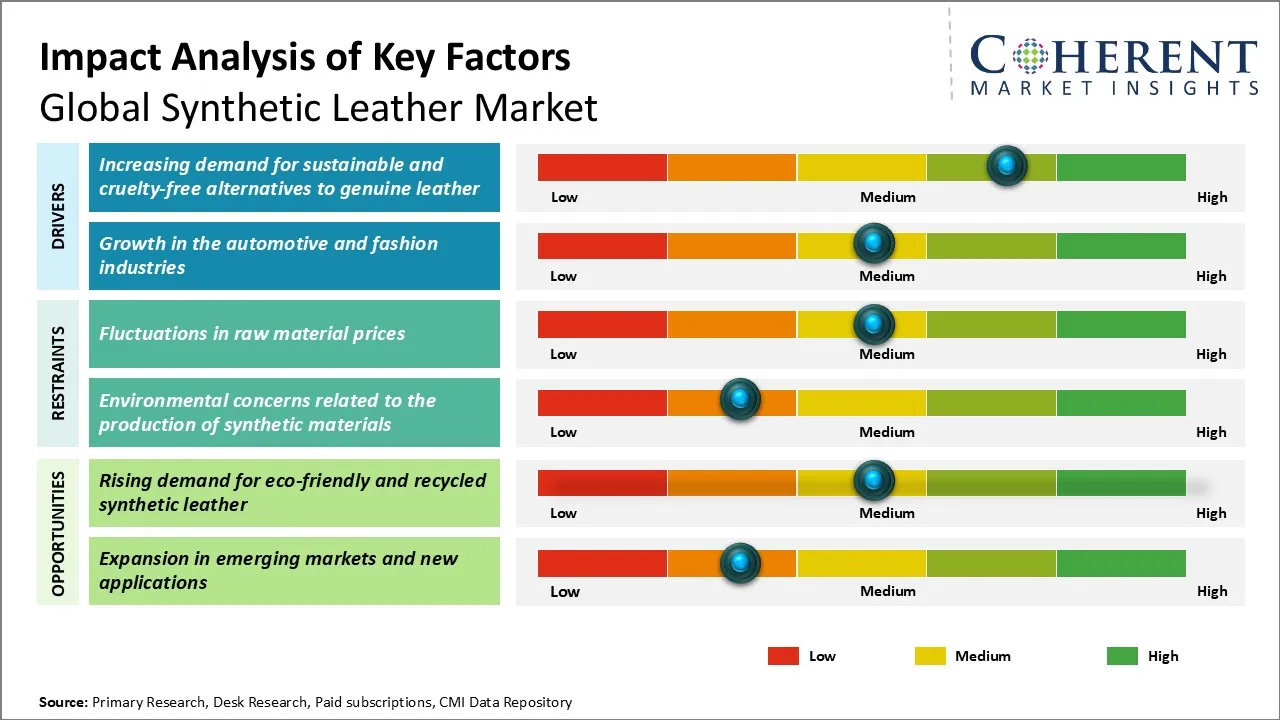
Synthetic Leather Market Driver - Increasing Demand for Sustainable and Cruelty-Free Alternatives to Genuine Leather
The increasing global awareness regarding environmental sustainability and animal welfare has significantly propelled the demand for synthetic leather across various end-use industries. Consumers are becoming more conscientious about the ethical implications of purchasing genuine leather, which involves animal slaughter and contributes to ecological degradation through resource-intensive tanning processes. As a result, synthetic leather, which offers a cruelty-free alternative produced from polyurethane or polyvinyl chloride, is gaining traction as a responsible choice.
For instance, luxury fashion brands such as Stella McCartney have adopted plant-based and PU-based synthetic leathers in their collections to align with consumer preferences for cruelty-free fashion.
Synthetic Leather Market Opportunity - Rising Demand for Eco-Friendly and Recycled Synthetic Leather
The global synthetic leather market is witnessing a significant growth opportunity driven by the escalating demand for eco-friendly and recycled synthetic leather products. As environmental concerns intensify worldwide, consumers and manufacturers alike are prioritizing sustainable alternatives to traditional leather, which involves resource-intensive and pollutive processes. Eco-conscious consumers are increasingly opting for synthetic leather created from recycled materials, such as Polyurethane (PU) derived from post-consumer plastics or bio-based raw materials, to reduce their carbon footprint.
For example, Adidas launched its “Stan Smith Mylo” sneakers using Mylo, a mushroom-based leather alternative developed by Bolt Threads, which is both bio-based and biodegradable.
Analyst Opinion (Expert Opinion)
- The global synthetic leather market is witnessing transformative growth, driven by increasing consumer demand for sustainable and ethical alternatives to traditional leather. Insights from the International Leather Conference (2023) and the Sustainable Fashion Summit (2022) highlighted key innovations, with companies like Miklos and Ultrafabrics leading advancements in eco-friendly synthetic materials.
- Miklos’s recent launch of a plant-based synthetic leather showcases a strategic response to consumer preferences for vegan and sustainable products, tapping into the growing market for environmentally conscious fashion. Discussions at these conferences emphasized the importance of durability and performance in synthetic leather, as brands aim to match the quality of genuine leather while minimizing environmental impact. Challenges such as fluctuating raw material costs and competition from alternative materials were recognized as potential obstacles.
- Companies that prioritize R&D to develop high-performance, biodegradable options will likely secure a competitive advantage. Furthermore, collaborations with fashion designers to promote innovative designs can enhance market visibility. Ultimately, the synthetic leather market's trajectory will depend on its ability to innovate while meeting the rising consumer expectations for sustainability, quality, and ethical sourcing.
Speak to the analyst
Want personalized insights?
Take the findings above to one of our principal consultants, or have the report rebuilt around the segments, geographies and competitors you actually track.
Market Segmentation
- Leather Type Insights (Revenue, USD Bn, 2021 - 2033)
- PU Synthetic Leather
- PVC Synthetic Leather
- TPO Synthetic Leather
- Bio-based Leather
- Application Insights (Revenue, USD Bn, 2021 - 2033)
- Footwear
- Sports Shoes
- Formals Shoes
- Apparel
- Furniture
- Chairs
- Sofas
- Other furnishing
- Automotive
- Others
- Regional Insights (Revenue, USD Bn, 2021 - 2033)
- North America
- U.S.
- Canada
- Latin America
- Brazil
- Argentina
- Mexico
- Rest of Latin America
- Europe
- Germany
- U.K.
- Spain
- France
- Italy
- Russia
- Rest of Europe
- Asia Pacific
- China
- India
- Japan
- Australia
- South Korea
- ASEAN
- Rest of Asia Pacific
- Middle East
- GCC Countries
- Israel
- Rest of Middle East
- Africa
- South Africa
- North Africa
- Central Africa
- North America
- Key Players Insights
- BASF
- Foss Manufacturing Company, LLC
- Toray Industries, Inc.
- Teijin Limited
- Mitsubishi Chemical Corporation
- DuPont de Nemours, Inc.
- Ahlstrom-Munksjö
- LG Chem Ltd.
- Sappi Lanaken Mill
- Vegan Leather Co.
- Hengli Group
- Nitta Corporation
- Kuraray Co., Ltd.
- Jiangsu Zhongxin Industrial Co., Ltd.
- Yanfeng Automotive Interiors
Sources
Primary Research Interviews
- R&D Head – Leading Synthetic Leather Manufacturer
- Sustainability Manager – Global Footwear & Apparel Brand
- Procurement Director – Automotive OEM (Interior Components)
- Product Innovation Lead – Furniture & Upholstery Manufacturer
- Policy Advisor – Environmental & Recycling Regulatory Body
Stakeholders
- Manufacturers (PU-based, PVC-based, Bio-based Synthetic Leather)
- End Use Sectors:
- Footwear & Apparel
- Automotive (Seats, Interiors, Upholstery)
- Furniture & Home Décor
- Consumer Electronics & Accessories (cases, covers, etc.)
- Industrial Applications (safety, marine, aviation)
- Regulatory & Certification Bodies
- Retailers & E-commerce Platforms
- Technology Innovators – Bio-based & Recycled Leather Developers
Databases
- UN Comtrade Database (Synthetic Leather Trade Data)
- India Import Export (EXIM) Database – PU/PVC leather
- Eurostat – Trade & Production Data for Synthetic Leather
Magazines
- Leather International – Industry developments & sustainability trends
- Textile World – Innovations in coated fabrics & leather alternatives
- Sustainable Brands Magazine – Eco-friendly material innovations
- Automotive Interiors World – Synthetic leather adoption in automotive
- Global Footwear News – Demand trends in footwear & fashion
Journals
- Journal of Applied Polymer Science – PU/PVC coatings & performance studies
- Polymer Degradation and Stability – Durability & environmental impact
- Materials Today Sustainability – Bio-based synthetic leather research
- Journal of Cleaner Production – Circular economy in synthetic leather
Newspapers
- The Financial Times – Synthetic leather market & sustainability policies
- The Guardian – Consumer shift to cruelty-free materials
- South China Morning Post – Asia Pacific production & exports
- European Textile News – EU regulations on PVC-based materials
Associations
- International Council of Tanners (ICT)
- European Coated Fabrics Association (AICV)
- American Apparel & Footwear Association (AAFA)
Public Domain Sources
- U.S. Environmental Protection Agency (EPA) – PVC/PU material impact studies
- European Chemicals Agency (ECHA) – REACH guidelines for synthetic leather chemicals
- European Commission – Circular Economy Action Plan & Eco-design regulations
- World Health Organization (WHO) – Chemical exposure safety in consumer products
Proprietary Elements
- CMI Data Analytics Tool, Proprietary CMI Existing Repository of information for last 8 years.
Get access to 250+ pages report
Every segment, forecast, competitor profile and data table behind the analysis above — available for instant download.
- ESOMAR Member
- ISO 9001:2015 Certified
- D-U-N-S Registered
- GDPR & CCPA Compliant
Missing comfort of reading report in your local language? Find your preferred language:
Transform your Strategy with Exclusive Trending Reports
Frequently Asked Questions
The global synthetic leather market is estimated to be valued at USD 49.75 Bn in 2026 and is expected to reach USD 107.60 Bn by 2033.
The CAGR of the global synthetic leather market is projected to be 11.7% from 2026 to 2033.
Increasing demand for sustainable and cruelty-free alternatives to genuine leather and growth in the automotive and fashion industries are the major factors driving the growth of the global synthetic leather market.
Fluctuations in raw material prices and environmental concerns related to the production of synthetic materials are the major factors hampering the growth of the global synthetic leather market.
In terms of leather type, the PU synthetic leather segment is estimated to dominate the market revenue share in 2026.
BASF, Foss Manufacturing Company, LLC, Toray Industries, Inc., Teijin Limited, Mitsubishi Chemical Corporation, DuPont de Nemours, Inc., Ahlstrom-Munksjö, LG Chem Ltd., Sappi Lanaken Mill, Vegan Leather Co., Hengli Group, Nitta Corporation, Kuraray Co., Ltd., Jiangsu Zhongxin Industrial Co., Ltd., and Yanfeng Automotive Interiors are the major players.
Asia Pacific is expected to lead the global synthetic leather market in 2026.