

Global Tissue Dissociation Market Size and Forecast – 2026 to 2033
The Global Tissue Dissociation Market is estimated to be valued at USD 387.6 Mn in 2026 and is expected to reach USD 704.0 Mn by 2033, exhibiting a compound annual growth rate (CAGR) of 8.9% from 2026 to 2033. This significant growth is driven by increasing demand for advanced tissue processing techniques in biomedical research, drug discovery, and clinical applications, which require precise cell separation and analysis.
Key Takeaways of the Tissue Dissociation Market
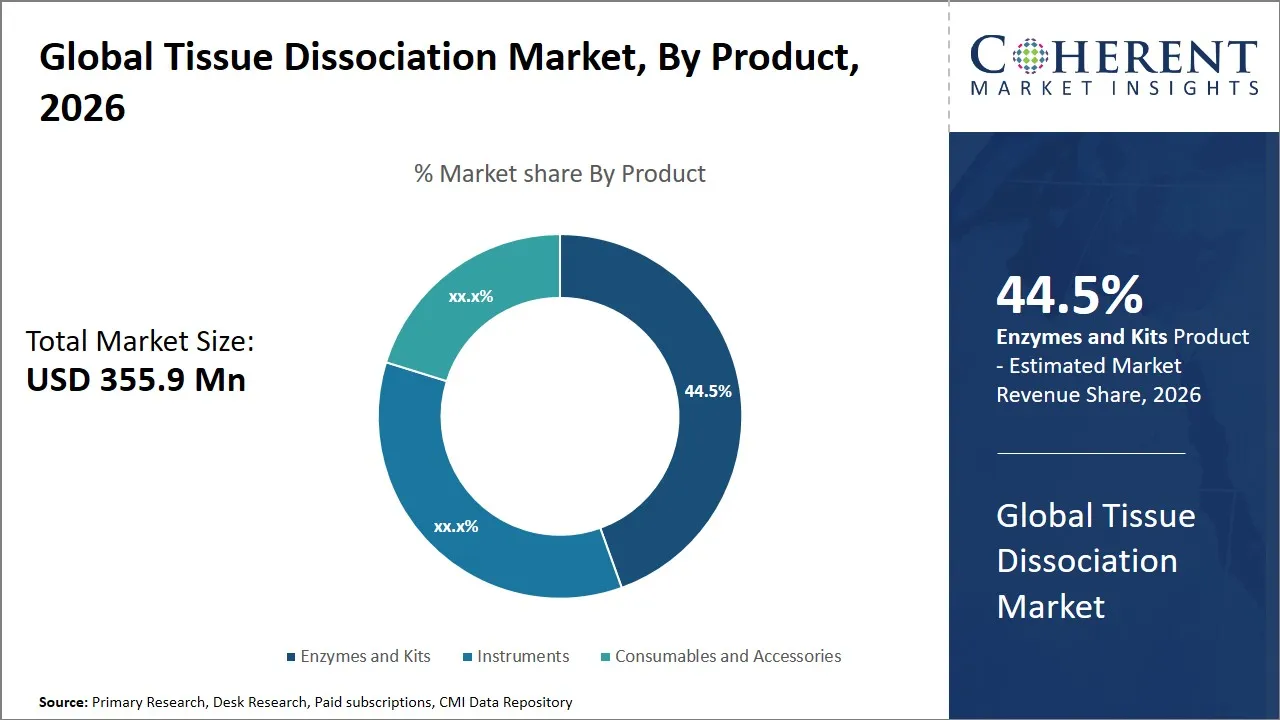
- The enzymes and kits segment is expected to lead the market with 45.5% share in 2026.
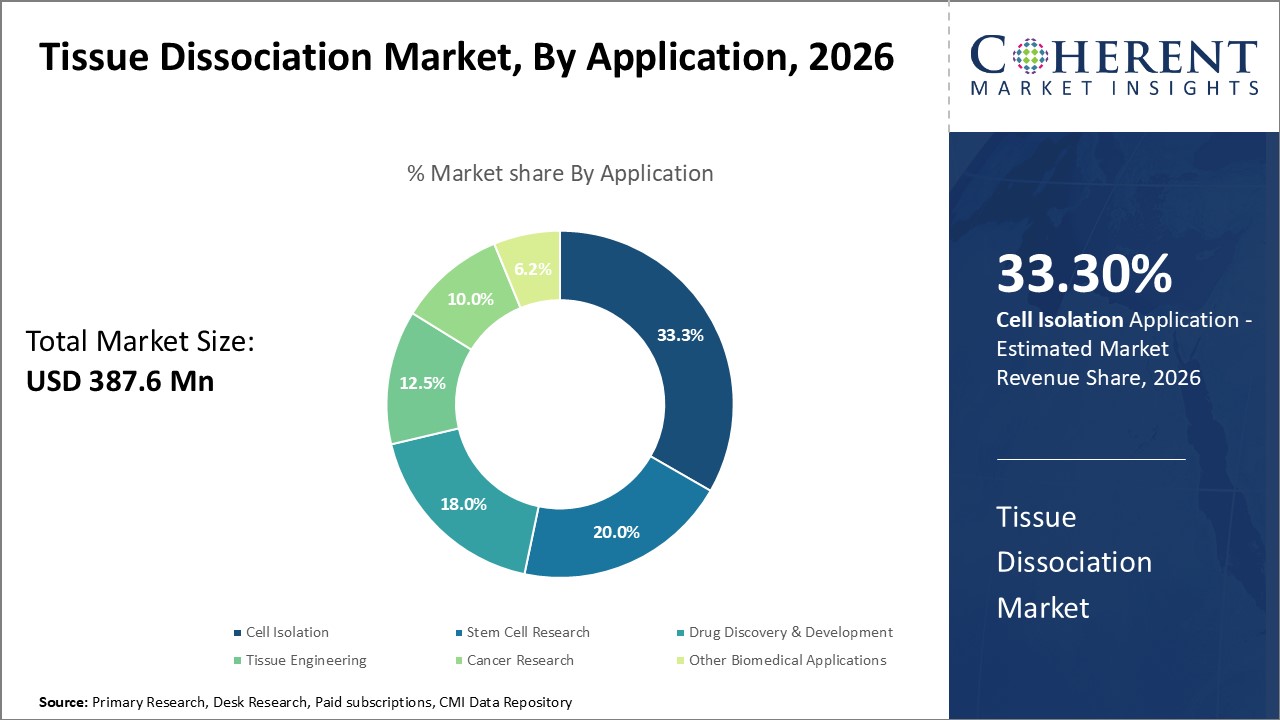
- The cell isolation segment is experiencing significant growth, capturing an estimated share of 33.3% in 2026.
- Pharmaceutical and biotechnology companies are major contributors to market expansion, accounting for an estimated 43.1% of the market share in 2026.
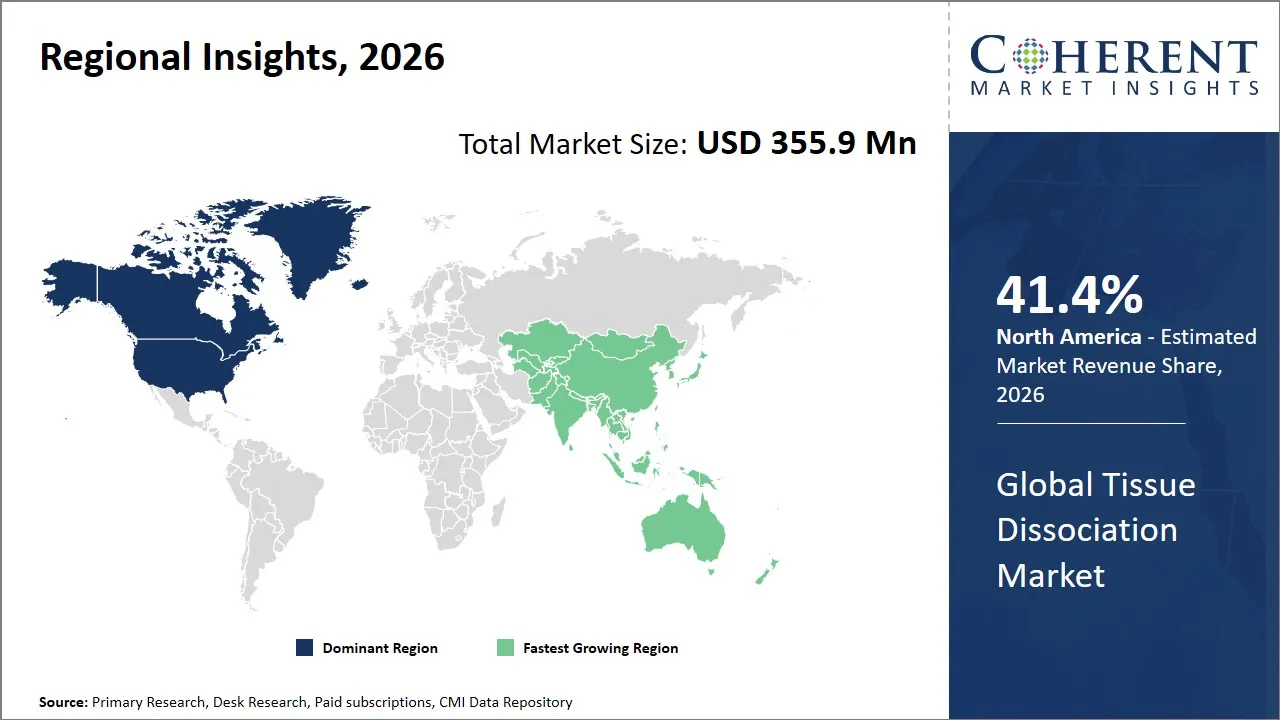
- North America is expected to lead the market, holding a share of 41.4% in 2026. Asia Pacific is anticipated to be the fastest-growing region, with 23.5% share in 2026.
Market Overview
- A key market trend is the rising adoption of automated and high-throughput tissue dissociation systems, which enhance efficiency and reproducibility in laboratories.
- Additionally, growing investments in regenerative medicine and personalized therapies are fueling demand for tissue dissociation technologies.
- Innovations focused on minimizing tissue damage and improving cell viability are also shaping market dynamics, offering improved outcomes for downstream applications and expanding the use of these technologies across various biomedical fields.
Currents Events and Its Impact
Current Events | Description and its Impact |
Accelerated Adoption of Single-Cell Analysis and Omics Technologies |
|
Post-Pandemic Biopharmaceutical R&D Focus and Supply Chain Realignment |
|
Segmental Insights
- Current Industry Events of 2026
- Market Size Estimation
- Regional Breakdown
- Competitive Landscape
- Customer Intelligence
- Segmental Analysis
- Pricing Analysis
- Key Market Drivers, Challenges & Future Trends
- Customized Insights Section
Why are Enzymes and Kits Leading the Growth in Tissue Dissociation Market?
The enzymes and kits segment is the most dominant in the tissue dissociation market with an estimated 45.5% share in 2026, efficient and reproducible tissue processing solutions that are required in downstream application in biomedical research and clinical practice.
Enzyme-based kits are popular due to their capacity to selectively lyse the components of the extracellular matrix, allowing the viable single cells with different types of tissues to be isolated with minimal damage.
For example, Miltenyi Biotec offers Multi Tissue Dissociation Kits designed for gentle yet effective cell isolation from various tissues such as kidney, prostate, mouse embryos, and cell monolayers. These kits, used with the gentleMACS Dissociators, help generate viable single-cell suspensions while preserving cell surface epitopes.
Why is Cell Isolation Driving Growth in the Tissue Dissociation Market?
The cell isolation segment is experiencing a massive growth in the global tissue dissociation market and has an estimated share of 33.3% in 2026, due to its critical contribution in biomedical research, drug development and customized medicine. The application of tissue dissociation methods is essential in the isolation of viable cells in heterogeneous tissue samples to allow researchers to investigate certain cell types, gene expression, and cellular behavior.
The growing interest in dissociation techniques as more complex techniques are required to obtain microfluidic cell isolation methods with applications in stem cell research, cancer diagnostics, and immunotherapy.
How are Pharmaceutical and Biotechnology Companies Fueling the Tissue Dissociation Market?
The tissue dissociation market is mainly dominated by pharmaceutical and biotechnology companies with an estimated share of 43.1% in 2026, because these products are largely used in drug discovery and preclinical research and development of therapeutic products. Tissue dissociation solutions are used by these companies to isolate cells and analyze them to develop new treatments and biologics.
As Precision medicine and cell-based therapies gain more and more interest, pharmaceutical and biotech companies are beginning to invest in state-of-the-art dissociation technologies to facilitate their R&D efforts, which are adding further momentum to the growth of the market.
Addressing Reproducibility and Batch-to-Batch Variability in the Tissue Dissociation Market
- Reproducibility and batch-to-batch variability are critical concerns in the tissue dissociation market, as they directly impact the consistency and reliability of research outcomes. Variability in enzyme performance, reagent quality, and processing conditions can lead to inconsistent results, affecting cell viability and downstream analysis. Ensuring reproducibility across multiple experiments is essential for reliable data, especially in drug development, stem cell research, and personalized medicine applications.
- To address this, manufacturers are increasingly focusing on standardizing reagent formulations and improving automation systems. Advances in quality control and the use of validated protocols are helping reduce batch-to-batch variability. As demand for high-quality, reproducible results grows, these efforts are vital to improving market reliability and supporting the expansion of tissue dissociation technologies in global research labs.
Regional Insights
North America Tissue Dissociation Market Analysis and Trends
In North America, the dominance in the global tissue dissociation market is primarily driven by a robust healthcare infrastructure with an estimated 41.4% in 2026, strong presence of key industry players, and significant R&D investments. The region enjoys developed biotechnology and pharmaceutical industries which currently seek the advanced tissue dissociation technologies to apply in the regenerative medicine, diagnostics and drug discovery domains.
Market development is also further sparked by the U.S. government programs that promote biomedical research and medical innovation. Also, there are a few well-known businesses in North America including Thermo Fisher Scientific, Miltenyi Biotec and STEMCELL Technologies, which provide innovative products and solutions that make the implementation of tissue dissociation procedures more essential.
Asia Pacific Tissue Dissociation Market Analysis and Trends
The Asia Pacific region is expected to exhibit the fastest growth in the market contributing 23.5% share in 2026, due to the growing healthcare accessibility, the rising investment in advanced research centers and the growing government support to establish biotechnology sectors. Countries like China, Japan, South Korea, and India are rapidly taking in the latest technology in tissue processing to facilitate their expanding cell therapy and biomedical research system.
The increasing population and prevalence of chronic conditions contribute to the demand in tissue dissociation products applied in the diagnostics and development of the therapies. There are major companies such as Nanjing Vazyme Biotech, BioCatalyst, and Takara Bio that are aggressively enlarging their presence in the region with innovations in their products that are region specific.
Tissue Dissociation Market Outlook for Key Countries
How are technological advancements shaping the U.S. market?
The U.S. is still the giant of the tissue dissociation market that has a well-established ecosystem consisting of biotech companies, research centers, and health organizations. FDA regulatory environment encourages innovation, alongside safety, thus this motivates firms to come up with new enzymatic and mechanical dissociation therapies in tissue engineering and stem cell research.
The market is reinforced by major players like Thermo Fisher Scientific and Miltenyi Biotec who invest heavily in product development and strategic acquisitions. The availability of a high number of patients in need of regenerative therapy stimulates the demand of tissue dissociation products.
How does Germany’s tissue dissociation market compare within Europe?
The market in Germany boasts of dominance of the country in terms of life sciences and precision manufacturing. A healthy government support in terms of programs such as Bioeconomy Strategy and investments towards the development of biotech innovation promote the development of tissue dissociation technologies.
Germany has strong firms like the European headquarters of Miltenyi Biotec which offer good avenues of innovation and distribution in Europe. The highly-developed healthcare infrastructure and the research relations with the major universities of the country contribute to the implementation of the high-quality dissociation solutions to be applied both in clinical and research purposes.
China Tissue Dissociation Market Trends
The increasing healthcare spending, the growing biomedical research and development, and favorable government policies, such as Made in China 2026 that focuses on developing biotechnology, are contributing to the rapid development of the tissue dissociation market in China. The market will be defined by the influx of local manufacturers e.g. Nanjing Vazyme Biotech that provides cost-effective and creative solutions in enzymatic dissociation tailored to the local requirements.
Demand is further increased in increased clinical trials and practices of regenerative medicine. Technology transfer and market expansion in the Chinese healthcare landscape is also done through strategic alliances with international corporations.
Japan Tissue Dissociation Market Trends
Japan remains at the head of the tissue dissociation market in Asia Pacific due to its high level of healthcare and focus on regenerative medicine as one of the priorities of the country. Firms such as Takara Bio have been very instrumental in the development of innovative dissociation reagents and equipment in accordance with the strict Japanese regulatory requirements.
The joint efforts of the government research agencies and the private industry lead to continued innovation, which aims at improving the efficiency and safety of tissue dissociation that is essential to developing cell therapy. The aging population in Japan creates a need to apply therapeutic uses based on the tissue dissociation techniques.
Mitigating Enzyme-Induced Transcriptomic Bias in the Tissue Dissociation Market
- Enzyme-induced transcriptomic bias is a key challenge in the tissue dissociation market, as enzymes used for dissociation can inadvertently alter gene expression profiles during the process. This bias occurs when enzymes affect cellular RNA, leading to skewed transcriptomic data that may not accurately reflect the original tissue’s biological state. Understanding and mitigating this bias is essential for ensuring the reliability of downstream analyses, such as single-cell RNA sequencing.
- To address this, researchers are focusing on developing more precise dissociation protocols and enzyme mixtures that minimize RNA degradation and maintain natural gene expression. By optimizing dissociation conditions and selecting enzymes with minimal transcriptomic impact, manufacturers are working to enhance the accuracy of gene expression data, which is crucial for applications in drug discovery, biomarker development, and regenerative medicine.
Market Players, Key Developments, and Competitive Intelligence
Key Developments
- In June 2025, STEMCELL Technologies, a global provider of life science research tools, launched the STEMprep Tissue Dissociation System to automate tissue dissociation workflows and deliver high‑viability single‑cell suspensions for research applications.
- In September 2024, Singleron, a leader in advanced life sciences tools, launched the sCelLiVE Tissue Dissociation Kit. This all-in-one solution for human and mouse skin tissue reduces processing time while preserving cell viability for high-quality analysis, including single-cell sequencing.
- In January 2024, Thermo Fisher, a global biotech innovator, introduced Gibco TrypLE gentle cell dissociation reagents. The animal-free TrypLE enzyme eliminates pathogen risks and is produced via a controlled fermentation process, available at any scale.
- In March 2023, Agilent Technologies, a leader in life sciences and diagnostics, announced its acquisition of e-MSion. The acquisition will integrate e-MSion’s innovative electron capture dissociation (ECD) technology, ExD cell, into Agilent’s portfolio. This technology enables more precise characterization of complex biomolecules, accelerating biopharma drug development.
Top Strategies Followed by Global Tissue Dissociation Market Players
Player Type | Strategic Focus | Examples |
Established Market Leaders | Heavy R&D investment in high-performance tissue dissociation products; focus on innovation to improve efficiency, accuracy, and ease of use; strategic partnerships with OEMs, key stakeholders; global expansion into emerging markets in Asia-Pacific, Latin America, and Africa. | Thermo Fisher Scientific focuses on advanced automation for tissue dissociation; STEMCELL Technologies expands distribution networks into Asia Pacific. |
Mid-Level Players | Focus on cost-effectiveness while maintaining product quality; address price-sensitive customers in research labs, universities, and regional healthcare providers; collaborative ventures for improved production capabilities. | Miltenyi Biotec offers cost-effective tissue dissociation solutions for small labs; Bio-Techne targets price-sensitive healthcare providers with reliable but affordable products. |
Small-Scale Players | Specialize in niche applications with innovation-driven products; use technologies like microfluidics, automated dissociation platforms, and custom enzyme blends; local alliances to enhance market visibility. | Cell Microsystems offers specialized microfluidic dissociation solutions; GentleMACS by Miltenyi Biotec provides custom enzyme blends for specific tissue types. |
Market Report Scope
Tissue Dissociation Market Report Coverage
| Report Coverage | Details | ||
|---|---|---|---|
| Base Year: | 2025 | Market Size in 2026: | USD 387.6 Mn |
| Historical Data for: | 2020 To 2024 | Forecast Period: | 2026 To 2033 |
| Forecast Period 2026 to 2033 CAGR: | 8.9% | 2033 Value Projection: | USD 704.0 Mn |
| Geographies covered: |
| ||
| Segments covered: |
| ||
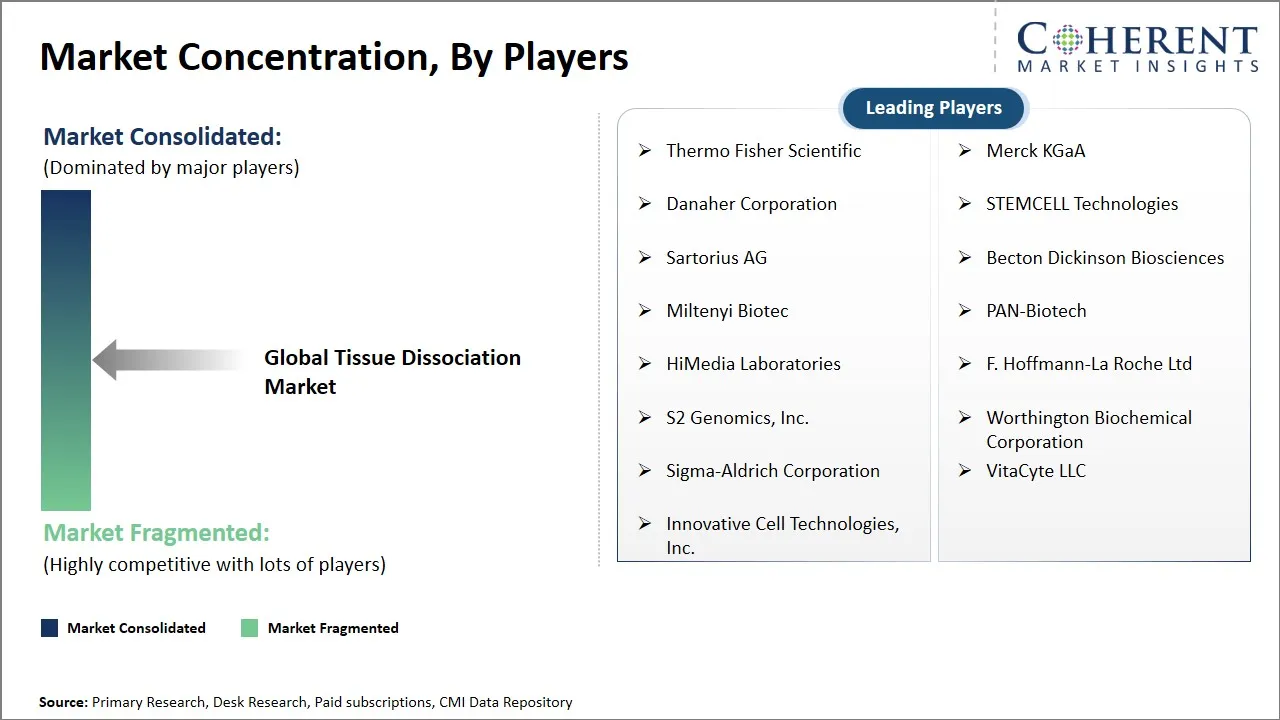
| Companies covered: | Thermo Fisher Scientific, Merck KGaA, Danaher Corporation, STEMCELL Technologies, Sartorius AG, Becton Dickinson Biosciences, Miltenyi Biotec, PAN-Biotech, HiMedia Laboratories, F. Hoffmann-La Roche Ltd, S2 Genomics, Inc., Worthington Biochemical Corporation, Sigma-Aldrich Corporation, VitaCyte LLC, and Innovative Cell Technologies, Inc. | ||
| Growth Drivers: |
| ||
| Restraints & Challenges: |
| ||
Tissue Dissociation Market Dynamics
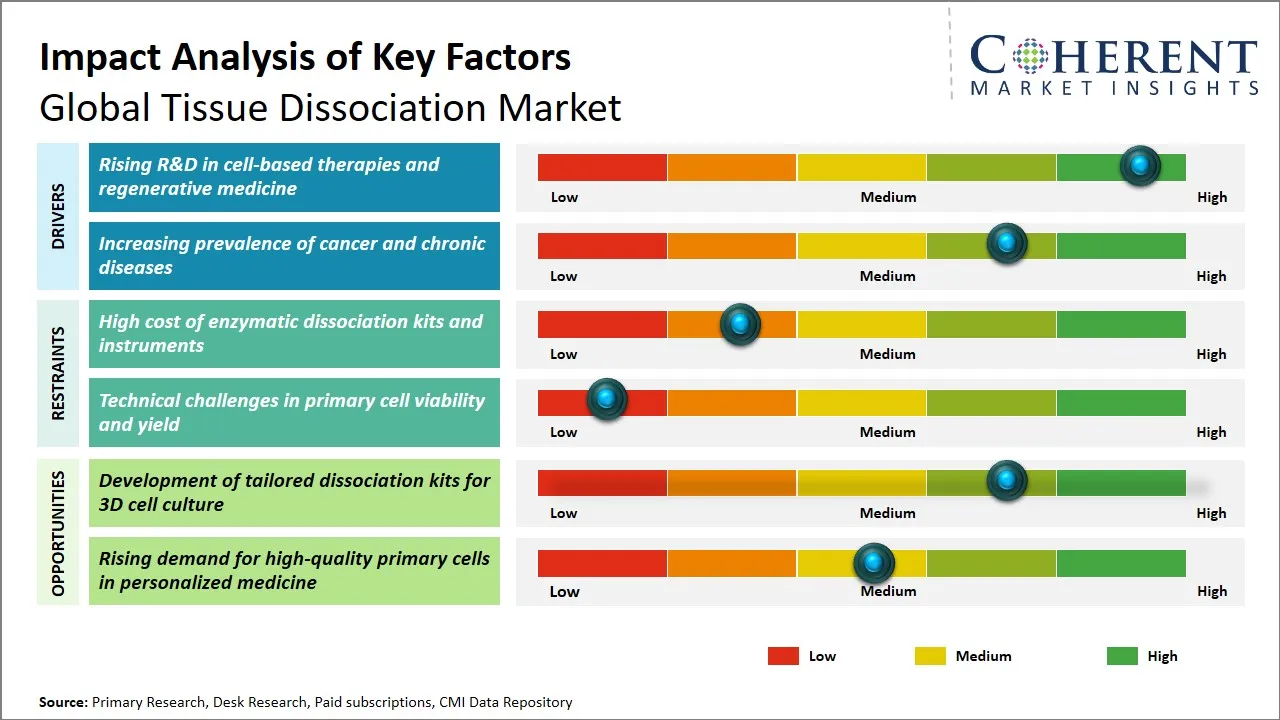
Tissue Dissociation Market Driver - Rising R&D in Cell-Based Therapies and Regenerative Medicine
The increase in investment into research and development that is targeted at cell-based therapies and regenerative medicine is also a major force that is pushing the tissue dissociation market. Due to the growing sophistication of these areas, there is a growing need to identify a way to extract viable single cells out of complex tissues with high precision and efficiency to apply it in downstream research, including stem cell therapy, immunotherapy and tissue engineering. High quality cell populations obtained by means of optimized tissue dissociation processes play a key role in regenerative medicine, which focuses on repairing or replacing damaged tissues and organs. Also, the increasingly close study of personalized medicine methods requires custom isolation methods that preserve cell integrity and function and therefore heightens the use of state of the art dissociation technologies.
In July 2024, Bioserve India, a leading provider of biotechnology solutions, launched advanced stem cell products in India. The products from REPROCELL aim to support innovation in regenerative medicine, drug development, and therapeutic discovery. Key offerings include cell culture media, growth factors, 3D cell culture systems, and drug discovery services. This launch is expected to significantly advance stem cell research and therapy development in India, contributing to healthcare innovations.
Tissue Dissociation Market Opportunity - Development of Tailored Dissociation Kits for 3D Cell Culture
The increased use of three-dimensional (3D) cell culture models in biomedical studies and drug development represents a great potential of the global tissue dissociation market by developing specific dissociation kits targeting specific complex cellular systems. Compared to conventional two-dimensional cultures, three-dimensional cell cultures can better reproduce the in vivo physiological conditions and therefore it needs a special enzymatic and mechanical dissociation solution that keep the cells alive and functional during harvesting. The current dissociation protocols commonly fail to efficiently process 3D spheroids and organoids without damaging cell integrity and there is a need to have optimized dissociation kits that have the ability to service these two types of structures in a unique way.
For example, Tebubio, a leading provider of scientific tools, launched advanced 3D cell culture technologies in collaboration with Apricell Biotechnology and 4Dcell. Apricell’s 3-in-1 Plate hydrogel-based culture inserts integrate spheroid formation, ECM incorporation, and drug testing in one platform. 4Dcell introduced SmartSphero technology, enabling stable and reproducible spheroid positioning for drug testing and organoid formation
Analyst Opinion (Expert Opinion)
- The tissue dissociation market is expanding with the technological improvements in automation and enzymatic procedures enhancing research and clinical utilization in terms of efficiency. This growth is being propelled by growing demand in personalized medicine, oncology, and stem cell research and is much higher in the emerging markets such as the APAC. Market is further sustained by regulatory support to biotechnology and regenerative medicine.
- Nevertheless, such factors as supply chain disruption and the increase in the prices of raw materials can hit the market. There are prospects in the rising demand of automated solutions especially in areas with growing research facilities. The latest advances, including the release of the International Symposium on Stem Cell Research, have played a major role in the development of the tissue dissociation technologies, and the future of the market is likely to be influenced by the government initiatives in the areas of personalized medicine and cancer research.
Speak to the analyst
Want personalized insights?
Take the findings above to one of our principal consultants, or have the report rebuilt around the segments, geographies and competitors you actually track.
Market Segmentation
- Product Insights (Revenue, USD Mn, 2026 - 2033)
- Enzymes and Kits
- Collagenases
- Trypsin
- Elastases
- Papain
- Hyaluronidase
- Other Enzyme Blends and Kits
- Instruments
- Mechanical Dissociators
- Enzymatic Dissociators
- Ultrasound Dissociators
- Other Instruments
- Consumables and Accessories
- Filters and Strainers
- Dissociation Vessels and Tubes
- Other Disposable Accessories
- Enzymes and Kits
- Application Insights (Revenue, USD Mn, 2026 - 2033)
- Cell Isolation
- Drug Discovery and Development
- Tissue Engineering
- Stem Cell Research
- Cancer Research
- Other Biomedical Applications
- Dosage Form Insights (Revenue, USD Mn, 2026 - 2033)
- Parenteral
- Oral
- Topical
- End User Insights (Revenue, USD Mn, 2026 - 2033)
- Pharmaceutical and Biotechnology Companies
- Academic and Research Institutes
- Hospitals and Diagnostic Laboratories
- Contract Research Organizations (CROs)
- Technology Insights (Revenue, USD Mn, 2026 - 2033)
- Manual Tissue Dissociation
- Automated Tissue Dissociation
- Regional Insights (Revenue, USD Mn, 2026 - 2033)
- North America
- U.S.
- Canada
- Latin America
- Brazil
- Argentina
- Mexico
- Rest of Latin America
- Europe
- Germany
- U.K.
- Spain
- France
- Italy
- Russia
- Rest of Europe
- Asia Pacific
- China
- India
- Japan
- Australia
- South Korea
- ASEAN
- Rest of Asia Pacific
- Middle East
- GCC Countries
- Israel
- Rest of Middle East
- Africa
- South Africa
- North Africa
- Central Africa
- North America
- Key Players Insights (Revenue, USD Mn, 2021 - 2033)
- Thermo Fisher Scientific
- Merck KGaA
- Danaher Corporation
- STEMCELL Technologies
- Sartorius AG
- Becton Dickinson Biosciences
- Miltenyi Biotec
- PAN-Biotech
- HiMedia Laboratories
- Hoffmann-La Roche Ltd
- S2 Genomics, Inc.
- Worthington Biochemical Corporation
- Sigma-Aldrich Corporation
- VitaCyte LLC
- Innovative Cell Technologies, Inc.
Sources
Primary Research Interviews
- Industry Stakeholders List
- Biotech Companies
- Medical Device Manufacturers
- End-users List
- Research Institutions
- Hospitals & Clinical Labs
Government and International Databases
- U.S. National Institutes of Health (NIH)
- European Medicines Agency (EMA)
- World Health Organization (WHO)
- Food and Drug Administration (FDA)
- National Cancer Institute (NCI)
- United Nations Health Agency (UNHA)
Trade Publications
- BioTechniques
- The Journal of Tissue Engineering and Regenerative Medicine
- Nature Biotechnology
- Laboratory News
- Cell Stem Cell Journal
- BioScience Technology
Academic Journals
- Journal of Clinical Investigation
- Tissue Engineering Part A
- Biofabrication Journal
- Journal of Biological Chemistry
- Stem Cell Reports
- Regenerative Medicine
Reputable Newspapers
- The New York Times
- The Guardian
- The Wall Street Journal
- Financial Times
- The Washington Post
- Reuters
Industry Associations
- American Association for Cancer Research (AACR)
- American Society of Cell Biology (ASCB)
- International Society for Stem Cell Research (ISSCR)
- European Society for Biomaterials (ESB)
- Biotechnology Innovation Organization (BIO)
- American Society for Biochemistry and Molecular Biology (ASBMB)
Public Domain Resources
- National Institutes of Health (NIH) Public Access Database
- ClinicalTrials.gov
- The Cochrane Library
- OpenAIRE
- World Health Organization (WHO) Global Health Observatory
Proprietary Elements
- CMI Data Analytics Tool: Proprietary analytics tool to analyze real-time market trends, consumer behavior, and technology adoption in market
- Proprietary CMI Existing Repository of Information for Last 8 Years
Get access to 250+ pages report
Every segment, forecast, competitor profile and data table behind the analysis above — available for instant download.
- ESOMAR Member
- ISO 9001:2015 Certified
- D-U-N-S Registered
- GDPR & CCPA Compliant
Missing comfort of reading report in your local language? Find your preferred language:
Transform your Strategy with Exclusive Trending Reports
Frequently Asked Questions
The global tissue dissociation market is estimated to be valued at USD 387.6 Mn in 2026 and is expected to reach USD 704.0 Mn by 2033.
The CAGR of global tissue dissociation market is projected to be 8.9% from 2026 to 2033.
Rising R&D in cell-based therapies and regenerative medicine and increasing prevalence of cancer and chronic diseases are the major factors driving the growth of the global tissue dissociation market.
High cost of enzymatic dissociation kits and instruments and technical challenges in primary cell viability and yield are the major factors hampering the growth of the global tissue dissociation market.
In terms of product, enzymes and kits are estimated to dominate the market revenue share in 2026.
Thermo Fisher Scientific, Merck KGaA, Danaher Corporation, STEMCELL Technologies, Sartorius AG, Becton Dickinson Biosciences, Miltenyi Biotec, PAN-Biotech, HiMedia Laboratories, F. Hoffmann-La Roche Ltd, S2 Genomics, Inc., Worthington Biochemical Corporation, Sigma-Aldrich Corporation, VitaCyte LLC, and Innovative Cell Technologies, Inc. are the major players.
North America is expected to lead the global tissue dissociation market in 2026.