

Cell Separation Market Size and Trends – 2026 - 2033
The global cell separation market is estimated to be valued at USD 10.90 Bn in 2026 and is expected to reach USD 21.22 Bn by 2033, exhibiting a compound annual growth rate (CAGR) of 10.0% from 2026 to 2033.
Key Takeaways of the Cell Separation Market
- By Product Type, the Consumables segment is expected to contribute the highest share of the market with 53.1% in 2026, owing to ongoing technological innovations.
- By Cell Type, the Human Cells segment is expected to contribute the highest share of the market with 50.1% in 2026, driven by growing clinical importance.
- By Cell Source, the Adipose Tissue segment is expected to contribute the highest share with 36.2% in 2026, driven by its rising relevance as an accessible and abundant source.
- By Technique, Centrifugation sector is projected to hold highest share during the forecast period.
- Based on Application, Biomolecule Isolation division to command lion’s share in the global market.
- On the basis of End User, Pharmaceutical & Biotechnology companies are poised to lead the market in 2026.
- North America is expected to top the global market with 32.3% share, followed by Asia Pacific with 25.4% share in 2026.
Market Overview
The demand for cell separation technologies is driven by factors such as the rising incidence of chronic and infectious diseases, along with the growing popularity of regenerative medicine and stem cell research. Additionally, increasing venture capital investments, government funding for cell-based research, and ongoing technological advancements further support this demand. Rising focus on the development of point-of-care devices for cell separation is also a major opportunity. The growing stem cell banking industry is another positive factor. However, high cost of cell separation instruments and lack of infrastructure for stem cell banking in developing nations limits market expansion to some extent.
Current Events and Its Impact
Current Event | Description and its Impact |
Artificial Intelligence and Machine Learning Integration in Cell Analysis |
|
Global Regulatory Framework Evolution for Cell Therapies |
|
End User Feedback and Unmet Needs – Cell Separation Market
End-User Feedback
- High Costs of Equipment and Consumables: Flow cytometry and magnetic-activated cell sorting (MACS) are examples of advanced cell separation technologies that need a lot of money to set up.
- Technical Complexity and Lack of Standardization: The complexity of cell isolation techniques, which require specific reagents and protocols, makes it hard to get results that are consistent and can be repeated.
- Lack of Skilled Workers: Advanced cell separation systems need workers who have a lot of training. The adoption of these technologies is slowed down by the fact that there aren't enough skilled specialists who can use advanced equipment and understand complicated data.
Unmet Needs
- Affordable and Accessible Technologies: More and more people want cell separation solutions that are cheap and easy to use without sacrificing performance.
- Making protocols and reagents the same: Making protocols and reagents the same can make cell separation techniques more reliable and reproducible in different labs and clinical settings.
- Training and Skill Development: Putting money into training programs and educational resources can help with the lack of skilled workers. Giving researchers and doctors the skills they need to use advanced cell separation technologies will make it easier for them to adopt and use them correctly.
- Current Industry Events of 2026
- Market Size Estimation
- Regional Breakdown
- Competitive Landscape
- Customer Intelligence
- Segmental Analysis
- Pricing Analysis
- Key Market Drivers, Challenges & Future Trends
- Customized Insights Section
Segmental Insights
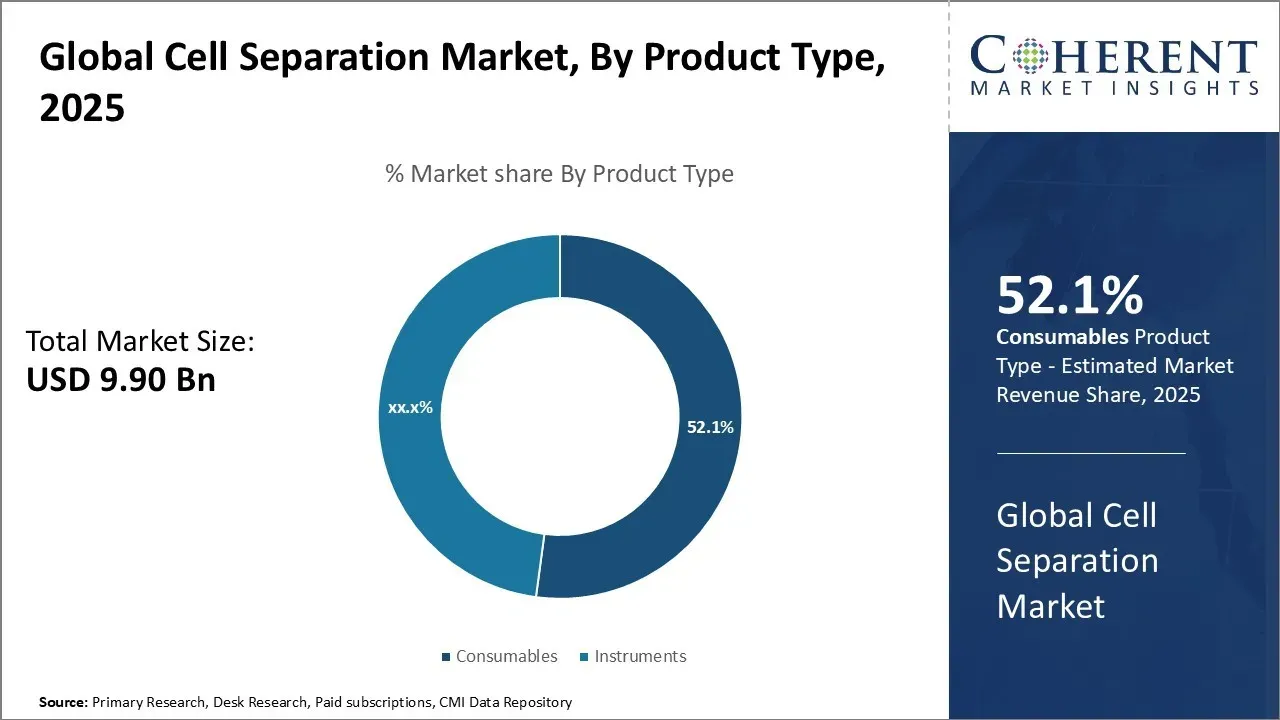
Cell Separation Market Insights, by Product Type - Technological Advancements Fuel Consumables Demand
In terms of product type, the consumables segment is expected to contribute the highest share of the market with 53.1% in 2026 owing to ongoing technological innovations. Consumables such as kits, reagents, beads, and media have become indispensable for cell separation procedures due to continuous upgrades in materials and formulations.
Advanced biomaterials now allow for improved cell viability and purity compared to earlier generations. Magnetic microbeads coated with antibodies or other ligands are now available in an array of newer compositions and configurations optimized for emerging separation techniques.
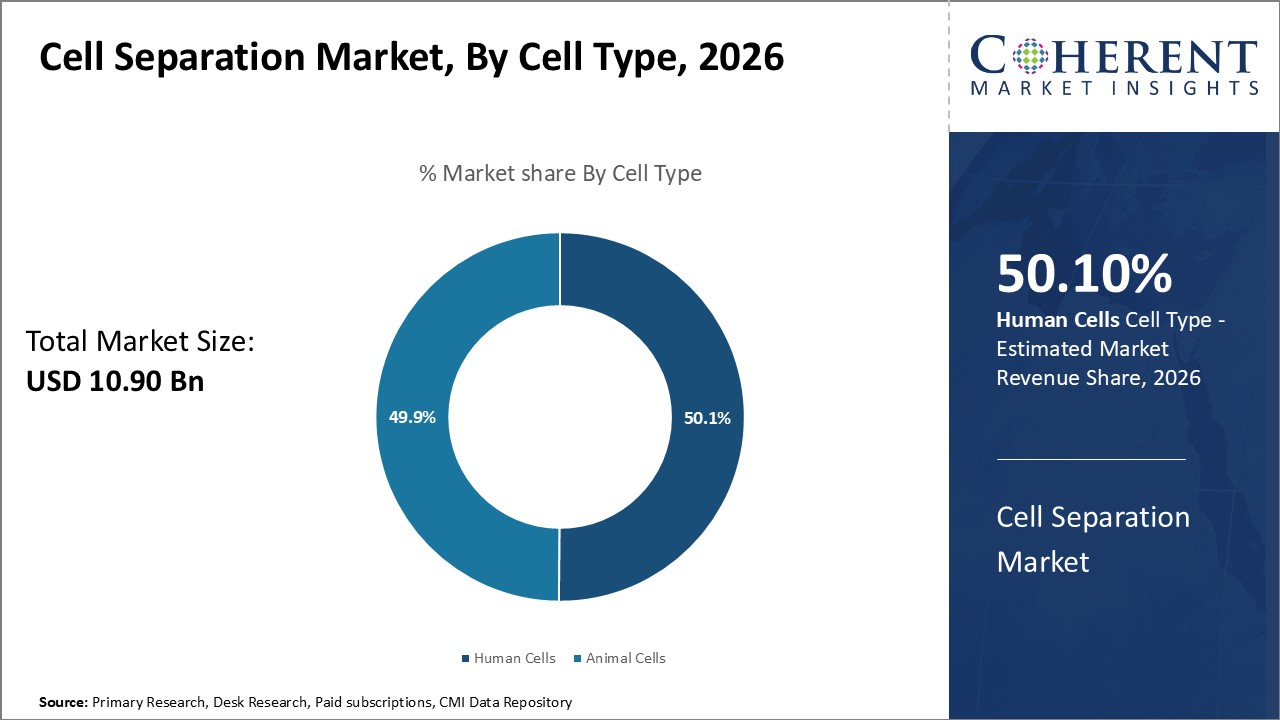
Cell Separation Market Insights, by Cell Type - Rising Clinical Applications Propel the Human Cells Segment
In terms of cell type, the human cells segment is expected to contribute the highest share of the market with 50.1% in 2026 driven by growing clinical importance. Isolation of specific human cell populations finds widespread application across major therapeutic areas. Stem cell therapies rely on purified stem cells as a source material and their separation is a critical pretreatment step.
Cord blood banking proliferates amidst rising demand for hematopoietic stem cell transplants. Cell-based therapy developers engaged in developing allogenic solutions mass-produce defined adult cell types. Researchers explore new functions of rare cell subsets in various disease contexts.
For instance, in November 2024, Akadeum Life Sciences, a leader in buoyancy-based cell separation technology, expanded its product portfolio with a new human B cell isolation kit and updated protocols for existing isolation kits. Unveiled at the 105th American Association of Immunologists annual meeting, the new products leverage Akadeum’s microbubble-based Buoyancy-Activated Cell Sorting (BACS) technology, which eliminates the need for columns or magnets, offering higher yields, faster processing, and simpler workflows.
Cell Separation Market Insights, by Cell Source - Adipose Tissue Emerges as a Viable Source for Multiple Applications
In terms of cell source, the adipose tissue is expected to contribute the highest share with 36.2% in 2026 driven by its rising relevance as an accessible and abundant source. While bone marrow and cord blood remain important conventional sources, increasing exploration of adipose tissue holds strong promise.
Being more abundant and easier to obtain compared to other tissues via minimally invasive procedures, adipose serves as an ethical and painless alternate. It yields a high number of multipotent stem cells per gram of tissue collected which translates to efficient processing. Adipose tissue-derived stem cells (ADSCs) demonstrate plasticity and differentiation ability resembling their bone marrow-derived counterparts in preclinical research settings.
Cell Separation Market Insights, by Technique - Cost-effectiveness, and Versatility Fuel Consumables Demand
In terms of technique, the centrifugation is expected to contribute the highest share during the forecast period. This is largely due to its established effectiveness, cost-efficiency, and adaptability in isolating various cell types based on density differences. Centrifugation remains a fundamental method widely used across research laboratories, clinical diagnostics, and biopharmaceutical manufacturing. Its scalability and compatibility with a broad range of sample types further reinforce its leading position.
Cell Separation Market Insights, by Application - Increasing Demand for Purified Biomolecules Fuel Demand
In terms of application, the biomolecule isolation is expected to contribute the highest share during the forecast period. This growth is driven by the increasing demand for purified biomolecules such as proteins, nucleic acids, and enzymes in research, diagnostics, and therapeutic development. Biomolecule isolation plays a crucial role in drug discovery, personalized medicine, and biopharmaceutical manufacturing, where high purity and specificity are essential.
Cell Separation Market Insights, by End User – Growing Usage in Drug Discovery Fuel Demand
In terms of end user, the pharmaceutical & biotechnology companies are expected to contribute the highest share during the forecast period. This dominance is attributed to the increasing use of cell separation technologies in drug discovery, development of biologics, and cell-based therapies. These companies require precise and efficient cell isolation methods for applications such as target identification, biomarker discovery, and quality control in manufacturing processes.
For instance, in January 2026, SGS has announced the launch of Germany’s first commercial cell sorting service via fluorescent-activated cell sorting (FACS) for the biopharmaceutical industry.
Regional Insights
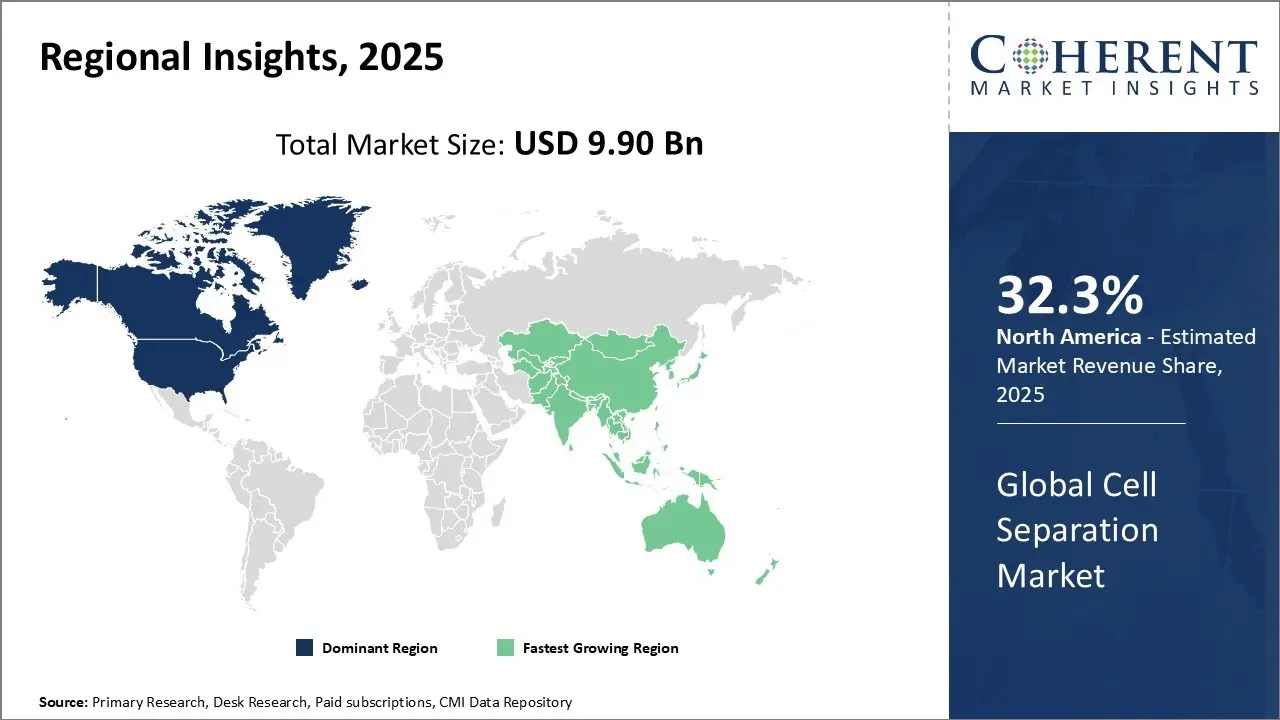
North America Cell Separation Market Trends
North America’s dominance in the cell separation market with a share of 32.3% in 2026 can be attributed to robust research funding and the presence of leading life sciences companies in the region. The U.S. and Canada house premier research institutes and top-notch pharmaceutical and biotechnology players focusing on developing advanced cell-based therapies and diagnostic methods.
Furthermore, favorable reimbursement policies and growing awareness about personalized medicine have propelled cell separation procedures in the healthcare vertical.
Asia Pacific Cell Separation Market Trends
The Asia Pacific region exhibits the fastest growth with a share of 25.4% in 2026, driven by increasing healthcare expenditure, expanding patient pool, and improving diagnostic and research infrastructure across major economies.
China, India, Japan, and South Korea have emerged as lucrative markets due to rising investments in cell-based research by both public and private sectors. The governments are offering regulatory and financial support to develop indigenous capabilities in this field.
Cell Separation Market Outlook for Key Countries
U.S. Cell Separation Market Trends
The increasing prevalence of chronic diseases is driving the demand for diagnostic solutions and research applications. As chronic conditions rise, the need for precise cell separation technologies grows.
Germany Cell Separation Market Trends
Germany is a leader in the cell separation market, supported by strong healthcare infrastructure and R&D. In May 2024, Merck KGaA, a leading science and technology company in Germany, announced a partnership with the Korea Advanced Institute of Science and Technology (KAIST) to advance cell separation technologies, highlighting the country's commitment to innovation.
China Cell Separation Market Trends
China cell separation market is expanding rapidly due to increasing healthcare expenditure and government support for biotechnology. In June 2026, Korean regenerative medicine company CGBio, affiliated with Daewoong Pharmaceutical, announced the establishment of Sol Cent Bio Co. Ltd., a joint venture with Chinese orthopedic device maker Shanghai Sanyou Medical, marking its full-scale entry into the Chinese regenerative medicine market. The joint venture between these companies will produce stem cell separation systems and other regenerative tools.
India Cell Separation Market Trends
India cell separation market is gaining traction, driven by increasing research activities in biotechnology. In September 2024, the Indian government launched a new program like global bio-India 2024 initiative to support startups in the biotechnology sector, including those focused on cell separation technologies. This initiative aims to foster innovation and enhance the country's capabilities in cell-based therapies.
Market Players, Key Development, and Competitive Intelligence
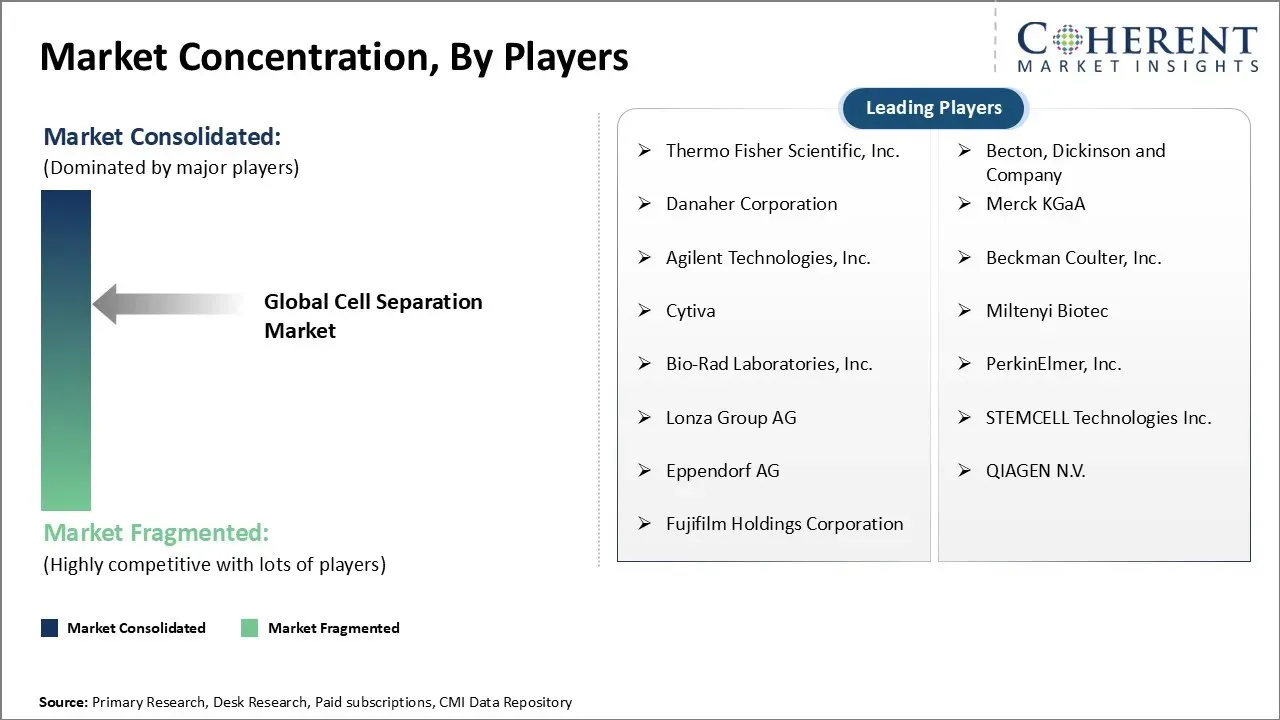
Key Developments
- In July 2024, STEMCELL Technologies launched the CellPore™ Transfection System, providing a groundbreaking new technology with the potential to advance cell engineering research and the development of novel cell therapies to cure diseases.
- In April 2024, GenScript, a life sciences company, and Multiply Labs, a company in robotics, announced a strategic partnership to automate the cell isolation phase of cell therapy manufacturing. This collaboration aims to streamline the labor-intensive process of isolating cells using immunomagnetic beads, which currently involves manual handling of complex closed-system consumables, ensuring greater efficiency and precision.
Market Report Scope
Cell Separation Market Report Coverage
| Report Coverage | Details | ||
|---|---|---|---|
| Base Year: | 2025 | Market Size in 2026: | USD 10.90 Bn |
| Historical Data for: | 2020 To 2024 | Forecast Period: | 2026 To 2033 |
| Forecast Period 2026 to 2033 CAGR: | 10.0% | 2033 Value Projection: | USD 21.22 Bn |
| Geographies covered: |
| ||
| Segments covered: |
| ||
| Companies covered: | Thermo Fisher Scientific, Inc., Becton, Dickinson and Company, Danaher Corporation, Merck KGaA, Agilent Technologies, Inc., Beckman Coulter, Inc., Cytiva, Miltenyi Biotec, Bio-Rad Laboratories, Inc., PerkinElmer, Inc., Lonza Group AG, STEMCELL Technologies Inc., Eppendorf AG, QIAGEN N.V., and Fujifilm Holdings Corporation | ||
| Growth Drivers: |
| ||
| Restraints & Challenges: |
| ||
Market Dynamics
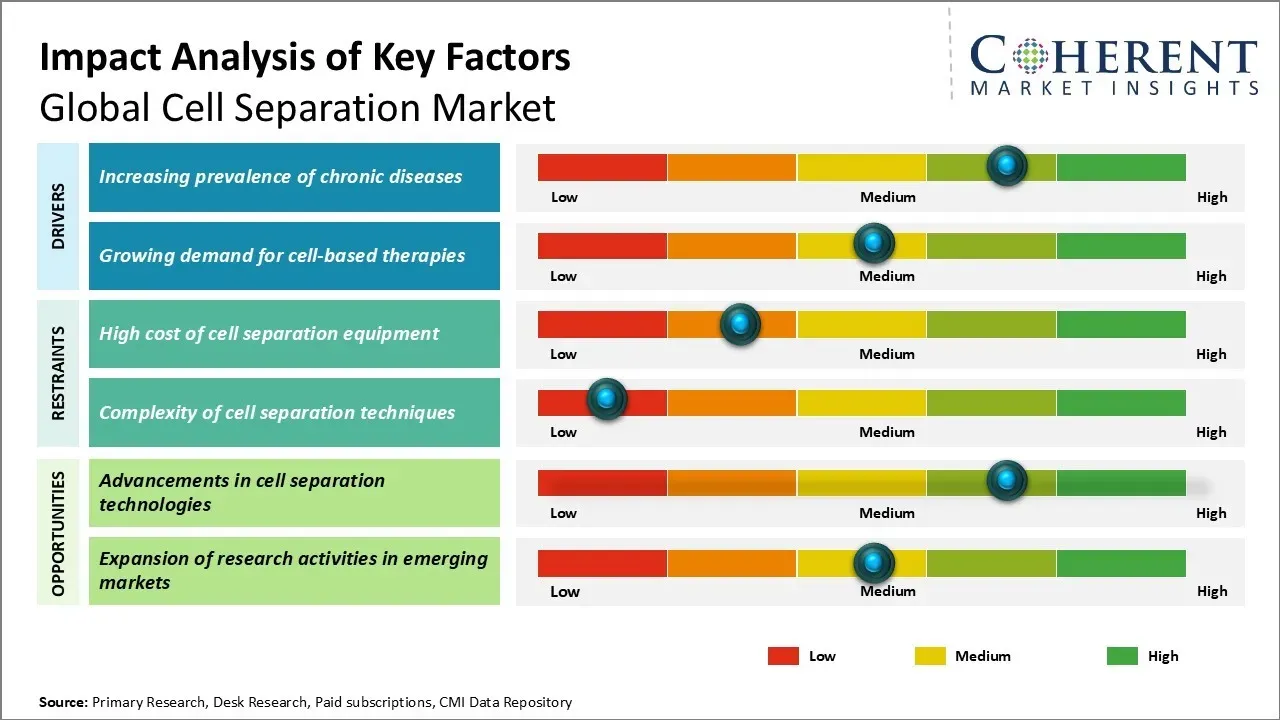
Market Driver - Increasing prevalence of chronic diseases
The global prevalence of chronic diseases has been steadily rising over the past few decades. Chronic conditions such as cancer, diabetes, cardiovascular diseases, and autoimmune disorders are becoming more widespread. Cancer remains one of the leading causes of mortality worldwide and is responsible for millions of new cases and deaths each year.
The increasing incidence of various cancers can majorly be attributed to factors such as changing lifestyle habits, growing environmental pollution levels, and prolonged lifespan. Cancer research activities have accelerated in recent times to develop more effective treatment approaches to better target and destroy cancer cells.
For example, a WHO report from February 2024 stated that there were 20 million new cases of cancer, 9.7 million deaths, and 53.5 million survivors around the world. The most common types of cancer were lung, breast, and colorectal cancers. Lung cancer caused the most cases and deaths, while breast cancer was the most common and deadly for women. A WHO survey found that only 39% of countries offer basic cancer services and 28% offer full palliative care.
Market Opportunity - Advancements in cell separation technologies
The global cell separation market is poised to gain significantly from ongoing advancements in cell separation technologies. Heavy investments by major players in development of novel technologies such as microfluidic-based cell separation, acoustic separation, and deterministic lateral displacement are expanding applications of cell separation. For instance, microfluidic lab-on-a-chip devices allow high resolution separation of rare tumor cells from blood with minimal sample volume requirements.
Analyst Opinion (Expert Opinion)
- Driven by rising stem cell research activities and increasing prevalence of chronic diseases, demand for cell separation technologies is expected to grow substantially. Advancements in life sciences will also support cell separation market growth.
- North America currently dominates the market owing to increasing R&D investments and expanding biotechnology industry in the U.S. and Canada. However, Asia Pacific is likely to emerge as the fastest growing region with China and India predicted to offer high opportunities. This can be attributed to rising healthcare expenditure, growing biotech research in these nations and strengthening economic conditions.
- On the technology front, microbioreactor systems and microfluidics techniques are gaining more attention of researchers and pharma companies. Their abilities to automate separation process at a very small scale make them an ideal solution. Rising uptake of these techniques will offer new avenues to key market players, high capital requirements for setup and maintenance of cell separation instruments may restrict market growth to some extent.
- Rapid clinical translation of cell-based therapies and growing adoption rate of advanced separation tools like fluorescence-activated cell sorting will revolutionize the market in coming years. With a wide array of medical and research applications, cell separation demand is anticipated to increase manifold through 2027.
Speak to the analyst
Want personalized insights?
Take the findings above to one of our principal consultants, or have the report rebuilt around the segments, geographies and competitors you actually track.
Market Segmentation
- By Product Type Insights (Revenue, USD Bn, 2021 - 2033)
- Consumables
- Instruments
- By Cell Type Insights (Revenue, USD Bn, 2021 - 2033)
- Human Cells
- Animal Cells
- By Cell Source Insights (Revenue, USD Bn, 2021 - 2033)
- Adipose Tissue
- Bone Marrow
- Cord Blood/Embryonic Stem Cells
- Other Cell Source
- By Technique Insights (Revenue, USD Bn, 2021 - 2033)
- Centrifugation
- Surface Marker-Based Separation
- Filtration
- By Application Insights (Revenue, USD Bn, 2021 - 2033)
- Biomolecule Isolation
- Cancer Research
- Stem Cell Research
- Tissue Regeneration
- In Vitro Diagnostics
- Cell & Gene Therapies
- By End User Insights (Revenue, USD Bn, 2021 - 2033)
- Pharmaceutical & Biotechnology Companies
- Academic & Research Institutes
- Hospitals & Diagnostic Laboratories
- Cell Banks
- Regional Insights (Revenue, USD Bn, 2021 - 2033)
- North America
- U.S.
- Canada
- Latin America
- Brazil
- Argentina
- Mexico
- Rest of Latin America
- Europe
- Germany
- U.K.
- Spain
- France
- Italy
- Russia
- Rest of Europe
- Asia Pacific
- China
- India
- Japan
- Australia
- South Korea
- ASEAN
- Rest of Asia Pacific
- Middle East
- GCC Countries
- Israel
- Rest of Middle East
- Africa
- South Africa
- North Africa
- Central Africa
- Key Players Insights
- Thermo Fisher Scientific, Inc.
- Becton, Dickinson and Company
- Danaher Corporation
- Merck KGaA
- Agilent Technologies, Inc.
- Beckman Coulter, Inc.
- Cytiva
- Miltenyi Biotec
- Bio-Rad Laboratories, Inc.
- PerkinElmer, Inc.
- Lonza Group AG
- STEMCELL Technologies Inc.
- Eppendorf AG
- QIAGEN N.V.
- Fujifilm Holdings Corporation
Source
Primary Research Interviews
- Cell separation technology manufacturers and suppliers
- Biotechnology and pharmaceutical companies
- Research institutes and academic laboratories
- Clinical diagnostics laboratories
- Others
Databases
- Scopus
- Web of Science
- BioWorld Intelligence Database
- Others
Magazines
- BioTechniques
- Nature Biotechnology
- Bio-IT World
- Laboratory Equipment
- Others
Journals
- Cytometry Part A
- Journal of Chromatography B
- Analytical and Bioanalytical Chemistry
- Others
Newspapers
- The Wall Street Journal
- Financial Times
- Reuters Health News
- BioPharma Dive
- FierceBiotech
- Others
Associations
- International Society for Advancement of Cytometry (ISAC)
- Association of Biomolecular Resource Facilities (ABRF)
- American Association for Clinical Chemistry (AACC)
- European Federation of Biotechnology (EFB)
- Others
Public Domain Sources
- U.S. Food and Drug Administration (FDA)
- European Medicines Agency (EMA)
- National Institutes of Health (NIH)
- World Health Organization (WHO)
- Others
Proprietary Elements
- CMI Data Analytics Tool
- Proprietary CMI Existing Repository of information for last 8 years
Get access to 250+ pages report
Every segment, forecast, competitor profile and data table behind the analysis above — available for instant download.
- ESOMAR Member
- ISO 9001:2015 Certified
- D-U-N-S Registered
- GDPR & CCPA Compliant
Missing comfort of reading report in your local language? Find your preferred language:
Transform your Strategy with Exclusive Trending Reports
Frequently Asked Questions
The global cell separation market is estimated to be valued at USD 9.90 Bn in 2025 and is expected to reach USD 19.11 Bn by 2032.
The CAGR of the global cell separation market is projected to be 9.8% from 2025 to 2032.
Increasing prevalence of chronic diseases and growing demand for cell-based therapies are the major factor driving the growth of the global cell separation market.
High cost of cell separation equipment and complexity of cell separation techniques are the major factor hampering the growth of the global cell separation market.
In terms of product type, the consumables segment is estimated to dominate the market revenue share in 2025.
Thermo Fisher Scientific, Inc., Becton, Dickinson and Company, Danaher Corporation, Merck KGaA, Agilent Technologies, Inc., Beckman Coulter, Inc., Cytiva, Miltenyi Biotec, Bio-Rad Laboratories, Inc., PerkinElmer, Inc., Lonza Group AG, STEMCELL Technologies Inc., Eppendorf AG, QIAGEN N.V., and Fujifilm Holdings Corporation are the major players.
North America is expected to lead the global cell separation market in 2025.