

U.S. Acellular Dermal Matrices Market Size and Forecast — 2026-2033
U.S. Acellular Dermal Matrices Market is estimated to be valued at USD 3.44 Bn in 2026 and is expected to reach USD 7.14 Bn in 2033, exhibiting a compound annual growth rate (CAGR) of 11.0% from 2026 to 2033.
Analysts’ Views on the U.S. Acellular Dermal Matrices Market:
Increasing research and development (R&D) activities by the key market players is expected to drive the growth of the U.S. acellular dermal matrices market over the forecast period. For instance, in April 2022, Memorial Sloan Kettering Cancer Center, a cancer treatment and research institution based in New York, U.S., initiated a clinical trial titled “A Randomized Controlled Trial of Prepectoral Breast Reconstruction With and Without Acellular Dermal Matrix”. The study is currently in phase 3 which is estimated to get completed in March 2026.
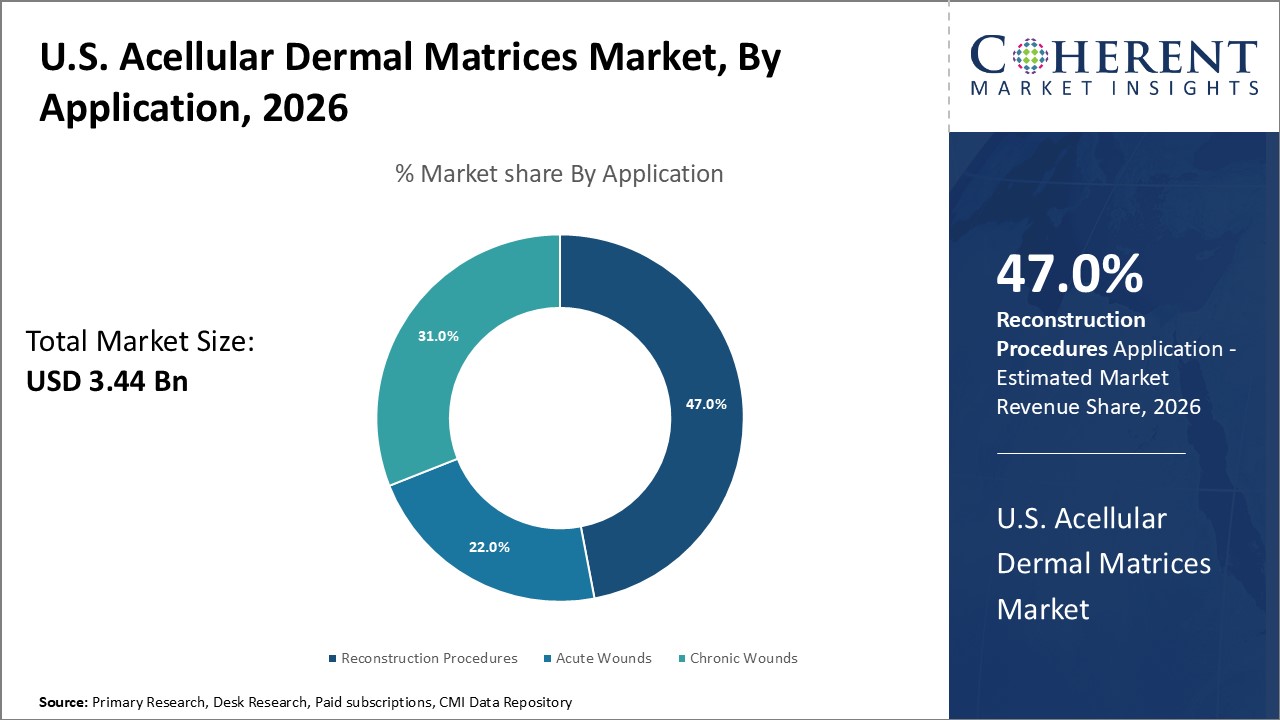
Figure 1. U.S. Acellular Dermal Matrices Market Share (%), By Application, 2026
U.S. Acellular Dermal Matrices Market - Drivers
- Increasing number of surgeries: Increasing number of surgeries performed is expected to drive the growth of the U.S. acellular dermal matrices market over the forecast period. For instance, on September 21, 2023, according to data published by Cleveland Clinic, more than 1 million hernia surgeries are performed in the U.S. annually.
- Increasing adoption of organic growth strategies such as product launch: Increasing adoption of organic growth strategies such as product launch by the key market players is expected to drive the growth of the U.S. acellular dermal matrices market over the forecast period. For instance, in November 2021, Sanara MedTech Inc., a provider of products and technologies for surgical and chronic wound care dedicated in improving patient outcomes, launched two new innovative extracellular matrix products named- FORTIFY TRGT and FORTIFY FLOWABLE. FORTIFY FLOWABLE Extracellular Matrix is an advanced wound care device that presents the SIS ECM technology in a way that can fill irregular wound shapes and depths.
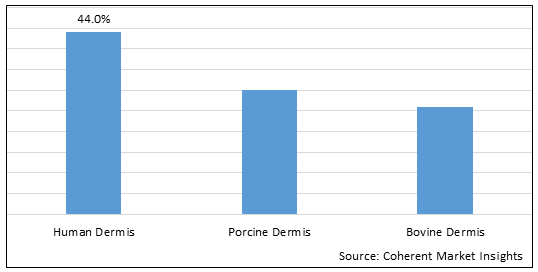
Figure 2. U.S. Acellular Dermal Matrices Market Share (%), By Origin, 2026
U.S.
It affected specialized medical services in unprecedented ways. Surgical decision making which is always regarded as the most important aspect of care undertook an added layer of complexity in the face of the
- Current Industry Events of 2026
- Market Size Estimation
- Regional Breakdown
- Competitive Landscape
- Customer Intelligence
- Segmental Analysis
- Pricing Analysis
- Key Market Drivers, Challenges & Future Trends
- Customized Insights Section
U.S. Acellular Dermal Matrices Market Report Coverage`
| Report Coverage | Details | ||
|---|---|---|---|
| Base Year: | 2025 | Market Size in 2026: | USD 3.44 Bn |
| Historical Data for: | 2020 To 2024 | Forecast Period: | 2026 To 2033 |
| Forecast Period 2026 to 2033 CAGR: | 11.0% | 2033 Value Projection: | USD 7.14 Bn |
| Geographies covered: |
| ||
| Segments covered: |
| ||
| Companies covered: | Integra LifeSciences Corporation, AbbVie Inc., Johnson & Johnson, HansBioMed, Becton, Dickinson and Company, Cook Group, Smith & Nephew Plc., Reprise Biomedical, Organogenesis Holdings Inc., Tissue Regenix, LifeNet Health, Zimmer Biomet Holdings, Inc., Stryker Corporation, MiMedx Group, PolyNovo Limited, Fidia Pharma USA Inc., Baxter International Inc., In2Bones Global, AlloSource | ||
| Growth Drivers: |
| ||
| Restraints & Challenges: |
| ||
U.S. Acellular Dermal Matrices Market Segmentation:
U.S. acellular dermal matrices market is segmented into origin, application, place of setting, and region.
- By origin, the market is segmented into human dermis, porcine dermis, and bovine dermis. Out of which, the human dermis segment is expected to hold a dominant position in the U.S. acellular dermal matrices market during the forecast period. Human dermis is preferred by surgeons and patients as it minimizes the risk of rejection or allergic reaction. As the material is sourced from human tissue, it is less likely to trigger an immune response in the recipient's body compared to porcine or bovine tissues. This reduces complications and allows for faster healing times.
- By application, the market is segmented into [acute wounds (burns, trauma, cancers, and infections), chronic wounds (diabetic foot ulcers, venous leg ulcers, pressure ulcer, and others), and reconstruction procedures (abdominal wall procedures, breast procedures, orthopedic procedures, and others]. Out of which, the reconstruction procedures segment is expected to dominate the market over the forecast period, due to the increasing number of reconstruction procedures performed in the U.S. For instance, in October 2022, according to data published by Yale Medicine, in 2020, nearly 138,000 breast reconstructions were done in the U.S. among women who needed a mastectomy to either eliminate an active breast cancer or prevent it from occurring.
- By place of setting , the market is segmented into hospitals, ambulatory surgical centers, and office based. Out of which, the hospitals segment is expected to dominate the market over the forecast period, due to increasing adoption of organic growth strategies such as launch of new hospitals in the U.S. For instance, in January 2020, Hospital for Special Surgery, a medical center focused on musculoskeletal health, launched a new hospital in Florida, U.S.
U.S. Acellular Dermal Matrices Market: Key Developments
- In August 2021, Allosource, a company that manufactures fresh cartilage tissue for joint repair and skin allografts to heal severe burn, launched AlloMend Ultra-Thick Acellular Dermal Matrix (ADM). The product was designed for use in the repair or replacement of damaged or inadequate tissue required in demanding procedures, such as superior capsule reconstruction (SCR).
- In March 2022, Smith&Nephew, the global medical technology business, announced the publication of a peer-reviewed study in the Advances in Wound Care Journal, providing results for Medicare patients with diabetic foot ulcers (DFUs) demonstrating that, in comparison to leading cellular therapies, GRAFIX Cryopreserved Placental Membrane lowered DFU recurrence rates in half.
- On March 28, 2023, Bimini Health Tech, a global provider in the breast reconstruction and regenerative product and therapy announced that it acquired the exclusive rights of Acellular Dermal Matrix (“ADM”) technology for use in plastic and reconstructive surgery field. By acquiring the exclusive license for this technology, Bimini Health Tech will be able to leverage its existing infrastructure and expertise of the important technology to a wider patient population with an estimated U.S. market.
U.S. Acellular Dermal Matrices Market: Trends
Increasing adoption of inorganic growth strategies such as agreement: Increasing adoption of inorganic growth strategies, such as agreements, by the key market players is expected to drive the growth of the U.S acellular dermal matrices market over the forecast period. For instance, on March 22, 2023, Aziyo Biologics, Inc, a company that develops and commercializes biologic products to improve compatibility between medical devices and the patients who need them, and Sientra, Inc., a medical aesthetics company focusing on plastic surgery, announced that they have entered into an agreement to expand the distribution of Aziyo’s SimpliDerm product line. Under the agreement terms, Aziyo Biologics, Inc will grant Sientra, Inc., certain non-exclusive rights in the U.S. to market, sell, and distribute Aziyo’s SimpliDerm for selective use in reconstruction surgery. SimpliDerm is a pre-hydrated human acellular dermal matrix (hADM) that uses a proprietary process to preserve key growth factors of native dermis that supports faster integration and more rapid revascularization while demonstrating a lower risk of inflammatory response.
U.S. Acellular Dermal Matrices Market: Restraint
- Complications of acellular dermal matrices in breast surgery: Complications of acellular dermal matrices in breast surgery and plastic surgery are expected to hamper the growth of the U.S. acellular dermal matrices market. For instance, in December 2021, according to data published, by National Library of Medicine, seroma, infection, mastectomy skin necrosis, and expander/implant loss were the most commonly reported complications with acellular dermal matrices. The most common complication found was necrosis/impaired healing.
- Counterbalance: The key market players must focus in adopting launching of products which would not involve any sort of complications.
U.S. Acellular Dermal Matrices Market - Key Players
The major players operating in the U.S. acellular dermal matrices market includes Integra LifeSciences Corporation, AbbVie Inc., Johnson & Johnson, HansBioMed, Becton, Dickinson and Company, Cook Group, Smith & Nephew Plc., Reprise Biomedical, Organogenesis Holdings Inc., Tissue Regenix, LifeNet Health, Zimmer Biomet Holdings, Inc., Stryker Corporation, MiMedx Group, PolyNovo Limited, Fidia Pharma USA Inc., Baxter International Inc., In2Bones Global, and AlloSource.
Sources
Primary Research Interviews:
- Plastic and reconstructive surgeons performing breast and abdominal reconstruction
- Wound care specialists at U.S. hospitals
- Tissue bank operators
- Product managers at ADM manufacturers
Databases:
- iData Research (wound management & soft tissue repair)
- GlobalData Medical Devices
- Definitive Healthcare
- IQVIA hospital procurement
Magazines:
- Plastic Surgery News
- Wound Source / Today's Wound Clinic
- Outpatient Surgery Magazine
- Becker's ASC Review
Journals:
- Plastic and Reconstructive Surgery
- Annals of Plastic Surgery
- Journal of Wound Care
- Tissue Engineering Part B: Reviews
Newspapers:
- The Wall Street Journal
- Reuters
- The New York Times
- Financial Times
Associations:
- American Society of Plastic Surgeons (ASPS)
- American Association of Tissue Banks (AATB)
- Wound, Ostomy and Continence Nurses Society (WOCN)
- American College of Surgeons (ACS)
Public Domain Sources:
- U.S. FDA 510(k) and PMA databases
- SEC filings (Allergan/AbbVie, Integra LifeSciences, MTF Biologics)
- CMS HCPCS Q-code reimbursement data
- ClinicalTrials.gov
Proprietary Elements
- CMI Data Analytics Tool, Proprietary CMI Existing Repository of information for last 10 years.
Definition: Acellular dermal matrix (ADM) is a soft connective tissue graft generated by a decellularization process that preserves the intact extracellular skin matrix. Upon implantation, this structure serves as a scaffold for donor-side cells to facilitate subsequent incorporation and revascularization.
Get access to 250+ pages report
Every segment, forecast, competitor profile and data table behind the analysis above — available for instant download.
- ESOMAR Member
- ISO 9001:2015 Certified
- D-U-N-S Registered
- GDPR & CCPA Compliant
Missing comfort of reading report in your local language? Find your preferred language:
Transform your Strategy with Exclusive Trending Reports
Frequently Asked Questions
The U.S. Acellular Dermal Matrices Market is estimated to be valued at USD 3.44 Bn in 2026, and is expected to reach USD 7.14 Bn by 2033.
The CAGR of the U.S. Acellular Dermal Matrices Market is projected to be 11.0% from 2026 to 2033.
Increasing number of surgeries and increasing adoption of organic growth strategies such as product launch are expected to drive the U.S. acellular dermal matrices market growth.
Reconstruction procedures is the leading application segment in the U.S. acellular dermal matrices market.
Complications of acellular dermal matrices in breast surgery is expected to hinder the U.S. acellular dermal matrices market over the forecast period.
The major players operating in the U.S. acellular dermal matrices market are Integra LifeSciences Corporation, AbbVie Inc., Johnson & Johnson, HansBioMed, Becton, Dickinson and Company, Cook Group, Smith & Nephew Plc., Reprise Biomedical, Organogenesis Holdings Inc., Tissue Regenix, LifeNet Health, Zimmer Biomet Holdings, Inc., Stryker Corporation, MiMedx Group, PolyNovo Limited, Fidia Pharma USA Inc., Baxter International Inc., In2Bones Global, and AlloSource.