

Tissue Banking Market Size and Trends - 2026 to 2033
The Tissue Banking Market is estimated to be valued at USD 8.45 Bn in 2026 and is expected to reach USD 15.00 Bn by 2033, growing at a compound annual growth rate (CAGR) of 7.5% from 2026 to 2033.
Key Takeaways
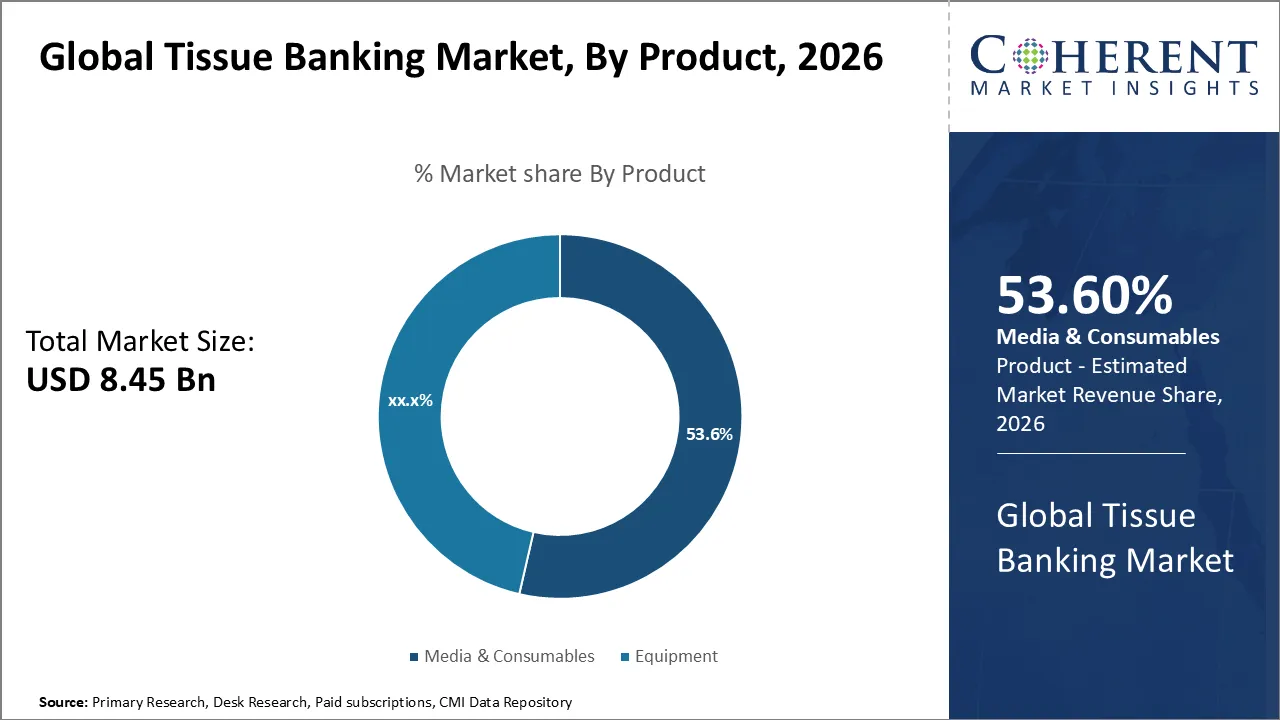
- Based on Product, the Media and Consumables segment is expected to lead the market with 53.60% share in 2026, due to increasing adoption of advanced tissue banking equipment and integration of automation technologies in biobanks.
- Based on Tissue Type, the Bone segment is expected to lead the market with 27.90% share in 2026, due to high demand in orthopaedic surgeries, trauma repair, and integration with reconstructive procedures.
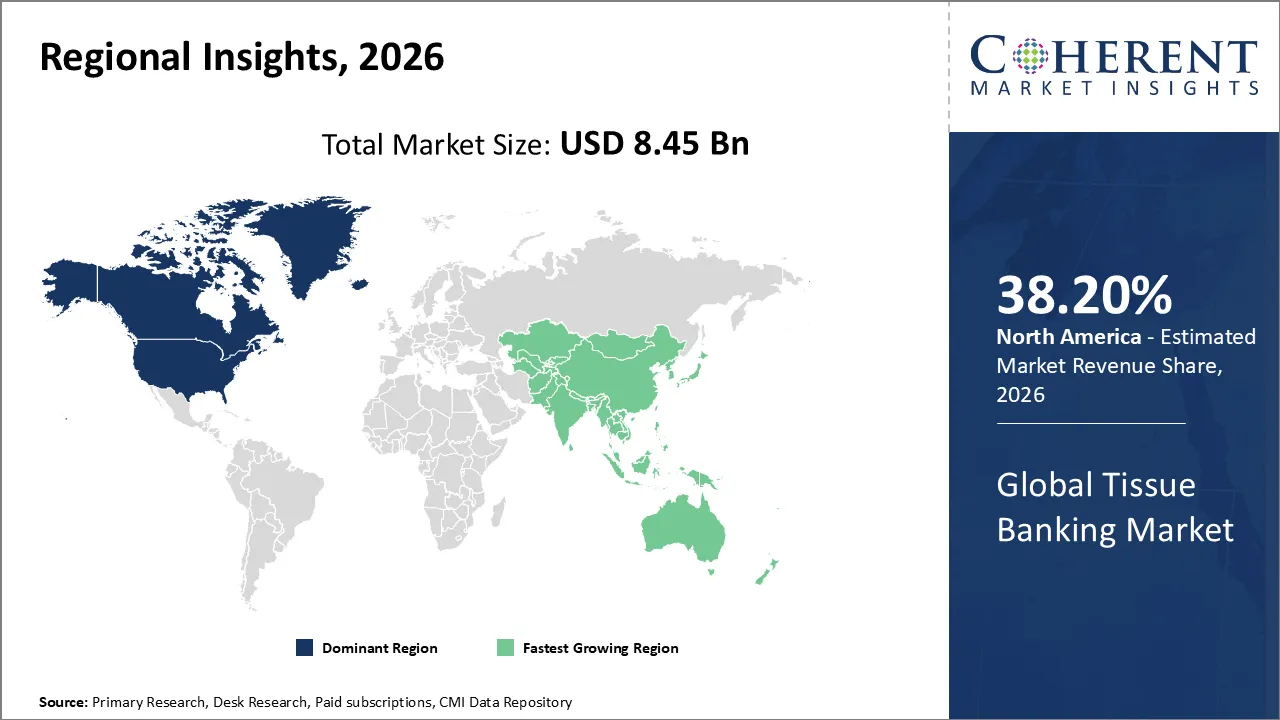
- Based on Region, North America is set to lead the market with 38.20% share in 2026. While, Asia Pacific is anticipated to be the fastest growing region.
Market Overview
The tissue banking market is advancing significantly with rising applications in regenerative medicine and personalized therapies. Moreover, expanding clinical transplantation needs and tightening regulatory standards are expected to propel market growth over the forecast period. Tissues are the essential biological materials required for repairing or replacing damaged human structures. Tissue banking is a commonly used process in the healthcare, biotechnological, and pharmaceutical industries. Tissue banks are utilized for the recovery as well as the long-term storage of biological samples such as bone, skin, and heart valves, which aids in life-saving allograft procedures.
The tissue banking industry is having a revolutionary period bolstered by a number of advancing preservation factors, adoption of sophisticated cryopreservation systems, along with high demand for particular biological analysis in different industries, including pharmaceuticals, clinical diagnostics, and medical research. These developments have spread the capabilities of tissue banks and enhanced their efficiency and safety, as well as traceability, marking a transformative phase in the market.
Current Events and their Impacts on the Tissue Banking Market
Current Event | Description and the Impact |
Technological Advancements |
|
Economic Factors and Investment Trends
|
|
Ethical and Social Considerations |
|
Segmental Insights
- Current Industry Events of 2026
- Market Size Estimation
- Regional Breakdown
- Competitive Landscape
- Customer Intelligence
- Segmental Analysis
- Pricing Analysis
- Key Market Drivers, Challenges & Future Trends
- Customized Insights Section
Tissue Banking Market Insights, By Product: Media and Consumables Leads Due to Increasing Adoption of Advanced Tissue Banking Equipment
In terms of product, the media and consumables segment contributes the highest share of 53.60% in 2026 of the market. The growth is due to its critical role in the lifecycle of a specimen. This segment includes basic items such as preservation media, specialized reagents, and storage containers required for the collection, processing, and long-term preservation of tissues. The media and consumables create continuous revenue streams unlike high-cost capital equipment (like freezers), which are one-time investments. The increasing demand for regenerative medicine and growing R&D activities require a regular supply of these materials to protect cell viability and minimize contamination risks. As a result, as the number of stored samples rises globally, this segment secures a leading market share through strong consumption levels.
Tissue Banking Market Insights, By Tissue Type: Bone Leads Due to its High Demand in Orthopaedic Surgeries
In terms of tissue type, the bone segment contributes the highest share of 27.90% in 2026 of the market. This growth is mainly supported by the growing number of orthopedic surgeries. Bone allografts are the most commonly transplanted tissues, used for treating musculoskeletal conditions, sports injuries, and common diseases like osteoporosis. The growing elderly population has led to an increase in hip and knee replacement surgeries where bone grafts are used to give structural support to the body. The constant advances in bone processing and cleaning techniques have enhanced the safety and shelf life of bone grafts, thereby making them easier to work with for surgeons. With the rising cases of trauma and the continuous growth of dental implant procedures worldwide, the bone segment continues to be the top revenue-generating category in the tissue banking industry.
Regional Insights
North America Tissue Banking Market Analysis & Trends
North America has remained the dominant region with 38.20% in 2026 of the global tissue banking market over the past decade. The growth is owing to cutting-edge infrastructure, high adoption of regenerative medicines, and strong regulatory standards (FDA, AATB). The primary catalyst for growth is the increasing use of allografts in orthopedics, dentistry, and neurosurgery, alongside a surge in regenerative medicine research. In addition, the surge in personalized medicine is increasing the demand for high-quality, well-characterized biospecimens needed for genomic studies and disease modeling. The industry is rapidly moving toward technological integration, utilizing advanced automation and AI-driven cryopreservation systems to maintain sample viability, improve efficiency, and ensure regulatory compliance.
North America, spearheaded by the US, boasts a robust network of accredited tissue banks that are primarily non-profit and private. The market is currently experiencing a transition from centralized storage to decentralized, hospital-integrated banking systems, which facilitate quicker access to tissues during urgent trauma and surgical situations. The companies like MTF Biologics, AlloSource, CryoLife, and Azenta Life Sciences are placing a greater emphasis on strategic partnerships and improving their logistical capabilities to meet the growing need for high-quality tissues.
For instance, in April 2025, Spine Wave has entered the spinal allograft cortical fiber market with its Tempest® DCF Demineralized Cortical Fibers. This new allograft enhances Spine Wave's standing in the growing spinal biologics market and complements its existing biologics and graft delivery range.
Asia Pacific Tissue Banking Market Analysis & Trends
The Asia Pacific region is the fastest growing market for tissue banking. The growth is primarily supported by the rising demand for regenerative medicines and the increasing cases of chronic diseases such as cardiovascular diseases, cancers, and diabetes. The leading nations like China, Japan, India, and South Korea are boosting this growth by creating organized networks of biobanks. These countries are also applying cutting edge technologies like AI-driven specimen management, automated cryopreservation, and 3D bioprinting to strengthen personalized tissue engineering. For instance, India's Biopharma SHAKTI initiative, introduced in the 2026–27 budget with an allocation of USD 1.10 billion, aims to develop the domestic ecosystem for biologics and tissue-based research.
The major firms like Thermo Fisher Scientific Inc., Merck KGaA, and Azenta Life Sciences are expanding their activities in this region. The local innovators like Cordlife Group Limited and Rokit Healthcare are making steady improvements in specialized cord blood banking and regenerative therapies. The smooth integration of digital infrastructure and ethical sourcing is expected to further support APAC's position as a global hub for medical innovation.
Tissue Banking Market Outlook Country-Wise
The US Tissue Banking Market Trends
The U.S. remains the largest and most established tissue banking market in the world, underpinned by a highly sophisticated healthcare infrastructure and a massive volume of annual transplant procedures. Each year, hundreds of thousands of American patients receive bone grafts, skin substitutes, and heart valves, which fuels a consistent and high demand for various allografts. The market is characterized by intense technological innovation, particularly regarding automated cryopreservation techniques and digital traceability systems for specimen tracking. While the US industry faces stringent FDA regulations and complex ethical oversight, these rigorous frameworks provide a global gold standard for safety and quality. The growth is currently propelled by the surge in personalized medicine as well as the expanding use of human biospecimens in pharmaceutical drug discovery.
For instance, in May 2025, the 10,000 Brains Project has unveiled Path-ND, an innovative digital brain banking program aimed at digitizing at least 5,000 neuropathology cases in the next two years. This initiative will provide broader access to ultra-high-resolution brain tissue images for neurodegenerative disease research on an unprecedented scale.
China Tissue Banking Market Trends
The tissue banking market in China is currently the fastest-growing sector globally, primarily driven by a rapidly aging population and a massive national shift toward regenerative medicine. A unique characteristic of this particular market is the strong demand for umbilical cord blood and tissue banking, where private storage rates have consistently remained above global averages. Government backing continues to be an important factor as the state closely supervises the industry through a strict provincial licensing framework that maintains a controlled yet highly profitable environment. In addition, china has positioned itself as a leading country in clinical research involving different types of umbilical cord tissues. With increasing healthcare expenditure and a growing middle class seeking biological insurance, the market is evolving from basic storage to advanced therapeutic applications and precision medicine research.
Market Report Scope
Tissue Banking Market Report Coverage
| Report Coverage | Details | ||
|---|---|---|---|
| Base Year: | 2025 | Market Size in 2026: | USD 8.45 Bn |
| Historical Data for: | 2020 To 2024 | Forecast Period: | 2026 To 2033 |
| Forecast Period 2026 to 2033 CAGR: | 7.5% | 2033 Value Projection: | USD 15.00 Bn |
| Geographies covered: |
| ||
| Segments covered: |
| ||
| Companies covered: | AbD Serotec (a Bio-Rad company), AMS Biotechnology Limited, BioLife Solutions, Inc., Beckman Coulter, Inc., BioCision LLC, BioStorage Technologies, Inc., Custom BioGenic Systems, Eppendorf AG, EMD Millipore Corporation, Fisher BioServices, Inc., Genzyme Corporation, Hamilton Company, Merck KGaA, PHC Corporation, and Teva Pharmaceutical Industries Ltd | ||
| Growth Drivers: |
| ||
| Restraints & Challenges: |
| ||
Tissue Banking Market Drivers
Advancements in regenerative medicine
The advancements in regenerative medicine are steadily transforming the tissue banking market by sifting it from simple storage to a technology-focused pillar of modern healthcare. This growth is mainly driven by the rising demand for stem cell-based therapies and tissue engineering to treat chronic diseases like cancer and cardiovascular disorders. Technological breakthroughs in cryopreservation and 3D bioprinting have greatly improved the survival and performance of stored biological materials. Furthermore, the shift toward personalized medicine has increased the need for specialized banks capable of managing autologous and allogeneic samples. With regenerative medicine attracting strong global investment, tissue banks are expanding their facilities to support large-scale clinical trials and detailed genomic profiling. This close link between clinical process and biobanking ensures a reliable supply of high-quality tissues and promotes consistent market growth worldwide.
Increasing use of advanced methodology for tissue banking
The increasing use of advanced methodologies for tissue banking is anticipated to drive market growth during the forecast period. For example, in August 2022, Carnegie Mellon University's Biothermal Technology Laboratory introduced a novel approach to isochoric preservation, known as cryopreservation, for the preservation of organs and tissues. To successfully freeze-protect tissues and organs without harming them, they must be handled carefully using thermodynamic principles as a guide. Cryopreservation research is focused on keeping whole organs alive and storing them for a long time, which could lead to a major medical breakthrough. At present, organs such as the heart, liver, and pancreas can only survive for a few hours outside the human body. Cryopreservation has the potential to extend this timeframe to several days or even longer. However, successful cryopreservation has thus far been limited to very small tissues, such as embryos and stem cells.
Analyst Opinion (Expert Opinion)
The Tissue Banking Market is experiencing steady growth, driven by increasing demand for allogeneic and autologous tissue therapies in orthopedic, regenerative medicine, and cosmetic applications. Globally, over 1.5 million tissue transplants are performed annually, emphasizing the importance of tissue banks in ensuring graft availability and quality.
Advances in cryopreservation and storage technologies have significantly improved tissue viability, with studies showing preserved bone and soft tissues maintain over 90% functional integrity over long-term storage. Automation and robotics in tissue processing have enhanced throughput and reduced contamination risks, supporting high-volume operations in major biobanks.
North America leads the market, backed by established tissue banks, robust regulatory frameworks, and advanced healthcare infrastructure. Europe is witnessing growth due to harmonized policies and investment in biorepository infrastructure, while Asia-Pacific is expanding rapidly, supported by rising healthcare expenditure, private tissue banks, and awareness campaigns for tissue and organ donation.
Emerging applications in cell-based therapies are broadening the market beyond traditional reconstructive and orthopedic uses. Integration of stem cell-derived tissues and data-driven inventory management systems enhances traceability and operational efficiency.
Regulatory compliance and accreditation from bodies such as AATB and EATB ensure high-quality tissue banking practices, minimizing wastage and maintaining clinical acceptance rates. Overall, the market demonstrates a blend of technological sophistication, operational excellence, and growing clinical demand, positioning it as a vital component of regenerative medicine.
Speak to the analyst
Want personalized insights?
Take the findings above to one of our principal consultants, or have the report rebuilt around the segments, geographies and competitors you actually track.
Tissue Banking Industry News
- In July 2025, Owkin has announced a strategic agreement with NeoGenomics and France Tissue Bank (FTB). This collaboration will allow Owkin to leverage their high-quality histopathological datasets to create the first foundation model specifically trained on immunohistochemistry (IHC) images. The model will be made publicly available for research purposes.
- In April 2025, A Love of Humanity, a newly established tissue bank dedicated to enhancing medical education and scientific research, has launched its operations in England and Wales under the umbrella of Fenix Biomed BV. This organization is also planning to introduce services in the Netherlands.
- In January 2025, BioGrad, a laboratory and medical education firm located in Liverpool, has introduced Europe's first private women's health tissue bank, supported by an investment of USD 34.09 million.
- In November 2024, Sidra Medicine, a member of Qatar Foundation, has introduced a cutting-edge cord blood banking service. This facility is the first of its kind in the country, providing families with a unique opportunity to store their newborns’ stem cells in Qatar for potential medical needs in the future.
- In May 2024, The Department of Health - Abu Dhabi (DoH) and M42 have teamed up to introduce the Abu Dhabi Biobank, which will feature the region's largest hybrid cord blood bank as its inaugural offering.
- In July 2023, Cell Genesis has introduced CEXCI Cord Protein Banking, an innovative initiative that signifies a major advancement in stem cell research and personalized medicine. This approach utilizes proteins derived from umbilical cord stem cells, creating new opportunities for enhanced health outcomes and transformative medical treatments.
Market Segmentation
- Product Insights (Revenue, USD Bn, 2026 - 2033)
- Media and Consumables
- Equipment
- Cryopreservation Equipment
- Quality Control Equipment
- Thawing equipment
- Others
- Tissue Type Insights (Revenue, USD Bn, 2026 - 2033)
- Bone
- Brain & Spinal Cord
- Cornea
- Heart Valves
- Skin
- Others
- Regional Insights (Revenue, USD Bn, 2026 - 2033)
- North America
- U.S.
- Canada
- Latin America
- Brazil
- Argentina
- Mexico
- Rest of Latin America
- Europe
- Germany
- U.K.
- France
- Italy
- Russia
- Rest of Europe
- Asia Pacific
- China
- India
- Japan
- Australia
- South Korea
- ASEAN
- Rest of Asia Pacific
- Middle East
- GCC
- Israel
- Rest of Middle East
- Africa
- North Africa
- Central Africa
- South Africa
- North America
- Key Players Insights
- AbD Serotec
- AMS Biotechnology Limited
- BioLife Solutions, Inc.
- Beckman Coulter, Inc.
- BioCision LLC
- BioStorage Technologies, Inc.
- Custom BioGenic Systems
- Eppendorf AG
- EMD Millipore Corporation
- Fisher BioServices, Inc.
- Genzyme Corporation
- Hamilton Company
- Merck KGaA
- PHC Corporation
- Teva Pharmaceutical Industries Ltd.
Sources
Primary Research Interviews
- Tissue Bank Directors & Operations Heads
- Organ Procurement Organization (OPO) Executives
- Hospital Transplant Coordinators
- Cryopreservation Equipment Manufacturers
- Biorepository & Biobank Managers
- Regulatory & Quality Assurance Experts (GMP / GTP)
- Biomedical Researchers & Clinical Investigators
- Others
Databases
- Bloomberg Terminal
- Thomson Reuters Eikon
- Others
Magazines
- Cell & Gene Therapy Insights
- Genetic Engineering & Biotechnology News (GEN)
- BioPharm International
- Medical Product Outsourcing Magazine
- Healthcare Business Today
- Others
Journals
- Transplantation Journal
- American Journal of Transplantation
- Cell and Tissue Banking Journal
- Cryobiology Journal
- Tissue Engineering – Part A
- Journal of Biomedical Materials Research
- Others
Newspapers
- Financial Times
- The Wall Street Journal
- Reuters
- Bloomberg News
- The Economic Times
- Others
Associations
- American Association of Tissue Banks (AATB)
- European Association of Tissue Banks (EATB)
- International Society for Cell & Gene Therapy (ISCT)
- World Marrow Donor Association (WMDA)
- Alliance of Bioversity & Biobanking Organizations
- Others
Public Domain Sources
- U.S. Food & Drug Administration (FDA) – Center for Biologics Evaluation and Research (CBER)
- Centers for Disease Control and Prevention (CDC)
- National Institutes of Health (NIH)
- World Health Organization (WHO)
- European Medicines Agency (EMA)
- World Bank Open Data
- Others
Proprietary Elements
- CMI Data Analytics Tool
- Proprietary CMI Existing Repository of Information for the Last 8 Years
- CMI Primary Interview Database
- CMI Market Modeling & Forecast Framework
Definition: The tissue banking market refers to the global sector dedicated to the structured collection, processing, storage and supply of biological materials for clinical and scientific use. The market includes the preservation of human and animal tissues such as bone, skin, heart valves and corneas to maintain their quality for life-saving allograft transplantations and reconstructive surgeries. It is broadly divided into two main segments covering specialized equipment like ultra-low-temperature freezers and basic consumables such as preservation media. Beyond direct medical procedures, the industry provides the core infrastructure needed for developments in regenerative medicine and drug discovery. The market’s continual growth is largely driven by an ageing global population, the increasing incidence of chronic diseases, and a rising demand for personalized healthcare solutions.
Get access to 250+ pages report
Every segment, forecast, competitor profile and data table behind the analysis above — available for instant download.
- ESOMAR Member
- ISO 9001:2015 Certified
- D-U-N-S Registered
- GDPR & CCPA Compliant
Missing comfort of reading report in your local language? Find your preferred language:
Transform your Strategy with Exclusive Trending Reports
Frequently Asked Questions
The Tissue Banking Market is estimated to be valued at USD 8.45 Bn in 2026, and is expected to reach USD 15.00 Bn by 2033.
The CAGR of the Tissue Banking Market is projected to be 7.5% from 2026 to 2033.
Factors such as increasing government initiatives and rising demand for transplantation and increasing use of advanced methodology for tissue banking are the major factors driving the growth of the Tissue Banking Market.
The tissue banking organization is complex system and need high technical expertise and skilled personnel and Insufficiency and scarcity in tissue availability are the major factors hampering the growth of the Tissue Banking Market.
In terms of product, the media and consumables segment is estimated to dominate the market revenue share in 2026.
AbD Serotec (a Bio-Rad company), AMS Biotechnology Limited, BioLife Solutions, Inc., Beckman Coulter, Inc., BioCision LLC, BioStorage Technologies, Inc., Custom BioGenic Systems, Eppendorf AG, EMD Millipore Corporation, Fisher BioServices, Inc., Genzyme Corporation, Hamilton Company, Merck KGaA, PHC Corporation, and Teva Pharmaceutical Industries Ltd. are the major players.
North America is expected to lead the Tissue Banking Market in 2026.