

Gene Panel Market Size and Share Analysis - Growth Trends and Forecast (2026 - 2033)
The gene panel market refers to the global industry focused on the development, manufacturing, and commercialization of targeted genetic testing solutions that utilize amplicon-based and hybridization-based sequencing techniques to analyze a selected set of genes associated with specific diseases or clinical conditions. These gene panels are available as predesigned or customized solutions and are extensively used for pharmacogenetics, diagnosis of congenital disorders, cancer risk assessment, and other precision medicine applications.
Compared with broader sequencing methods such as whole-exome sequencing (WES) and whole-genome sequencing (WGS), gene panels offer faster turnaround times, lower costs, higher analytical sensitivity for targeted genes, and simplified data interpretation. The market encompasses gene panel kits, sequencing reagents, bioinformatics software, and related services utilized by research and academic institutes, hospitals and diagnostic laboratories, and biotechnology and pharmaceutical companies across North America, Latin America, Europe, Asia Pacific, the Middle East, and Africa.
Key Statistics at a Glance
Metric | Value |
Market Size (2026) | USD 55,312.9 Mn |
Forecast Market Value (2033) | USD 200,520.1 Mn |
Forecast Period | 2026–2033 |
Compound Annual Growth Rate (CAGR) | 20.2% |
Base Year | 2025 |
Historical Period | 2020–2024 |
Top Technique Segment | Amplicon-Based Gene Panels (58.4% market share in 2026) |
Top Design Segment | Predesigned Gene Panels (67.8% market share in 2026) |
Leading Application | Cancer Risk Assessment (55.0% market share in 2026) |
Largest Regional Market | North America (40.8% market share in 2026) |
Fastest-Growing Region | Asia Pacific |
Major Companies | Thermo Fisher Scientific Inc., Illumina Inc., QIAGEN, Agilent Technologies, F. Hoffmann-La Roche Ltd., Eurofins Scientific, Novogene Co., Ltd., GeneDx Inc., Personalis Inc., and Invitae Corporation |
The global gene panel market size is estimated to reach USD 55,312.9 Mn in 2026 and is projected to grow at a CAGR of 20.2% during the forecast period (2026-2033), surpassing USD 200,520.1 Mn by 2033. This is attributable to increasing adoption of precision medicine and personalized healthcare services, rising prevalence of cancer and rare genetic disorders globally, rising adoption of NGS-based diagnostic tests, and advancements in various genomic tools and technologies.
Key Takeaways from the Gene Panel Market Report
- Amplicon-based gene panels are expected to lead the market with a share of 58.4% in 2026 due to their low cost, rapid turnaround time, and high accuracy for targeted sequencing applications. For example, reagent cost per sample for amplicon-based (multiplex PCR) sequencing is approximately USD 20–80.
- Predesigned gene panels are projected to account for the largest market revenue share of 67.8% in 2026 owing to their standardized workflows, validated clinical performance, and broad adoption in routine diagnostic laboratories. For example, Thermo Fisher Scientific’s Oncomine predesigned gene panels are widely used for standardized cancer biomarker testing, helping reduce assay development time while ensuring consistent and reproducible results.
- North America is forecast to lead the global gene panel market with a share of 40.8% in 2026, driven by extensive adoption of NGS technologies and investments made towards the development of precision medicines. This can be exemplified by the initiative of NIH’s All of Us, which seeks to recruit one Mn people to create an extensive genetic database.
- Asia Pacific is anticipated to be the fastest-growing regional market, fueled by expanding genomic testing infrastructure, increasing healthcare expenditure, and government initiatives promoting precision medicine and early disease diagnosis.
Gene Panel Market Overview
Gene panel testing is a targeted genetic testing approach that sequences a selected set of genes associated with specific diseases or clinical conditions rather than the entire genome. It is widely used to identify genetic variants linked to inherited disorders, cancer, cardiovascular diseases, neurological disorders, and other genetic conditions.
Gene panels have broad applications in pharmacogenomics, diagnosis of congenital disorders, cancer risk assessment, and precision medicine. They play a crucial role in the early detection, diagnosis, and risk assessment of hereditary conditions such as Lynch syndrome, an inherited disorder associated with an increased risk of colorectal, endometrial, ovarian, stomach, and several other cancers.
Compared with broader sequencing methods such as whole-exome sequencing (WES) and whole-genome sequencing (WGS), targeted gene panels offer faster turnaround times, lower costs, and higher sequencing depth for clinically relevant genes.
Furthermore, ongoing advancements in next-generation sequencing (NGS) technologies and bioinformatics have enabled the development of customizable gene panels tailored to specific clinical and research applications. For example, FoundationOne® CDx is an FDA-approved comprehensive genomic profiling test that analysis 324 genes to identify clinically relevant genomic alterations and help match patients with targeted therapies across multiple solid tumours.
Segmental Insights
Which Technique Holds the Largest Share of the Gene Panel Market?
Amplicon-based Gene Panels to Hold Nearly Three-Fifths of Market Share in 2026
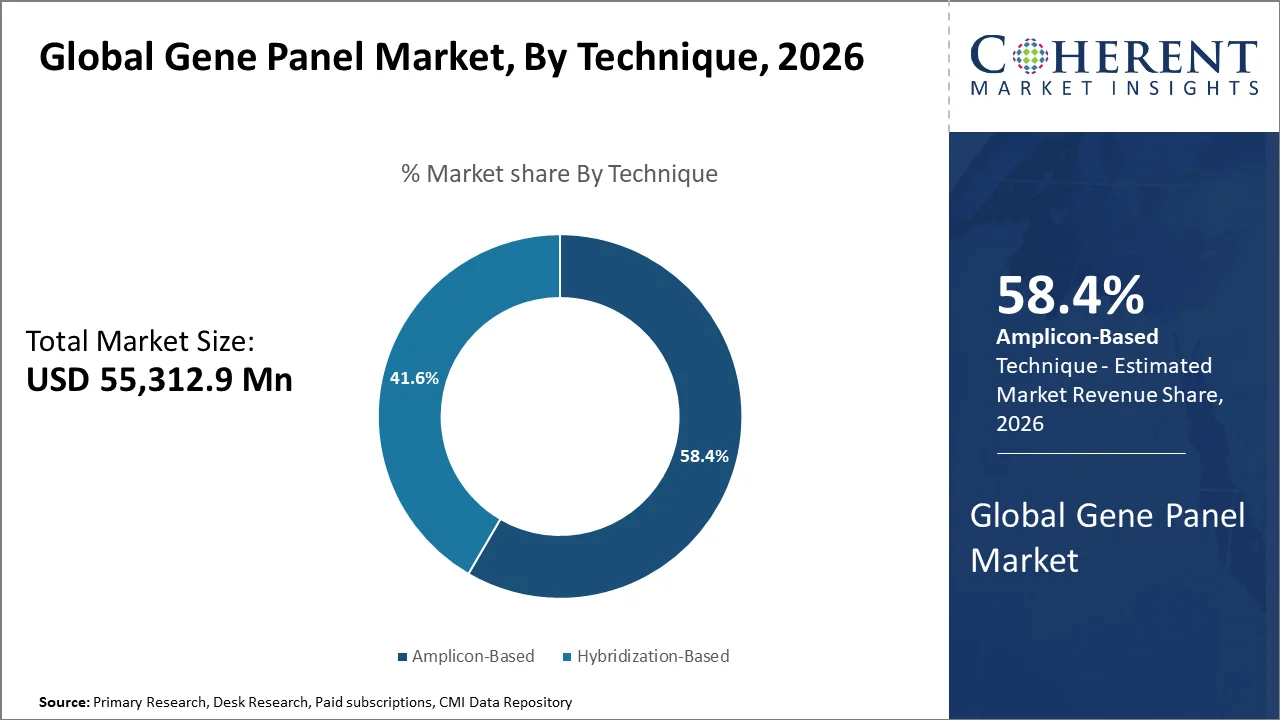
According to Coherent Market Insights' latest gene panel market analysis, amplicon-based gene panels are expected to account for a revenue share of 58.4% in 2026. This dominance is attributable to their lower costs, rapid turnaround times, and high sensitivity for targeted sequencing applications.
Amplicon sequencing is highly preferred due to the fact that it enables selective amplification of specific regions, thereby enabling laboratories to sequence clinically important genes with good sensitivity using minimal amounts of DNA or RNA. The technique provides shorter turnaround time, easier workflows in the laboratory, and reduced sequencing costs compared to other forms of sequencing. Thus, amplicon sequencing is ideal for clinical purposes including oncology, inherited disorders testing, pharmacogenomics, and liquid biopsy testing. Therefore, hospitals and diagnostic laboratories are increasingly favoring amplicon-based gene panels for genetic testing.
- Current Industry Events of 2026
- Market Size Estimation
- Regional Breakdown
- Competitive Landscape
- Customer Intelligence
- Segmental Analysis
- Pricing Analysis
- Key Market Drivers, Challenges & Future Trends
- Customized Insights Section
Which Design Dominates the Global Gene Panel Market?
Predesigned Gene Panels Lead the Market with Over Two-Thirds of the Market Share
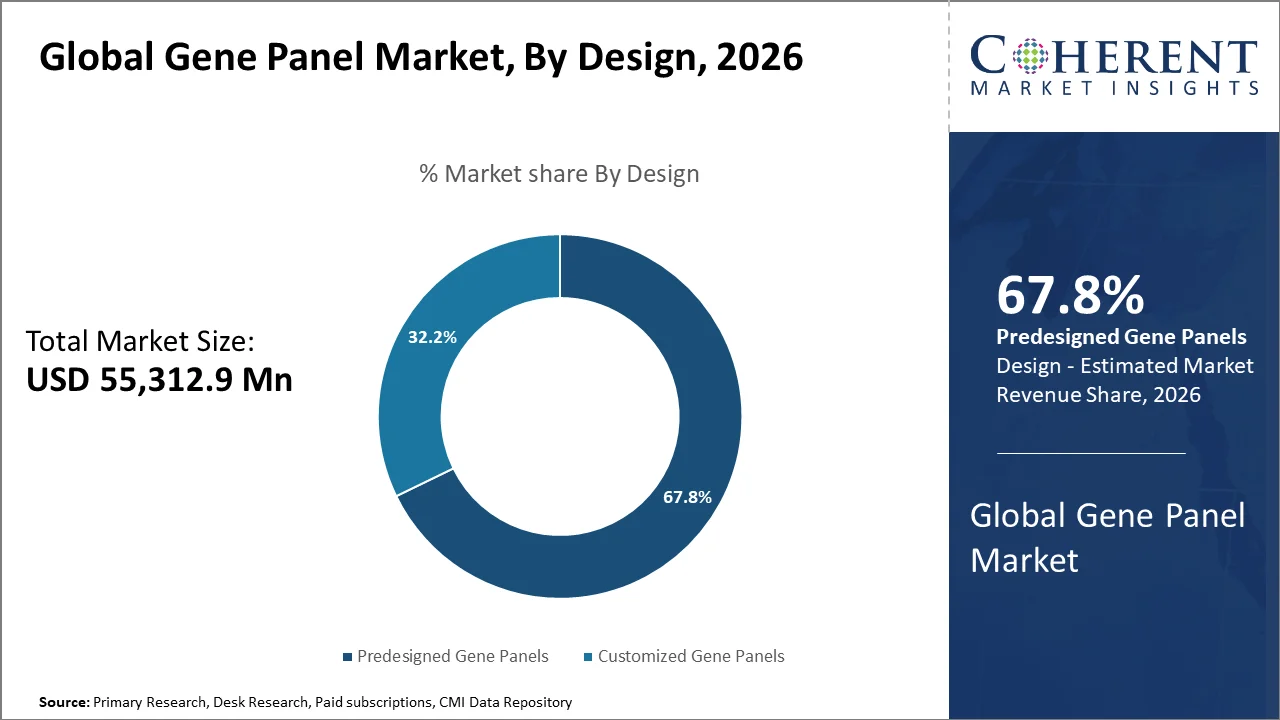
Predesigned gene panels are expected to hold the largest share of 67.8% in the global gene panel market in 2026. These panels are extensively used due to the presence of clinically validated gene sets that have some linkages to particular diseases and can be easily tested. In contrast to the custom-made panel tests, less effort is needed for developing and validating such assays and thus, these panels can be easily introduced into practice without any loss in their analytical performance.
The shorter implementation time, lower operational costs, and compatibility with high-throughput next-generation sequencing (NGS) workflows also fuel their adoption across routine clinical diagnostics. Growing demand for precision medicine, companion diagnostics, and genetic testing for oncology, inherited disorders, and rare diseases also drives the segment's growth.
For instance, in April 2025, QIAGEN launched new QIAseq comprehensive genomic profiling (CGP) panels at the AACR Annual Meeting 2025. The predesigned panels are designed to analyze more than 700 genes on next-generation sequencing (NGS) platforms, providing standardized, high-throughput genomic profiling for research and clinical applications. This launch shows the growing preference for validated, ready-to-use gene panels that reduce assay development time and support precision medicine.
Gene Panel Market Growth Drivers
Rising Adoption of Precision Medicine and Increasing Burden of Cancer and Genetic Disorders
Increasing use of precision medicine, along with rising prevalence of cancer and genetic disorders, will fuel growth of the gene panel market. Gene panels allow physicians to detect the genetic mutations associated with the disease rapidly and precisely, which helps in the accurate diagnosis of diseases and assessment of the risk of inheriting certain conditions as well as the right choice of targeted therapy.
For example, in August 2024, the U.S. Food and Drug Administration (FDA) approved The test analyzes more than 500 cancer-related genes from a single tumor sample and helps doctors identify biomarkers that can quickly match patients with targeted therapies. This approval highlights the growing role of advanced gene panel testing in precision oncology and supports the increasing adoption of genomic testing in clinical practice.
Gene Panel Market Opportunities
Expansion of Population Genomics and National Precision Medicine Programs
Large-scale national genomics initiatives and increasing investments in precision medicine are creating lucrative growth opportunities for the gene panel market. Governments and healthcare organizations are expanding genomic screening programs to improve early disease detection, accelerate research, and enable personalized healthcare. These initiatives are expected to increase demand for standardized and customized gene panel testing across clinical and research settings. For example, The NIH All of Us Research Program aims to enrol more than one million participants, creating one of the world's largest and most diverse genomic databases to advance precision medicine and support the development of genomic diagnostics.
Gene Panel Market Trends
Growing Adoption of AI-Enabled Bioinformatics and Comprehensive Gene Panels
A key trend shaping the gene panel market is the increasing integration of artificial intelligence (AI) and advanced bioinformatics with next-generation sequencing (NGS). AI-assisted variant interpretation enhances the speed, accuracy, and consistency of genomic data analysis, while comprehensive gene panels enable the simultaneous analysis of dozens to hundreds of clinically relevant genes in a single test.
These advancements are improving diagnostic efficiency, reducing turnaround times, and supporting the broader adoption of precision medicine. In this regard, for instance, QCI Interpret by QIAGEN’s Clinical Insight (QCI) makes use of AI-enabled bioinformatics in order to facilitate the clinical interpretation of genetic variants detected from NGS-based gene panel tests.
Current Events and Their Impact on the Gene Panel Market
Current Event | Description and its Impact |
Expansion of Medicare Coverage for Genetic Testing (U.S.) |
|
NIH Expands the World's Largest Integrated Genomics and Health Database (2026) |
|
Regional Insights
North America Remains at the Epicenter of Gene Panel Market Growth
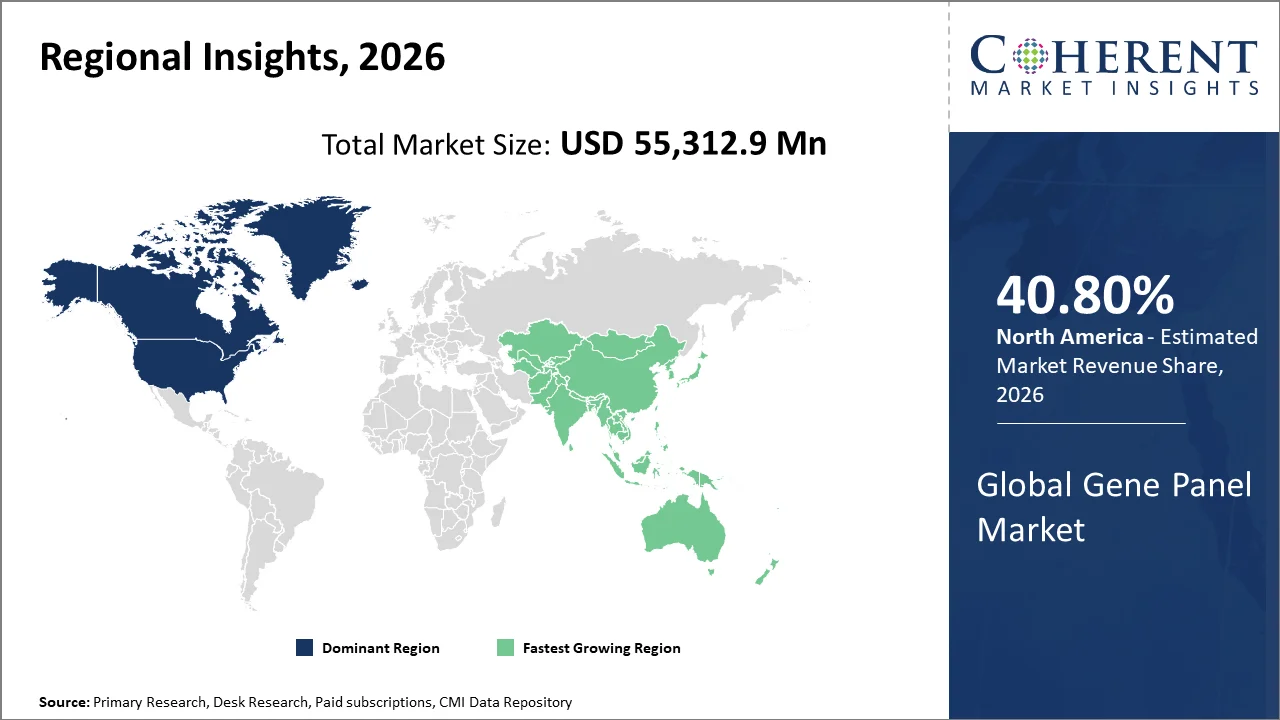
North America is expected to dominate the global gene panel market, accounting for a share of 40.80% in 2026. This growth is attributable to rising adoption of next-generation sequencing (NGS), favorable reimbursement policies, advanced healthcare infrastructure, and rising investments in precision medicine and genomic research.
For example, the U.S. National Institutes of Health (NIH) All of Us Research Program has shared genomic and health data from more than 747,000 participants with researchers. This has helped create the world's largest combined genomic and electronic health record database, supporting precision medicine research and encouraging the wider use of genomic testing, including gene panel-based diagnostics.
Asia Pacific Becoming Gene Panel Market Trends
Asia Pacific is anticipated to account for an estimated 22.6% of the global gene panel market share in 2026. This is mostly due to expanding genomic testing infrastructure, increasing healthcare expenditure, and government-led precision medicine initiatives that are improving access to genetic testing and enabling early disease diagnosis.
For example, India's GenomeIndia Project successfully sequenced the genomes of 10,000 individuals from diverse populations, creating a national genomic resource to advance precision medicine, genetic disease research, and personalized healthcare across the country. This initiative is expected to boost adoption of gene panel testing in both clinical and research settings throughout the region.
Gene Panel Market Outlook – Country-wise
U.S. Gene Panel Market Forecast
The United States is expected to remain a leading market for gene panels during the forecast period. This can be attributed to rising adoption of next-generation sequencing (NGS), strong reimbursement support, well-established precision medicine ecosystem, and strong presence of leading genomics companies. In January 2026, Illumina, Inc. announced that the Centers for Medicare & Medicaid Services (CMS) granted reimbursement coverage for its FDA-approved in vitro diagnostic (IVD) TruSight Oncology Comprehensive Test. The decision is expected to improve access to comprehensive genomic profiling (CGP) and support the increasing adoption of personalized genomics in cancer care. Increasing adoption of comprehensive oncology gene panels is also supporting market expansion in the nation.
China Gene Panel Market Trends
China’s gene panel market is poised to exhibit fastest growth during the forecast period. This is due to rising government investments in precision medicine, expanding genomic sequencing capacity, and increasing adoption of genetic testing in oncology and rare disease diagnosis. Growing popularity of customized gene panels among clinicians and researchers seeking disease-specific and patient-specific testing solutions is also expected to boost gene panel market value across China in the coming years.
Who are the Major Companies in the Gene Panel Market?
Company | Headquarters | Key Gene Panel Solutions | Market Segment / Core Focus |
Thermo Fisher Scientific Inc. | Waltham, Massachusetts, U.S. | Oncomine, Ion Torrent, AmpliSeq | Oncology gene panels, NGS workflows, precision medicine |
Illumina, Inc. | San Diego, California, U.S. | TruSight, TruSeq, DRAGEN Bio-IT Platform | Clinical genomics, cancer diagnostics, inherited disease testing |
QIAGEN N.V. | Venlo, Netherlands | QIAseq, QIAGEN Clinical Insight (QCI) | Comprehensive genomic profiling, bioinformatics, precision medicine |
Agilent Technologies, Inc. | Santa Clara, California, U.S. | SureSelect, SureCall | Target enrichment, hybridization-based sequencing, clinical research |
F. Hoffmann-La Roche Ltd | Basel, Switzerland | AVENIO, KAPA, FoundationOne CDx | Companion diagnostics, oncology genomic profiling, precision medicine |
Eurofins Scientific SE | Luxembourg | Eurofins Genomics Services | Clinical genomics, sequencing services, molecular diagnostics |
Novogene Co., Ltd. | Beijing, China | Targeted Sequencing Services | Clinical and research sequencing, customized gene panels |
GENEWIZ, LLC (an Azenta Life Sciences company) | South Plainfield, New Jersey, U.S. | Targeted Sequencing Services | Genomic sequencing, custom panel development, research services |
GeneDx Holdings Corp. | Stamford, Connecticut, U.S. | Hereditary Disease Gene Panels | Rare disease diagnosis, pediatric genetics, exome and genome sequencing |
Invitae Corporation | San Francisco, California, U.S. | Invitae Diagnostic Gene Panels | Hereditary cancer testing, reproductive health, cardiovascular genetics |
Key Strategies Adopted by Industry Players
Top manufacturers of anticoagulant reversal drugs are adopting various organic and inorganic strategies to boost their sales as well as gain a competitive edge in the industry. These include new product launches and approvals, clinical trials, investments in R&D, mergers, acquisitions, distribution agreements, partnerships, collaborations, and joint ventures.
- In March 2025, Bio-Techne Corporation launched the AmplideX Nanopore Carrier Plus Kit, a new genetic panel for carrier screening research. The launch also included supporting analysis software designed for carrier screening research.
- In November 2024, Thermo Fisher Scientific partnered with Mainz Biomed to develop a next-generation mRNA-based colorectal cancer screening test. The partnership combines NGS technology with molecular diagnostics to improve colorectal cancer screening.
Market Report Scope
Gene Panel Market Report Coverage
| Report Coverage | Details | ||
|---|---|---|---|
| Base Year: | 2025 | Market Size in 2026: | USD 55,312.9 Mn |
| Historical Data for: | 2020 To 2024 | Forecast Period: | 2026 To 2033 |
| Forecast Period 2026 to 2033 CAGR: | 20.2% | 2033 Value Projection: | USD 200,520.1 Mn |
| Geographies covered: |
| ||
| Segments covered: |
| ||
| Companies covered: |
| ||
| Growth Drivers: |
| ||
| Restraints & Challenges: |
| ||
Analyst Opinion (Expert Opinion)
- Gene panels are becoming the preferred choice for genetic testing. They can analyze multiple disease-related genes in a single test, making diagnosis faster, more accurate, and more cost-effective than testing one gene at a time. This is increasing their adoption in cancer, rare disease, and inherited disorder diagnosis.
- The growing use of precision medicine is creating strong demand for gene panels. Healthcare providers are increasingly using genetic information to select targeted treatments, especially in oncology, where gene panels help identify actionable mutations. Rising precision medicine programs are expanding the use of gene panels in routine clinical practice.
- Genome sequencing programs on a large scale are driving the growth of the market. An instance is the GenomeIndia project in India, where the genomes of 10,000 people have been sequenced belonging to 83 different populations.
- Health care systems are increasingly prioritizing disease detection at an early stage. Gene panel testing makes it possible to detect genetic diseases and cancer-related mutations at an early stage, making treatment easier. Health care organizations’ focus on preventative health care has led to an increased demand for gene panels.
Speak to the analyst
Want personalized insights?
Take the findings above to one of our principal consultants, or have the report rebuilt around the segments, geographies and competitors you actually track.
Market Segmentation
- By Technique Insights ( Revenue, USD Mn, 2021 - 2033)
- Amplicon-Based
- Hybridization-Based
- By Design Insights ( Revenue, USD Mn, 2021 - 2033)
- Predesigned Gene Panels
- Customized Gene Panels
- By Application Insights ( Revenue, USD Mn, 2021 - 2033)
- Pharmacogenetics
- Diagnosis of Congenital Disorders
- Cancer Risk Assessment
- Others
- By End User Insights ( Revenue, USD Mn, 2021 - 2033)
- Research and Academic Institutes
- Hospital and Diagnostic Laboratories
- Biotechnology and Pharmaceutical Companies
- By Region Insights ( Revenue, USD Mn, 2021 - 2033)
- North America
- U.S.
- Canada
- Latin America
- Brazil
- Argentina
- Mexico
- Rest of Latin America
- Europe
- Germany
- U.K.
- Spain
- France
- Italy
- Russia
- Rest of Europe
- Asia Pacific
- China
- India
- Japan
- Australia
- South Korea
- ASEAN
- Rest of Asia Pacific
- Middle East
- GCC
- Israel
- Rest of Middle East
- Africa
- North Africa
- Central Africa
- South Africa
- North America
Sources
Primary Research interviews
- Chief Executive Officers (CEOs)
- Chief Technology Officers (CTOs)
- Laboratory Directors
- Molecular Geneticists
- Clinical Geneticists
- Pathologists
- Genomic Scientists
- Product Managers
- R&D Directors
- Regulatory Affairs Managers
- Hospital Procurement Managers
- Diagnostic Laboratory Managers
- Distributors and Channel Partners
- Academic Researchers
- Key Opinion Leaders (KOLs)
Databases
- National Center for Biotechnology Information (NCBI)
- PubMed
- GenBank
- ClinVar
- Online Mendelian Inheritance in Man (OMIM)
- Genome Data Viewer (GDV)
- Ensembl Genome Browser
- European Nucleotide Archive (ENA)
- Database of Genotypes and Phenotypes (dbGaP)
- ClinicalTrials.gov
Magazines
- Genome Technology Magazine
- Genetic Engineering & Biotechnology News (GEN)
- Laboratory Equipment Magazine
- Medical Laboratory Observer (MLO)
- BioTechniques
- Clinical Lab Products
Journals
- Nature Genetics
- Nature Biotechnology
- The American Journal of Human Genetics
- Genetics in Medicine
- Genome Medicine
- The Journal of Molecular Diagnostics
- Human Mutation
- BMC Genomics
- Genome Research
- Molecular Genetics & Genomic Medicine
Newspapers
- The Wall Street Journal
- Financial Times
- The New York Times
- The Economic Times
- Business Standard
- The Hindu BusinessLine
Associations
- American Society of Human Genetics (ASHG)
- European Society of Human Genetics (ESHG)
- Association for Molecular Pathology (AMP)
- American College of Medical Genetics and Genomics (ACMG)
- Clinical Genome Resource (ClinGen)
- International Society for Computational Biology (ISCB)
- European Molecular Biology Organization (EMBO)
Public Domain sources
- World Health Organization (WHO)
- U.S. Food and Drug Administration (FDA)
- Centers for Disease Control and Prevention (CDC)
- National Institutes of Health (NIH)
- National Human Genome Research Institute (NHGRI)
- European Medicines Agency (EMA)
- European Commission
- GenomeIndia Project
- UK Biobank
- National Cancer Institute (NCI)
- Organisation for Economic Co-operation and Development (OECD)
Proprietary Elements
- CMI Data Analytics Tool
- Proprietary CMI Existing Repository of information for last 10 years
Get access to 250+ pages report
Every segment, forecast, competitor profile and data table behind the analysis above — available for instant download.
- ESOMAR Member
- ISO 9001:2015 Certified
- D-U-N-S Registered
- GDPR & CCPA Compliant
Missing comfort of reading report in your local language? Find your preferred language:
Transform your Strategy with Exclusive Trending Reports
Frequently Asked Questions
The global Gene Panel Market size is estimated to reach USD 55,312.9 Mn in 2026.
The global Gene Panel Market value is expected to reach USD 200,520.1 Mn by 2033.
The global Gene Panel Market is poised to exhibit a CAGR of 20.2% from 2026 to 2033.
Major growth factors include rising prevalence of chronic diseases, increasing research and development activities, and growing adoption of precision medicine.
Major factor hampering the growth of market include high cost of gene panel testing and sequencing technologies and limited reimbursement coverage.
Amplicon-based technique is expected to lead the market with a share of 58.4% in 2026.
Predesigned gene panels are projected to account for 67.8% of the global market in 2026.