

Global Tongue Depressors Market Size and Forecast – 2026 To 2033
The global tongue depressors market is expected to grow from USD 312.6 Mn in 2026 to USD 438.9 Mn by 2033, registering a compound annual growth rate (CAGR) of 5% from 2026 to 2033. The market for tongue depressors is poised for significant expansion, fueled by the soaring burden of respiratory and throat-based infections that often necessitate regular oral screening in outpatient or primary healthcare settings.
According to the World Health Organization, chronic respiratory diseases (CRDs) are among the most common noncommunicable diseases (NCDs), and are the sixth leading cause of death in the WHO European Region, with almost 400,000 deaths every year, and nearly 80% of these deaths are caused by chronic obstructive pulmonary disease (COPD).
(Source: World Health Organization)
Key Takeaways of the Global Tongue Depressors Market
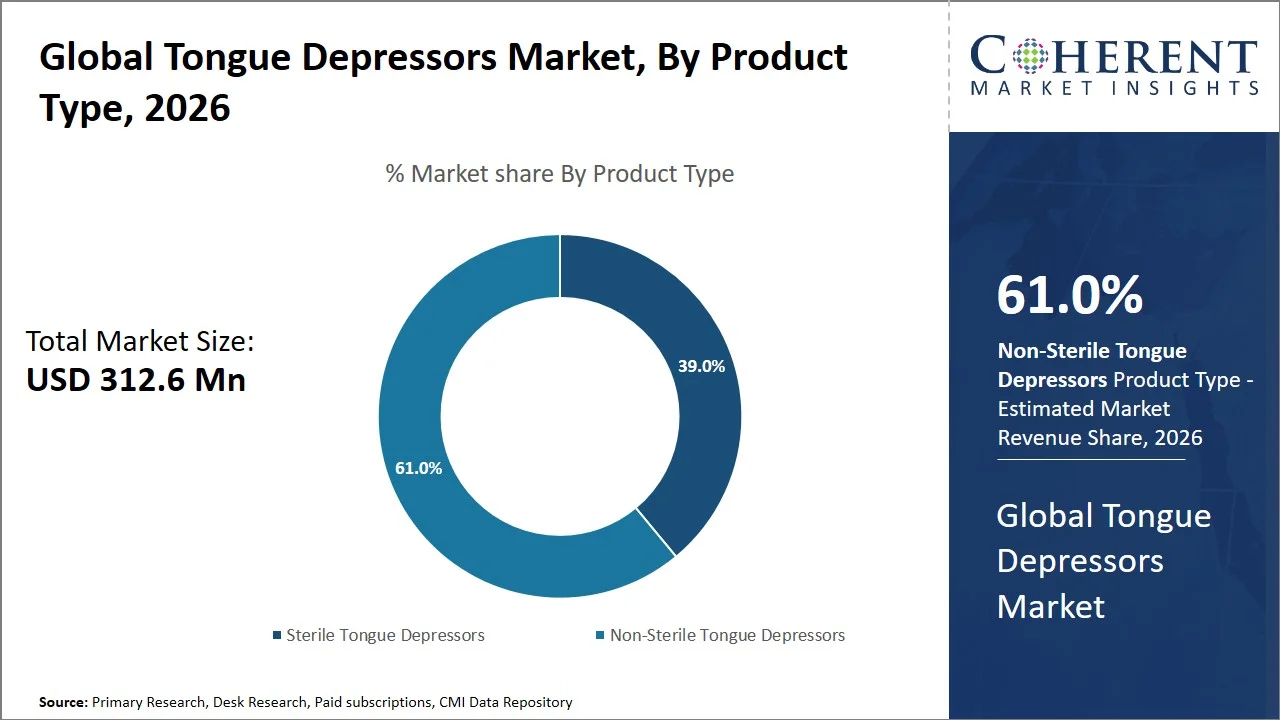
- Non-sterile tongue depressors are projected to hold 61.0 % of the global tongue depressors market share in 2026, making it the dominant product type segment, with considerable dominance throughout North America owing to the high number of routine outpatient visits, pediatric tests and non-invasive oral diagnostics conducted by primary healthcare providers. Non-sterile tongue depressors are extensively used throughout general physical examinations where a sterile instrument is not required as a cost-effective way of conducting medical treatment. For instance, according to the Centers for Disease Control and Prevention (CDC) the average physician office visits in the U.S. was almost 1.0 billion annually, leading to a strong demand for disposable non-sterile examination instruments such as tongue depressors. (Source: Centers for Disease Control and Prevention)
- Wooden tongue depressors are projected to hold 68.0 % of the global tongue depressors market share in 2026, making it the dominant material segment, particularly in Europe attributed to the uptrend in the usage of environment-friendly, biodegradable medical consumables in healthcare establishments. Hospitals and clinics across the region are increasingly opting for wooden tongue depressors on account of their affordability, disposable nature, simplicity in handling, and relatively less damaging effect to the environment. For instance, the Circular Economy Action Plan by the European Commission aims for more sustainable and reusable material consumption in all sectors such as healthcare related disposable products, throughout the European Union countries. (Source: European Commission)
- The hospitals and clinics segment is projected to hold 57.0 % of the global tongue depressors market share in 2026, making it the dominant end user segment, with Asia Pacific emerging as a significant regional contributor owing to the increase in hospital capacities and patient intake, coupled with increasing government spend on primary health care services. The surge in the number of ENT consultations, oral screening as well as infectious disease screening in hospitals and outpatient clinics are expected to greatly impact product demand in this region. For instance, as per the Government of India's Ministry of Health and Family Welfare, over 0.178 million (1.78 ) Ayushman Arogya Mandirs (Health & Wellness Centres) were operationalized in the country, improving access to primary healthcare & driving up consumption of routine diagnostics consumables like tongue depressors. (Source: Ministry of Health and Family Welfare)
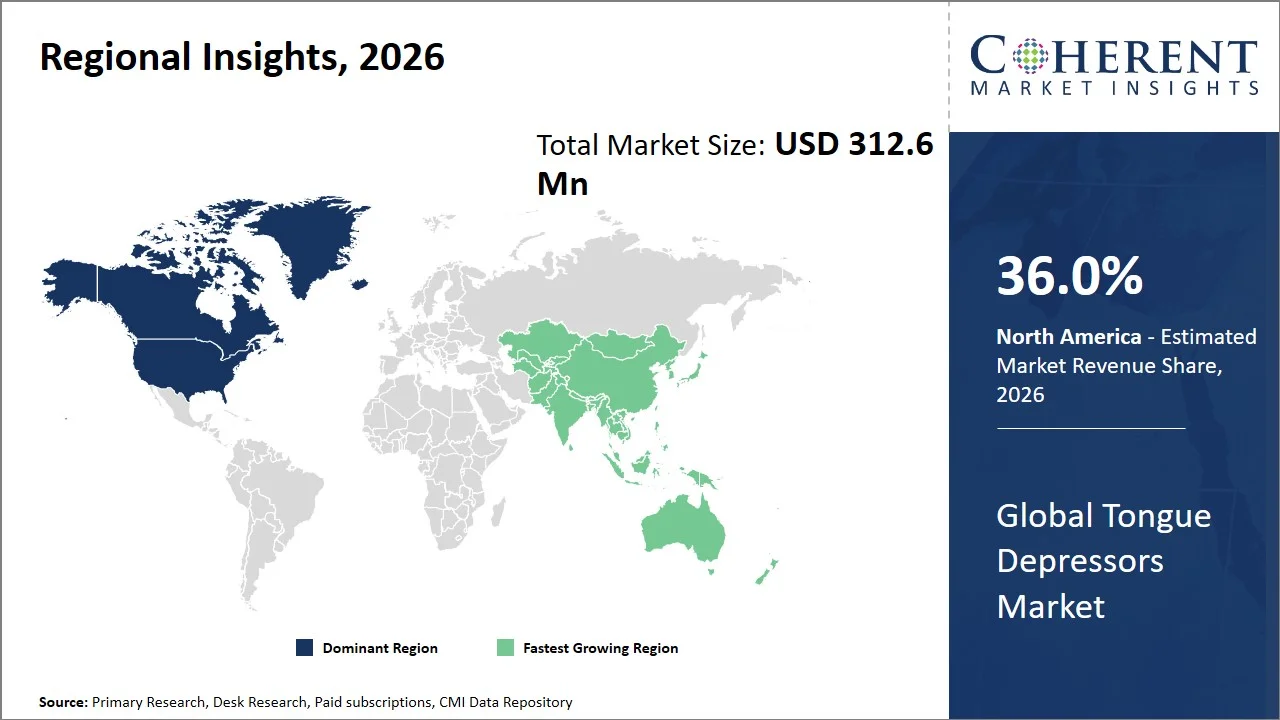
- North America maintains its dominance with an expected share of 36.0 % in 2026, bolstered by the high prevalence of influenza and respiratory infections that necessitate routine examination of the throat and oral cavity in the healthcare centers of U.S. and Canada. Disposable tongue depressors have shown high adoption rates in hospitals’ emergency departments, outpatient clinics and urgent care clinics for infection diagnosis. For instance, according to Centers for Disease Control and Prevention (CDC), the U.S. experienced between 3.1 million and 5.4 million cases of flu and between 1.4 million and 2.5 million visits to the doctor due to the flu during the 2024-2025 season which would contribute heavily to the need for routine examination supplies such as tongue depressors. (Source: Centers for Disease Control and Prevention)
- Asia Pacific is expected to exhibit the fastest growth with an estimated contribution of 27.0 % share in 2026, boosted due to surging healthcare services consumption and proliferation of outpatient visits across emerging economies like China, India, and South-east Asian countries. Market demand for disposable examination consumables in the region is on the rise owing to the proliferation of ENT examination services, pediatric consultation procedures, and mass infectious disease surveillance programs in public sector hospitals. Besides, rising government expenditure on improving healthcare accessibility and expanding diagnostic infrastructure at community levels are also likely to fuel demand in the coming years. For instance, according to the World Bank, the current health expenditure in East Asia & Pacific has exceeded 10% of GDP in recent years, indicating the rapid growth of healthcare services and clinical diagnostic activities across the region. (Source: World Bank)
- Rising Demand for Individually Wrapped Tongue Depressors in Infection-Control Settings: The utilization of individually wrapped tongue depressors by healthcare institutions is on the rise, to reduce the chances of cross-contamination, in oral and throat examinations. The increasing prevalence of infection control procedures in hospitals, dental practices, and ambulatory surgical centers is actively promoting the growth for sterile, single-use examination products. This pattern is observed especially in outpatient high patient volume locations and pediatrics settings.
- Expansion of Veterinary and Home Healthcare Applications: Market trends for tongue depressors are expanding out of the healthcare facilities into other areas of use such as veterinary diagnostics and home healthcare kits. Veterinary clinics have started making use of single-use tongue depressors for oral examinations and animal diagnostics while home healthcare providers are adding these two, first-aid kits as well as tele-consultation support kits. The ease of availability of basic diagnostic tools through online stores and retail healthcare outlets are also providing niche growth opportunities to the market players.
Segmental Insights
Why Does the Non-Sterile Tongue Depressors Segment Dominate the Global Tongue Depressors Market?
Non-sterile tongue depressors are projected to hold a market share of 61.0% in 2026, owing to their numerous applications in regular physical examinations, pediatric checkups, throat inspections where there is no clinical necessity to use sterile tongue depressors. The non-sterile tongue depressors are most frequently used in outpatient clinics, physician offices, primary healthcare providers, school healthcare initiatives and other outpatient departments for their cost effectiveness and convenience of use in bulk packaging. Furthermore, non-sterile tongue depressors aid faster patient throughput in high footfall hospitals as they allow quick examinations to be performed. Their high application in seasonal infection screening programs and in various other non-invasive health checkups such as throat examinations adds to the segment dominance. For instance, according to the Centers for Disease Control and Prevention (CDC) there were 51 million influenza (flu)-related illnesses, 23 million medical visits, 710,000 hospitalizations and 45,000 deaths during the 2024-2025 flu season. (Source: Centers for Disease Control and Prevention)
- Current Industry Events of 2026
- Market Size Estimation
- Regional Breakdown
- Competitive Landscape
- Customer Intelligence
- Segmental Analysis
- Pricing Analysis
- Key Market Drivers, Challenges & Future Trends
- Customized Insights Section
Why Do Wooden Tongue Depressors Represent the Largest Material Segment in the Global Tongue Depressors ?
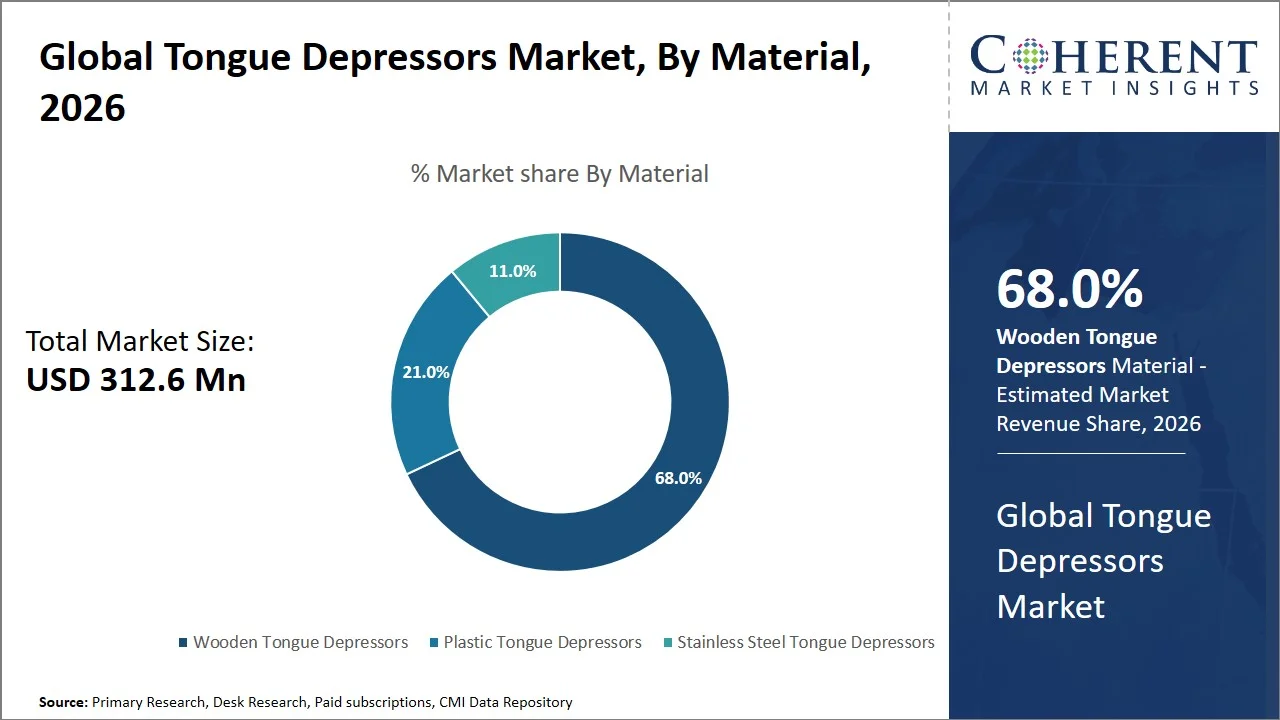
Wooden tongue depressors are projected to hold a market share of 68.0% in 2026, owing to low-cost, bio-degradable nature and widespread utilization across hospitals, clinics and diagnostics laboratories for performing routine oral examinations. This material is the most favored owing to its lightweight nature, biodegradability, disposability, ease of mass production, and low cross contamination rate during high patient numbers. Furthermore, growing regulatory and environmental scrutiny on reducing plastic waste also propels the usage of wooden disposable medical consumables. For instance, as per the European Parliament, plastic packaging waste produced in the European Union stood at 16.16 million tons in 2022 propelling the usage of biodegradable substitutes in numerous end-use sectors such as healthcare consumables. (Source: European Parliament)
Hospitals and Clinics Segment Dominates the Global Tongue Depressors Market
The hospitals and clinics segment is projected to hold a market share of 57.0% in 2026, as the highest number of routine oral examinations, inspection of throat and diagnostic screening tests are carried out in hospitals and clinics worldwide. The facilities are widely used by clinicians during ENT exams, pediatric exams, dental examinations and infectious disease screening due to low cost, once-used nature and user-friendly property. Moreover, expanding outpatient count coupled with increased focus on infection control practices is an instrumental factor for the rising usage of these products across hospitals and clinics around the world. Growing expansion of primary healthcare services as well as ambulatory care facilities are also fueling the segment growth on the global level.
Currents Events and their Impact
Current Events | Description and its Impact |
European Union Advances Single-Use Plastics Reduction Policies Across Consumer and Healthcare-Related Products (December 2025) |
|
CDC Reinforces Infection Prevention Standards for Outpatient Healthcare Facilities (April 2024) |
|
(Source: European Commission, Centers for Disease Control and Prevention)
Global Tongue Depressors Market Dynamics
Market Drivers
Rising patient examinations and diagnostic procedures
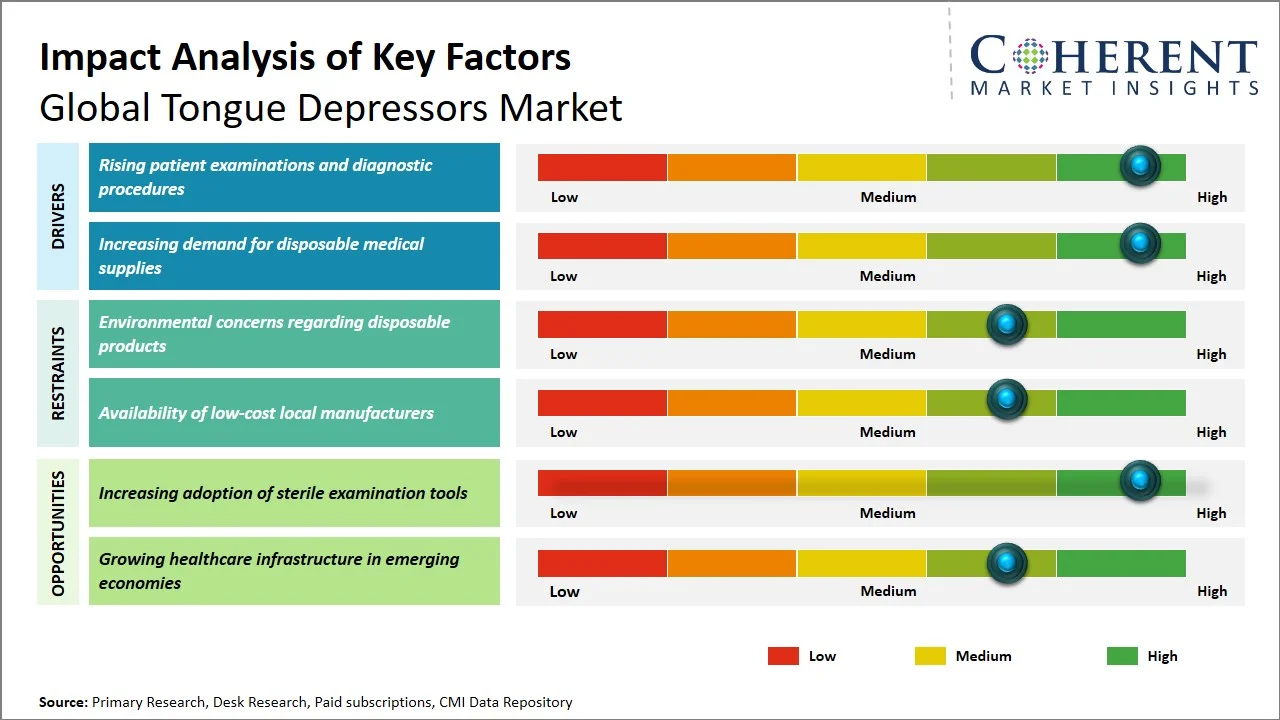
The ever-increasing number of patient check-ups and diagnostic tests in healthcare facilities are emerging as the major factors contributing to the global demand for tongue depressors. Tongue depressors are used in wide applications like examinations of oral cavity, ENT checks, pediatric checkups, dental checkups and infectious diseases testing in hospitals, clinics and physician offices. The ongoing expansion of outpatient healthcare services coupled with rising awareness on preventive healthcare is further pushing the disposable examination consumables consumption levels. Furthermore, increasing number of patient visits for routine health check-ups and general practitioner visits are another factor benefiting the market. For instance, according to Organization for Economic Co-operation and Development (OECD), there were an average of 27 ED visits per 100 population annually in 25 OECD countries, demonstrating the demand for routinely used clinical examination tools in a variety of healthcare settings. (Source: Organisation for Economic Co-operation and Development)
Increasing demand for disposable medical supplies
The increased use of disposable test kits in hospitals and clinics around the world has led to the increased usage of disposable tongue depressors, which is creating a huge market for this product. Healthcare providers are more inclined to utilize single-use examination supplies so as to prevent cross contamination as well as facilitate the implementation of effective infection control protocols while performing patient evaluations. Disposable tongue depressors are comprehensively used in hospitals, dental clinics, emergency care units, outpatient care centers owing to the convenience offered by the product, its economical pricing and hygienic attributes.
Additionally, the increasing awareness among consumers related to patient safety and infection control benchmarks defined for healthcare related infections is supplementing product acceptance. For instance, World Health Organization (WHO) estimated that in the acute-care hospital setting, of every 100 patients admitted to high income countries,7 patients will acquire a Healthcare-associated infection (HAI) whereas, in low and middle income countries 15 of every 100 patients admitted to an acute-care hospital setting will acquire a Healthcare-associated infection (HAI), thereby placing even greater importance on disposable, single-use items within the healthcare arena. (Source: World Health Organization)
Emerging Trends
- Increasing Adoption of Printed and Colored Tongue Depressors in Pediatric Care: To enhance patient cooperation and minimize examination fear for pediatric patients, healthcare providers are adopting the use of printed, flavored, and colored tongue depressors. The use of these tools is spreading among children's hospitals, pediatric clinics, and dental care centers to promote more patient friendly examination.
- Growing Preference for Individually Packed Examination Consumables: Individually wrapped tongue depressors are widely used in hospitals and outpatient clinics. The practice is gaining popularity for easier management of hygiene measures and additional control in infection-control measures during standard examinations. The biggest growing area for usage of this product is in ambulatory care centers and emergency rooms where there is high-volume of patients and care needs to be streamlined.
Regional Insights
Why is North America a Strong Market for Tongue Depressors?
North America leads the global tongue depressors market, accounting for an estimated 36.0% share in 2026, attributed to the extensive application of preventive and routine diagnostic services in physicians' clinics, out-patient urgent care facilities and retail clinics. The widespread use of disposable examination procedure consumables by healthcare workers for expeditious patient assessment and standardized infection-control management in oral and pharyngeal examination will drive the demand for such consumables in community-based health facilities, which will be further strengthened by the progressive penetration of retail clinics and expansion of outpatient same-day consultation services.
The region's robust spending power and the well-established channels of medical supplies distribution will further stabilize the demand of products in the U.S. and Canada. For instance, according to the Centers for Disease Control and Prevention (CDC), the U.S. averaged about 155.4 million visits to emergency departments each year, with 17.8 million visits leading to hospital admission and 3.1 million visits leading to admission to the critical care unit, illustrating the high consumption of common diagnostic testing supplies-such as tongue depressors-in an acute care setting. (Source: Centers for Disease Control and Prevention)
Why Does the Asia Pacific Tongue Depressors Market Exhibit High Growth?
The Asia Pacific tongue depressors market is expected to exhibit the fastest growth with an estimated contribution of 27.0% share to the market in 2026, attributed to rapid growth in the number of retail healthcare clinics, diagnostic consultation centers and school healthcare screening programs in densely populated countries. Healthcare service providers are adopting low-cost disposable examination consumables during expansive outpatient consultations, pediatric health investigations and infectious disease monitoring tasks. Domestic manufacture of wooden tongue depressors (such as Jiangsu JianEr Medical Technology Co., Ltd., Shanghai Medical Instruments Group, and Narang Medical Limited) are increasing across the region to accommodate the expanding institutional buying power from public hospitals and community healthcare centers. The growing healthcare penetration into rural and tier-2 locations in the region is further spurring the market growth. For instance, according to the World Bank, East Asia & Pacific accounted more than 1.9 billion outpatient visits annually for all health systems in the recent years, which would be a major source for demand of goods and services for routine examination consumable items like tongue depressors. (Source: World Bank)
Global Tongue Depressors Market Outlook for Key Countries
Why is the U.S. Leading Innovation and Adoption in the Tongue Depressors Market?
The U.S. has been at the forefront of innovation and implementation of tongue depressors owing to the penetration of organized outpatient healthcare networks, urgent care centers, and physician office practices which demand high-volume disposable examination consumables. Healthcare providers in the country are increasingly adopting hygienic single-use and individually-wrapped tongue depressors in a bid to strengthen infection-control compliance across standard diagnostic procedures. Moreover, U.S. manufacturers are focusing on automated bulk manufacturing, environmentally friendly wooden products development and better packaging formats to achieve supply efficiencies and distinct products.
Is Japan a Favorable Market for Tongue Depressors?
Japan appears to be a promising market for tongue depressors because hospitals have a hygiene-centered approach to clinical procedures and the use of disposable examination consumables is high throughout a range of healthcare establishments. In addition, Japanese health services are increasingly adopting small sterile disposable examination devices that are individually wrapped, in order to promote a more standardized level of care and reduce the chance of infection. Japanese healthcare facilities procure a significant volume of tongue depressors for diverse clinical applications, including pediatric care, dental examinations, geriatric healthcare, and otorhinolaryngology (ENT) diagnostic procedures. Furthermore, Japan is known to have a highly developed healthcare infrastructure and high levels of quality in its medical examination consumables.
Is China Emerging as a Key Growth Hub for the Tongue Depressors Market?
The tongue depressors market is witnessing robust expansion within China on account of rising penetration of community health care facilities, public hospitals, and screening programs for diagnosis in both urban and rural regions. There has been higher adoption of affordable disposable examination consumables during mass outpatient screening procedures and infectious disease screening activities. Domestic manufacturers are additionally ramping up large scale production of wooden and plastic tongue depressors to meet the rising healthcare demands and export supply needs. In addition, growing focus on primary health care service and constant monitoring in clinical examination practices are driving the market in China.
Why Does Germany Top the Europe Tongue Depressors Market?
Germany is the leader in the Europe market for tongue depressors attributed to well-structured hospital procurement systems and high demand for disposable examination consumables by all the healthcare facilities. The persistent usage of tongue depressors throughout ENT diagnostics, dental examinations, pediatric examinations and general practitioner consultations in hospitals and outpatient clinics are another key factor. German healthcare providers are giving more weight to environment friendly medical consumables, which is a good driver for introducing biodegradable wooden tongue depressors. Moreover, the advantage of well-established medical consumables manufacturing companies and healthcare supply chain will ensure Germany's leading position in the Europe tongue depressors market.
Is the Tongue Depressors Market Developing in India?
India tongue depressors market is gradually evolving on the back of the swift proliferation of primary health care institutions, diagnostic laboratories and outpatient specialist clinics in urban as well as rural areas. In the recent years, the adoption of disposable examination consumables in ENT, pediatric, dental and infectious diseases diagnostics tests in India is witnessing broad-based increases in public and private sector hospitals and clinics. Indian companies are also investing in affordable manufacturing facilities for wooden tongue depressors in order to satisfy domestic health care requirements and institutional procurement preferences. Moreover, the rise in implementation of community health programs and organized distribution channels of medical equipment in India is also bolstering industry prospects.
Regulatory Landscape Governing the Global Tongue Depressors Market
Region | Authority & Classification | Approval Pathway | Key Regulatory Insight |
North America | U.S. Food and Drug Administration (FDA) – Class I Medical Device | General Controls and FDA Establishment Registration & Device Listing | Tongue depressors in the U.S. are generally regulated as low-risk Class I medical devices and are subject to labeling, quality system, and infection-control compliance requirements. Manufacturers increasingly focus on disposable and sterile product standards to align with healthcare-associated infection prevention practices. |
Europe | European Commission / EU MDR – Class I Medical Device | CE Marking under EU Medical Device Regulation (MDR 2017/745) | The European market emphasizes product safety, biocompatibility, traceability, and sustainability compliance for disposable medical consumables. Increasing environmental regulations regarding single-use plastics are encouraging adoption of biodegradable wooden tongue depressors across healthcare facilities. |
Asia Pacific | NMPA (China), CDSCO (India), PMDA (Japan) – Low-risk Medical Consumables | Country-specific Medical Device Registration and Local Compliance Approvals | Asia Pacific countries are strengthening medical consumable quality and hygiene regulations due to increasing patient volumes and expanding healthcare infrastructure. Regulatory authorities are increasingly emphasizing sterile packaging, manufacturing quality standards, and import compliance for disposable examination products. |
Latin America | ANVISA (Brazil), COFEPRIS (Mexico) – Class I / Low-risk Medical Device | Local Medical Device Registration and Distributor Authorization | Latin American countries are increasingly improving regulatory oversight for disposable healthcare consumables to strengthen infection prevention and patient safety standards across hospitals and outpatient care facilities. |
Middle East & Africa | Saudi FDA (SFDA), UAE Ministry of Health & Prevention (MOHAP), South African Health Products Regulatory Authority (SAHPRA) | Regional Import Licensing and Medical Device Registration | Growing healthcare infrastructure development and rising dependence on imported medical consumables are driving stricter quality and product registration requirements for disposable diagnostic and examination products across the region. |
How is the growing healthcare infrastructure in emerging economies creating new growth opportunities in the global tongue depressors market?
The developing healthcare infrastructure in emerging markets would provide tremendous growth potential for the tongue depressors market by enabling inclusion of more diagnostic and primary care facilities in the urban and rural regions. The growing proliferation of hospitals, community health centers, outpatient clinics and diagnostic labs would augment the sales of standard oral examination supplies during routine check-ups and infectious disease screening processes.
Additionally, the improvement in public healthcare expenditure along with the up-scaling of universal health cover schemes would result in more patients populating the government run healthcare institutions. The increasing emphasis on preventive and early diagnosis has also been ensuring widespread usage of disposable examination supplies in emerging nations. For instance, as per the World Bank, India's current health expenditure has risen to 3.3% of GDP in recent years indicating sustained investments in health infrastructure and increasing access to healthcare services throughout the nation. (Source: World Bank)
Market Players, Key Development, and Competitive Intelligence
Key Developments
- In March 2026, Puritan Medical Products drew attention to the increasing trend towards the usage of flavored tongue depressors meant specifically for children’s medical examinations and speech therapy. The use of tongue depressors that are flavored by the U.S. FDA food-grade and hypoallergenic process was stressed for greater ease in conducting oral exams.
- In January 2025, Dynarex Corporation introduced its range of “LabChoice” diagnostic consumables, a new category addition to the current portfolio of Dynarex Corporation, including disposable examination and laboratory accessories that are utilized in patient examinations. There is a growing need for disposable diagnostic consumables in healthcare institutions.
Competitive Landscape
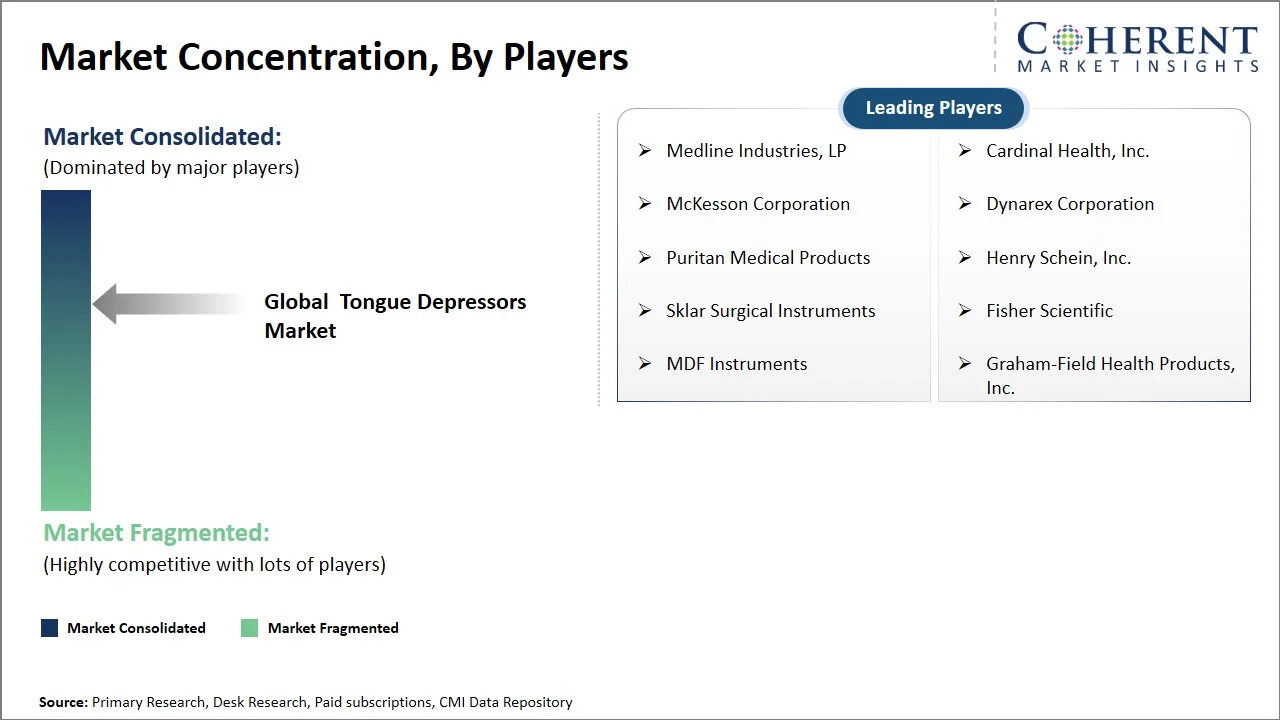
The global tongue depressors market is moderately competitive. Major product related competition is by way of quality, price competitiveness, disposability, packaging innovation, and adherence to safety and infection-control standards. Companies are focusing on expanding the portfolio of biodegradable wooden tongue depressors, individually wrapped examination tongue depressors, sterile disposable tongue depressors etc., to enhance competitiveness in hospitals, outpatient clinics, and diagnostic centers. They are also focusing on improving cost effectiveness through use of new sustainable raw materials, automation in high volume manufacturing, and effective distribution through strategic tie ups with hospitals, diagnostic centers and channel partners. Key focus areas include:
- Development of biodegradable and eco-friendly wooden tongue depressors
- Expansion of individually wrapped and sterile disposable examination products
- Investment in automated bulk manufacturing and cost-efficient production processes
- Enhancement of hygienic packaging and infection-control compliant product designs
- Strategic distribution expansion across hospitals, clinics, and primary healthcare networks
Market Report Scope
Tongue Depressors Market Report Coverage
| Report Coverage | Details | ||
|---|---|---|---|
| Base Year: | 2025 | Market Size in 2026: | USD 312.6 Mn |
| Historical Data for: | 2020 To 2024 | Forecast Period: | 2026 To 2033 |
| Forecast Period 2026 to 2033 CAGR: | 5% | 2033 Value Projection: | USD 438.9 Mn |
| Geographies covered: |
| ||
| Segments covered: |
| ||
| Companies covered: | Medline Industries, LP, Cardinal Health, Inc., McKesson Corporation, Dynarex Corporation, Puritan Medical Products, Henry Schein, Inc., Sklar Surgical Instruments, Fisher Scientific, MDF Instruments, and Graham-Field Health Products, Inc. | ||
| Growth Drivers: |
| ||
| Restraints & Challenges: |
| ||
Analyst Opinion (Expert Opinion)
- In the coming years, the future outlook for the tongue depressors market will continue to be strongly associated with the persistent growth of outpatient services, preventive diagnostic methodologies and infection-prevention procedures throughout healthcare organizations worldwide. The rising number of patient investigations, prevalent respiratory and throat infections/diseases and the accelerating focus on single-use medical disposables are all likely to fuel stable long-term need for these products. Furthermore, the industry will probably experience a slow change to biodegradable wood-based offerings, unit-packaged products and environmentally friendly packaging styles.
- The maximum opportunities will probably exist in disposable wooden tongue depressors for primary healthcare & outpatient diagnostic use in India and other Southeast Asian countries. Growing healthcare infrastructure investments, rapid increase in patient arrival in public hospitals and outpatient clinics and growing government inclination towards community healthcare access are collectively propelling the market for cheap everyday examination consumables in these countries. Palp clinics, ENT hospitals and community diagnostic programs are anticipated to continue being key high-volume application segments for the market.
- In order to gain a competitive advantage, the market players should develop competitive advantage in the procurement of green raw materials, competitive advantage in mass production and packaging of the product (individually wrapped tongue depressors). The key players should also develop and cultivate improved channels and partnerships with hospital procurement organizations, medical product distributors, government health care programs for expansion of coverage in developing countries. In the long term, the key manufacturers should also develop continuous innovation of green and biodegradable product offerings and response to new infection control procedures and initiatives in order to effectively compete in the global tongue depressors market.
Speak to the analyst
Want personalized insights?
Take the findings above to one of our principal consultants, or have the report rebuilt around the segments, geographies and competitors you actually track.
Market Segmentation
- Product Type Insights (Revenue, USD Mn, 2021 - 2033)
- Sterile Tongue Depressors
- Non-Sterile Tongue Depressors
- Material Insights (Revenue, USD Mn, 2021 - 2033)
- Wooden Tongue Depressors
- Plastic Tongue Depressors
- Stainless Steel Tongue Depressors
- End User Insights (Revenue, USD Mn, 2021 - 2033)
- Hospitals and Clinics
- Diagnostic Centers
- Ambulatory Surgical Centers (ASCs)
- Others
- Distribution Channel Insights (Revenue, USD Mn, 2021 - 2033)
- Direct Sales
- Medical Supply Distributors
- Online Sales Channels
- Regional Insights (Revenue, USD Mn, 2021 - 2033)
- North America
- U.S.
- Canada
- Latin America
- Brazil
- Argentina
- Mexico
- Rest of Latin America
- Europe
- Germany
- U.K.
- Spain
- France
- Italy
- Russia
- Rest of Europe
- Asia Pacific
- China
- India
- Japan
- Australia
- South Korea
- ASEAN
- Rest of Asia Pacific
- Middle East
- GCC Countries
- Israel
- Rest of Middle East
- Africa
- South Africa
- North Africa
- Central Africa
- North America
- Key Players Insights
- Medline Industries, LP
- Cardinal Health, Inc.
- McKesson Corporation
- Dynarex Corporation
- Puritan Medical Products
- Henry Schein, Inc.
- Sklar Surgical Instruments
- Fisher Scientific
- MDF Instruments
- Graham-Field Health Products, Inc.
Sources
Primary Research Interviews
- Hospital procurement managers and outpatient clinic administrators utilizing disposable examination consumables
- ENT specialists, pediatricians, and primary care physicians conducting routine oral and throat examinations
- Infection prevention and hospital hygiene professionals managing single-use medical consumable protocols
- Medical consumables distributors and healthcare supply chain professionals supplying diagnostic examination products
- Wooden and disposable medical consumable manufacturers specializing in examination instruments and hygiene products
- Dental clinic professionals and ambulatory care providers utilizing tongue depressors during routine diagnostic assessments
Stakeholders
- Tongue depressor manufacturers and disposable medical consumable suppliers
- End-use Sectors
- Hospitals and outpatient clinics
- ENT and pediatric care centers
- Dental clinics and diagnostic laboratories
- Ambulatory care and urgent care centers
- Community healthcare and primary healthcare facilities
- Home healthcare and first-aid kit providers
- Regulatory & Health Bodies: U.S. Food and Drug Administration (FDA) – disposable medical consumable regulations and infection-control compliance, European Commission – EU MDR and single-use plastics regulatory framework, National Medical Products Administration (NMPA), China – medical consumable registration standards, Pharmaceuticals and Medical Devices Agency (PMDA), Japan – low-risk medical device compliance framework, World Health Organization (WHO) – healthcare-associated infection prevention and hygiene standards
Databases
- CDC FastStats – outpatient visits and healthcare utilization statistics
- WHO Global Health Observatory – healthcare infrastructure and infection prevention data
- OECD Health Statistics – outpatient care and emergency healthcare utilization data
- FDA Medical Device Databases – disposable medical device registration and classification data
Magazines
- Medical Product Outsourcing (MPO) – disposable medical consumable manufacturing trends
- Medical Device Network – healthcare consumable and infection prevention product developments
- Infection Control Today – hospital hygiene and disposable medical supply updates
- MedTech Dive – healthcare consumable regulatory and manufacturing developments
- Healthcare Purchasing News – hospital procurement and medical supply chain trends
Journals
- American Journal of Infection Control
- Journal of Hospital Infection
- BMC Health Services Research
- International Journal of Environmental Research and Public Health
- Journal of Primary Care & Community Health
Newspapers
- Financial Times – healthcare supply chain and medical consumables coverage
- The Wall Street Journal – healthcare manufacturing and hospital supply developments
- The New York Times (Health Section) – infection prevention and healthcare infrastructure trends
- The Guardian (Science & Health) – global healthcare systems and sustainability initiatives
Associations
- Association for Professionals in Infection Control and Epidemiology (APIC)
- Advanced Medical Technology Association (AdvaMed)
- Medical Device Manufacturers Association (MDMA)
- Healthcare Supply Chain Association (HSCA)
Public Domain Sources
- World Health Organization (WHO) – healthcare-associated infection and patient safety statistics
- Centers for Disease Control and Prevention (CDC) – outpatient visits and infection prevention data
- U.S. Food and Drug Administration (FDA) – disposable medical device regulatory framework
- European Commission – sustainability and single-use medical consumable regulations
- OECD – healthcare utilization and outpatient care statistics
Proprietary Elements
- CMI Data Analytics Tool, Proprietary CMI Existing Repository of information for last 10 years.
Get access to 250+ pages report
Every segment, forecast, competitor profile and data table behind the analysis above — available for instant download.
- ESOMAR Member
- ISO 9001:2015 Certified
- D-U-N-S Registered
- GDPR & CCPA Compliant
Missing comfort of reading report in your local language? Find your preferred language:
Transform your Strategy with Exclusive Trending Reports
Frequently Asked Questions
The global tongue depressors market is estimated to be valued at USD 312.6 Mn in 2026 and is expected to reach USD 438.9 Mn by 2033.
Non-sterile tongue depressors dominate due to their extensive utilization in routine oral examinations, pediatric assessments, and outpatient diagnostic procedures across hospitals and clinics.
Tongue depressors are flat medical instruments used to hold down the tongue during oral, throat, and diagnostic examinations.
The CAGR of the global tongue depressors market is projected to be 5% from 2026 to 2033.
Rising patient examinations and diagnostic procedures and increasing demand for disposable medical supplies are the major factors driving the growth of the global tongue depressors market.
Environmental concerns regarding disposable products and availability of low-cost local manufacturers are the major factors hampering the growth of the global tongue depressors market.
In terms of material, wooden tongue depressors are estimated to dominate the market revenue share in 2026.