

Surgical Drapes and Gowns Market Size and Trends
The global surgical drapes and gowns market share is estimated to be valued at USD 3.56 Bn in 2026 and is expected to reach USD 5.21 Bn by 2033, exhibiting a compound annual growth rate (CAGR) of 5.6% from 2026 to 2033.
Key Takeaways
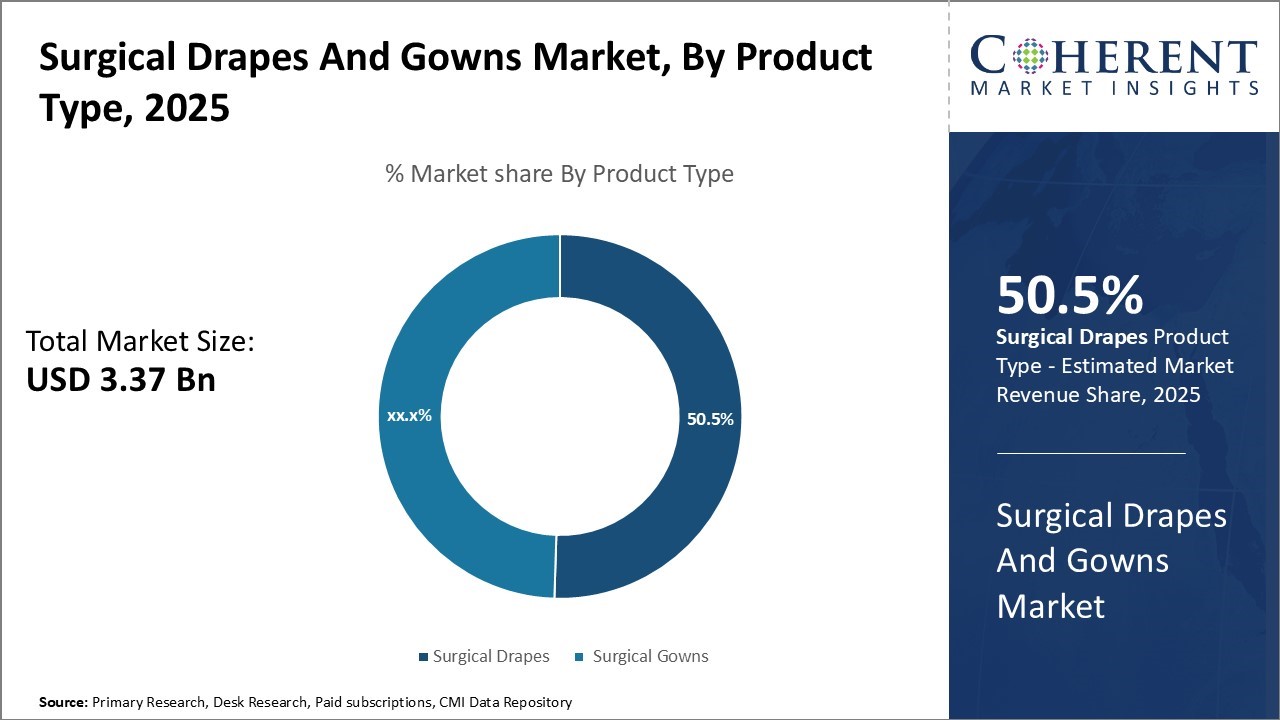
- Based on Product Type, the Surgical Drapes segment is expected to account for 51.5% of the market share in 2026 owing to its widespread applicability and cost-effectiveness.
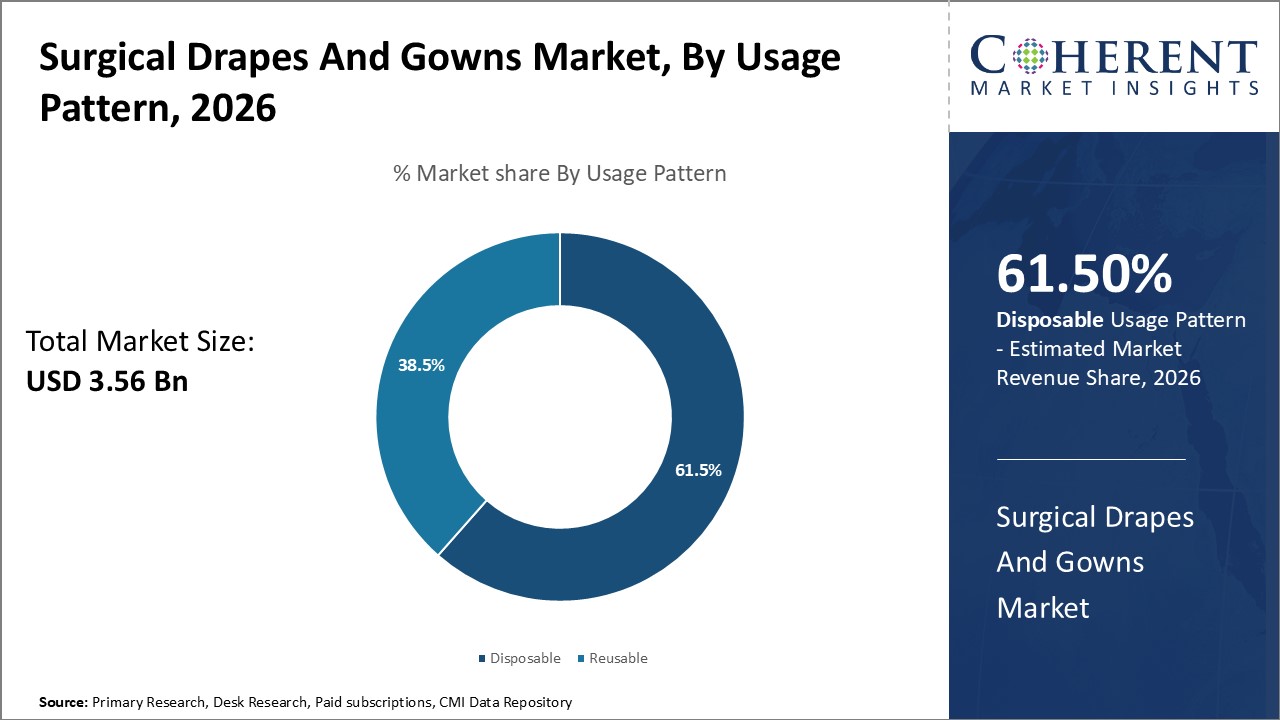
- Based on Usage Pattern, the Disposable segment is projected to hold 61.5% share of the global surgical drapes and gowns market in 2026, due to stringent infection control norms and convenience factors.
- Based on End User, the Hospital and Clinics segment is expected to account for 71.5% of the global surgical drapes and gowns market in 2026, owing to the concentration of specialized surgical facilities and capacities.
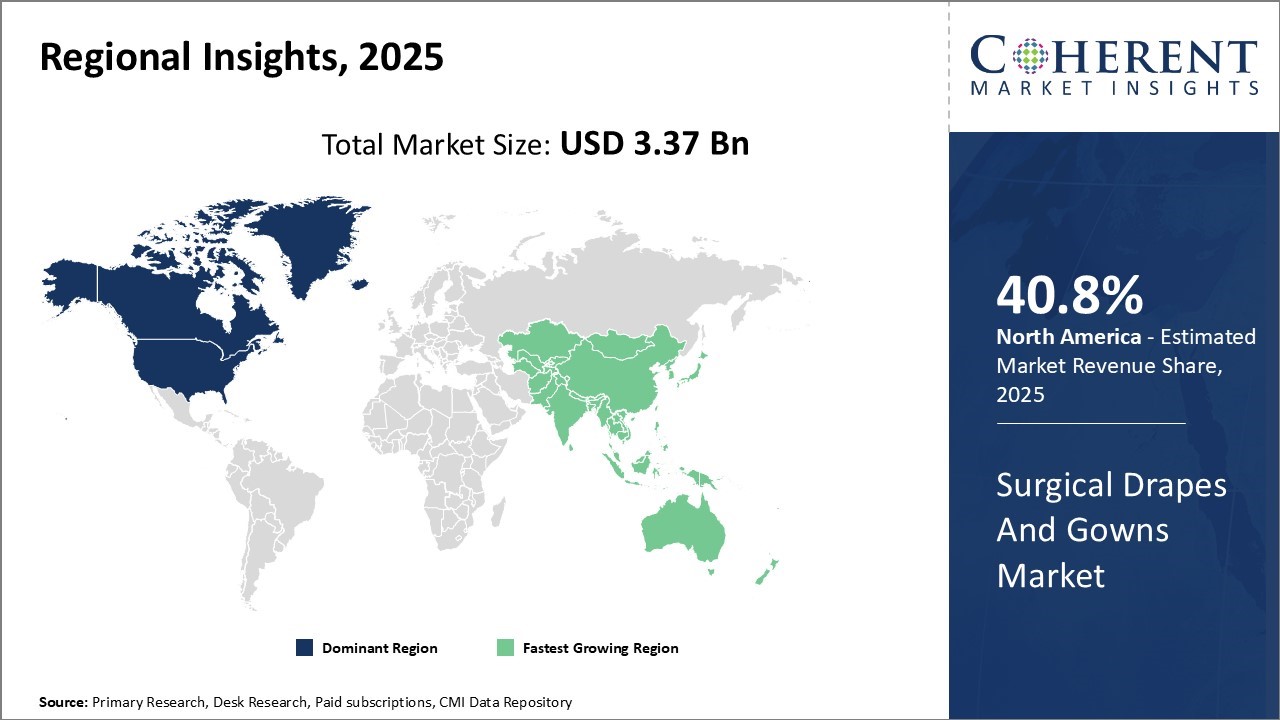
- Based on Region, North America is set to lead the global surgical drapes and gowns market in 2026 with a 40.8%, supported by the presence of leading medical device manufacturers. While, Asia Pacific is considered to be the fastest growing region during the forecast region.
Market Overview
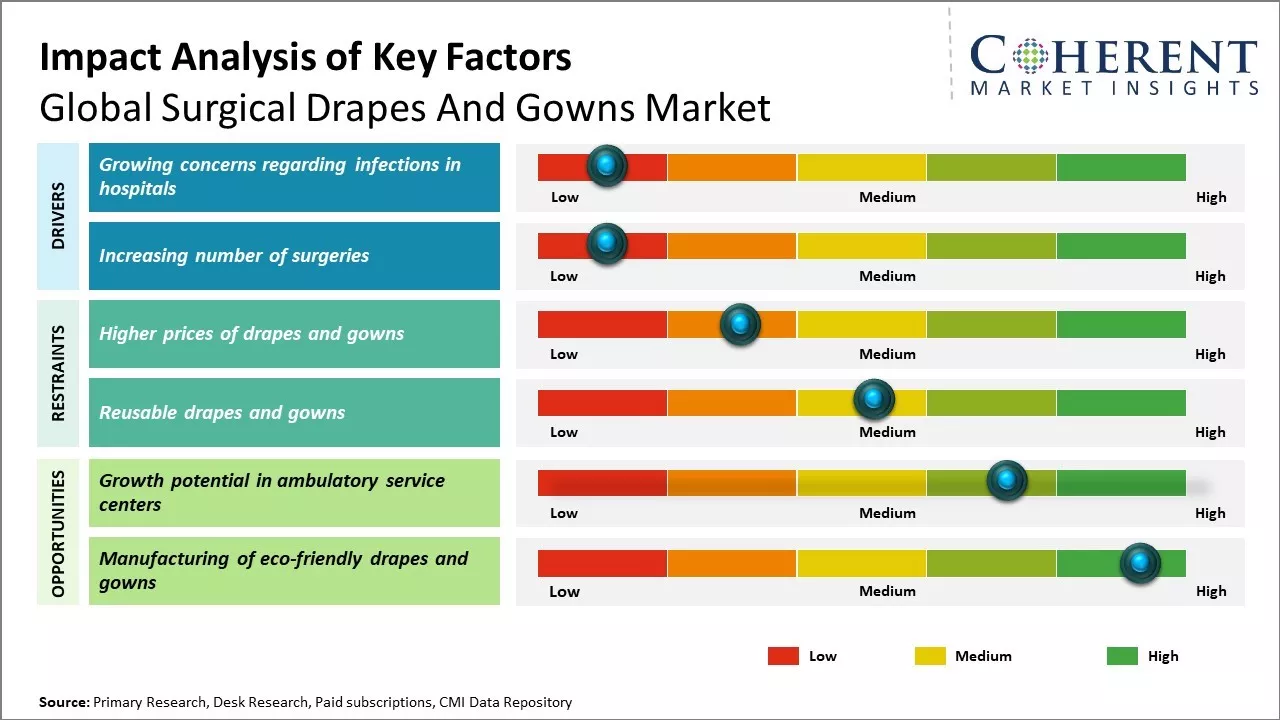
The surgical drapes and gowns market is expected to witness substantial growth over the forecast period. Key factors such as increasing number of surgical procedures performed worldwide on an annual basis and growing awareness regarding infection control in clinical settings are expected to drive surgical drapes and gowns market demand. Additionally, rising demand for nonwoven materials-based surgical drapes and gowns owing to their properties such as high liquid resistance, bacteria barrier, and breathability is further expected to support the revenue generation in the industry. Also, the growing adoption of surgical gowns and drapes due to regulatory compliance for infection control during surgeries will supplement the market expansion during the next few years. However, higher pricing of advanced surgical drapes and gowns and availability of cheaper substitutes may hamper the market growth to some extent.
Current Events and their Impacts on the Surgical Drapes and Gowns Market
Current Events | Description and its Impact |
Regulatory and Trade Policy Shifts |
|
Industry Consolidation and Strategic Realignments |
|
Pricing Analysis of Surgical Drapes and Gowns
Surgical Gowns
- Reusable/Autoclavable cotton gown
- Basic washable green cloth gown: ₹290 each Surgical Gown Green Cloth (Washable/Autoclavable) a cost-effective reusable option.
- Box of cotton gowns (minimum 100 units): ₹320 per unit.
- Reusable hospital-grade gown
- Mowell Hospital Reusable Surgical Gown (single unit): ₹735 (discounted from ₹1,199).
- Disposable non-woven gowns
- Jetflon pack of 2 disposable gowns: ₹474 for 2 (~₹237 each)
- Mowell Disposable gowns pricing (varied by qty):
- Pack of 3: ₹1,499 (~₹500 each)
- Pack of 10: ₹799 (₹79.90 each)
- Pack of 50: ₹899 (₹17.98 each)
- Pack of 100: ₹1,399 (₹13.99 each)
Surgical Drapes
- Single-use drapes
- Softcare basic drape 75 × 90 cm: ₹121.84 each SOFTcare Surgical Drape 75 × 90 cm.
- Bos Medicare patient drape:
- ₹265 (autoclavable grey)
- ₹315–₹347 for colored variants (grey, maroon, sky blue)
- Pack/Set drapes
- G Surgiwear surgical drape packs: ₹2,550 for a set (various sizes/incise sheets, pack of 4)
- Regal Healthcare non-woven drapes (sterile knee/ortho): ₹335 per piece (MOQ 50)
- Current Industry Events of 2026
- Market Size Estimation
- Regional Breakdown
- Competitive Landscape
- Customer Intelligence
- Segmental Analysis
- Pricing Analysis
- Key Market Drivers, Challenges & Future Trends
- Customized Insights Section
Export Analysis of Surgical Drapes
Between October 2023 and September 2024, India exported a total of 57 shipments of surgical drapes. These exports involved 16 Indian exporters and reached 18 international buyers.
In September 2024 specifically, India recorded 8 shipments of surgical drapes, representing a 167% increase compared to September 2023 and a 60% rise from August 2024.
Segmental Insights
Surgical Drapes and Gowns Market Insights, By Product Type
Affordability Drives General Procedure Surgical Drapes Segment Growth
In terms of product type, surgical drapes segment is expected to contribute 51.5% of the market share owing to its widespread applicability and cost-effectiveness. General procedure drapes are designed for use in basic surgical procedures that do not require specialized equipment or materials. Featuring universal design and basic constructs, general drapes can be utilized across a variety of routine operations from minor vascular access to abdominal examinations. Their versatility allows for use in over 50% of all surgical procedures performed globally each year. As a result, general drapes experience consistently high demand in hospitals, clinics, and ambulatory centers worldwide. In addition, general drapes offer an affordable solution for providers compared to more specialized drapes. Their simpler design translates to lower manufacturing costs which are then passed onto customers. This price advantage makes general drapes accessible for resource-constrained medical facilities in developing regions.
In November 2023, Manjushree Spntek launched HighTex Hybrid Spunmelt Nonwoven, fabricated on a world-first Reicofil RF smart composite line and enhanced with A.Celli’s resin-treatment technology. Designed for medical and hygiene applications, the multilayer composite delivers low lint, excellent barrier protection, breathability, and resistance to acids, bases, solvents, and chemicals. It also features high wet strength, biocompatibility, Class 1 flammability compliance, and options like alcohol-repellent and anti-static finishes meeting EN 13795 standards. The inner soft layer ensures comfort, while the outer layer shields against contaminants ideal for surgical drapes.
Surgical Drapes and Gowns Market Insights, By Usage Pattern
Disposability Increases Demand in Disposable Surgical Drapes and Gowns
In terms of usage pattern, disposable is expected to contribute 61.5% of the market share in 2026 due to stringent infection control norms and convenience factors. Regulatory agencies worldwide have enacted strict guidelines in recent decades mandating the use of disposable drapes and gowns in surgical environments. This is aimed at limiting the spread of hospital-acquired infections through cross-contamination between patients. Disposable drapes and gowns engineered from breathable non-woven materials offer a reliable means to satisfy these hygienic standards through single-use applications. Additionally, disposable drapes and gowns alleviate the need for laundering and sterilization of reusable products.
For instance, a new production line for disposable surgical gowns made from non-woven fabric has been launched at a sterile dressing manufacturing enterprise in Turkmenistan’s northern Dashoguz velayat.
Surgical Drapes and Gowns Market Insights, By End User
Increased Access Points are Driving the Hospitals & Clinics Segment
In terms of end user, hospitals & clinics is expected to contribute 71.5% of the market share in 2026 owing to the concentration of specialized surgical facilities and capacities in this segment. Hospitals serve as key access points for specialized and complex surgical procedures that require dedicated infrastructure and personnel. They house specialized operating rooms, catheterization labs, endoscopy suites and other critical care facilities equipped to handle a diverse surgical case load. Additionally, the shift towards super-specialty tertiary and quaternary care hospitals has boomed access to advanced surgery worldwide. Meanwhile, emerging multi-specialty clinic networks now deliver a wide range of surgical services previously concentrated in hospitals. Combined, these factors have expanded the physical footprint and case volumes handled within the hospitals & clinics segment globally.
For instance, Cardinal Health is advancing surgical safety with its latest innovations in drapes and gowns, developed by a specialized team within its Global Medical Products division. The team collaborates closely with clinicians to design products prioritizing sterility, ease of use, and protection in operating rooms.
Regional Insights
North America Surgical Drapes and Gowns Market Analysis & Trends
The North America region currently dominates the global surgical drapes and gowns market. The region is expected to account for 40.8% of the market share in 2026. The presence of leading medical device manufacturers as well as established healthcare infrastructure and facilities have contributed to its large market size. With the U.S. being one of the largest healthcare spenders globally, there is immense demand for surgical drapes and gowns. According to the American Medical Association, in 2023, the United States spent USD 4.9 trillion on healthcare, representing 17.6% of the nation's Gross Domestic Product. This equates to approximately USD 14,570 per person. Furthermore, the region actively encourages medical research and development which further accelerates product innovations. This is further accelerating the surgical drapes and gowns market share.
Asia Pacific Surgical Drapes and Gowns Market Analysis & Trends
The Asia Pacific region is projected to witness the fastest growth over the coming years. Majority of the leading market players are looking to establish their manufacturing bases in Southeast Asian countries to cater to the rising healthcare needs. With improving access to healthcare and growing medical tourism, countries like India and China offer lucrative opportunities. Additionally, their large population size along with increasing healthcare expenditures will drive further market penetration. For instance, Primewear® India is a well-established company specializing in the manufacturing and export of surgical disposable drapes and packs.
The pricing of surgical drapes and gowns is also comparatively lower owing to lower manufacturing costs. This makes the products more affordable for the providers and patients in Asia Pacific region as compared to developed markets. The region provides a favorable environment for sustained market expansion. If the same growth momentum continues, Asia Pacific may emerge as the dominant regional surgical drapes and gowns market share in the near future.
Surgical Drapes and Gowns Market Outlook Country-Wise
The U.S. Surgical Drapes and Gowns Market Trends
The U.S. market for surgical drapes and gowns is characterized by a high surgical volume, strict CDC and AAMI guidelines. Along with that, the U.S. has a widespread hospital-acquired infection (HAI) prevention protocol. In the United States, approximately 51.4 million inpatient surgical procedures are performed annually, according to the CDC. This includes a wide range of procedures, from arteriography and cardiac catheterizations to endoscopies and diagnostic ultrasounds. Additionally, there are roughly 31.5 million outpatient surgeries performed each year.
For instance, in January 2023, the Association for the Advancement of Medical Instrumentation (AAMI) revised its ANSI/AAMI PB70 standard “Liquid barrier performance and classification of protective apparel and drapes”. The update expands coverage to new PPE types beyond surgical and isolation gowns, including Surgical Gown–E, procedure gowns, decontamination gowns, full-coverage/open-back gowns, hoods, togas, and accessories like aprons and footwear covers. It also introduces clear labeling requirements indicating barrier level and coverage area, enabling clinicians to choose appropriately for infection-risk settings.
The UK Surgical Drapes and Gowns Market Trends
The surgical drapes and gowns market in UK is experiencing significant transformation, driven by a strong NHS surgical infrastructure and high demand for barrier-level gowns and procedure-specific drapes. The UK government has pledged £102 million to modernize and expand GP surgeries across England to boost capacity and patient access. This funding, part of a broader community care expansion initiative, follows rising concerns over limited surgery space and mounting demand for appointments. Health officials estimate the investment will support an additional 8 million GP appointments annually, alleviating pressure on local practices and reducing patient wait times.
For instance, in April 2026, Lohmann & Rauscher Group (L&R) acquired Unisurge International Ltd., a leading UK manufacturer of Custom Procedure Packs, disposable surgical products, drapes, gowns and instruments. With annual revenues of £48.5 million in 2024 and a workforce of over 280 across Newmarket and Castleford, Unisurge will operate as an independent L&R subsidiary.
India Surgical Drapes and Gowns Market Trends
India surgical drapes and gowns market is advancing rapidly, driven by rising surgical procedures, hospital expansion, government mandates for infection control. India has a high-volume demand for cost-effective disposable gowns and reusable options in rural regions. It's estimated that around 30 million surgical procedures are performed in India each year.
For instance, in April 2026, India is cementing its position as a global hub for disposable surgical drapes and gowns, thanks to the government’s “Make in India” initiative and surging domestic demand for infection-control PPE. Manufacturers such as Man‑Med are scaling up production of high-quality, ISO- and CE-certified gowns and drapes, increasingly supplying both local hospitals and export markets.
Market Concentration and Competitive Landscape

Surgical Drapes and Gowns Industry News
- In June 2025, Medline integrated Microtek’s sterile drape and surgical attire lines following the acquisition of Ecolab’s surgical solutions business. The global takeover expands Medline’s OEM development and sterile barrier capabilities, offering advanced drape systems, adhesive barriers, and fluid-warming technology for enhanced OR safety.
- In March 2025, Northwell Health unveiled an innovative recycling initiative within its operating rooms at the Center for Advanced Medicine aimed at reducing landfill waste by up to 50%. The program diverts millions of pounds of clean, sterile packaging, such as surgical wraps and drapes from landfills by collecting them in color-coded bins and transforming them into recycled resin, later repurposed into products like plastic bags, caps, and gowns.
- In March 2025, Mölnlycke Health Care increased its investment in Tamer Mölnlycke Care, raised its stake from 33.3% to 60% to become the majority partner in the Saudi joint venture with Tamer Group. The move supports local manufacturing of customized surgical trays, drapes and gowns, wound‑care products, and emollients, operations that began in late 2024. Mölnlycke emphasized the alignment with Saudi Vision 2030, aiming to improve regional healthcare access and export capacity.
- In August 2024, Medical apparel maker SAFEQUEST, under Galla Med Sdn Bhd, unveiled its latest surgical gown line, combining high protection with improved flexibility. Both Standard and Reinforced options meet AAMI Level 3 criteria, offering reliable or reinforced fluid resistance for general and high-risk procedures. Featuring an innovative raglan sleeve design unlike traditional set‑in designs, these gowns support greater freedom of movement, aiding surgical precision.
Market Report Scope
Surgical Drapes and Gowns Market Report Coverage
| Report Coverage | Details | ||
|---|---|---|---|
| Base Year: | 2025 | Market Size in 2026: | USD 3.56 Bn |
| Historical Data for: | 2020 To 2024 | Forecast Period: | 2026 To 2033 |
| Forecast Period 2026 to 2033 CAGR: | 5.6% | 2033 Value Projection: | USD 5.21 Bn |
| Geographies covered: |
| ||
| Segments covered: |
| ||
| Companies covered: | Cardinal Health, Inc., 3M Health Care, Medline Industries, Inc., Mölnlycke Health Care AB, Thermo Fisher Scientific Inc., Steris plc, Paul Hartmann AG, Ahlstrom-Munksjö, Priontex, Lohmann & Rauscher GmbH & Co. KG, Guardian Surgical, Dynarex Corporation, Fullstar Non-Woven Products Co., Ltd., Winner Medical Co., Ltd., Alpha Pro Tech, Ltd., and Graham Medical | ||
| Growth Drivers: |
| ||
| Restraints & Challenges: |
| ||
Surgical Drapes and Gowns Market Driver
Growing concerns regarding infections in hospitals
Growing concerns about hospital-acquired infections are a major factor boosting the global surgical drapes and gowns market. Hospitals aim to provide hygienic environments to patients during surgeries by effectively using surgical drapes and gowns. These products act as barriers and help prevent the spread of infections from patient to patient as well as from patient to staff members. According to the World Health Organization (WHO), on any given day, over 1.4 million people worldwide suffer from hospital-acquired infections. With the rising prevalence of such infections, hospitals and healthcare facilities are procuring more surgical drapes and gowns which are proven to significantly reduce pathogen transmission if used appropriately.
Surgical drapes and gowns allow medical professionals to easily isolate the surgical site and limit contact between non-sterile surfaces and the surgical area. Their use is evidence-based practice recommended by standards and guidelines set by health organizations. According to UNICEF, the shortage of essential medical supplies, such as surgical kits, remains a critical challenge in many developing countries as of 2025. However, with increased funding and awareness about infections, more hospitals globally are ensuring adequate supplies of surgical draping and gowning solutions which has boosted their overall demand. Going forward, the market is anticipated to witness continued growth. Advanced materials being used for manufacturing surgical draping and gowning products are adding an extra layer of protection.
Increasing number of surgeries
The global surgical drapes and gowns market has been witnessing significant growth in recent years driven by the rising number of surgical procedures performed worldwide. With the growing geriatric population and increasing prevalence of chronic pain and lifestyle diseases, there has been a substantial increase in the demand for various types of surgeries such as cardiac, orthopedic, neurological, etc. The growing disease burden and improving access to healthcare are some of the key factors contributing to this rise in surgical volumes. For instance, cardiovascular diseases which often require surgical interventions such as cardiac bypass, heart valve replacement, etc. are reported to be the leading cause of death globally by the WHO. It is projected that by 2030, over 23 million cardiovascular procedures will be performed annually worldwide. This steady increase in surgical caseloads has led to a proportional rise in the utilization of surgical drapes and gowns across hospitals and ambulatory surgery centers. Surgical drapes and gowns market research highlights that innovations in material technology and infection control compliance are further propelling market demand.
A recent example includes Northwell Health’s 2025 operating room recycling program, which repurposes sterile drape and gown materials to reduce medical waste and improve sustainability, demonstrating how healthcare systems are also prioritizing environmental responsibility alongside sterility and safety. Surgical drapes are used to cover patients and surgical instruments in the operating room to maintain sterility and prevent contamination during procedures.
Surgical Drapes and Gowns Market Opportunities
Growth potential in ambulatory service centers
Ambulatory surgical centers are poised to drive significant growth in the surgical drapes and gowns market. Ambulatory or same-day surgery allows many procedures to be performed outside of a hospital setting, with patients able to return home the same day. This streamlines healthcare delivery and saves costs compared to traditional inpatient surgery. The number of ambulatory surgical centers has been increasing steadily over the past decade. As more complex surgeries migrate from hospitals to these centers, it increases the need for surgical drapes, gowns and other sterile products. According to a recent surgical drapes and gowns market forecast, this segment is expected to see robust growth through 2030, driven by increasing outpatient procedure volumes and infection control needs.
For example, in the U.S., Ambulatory Surgery Centers (ASCs) now perform more than 60% of all outpatient surgeries, with similar trends emerging in countries like India and Brazil. Healthcare systems globally are seeking ways to manage rising costs while still meeting patient demand. Same-day or ambulatory surgery addresses this need by freeing up expensive hospital beds for more serious cases. All of these factors are expected to further drive expansion surgical drapes and gowns market growth in the coming years.
Analyst Opinion (Expert Opinion)
The surgical drapes and gowns market value is quietly undergoing a structural shift, driven not by volume growth, but by value migration toward advanced barrier technologies, regulatory stringency, and sustainability integration. In my view, the future battleground will not be between low-cost providers, but between IP-driven innovators capable of balancing performance, disposability, and compliance.
Hospitals are also getting smarter in purchasing behavior, transitioning from “per-piece pricing” to procedure-based custom packs (CPTs). Cardinal Health and Mölnlycke have aggressively expanded CPT solutions, not for margin expansion alone, but because this gives them control of the surgical workflow, embedding their SKUs into the OR ecosystem. This is sticky revenue disguised as disposables.
From a regulatory standpoint, the EU MDR has become a litmus test. Manufacturers relying on basic CE-marked drapes will soon be filtered out unless they adhere to EN 13795 high-performance level standards. The upcoming tightening of clinical evidence requirements will tilt the market away from generic Asian OEMs toward regionally compliant manufacturers with traceability and clinical validation capabilities.
While disposability ensures sterility, the pressure from ESG-conscious hospital groups, particularly in the UK’s NHS and Scandinavia is leading to trials of reusable gowns with RFID tracking for lifecycle monitoring. Yet, reusables still represent <5% share globally. The real opportunity lies in biodegradable single-use nonwovens, such as Medline’s green-line drapes made from PLA-derived composites, which are seeing pilot adoption in France and Canada.
Speak to the analyst
Want personalized insights?
Take the findings above to one of our principal consultants, or have the report rebuilt around the segments, geographies and competitors you actually track.
Market Segmentation
- Product Type Insights (Revenue, USD Bn, 2021 - 2033)
- Surgical Drapes
- Cardiovascular Drapes
- General Procedure Drapes
- Orthopedic Drapes
- Ophthalmic Drapes
- Gynecology
- Obstetrics
- Urology Drapes
- Other Surgical Drapes
- Surgical Gowns
- Usage Pattern Insights (Revenue, USD Bn, 2021 - 2033)
- Disposable
- Reusable
- End User Insights (Revenue, USD Bn, 2021 - 2033)
- Hospitals & Clinics
- Ambulatory Surgical Centers
- Other
- Regional Insights (Revenue, USD Bn, 2021 - 2033)
- North America
- U.S.
- Canada
- Latin America
- Brazil
- Argentina
- Mexico
- Rest of Latin America
- Europe
- Germany
- U.K.
- Spain
- France
- Italy
- Russia
- Rest of Europe
- Asia Pacific
- China
- India
- Japan
- Australia
- South Korea
- ASEAN
- Rest of Asia Pacific
- Middle East
- GCC Countries
- Israel
- Rest of Middle East
- Africa
- South Africa
- North Africa
- Central Africa
- Key Players Insights
- Cardinal Health, Inc.
- 3M Health Care
- Medline Industries, Inc.
- Mölnlycke Health Care AB
- Thermo Fisher Scientific Inc.
- Steris plc
- Paul Hartmann AG
- Ahlstrom-Munksjö
- Priontex
- Lohmann & Rauscher GmbH & Co. KG
- Guardian Surgical
- Dynarex Corporation
- Fullstar Non-Woven Products Co., Ltd.
- Winner Medical Co., Ltd.
- Alpha Pro Tech, Ltd.
- Graham Medical
Sources
Primary Research Interviews from the following stakeholders
Stakeholders
- Interviews with surgical drape and gown manufacturers, hospital procurement officers, surgical unit heads, infection control specialists, medical textile engineers, and regulatory compliance officers across key global markets.
Databases
- World Health Organization (WHO) Global Health Observatory
- UN Comtrade Database
- World Bank
- Eurostat
- U.S. Centers for Medicare & Medicaid Services (CMS) Data
- China National Health Commission Reports
- India Ministry of Health and Family Welfare
- OECD Health Statistics
- Japan Ministry of Health, Labour and Welfare
Magazines
- Healthcare Purchasing News
- Medical Design & Outsourcing
- Infection Control Today
- Medical Device and Diagnostic Industry (MD+DI)
- Hospital & Healthcare Management
- Clinical Services Journal
- Healthcare Packaging
- Medical Textile Report
Journals
- American Journal of Infection Control
- Journal of Hospital Infection
- Journal of Biomedical Materials Research
- Journal of Healthcare Engineering
- Textile Research Journal
- International Wound Journal
- Journal of Clinical Nursing
- Annals of Surgery
Newspapers
- The Wall Street Journal – Healthcare & Industry
- Financial Times – Global Medical Devices & PPE Coverage
- Business Standard – Health & Manufacturing
- Nikkei Asia – Medical Textiles and Supplies
- Reuters Health News
- The Economic Times – Healthcare and Infrastructure
- South China Morning Post – Health Equipment Trade
Associations
- Association for the Advancement of Medical Instrumentation (AAMI)
- Association of periOperative Registered Nurses (AORN)
- World Federation for Hospital Sterilization Sciences (WFHSS)
- Association for Professionals in Infection Control and Epidemiology (APIC)
- Medical Device Manufacturers Association (MDMA)
- European Committee for Standardization (CEN) – Medical Textiles
- Nonwovens Industry Associations (e.g., INDA, EDANA)
- International Federation of Surgical Colleges (IFSC)
Public Domain Sources
- U.S. Food and Drug Administration (FDA) – Medical Devices and PPE Regulations
- European Medicines Agency (EMA) – Medical Device Reports
- National Health Service (UK) – Surgical Consumables Procurement Data
- Ministry of Health (Brazil, India, China) – Annual Reports
- World Bank Health Infrastructure Investment Tracker
- Occupational Safety and Health Administration (OSHA) – Surgical PPE Standards
- EU Health Security Committee – Infection Control Directives
- Global Health Security Index (GHSI)
Proprietary Elements
- CMI Data Analytics Tool, and Proprietary CMI Existing Repository of information for last 8 years
*Definition: The global surgical drapes and gowns market consists of medical textile products that are used as barriers to prevent cross-contamination between healthcare staff, patients and surgical equipment during medical procedures. Surgical drapes help create a sterile field during surgery while gowns protect healthcare professionals and patients from pathogens. Key products include disposable and non-disposable drapes and gowns used in hospitals, outpatient facilities, and other healthcare settings to maintain sterility and infection control standards.
Get access to 250+ pages report
Every segment, forecast, competitor profile and data table behind the analysis above — available for instant download.
- ESOMAR Member
- ISO 9001:2015 Certified
- D-U-N-S Registered
- GDPR & CCPA Compliant
Missing comfort of reading report in your local language? Find your preferred language:
Transform your Strategy with Exclusive Trending Reports
Frequently Asked Questions
The Surgical Drapes and Gowns Market is estimated to be valued at USD 3.56 Bn in 2026, and is expected to reach USD 5.21 Bn by 2033.
The CAGR of the Surgical Drapes and Gowns Market is projected to be 5.6% from 2026 to 2033.
Growing concerns regarding infections in hospitals and increasing number of surgeries are the major factors driving the growth of the global surgical drapes and gowns market.
Higher prices of drapes and gowns and reusable drapes and gowns are the major factors hampering the growth of the global surgical drapes and gowns market.
In terms of product type, surgical drapes is estimated to dominate the market revenue share in 2026.
Cardinal Health, Inc., 3M Health Care, Medline Industries, Inc., Mölnlycke Health Care AB, Thermo Fisher Scientific Inc., Steris plc, Paul Hartmann AG, Ahlstrom-Munksjö, Priontex, Lohmann & Rauscher GmbH & Co. KG, Guardian Surgical, Dynarex Corporation, Fullstar Non-Woven Products Co., Ltd., Winner Medical Co., Ltd., Alpha Pro Tech, Ltd., and Graham Medical are the major players.
North America is expected to lead the global surgical drapes and gowns market.