

Global Transduction Enhancer Reagents Market Size and Forecast – 2026 To 2033
The global transduction enhancer reagents market is expected to grow from USD 119.5 Mn in 2026 to USD 210.5 Mn by 2033, registering a compound annual growth rate (CAGR) of 8.4% from 2026 to 2033. The market for global transduction enhancer reagents is poised for significant expansion, fueled by the rapid growth of gene and cell therapy development and clinical programs, which is increasing demand for efficient viral-vector transduction.
According to the U.S. Food and Drug Administration (FDA), 91 Regenerative Medicine Advanced Therapy (RMAT) designation requests were received in 2025, up from 59 in 2024, with 50 designations granted in 2025. The expanding pipeline of advanced cell and gene therapies is expected to increase demand for viral-vector processing and transduction optimization reagents.
Key Takeaways of the Global Transduction Enhancer Reagents Market
- Polymer-based are projected to hold 38.6 % of the global transduction enhancer reagents market share in 2026, making it dominant product type segment, with North America benefiting from extensive use of polymer-based enhancers in research and viral-vector workflows. For instance, the U.S. FDA recognizes transduction-enhancing agents as part of viral-vector manufacturing considerations and continues to expand its regulatory guidance for cellular and gene therapy products, supporting the need for optimized transduction processes.
- Lentiviral is projected to hold 46.8 % of the global transduction enhancer reagents market share in 2026, making it dominant vector type segment, with Europe emerging strongly because of its established regulatory and development ecosystem for lentiviral-based advanced therapy medicinal products (ATMPs). For instance, the European Medicines Agency (EMA) specifically identifies lentiviral-vector products within its scientific recommendations for ATMP classification, including a lentiviral vector containing the FANCA gene for Fanconi anemia.
- Gene and cell therapies are projected to hold 61.5 % of the global transduction enhancer reagents market share in 2026, making it dominant application segment, with Europe supported by the expanding commercialization of ATMPs and dedicated regulatory pathways. For instance, the EMA's December 2025 CAT report documented new ATMP approvals and indication extensions, demonstrating continued regulatory advancement of cell- and gene-based therapies in the European market.
- North America market maintains dominance with an expected share of 43.7 % in 2026, bolstered by its mature cell and gene therapy development ecosystem and established viral-vector manufacturing capabilities. For instance, in April 2026, the U.S. FDA approved Otarmeni, the first dual adeno-associated virus (AAV) vector-based gene therapy, adding another viral-vector-based product to the U.S. approved gene-therapy landscape. This continued regulatory validation of viral-vector therapies supports demand for technologies that improve vector transduction efficiency.
- Asia Pacific is expected to exhibit the fastest growth in the global transduction enhancer reagents market, registering an estimated CAGR of 11.1 % during 2026–2033, propelled by expanding cell and gene therapy development and strengthening regulatory infrastructure. For instance, Japan’s Pharmaceuticals and Medical Devices Agency (PMDA) reported that 26 regenerative medical products were approved under Japan’s regulatory framework as of May 2026, reflecting the region’s expanding clinical and commercial base for advanced therapies and associated viral-vector technologies.
Segmental Insights
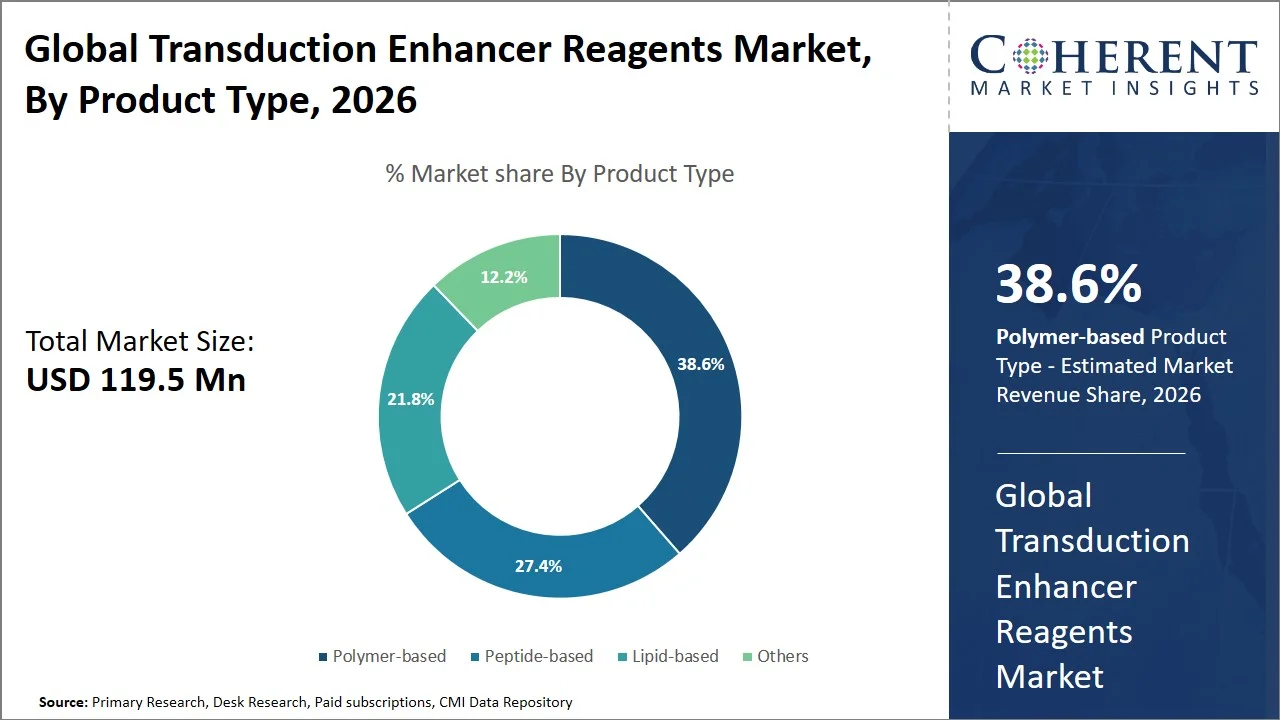
Why Do Polymer-Based Dominate the Global Transduction Enhancer Reagents Market?
Polymer-based are projected to hold the market share of 38.6% in 2026, due to its ease of application to achieve effective cellular uptake, cell membrane interactions and facilitate high delivery efficacy on a variety of cells. Additionally, the chemical versatility of polymers allows their synthesis and formulation to achieve better transduction efficiencies and maintain lesser cytotoxic effects in the treatment and research activities targeting gene and cell therapy. For instance, in February 2025, a study published by Springer Nature Limited, demonstrated higher transfection efficiency in mesenchymal stem cells with greater serum tolerance and cell membrane interaction. Such progresses of gene delivery systems are anticipated to fortify its presence in sophisticated gene-delivery protocols.
- Current Industry Events of 2026
- Market Size Estimation
- Regional Breakdown
- Competitive Landscape
- Customer Intelligence
- Segmental Analysis
- Pricing Analysis
- Key Market Drivers, Challenges & Future Trends
- Customized Insights Section
Why Does Lentiviral Represent the Largest Vector Type Segment in the Transduction Enhancer Reagents Market?
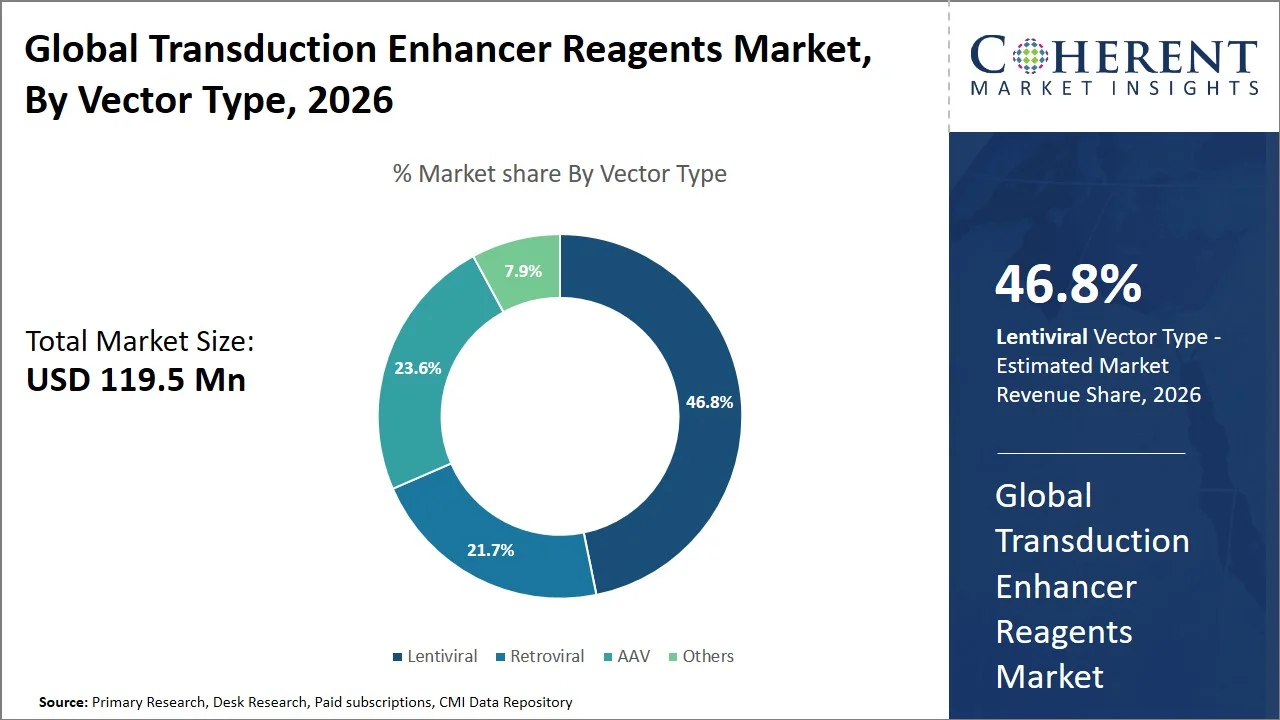
Lentiviral is projected to hold a market share of 46.8% in 2026, attributed to the high potential of lentiviral vectors for the transduction of dividing and non-dividing cells, stable gene expression, along with the ability to deliver genetic cargo of larger sizes. These are widely used in CAR-T cell therapy, modification of hematopoietic stem cells (HSCs), and other ex vivo gene therapies, therefore enhancing the demand of reagents that helps in boosting up the transduction of cell without adversely affecting cell viability. For instance, in July 2025, a marketing authorization application for the lentiviral-vector-based gene therapy Waskyra for the treatment of metachromatic leukodystrophy was authorized by the European Commission after the European Medicines Agency (EMA) CHMP recommended approval. Current clinical and regulatory developments for lentiviral therapies highlight a growing market demand for enhanced lentiviral transduction workflows.
Gene and Cell Therapies Segment Dominates the Global Transduction Enhancer Reagents Market
The gene and cell therapies segment is projected to hold a market share of 61.5% in 2026, driven by the swift growth of the genetically modified cell therapies which requires cost-effective and reproducible viral vector transduction. There are particular opportunities for T-cell and hematopoietic stem cell applications where efficient gene transfer is a key requirement for consistent manufacturing of therapeutic cells. For instance, in December 2025, Breyanzi received U.S. Food and Drug Administration (FDA) approval for marginal zone lymphoma, expanding CAR-T cell therapy’s approved use in the U.S. The increasing number of commercially approved cell therapies should fuel demand for transduction-enhancement solutions that facilitate the cell modification processes.
Current Events and their Impact
Current Events | Description and its Impact |
U.S. FDA Increased CMC Flexibility for Cell and Gene Therapies (January 2026) |
|
U.S. FDA Issued Draft Guidance on Leveraging Prior Knowledge for Gene Therapy Products (June 2026) |
|
European Medicines Agency (EMA) Advanced Therapy Guideline Entered Second Public Consultation (February 2025) |
|
Transduction Enhancer Reagents Market Dynamics
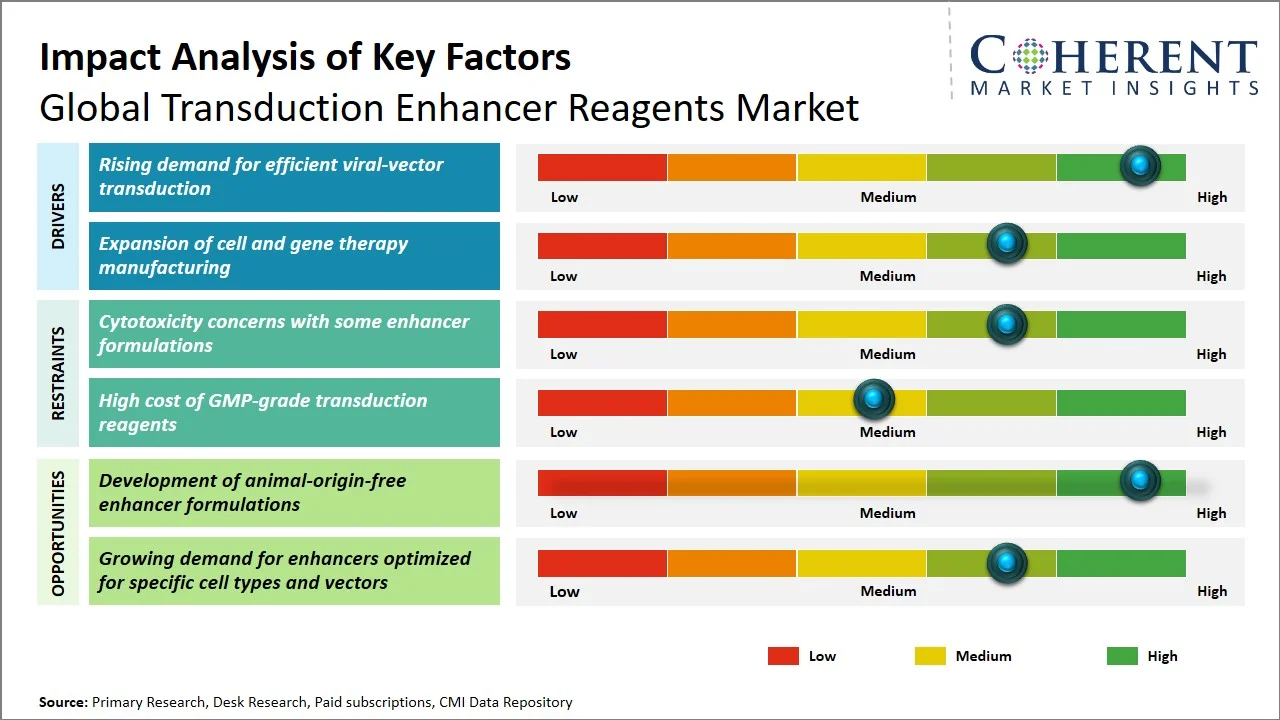
Market Drivers
- Rising demand for efficient viral-vector transduction: The global transduction enhancer reagents market is benefiting from the expanding clinical use of AAV and other viral-vector platforms, increasing the need for efficient and reproducible transduction. For instance, in April 2025, Japan’s Pharmaceuticals and Medical Devices Agency (PMDA) completed its review of Elevidys, an AAV-based gene therapy, classifying it as a gene therapy and viral-vector product for regulatory approval. The continued regulatory progression of viral-vector therapies is expected to expand demand for reagents that optimize vector delivery and transduction efficiency.
- Expansion of cell and gene therapy manufacturing: The global transduction enhancer reagents market is benefiting from the rapid expansion of cell and gene therapy manufacturing capacity, particularly for viral-vector-based therapies, increasing demand for reagents that support efficient and reproducible transduction. For instance, in October 2025, Saudi Arabia opened its first gene and cell therapy manufacturing facility, a 5,000-square-meter GMP facility designed to produce up to 2,400 therapeutic doses annually once fully operational. The expansion of GMP manufacturing infrastructure is expected to increase adoption of specialized transduction enhancers across vector production and cell-engineering workflows.
- Rising adoption of primary-cell and stem-cell transduction workflows: The global transduction enhancer reagents market is benefiting from the growing use of genetically modified primary and stem cells in advanced therapies, where efficient and reproducible viral transduction is critical. For instance, in April 2024, the U.S. FDA issued draft guidance on safety testing of human allogeneic cells used in cell-based medical products, specifically requiring manufacturers to consider the reagents used during cell expansion and processing. This increasing regulatory focus on cell-processing inputs is expected to support demand for characterized transduction enhancer reagents compatible with sensitive cell populations.
Emerging Trends
- Shift toward low-toxicity and serum-free transduction systems: Developers are increasingly seeking transduction approaches that maintain high efficiency while minimizing cytotoxicity and variability, particularly for primary immune and stem cells. This is encouraging the development of more reproducible enhancer formulations suited to scalable cell-therapy manufacturing.
- Growing integration of transduction optimization with next-generation vector engineering: Advances in AAV capsid engineering and vector design are increasingly being combined with optimization of cellular uptake and transduction conditions to improve tissue specificity and delivery efficiency. This is creating demand for enhancer reagents that can work with engineered and emerging vector platforms rather than conventional vectors alone.
- Increasing focus on scalable and standardized transduction workflows: As viral-vector therapies move toward commercial manufacturing, transduction processes are shifting from laboratory-specific protocols toward controlled, reproducible workflows that can be transferred across manufacturing sites. This trend is increasing the importance of characterized enhancer reagents with consistent performance and compatibility with GMP-oriented processes.
Regional Insights
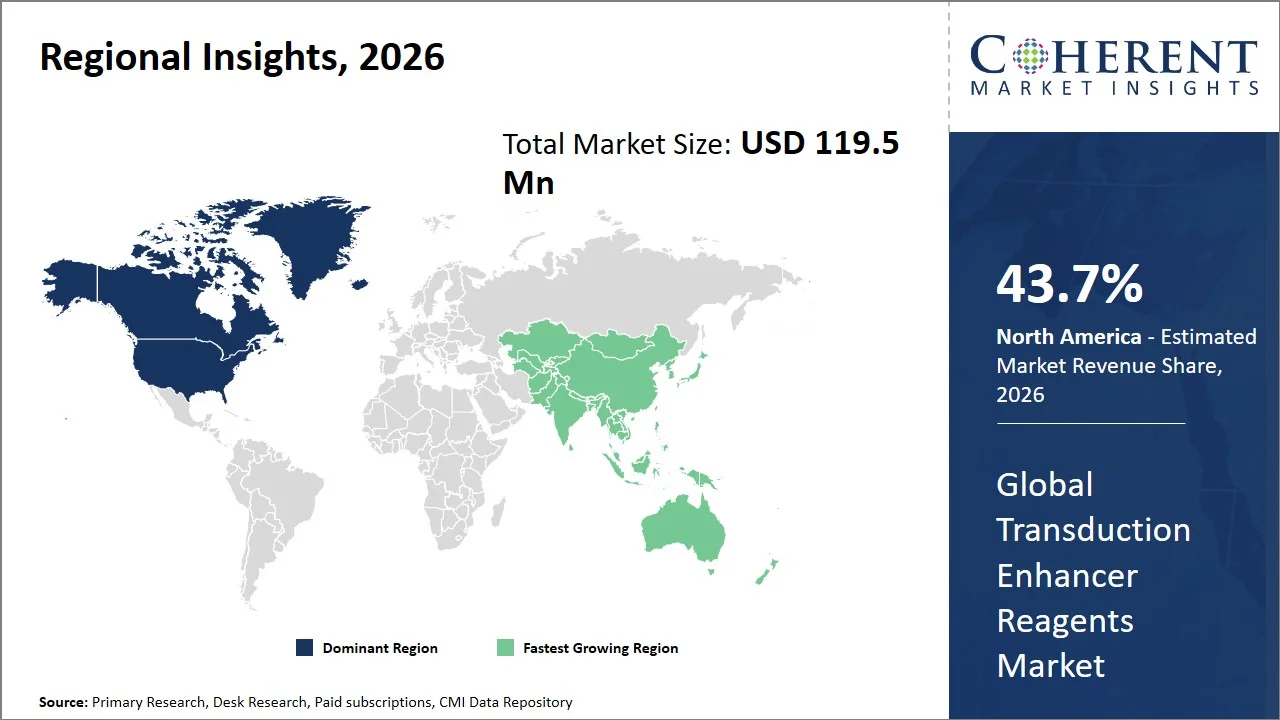
Why is North America a Strong Market for Transduction Enhancer Reagents?
North America leads the global transduction enhancer reagents market, accounting for an estimated 43.7% share in 2026, attributed to its robust biotechnology and pharmaceutical sectors, substantial research and development expenditure and well-equipped healthcare research and treatment facilities. The region's business environment has been a focal point, as governments extend robust intellectual property rights and inject capital into life sciences research and development into the commercial development of gene and cell therapies. This is backed by reliable biopharmaceutical production frameworks and advanced construction, allowing the use of transduction enhancers to expand over various treatment and diagnostic use.
For instance, during FY 2025, the U.S. Department of Energy maintained ongoing federal support of biotechnology and biomanufacturing research via its national laboratory system, supporting synthetic biology, biomanufacturing, and biomedical technologies. The ongoing public R&D investment supports the U.S. Life sciences innovation ecosystem for advanced therapeutic technologies.
Why Does Asia Pacific Transduction Enhancer Reagents Market Exhibit High Growth?
Asia Pacific is expected to exhibit the fastest growth in the global transduction enhancer reagents market, registering an estimated CAGR of 11.1% during 2026–2033. The region is projected to account for approximately 15.8% of the global market in 2026, driven by widespread biotechnology R&D, improving biopharmaceutical manufacturing base, and various governments policies related to the biotechnology industry in China, India, Japan, and South Korea. For instance, in August 2024, India’s Union Cabinet had approved of the BioE3 (Biotechnology for Economy, Environment and Employment) Policy that encourage the building of high-performance biomanufacturing such as precision biotherapeutics and enable the setting up of Biomanufacturing and Bio-AI hubs. (Source: Press Information Bureau)
Furthermore, due to the rising investments in healthcare, larger research community, and lower development cost, more R&D and manufacturing have been shifting towards Asia Pacific countries. In addition, establishment of biotechnology hubs and supportive regulatory procedures are playing a key role in increasing rate of adoption of the transduction enhancer reagents on account of better scope and development for gene and cell-based therapy.
Global Transduction Enhancer Reagents Market Outlook for Key Countries
Why is the U.S. Leading Innovation and Adoption in the Transduction Enhancer Reagents Market?
The U.S. holds the largest market share for innovation and adoption in transduction enhancer reagents market because there has been a robust commercialization of viral vector-based gene and cell therapies in the country are leading to a need for long term transduction technologies that work. Additionally, the country has a mature, industry specific infrastructure and an established environment that relies upon the use of highly sophisticated transduction reagents including viral vector creation, cell processing, and therapeutic manufacturing.
Is the UK a Favorable Market for Transduction Enhancer Reagents Market?
The U.K. is a promising market for transduction enhancer reagents due to the mature cell and gene therapy industry, presence of specialized GMP manufacturing infrastructure and a specialized advanced therapy medicinal products regulatory process. The combination of the Cell and Gene Therapy Catapult, access to National Health Service (NHS) clinical services and Medicines and Healthcare products Regulatory Agency (MHRA) oversight enable to rapidly scale viral-vector expertise from research into clinical and commercial applications.
Is China Emerging as a Key Growth Hub for the Transduction Enhancer Reagents Market?
China is becoming an important growth area in the transduction enhancer reagents market driven to country’s expanding cell and gene therapy ecosystem, improving viral-vector capacity, and a developing regulatory environment. The country is building cell and gene therapy infrastructure, CDMO capabilities and clinical translation abilities, thus prompting an uptake for reagents that support viral-vector transduction and cell engineering.
Why Does Germany Top the European Transduction Enhancer Reagents Market?
Germany leads the European transduction enhancer reagents market due to the vibrant and mature gene and cell therapy research infrastructure, outstanding GMP manufacturing, and regulatory know-how concerning advanced therapy medicinal products (ATMPs). Germany's regulators under the PEI focus particularly on cell/gene therapies and key manufacturing facilities/research centers have the experience in gene therapy-specific, and particularly viral vector-based, approaches for clinical translation. This provides fertile ground for the widespread application of transduction enhancers in both therapeutic productions, and in underlying research and development.
Is Transduction Enhancer Reagents Market Developing in Japan?
The transduction enhancer reagents market in Japan is gradually expanding boosted by its advanced regulatory structure in regenerative medicine, as well as the country's increasing focus on gene and cell therapy development. The gene therapy and regenerative medical products, including recombinant viral-vector products, are regulated by the Pharmaceuticals and Medical Devices Agency (PMDA) with specific clauses addressing each product type. The scope of the Japanese regulatory structure also tends to embrace the manufacture of viral vectors. As a result of this, transduction enhancer reagents for gene and cell therapy are presented an emerging market.
Viral Vector Type, Target Cell Type, Transduction Considerations, and Key Applications
Viral vector type | Common target cell types | Transduction considerations | Key Application |
Lentiviral | T cells, hematopoietic stem cells, primary cells | Often requires transduction optimization for difficult-to-transduce cells | CAR-T cell therapy, gene-modified cell therapies, research |
Retroviral | Hematopoietic and other dividing cells | Transduction efficiency depends on cell proliferation and vector characteristics | Ex-vivo gene therapy and cell engineering |
AAV | Neurons, muscle cells, liver cells, retinal cells | Efficiency varies substantially by serotype and target tissue | In-vivo gene therapy, genetic disease treatment, preclinical research |
Others | Cell-type dependent | Requires optimization according to vector and cellular characteristics | Gene delivery and molecular research |
How is the development of animal-origin-free enhancer formulations creating new growth opportunities in the transduction enhancer reagents market?
The development of animal-origin free transduction enhancer formats would be beneficial in the market, where cell and gene therapy companies are demanding reagents that are more traceable, consistent, ensure viral safety, and that conform to GMP workflow requirements. The use of animal free formats can mitigate the issues related to animal derived raw materials and provide more reproducible transduction process. For instance, in June 2025, the European Medicine Agency (EMA) updated their questions and answers in biological medicinal products to mandate disclosure of the composition of externally sourced media components and quality controls where cell-culture related reagents are concerned to emphasize quality of the manufacturing inputs.
Market Players, Key Development, and Competitive Landscape
Key Developments
- In August 17, 2026, Vector Science and Therapeutics signed an amended 10-year manufacturing and testing agreement with LyoGenesis Holdings, securing long-term U.S.-based cGMP manufacturing capacity for its proprietary peptide-based pharmaceutical products. The agreement includes quality testing and batch approval by LyoGenesis affiliate Verlytix, strengthening manufacturing and quality-control capabilities for advanced pharmaceutical products.
- In February 2026, ExploRNA Therapeutics announced a strategic partnership with OZ Biosciences to integrate ExploCap, a next-generation RNA capping technology, into OZ Biosciences’ mRNA portfolio. The collaboration expands access to advanced RNA reagents and strengthens OZ Biosciences’ capabilities across nucleic-acid and gene-therapy research applications.
- In May 2024, Takara Bio launched the Lenti-X Transduction Sponge, a dissolvable microfluidic transduction enhancer designed to improve lentivirus-mediated gene delivery and transduction efficiency across different cell types. The launch strengthens the availability of non-toxic, simplified transduction-enhancement technologies for gene and cell therapy research, supporting innovation in the transduction enhancer reagents market.
Competitive Landscape
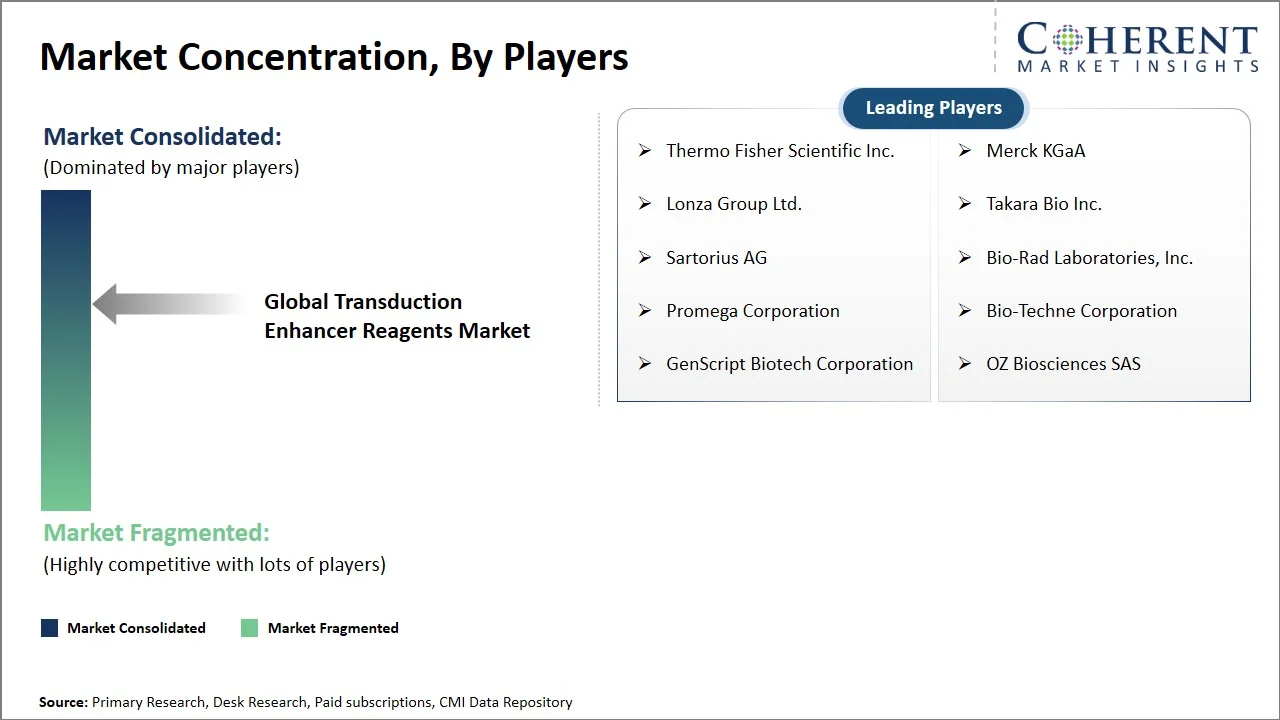
The global transduction enhancer reagents market is moderately competitive, with market activity increasingly focused on improving viral-vector transduction efficiency, expanding compatibility across difficult-to-transduce cell types, and developing reagents suitable for gene and cell therapy workflows. Competition is shaped by product performance, cell-type compatibility, reproducibility, and the ability to support increasingly stringent research and manufacturing requirements. Leading players are strengthening their portfolios through lentiviral and retroviral transduction enhancers, AAV-focused solutions, and next-generation formulations designed to improve gene-delivery efficiency. Key focus areas include:
- Development of next-generation transduction enhancers with improved efficiency and lower cytotoxicity
- Expansion of lentiviral, retroviral, and AAV-compatible solutions for diverse cell and gene therapy applications
- Optimization of transduction in primary cells and stem cells, which are often more difficult to transduce
- Increasing development of scalable and reproducible reagent solutions for research and cell and gene therapy manufacturing workflows.
Market Report Scope
Transduction Enhancer Reagents Market Report Coverage
| Report Coverage | Details | ||
|---|---|---|---|
| Base Year: | 2025 | Market Size in 2026: | USD 119.5 Mn |
| Historical Data for: | 2020 To 2024 | Forecast Period: | 2026 To 2033 |
| Forecast Period 2026 to 2033 CAGR: | 8.4% | 2033 Value Projection: | USD 210.5 Mn |
| Geographies covered: |
| ||
| Segments covered: |
| ||
| Companies covered: | Thermo Fisher Scientific Inc., Merck KGaA, Lonza Group Ltd., Takara Bio Inc., Sartorius AG, Bio-Rad Laboratories, Inc., Promega Corporation, Bio-Techne Corporation, GenScript Biotech Corporation, OZ Biosciences SAS | ||
| Growth Drivers: |
| ||
| Restraints & Challenges: |
| ||
Analyst Opinion (Expert Opinion)
- The global transduction enhancer reagents industry is expected to shift from conventional research-use reagents toward high-performance, low-toxicity and manufacturing-compatible formulations as viral-vector-based therapies progress from clinical development to commercial production. Over the forecast period, demand will increasingly favor enhancers that deliver consistent transduction across difficult-to-transduce primary cells while supporting scalable and reproducible workflows.
- The maximum opportunities are foreseen within polymer-based enhancers for gene and cell therapies in the U.S., where established viral-vector manufacturing capabilities and a large pipeline of CAR-T and gene therapy programs create sustained requirements for efficient transduction. However, China represents an attractive high-growth opportunity as domestic cell and gene therapy development and manufacturing capabilities expand.
- In order to gain a competitive advantage market players should prioritize next-generation, non-toxic and serum-free enhancer formulations that can demonstrate consistent performance across lentiviral and AAV workflows. Companies can further differentiate by offering GMP-compatible products, application-specific optimization protocols, technical support and scalable formulations, allowing customers to transition from research-stage experimentation to clinical and commercial manufacturing with the same supplier.
Speak to the analyst
Want personalized insights?
Take the findings above to one of our principal consultants, or have the report rebuilt around the segments, geographies and competitors you actually track.
Market Segmentation
- Product Type Insights (Revenue, USD Mn, 2021 - 2033)
- Polymer-based
- Peptide-based
- Lipid-based
- Others
- Vector Type Insights (Revenue, USD Mn, 2021 - 2033)
- Lentiviral
- Retroviral
- AAV
- Others
- Application Insights (Revenue, USD Mn, 2021 - 2033)
- Gene and Cell Therapies
- Drug Development and Research
- Vaccine Development
- Others
- End User Insights (Revenue, USD Mn, 2021 - 2033)
- Pharma and Biotech Firms
- Contract Manufacturing Organizations (CMOs) and Contract Development and Manufacturing Organizations (CDMOs)
- Academic and Research Institutes
- Contract Research Organizations (CROs)
- Others
- Regional Insights (Revenue, USD Mn, 2021 - 2033)
- North America
- U.S.
- Canada
- Latin America
- Brazil
- Argentina
- Mexico
- Rest of Latin America
- Europe
- Germany
- U.K.
- Spain
- France
- Italy
- Russia
- Rest of Europe
- Asia Pacific
- China
- India
- Japan
- Australia
- South Korea
- ASEAN
- Rest of Asia Pacific
- Middle East
- GCC Countries
- Israel
- Rest of Middle East
- Africa
- South Africa
- North Africa
- Central Africa
- North America
- Key Players Insights
- Thermo Fisher Scientific Inc.
- Merck KGaA
- Lonza Group Ltd.
- Takara Bio Inc.
- Sartorius AG
- Bio-Rad Laboratories, Inc.
- Promega Corporation
- Bio-Techne Corporation
- GenScript Biotech Corporation
- OZ Biosciences SAS
Sources
Primary Research Interviews
- Cell & gene therapy process-development scientists – evaluation of transduction efficiency, reagent performance, cell compatibility, and process optimization.
- Viral-vector manufacturing specialists – adoption of enhancers in lentiviral and AAV-based manufacturing workflows and scale-up requirements.
- CDMO/CMO technical and quality experts – GMP-grade reagent qualification, supplier selection, and manufacturing-process integration.
- Academic gene-therapy researchers – use of transduction enhancers across research and preclinical viral-vector applications.
Stakeholders
- Pharmaceutical and biotechnology companies developing gene and cell therapies.
- Contract development and manufacturing organizations (CDMOs) providing viral-vector and cell-therapy manufacturing services.
- Research institutes and academic laboratories conducting viral-vector and gene-delivery research.
- Transduction enhancer reagent manufacturers and suppliers providing research-grade and GMP-grade formulations.
- Regulatory and quality teams responsible for raw-material qualification, process consistency, and compliance.
- End-use Sectors
- Gene and cell therapy manufacturing – viral-vector-mediated genetic modification of therapeutic cells.
- Pharmaceutical and biotechnology R&D – preclinical and translational gene-delivery research.
- Academic and research institutions – viral-vector, gene-editing, and molecular-biology studies.
- Contract development and manufacturing organizations (CDMOs) – outsourced process development and manufacturing of viral-vector and cell-therapy products.
- Regulatory & Health Bodies
- U.S. Food and Drug Administration (FDA) – regulation and guidance for cell and gene therapy products, viral-vector manufacturing, and CMC requirements.
- European Medicines Agency (EMA) – regulation of advanced therapy medicinal products (ATMPs), including gene therapy medicinal products and viral-vector products.
- National Medical Products Administration (NMPA), China – regulation of gene therapy and cell therapy products.
- Pharmaceuticals and Medical Devices Agency (PMDA), Japan – regulatory oversight of regenerative medicine and gene therapy products.
Databases
- ClinicalTrials.gov – clinical trials involving gene therapies, cell therapies, lentiviral vectors, and adeno-associated virus (AAV) vectors.
- MEDLINE – scientific literature covering viral transduction, transduction enhancers, viral vectors, and gene delivery.
- FDA CBER – regulatory and product information for cellular and gene therapy products.
Associations
- American Society of Gene & Cell Therapy (ASGCT) – research, clinical development, manufacturing, and policy developments in cell and gene therapy.
- International Society for Cell & Gene Therapy (ISCT) – cell and gene therapy research, manufacturing, and clinical translation.
- Alliance for Regenerative Medicine (ARM) – industry developments, investment, and commercialization of advanced therapies.
Public Domain Sources
- National Institutes of Health (NIH) – biomedical research and developments in gene and cell therapy.
- National Center for Biotechnology Information (NCBI) – scientific literature and molecular biology information related to viral vectors and gene delivery.
- World Health Organization (WHO) – global information and guidance relevant to biological and advanced therapies.
Proprietary Elements
- CMI Data Analytics Tool, Proprietary CMI Existing Repository of information for last 10 years.
Get access to 250+ pages report
Every segment, forecast, competitor profile and data table behind the analysis above — available for instant download.
- ESOMAR Member
- ISO 9001:2015 Certified
- D-U-N-S Registered
- GDPR & CCPA Compliant
Missing comfort of reading report in your local language? Find your preferred language:
Transform your Strategy with Exclusive Trending Reports
Frequently Asked Questions
The global transduction enhancer reagents market is estimated to be valued at USD 119.5 Mn in 2026 and is expected to reach USD 210.5 Mn by 2033.
Polymer-based dominate due to their established effectiveness, broad compatibility with viral vectors and cell types, ease of use, and ability to improve transduction efficiency at relatively low cost.
Transduction enhancer reagents are biochemical agents that improve the efficiency of viral-vector entry and gene delivery into target cells.
The CAGR of global transduction enhancer reagents market is projected to be 8.4% from 2026 to 2033.
Transduction enhancer reagents are used to improve viral-vector entry into target cells and increase the efficiency of gene delivery.
They facilitate interactions between viral vectors and target-cell membranes, thereby increasing vector uptake and gene delivery.
Lentiviral and adeno-associated viral (AAV) vectors are among the major viral-vector systems used with transduction enhancers.