

Global Urea Market Size and Forecast – 2026-2033
The Global Urea Market is estimated to be valued at USD 70,457.7 Mn in 2026 and is expected to reach USD 92,717.5 Mn by 2033, exhibiting a compound annual growth rate (CAGR) of 4.0% from 2026 to 2033.
Key Takeaways of the Urea Market
- Granular urea is expected to dominate the global urea market with a 69.4 % share in 2026.
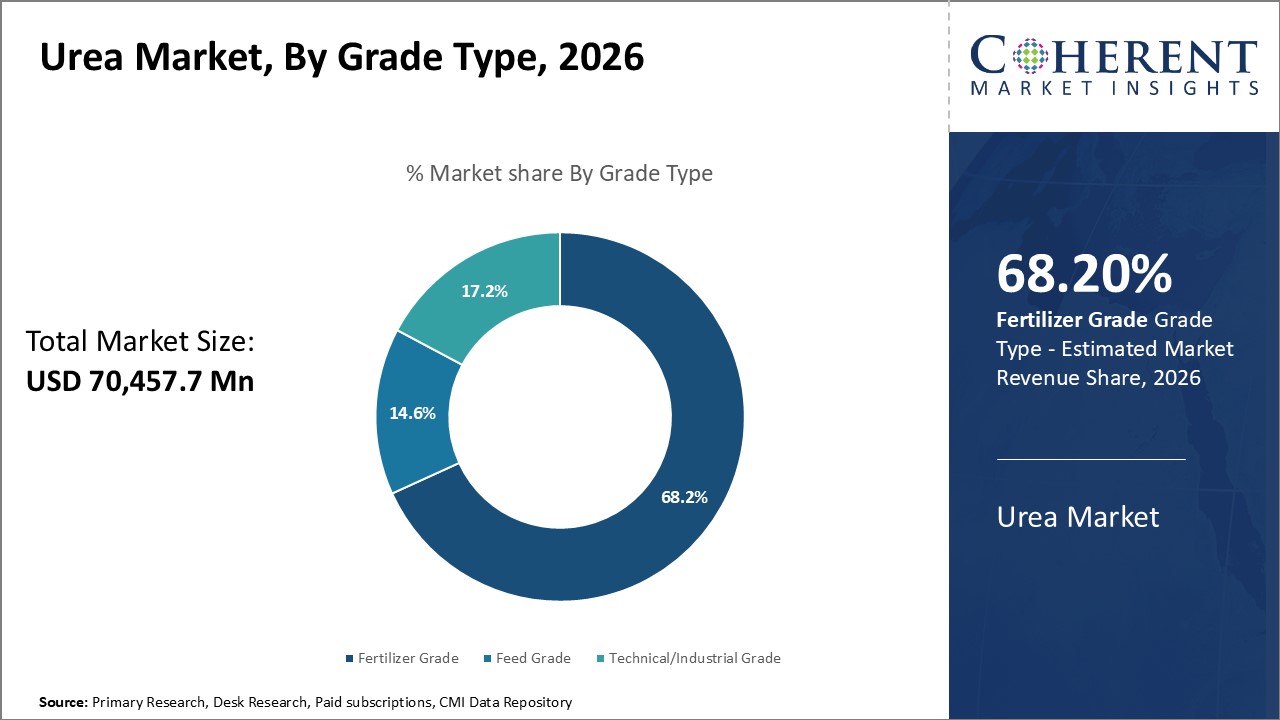
- The fertilizer grade segment is projected to account for 68.2 % of the market in 2026.
- Below 91% purity segment is expected to hold 71.7 % of the market share in 2026.
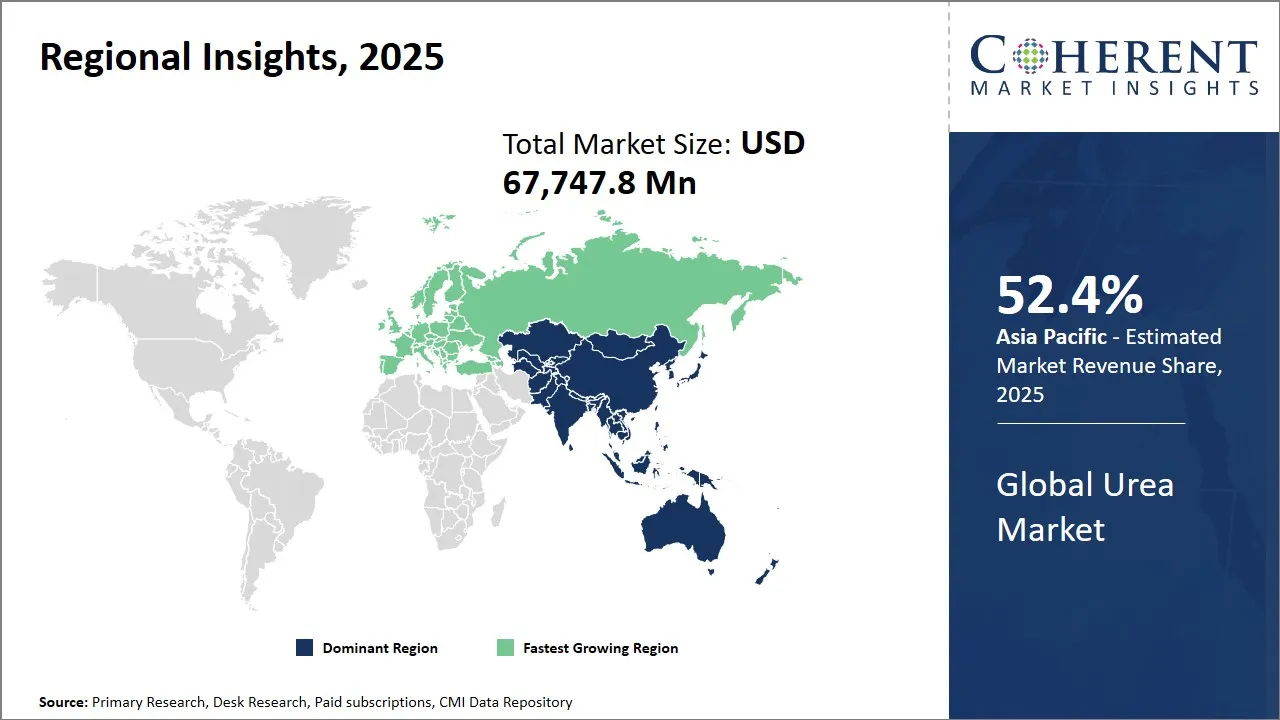
- The Asia Pacific region is poised to dominate the global urea market in 2026, capturing a 52.4 % share. Europe, with a 13.8% share, is expected to be the fastest-growing region.
Market Overview
The market trend in the urea industry highlights a strong shift towards sustainable and efficient agricultural practices, with innovations focusing on enhanced nutrient use efficiency and reduced environmental impact. Additionally, growing investments in advanced production technologies and expansion of production capacities in regions like Asia Pacific are shaping market dynamics. The rising adoption of urea in non-agricultural sectors such as automotive and chemical manufacturing further supports the market growth, reflecting diversification and resilience amidst changing regulatory and economic conditions.
Current Events and Its Impact
Current Events | Description and its impact |
China's Urea Export Policy Changes |
|
Dangote's Fertilizer Plant Expansion in Nigeria |
|
Segmental Insights
- Current Industry Events of 2026
- Market Size Estimation
- Regional Breakdown
- Competitive Landscape
- Customer Intelligence
- Segmental Analysis
- Pricing Analysis
- Key Market Drivers, Challenges & Future Trends
- Customized Insights Section
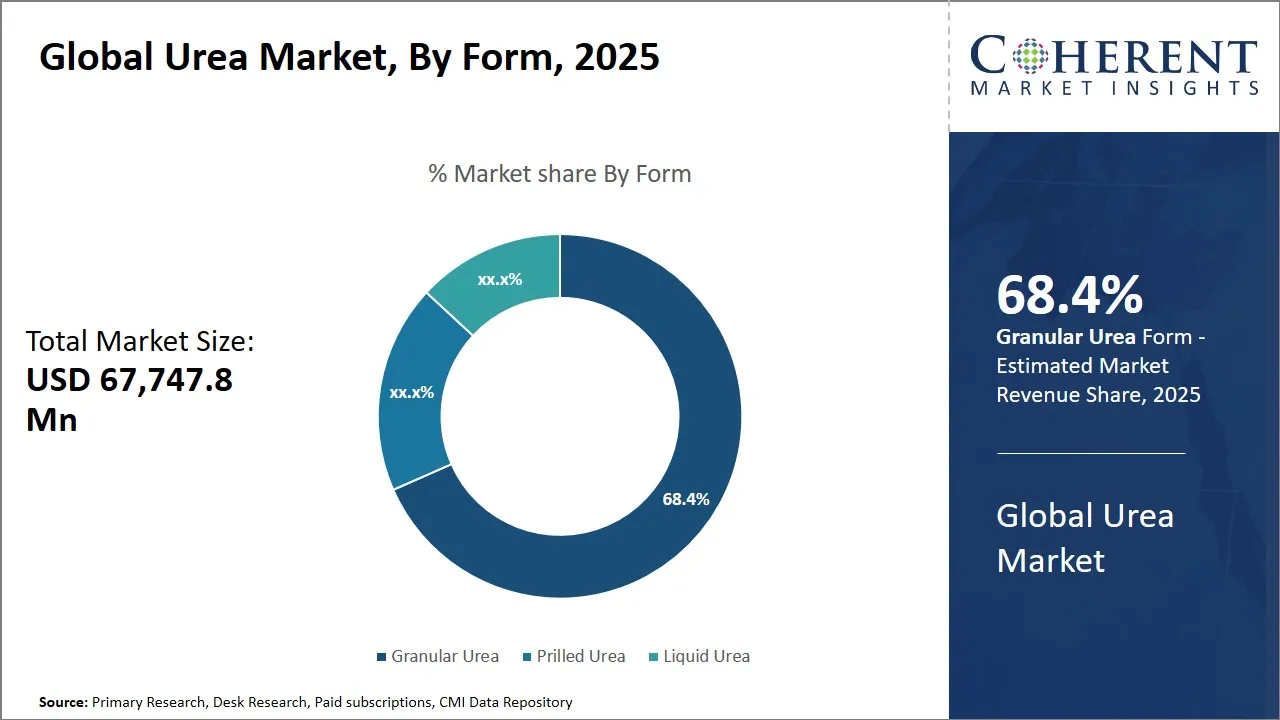
Urea Market Insights, By Form - Granular Urea Segment Dominates Due to Its Superior Agronomic and Handling Advantages
Granular urea segment is expected to hold 69.4% share of the global urea market in 2026. This is primarily due to its excellent physical and handling properties over prilled and liquid urea. The granular form is characterized by the increased density and the consistent size of the grains that improves the flowability of the substance and decreases dust formation during the transportation and working process. This renders it desirable to farmers and distributors who value its convenience of handling, storage and use in other farming conditions.
For example, in regions like India, where urea is extensively used for rice and wheat cultivation, granular urea is preferred due to its efficient handling and minimized wastage during application. Farmers in Uttar Pradesh, one of the major agricultural states in India, has shown a marked preference for granular urea over liquid forms, as the granular variety ensures even distribution and better crop yields.
Urea Market Insights, By Grade Type - Fertilizer Grade Segment Maintains Dominance Due to Its Essential Role in Agriculture
Fertilizer grade segment is projected to account for 68.2% share of the market in 2026. This dominance in the soil is maintained by its key role in making the soil more fertile and enhancing crop production particularly staple foods like wheat, maize, and rice. Urea fertilizer is a cost effective and concentrated source of nitrogen, an important nutrient necessary in high quantities by crops to grow best.
Its large market share is due to the extensive use of fertilizer grade urea in various agricultural activities. With the world growing hungry, most particularly in the developing countries where the agricultural industry is experiencing growth, the farmers will still prefer using fertilizer grade urea to maximize production and guarantee food security. Its performance in the fast delivery of nitrogen to plants and efficiency in uptake of nutrients justify intensive farming models that are essential to ensure this demand is fulfilled.
Urea Market Insights, By Purity Level - Below 91% Purity Leads Driven by Cost-Effectiveness and Broad Application Scope
Below 90% segment is set to hold 70.7% market share in 2026. The dominance is largely due to the trade-off in cost and functionality of lower purity urea which makes it very appealing to large-scale agricultural uses where cost-effectiveness is a key factor.
Urea that is of less than 90 percent purity usually has a higher percentage of impurities like biuret and other nitrogenous compounds that may slightly decrease the availability of nitrogen, but are otherwise accepted in the agricultural world. The reduced cost of below 90% purity urea will be more important than the marginal costs of reduced nutrient efficiency to many farmers, especially in areas with tight budgets or with less intensive farming methods. This allows wider access and application in diverse sizes of farms and economical situations.
Regional Insights
Asia Pacific Urea Market Analysis and Trends
The Asia Pacific region is projected to lead the market with a 52.4% share in 2026, driven by several critical factors. Its large agricultural activities especially in the developing countries such as India and China result in the creation of significant demand for nitrogen-based fertilizers such as urea. Constant consumption is based on government programs that enhance the production of agriculture and food security. Also, the good availability of established manufacturing centers including Yara Internationals regional offices, Sabic (Saudi Basic Industries Corporation) with joint ventures and Indian Fertilizer Corporation facilitates a strong-supplies ecosystem.
The nature of trade is also in favor of Asia Pacific as there are sufficient natural gas deposits in such countries as Indonesia and Malaysia that offer feedstock at relatively low prices and therefore boosts the competitiveness of production. Asia Pacific’s dominant position is further encouraged by the regulatory promotion of sustainable farming practices which is promoting the incorporation of efficient urea formulations in the region.
Europe Urea Market Analysis and Trends
In Europe, the urea market is expected to experience steady growth, with a significant contribution of approximately 13.8% share in 2026. The factors that have led to the expansion are a robust agricultural industry in the region and continuous attempts to improve fertilizer efficiency and sustainability. Russia, Germany, and Poland and France countries that are on top of the urea production in the region and their strong agricultural sector needs efficient nitrogen fertilizers to increase the production of crops.
The main industry participants like Yara international and CF industries are making investments in advanced production technologies on urea with an aim of minimizing the environmental impact and enhancing the production process. Furthermore, the EU regulations on emissions and sustainability are strict and affecting the demand for more environment-friendly urea solutions. Rising demand for organic and sustainable agricultural production coupled with the moves to enhance soil health and crop productivity is further contributing to urea consumption.
Global Urea Market Outlook for Key Countries
India Urea Market Trends
Indian market stands as a pillar of world urea demand as it happens to be one of the largest producers of agriculture worldwide. There is strong government policy subsidization on fertilizers and fertilizers are highly consumed both by small and large sized farmers. Indian Farmers Fertilizer Cooperative (IFFCO), Rashtriya Chemicals and Fertilizers (RCF), and National Fertilizers Limited are major manufacturers that control the supply side. Continuous attempts to increase the efficiency of fertilizer application and the introduction of tailored nutrient management activities affect product development and market forces. The vast geographical coverage of India and the variety of its cropping patterns guarantees the year-long demand for urea, which solidifies its indispensability in the global marketplace.
China Urea Market Trends
China remains the largest producer and consumer of urea due to its urea emphasis as a result of its emphasis on agricultural productivity and increase of industrial applications. Massive chemical giants such as China National Corporation of Chemical (ChemChina) and China National Offshore Oil Corporation (CNOOC) are the drivers of production capacity increments and the enhancement of technology. Quality of products and market structures are being influenced by environmental regulations that are forced to minimize emissions and enhance the efficiency of application of fertilizers. This is due to the strategic trade policies of China and its location in the Belt and Road Initiative that allow it to export and import urea, which influences the global supply chains.
Saudi Arabia Urea Market Trends
The influence of the country’s huge natural gas reserves and the governmental ambition of downstream chemical industries on the development of the Saudi Arabia’s urea market is eminent. Industry leaders like SABIC and Petro Rabigh have central roles to play since they capitalize on the gas to chemicals integration to make urea at low costs. Strategic investments by the governments are meant to increase exports to the regional and foreign markets facilitated by well-established logistics and port infrastructure. Also, Saudi Arabia is moving toward sustainable production technologies, to become associated with the efforts of environmental objectives, a major participant in the Middle Eastern urea production environment, and a region market growth driver.
Brazil Urea Market Trends
The urea market in Brazil is affected by its vast agricultural sector especially soy and corn production, which require high levels of nitrogen. Although the country depends on imports of the Middle East and Asia, local manufacturers like Petrobras and Vale are taking steps to increase local manufacturing potentials. Constant consumption is maintained by government agricultural extension and incentives to enhance the better use of fertilizers. The agri-export powerhouse status of Brazil influenced the increased urea demand, whereas the trade policies and the logistic advancements serve to enhance the market resilience and development. The availability of multinational players also adds to the existence of product availability and technology diffusion into the market.
Macro and Micro Economic Factors Impacting Global Urea Market
Macroeconomic Factors
- Global population growth and expanding food security initiatives are pushing agricultural demand, making urea indispensable as a nitrogen fertilizer for crop productivity.
- Trends in global GDP, inflation, and exchange rates have a direct impact on affordability, international trade flows, and procurement strategies, especially for major importers like India and Brazil.
- Natural gas price fluctuations—representing 60–80% of production costs—are central to urea's cost base. Volatile energy markets, supply disruptions, and geopolitical tensions (especially in gas-exporting countries) can lead to factory shutdowns, price surges, and increased import reliance.
- International policy frameworks related to fertilizer subsidies, environmental regulations (carbon tracking, nitrogen pollution control), and protectionist measures impact both local market resilience and global pricing volatility.
Microeconomic Factors
- Technological innovations, production process improvements, adoption of enhanced-efficiency fertilizers, and logistics optimization reduce inefficiencies and may pressure margins.
- Seasonal agricultural cycles drive short-term price peaks, often in advance of planting seasons in key regions.
- The supply chain complexity—regional discrepancies in availability, logistics costs, access to reliable suppliers—demands flexible and data-driven sourcing strategies for distributors and farmers.
Market Players, Key Development, and Competitive Intelligence
Key Developments
- In April 2024, CF Industries Holdings, Inc (a global manufacturer of hydrogen and nitrogen products for clean energy, fertilizer) and JERA (the world's largest energy companies dealing in fuels) entered into a Joint Development Agreement (JDA) to explore constructing a greenfield, 1.4 Mn ton low‑carbon ammonia plant at CF’s Blue Point Complex in Louisiana. The project will use autothermal reforming (ATR) technology combined with carbon capture to supply sustainable ammonia, an essential feedstock for future urea production.
- In April 2024, EuroChem Group (a global fertilizer company) announced the launch of a new research and development program aimed at enhancing fertilizer products, including urea-based and enhanced-efficiency fertilizers. The initiative is designed to speed up innovation in nitrogen fertilizers that release nutrients more effectively. This effort supports the company’s ongoing push to improve crop nutrient use and reduce environmental impact.
Top Strategies Followed by Global Urea Marke t Players
- Established players, often multinational corporations with substantial resource pools, prioritize heavy investment in research and development (R&D) to innovate high-performance and environmentally friendly urea products. These innovations often focus on enhanced nitrogen efficiency and reduced emissions, aligning with global sustainability trends and regulatory demands.
- For example, Yara has pioneered technologies aimed at improving nitrogen efficiency, such as their YaraVita range, which enhances crop yield while minimizing nitrogen loss. This aligns with global sustainability efforts and regulatory requirements like those outlined in the EU Nitrogen Directive.
- Mid-level market players in the global urea arena position themselves by balancing quality and affordability, catering primarily to price-sensitive consumer segments such as smallholder farmers and developing economies. Unlike their larger counterparts, mid-tier companies may have limited R&D budgets but focus strategically on producing cost-effective urea formulations that maintain essential nutrient efficiency without compromising affordability.
- For instance, Coromandel International focuses on offering cost-effective urea formulations that maintain nutrient efficiency but at a lower price point compared to large players. These companies may not have the same level of R&D investment as the multinational giants but excel by ensuring their products remain accessible and affordable in regions where price sensitivity is high.
- Small-scale players operating within the global urea market typically carve out niche segments to stay competitive amid intense rivalry. These firms often emphasize specialized product features, such as custom formulations tailored for specific crops or conditions, or innovative delivery technologies that improve nutrient uptake. By adopting cutting-edge manufacturing and formulation technologies, small players aim to differentiate themselves from mass-market competitors.
- For instance, Sunnyside Organic Fertilizers has developed a line of urea products enriched with micronutrients tailored for organic farming. They also leverage innovative delivery technologies such as slow-release urea products, which enhance nutrient uptake and minimize leaching.
Market Report Scope
Urea Market Report Coverage
| Report Coverage | Details | ||
|---|---|---|---|
| Base Year: | 2025 | Market Size in 2026: | USD 70,457.7 Mn |
| Historical Data for: | 2020 To 2024 | Forecast Period: | 2026 To 2033 |
| Forecast Period 2026 to 2033 CAGR: | 4.0% | 2033 Value Projection: | USD 92,717.5 Mn |
| Geographies covered: |
| ||
| Segments covered: |
| ||
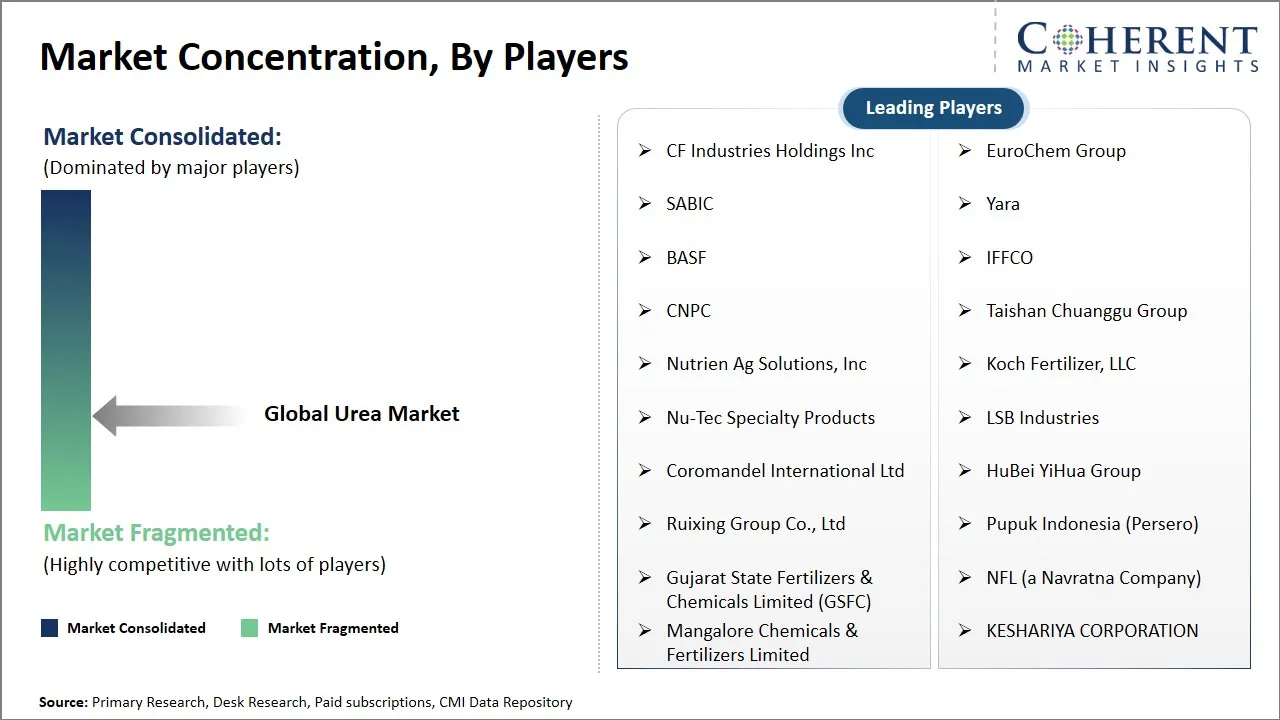
| Companies covered: | CF Industries Holdings Inc, EuroChem Group, SABIC, Yara, BASF, IFFCO, CNPC, Taishan Chuanggu Group, Nutrien Ag Solutions, Inc, Koch Fertilizer, LLC, Nu-Tec Specialty Products, LSB Industries, Coromandel International Ltd, HuBei YiHua Group, Ruixing Group Co., Ltd, Pupuk Indonesia (Persero), Gujarat State Fertilizers & Chemicals Limited (GSFC), NFL (a Navratna Company), Mangalore Chemicals & Fertilizers Limited, and KESHARIYA CORPORATION | ||
| Growth Drivers: |
| ||
| Restraints & Challenges: |
| ||
Urea Market Dynamics
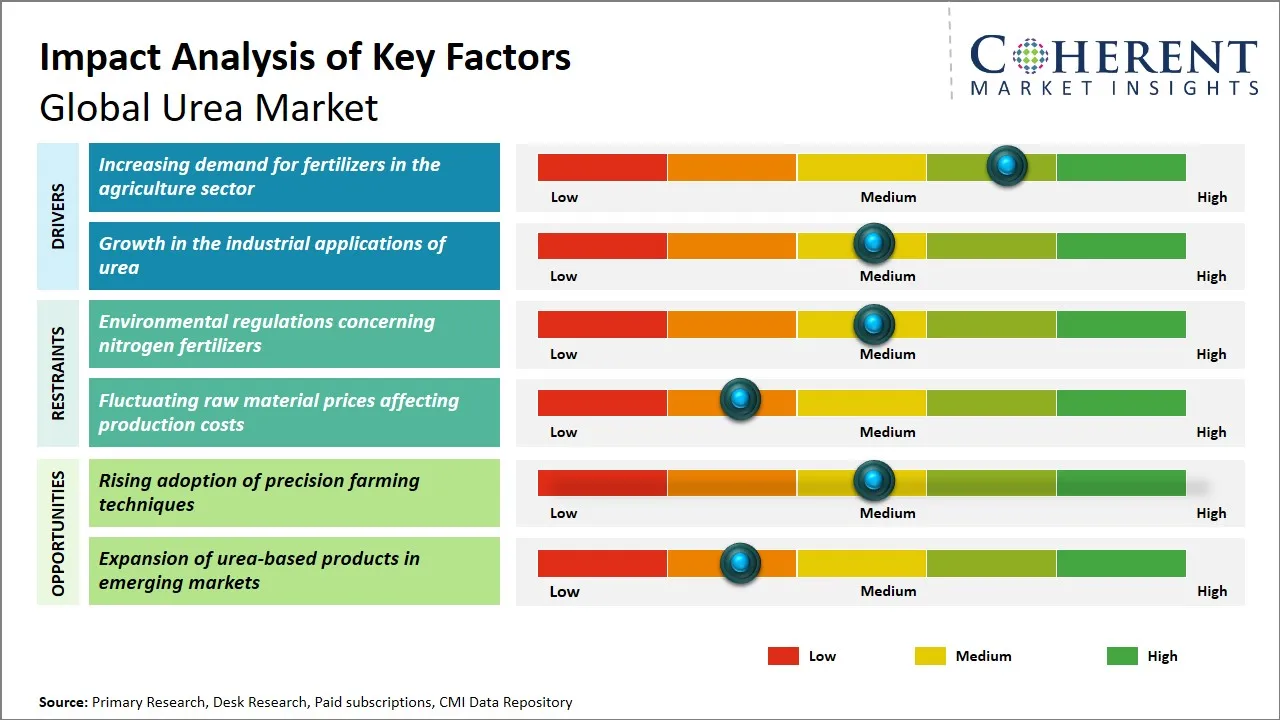
Urea Market Driver - Increasing Demand for Fertilizers in the Agriculture Sector
The rising need to increase agricultural output to satisfy the rising world population is making a significant contribution to the demand for urea fertilizers. With farmers struggling to boost crop productivity and increase soil fertility, urea has gained popularity as a source of nitrogen because of its great nutritional value and affordability. Additionally, growing agricultural activities and the increase of arable land in the developing economies have boosted the use of urea. The use of chemical fertilizer is also being supported by government programs promoting sustainable farming methods and food security in areas where there is a depletion in the nutrient content of the soil.
As an illustration, the Indian governments Pradhan Mantri Krishi Sinchayee Yojana (PMKSY) program is focused on the adoption of water-efficient agriculture, as well as the widespread application of fertilizers such as urea, ensuring long-term crop yields and combating the situation when nutrients are drained from the soil. Such policy encouragement and the increased requirement of food security is driving the trend towards the usage of urea as an essential fertilizer in the world.
Urea Market Opportunity - Rising Adoption of Precision Farming Techniques
The growing use of precision farming methods is a major growth prospect in the global urea market. Precision farming requires the use of advanced technologies like GPS, IoT, remote sensing, and data analytics that help optimize the inputs in farming and enhance the yields of crops. This would promote the accurate use of fertilizers, such as urea, and lead to a higher efficiency of nutrient utilization and minimize wastage.
Indicatively, farmers are using GPS-guided tractors and drones in the U.S. to drop urea fertilizers with high precision, so that fertilizers are only applied to where they are required, saving money and reducing environmental impact.
Analyst Opinion (Expert Opinion)
- The market for urea is set to grow significantly because of rising agricultural demand and the necessity to use effective fertilizers. The findings of the International Fertilizer Association Conference (2023) and the Global Agri-Tech Summit (2022) emphasized considerable progress, with such companies as Nutrien and Yara international leading the pack.
- The introduction of a coated urea product by Nutrien to promote the absorption of nutrients is an indicator of a strategic reaction to the necessity of environmentally friendly agricultural production and high crop yields. Debates during these shows focused on the need to tackle environmental issues especially regarding nitrogen emissions thus creating an urgency to seek more environmentally friendly formulations. But issues like unreliable natural gas prices and geopolitical unrests on supply chains also came out as a common barrier.
- Those businesses that are capable of engaging in research and development to develop novel, eco-friendly urea-based products will probably have a competitive advantage. Also, partnerships with agricultural stakeholders should be empowered to spread the advantages of advanced fertilizers to allow market positioning. Finally, the future development of urea market will be based on its flexibility to the varying agricultural trends and regulatory environments as well as satisfying rising global food demand.
Speak to the analyst
Want personalized insights?
Take the findings above to one of our principal consultants, or have the report rebuilt around the segments, geographies and competitors you actually track.
Market Segmentation
- Form Insights (Revenue, USD Mn, 2021 - 2033)
- Granular Urea
- Prilled Urea
- Liquid Urea
- Grade Type Insights (Revenue, USD Mn, 2021 - 2033)
- Fertilizer Grade
- Feed Grade
- Technical/Industrial Grade
- Purity Level Insights (Revenue, USD Mn, 2021 - 2033)
- Below 90%
- 90–95%
- Above 95%
- Distribution Channel Insights (Revenue, USD Mn, 2021 - 2033)
- Indirect
- Direct
- Regional Insights (Revenue, USD Mn, 2021 - 2033)
- North America
- U.S.
- Canada
- Latin America
- Brazil
- Argentina
- Mexico
- Rest of Latin America
- Europe
- Germany
- U.K.
- Spain
- France
- Italy
- Russia
- Rest of Europe
- Asia Pacific
- China
- India
- Japan
- Australia
- South Korea
- ASEAN
- Rest of Asia Pacific
- Middle East
- GCC Countries
- Israel
- Rest of Middle East
- Africa
- South Africa
- North Africa
- Central Africa
- North America
- Key Players Insights
- CF Industries Holdings Inc
- EuroChem Group
- SABIC
- Yara
- BASF
- IFFCO
- CNPC
- Taishan Chuanggu Group
- Nutrien Ag Solutions, Inc
- Koch Fertilizer, LLC
- Nu-Tec Specialty Products
- LSB Industries
- Coromandel International Ltd
- HuBei YiHua Group
- Ruixing Group Co., Ltd
- Pupuk Indonesia (Persero)
- Gujarat State Fertilizers & Chemicals Limited (GSFC)
- NFL (a Navratna Company)
- Mangalore Chemicals & Fertilizers Limited
- KESHARIYA CORPORATION
Sources
Primary Research Interviews
- Plant Manager – Leading Urea Production Facility
- Procurement Director – Major Fertilizer Distributor
- Product Development Lead – Urea-Based Agrochemical Manufacturer
- Sustainability Officer – Fertilizer Industry Trade Association
Stakeholders
- Manufacturers (Urea producers, fertilizer companies)
- End-use Sectors:
- Agriculture (crop fertilizers, soil amendment users)
- Industrial (resins, adhesives, animal feed sector)
- Environmental (wastewater treatment, NOx control)
- Regulatory & Certification Bodies
- E-commerce Platforms and Retailers (fertilizer retailers, B2B platforms)
- Technology Integration Players (smart farming, supply chain analytics providers)
Databases
- UN Comtrade Database
- India Import Export (EXIM) Database
- World Fertilizer Database (IFA – International Fertilizer Association)
Magazines
- Fertilizer Focus – Market dynamics and innovations in urea
- World Fertilizer Magazine – Technical news and industry trends
- AgroChemicals Market Review – Growth trends in urea and fertilizer applications
- Chemical Week – Global commodity and specialty chemicals updates
Journals
- International Journal of Fertilizer Science – Efficiency and usage in agriculture
- Journal of Applied Agricultural Chemistry – Urea formulations and application research
- Journal of Environmental Science & Technology – Impacts of urea in industrial sectors
- Global Journal of Soil Science – Agronomic effectiveness of urea
Newspapers
- The Financial Times – Global commodity market reports and pricing
- The Wall Street Journal – Fertilizer industry and export/import trends
- AgriBusiness News – Regional market coverage and policy updates
- The Economic Times (India) – Fertilizer policy and market changes
Associations
- International Fertilizer Association (IFA)
- Fertilizer Association of India (FAI)
- The Fertilizer Institute (TFI, USA)
- European Fertilizer Manufacturers Association (EFMA)
Public Domain Sources
- U.S. Geological Survey (USGS) – Mineral commodities summaries for urea
- Food & Agriculture Organization (FAO) – Fertilizer use statistics
- World Bank – Global fertilizer consumption and production databases
- European Commission – Fertilizer regulations and trade policy
Proprietary Elements
- CMI Data Analytics Tool, Proprietary CMI Existing Repository of information for last 8 years.
Get access to 250+ pages report
Every segment, forecast, competitor profile and data table behind the analysis above — available for instant download.
- ESOMAR Member
- ISO 9001:2015 Certified
- D-U-N-S Registered
- GDPR & CCPA Compliant
Missing comfort of reading report in your local language? Find your preferred language:
Transform your Strategy with Exclusive Trending Reports
Frequently Asked Questions
The global urea market is estimated to be valued at USD 70,457.7 Mn in 2026 and is expected to reach USD 92,717.5 Mn by 2033.
The CAGR of Global Urea Market is projected to be 4.0% from 2026 to 2033.
Increasing demand for fertilizers in the agriculture sector and growth in the industrial applications of urea are the major factors driving the growth of the global urea market.
Environmental regulations concerning nitrogen fertilizers and fluctuating raw material prices affecting production costs are the major factors hampering the growth of the global urea market.
In terms of Form, Granular Urea segment is estimated to dominate the market revenue share in 2026.
CF Industries Holdings Inc, EuroChem Group, SABIC, Yara, BASF, IFFCO, CNPC, Taishan Chuanggu Group, Nutrien Ag Solutions, Inc, Koch Fertilizer, LLC, Nu-Tec Specialty Products, LSB Industries, Coromandel International Ltd, HuBei YiHua Group, Ruixing Group Co., Ltd, Pupuk Indonesia (Persero), Gujarat State Fertilizers & Chemicals Limited (GSFC), NFL (a Navratna Company), Mangalore Chemicals & Fertilizers Limited, KESHARIYA CORPORATION are the major players.
Asia Pacific is expected to lead the global urea market in 2026.