

U.S. Latin Sauce Market Size and Forecast – 2026-2033
The U.S. Latin sauce market is estimated to be valued at USD 4,694.0 Mn in 2026 and is expected to reach USD 8,416.8 Mn by 2033, exhibiting a compound annual growth rate (CAGR) of 8.7% from 2026 to 2033.
Key Takeaways of the U.S. Latin Sauce Market
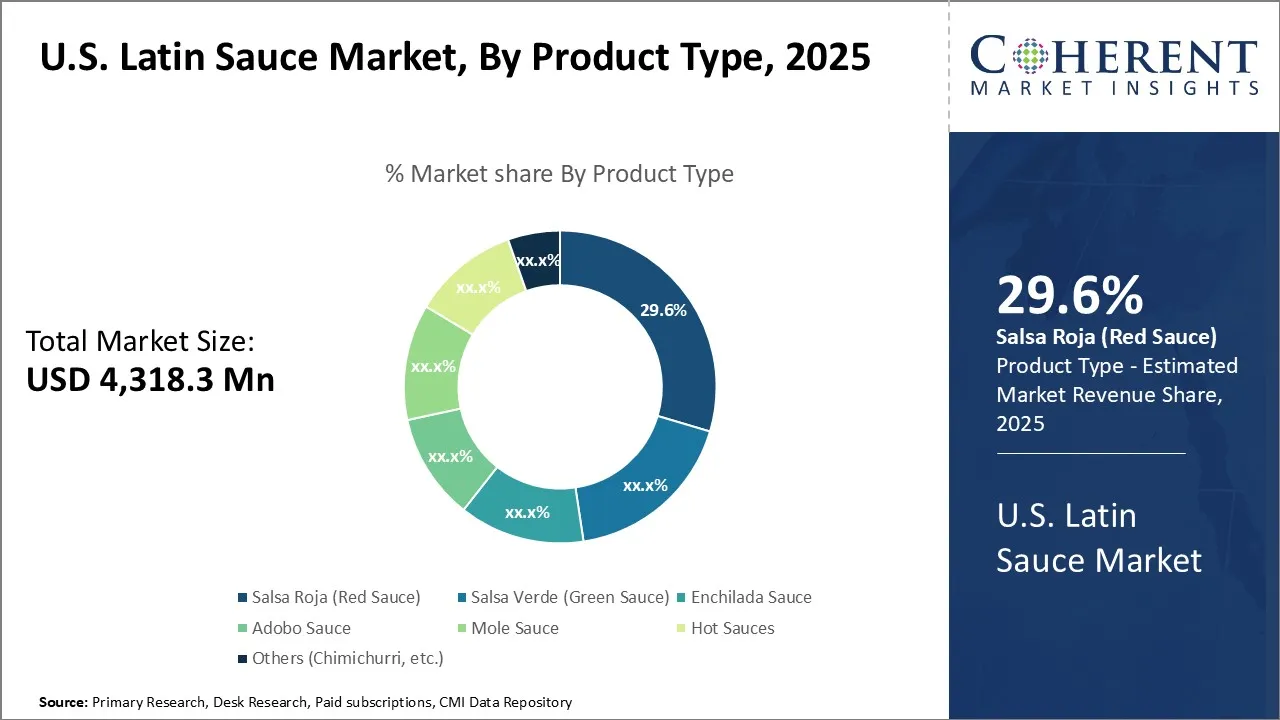
- The Salsa Roja (red sauce) segment is projected to dominate the U.S. Latin sauce market in 2026 with a 30.6% share.
- The bottles segment is expected to hold the largest share of the U.S. Latin sauce market in 2026, accounting for 35.3% share.
- The conventional segment is expected to capture a 52.7 % of the market share in 2026.
Market Overview
A key trend shaping the U.S. Latin sauce market is the growing preference for authentic and ethnic flavors among consumers, fueled by increased multicultural exposure and adventurous eating habits. Additionally, the surge in health-conscious choices and demand for organic and preservative-free products has led manufacturers to innovate with cleaner labels and natural ingredients. E-commerce channels and retail partnerships are also playing a pivotal role, making Latin sauces more accessible to a wider audience and driving sustained the market expansion.
Current Events and Its Impact
Current Events | Description and its Impact |
Rise of Latin American Sauces in U.S. Retail (2025) |
|
Health-Conscious Consumer Trends (2025) |
|
Segmental Insights
- Current Industry Events of 2026
- Market Size Estimation
- Regional Breakdown
- Competitive Landscape
- Customer Intelligence
- Segmental Analysis
- Pricing Analysis
- Key Market Drivers, Challenges & Future Trends
- Customized Insights Section
U.S. Latin Sauce Market Insights, by Product Type - Salsa Roja (Red Sauce) Segment Dominates the Market Owing to its Versatility and Deep-Rooted Cultural Significance
The Salsa Roja (red sauce) segment is projected to account for 30.6% share in 2026, due to its extensive culinary and strong culture appeal to consumers. This market is advantaged by the natural taste profile that it provides which is part of most of the traditional Latin American cuisine not only Mexican food but also other specialty cuisines of the region. The rich, spicy taste of Salsa Roja goes well with many types of foods, including tacos and enchiladas along with grilled meats and even fusion meals, thus extending its popularity not only to Latin American cuisines but also to a wider group of people willing to explore multicultural cuisines.
The consumer habits are also very crucial in driving the development of Salsa Roja. The convenience and the familiarity promote frequent home and foodservice usage. Familiar products like tomatoes, chili peppers, onions, and garlic are also commonly used in Salsa Roja which is easily embraced by the mainstream American palates which is also a factor that facilitates its wide adoption. Moreover, the development of the chef-inspired recipes and the increased interest in the authentic ethnic cuisine have only compounded the demand of Salsa Roja, with the shoppers preferring the authentic flavors in convenient packaging.
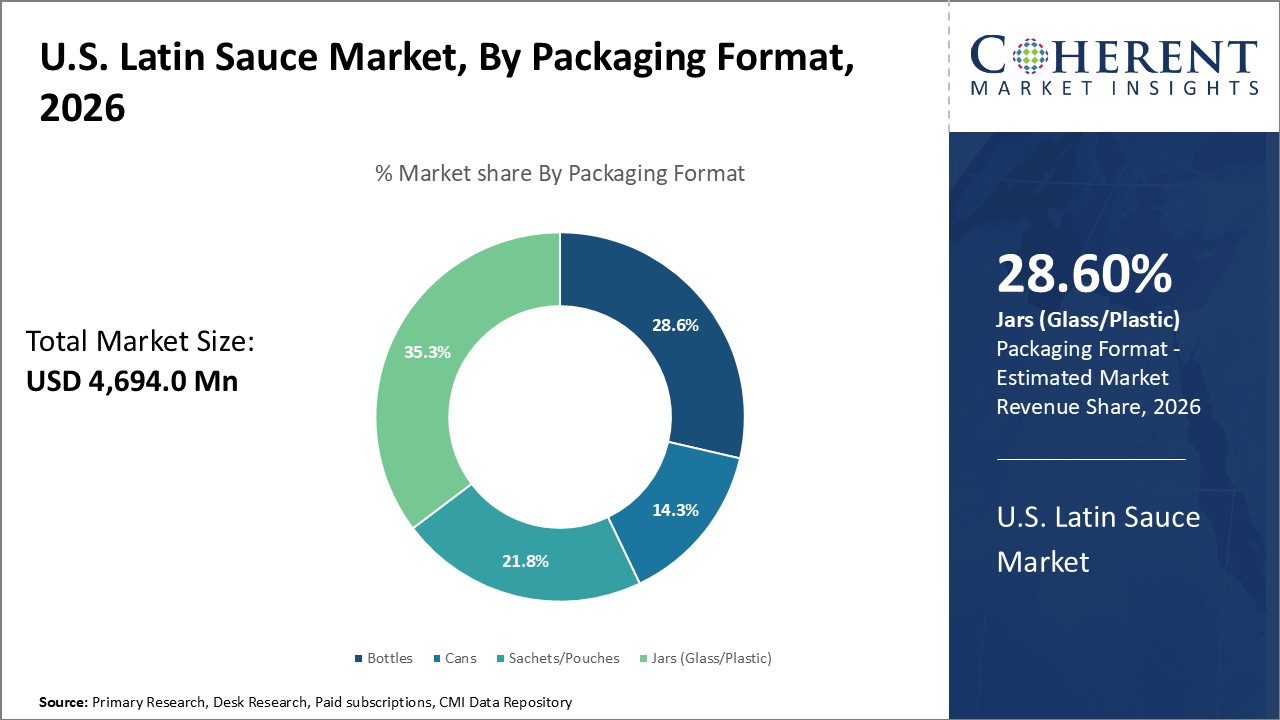
U.S. Latin Sauce Market Insights, by Packaging Format - Bottles Segment Dominates the Market Owing to Convenience, Preservation Benefits, and Consumer Preferences
The bottles segment is expected to capture 35.3% of the market share in 2026, the largest percentage as by the numerous benefits it has over other forms. The bottles, which can be either of glass or plastic and have resealable tops, are in response to the growing need of convenience and ease of use in the everyday cooking habits of the consumers. The packaging offers a tight lid that keeps the products fresh and extends the shelf life, which is necessary in the case of the product with fresh ingredients and complicated flavor profile such as those created by Latin sauces.
U.S. Latin Sauce Market Insights, by Nature – Conventional Segment Dominates the Market Driven by Accessibility, Affordability, and Established Supply Chains
The conventional segment is projected to hold 53.7% share in 2026, rooted in their accessibility, cost-effectiveness, and broad availability through well-established manufacturing and distribution networks. Latin sauces as conventional are usually made using ingredients produced through traditional agricultural techniques, and the production stages are usually optimized over scale, allowing the conventional product to be sold at cheaper retail prices than their organic counterparts. This is a very important price advantage especially in wide consumer segments who value the price and affordability factor when making buying decisions.
Consumer Buying Behavior Analysis for the U.S. Latin Sauce Market
- Convenience and Time-Saving: Busy lifestyles, especially in urban areas, drive demand for ready-to-use Latin sauces, portion-controlled packs, and meal kits that simplify meal preparation without compromising taste.
- Authenticity and Ethnic Influence: Consumers, including both Hispanic and non-Hispanic groups, buy Latin sauces to add bold, traditional flavors to their meals. There is a strong preference for authentic Latin American taste profiles, with many consumers valuing traditional preparation methods and cultural heritage embedded in the products.
- Health and Wellness Focus: Increasingly health-conscious consumers seek sauces with minimal processing, clean labels, and functional benefits such as reduced fat, sugar, and calories. Ingredients that support gut health and allergen-friendly options (gluten-free, plant-based) also influence purchasing decisions.
- Quality and Premiumization: Buyers often look for recognizable, premium ingredients and artisanal quality, which elevates product appeal. Packaging that emphasizes high-quality sourcing and traditional recipes helps build consumer trust and repeat purchases.
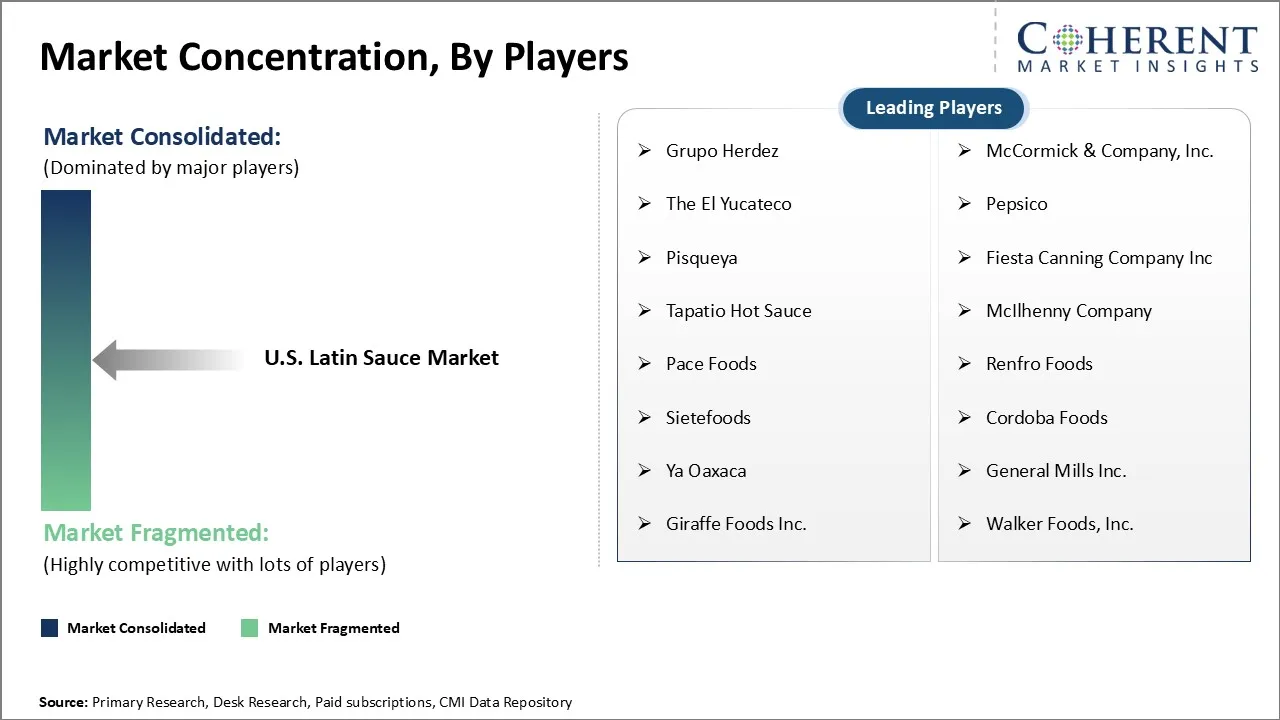
Market Players, Key Development, and Competitive Intelligence
Key Development
- In August 2025, Texas Pete introduced its new Habanero Buffalo Wing Sauce, a product designed to capture the growing demand for Latin-inspired flavors in the U.S. foodservice market. Combining the bold taste of aged habanero peppers with the buttery richness of Texas Pete® Original Hot Sauce, this innovation aligns with Datassential’s projection that Latin-inspired sauces will grow by nearly 30% over the next four years. Positioned as a traffic-driving menu addition, the new sauce is expected to help operators boost customer engagement and sales during the fall season.
Top Strategies Followed by U.S. Latin Sauce Market Players
- Established players in the market differentiate themselves through substantial investments in research and development (R&D), aiming to innovate high-performance products that meet evolving consumer preferences. These industry leaders focus on leveraging cutting-edge technologies and advanced formulations to create sauces with enhanced flavors, organic or health-oriented ingredients, and improved shelf life.
- For example of such a player is Goya Foods, which has been innovating by offering a wide range of sauces that incorporate organic ingredients and cater to various dietary needs such as gluten-free or low-sodium options.
- Mid-level players in the U.S. Latin sauce industry adopt a slightly different approach, focusing on balancing quality with affordability to appeal to price-sensitive consumer groups without compromising on flavor or authenticity. These companies often position themselves as providers of cost-effective solutions, carving out a niche by offering products that deliver satisfactory taste and quality at competitive price points. Recognizing the critical importance of scale and technology, mid-level firms frequently pursue collaborative ventures with other producers and technology providers.
- For example, La Costeña, which offers a variety of affordable Latin sauces such as salsas and hot sauces. Despite being priced competitively, their products emphasize traditional Latin flavors and cater to the mass market, enabling them to secure a large consumer base.
- Small-scale players, often boutique or regional manufacturers, distinguish themselves by focusing on specialized product features and innovation to carve out unique market niches. These companies frequently utilize cutting-edge technologies to stay competitive, whether through artisanal production techniques, unique ingredient sourcing, or novel flavor profiles that cater to local or niche tastes. Instead of competing head-to-head with larger firms, small players build strength through agility and innovation, often targeting underserved regional segments.
- For example, Spicy Shark, is a small, regional Latin sauce maker that specializes in crafting small-batch, artisanal hot sauces using locally sourced ingredients and unique flavor combinations, such as pineapple habanero or mango chili.
Market Report Scope
U.S. Latin Sauce Market Report Coverage
| Report Coverage | Details | ||
|---|---|---|---|
| Base Year: | 2025 | Market Size in 2026: | USD 4,694.0 Mn |
| Historical Data for: | 2020 To 2024 | Forecast Period: | 2026 To 2033 |
| Forecast Period 2026 to 2033 CAGR: | 8.7% | 2033 Value Projection: | USD 8,416.8 Mn |
| Segments covered: |
| ||
| Companies covered: | Grupo Herdez, McCormick & Company, Inc., The El Yucateco, Pepsico, Pisqueya, Fiesta Canning Company Inc, Tapatio Hot Sauce, McIlhenny Company, Pace Foods, Renfro Foods, Sietefoods, Cordoba Foods, Ya Oaxaca, General Mills Inc., Giraffe Foods Inc., and Walker Foods, Inc. | ||
| Growth Drivers: |
| ||
| Restraints & Challenges: |
| ||
U.S. Latin Sauce Market Dynamics
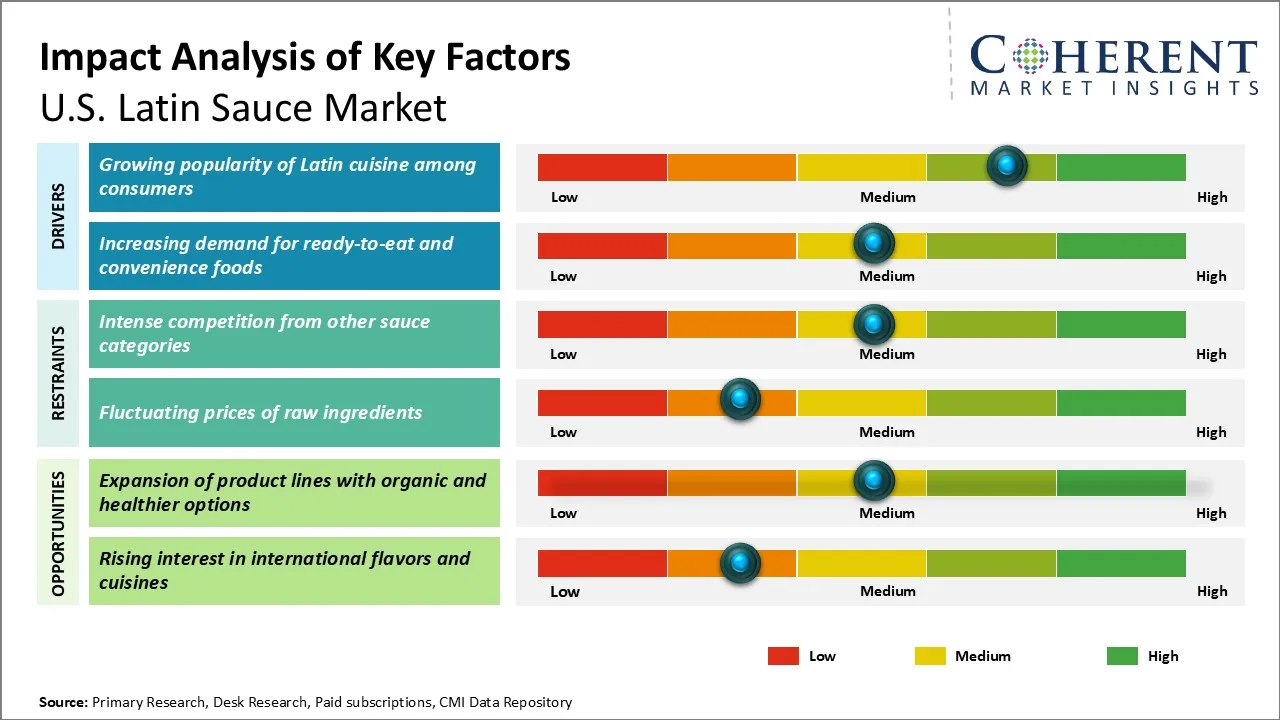
U.S. Latin Sauce Market Driver - Growing Popularity of Latin Cuisine Among Consumers
The growing popularity of Latin food is strongly contributing to the demand of Latin sauces in the U.S. market since consumers are a more active consumer of numerous and authentic foods that can provide more than just simple seasoning. The cultural interest and desire to experience dining, in turn, is what innovates this culinary movement and makes people explore the traditional Latin ingredients and recipes at home. Latin sauces, which are characterized by their colorful spices and attractive taste profiles, have been a key ingredient in recreating traditional food like tacos, enchilada, and ceviche. Furthermore, the popularity of the social media and food blogs have increased the interest in Latin food, and the home cooks, as well as professional chefs, have decided to add those sauces to their menus.
An example is the success of the Goya Foods which is one of the largest food companies owned by Hispanics in the U.S Goya has achieved a lot of success due to the wide variety of the authentic Latin sauces and seasonings which include Sofrito and Adobo among others which have become a staple in the household of many Americans, both Hispanics and non-Hispanics.
U.S. Latin Sauce Market Opportunity - Expansion of Product Lines with Organic and Healthier Options
The U.S. Latin sauce market is an excellent market for expansion upon considering the introduction of product lines with more organic and healthier ones. With the continuing trend of consumer tastes towards clean-label, natural, and healthy foods, Latin sauce brands will have the opportunity to tap into this market by providing products with no artificial preservatives, colors, and additives. Millennial and Gen Z buyers are particularly attracted to organic certifications and non-GMO labels since they value wellness and sustainability when making their buying choices. Also, by including some ingredients that appeal to the dietary supplements needs of the population, including gluten-free, low sodium, and reduced sugar options, it can be possible to increase the popularity and usability of the Latin sauces by a larger audience. Demand on the ethnic foods in the market shows an increase that is not only offering the authentic flavor but also satisfying the current health trends.
Indicatively, La Costeña has managed to diversify its product to incorporate organic products, including its Organic Salsa Verde, which is prepared without the use of preservatives, colors, and additives. This action is leveraging on the ever-increasing demand of clean-label and organic foods by health-conscious consumers.
Analyst Opinion (Expert Opinion)
- The Latin sauce market in the U.S. is witnessing a healthy growth driven by the growing consumer preference of different culinary sensations and the emerging popularity of Latin food. The events at the Food & Beverage Innovation Conference (2023) and the Latin Food & Beverage Expo (2022) provided some of the important insights into the development of the industry, as such brands as Goya Foods and La Costeña challenged the boundaries of the flavors and product range.
- A new brand of organic salsas by Goyas, recently launched as a strategy to meet the needs of the health-conscious customers at the same time preserving traditional tastes. The talks during these conferences have highlighted the relevance of marketing approaches that focus on authenticity and heritage because consumers are demanding authentic culinary experiences more and more. Nevertheless, the obstacles, including the disruption of the supply chain and the presence of well-known brands of condiments, have also been mentioned as possible barriers.
- Firms that are able to use the social media and influencer networks to create brand awareness and teach their consumers how to use their products will most probably thrive. Finally, the expansion of the Latin market of the U.S. sauce will be based on its capacity to be creative and reach the consumers on cultural and culinary grounds as a way of maintaining their interest and involvement.
Speak to the analyst
Want personalized insights?
Take the findings above to one of our principal consultants, or have the report rebuilt around the segments, geographies and competitors you actually track.
Market Segmentation
- Product Type Insights (Revenue, USD Mn, 2021 - 2033)
- Salsa Roja (Red Sauce)
- Salsa Verde (Green Sauce)
- Enchilada Sauce
- Adobo Sauce
- Mole Sauce
- Hot Sauces
- Others (Chimichurri, etc.)
- Packaging Format Insights (Revenue, USD, 2021 - 2033)
- Bottles
- Cans
- Sachets/Pouches
- Jars (Glass/Plastic)
- Nature Insights (Revenue, USD Mn, 2021 - 2033)
- Conventional
- Organic
- Brand Type Insights (Revenue, USD Mn, 2021 - 2033)
- Mainstream U.S. Brands
- Latin-Origin Brands (Operating in the U.S.)
- Private Labels & Emerging Brands
- Pack Size Insights (Revenue, USD Mn, 2021 - 2033)
- Small Packs (up to 8 oz)
- Medium Packs (9 oz to 24 oz)
- Extra Large Packs (over 64 oz)
- Distribution Channel Insights (Revenue, USD Mn, 2021 - 2033)
- B2B (Majorly for HoReCa & Foodservice Industry)
- B2C
- Key Players Insights
- Grupo Herdez
- McCormick & Company, Inc.
- The El Yucateco
- Pepsico
- Pisqueya
- Fiesta Canning Company Inc
- Tapatio Hot Sauce
- McIlhenny Company
- Pace Foods
- Renfro Foods
- Sietefoods
- Cordoba Foods
- Ya Oaxaca
- General Mills Inc.
- Giraffe Foods Inc.
- Walker Foods, Inc.
Sources
Primary Research Interviews
- Marketing Director – Leading Latin Sauce Manufacturer (U.S.)
- Category Manager – Major U.S. Grocery Retail Chain (Latin Sauce Category)
- Consumer Insights Head – Latin Food Specialty Distributor
- Product Innovation Lead – Popular Latin Sauce Brand
Stakeholders
- Manufacturers of Latin sauces and condiments in U.S. and Latin America
- Retailers and E-commerce Platforms specializing in Latin foods
- Foodservice channels including Latin restaurants and fast casual chains
- Regulatory and Certification Authorities (FDA, USDA, local health departments)
- Distribution and Import-Export Logistics providers
- Marketing and Consumer Insights Firms specialized in Latin Food markets
Databases
- U.S. Customs and Border Protection Import Data
- USDA Foreign Agricultural Service Reports
Magazines
- Food Business News – Latin Food Trends and Market Developments
- Specialty Food Magazine – Latin Food Product Spotlights
- The Grocer – Latin Food Segmentation and Consumer Trends
- Restaurant Business Magazine – Latin Cuisine Focus
Journals
- Journal of Food Science – Latin Flavors and Food Safety Studies
- International Journal of Gastronomy and Food Science – Cultural Impact on Food Choice
- Journal of Consumer Behavior – Latin Food Purchasing Patterns
Newspapers
- The New York Times – Latin Food Popularity and Consumer Preferences in U.S.
- Los Angeles Times – Latin Food Market Growth in California and Southwest U.S.
- Washington Post – Regulatory Updates Affecting Latin Food Imports
Associations
- Specialty Food Association – Latin Food Section
- National Restaurant Association – Latin Cuisine Working Group
- U.S. Hispanic Chamber of Commerce – Food and Beverage Committees
- FDA – Food Safety Guidelines applicable to Latin sauces
Public Domain Sources
- FDA Food Safety Modernization Act (FSMA) updates on sauces and condiments
- USDA Economic Research Service reports on food imports and consumption
- USDA National Nutrient Database – reference for Latin sauce nutritional content
Proprietary Elements
- CMI Data Analytics Tool, Proprietary CMI Existing Repository of information for last 8 years.
Get access to 250+ pages report
Every segment, forecast, competitor profile and data table behind the analysis above — available for instant download.
- ESOMAR Member
- ISO 9001:2015 Certified
- D-U-N-S Registered
- GDPR & CCPA Compliant
Missing comfort of reading report in your local language? Find your preferred language:
Transform your Strategy with Exclusive Trending Reports
Frequently Asked Questions
The U.S. Latin sauce market is estimated to be valued at USD 4,694.0 Mn in 2026 and is expected to reach USD 8,416.8 Mn by 2033.
The CAGR of the U.S. Latin sauce market is projected to be 8.7% from 2026 to 2033.
Growing popularity of Latin cuisine among consumers and increasing demand for ready-to-eat and convenience foods are the major factors driving the growth of the U.S. Latin sauce market.
Intense competition from other sauce categories and fluctuating prices of raw ingredients are the major factors hampering the growth of the U.S. Latin sauce market.
In terms of product type, the Salsa Roja (red sauce) segment is estimated to dominate the market revenue share in 2026.
Grupo Herdez, McCormick & Company, Inc., The El Yucateco, Pepsico, Pisqueya, Fiesta Canning Company Inc, Tapatio Hot Sauce, McIlhenny Company, Pace Foods, Renfro Foods, Sietefoods, Cordoba Foods, Ya Oaxaca, General Mills Inc., Giraffe Foods Inc., and Walker Foods, Inc. are the major players.