

U.S. Manual Resuscitator Market Size and Forecast – 2026 to 2033
The U.S. manual resuscitators market is projected to be worth USD 219.1 Mn in 2026, rising to USD 340.2 Mn by 2033. The market is anticipated to exhibiting a compound annual growth rate (CAGR) of 6.5% during the period of 2026 to 2033. The consistent growth can be attributed to increasing incidence of respiratory illness, the rising demand for emergency medical services, and improved technology in resuscitation devices, making manual resuscitators a preference in clinical and pre-hospital settings.
Key Takeaways of the U.S. Manual Resuscitator Market
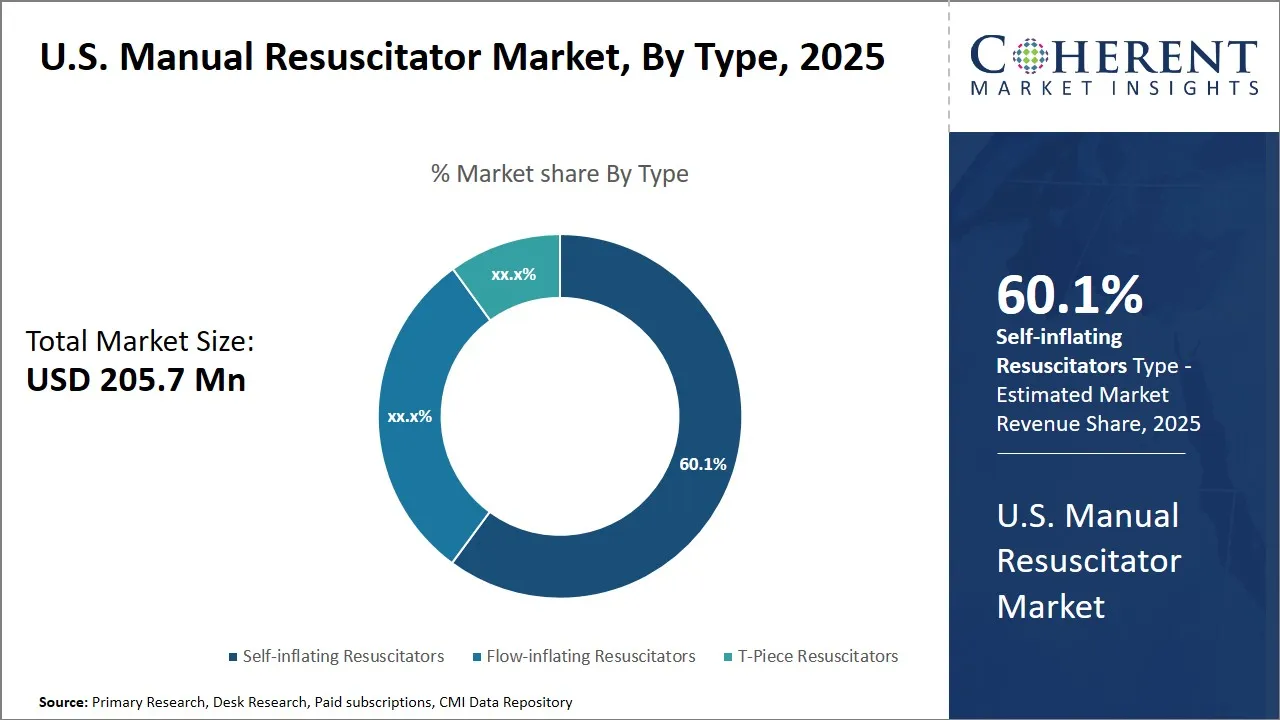
- By type, the self-inflating resuscitators segment is projected to lead the U.S. manual resuscitator market with a 61.1 % share in 2026.
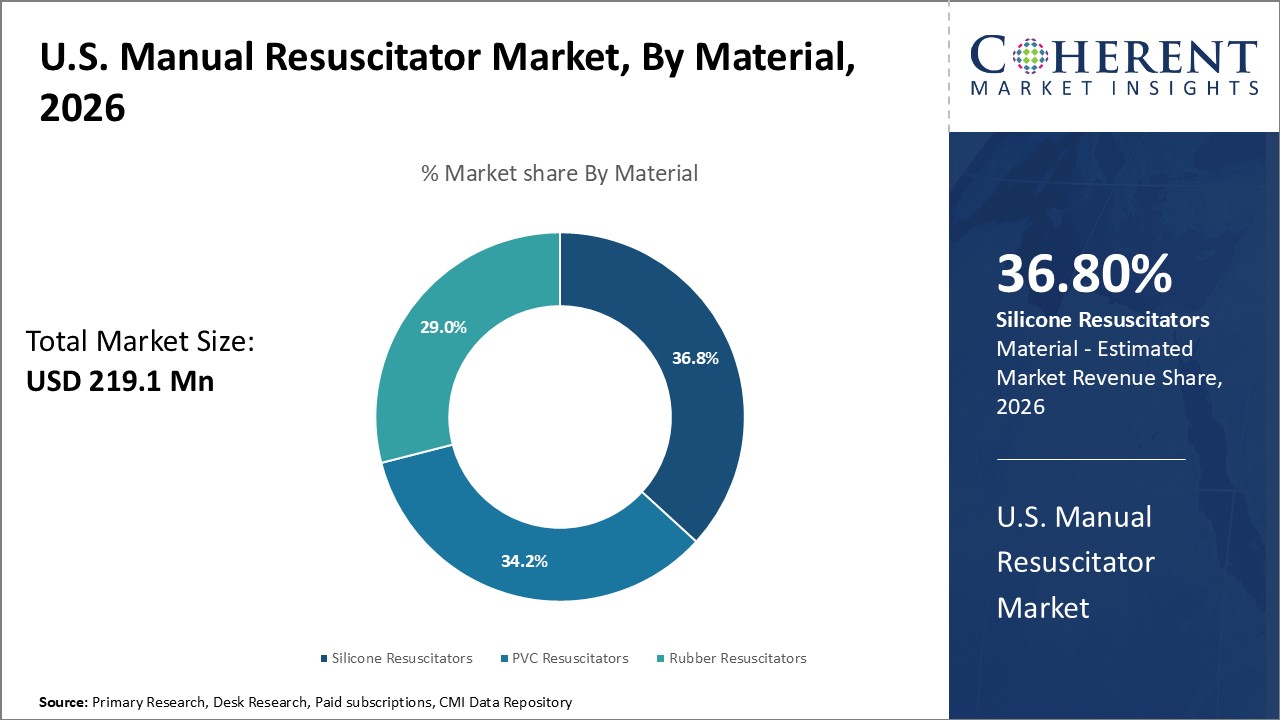
- By material, the silicone resuscitators segment is expected to capture 36.8 % share in 2026.
- By modality, the disposable/single-use resuscitators segment is anticipated to hold a 55.9 % share in 2026.
Market Overview
A prominent market trend is the design of lightweight, portable, and user-friendly manual resuscitators that improve usability during emergency situations. Furthermore, rising first aid and resuscitation training and certification is resulting in their increasing adoption by healthcare facilities and first responders. The market is experiencing innovations emphasizing patient safety, minimizing infection control features, and applying advanced ventilation systems, which is reshaping the market structure and facilitating new opportunities for the market growth.
Current Events and Its Impact
Current Events | Description and its Impact |
Launch of South Bruce Grey Health Centre’s Digital Resuscitation Training Program |
|
Implementation of the U.S. FDA's Cybersecurity for Medical Devices Guidance |
|
Segmental Insights
- Current Industry Events of 2026
- Market Size Estimation
- Regional Breakdown
- Competitive Landscape
- Customer Intelligence
- Segmental Analysis
- Pricing Analysis
- Key Market Drivers, Challenges & Future Trends
- Customized Insights Section
U.S. Manual Resuscitator Market Insights, by Type - Self-Inflating Resuscitators Segment Contribute the Highest Share of the Market Owing to their Operational Simplicity and Versatility
The self-inflating resuscitators segment is projected to account for 61.1% share in 2026. Their ease of use and portability across various clinical situations remains the driving force behind market share. Self-inflating resuscitators are designed to automatically refill with air or oxygen, without needing an external power source or compressed gas, allowing them to be as portable and reliable as possible, in situations with time or resource constraints (such as Cardiopulmonary Resuscitation [CPR] or neonatal resuscitation). A self-inflating resuscitator is a self-contained, pliable bag, allowing a healthcare provider to provide controlled positive pressure ventilation to patients varying from neonates to adults, thus increasing their application in the clinical settings.
For example, Ambu a global leader in medical devices introduced the world’s first self-inflating resuscitator more than 50 years ago and has since built a strong reputation in manual ventilation Today the company continues to expand its portfolio with reusable options such as Mark IV and Ambu Oval alongside its popular disposable line SPUR II reflecting its ongoing focus on innovation in critical care solutions
U.S. Manual Resuscitator Market Insights, by Material - Silicone Resuscitators Segment Lead the Market Driven by Superior Biocompatibility and Durability
The silicone resuscitators segment is expected to capture 36.8% share in 2026, due to their performance characteristics and safety. Silicone as a material has high chemical stability and high heat resistance, allowing a silicone-made resuscitator to be sterilized numerous times without performance hindrance or product degradation. This durability allows a long product life cycle, and they are often chosen for routine use in a clinical setting environment of reusable resuscitators.
The biocompatibility of silicone is another significant factor contributing to its dominance. It is hypoallergenic and less likely to trigger adverse reactions or irritations compared to other materials such as PVC or rubber. This is particularly important in neonatal and pediatric care, where patients are more sensitive to material compositions. Furthermore, silicone’s flexibility supports better sealing around masks and patient interfaces, which improves the efficacy of ventilation by minimizing air leaks.
U.S. Manual Resuscitator Market Insights, by Modality - Disposable/Single-Use Resuscitators Dominate due to Enhanced Infection Control and Regulatory Emphasis on Patient Safety
The disposable/single-use resuscitators segment is projected to hold 56.9% share in 2026, driven by stringent infection prevention protocols and the need to minimize cross-contamination risks in clinical settings. Hospitals, emergency care providers, and outpatient facilities increasingly require disposable options to uphold hygiene standards, particularly in the wake of heightened awareness around Healthcare-Associated Infections (HAIs).
For example, Flexicare Group Limited, a U.K.-based medical device company, introduced its latest range of single-use resuscitators designed with ergonomic features, quick-to-open packaging, and higher oxygen delivery efficiency. The devices include options such as CO₂ monitoring ports for accurate capnography, adjustable PEEP valves, and optional manometers, enhancing patient safety and clinical control. With lightweight construction, textured grips, and tamper-evident packaging, Flexicare’s resuscitators are tailored to support emergency care teams in delivering fast and reliable ventilation in critical situations.
End User Feedback and Unmet Needs - U.S. Manual Resuscitator Market
- End users in the U.S. manual resuscitator market consistently emphasize both strengths and shortcomings in current products. Emergency responders appreciate lightweight, single-use models with pre-fitted oxygen reservoirs, which reduce setup time and improve reliability during critical care. At the same time, rural hospitals and smaller clinics frequently report issues with valve durability in lower-cost devices, raising concerns about consistency and trust in performance.
- Looking ahead, users highlight unmet needs such as smarter integration with patient monitoring systems, affordability for budget-constrained providers, and customizable options for pediatric or geriatric care. Addressing these gaps offers manufacturers an opportunity to boost customer satisfaction, improve retention, and drive innovation that directly supports frontline healthcare delivery.
Market Players, Key Developments, and Competitive Intelligence
Key Developments
- In July 2025, Teleflex Incorporated, a U.S.-based global provider of medical technologies, announced the acquisition of BIOTRONIK's Vascular Intervention business to strengthen its interventional cardiology and peripheral vascular portfolio. This move highlights ongoing consolidation trends in the healthcare device sector and underscores Teleflex’s commitment to expanding its emergency care solutions. Alongside advancements in cardiovascular technologies, the company continues to emphasize critical life-support equipment such as U.S. manual resuscitators, reinforcing its role in providing comprehensive tools that support frontline healthcare providers in both hospital and pre-hospital settings.
- In September 2024, Medtronic, a leading global healthcare technology company, launched the VitalFlow Extracorporeal Membrane Oxygenation (ECMO) system designed to improve ease of use and performance in critical care, bridging bedside treatment and intra-hospital transport. The system is particularly relevant in complex cardiac and respiratory cases, where it complements the role of U.S. manual resuscitators in providing immediate ventilation support during emergencies, thereby strengthening the continuum of life-saving respiratory care across hospital settings.
- In May 2024, the Global LEADR clinical trial showcased the strong performance of Medtronic’s OmniaSecure defibrillation lead achieving a 97.5% success rate in defibrillation testing and 97.1% freedom from major complications at six months marking it as the smallest-diameter lead of its kind at 4.7 French aimed at reducing complications while maintaining high effectiveness in cardiac arrest management.
Top Strategies Followed by U.S. Manual Resuscitator Market Players
- In the market, established players are able to utilize large budgets to continue funding developments in research and product innovation in-Iine with the introduction of high-performance products. They place an emphasis on improving efficacy, safety, and usability of devices while continuing to exceed requirements and specifications in order to meet the changing needs of healthcare providers. At the same time, established players are working to develop strategic business partnerships with major players and OEMS within the industry in order to promote the new technology and products within manual resuscitators, increase product lines, and continue to add technology within healthcare.
- As an example, Ambu A/S, launched silicone based reusable resuscitators that reduce overall hospital cost, while addressing reduction in waste and sustainable issues. Likewise, Laerdal Medical has solidified their position in the market for manual resuscitators specifically by integrating their manual resuscitators with a simulation and training program in conjunction with the American Heart Association to ensure the healthcare provider will be proficient in advanced emergency ventilation.
- Players that are mid-level in the U.S. manual resuscitator market will not compete directly with established players but rather take a different route towards making a product at a more comparative cost for the end-user as well as continue to be more cost-effective. They are also sensitive to certain consumer segments pricing. Players targeting a more price-sensitive consumer segment would be more area-specific based on the market. These players will leverage their resources and manufacturing advantages more towards low-cost healthcare and emergency services such as healthcare facilities in niche markets, do not always have the ability to pay establish prices or altogether the ability to pay.
- For example, Medline Industries, utilized its large distribution network to meet the demands of smaller hospitals and clinics for inexpensive resuscitators in the COVID-19 crisis while the supply chain was disrupted. Similarly, Allied Healthcare Products has focused on partnerships with regional distributors to broaden access, making sure rural EMS providers are able to access reliable and affordable forms of manual resuscitation.
- Small firms in the U.S. manual resuscitator market often set themselves apart by providing niche attributes or solutions based on needs for specific clinics. Their nimbleness allows them to be on the leading edge of new technologies, including smart sensors or new materials, which may not be as easily accessible for larger firms that have older systems. To facilitate introduction into the market and to develop visibility, these small firms often leverage the collaboration of local entities, such as startups, providers, or regional manufacturers.
- For example, Mercury Medical, developed neonatal resuscitators designed for sensitive use in NICUs. In addition, smaller distributors with CareFusion have worked with regional EMS departments to distribute advancing resuscitators with pressure monitoring sensors based on regional research in order to improve responder safety and training in emergency situations.
Market Report Scope
U.S. Manual Resuscitator Market Report Coverage
| Report Coverage | Details | ||
|---|---|---|---|
| Base Year: | 2025 | Market Size in 2026: | USD 219.1 Mn |
| Historical Data for: | 2020 To 2024 | Forecast Period: | 2026 To 2033 |
| Forecast Period 2026 to 2033 CAGR: | 6.5% | 2033 Value Projection: | USD 340.2 Mn |
| Segments covered: |
| ||
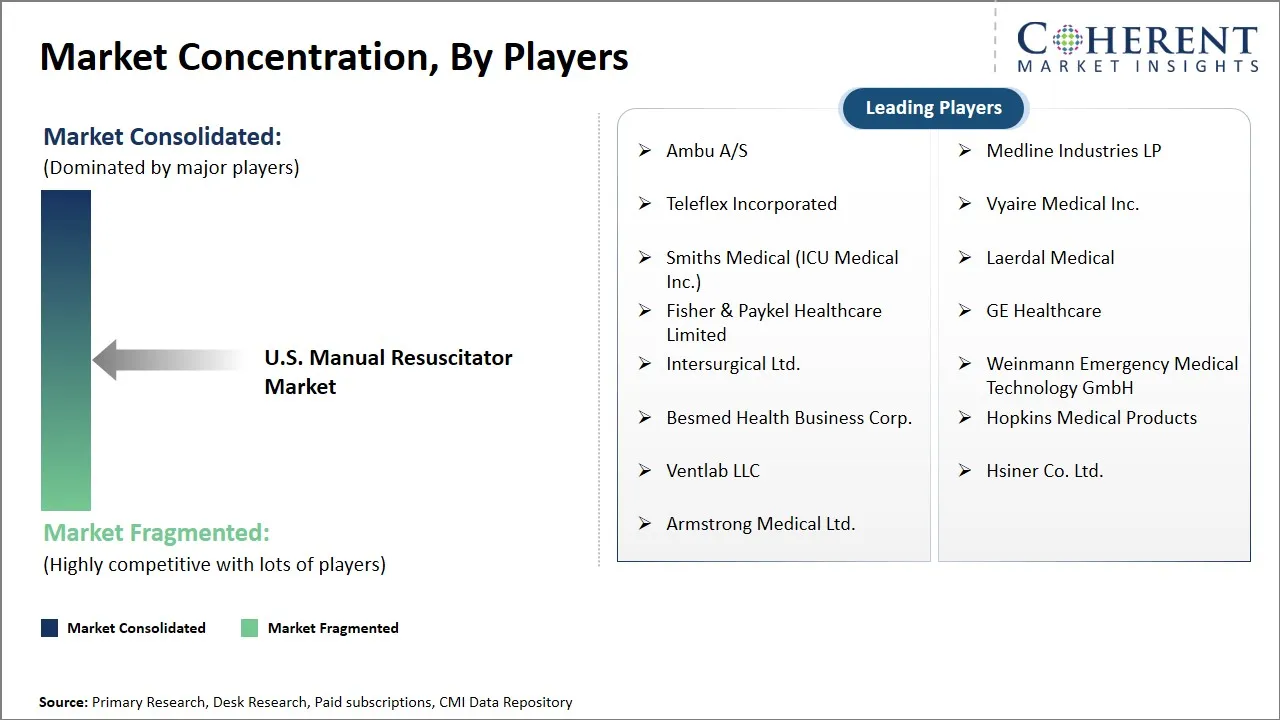
| Companies covered: | Ambu A/S, Medline Industries LP, Teleflex Incorporated, Vyaire Medical Inc., Smiths Medical (ICU Medical Inc.), Laerdal Medical, Fisher & Paykel Healthcare Limited, GE Healthcare, Intersurgical Ltd., Weinmann Emergency Medical Technology GmbH, Besmed Health Business Corp., Hopkins Medical Products, Ventlab LLC, Hsiner Co. Ltd., and Armstrong Medical Ltd. | ||
| Growth Drivers: |
| ||
| Restraints & Challenges: |
| ||
U.S. Manual Resuscitator Market Dynamics
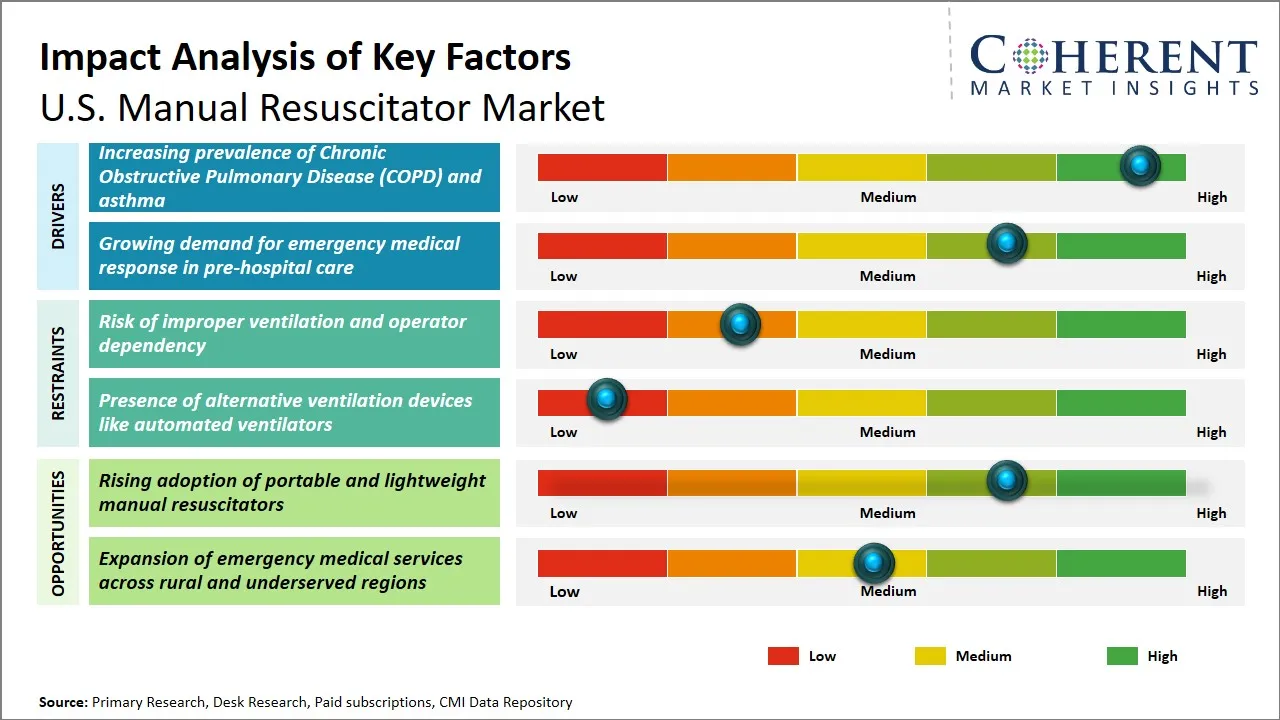
U.S. Manual Resuscitator Market Driver - Increasing Prevalence of Chronic Obstructive Pulmonary Disease (COPD) and Asthma
The rising incidence of chronic respiratory diseases such as Chronic Obstructive Pulmonary Disease (COPD) and asthma throughout the U.S. has significantly increased the need for manual resuscitators in both clinical and emergency situations. The respiratory diseases and illnesses limit normal lung function and effectiveness with breathing, which frequently requires immediate care through the use of some device in the event of an exacerbation or acute attack. Manual resuscitators are essential for providing controlled ventilation and oxygenation, particularly in emergencies when mechanical ventilators are inaccessible or during transport. In addition to this, the growing knowledge by health care providers regarding early recognition and intervention in respiratory distress has again emphasized the role of manual resuscitators as life-saving devices. In November 2024, the World Health Organization WHO reported that chronic obstructive pulmonary disease COPD is the fourth leading cause of death globally responsible for 3.5 million deaths in 2021 or about 5% of all deaths Nearly 90% of COPD deaths in people under 70 occur in low- and middle-income countries where household air pollution is a major risk factor while in high-income countries more than 70% of cases are linked to tobacco smoking Overall COPD ranks as the eighth leading cause of poor health worldwide measured by disability-adjusted life years highlighting its severe global health burden.
U.S. Manual Resuscitator Market Opportunity - Rising Adoption of Portable and Lightweight Manual Resuscitators
Furthermore, the U.S. manual resuscitator market has a significant opportunity as the growth in use of portable and lightweight manual resuscitators continues to rise. Whether this be healthcare providers or emergency action responders, there is significant attention to devices that are lightweight, can be easily transported, deploy quickly and work effectively in delivering immediate respiratory support, especially in out-of-hospital incidence. This trend has been increasing through the multiple demands for improved patient mobility during transport and increased need for early response in multiple settings such as an ambulance, home care, or in the field of an emergency situation. Advances in material science and ergonomic design have enabled manufacturers to develop resuscitators that combine durability with reduced weight, facilitating ease of use without compromising performance.
For example, in October 2023, SunMed Holdings LLC a U.S.-based manufacturer of respiratory and anesthesia products which also operates under the brand Ventlab LLC issued a safety update for its Airflow SafeSpot and Horizon manual resuscitators The company revised its instructions for use to include a warning that attaching accessories such as peep valves to the exhalation port may increase expiratory resistance and cause backward leak recommending that end tidal carbon dioxide levels be carefully monitored in critically ill patients.
Analyst Opinion (Expert Opinion)
- The U.S. manual resuscitator market is being shaped by a mix of technological progress, healthcare policy support, and shifting demand patterns. Lightweight and portable designs are becoming a priority as emergency medical teams and home healthcare providers seek faster, more reliable solutions for out-of-hospital care. This is reinforced by regulatory bodies emphasizing quality and accessibility standards for life-saving devices, encouraging companies to innovate around ease of use and patient safety. At the same time, the market is opening opportunities in telemedicine-linked emergency care and pediatric applications, although challenges remain in terms of cost pressures, device standardization, and ensuring training across diverse user groups. Conferences such as the American Association for Respiratory Care (AARC) Congress and MEDICA Trade Fair in Germany have been crucial in the past few years, acting as platforms for knowledge exchange and showcasing resuscitation technologies, while also influencing procurement guidelines and policy discussions around emergency response equipment.
- In practice, several initiatives underline this market momentum. For example, companies like Ambu A/S have launched silicone-based, reusable resuscitators to address sustainability and hospital cost efficiency, while Laerdal Medical has expanded training programs in collaboration with the American Heart Association to improve manual ventilation skills among healthcare workers. Government-backed initiatives, such as U.S. federal funding to strengthen EMS readiness during the COVID-19 pandemic, accelerated procurement of portable resuscitators and highlighted their importance in emergency preparedness. Similarly, regional pilot projects aimed at equipping rural ambulances with advanced manual resuscitators have demonstrated tangible improvements in patient outcomes, reflecting how industry partnerships and public health programs together are setting the course for future market growth.
Speak to the analyst
Want personalized insights?
Take the findings above to one of our principal consultants, or have the report rebuilt around the segments, geographies and competitors you actually track.
Market Segmentation
- Type Insights (Revenue, USD Mn, 2021 - 2033)
- Self-inflating Resuscitators
- Flow-inflating Resuscitators
- T-Piece Resuscitators
- Material Insights (Revenue, USD Mn, 2021 - 2033)
- Silicone Resuscitators
- PVC Resuscitators
- Rubber Resuscitators
- Modality Insights (Revenue, USD Mn, 2021 - 2033)
- Disposable/Single-Use Resuscitators
- Reusable Resuscitators
- Patient Type Insights (Revenue, USD Mn, 2021 - 2033)
- Adult Resuscitators
- Pediatric Resuscitators
- Neonatal Resuscitators
- Accessories Insights (Revenue, USD Mn, 2021 - 2033)
- Masks (different sizes)
- Reservoir Bags
- PEEP Valves
- Other (Filters, etc.)
- End User Insights (Revenue, USD Mn, 2021 - 2033)
- Hospitals
- Ambulatory Surgical Centers
- Emergency Medical Services (EMS)
- Military and Defense Medical Units
- Home Care Settings
- Key Players Insights
- Ambu A/S
- Medline Industries LP
- Teleflex Incorporated
- Vyaire Medical Inc.
- Smiths Medical (ICU Medical Inc.)
- Laerdal Medical
- Fisher & Paykel Healthcare Limited
- GE Healthcare
- Intersurgical Ltd.
- Weinmann Emergency Medical Technology GmbH
- Besmed Health Business Corp.
- Hopkins Medical Products
- Ventlab LLC
- Hsiner Co. Ltd.
- Armstrong Medical Ltd.
Sources
Primary Research Interviews
- Industry Stakeholders list
- Hospital Procurement Officers
- Medical Device Distributors
- End Users List
- Emergency Medical Technicians (EMTs)
- Critical Care Physicians
Government and International Databases
- U.S. Food and Drug Administration (FDA) – Device Approvals Database
- Centers for Medicare & Medicaid Services (CMS) Data
- U.S. National Center for Health Statistics (NCHS)
- Centers for Disease Control and Prevention (CDC) – Emergency Preparedness Data
- World Health Organization (WHO) Medical Device Information
- U.S. National Library of Medicine (ClinicalTrials.gov)
Trade Publications
- Medical Device and Diagnostic Industry (MD+DI)
- EMS World
- Respiratory Therapy Journal Online
- Biomedical Instrumentation & Technology Magazine
- Emergency Medicine News
- Journal of Emergency Medical Services (JEMS)
Academic Journals
- Journal of the American Medical Association (JAMA)
- The Lancet Respiratory Medicine
- New England Journal of Medicine (NEJM)
- Chest Journal (American College of Chest Physicians)
- Critical Care Medicine (Society of Critical Care Medicine)
- Annals of Emergency Medicine
Reputable Newspapers
- The New York Times – Health Section
- The Washington Post – Health Policy
- The Wall Street Journal – Healthcare Business
- USA Today – Health Coverage
- Los Angeles Times – Science & Medicine
- Reuters Health News
Industry Associations
- American Association for Respiratory Care (AARC)
- American College of Emergency Physicians (ACEP)
- American Heart Association (AHA)
- Association for the Advancement of Medical Instrumentation (AAMI)
- Emergency Nurses Association (ENA)
- International Liaison Committee on Resuscitation (ILCOR)
Public Domain Resources
- (U.S. National Library of Medicine)
- U.S. Census Bureau Health Data
- National Institutes of Health (NIH) Open Data Portal
- Health Resources & Services Administration (HRSA) Data Warehouse
- Occupational Safety and Health Administration (OSHA) – Healthcare Guidelines
- World Bank Health Statistics
Proprietary Elements
- CMI Data Analytics Tool: Proprietary analytics tool to analyze real-time market trends, consumer behavior, and technology adoption in market
- Proprietary CMI Existing Repository of Information for Last 8 Years
Get access to 250+ pages report
Every segment, forecast, competitor profile and data table behind the analysis above — available for instant download.
- ESOMAR Member
- ISO 9001:2015 Certified
- D-U-N-S Registered
- GDPR & CCPA Compliant
Missing comfort of reading report in your local language? Find your preferred language:
Transform your Strategy with Exclusive Trending Reports
Frequently Asked Questions
The U.S. manual resuscitator market is estimated to be valued at USD 219.1 Mn in 2026 and is expected to reach USD 340.2 Mn by 2033.
The CAGR of the U.S. manual resuscitator market is projected to be 6.5% from 2026 to 2033.
Increasing prevalence of chronic obstructive pulmonary disease (COPD) and asthma and growing demand for emergency medical response in pre-hospital care are the major factors driving the growth of the U.S. manual resuscitator market.
Risk of improper ventilation and operator dependency and presence of alternative ventilation devices like automated ventilators are the major factors hampering the growth of the U.S. manual resuscitator market.
In terms of type, the self-inflating resuscitators segment is estimated to dominate the market revenue share in 2026.
Ambu A/S, Medline Industries LP, Teleflex Incorporated, Vyaire Medical Inc., Smiths Medical (ICU Medical Inc.), Laerdal Medical, Fisher & Paykel Healthcare Limited, GE Healthcare, Intersurgical Ltd., Weinmann Emergency Medical Technology GmbH, Besmed Health Business Corp., Hopkins Medical Products, Ventlab LLC, Hsiner Co. Ltd., and Armstrong Medical Ltd. are the major players.