

Low Temperature Sterilization Equipment Market Size and Forecast – 2026 To 203 3
The Low Temperature Sterilization Equipment Market is anticipated to grow at a CAGR of 6.8% with USD 18.3 Bn in 2026 and is expected to reach USD 22.5 Bn in 2033. Rising demand for minimally invasive surgeries, wider use of heat-sensitive medical instruments, stricter infection-control regulations, and expanding healthcare infrastructure drive the Low Temperature Sterilization Equipment Market. Around 46% of surgical procedures now involve advanced tools requiring gentle sterilization environments.
Key Takeaways
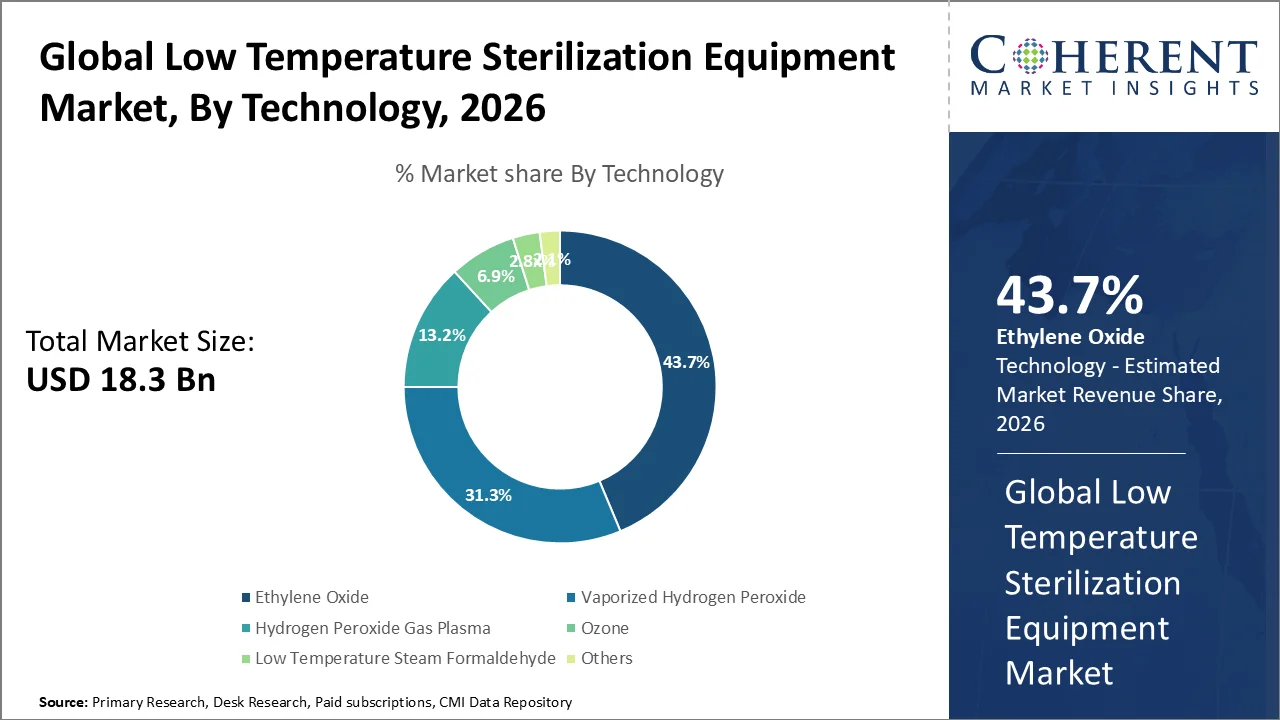
- Ethylene Oxide hold the largest market share of 43.7% in 2026 owing to its rising demand for sterilization of heat- and moisture-sensitive medical devices. ETO is used in healthcare to sterilize critical and some semi critical items that are sensitive to heat or moisture.
- Hospitals expected to hold the largest market share of 38.7% in 2026 owing to the rising volume of surgical procedures. Around 300 million surgeries occur globally each year, driving strong demand for enhanced safety measures.
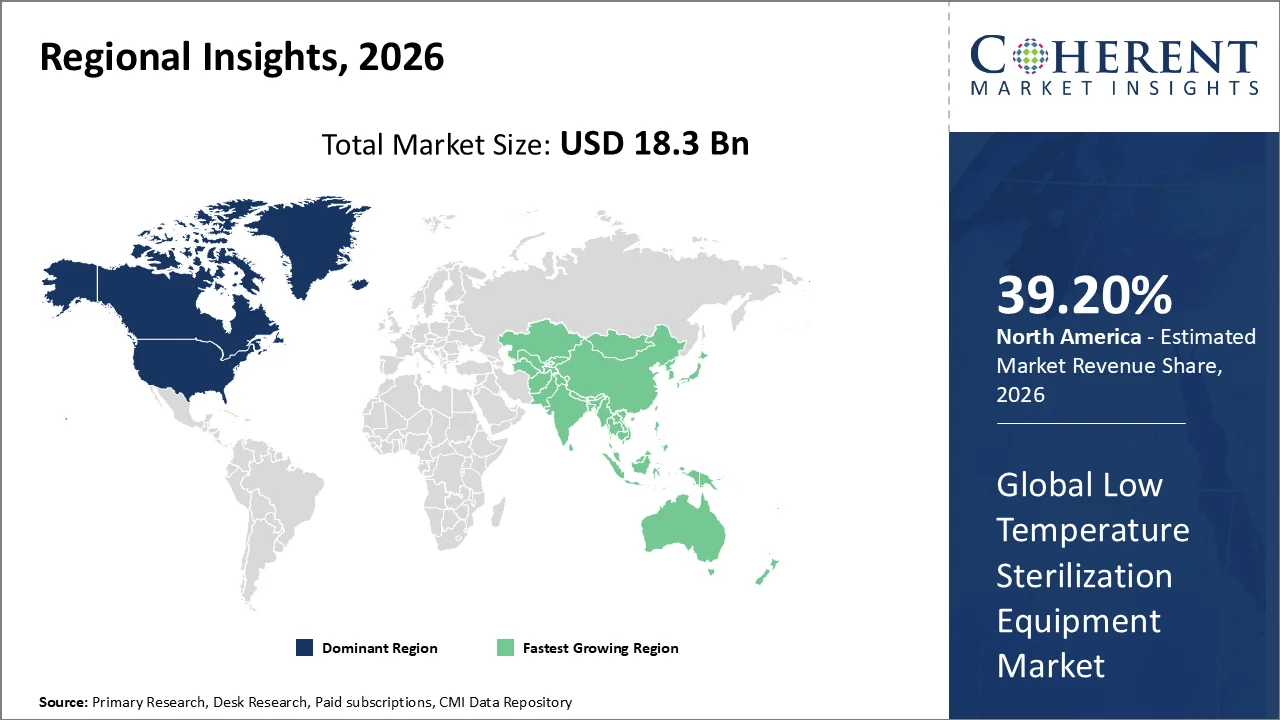
- North America is expected to acquire the dominant share of 39.20% in 2026 owing to the high prevalence of healthcare-associated infections (HAIs). Approximately 1 in 31 hospital patients acquires a healthcare-associated infection.
Current Events and Their Impact
Current Event | Description and its Impact |
U.S. EPA’s New Ethylene Oxide (EtO) Emissions & Usage Rules |
|
Draft India Medical Devices Rules (2026) |
|
Segmental Insights
- Current Industry Events of 2026
- Market Size Estimation
- Regional Breakdown
- Competitive Landscape
- Customer Intelligence
- Segmental Analysis
- Pricing Analysis
- Key Market Drivers, Challenges & Future Trends
- Customized Insights Section
Why is Ethylene Oxide Acquiring the Largest Market Share?
Ethylene Oxide hold the largest market share of 43.7% in 2026. Healthcare providers and medical device manufacturers drive demand for ethylene oxide (EtO) sterilization by increasingly using heat- and moisture-sensitive devices such as endoscopes, catheters, implants, and electronic instruments. EtO sterilization effectively penetrates complex device structures, porous materials, and sealed packaging, making it suitable for advanced medical applications. Growing surgical volumes, rising concerns about healthcare-associated infections, and expanding medical device production continue to support market growth. Recent estimates suggest over 300 million surgical procedures are performed globally each year, with projections toward 500 million by 2030 as healthcare systems expand and aging populations increase demand. Hospitals and manufacturers choose EtO sterilization for its broad material compatibility, efficient large-scale processing, and ability to safely sterilize pre-packaged disposable medical products. For instance, in June 2025, Sonata Scientific launched the revolutionary Helios MP500, a high-performance solution designed to eliminate fugitive ethylene oxide (EtO) emissions in medical device sterilization facilities.
Which End User segment dominates the market?
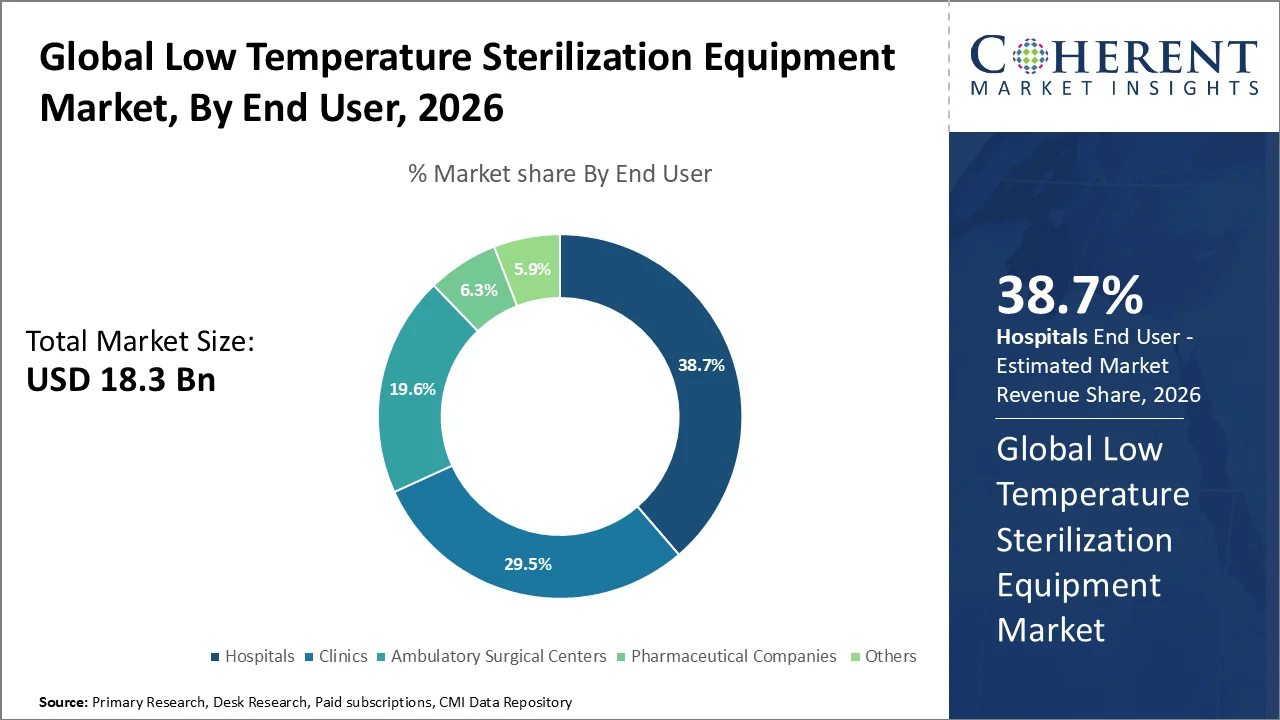
Hospitals expected to hold the largest market share of 38.7% in 2026 owing to the growing use of heat- and moisture-sensitive medical devices. Hospitals drive demand for low temperature sterilization equipment by increasing the number of surgical procedures, expanding the use of minimally invasive techniques, and adopting heat-sensitive medical instruments such as endoscopes and robotic surgical devices. Healthcare facilities invest in advanced sterilization technologies to meet strict infection control regulations and reduce healthcare-associated infections. Hospitals also seek faster instrument turnaround, improved patient safety, and efficient reprocessing of reusable devices. Furthermore, healthcare providers continue to expand hospital infrastructure and modernize sterile processing departments, which further accelerates market growth.
Low Temperature Sterilization Equipment Market Trends
- Rising adoption of minimally invasive and robotic‑assisted surgeries increases demand for sterilization of delicate, heat‑sensitive surgical instruments and endoscopic devices. Globally, minimally invasive procedures now account for more than 50% of all surgeries due to faster recovery and lower infection rates.
- Expanding concerns regarding healthcare‑associated infections (HAIs) and cross‑contamination strengthen focus on advanced sterilization protocols. According to the World Health Organization (WHO), hundreds of millions of patients worldwide develop HAIs each year, with rates as high as 15% in low‑ and middle‑income countries.
- Regulatory agencies and healthcare organizations continue to strengthen sterilization compliance standards, encouraging hospitals and manufacturers to invest in advanced low temperature sterilization systems with automated monitoring and documentation features. For example, the U.S. FDA and CDC now recommend validated low‑temperature sterilization for heat‑sensitive devices as part of standardized reprocessing protocols.
Regional Insights
North America dominates owing to technological advancements and automation
North America is expected to acquire the dominant share of 39.20% in 2026. North America drives demand for low temperature sterilization equipment with its advanced healthcare infrastructure, high surgical volumes, and widespread use of minimally invasive and robotic procedures. Hospitals and medical facilities increasingly rely on heat-sensitive devices such as endoscopes, implants, and electronic instruments, which require advanced sterilization methods. Strict regulatory standards and a strong focus on infection control and patient safety push healthcare providers to adopt these systems. Growing outpatient care centers, continuous technological advancements, and the replacement of aging sterilization systems further support sustained market growth across the region. In response to this, in October 2025, Andersen Sterilizers launched EOGas 4PLUS, a low-emission ethylene oxide (EO) system developed to help sterile processing departments strengthen their infection control strategies.
Asia Pacific Low Temperature Sterilization Equipment Market Trends
Asia Pacific’s low temperature sterilization equipment market grows as healthcare systems expand and hospitals increase capacity. Rising demand for infection prevention solutions drives adoption across medical facilities. Governments enforce stricter sterilization standards and raise awareness of hospital-acquired infections. For instance, the Director of AIIMS, Jodhpur, established a Hospital Infection Control Committee (HICC) to oversee infection prevention and control within the facility. Its objectives include reducing healthcare-associated infections (HAIs) among patients, staff, and visitors; minimizing antimicrobial resistance through stewardship programs; and conducting surveillance to monitor and manage infection control data effectively.
United States Low Temperature Sterilization Equipment Market Trends
Rising demand for effective infection control in healthcare facilities drives the United States low temperature sterilization equipment market. Healthcare providers increasingly address hospital-acquired infections, which further boosts adoption. Strict sterilization regulations push facilities to upgrade systems, while advances in hydrogen peroxide and ethylene oxide technologies enhance efficiency. Expanding outpatient care and an aging population also increase the need for reliable sterilization solutions in hospitals and clinics. In June 2025, Solventum launched the Attest Super Rapid Vaporized Hydrogen Peroxide (VH2O2) Clear Challenge Pack, a preassembled and transparent test pack designed for low-temperature medical instrument sterilization applications.
Japan Low Temperature Sterilization Equipment Market Trends
Japan’s aging population is driving higher healthcare demand and increasing the number of surgical procedures that require careful reprocessing of sensitive instruments. Hospitals are strengthening infection control practices and complying with strict sterilization regulations, which pushes them to adopt advanced low temperature systems. Pharmaceutical and biotechnology laboratories are expanding their operations, further boosting demand.
Who are the Major Companies in Low Temperature Sterilization Equipment Industry
Some of the major key players in Low Temperature Sterilization Equipment are 3M Company, Steris Corporation, Belimed AG, Cantel Medical Corporation, Anderson products, Advanced Sterilization Products, Matachana Group, Sterigenics international, and MMM Group.
Key News
- In April 2026, STERIS launched the VHP LTS60, a compact low-temperature sterilizer for heat-sensitive materials, using FDA-approved vaporized hydrogen peroxide (VHP) technology for validated, Class A sterilization.
Market Report Scope
Low Temperature Sterilization Equipment Market Report Coverage
| Report Coverage | Details | ||
|---|---|---|---|
| Base Year: | 2025 | Market Size in 2026: | USD 18.3 Bn |
| Historical Data for: | 2020 To 2024 | Forecast Period: | 2026 To 2033 |
| Forecast Period 2026 to 2033 CAGR: | 6.8% | 2033 Value Projection: | USD 22.5 Bn |
| Geographies covered: |
| ||
| Segments covered: |
| ||
| Companies covered: | 3M Company, Steris Corporation, Belimed AG, Cantel Medical Corporation, Anderson products, Advanced Sterilization Products, Matachana Group, Sterigenics international, and MMM Group. | ||
Analyst Opinion
- Low temperature sterilization is no longer a “supporting” workflow in hospitals — it is becoming the default enabler of modern minimally invasive surgery. The core driver is structural: a large and expanding share of surgical tools are now heat-sensitive (endoscopes, catheters, robotic instruments).
- The scale of endoscopy alone explains why low-temperature sterilization demand is not incremental but systemic. Over 20 million upper GI endoscopy procedures are performed annually in the United States alone, and colonoscopy volumes are even higher globally due to colorectal cancer screening programs. Each of these procedures depends on reusable scopes that cannot withstand conventional steam sterilization (~121–134°C), making hydrogen peroxide plasma systems and ethylene oxide sterilization the only scalable solutions for compliant reprocessing
- Infection-control failures in reusable device reprocessing have fundamentally reshaped regulatory expectations, pushing hospitals toward more aggressive sterilization protocols. A widely cited example is the recurrent contamination issues associated with duodenoscopes used in ERCP procedures, where outbreaks of carbapenem-resistant infections were documented even after standard reprocessing.
- Ethylene oxide (EtO), once the backbone of low-temperature sterilization for heat- and moisture-sensitive devices, is now under sustained environmental and occupational pressure due to toxicity concerns and emissions scrutiny. In the United States, the EPA has classified EtO as a carcinogenic air pollutant, and several sterilization plants have faced operational disruptions due to community exposure concerns.
- The real inflection point for the market is the expansion of complex, multi-material surgical ecosystems driven by robotics and single-use hybrid devices. Robotic-assisted surgeries surpassed several million procedures annually across global installed bases of systems like those used in minimally invasive urology and gynecology, and each platform introduces instruments that require validated, repeatable, low-temperature reprocessing cycles.
Speak to the analyst
Want personalized insights?
Take the findings above to one of our principal consultants, or have the report rebuilt around the segments, geographies and competitors you actually track.
Market Segmentation
- By Technology: (Revenue, USD Bn, 2021-2033)
- Ethylene Oxide
- Vaporized Hydrogen Peroxide
- Hydrogen Peroxide Gas Plasma
- Ozone
- Low Temperature Steam Formaldehyde
- Others
- By End User: (Revenue, USD Bn, 2021-2033)
- Hospitals
- Clinics
- Ambulatory Surgical Centers
- Pharmaceutical Companies
- Others
- By Region: (Revenue, USD Bn, 2021-2033)
- North America
- U.S.
- Canada
- Latin America
- Brazil
- Mexico
- Argentina
- Rest of Latin America
- Europe
- Germany
- U.K.
- France
- Italy
- Spain
- Russia
- Rest of Europe
- Asia Pacific
- China
- India
- Japan
- Australia
- South Korea
- ASEAN
- Rest of Asia Pacific
- Middle East
- GCC
- Israel
- Rest of Middle East
- Africa
- South Africa
- Central Africa
- North Africa
- North America
- Key Players
- 3M Company
- Steris Corporation
- Belimed AG
- Cantel Medical Corporation
- Anderson products
- Advanced Sterilization Products
- Matachana Group
- Sterigenics international
- MMM Group
Sources
Primary Research interview
- Interviews with hospital procurement managers and CSSD (Central Sterile Services Department) heads
- Discussions with biomedical engineers and infection control specialists
- Inputs from medical device distributors and sterilization equipment service providers
- Feedback from pharmaceutical manufacturing QA/QC teams
Databases
- PubMed and Medline biomedical literature databases
- ScienceDirect for peer-reviewed engineering and healthcare equipment studies
- IEEE Xplore for sterilization technology and equipment design papers
- National government health and medical device regulatory databases
- World Health Organization (WHO) health technology and infection control datasets
Magazines
- Healthcare technology and hospital management trade magazines
- Medical device and life sciences industry publications
- Clinical engineering and sterilization technology magazines
- Pharmaceutical manufacturing and cleanroom technology magazines
Journals
- Journal of Hospital Infection
- Applied and Environmental Microbiology
- Infection Control & Hospital Epidemiology
- Journal of Medical Devices
- Biomedical Engineering and sterilization technology journals
Newspapers
- Leading national business newspapers covering healthcare and medical technology developments
- Financial newspapers reporting on hospital infrastructure investments
- Healthcare-focused sections of major daily newspapers
Associations
- Sterile Processing and Infection Control professional bodies
- Medical device regulatory and standards organizations
- Hospital accreditation and healthcare quality assurance associations
- Biomedical engineering and clinical engineering associations
- Pharmaceutical manufacturing compliance and standards organizations
Public Domain sources
- Government health ministry publications and policy documents
- Regulatory authority guidelines for medical devices and sterilization standards
- Hospital infrastructure development reports in public domain
- WHO, UNICEF, and other global public health organization reports
- Academic institutional research papers and theses available openly
Proprietary Elements
- CMI Data Analytics Tool, and Proprietary CMI Existing Repository of information for last 10 years
Get access to 250+ pages report
Every segment, forecast, competitor profile and data table behind the analysis above — available for instant download.
- ESOMAR Member
- ISO 9001:2015 Certified
- D-U-N-S Registered
- GDPR & CCPA Compliant
Missing comfort of reading report in your local language? Find your preferred language:
Transform your Strategy with Exclusive Trending Reports
Frequently Asked Questions
The global low temperature sterilization equipment market is estimated to surpass USD 22.5 Bn by 2033.
Major players operating in the global low temperature sterilization equipment market include 3M Company, Steris Corporation, Belimed AG, Cantel Medical Corporation, Anderson products, Advanced Sterilization Products, Matachana Group, Sterigenics international, and MMM Group
Among technology, ethylene oxide segment holds a dominant position in the low temperature sterilization equipment market, as this is a standard test for sterilization of plastics and other low temperature tolerant equipment
Increasing number of healthcare associated infectionsis one of the major factors that is expected to propel growth of the market over the forecast period.
The global low temperature sterilization equipment market is estimated to exhibit a CAGR of 6.8% over the forecast period.
Among regions, North America is expected to hold dominant position in the low temperature sterilization equipment market over the forecast period