

U.S. Pharmacogenomics Market Size and Forecast – 2026 To 2033
The U.S. pharmacogenomics market is expected to grow from USD 5,803.3 Mn in 2026 to USD 13,930.7 Mn by 2033, registering a compound annual growth rate (CAGR) of 13.3% from 2026 to 2033. The U.S. pharmacogenomics market is poised for significant expansion, fueled by the growing need to improve medication safety and optimize drug response through genetic insights.
According to the U.S. Centers for Disease Control and Prevention (CDC), approximately 1.4 million emergency department visits annually during 2016–2019 were associated with therapeutic use of medications, highlighting the substantial burden of medication-related harm and the need for more personalized approaches to drug therapy.
Key Takeaways of the U.S. Pharmacogenomics Market
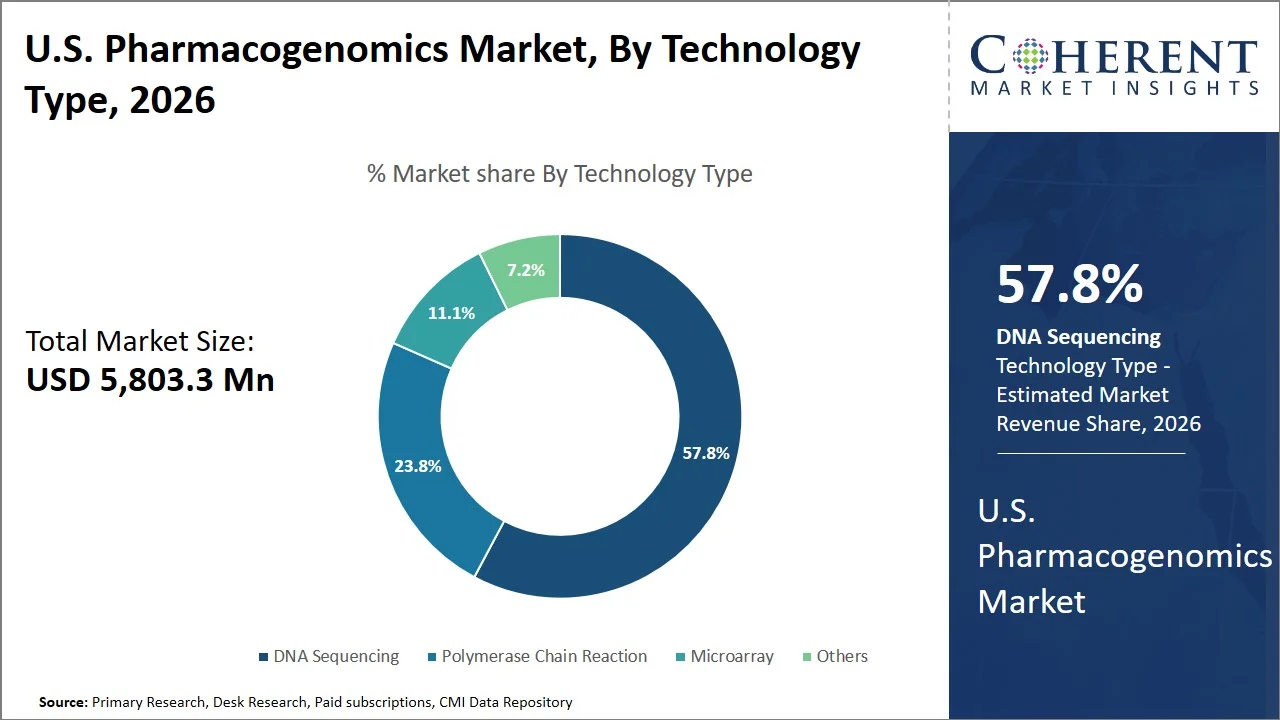
- DNA Sequencing is projected to hold 57.8% of the U.S. pharmacogenomics market share in 2026, making it the dominant technology type segment, owing to the increasing use of sequencing-based approaches to identify genetic variants that influence drug response and dosage. For instance, the U.S. Food and Drug Administration (FDA) maintains a pharmacogenomic biomarker table that includes genetic variants used for genotype-specific dosing, treatment response, and adverse-event risk, supporting the clinical application of sequencing-based genomic information.
- Therapeutic applications are projected to hold 68.5% of the U.S. pharmacogenomics market share in 2026, making it the dominant application segment, driven by the use of genetic information to optimize drug selection, dosing, and treatment safety. For instance, the Centers for Medicare & Medicaid Services (CMS) maintains an active Local Coverage Determination for pharmacogenomic testing, with coverage criteria for tests used to guide medication management.
- Pharmaceutical and biotechnology company is projected to hold 52.0% of the U.S. pharmacogenomics market share in 2026, owing to the growing incorporation of genomic information into drug development and regulatory submissions. For instance, the FDA's Pharmacogenomic Data Submissions guidance provides recommendations to pharmaceutical sponsors on submitting pharmacogenomic data as part of investigational new drug applications, new drug applications, and biologics license applications.
Segmental Insights
Why Do DNA Sequencing Dominate the U.S. Pharmacogenomics Market?
DNA sequencing is projected to hold a market share of 57.8% in 2026, as it offers detection of a range of genetic variations including single-nucleotide variations, insertion and deletions, and complex genomic alterations. New generation sequencing (NGS) technologies are increasing both the comprehensiveness and clinical utility of pharmacogenomic profiling and allow detection of variants unobserved by traditional genotyping. For instance, in May 2026, Guardant 360 Liquid CDx from Guardant Health, Inc. was approved by the U.S. Food and Drug Administration (FDA), a NGS based test designed to identify 741 unique gene mutations and act as a companion diagnostic tool for targeted drug delivery.
- Current Industry Events of 2026
- Market Size Estimation
- Regional Breakdown
- Competitive Landscape
- Customer Intelligence
- Segmental Analysis
- Pricing Analysis
- Key Market Drivers, Challenges & Future Trends
- Customized Insights Section
Why Does Therapeutic Applications Represent the Largest Application Segment in the U.S. Pharmacogenomics Market?
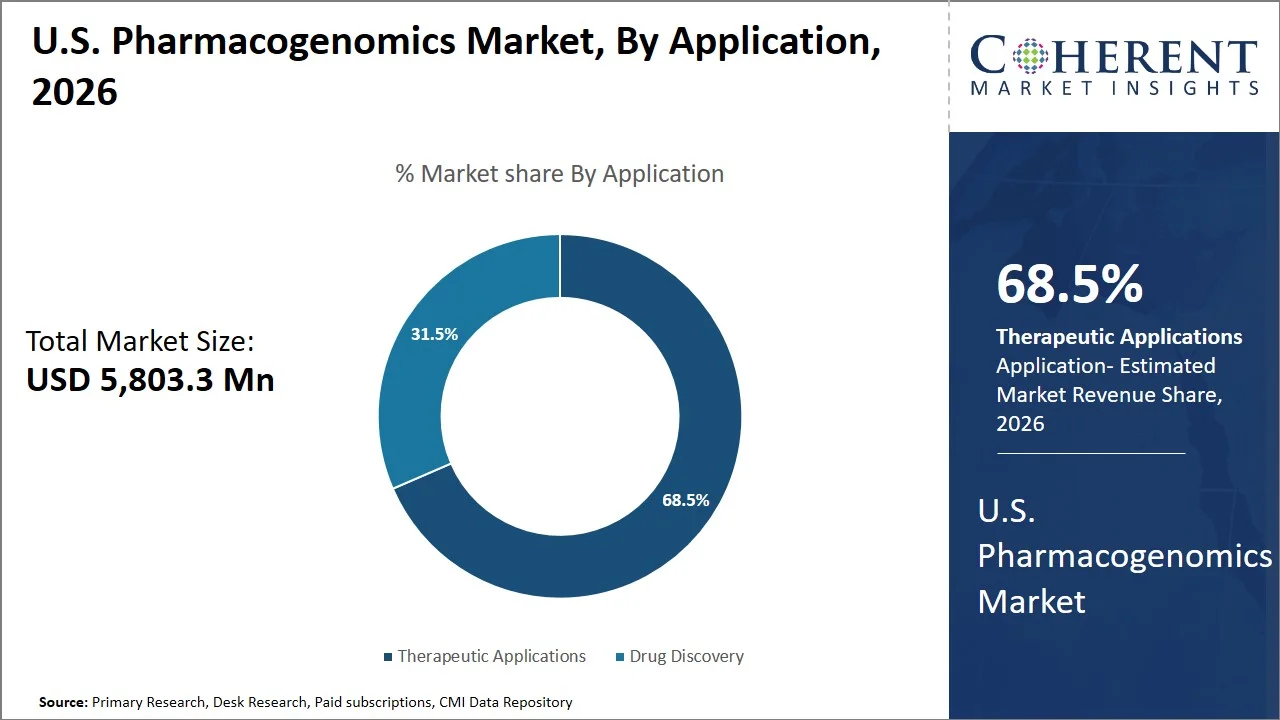
Therapeutic applications are projected to hold 68.5% of the market share in 2026, fueled by the rapid emergence of genetic-based clinical decision-making that assists and predicts the choice of treatment, dosage and patient's response as well as toxicity. Aiding this increasing acceptance of gene-drug association, pharmacogenomics is closely linked with therapeutics application across various disease indications. For instance, in March 2026, the U.S. Food and Drug Administration (FDA) expanded the indication for Wellcovorin (leucovorin calcium) to patients with cerebral folate deficiency where there is a molecularly confirmed FOLR1 mutation, reflecting the expanding use of genetic testing for identifying patients to be targeted for therapy.
Pharmaceutical and Biotechnology company Segment Dominates the U.S. Pharmacogenomics Market
The pharmaceutical and biotechnology company segment is expected to hold 52.0% of the U.S. Pharmacogenomics market share in 2026, owing to the growing adoption of genomic information for drug discovery and development. Companies are increasingly relying on the pharmacogenomics techniques such as patient stratification and biomarkers guided approaches to streamline drug discovery. Furthermore, in pharmacogenomics tests, patients at risk are detected in sub-population with specific genetic features, which enables design appropriate dosages for the effective therapeutic. For instance, the U.S. Food and Drug Administration (FDA) released guidance for pharmaceutical developers in evaluating how pharmacogenomic markers impact drug absorption, distribution, metabolism and excretion (ADME), the effects the drug will have (pharmacodynamics) and ultimately the effectiveness and safety in the early stages of the product’s development.
Current Events and their Impact
Current Events | Description and its Impact |
Centers for Medicare & Medicaid Services (CMS) Implementation of a Dedicated Pharmacogenomic Testing Coverage Policy (July 2025) |
|
Centers for Medicare & Medicaid Services (CMS) Expansion and Updating of Pharmacogenomic Testing Coverage Requirements (April 2026) |
|
U.S. Pharmacogenomics Market Dynamics
Market Drivers
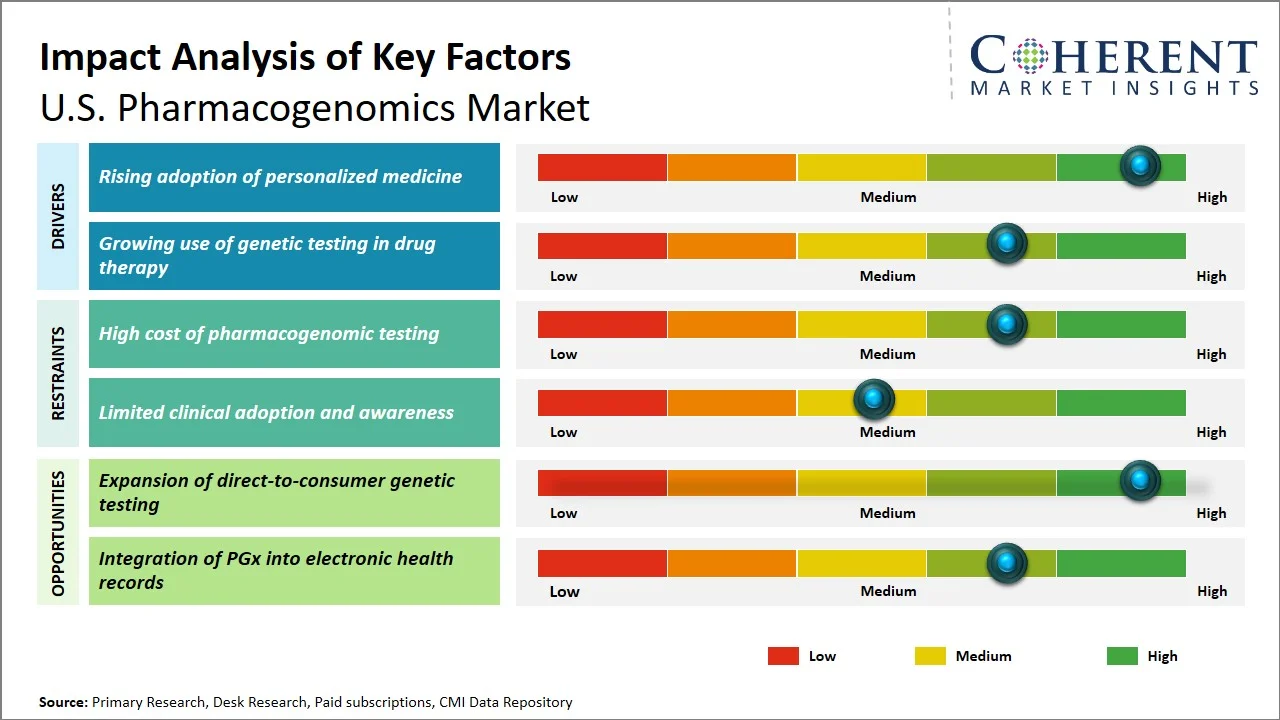
Rising adoption of personalized medicine
The growing emphasis on personalized medicine is driving the U.S. pharmacogenomics market as healthcare providers increasingly seek to replace trial-and-error prescribing with genetically informed treatment strategies. Advances in genomic technologies and access to large-scale genomic and clinical datasets are strengthening the ability to identify clinically actionable gene–drug relationships. For instance, the National Institutes of Health (NIH) has highlighted pharmacogenomics as a key component of precision medicine, with the goal of identifying the right drug and dose for the right patient. This continued integration of genomic information into clinical care is expected to support broader adoption of pharmacogenomic testing.
Growing use of genetic testing in drug therapy
The growing use of genetic testing in drug therapy is supporting the U.S. pharmacogenomics market by enabling more informed medication selection and dosing based on individual genetic profiles. Greater availability of PGx testing is also helping healthcare systems reduce medication trial-and-error and improve treatment safety. For instance, in May 2026, the U.S. Department of Veterans Affairs (VA) expanded access to its PHASER pharmacogenomic testing program, using a blood-based genetic test to help providers determine medications that may be more effective based on patients’ genetic profiles. The program covers applications across mental health, pain management, oncology, cardiovascular care, infectious disease, and other areas, demonstrating the expanding use of genetic testing in drug therapy.
Increasing Adoption of Precision Prescribing
The growing adoption of precision prescribing is supporting the U.S. pharmacogenomics market as healthcare systems increasingly incorporate genetic information into medication selection and dosing. This shift is strengthening demand for clinically actionable PGx testing and its integration into routine care. For instance, in March 2025, researchers at the University of California, San Francisco (UCSF) reported the implementation of a preemptive pharmacogenomics program covering 56 medications and 15 genes, with pharmacogenomic prescribing alerts integrated into the electronic health record.
Emerging Trends
Expansion of Direct-to-Consumer (DTC) Pharmacogenomic Testing
PGx providers are expanding online testing options that allow consumers to access pharmacogenomic reports with greater convenience. This trend is broadening testing access and increasing consumer engagement with personalized medication
Integration of Pharmacogenomics into Electronic Health Records (EHRs)
Healthcare systems are increasingly incorporating PGx results into electronic health records (EHRs) to make genetic information available during prescribing. This supports automated medication alerts and genotype-guided treatment decisions within routine clinical workflows.
Development of AI-Enabled Genomic Interpretation
AI-based platforms are emerging to analyze complex genetic data and translate pharmacogenomic findings into clinically actionable insights. This can improve the speed and consistency of variant interpretation while supporting healthcare professionals in medication selection.
Key Regulatory & Reimbursement Developments in the U.S. Pharmacogenomics Market
Governing Body | Regulatory / Reimbursement Development | Recent Development | Market Impact |
Centers for Medicare & Medicaid Services (CMS) | Medicare coverage for PGx testing | CMS’s Pharmacogenomic Testing Local Coverage Determination (LCD L39995) became effective April 1, 2026, establishing coverage criteria for medically necessary PGx testing. | Improves reimbursement clarity and supports broader adoption of PGx testing among Medicare beneficiaries. |
Centers for Medicare & Medicaid Services (CMS) | Coverage of single-gene, multi-gene, and combinatorial PGx tests | CMS coverage policies recognize PGx testing when results can directly inform medication management and improve drug safety. | Strengthens the clinical and reimbursement pathway for actionable PGx testing. |
U.S. Food and Drug Administration (FDA) | Pharmacogenomic biomarkers in drug labeling | FDA maintains a pharmacogenomic biomarker table identifying genetic markers associated with genotype-specific dosing, treatment response, and adverse-event risk. | Encourages integration of PGx information into prescribing and supports demand for clinically actionable testing. |
U.S. Food and Drug Administration (FDA) | Pharmacogenomic data submissions | FDA guidance outlines how pharmaceutical sponsors should submit pharmacogenomic data within Investigational New Drug (IND), New Drug Application (NDA), and Biologics License Application (BLA) development and review processes. | Supports greater incorporation of pharmacogenomic evidence into drug development and regulatory decision-making. |
How is the expansion of direct-to-consumer genetic testing creating new growth opportunities in the U.S. pharmacogenomics market?
The growth of direct-to-consumer (DTC) genetic testing is opening up major new business opportunities for the U.S. Pharmacogenomics market, by enhancing consumer awareness and access to genetic information and thereby contributing to the growing interest in personalized medicine. The availability of cost-effective and user-friendly genotyping techniques will continue to drive an increase in consumer use of DTC pharmacogenomic services. For instance, the U.S Food and Drug Administration (FDA) finalized a special regulatory classification route for DTC pharmacogenetic tests at 21 CFR 862.3364 and approved 23andMe’s Personal Genome Service Pharmacogenetic Reports via De Novo pathway. This framework serves as a platform for future expansion of consumer accessible PGx testing, while managing standards of performance and labeling.
Market Players, Key Development, and Competitive Intelligence
Key Developments
- In July 2026, Tempus AI, Inc. announced the national launch of its OneOme pharmacogenomics (PGx) testing solution, providing genetic insights to support medication safety, dosing and toxicity-risk assessment. Following its acquisition of OneOme in November 2025, Tempus integrated PGx capabilities into its precision-medicine platform, strengthening its presence in the U.S. pharmacogenomics market.
- In May 2026, Foundation Medicine, Inc. announced plans to launch FoundationOne PGx, a pharmacogenetic testing offering in the U.S. through an expanded partnership with Fulgent Genetics, Inc. The test is designed to identify genetic variations affecting drug metabolism and support therapy selection and dosing decisions. Its oncology-focused panel covers nine genes linked to actionable drug-metabolism guidance, strengthening the adoption of PGx testing in cancer care.
- In November 2025, Baylor Genetics launched pharmacogenomic and germline genetic testing services for the U.S. Department of Veterans Affairs, expanding access to genetic testing for medication-related decision-making and inherited conditions. The initiative directly supports the adoption of pharmacogenomics within the U.S. healthcare system and represents a strong institutional-use instance.
Competitive Landscape
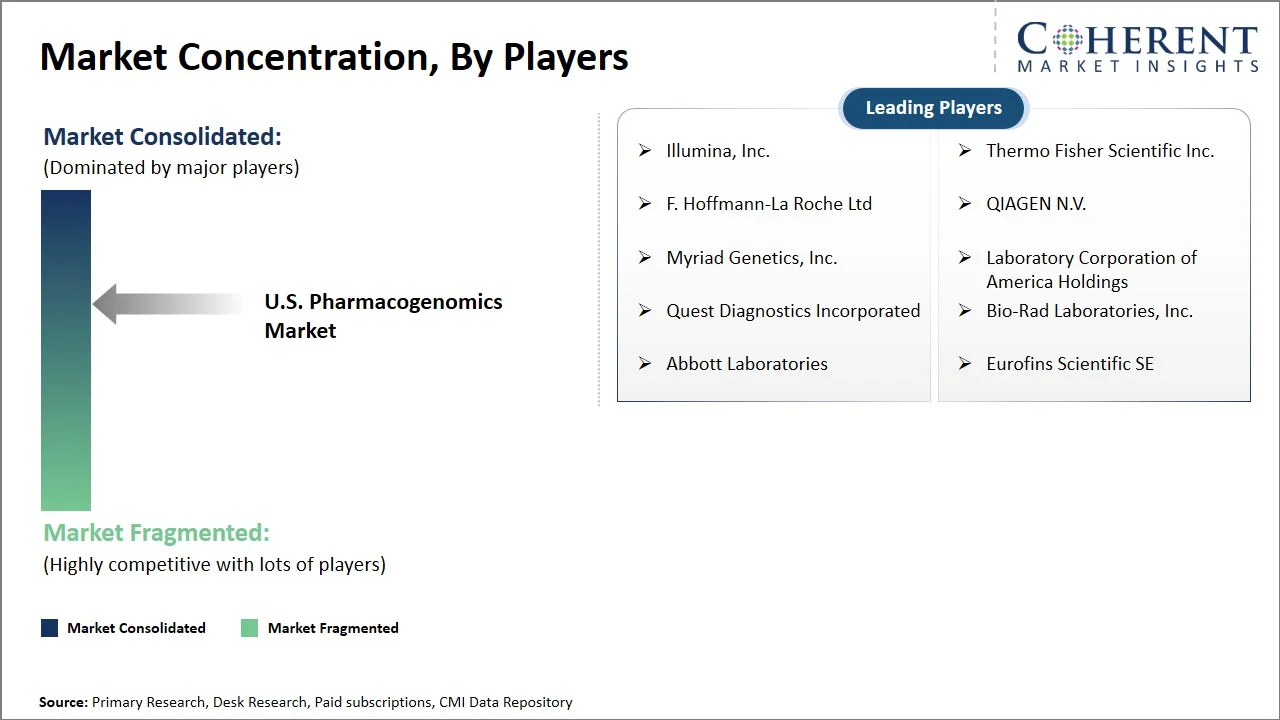
The U.S. pharmacogenomics market is highly competitive, with leading players focusing on expanding genetic testing portfolios and integrating pharmacogenomic insights into precision medicine and clinical decision-making. Companies are strengthening their positions through sequencing-based PGx testing, clinical decision-support platforms, and collaborations with healthcare providers and pharmaceutical companies. Key focus areas include:
- Expansion of sequencing-based pharmacogenomic testing for drug-response profiling
- Integration of PGx results into electronic health records and clinical decision-support systems
- Development of comprehensive gene–drug panels covering multiple therapeutic areas
- Strategic partnerships with hospitals, laboratories, pharmaceutical companies, and healthcare systems
- Expansion of reimbursement-supported and clinically validated pharmacogenomic testing solutions
Market Report Scope
U.S. Pharmacogenomics Market Report Coverage
| Report Coverage | Details | ||
|---|---|---|---|
| Base Year: | 2025 | Market Size in 2026: | USD 5,803.3 Mn |
| Historical Data for: | 2020 To 2024 | Forecast Period: | 2026 To 2033 |
| Forecast Period 2026 to 2033 CAGR: | 13.3% | 2033 Value Projection: | USD 13,930.7 Mn |
| Segments covered: |
| ||
| Companies covered: | Illumina, Inc., Thermo Fisher Scientific Inc., F. Hoffmann-La Roche Ltd, QIAGEN N.V., Myriad Genetics, Inc., Laboratory Corporation of America Holdings, Quest Diagnostics Incorporated, Bio-Rad Laboratories, Inc., Abbott Laboratories, Eurofins Scientific SE | ||
| Growth Drivers: |
| ||
| Restraints & Challenges: |
| ||
Analyst Opinion (Expert Opinion)
- In the coming years, U.S. pharmacogenomics will be shaped by the increasing integration of genomic insights into routine clinical care, supported by advances in next-generation sequencing, electronic health records, and clinical decision-support tools. As healthcare providers increasingly prioritize personalized treatment and medication safety, pharmacogenomic testing is expected to become an integral component of precision medicine.
- The maximum growth opportunity lies within DNA sequencing for therapeutic applications in the U.S., particularly across oncology, psychiatry, and cardiovascular care, where genetic information can guide drug selection, dosage optimization, and adverse drug reaction management. Growing adoption of precision therapies and increasing use of genomic-guided prescribing will continue to support market expansion.
- In order to create an advantage for themselves, the competitors should focus on developing clinically validated multi-gene panels, integrating PGx results into electronic health records, and expanding reimbursement coverage. Strategic collaborations with hospitals, pharmaceutical companies, laboratories, and healthcare providers can further strengthen clinical adoption, expand testing access, and establish differentiated positions in the market.
Speak to the analyst
Want personalized insights?
Take the findings above to one of our principal consultants, or have the report rebuilt around the segments, geographies and competitors you actually track.
Market Segmentation
- Technology Type Insights (Revenue, USD Mn, 2021 - 2033)
- DNA Sequencing
- Polymerase Chain Reaction
- Microarray
- Others
- Application Insights (Revenue, USD Mn, 2021 - 2033)
- Therapeutic Applications
- Drug Discovery
- End User Insights (Revenue, USD Mn, 2021 - 2033)
- Pharmaceutical and Biotechnology company
- Diagnostic Laboratories
- Academic and Research Institute
- Others
Sources
Primary Research Interviews
- Clinical Pharmacologists – pharmacogenomic testing adoption and genotype-guided prescribing
- Medical Geneticists – variant interpretation and clinical implementation of PGx testing
- Oncologists and Psychiatrists – pharmacogenomic applications in treatment selection and optimization
- Clinical Laboratory Directors – sequencing platforms, testing volumes, and laboratory adoption
- Pharmacists – use of PGx results for medication selection and dosing
- Payer and Health Plan Managers – reimbursement and coverage trends for PGx testing
Stakeholders
- Pharmacogenomic Testing Providers – genetic testing, sequencing, and interpretation services
- Pharmaceutical and Biotechnology Companies – biomarker-guided drug development
- Healthcare Providers – hospitals, specialty clinics, and integrated health systems
- Clinical Laboratories – genetic testing and pharmacogenomic interpretation
- Electronic Health Record and Clinical Decision-Support Providers – integration of PGx results into prescribing workflows
- End-use Sectors
- Pharmaceutical and Biotechnology Companies
- Hospitals and Academic Medical Centers
- Clinical Laboratories
- Specialty Clinics and Physician Practices
- Research and Academic Institutions
- Diagnostic and Testing Centers
- Regulatory & Health Bodies
- U.S. Food and Drug Administration (FDA)
- Centers for Medicare & Medicaid Services (CMS)
- National Institutes of Health (NIH)
- Centers for Disease Control and Prevention (CDC)
Databases
- FDA Table of Pharmacogenomic Biomarkers in Drug Labeling – gene–drug associations and genotype-based treatment information
- PharmGKB – pharmacogenomic annotations and clinical prescribing guidance
- ClinicalTrials.gov – pharmacogenomic and precision-medicine clinical studies
- NCBI ClinVar – clinically interpreted genetic variants
- NCBI dbSNP – genetic variation data for pharmacogenomic research
- NIH All of Us Research Program – genomic and health data for precision-medicine research
Magazines
- GenomeWeb – genomics, sequencing, and precision-medicine developments
- Fierce Biotech – biotechnology and genomic medicine developments
- Fierce Pharma – drug development and precision-medicine strategies
- Pharmaceutical Executive (PharmExec) – pharmaceutical and precision-medicine trends
Journals
- The Pharmacogenomics Journal – pharmacogenomic research and clinical applications
- Clinical Pharmacology & Therapeutics – clinical pharmacology and pharmacogenomics
- Pharmacogenetics and Genomics – pharmacogenetic research and implementation
- Clinical and Translational Science – translational genomics and precision medicine
- Journal of Personalized Medicine – personalized medicine and pharmacogenomics
Newspapers
- The Wall Street Journal (Health & Science) – pharmaceutical innovation and precision medicine
- The New York Times (Health) – genomics and personalized medicine
- The Washington Post (Health & Science) – genetic medicine and healthcare policy
- USA Today (Health) – genetic testing and personalized healthcare
Associations
- Clinical Pharmacogenetics Implementation Consortium (CPIC)
- Association for Molecular Pathology (AMP)
- American Society of Human Genetics (ASHG)
- American Society for Clinical Pharmacology and Therapeutics (ASCPT)
- Pharmacogenomics Global Research Network (PGRN)
- American College of Medical Genetics and Genomics (ACMG)
Public Domain Sources
- U.S. Food and Drug Administration (FDA) – pharmacogenomic biomarkers, drug labeling, and regulatory guidance
- Centers for Medicare & Medicaid Services (CMS) – coverage and reimbursement policies for PGx testing
- National Institutes of Health (NIH) – genomic research and precision-medicine initiatives
- Centers for Disease Control and Prevention (CDC) – public health genomics and medication-safety data
- National Center for Biotechnology Information (NCBI) – genomic and genetic-variant databases
- ClinicalTrials.gov – publicly available pharmacogenomic clinical-trial information
Proprietary Elements
- CMI Data Analytics Tool
- Proprietary CMI Existing Repository of information for last 10 years.
Get access to 250+ pages report
Every segment, forecast, competitor profile and data table behind the analysis above — available for instant download.
- ESOMAR Member
- ISO 9001:2015 Certified
- D-U-N-S Registered
- GDPR & CCPA Compliant
Missing comfort of reading report in your local language? Find your preferred language:
Transform your Strategy with Exclusive Trending Reports
Frequently Asked Questions
The U.S. pharmacogenomics market is estimated to be valued at USD 5,803.3 Mn in 2026 and is expected to reach USD 13,930.7 Mn by 2033.
DNA Sequencing dominate due to its high accuracy in identifying genetic variants that influence drug response, dosage, and adverse reactions.
Pharmacogenomics is the study of how genetic variations affect an individual's response to medications, enabling more personalized drug selection and dosing.
The CAGR of U.S. pharmacogenomics market is projected to be 13.3% from 2026 to 2033.
Rising adoption of personalized medicine, and growing use of genetic testing in drug therapy are the major factors driving the growth of the U.S. pharmacogenomics market.
High cost of pharmacogenomic testing, and limited clinical adoption and awareness are the major factors hampering the growth of the U.S. pharmacogenomics market.
In terms of application, therapeutic applications are estimated to dominate the market revenue share in 2026.