

Global Vegetable Capsules Market Size and Forecast – 2026 To 2033
The global vegetable capsules market is expected to grow from USD 1,984.6 Mn in 2026 to USD 3,486.2 Mn by 2033, registering a compound annual growth rate (CAGR) of 8.4% from 2026 to 2033. The market for vegetable capsules is poised for significant expansion, fueled by surging consumer demand for plant-based and clean-label nutraceutical and pharmaceutical products.
According to insights released by the Good Food Institute (GFI) based on retail sales data commissioned from SPINS, the U.S. plant-based food retail market expanded from USD 3.9 billion in 2017 to USD 7.9 billion by 2025, and with almost 60% of U.S. households consuming plant-based food in 2025, reflecting the growing consumer inclination toward plant-derived products.
(Source: Good Food Institute)
Key Takeaways of the Global Vegetable Capsules Market
- HPMC (Hydroxypropyl Methylcellulose) capsules are projected to hold 58.0 % of the global vegetable capsules market share in 2026, making it the dominant product type segment, especially in Europe as a result of the dominance of the regional demand for vegan certified, allergen-free, and non-animal derived nutraceutical formulations. European supplement and pharmaceutical companies now more frequently employ HPMC capsules to encapsulate botanical extracts, organic wellness products and moisture-sensitive formulations that demand high formulation stability. For instance, European Commission and European Medicines Agency (EMA) offer regulatory guidance on excipients in medicinal products for human use which specifies labelling and safety compliance requirements in the context of EU regulations for pharmaceuticals. This encourages the wide acceptance of high-quality plant-derived capsule excipients, including HPMC-based products in Europe. (Source: European Medicines Agency)
- Immediate release capsules are projected to hold 49.0 % of the global vegetable capsules market share in 2026, making it the dominant functionality segment, particularly in North America, due to high regional demand for fast dissolving nutraceutical and wellness products for sports nutrition, immunity support and daily health applications. U.S. and Canadian manufacturers are more frequently adopting the benefits of immediate release capsule technologies for products where quick onset of action and ease of oral administration is desired. For instance, the U.S. Food and Drug Administration (FDA) provides considerations of disintegration and dissolution testing of oral solid dosage forms under pharmaceutical quality standards for the development of proven reliable immediate release capsule formulations in the region. (Source: Food and Drug Administration)
- Dietary supplements are projected to hold 52.0 % of the global vegetable capsules market share in 2026, making it the dominant application segment, in Asia Pacific especially, due to growing adoption of vegetarian oral dosage formats in herbal nutraceuticals, functional food supplements and traditional medicine formulas in India, China, and Japan. Local manufacturers are shifting to HPMC capsules for moisture sensitive herbal ingredients and other plant-based wellness products with a need for long term stability and animal free encapsulation system. For instance, in China, the National Medical Products Administration (NMPA) mandates registration or filing for health food and dietary supplements to ensure the ingredients' safety, the use of excipients and the labeling before launching on the market. These regulations are leading to the adoption of steady, compliant plant capsule systems by manufacturers in Asia Pacific to formulate herbal nutraceuticals and functional supplements. (Source: CIRS)
- North America maintains dominance with an expected share of 36.0 % in 2026, bolstered by deep penetration of premium nutraceutical brands, the growing use of vegan-certified supplement ingredients and the expanding demand for non-gelatin oral dosage forms in the U.S. and Canada. The region is also experiencing the widespread adoption of innovative plant-based encapsulation technologies in sports nutrition, probiotic and condition-specific wellness products. For instance, the U.S. Pharmacopeia (USP) offers quality specifications and official requirements for dietary supplements and excipients enabling the formulation and marketing of good quality vegetable capsule formulations throughout North America. (Source: The United States Pharmacopeial Convention)
- Asia Pacific is expected to exhibit the fastest growth with an estimated contribution of 29.0 % share in 2026, driven by the proliferation of herbal nutraceutical manufacturing capacity, rising usage of traditional holistic health remedies and a preference for vegetarian dosage formats throughout China, India and South-east Asia. The region is also experiencing increased production of plant-based oral supplements, used for Ayurveda, Traditional Chinese Medicine (TCM) and functional nutrition purposes. For instance, the China government, through the State Council has published a "Development Plan for TCM [Traditional Chinese Medicine] during the 14th Five-Year Plan period" - which aims to promote the modernization, standardization and industrialization of TCM products. This is further stimulating growth in herbal oral formulations and herbal nutraceutical products, fueling the growth of vegetable capsule technology demands in the region. (Source: Hong Kong Trade Development Council)
- Growing demand for probiotic and microbiome-based supplement formulations: Growing consumer focus on gut health and microbiome wellness is providing niche growth opportunities for vegetable capsules, especially probiotic and enzyme-based formulations needing added protection from moisture and formulation stability. Use of plant-based capsules for live biotherapeutic and sensitive nutraceutical ingredients is rising as these are highly compatible with them and are non-animal derived.
- Increasing adoption of personalized and condition-specific nutraceutical products: Increasing demand from health-conscious consumers for personalized nutritional supplements with health benefits for immunity, sleep health, brain health and women's health is driving niche adoption of vegetable capsules in specialized nutraceuticals formulations. Plant capsules are being adopted by manufacturers for condition-specific products where premium clean-label attributes are important along with compatibility with sensitive ingredients.
Segmental Insights
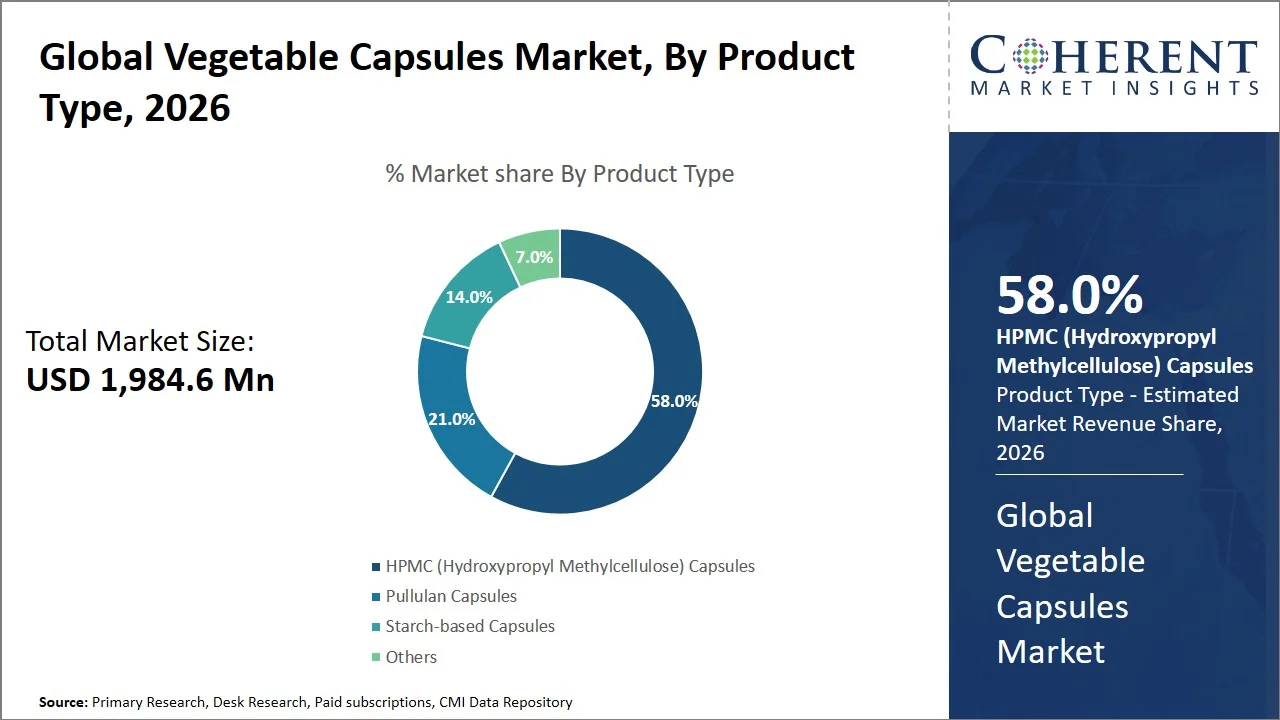
Why Does the HPMC (Hydroxypropyl Methylcellulose) Capsules Segment Dominate the Global Vegetable Capsules Market?
HPMC (Hydroxypropyl Methylcellulose) capsules are projected to hold a market share of 58.0% in 2026, driven by their excellent stability, low moisture pickup and compatibility with sensitive nutraceutical and pharmaceutical contents. HPMC capsules are being used for vegetarian, allergen free and non-animal-based products with high dissolution and shelf stability requirements. Their higher compatibility with hygroscopic contents, probiotics and herbal extracts has enabled the use of HPMC capsules in high-end health and pharmaceutical products. For instance, ACG has designed HPMC vegetarian capsules specifically for moisture sensitive formulations and acid sensitive formulations showing the increased focus on new, more advanced plant-based encapsulation technology in the industry. (Source: ACG) Furthermore, HPMC capsules allow a wide formulation flexibility for powders, pellets and semi-solid fills cementing the strong position of HPMC in the global vegetable capsules market.
- Current Industry Events of 2026
- Market Size Estimation
- Regional Breakdown
- Competitive Landscape
- Customer Intelligence
- Segmental Analysis
- Pricing Analysis
- Key Market Drivers, Challenges & Future Trends
- Customized Insights Section
Why Do Immediate Release Capsules Represent the Largest Functionality Segment in the Vegetable Capsules Market?
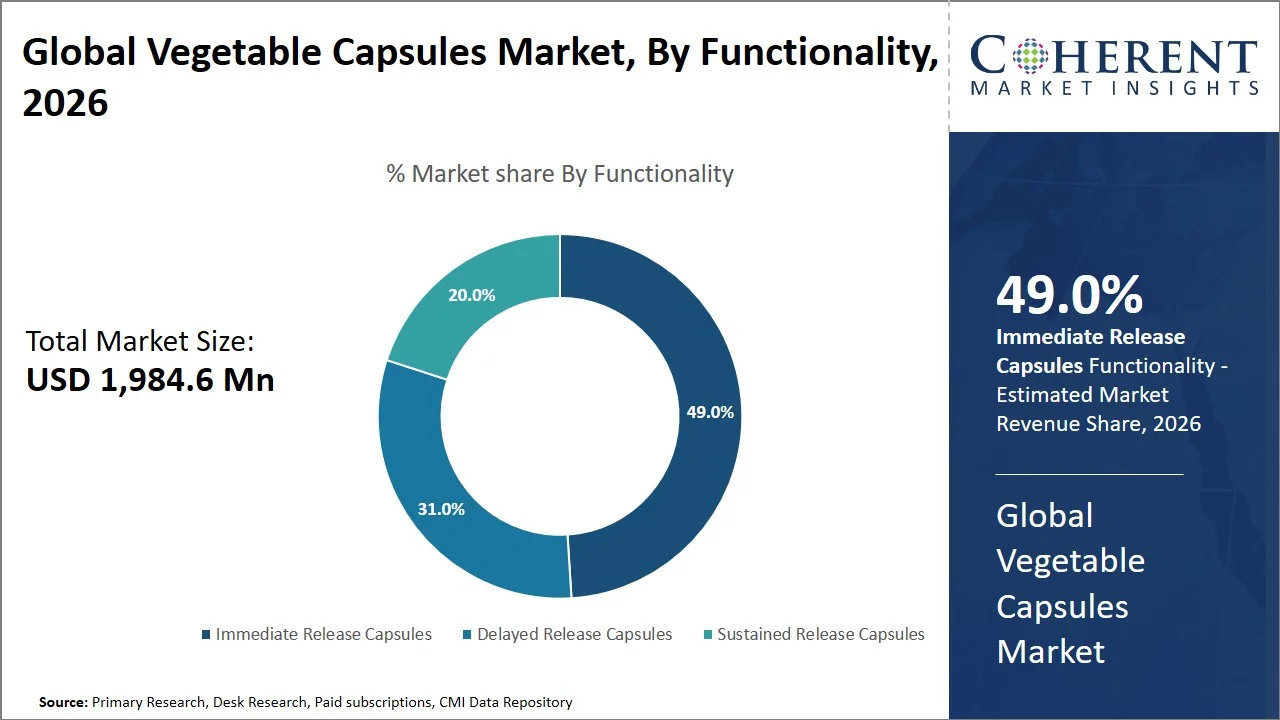
Immediate release capsules are projected to hold a market share of 49.0% in 2026, because of their fast-dissolving nature and instant release of active pharmaceutical ingredients and other nutraceutical ingredients. The consumption of these types of capsules in vitamins, herbal medicines, probiotic and OTC wellness products is gaining popularity because they are quickly absorbed by the human body and have faster onset of action. The effectiveness of administration procedure with these types of capsules and their disintegration characteristics also make them appropriate for everyday preventive health care and wellness applications. For instance, ACG provides ACGcaps HR which are fast-release HPMC capsules with immediate release that are designed for vegan and vegetarian products and are made with a cellulose that is resistant to high temperature and humidity that is seen by the industry as a sign of the future of sophisticated fast-release vegetable encapsulation techniques. (Source: ACG) Furthermore, immediate release vegetable capsules cater for the versatile filling of powders, granules and botanicals, thus providing further strengthening their increasing use in supplement and pharmaceutical production.
Dietary Supplements Segment Dominates the Global Vegetable Capsules Market
The dietary supplements segment is projected to hold a market share of 52.0% in 2026, owing to consumer inclination towards preventive health nutrition, active health maintenance and the use of herbal supplements. Vegetable capsules are widely used for sports nutrition, botanical extracts, probiotics and functional health products owing to their compatibility with sensitive ingredients and vegetarian appeal. Their tastelessness, convenience and clean-label proposition further influence their adoption in nutritional products. For instance, Garden of Life has developed a range of vegetarian and plant-based dietary supplements, with the use of vegetarian capsules for probiotics, vitamins and herbal nutritional supplements emphasizing the increase in the use of vegetable capsules in high-end supplement formulations. (Source: Garden of Life) Further, developments in encapsulation techniques supporting better ingredient stability and formula protection are boosting segment growth.
Currents Events and their Impact
Current Events | Description and its Impact |
U.S. FDA Strengthens Dietary Supplement Ingredient and Compliance Oversight (June 2025) |
|
European Union Expands Regulatory Guidance for Food Supplements and Novel Ingredients (May 2026) |
|
(Source: Morrison & Foerster LLP, European Food Safety Authority)
Global Vegetable Capsules Market Dynamics
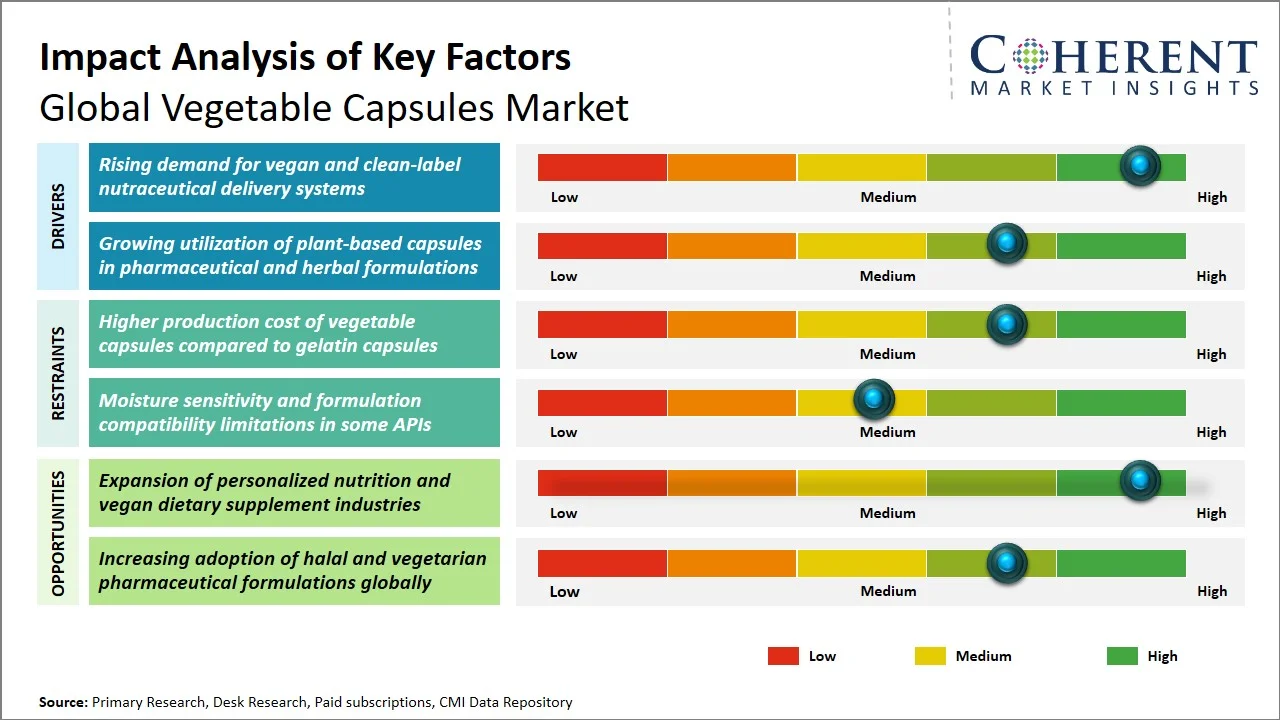
Market Drivers
- Rising demand for vegan and clean-label nutraceutical delivery systems: The consumer trend towards vegan and clean-label products is one of the major factors that is likely to increase the demand for vegetable capsules in the industry. As consumers become more conscious about health, sustainability and animal welfare, they look for alternatives to traditional gelatin capsules, which is animal derived. Vegetable capsules, formulated with plant ingredients such as hypromellose or cellulose support the vegan and clean-label trends. Apart from catering to vegan consumers, it also caters to those with food allergies or intolerances, as well as those wishing to follow a more natural, clean-label lifestyle. Focusing on healthy lifestyles, consumers are looking for transparency and natural ingredients, which vegetable capsules provide, as they are made entirely of plant material, and require less processing. More companies are modifying the formulations of existing products or developing new products with natural, plant-based capsules in order to cash-in on the trend, and as a result, the use of plant-based capsules continues to grow. For instance, the plant-derived capsule portfolio of Lonza Group, Capsugel group, includes HPMC capsule types suitable for clean-label and veg-centric supplements and nutraceutical products. As the use of these plant-derived encapsulation techniques continues to grow, the industry emphasis on vegan-friendly and natural dosage solutions continues to rise. (Source: Lonza)
- Growing utilization of plant-based capsules in pharmaceutical and herbal formulations: The growth of the vegetable capsules market is largely supported by the growing use of plant origin capsules in drug, herbal and nutraceutical formulations. Manufacturers of herbal extracts, probiotics and moisture sensitive formulations are increasingly selecting HPMC and pullulan capsules, due to their vegetarian nature, stable formulation, and clean-label brand positioning. Growing demand from consumers for non-animal-based dosage forms is further contributing to the growing demand of vegetable capsules in preventive healthcare and wellness applications. Furthermore, pharmaceutical and nutraceutical companies are launching vegan certified and gelatin free supplement products to meet the growing consumer demand for plant-based health and clean label healthcare products. For instance, NOW Foods provides extensive vegan certified dietary supplement products developed with plant derived capsules to meet the rising consumer interest in clean-label and vegetarian nutrition solutions. (Source: NOW Foods) This product trend is evidence of the expanding industry reliance on non-animal derived encapsulation methods within the nutraceutical industry.
Emerging Trends
- Rising adoption of clean-label and vegan-certified capsule formulations: Nutraceutical and pharmaceutical companies are increasingly moving to vegan-certified, non-GMO and preservative free capsule formulations in response to the rising consumer demand for plant-based health and wellness products. This trend is also driving growth in the use of HPMC and pullulan capsules in herbal supplements, probiotics and sports nutrition products that are marketed with a clean label.
- Increasing development of moisture-resistant and specialized encapsulation technologies: In response to the packaging concerns of sensitive formulations such as probiotics, enzymes and hygroscopic ingredients, manufacturers are exploring more sophisticated vegetable capsule technology with better oxygen barrier characteristics, low moisture content and greater stability. This trend is enabling a wider application of vegetable capsules for high-end nutraceutical and pharmaceutical formulations that demand increased formulation protection and shelf-life.
Regional Insights
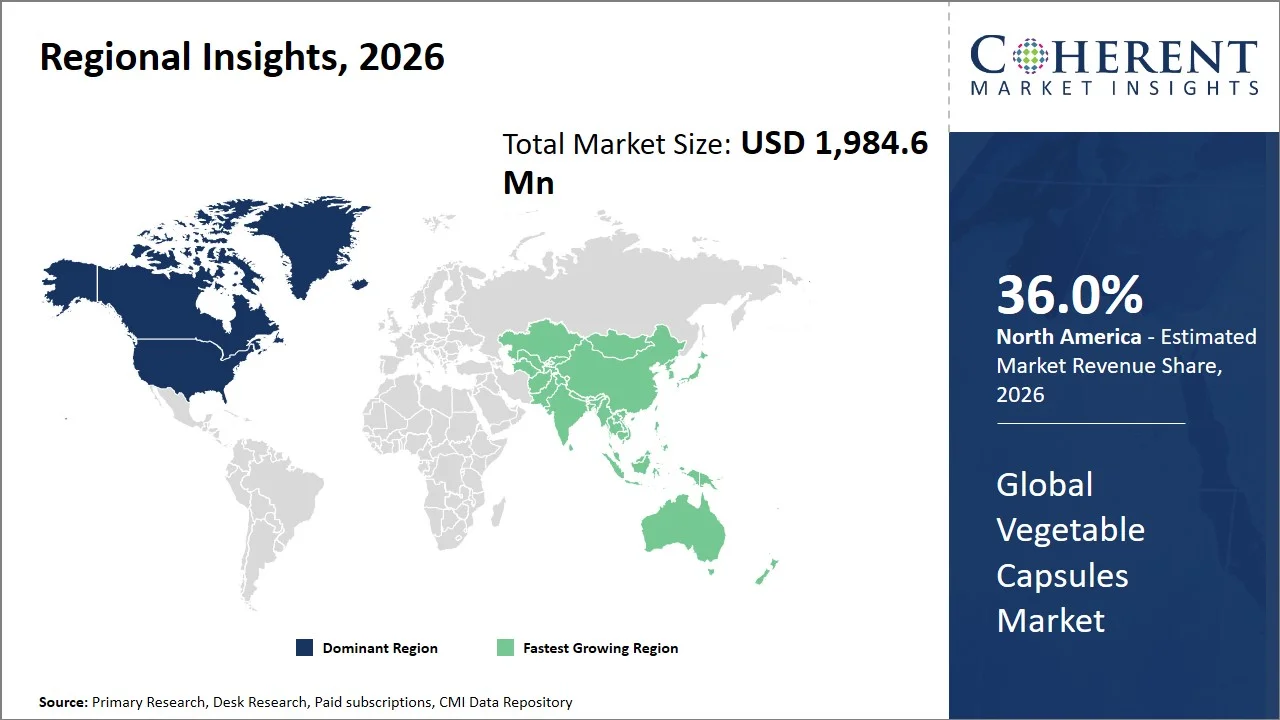
Why is North America a Strong Market for Vegetable Capsules?
North America leads the global vegetable capsules market, accounting for an estimated 36.0% share in 2026, attributed to the strong presence of well-developed and matured nutraceutical ecosystem. The North America region is characterized by high health and wellness awareness, stringent quality norms and high inclination of consumers towards plant-based and clean-label products. Favorable government policies towards natural and organic supplements, and regulatory framework such as U.S. FDA guidelines are critical factors encouraging the growth of the market within region.
For instance, U.S. Food and Drug Administration (FDA) oversees dietary supplement products including vegetable capsule-based formulas under the Dietary Supplement Health and Education Act (DSHEA) 1994 and the current Good Manufacturing Practice regulations (cGMP) 21 CFR Part 111. These regulations set forth requirements regarding ingredient safety, manufacturing quality, label compliance and product uniformity to allow for the growth of high-quality plant-based, clean-label capsule formulas in North America. (Source: Code of Federal Regulations) Moreover, the availability of the state-of-the-art nutraceutical manufacturing infrastructure and the strong consumer preference for high-end plant based formulations are additional reasons for North America's dominance in this market.
Why Does Asia Pacific Vegetable Capsules Market Exhibit High Growth?
The Asia Pacific vegetable capsules market is expected to exhibit the fastest growth with an estimated contribution of 29.0% share to the market in 2026, owing to increasing health awareness, growth of middle-class population, and soaring demand for natural dietary supplements in recent years. The region is also benefited by the growth of healthcare infrastructure and expansion in market opportunities created through effective government initiatives to promote use of traditional medicine and development of nutraceuticals in Asia Pacific especially in China and India. For instance, India's Ministry of AYUSH has been actively promoting indigenous herbal formulations and nutraceuticals by making dedicated efforts to develop and commercialization through Ayurveda and herbal wellness industry. These efforts have prompted vegetarian and plant based capsule formulations to find the way in the nutraceuticals and herbal supplement space of Asia Pacific. (Source: Ministry of Ayush). Further growth for the market is being supported by higher export opportunities to western countries along with improved trade relations within Asia Pacific.
Global Vegetable Capsules Market Outlook for Key Countries
Why is the U.S. Leading Innovation and Adoption in the Vegetable Capsules Market?
The U.S. has been at the forefront of innovation and implementation of vegetable capsules owing to the increasing consumer demand for vegan, clean-label and non-GMO supplement products across U.S. The country capitalizes on the emerging trend of plant-based delivery systems in sports nutrition, herbal supplementation and personalized health formulas requiring optimal ingredient compatibility and formulation stability. Moreover, the ultra-competitive supplements producers in the U.S. are adopting advanced encapsulation techniques for moisture-sensitive and probiotic ingredients. The mature nutraceutical framework and the surge in demand for high-end plant-based delivery formats ensure the U.S. industry domination.
Is Japan a Favorable Market for Vegetable Capsules?
The Japan appears to be a promising market for vegetable capsules because rising consumer demand for premium quality nutraceuticals, functional foods and precision wellness products with clean-label positioning. There is also high demand for plant-origin oral dosage forms for herbal supplements, probiotics and anti-ageing nutrition products that require excellent formulation stability and low moisture content. In addition, Japanese supplement producers have a high demand for premium-grade encapsulation equipment and highly standardized pharmaceutical-grade manufacturing facilities. The growing consumer focus on preventive healthcare and healthy ageing continues to boost vegetable-based capsules sales within the Japanese nutraceuticals sector.
Is China Emerging as a Key Growth Hub for the Vegetable Capsules Market?
The vegetable capsules market is witnessing robust expansion within China on the account of rapidly growing domestic nutraceutical manufacturing, along with a demand from consumers for plant derived nutritional supplement and traditional herbal remedies. China’s consumption of HPMC and pullulan capsules in herbal medicine, functional nutrition and probiotic applications requiring vegetarian and clean-label dosage formats continues to rise. In addition, Chinese OEMs are actively developing large-scale capsule production facilities and pharmaceutical excipient quality standards for domestic and export markets. This evolving blending of modern nutraceutical applications with traditional Chinese wellness practices is also driving expansion within China.
Why Does Germany Top the Europe Vegetable Capsules Market?
Germany leads the Europe vegetable capsules market driven by high penetration of demand for clean-label nutraceuticals, botanical supplements and pharmaceutical-grade plant-derived dosage forms across the country. German pharmaceutical and nutritional supplement companies also gradually adopt vegetable capsules for probiotic, herbal and organic supplement products that demand high formulation stability and exact dissolution properties. Moreover, the country has emerged as a key center for pharmaceutical excipient manufacturing and has a deep focus on high-quality oral dosage technology platforms. Furthermore, rise in demand for allergen-free, vegan wellness products among local consumers further accelerates the demand for vegetable-based capsules in Germany.
Is Vegetable Capsules Market Developing in India?
India is emerging as a potential market for vegetable capsules owing to the surging demand for Ayurvedic, herbal and plant-based nutraceutical products across the country. Local supplement and pharmaceutical manufacturers are making heavy investment in HPMC and pullulan capsules for vegetarian dosage formats which are in vogue with the consumers. The product is also witnessing the boon of surging acceptance for preventive health and wellness related supplements, sports nutrition and herbal supplementation among urban population. The surging nutraceutical manufacturing infrastructure coupled with soaring acceptance of premium oral dosage formats is creating the perfect cocktail for growth of vegetable capsules in India.
Regulatory Landscape Governing the Global Vegetable Capsules Market
Region | Authority & Classification | Approval Pathway | Key Regulatory Insight |
North America | U.S. Food and Drug Administration (FDA) – Dietary supplements regulated under DSHEA; vegetable capsules classified as pharmaceutical excipients or dietary supplement delivery systems | FDA dietary supplement compliance, GRAS excipient evaluation and cGMP adherence for nutraceutical/pharmaceutical manufacturing | Strong emphasis on clean-label claims, non-GMO certification, vegan compliance and excipient quality standards for oral dosage formulations |
Europe | European Medicines Agency (EMA) and European Commission – vegetable capsules regulated under pharmaceutical excipient and food supplement framework | EMA excipient quality documentation, EU food supplement compliance and GMP certification requirements | Increasing focus on plant-derived excipient traceability, sustainability compliance and allergen-free capsule formulations |
Asia Pacific | National Medical Products Administration (NMPA), China; Pharmaceuticals and Medical Devices Agency (PMDA), Japan; FSSAI, India | Product registration, excipient safety assessment and regional nutraceutical/pharmaceutical compliance pathways | Rising regulatory support for nutraceutical manufacturing and expanding demand for vegetarian capsule formulations in pharmaceutical and herbal applications |
Latin America | ANVISA, Brazil and COFEPRIS, Mexico – dietary supplement and pharmaceutical excipient oversight | Local product registration, import approvals and GMP-based manufacturing compliance | Growing regulatory harmonization for nutraceutical products and increasing adoption of plant-based supplement formulations |
Middle East & Africa | Saudi Food & Drug Authority (SFDA), UAE Ministry of Health & Prevention (MOHAP), South African Health Products Regulatory Authority (SAHPRA) | Product notification, halal certification and pharmaceutical excipient compliance procedures | Increasing preference for halal-certified and plant-derived capsule formulations in pharmaceutical and wellness products |
How is the expansion of personalized nutrition and vegan dietary supplement industries creating new growth opportunities in the global vegetable capsules market?
The rising trends of personalized nutrition and vegan dietary supplement industries are opening new growth avenues for the vegetable capsules market on account of surging demand for plant-based, clean label and customized oral dosage formulations. Consumers are preferring vegan compatible capsules for personalized vitamins, herbal formulations and wellness supplements driven by rising trend of animal free and allergen free supplement products. For instance, according to the Council for Responsible Nutrition 2024 Consumer Survey, approximately 75% of American adults use dietary supplements. Among those supplement users, 91% of them affirm that supplements are essential to maintaining their health, and nearly eight in ten supplement users report that they prefer using supplements to over-the-counter or prescription medications whenever appropriate. (Source: Council for Responsible Nutrition) Besides, nutraceutical firms are increasingly switching to HPMC (Hydroxypropyl Methylcellulose) capsules and pullulan capsules for customized formulations due to enhanced ingredient compatibility and stability. The growing emphasis on preventative health care and personalized nutrition is also driving the global growth of vegetable-based encapsulation technologies.
Market Players, Key Development, and Competitive Intelligence
Key Developments
- In March 2026, Nature Made added to its portfolio of gut health supplements with both SuperGreens and Digestive Enzymes formulations due to the rising demand for preventative wellness, digestive health, and plant-based nutraceutical products. This launch demonstrates the growing consumption of vegetable capsule dosage forms for functional nutrition and dietary supplements throughout North America.
- In October 2025, Lonza Group rolled out a new organic USDA-certified pullulan plant-based capsule solution in the North America region due to the increasing demands of clean-label and organic nutraceutical formulations. The newly launched immediately-release vegetable capsule is characterized by improved oxygen barrier protection and formulation stability and demonstrates the developing emphasis of the industry in high-quality vegan capsule technologies for dietary supplement and wellness use.
Competitive Landscape
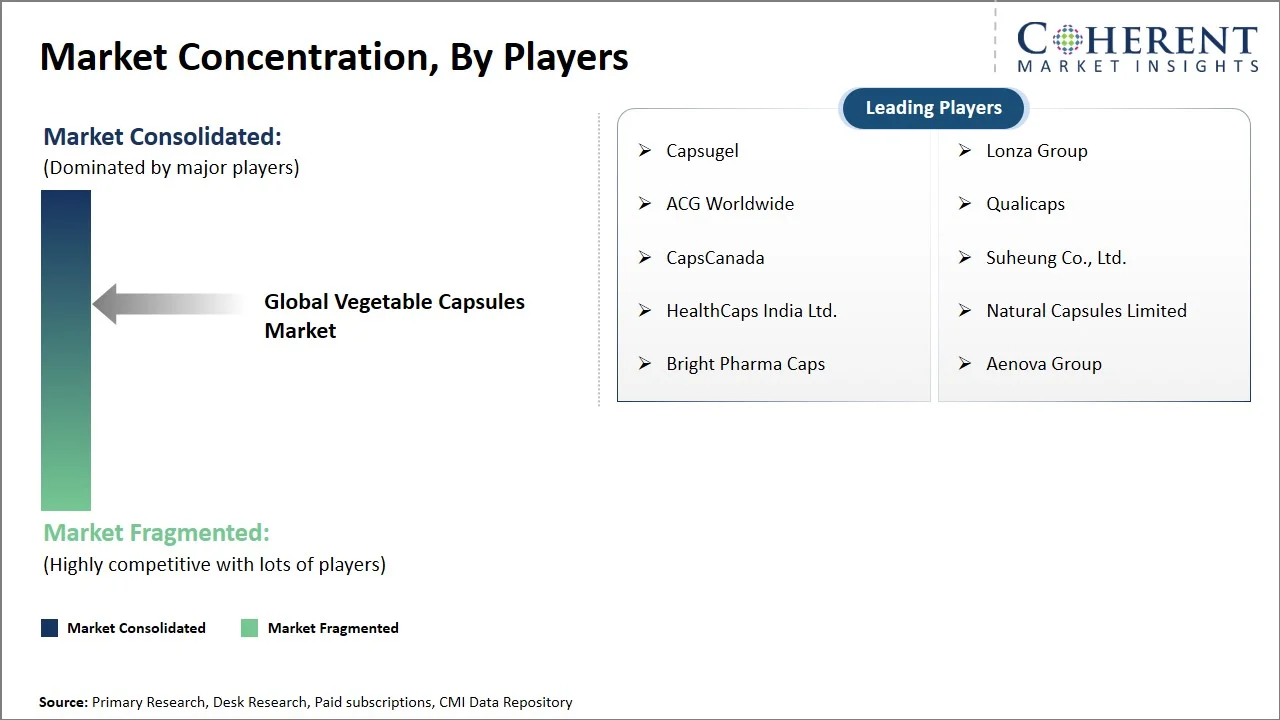
The global vegetable capsules market is moderately competitive with most of the competition arising from capsule stability, the quality of plant derived raw materials, dissolution characteristics and regulatory requirements for nutraceutical and pharmaceutical uses. Firms are placing more emphasis on developing a broad spectrum of HPMC and pullulan based capsule formulations to meet the increasing consumer requirements for vegan and clean-label products. Firms are also investing in innovative encapsulation technologies, moisture resistant capsules and high-speed automated production machinery to enhance capsule performance. Key focus areas include:
- Development of vegan, non-GMO and clean-label capsule formulations
- Expansion of HPMC and pullulan-based capsule production capacities
- Investment in moisture-resistant and oxygen-barrier capsule technologies
- Strengthening pharmaceutical and nutraceutical distribution partnerships
Market Report Scope
Vegetable Capsules Market Report Coverage
| Report Coverage | Details | ||
|---|---|---|---|
| Base Year: | 2025 | Market Size in 2026: | USD 1,984.6 Mn |
| Historical Data for: | 2020 To 2024 | Forecast Period: | 2026 To 2033 |
| Forecast Period 2026 to 2033 CAGR: | 8.4% | 2033 Value Projection: | USD 3,486.2 Mn |
| Geographies covered: |
| ||
| Segments covered: |
| ||
| Companies covered: | Capsugel, Lonza Group, ACG Worldwide, Qualicaps, CapsCanada, Suheung Co., Ltd., HealthCaps India Ltd., Natural Capsules Limited, Bright Pharma Caps, and Aenova Group | ||
| Growth Drivers: |
| ||
| Restraints & Challenges: |
| ||
Analyst Opinion (Expert Opinion)
- The global market for vegetable capsules is anticipated to show promising growth during the forecast period attributed to consumers' shift towards the use of plant-based clean-label and vegan-friendly nutraceutical and pharmaceutical products. Moreover, the rise in the use of vegetarian dietary approaches, the proliferation of herbal supplements and the escalating consumption of non-gelatin based capsule formulations are estimated to boost the long-term growth of the market. Furthermore, technological breakthroughs in the area of moisture resistance, capsule stability as well as the development of plant-based encapsulation technologies are expected to encourage widespread product adoption.
- The maximum opportunities will probably exist in HPMC (hydroxypropyl methylcellulose) vegetable capsules for nutraceuticals and dietary supplements markets, especially in the U. S., Germany and India. The nutraceuticals sector is likely to grow significantly due to the rising consumption of herbal and vitamin supplements, sports nutrition and immunity booster products. Moreover, growing penetration of clean label products and the expanding launches of vegan supplements in North America and Europe are also likely to generate attractive growth opportunities for market players.
- In order to secure a competitive advantage, market players need to develop advanced plant-based capsule technologies with enhanced dissolution efficiency, moisture barrier and compatibility with sensitive formulas. Suppliers who dedicate themselves to non-GMO, organic certified, clean label capsules will be in a better position. Meanwhile, to ensure sustainable long-term growth, strategic alliances with nutraceutical brands, enhanced global supply chains and increased manufacturing capacity for HPMC and pullulan capsules are essential.
Speak to the analyst
Want personalized insights?
Take the findings above to one of our principal consultants, or have the report rebuilt around the segments, geographies and competitors you actually track.
Market Segmentation
- Product Type Insights (Revenue, USD Mn, 2021 - 2033)
- HPMC (Hydroxypropyl Methylcellulose) Capsules
- Pullulan Capsules
- Starch-based Capsules
- Others
- Functionality Insights (Revenue, USD Mn, 2021 - 2033)
- Immediate Release Capsules
- Delayed Release Capsules
- Sustained Release Capsules
- Application Insights (Revenue, USD Mn, 2021 - 2033)
- Dietary Supplements
- Pharmaceuticals
- Herbal Products
- Cosmetics and Nutricosmetics
- Sports Nutrition
- Others
- End User Insights (Revenue, USD Mn, 2021 - 2033)
- Pharmaceutical Companies
- Nutraceutical Companies
- Contract Manufacturing Organizations (CMOs)
- Cosmetic and Personal Care Companies
- Research Laboratories
- Others
- Regional Insights (Revenue, USD Mn, 2021 - 2033)
- North America
- U.S.
- Canada
- Latin America
- Brazil
- Argentina
- Mexico
- Rest of Latin America
- Europe
- Germany
- U.K.
- Spain
- France
- Italy
- Russia
- Rest of Europe
- Asia Pacific
- China
- India
- Japan
- Australia
- South Korea
- ASEAN
- Rest of Asia Pacific
- Middle East
- GCC Countries
- Israel
- Rest of Middle East
- Africa
- South Africa
- North Africa
- Central Africa
- North America
- Key Players Insights
- Capsugel
- Lonza Group
- ACG Worldwide
- Qualicaps
- CapsCanada
- Suheung Co., Ltd.
- HealthCaps India Ltd.
- Natural Capsules Limited
- Bright Pharma Caps
- Aenova Group
Sources
Primary Research Interviews
- Nutraceutical manufacturers utilizing plant-based capsule formulations for dietary supplements and herbal products
- Pharmaceutical formulation specialists involved in vegetarian and clean-label oral dosage development
- Contract manufacturing organizations (CMOs) producing HPMC and pullulan capsule-based formulations
- Dietary supplement brand managers and procurement professionals sourcing vegan capsule technologies
- Encapsulation technology providers and raw material suppliers specializing in plant-derived capsule production
- Regulatory and quality assurance professionals managing capsule compliance and formulation stability standards
Stakeholders
- Vegetable capsule manufacturers and plant-based encapsulation technology providers
- End-use Sectors
- Nutraceutical and dietary supplement companies
- Pharmaceutical manufacturers
- Herbal and Ayurvedic product manufacturers
- Sports nutrition and wellness product companies
- Contract manufacturing organizations (CMOs)
- Functional food and health supplement brands
- Regulatory & Health Bodies: U.S. Food and Drug Administration (FDA) – dietary supplement and pharmaceutical capsule regulatory framework, European Medicines Agency (EMA) – excipient quality and pharmaceutical formulation standards, National Medical Products Administration (NMPA), China – pharmaceutical excipient and capsule compliance regulations, Pharmaceuticals and Medical Devices Agency (PMDA), Japan – oral dosage formulation quality standards, World Health Organization (WHO) – pharmaceutical excipient and medicine quality guidelines
Databases
- FDA Inactive Ingredient Database (IID) – pharmaceutical excipient and capsule ingredient data
- NIH Office of Dietary Supplements (ODS) – nutraceutical and dietary supplement usage statistics
- OECD Health Statistics – dietary supplement consumption and healthcare expenditure data
- WHO Global Health Observatory – health supplement utilization and pharmaceutical access statistics
- PubChem Database – HPMC, pullulan and pharmaceutical excipient composition data
Magazines
- Nutraceuticals World – nutraceutical formulation and supplement delivery trends
- Pharmaceutical Technology – capsule manufacturing and excipient technology developments
- Natural Products Insider – plant-based supplement and clean-label product trends
- Contract Pharma – pharmaceutical outsourcing and capsule manufacturing updates
- Capsugel & Encapsulation Industry Reports – capsule technology and formulation innovation coverage
Journals
- International Journal of Pharmaceutics
- Journal of Dietary Supplements
- AAPS PharmSciTech
- Drug Development and Industrial Pharmacy
- Journal of Pharmaceutical Sciences
Newspapers
- Financial Times – nutraceutical and pharmaceutical manufacturing coverage
- The Wall Street Journal – dietary supplement and wellness industry developments
- The New York Times (Health Section) – plant-based wellness and supplement consumption trends
- The Guardian (Science & Health) – clean-label and sustainable healthcare product developments
Associations
- Council for Responsible Nutrition (CRN)
- Consumer Healthcare Products Association (CHPA)
- International Pharmaceutical Excipients Council (IPEC)
- American Herbal Products Association (AHPA)
- United Natural Products Alliance (UNPA)
Public Domain Sources
- U.S. Food and Drug Administration (FDA) – dietary supplement and pharmaceutical excipient regulations
- National Institutes of Health (NIH) Office of Dietary Supplements – supplement consumption statistics
- World Health Organization (WHO) – medicine quality and pharmaceutical formulation guidance
- European Medicines Agency (EMA) – pharmaceutical excipient and oral dosage regulations
- OECD – health supplement consumption and healthcare expenditure statistics
Proprietary Elements
- CMI Data Analytics Tool, Proprietary CMI Existing Repository of information for last 10 years.
Get access to 250+ pages report
Every segment, forecast, competitor profile and data table behind the analysis above — available for instant download.
- ESOMAR Member
- ISO 9001:2015 Certified
- D-U-N-S Registered
- GDPR & CCPA Compliant
Missing comfort of reading report in your local language? Find your preferred language:
Transform your Strategy with Exclusive Trending Reports
Frequently Asked Questions
The global vegetable capsules market is estimated to be valued at USD 1,984.6 Mn in 2026 and is expected to reach USD 3,486.2 Mn by 2033.
HPMC (Hydroxypropyl Methylcellulose) capsules dominate due to their superior stability, low moisture content, compatibility with hygroscopic ingredients and suitability for vegan and clean-label formulations.
Vegetable capsules are plant-derived capsule shells primarily made from HPMC or pullulan, used for encapsulating pharmaceutical and nutraceutical ingredients.
The CAGR of global vegetable capsules market is projected to be 8.4%from 2026 to 2033.
Rising demand for vegan and clean-label nutraceutical delivery systems and growing utilization of plant-based capsules in pharmaceutical and herbal formulations are the major factors driving the growth of the global vegetable capsules market.
Higher production cost of vegetable capsules compared to gelatin capsules and moisture sensitivity and formulation compatibility limitations in some APIs are the major factors hampering the growth of the global vegetable capsules market.
Pharmaceutical, nutraceutical and dietary supplement industries are the primary end users due to the increasing demand for plant-based and clean-label dosage forms.