

Global Vitamin C Derivatives Market Size and Forecast – 2026-2033
The global vitamin C derivatives market is estimated to be valued at USD 4.2 Bn in 2026 and is expected to reach USD 5.9 Bn by 2033, exhibiting a compound annual growth rate (CAGR) of 5% from 2026 to 2033. This steady growth is fueled by the increasing consumer awareness about the benefits of vitamin C derivatives, as well as the wide application of vitamin C in the cosmetics, pharmaceutical, and food industries.
Key Takeaways of the Global Vitamin C Derivatives Market
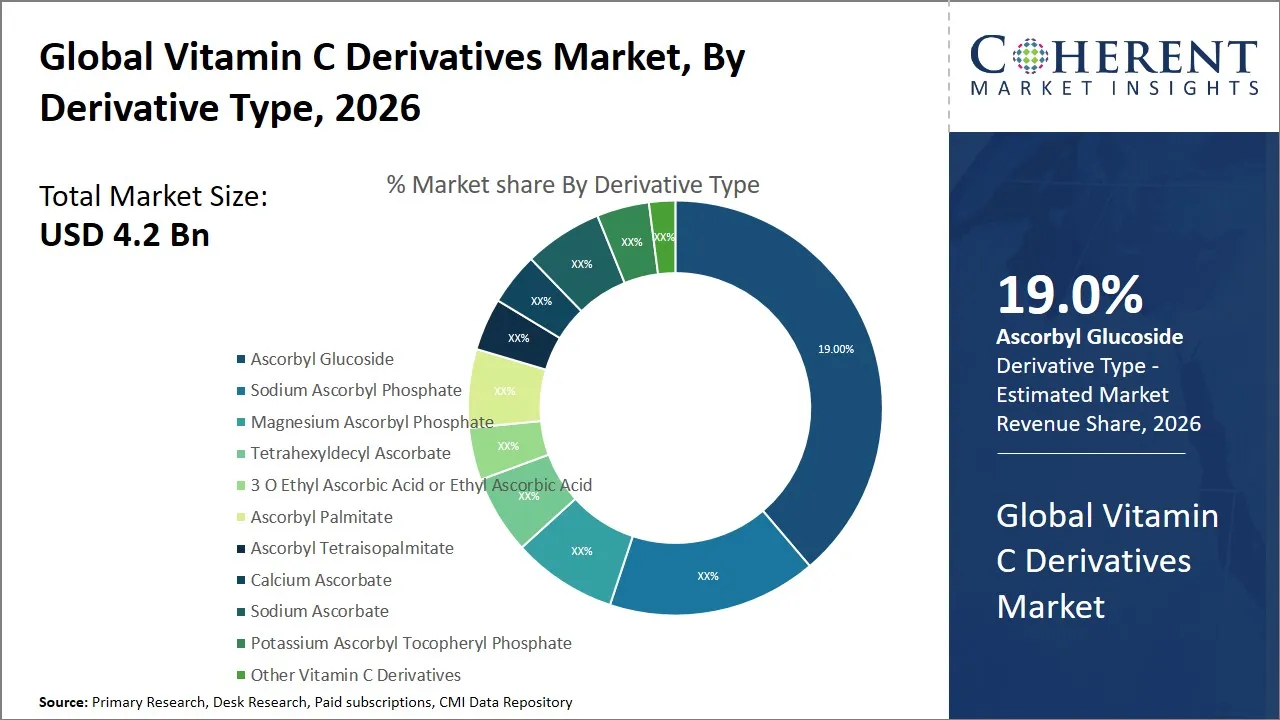
- The ascorbyl glucoside segment is expected to dominate the global vitamin C derivatives market, accounting for 19.0% share in 2026.
- The water soluble derivatives segment is expected to capture 60.0% of the global vitamin C derivatives market share in 2026.
- The powders segment is projected to hold 43.0% of the market share in 2026.
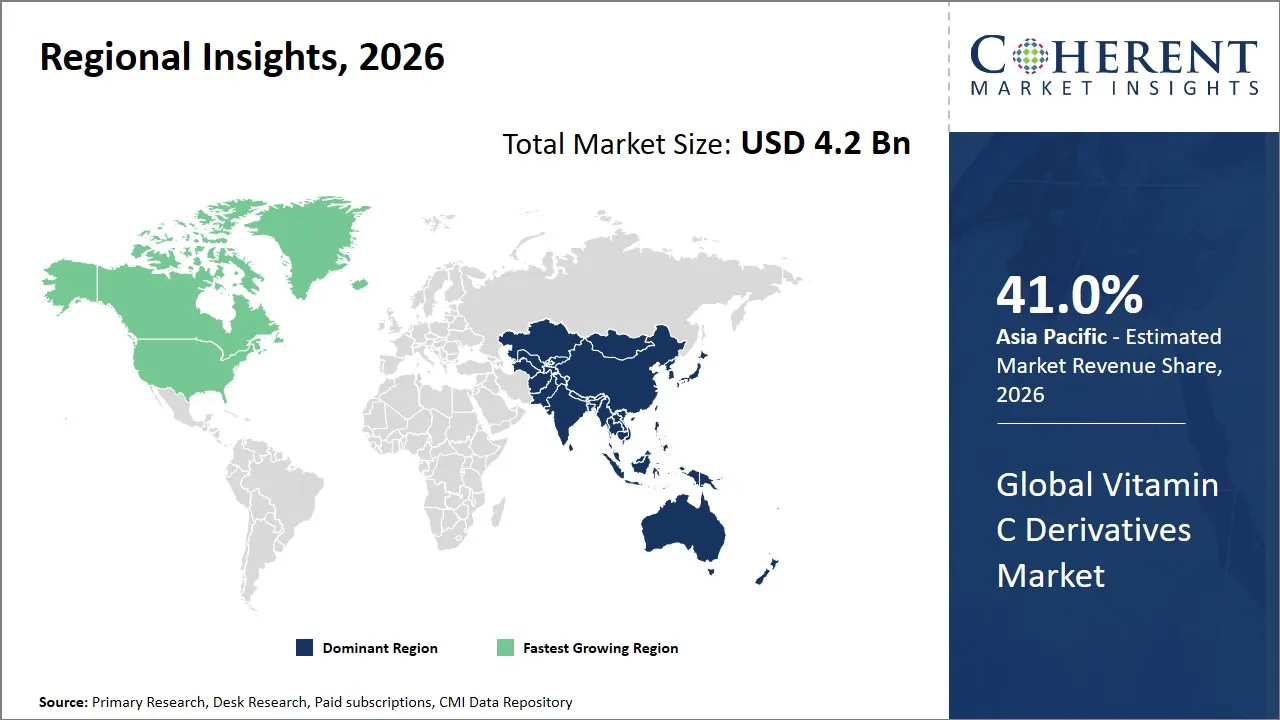
- Asia Pacific is expected to dominate the global vitamin C derivatives market in 2026, accounting for 41.0% share.
- North America is anticipated to be the fastest growing region, with a market share of 28% in 2026.
Market Overview
- Vitamin C derivatives are chemically modified forms of ascorbic acid, developed to improve stability, enhance bioavailability, and increase effectiveness in various applications. Vitamin C derivatives have applications in several sectors, including pharmaceuticals, nutraceuticals, food & beverages, and cosmetics, owing to their properties as an antioxidant, anti-aging, and immunity booster, etc. The stability of vitamin C derivatives is much higher compared to vitamin C. This makes vitamin C derivatives highly suitable for application in the cosmetics, nutraceuticals, and food & beverages sectors.
- Vitamin C derivatives have applications in several sectors. The trend of consumers adopting a preventive health approach, along with an increase in demand for clean label products and multi-functional skincare products, is largely contributing to the growth of vitamin C derivatives. In addition, an increase in the incidence of several diseases, along with awareness about immunity enhancement, are driving the demand for vitamin C derivatives.
- Moreover, the development of new technologies in the field of formulations, including bio-fermentation, green chemistry, and the development of stabilized derivatives, is also opening doors for the growth of the vitamin C derivatives market in the future. The rise in the demand for natural and sustainable ingredients, as well as the growth of the global beauty and wellness industry, is also expected to contribute to the growth of the vitamin C derivatives market in the future.
Currents Events and their Impact
Current Events | Description and its Impact |
Rising Demand for Stable and Effective Skincare Ingredients |
|
Advancements in Vitamin C Derivative Technologies |
|
Segmental Insights
- Current Industry Events of 2026
- Market Size Estimation
- Regional Breakdown
- Competitive Landscape
- Customer Intelligence
- Segmental Analysis
- Pricing Analysis
- Key Market Drivers, Challenges & Future Trends
- Customized Insights Section
Why Does the Ascorbyl Glucoside Segment Dominate the Global Vitamin C Derivatives Market in 2026?
The ascorbyl glucoside segment is anticipated to hold a market share of 19% in 2026. Ascorbyl Glucoside is known as one of the best derivatives of vitamin C, as it is more stable than ascorbic acid, which is highly susceptible to degradation by light, temperature, and oxygen. Ascorbyl Glucoside is widely used in skincare products, as it helps in the slow release of ascorbic acid, which is not likely to cause irritation, thus allowing the production of collagen, reduction of pigmentation, and protection of the skin from photoaging. Ascorbyl Glucoside is highly in demand, as it is easily formulated with various products, including serums, creams, etc.
Ascorbyl Glucoside is highly flexible, as it is easily formulated with water-based products without affecting the texture of the final product, thus making it highly in demand by the manufacturers of multifunctional skincare products, as Ascorbyl Glucoside can easily be formulated with other actives, thus making it highly popular. Ascorbyl Glucoside is highly popular, as the demand for this derivative is increasing, as consumers are looking for this derivative of vitamin C, as it is gentle on the skin and has high efficacy.
For instance, the leading cosmetic ingredients firm, Nagase Viita, has developed Ascorbyl Glucoside, which it markets under the brand name AA2G, with the firm stating that it has "outstanding stability, enabling it to deliver active vitamin C in the skin in a controlled manner, and it is widely used in skincare formulations around the world."
(Source: Nagase Viita)
Why Does the Water Soluble Derivatives Segment Dominate the Global Vitamin C Derivatives Market in 2026?
The water soluble derivatives segment is expected to hold the highest market share of 60% in 2026, owing to their excellent solubility with water-based formulas. Vitamin C derivatives such as Ascorbyl Glucoside, Sodium Ascorbyl Phosphate, and Magnesium Ascorbyl Phosphate have excellent solubility with water. This makes them suitable for use in the creation of formulas such as serums, creams, and supplements. Due to their excellent bioavailability, vitamin C derivatives are cost-effective in the creation of such formulas.
Moreover, these derivatives are in line with the growing consumer demand for non-greasy and easily absorbed formulas, especially in the cosmetics industry of Asian and Western countries. The excellent solubility of these derivatives in water makes them ideal for combining with other water-based actives, thus enhancing the synergies of such formulas. Besides cosmetics, the excellent solubility of these derivatives makes them ideal for use in supplements, thus enhancing their bioavailability and broadening their scope of use.
The Powders Segment Dominates the Global Vitamin C Derivatives Market
Powders segment is projected to capture 43% of the market share in 2026. The powders are less likely to degrade or get oxidized with time. Hence, they are the most preferred form, as they offer the best quality and longevity in the product. From the product development point of view, powders provide the best flexibility, as they can easily be dissolved in various forms, giving the flexibility to create different textures in the product. Also, the ease of use in clean label and preservative-free concepts, combined with the ability to create concentrated forms, makes powders the most sought-after form in the vitamin C derivatives market.
Technological Advancements & Innovation in Vitamin C Derivatives
Category | Key Developments | Impact on Market |
Next-Generation Derivatives Development | Introduction of advanced derivatives such as ethylated Vitamin C (e.g., 3-O-Ethyl Ascorbic Acid), lipophilic derivatives, and hybrid molecules with enhanced stability | Improves penetration, stability, and efficacy compared to traditional derivatives, expanding use in premium skincare and pharma applications |
Encapsulation Technologies | Use of liposomal encapsulation, microencapsulation, and nanotechnology-based delivery systems | Protects Vitamin C from oxidation and degradation, ensuring longer shelf life and improved bioavailability |
Controlled-Release Delivery Systems | Development of time-release and sustained-release formulations for gradual Vitamin C delivery | Reduces skin irritation, improves efficacy over time, and enhances consumer experience in skincare and pharma products |
Green & Bio-Based Synthesis | Adoption of bio-fermentation and eco-friendly synthesis processes for derivative production | Aligns with clean-label and sustainability trends, increasing consumer acceptance and regulatory compliance |
Formulation Innovation | Integration of Vitamin C derivatives with multifunctional actives (e.g., hyaluronic acid, niacinamide) in advanced formulations | Enhances product performance and supports multifunctional skincare trends |
Regional Insights
Asia Pacific Vitamin C Derivatives Market Analysis and Trends
The Asia Pacific region is projected to lead the market with a 41% share in 2026, attributed to the presence of a strong ecosystem, such as the high concentration of manufacturing plants, R&D facilities, and the availability of raw materials. The Asia Pacific region, including countries such as China, Japan, and Korea, already possesses a strong chemical and pharmaceutical industry, which actively participates in R&D for Vitamin C derivatives such as ascorbyl glucoside and magnesium ascorbyl phosphate. The government of these countries actively supports the development of nutritional supplements and cosmetic ingredients, thus fueling the Vitamin C derivatives market in the region. In addition to this, the region provides the benefits of low-cost production and the availability of the consumer segment, who actively seeks health and beauty products with Vitamin C derivatives.
For instance, in May 2024, BASF announced the expansion of its Vitamin C production capacity at its China plant to improve supply capabilities and address growing global demand. This indicates the robust manufacturing infrastructure and strategic investment in the Asia Pacific region, especially China, as a global production center for vitamin C and its related derivatives.
(Source: BASF)
North America Vitamin C Derivatives Market Analysis and Trends
North America is anticipated to be the fastest growing region, with a market share of 28% in 2026, driven by the rising awareness about the health and skincare advantages. Strict quality regulations, which favor high-purity derivatives, also play a role, as do well-established distribution networks. The pharmaceutical and cosmetic industries in the U.S. and Canada are thriving, fueling the need for advanced vitamin C derivatives in nutraceuticals, personal care, and therapeutic uses. Government policies that prioritize the safety and effectiveness of dietary supplements are spurring innovation and the introduction of products with improved vitamin C bioavailability.
Furthermore, the presence of major multinational companies like BASF, Ashland, and Lonza, alongside many start-ups focused on natural and sustainable ingredient formulations, is driving rapid market growth. Finally, trade dynamics that favor imports of premium vitamin C derivatives allow market participants to broaden their product offerings and satisfy the demands of discerning consumers.
Vitamin C Derivatives Market Outlook for Key Countries
How is the U.S. Helping in the Growth of the Vitamin C Derivatives Market?
The U.S. has a major share in the vitamin C derivatives market, owing to the high demand from consumers in the country for Vitamin C Derivatives-based products, especially in the nutraceuticals and cosmetics industries. The U.S. market is highly regulated by the FDA, maintaining the standard of products at a high level, thus forcing companies to develop products with proven efficacy. The U.S. market is dominated by companies like DSM, Ashland, and Lonza, which are utilizing the latest biotechnology to develop vitamin C derivatives products. The U.S. market has well-developed retail as well as online distribution channels, allowing products to reach the market quickly, while the rise in health awareness among consumers is driving the market for vitamin C derivatives products.
For instance, at the NYSCC Suppliers' Day in New York in January 2024, Ashland showcased its cutting-edge personal care ingredient technologies. The focus was on bio-based and vitamin C actives, specifically for skin brightening and anti-aging applications. This presentation underscored the increasing significance of advanced, clean label actives, a trend that American companies are embracing.
(Source: Ashland)
How is China Helping in the Growth of the Vitamin C Derivatives Market?
The China vitamin C derivatives market has a large production capacity, backed by companies such as Northeast Pharmaceutical Group and Zhejiang NHU Co., Ltd. The large production capacity, coupled with the low production costs, has helped China become a key player in the supply of vitamin C derivatives. The increased demand for skin whitening and anti-aging products has driven the demand for vitamin C derivatives in the region. Additionally, the incentives for pharmaceutical ingredient export, as well as green manufacturing technology, are key factors in the vitamin C derivatives market in China.
Key Drivers for the Growth of the Japan Vitamin C Derivatives Market
Japan dominates the vitamin C derivatives market in Asia Pacific, owing to the advanced cosmetic industry in Japan and the preference of the Japanese towards skin care and beauty. Japan has been at the forefront in using vitamin C derivatives such as Ascorbyl Glucoside and Ascorbyl Tetraisopalmitate in premium cosmetics. The Japanese government’s support in carrying out R&D in dermatological ingredients and the strict regulations in ensuring the quality of vitamin C derivatives have resulted in the trust that exists in the market. In addition, Japan is an aging nation, and this has led to the continuous demand for vitamin C derivatives that have anti-aging properties.
South Korea Vitamin C Derivatives Market Trends
The vitamin C derivatives market in South Korea is expanding at a rapid rate, owing to the reputation of the country as a pioneer in innovative skincare and beauty products. The companies in the country, such as Kolmar Korea and Cosmax, are using vitamin C derivatives in their products in a large manner, owing to the demand for these products in the domestic as well as the export market. The business environment in the country, along with the policies of the government regarding biotechnology and the safety of the product, makes the development and commercialization of the product smooth in the country. The active beauty markets in the country, known as K-beauty, is focused on the effectiveness of the product, which creates a high demand for vitamin C derivatives in the country.
Consumer Shift Toward Stable and Low-Irritation Formulations
Consumer are increasingly inclined towards stable and less irritating forms of vitamin C products, primarily due to the increased knowledge of the skin’s sensitivities and the demerits of the conventional vitamin C product. Conventional vitamin C products are known to be oxidized easily, which leads to irritation of the skin, and the consumer is increasingly demanding fewer irritating forms of vitamin C products such as Ascorbyl Glucoside, Magnesium Ascorbyl Phosphate, and Sodium Ascorbyl Phosphate.
The change in the consumer’s preferences towards less irritating forms of vitamin C products can also be attributed to the clean beauty and dermatologist skincare trends, where the safety, efficacy, and long-term health of the consumer are the primary concerns. Therefore, the consumer is demanding non-irritating, fragrance-free, and stable forms of skincare products, which is the reason for the increased development of mild and controlled release forms of vitamin C derivatives.
Market Players, Key Developments, and Competitive Intelligence
Key Developments
- In September 2025, Augustinus Bader, a luxury skincare brand, introduced a new Vitamin C serum. The product has been formulated with ascorbyl glucoside, a derivative of Vitamin C, which is known to provide better results in terms of skin brightness with less irritation, as opposed to ascorbic acid.
- In March 2024, dsm-firmenich announced that it has sold its vitamin C manufacturing plant based in Jiangshan, China. The buyer was Jingjiang Cosfocus Health Technology. The move is part of the optimization of the company’s portfolio with a strong focus on high value-added specialties, such as innovative vitamin derivatives for nutritional and beauty markets.
Top Strategies Followed by Global Vitamin C Derivatives Market Players
Player Type | Strategic Focus | Examples |
Established Market Leaders | Established market leaders emphasize R&D and innovation for the production of high-performance and reliable vitamin C derivatives for the cosmetic, pharmaceutical, and nutraceutical industries. Emphasis should be given on strategic partnerships, global presence, and distribution channels for establishing a presence in the emerging markets. | In March 2024, dsm-firmenich expanded its beauty & care ingredient portfolio, highlighting advanced vitamin C derivatives for skin brightening and anti-aging applications, supporting premium skincare innovation. |
Mid-Level Players | Mid-level players deliver cost-effective and reliable vitamin C derivatives for penetrating the markets. Emphasis should be given on improving manufacturing efficiency, strategic partnerships with distributors and contract manufacturers, as well as supply chain efficiency for penetrating the markets. | In July 2024, Nikkol Group strengthened its functional ingredient portfolio, including vitamin C derivatives, to support cosmetic manufacturers with high-quality yet cost-efficient formulation solutions. |
Small-Scale Players | Small-scale players emphasize innovation in niche markets such as organic vitamin C derivatives, unique formulations, and green chemistry. Strategic partnerships with research institutions as well as regional players should be utilized for improving entry into the markets. | In October 2024, Spec-Chem Industry Inc. promoted specialty vitamin C derivatives for cosmetic and industrial applications, emphasizing customized solutions and niche product differentiation. |
Market Report Scope
Vitamin C Derivatives Market Report Coverage
| Report Coverage | Details | ||
|---|---|---|---|
| Base Year: | 2025 | Market Size in 2026: | USD 4.2 Bn |
| Historical Data for: | 2020 To 2024 | Forecast Period: | 2026 To 2033 |
| Forecast Period 2026 to 2033 CAGR: | 5% | 2033 Value Projection: | USD 5.9 Bn |
| Geographies covered: |
| ||
| Segments covered: |
| ||
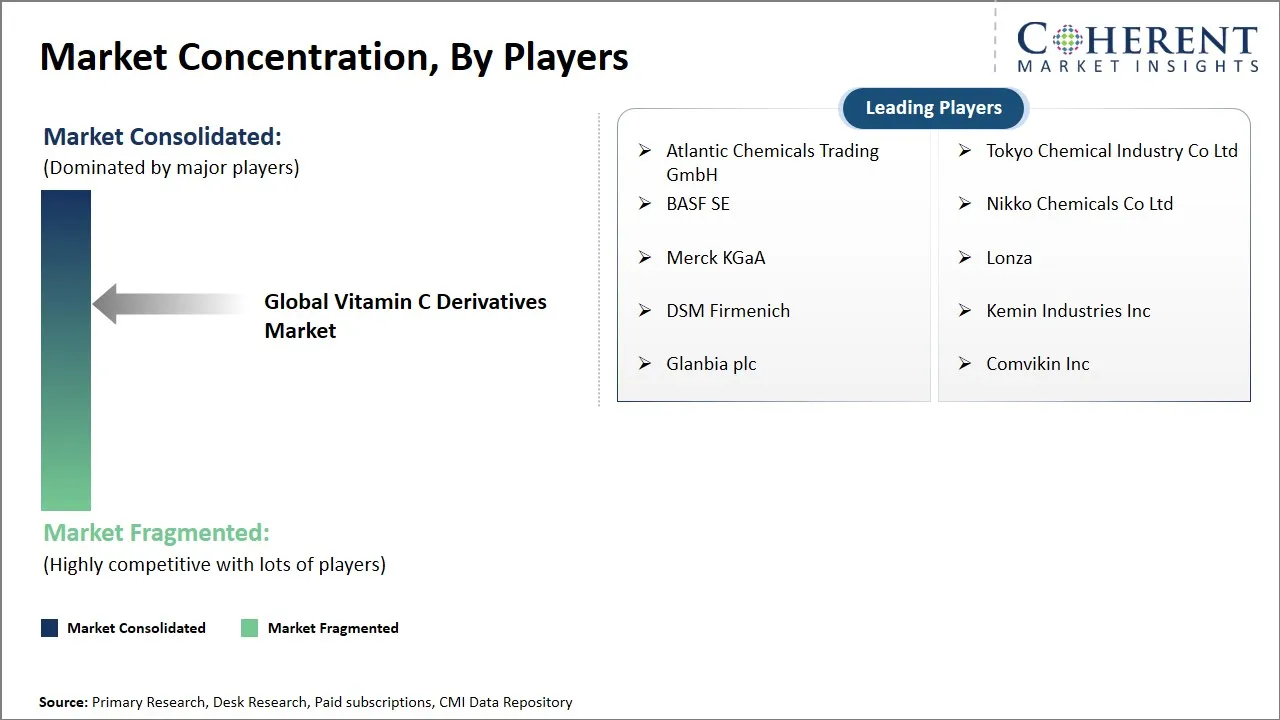
| Companies covered: | Atlantic Chemicals Trading GmbH, Tokyo Chemical Industry Co Ltd, BASF SE, Nikko Chemicals Co Ltd, Merck KGaA, Lonza, DSM Firmenich, Kemin Industries Inc, Glanbia plc, and Comvikin Inc | ||
| Growth Drivers: |
| ||
| Restraints & Challenges: |
| ||
Global Vitamin C Derivatives Market Dynamics
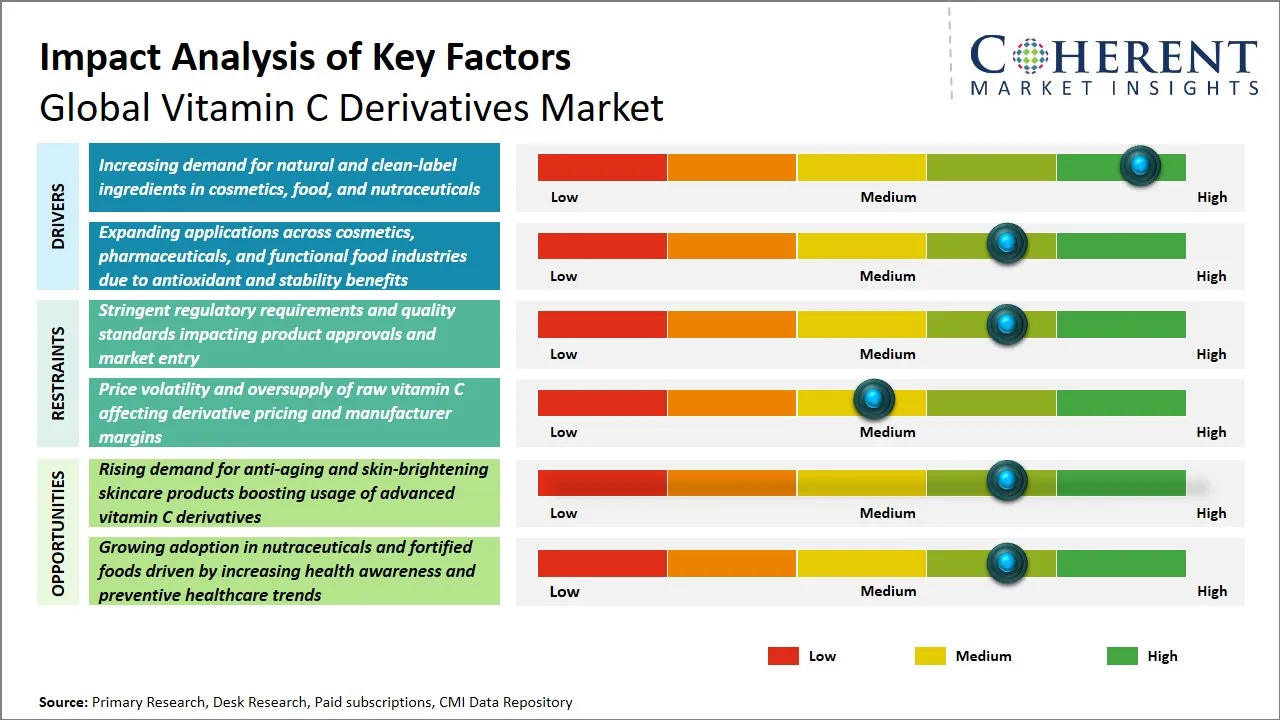
Global Vitamin C Derivatives Market Driver – Increasing Demand for Natural and Clean-Label Ingredients in Cosmetics, Food, and Nutraceuticals
The rise in the trend of using natural, clean label, and sustainable raw materials in the formulation of various products is a major factor that is expected to boost the market of vitamin C derivatives in various industries, including cosmetics, food, and nutraceuticals. This is due to the fact that, with the rise in the awareness of the possible adverse effects of synthetic ingredients, various manufacturers are actively reformulating their products with raw materials that are safe, as well as beneficial, for health.
Vitamin C derivatives, which are recognized for their benefits, are expected to act as the best solution for manufacturers, as they are expected to provide the necessary benefits of antioxidants, anti-aging, as well as immunity, without affecting the formulation of the products in any way.
Vitamin C derivatives are expected to gain popularity in the cosmetics industry, as they are recognized for their benefits, including their ability to lighten the skin, as well as their texturizing effect, along with their ability to meet the needs of consumers, as they are aware of the necessity of transparency in the products, along with the least interference of chemicals in the products.
For instance, Eastman Chemical Company places great emphasis on the development of sustainable and high-performance ingredients for personal care applications, thus supporting clean label formulation trends and enhancing product performance for skincare and cosmetic products.
(Source: Eastman Chemical Company)
Global Vitamin C Derivatives Market Opportunity - Rising Demand for Anti-Aging and Skin-Brightening Skincare Products Driving Advanced Vitamin C Derivatives Usage
The vitamin C derivatives market is growing at a rapid pace at the global level, as the consumers are demanding more and more anti-aging and skin-brightening creams, as the vitamin C derivative helps in the reduction of wrinkles, fine lines, and uneven skin tones, hence promoting the vitamin C derivatives market, as the consumers are becoming aware of the importance of vitamin C derivatives, as they are highly preferred by consumers over ascorbic acid, as the vitamin C derivative has the ability to penetrate the skin easily and provide longer-lasting active ingredient, as compared to ascorbic acid, as it does not provide the desired output.
The vitamin C derivatives market is highly preferred by consumers, especially the millennials, as well as the Gen Z population, as the consumers, especially the youth, are becoming more and more influenced by social media, hence promoting the vitamin C derivatives market at the global level, as the consumers are becoming more and more capable of purchasing the product, hence promoting the vitamin C derivatives market at the global level.
For instance, dsm-firmenich offers STAY-C 50, a stable derivative of Vitamin C known as Sodium Ascorbyl Phosphate, commonly used in skincare formulations as anti-aging, skin brightening, and antioxidant agents, reflecting the interest in stable vitamin C derivatives.
(Source: dsm-firmenich)
Analyst Opinion (Expert Opinion)
- The rising demand for stable and high-performance skincare ingredients is a key factor driving the increased adoption of vitamin C derivatives. Vitamin C derivatives have better stability, a long shelf life, and low irritation, making it the best choice in today’s cosmeceuticals and dermatological industry, as opposed to ascorbic acid.
- The growing concern about skin problems, coupled with an aging demographic and a shift toward preventive healthcare, have driven up the need for Vitamin C derivatives across the cosmeceuticals, nutraceuticals, and pharmaceuticals sectors.
- The market for vitamin C derivatives is witnessing a surge in demand for multifunctional actives, especially vitamin C, as consumers increasingly seek products that offer not only skin-protecting benefits against oxidative damage but also offer skin brightening benefits.
- The rising formulation technologies, especially in vitamin C derivatives, are improving the bioavailability of vitamin C, thus providing a boost to the market in the future. The rising formulation technologies in vitamin C formulations are providing opportunities for companies to extend their range of products, thus providing a strong growth platform for the vitamin C derivatives market in the future.
Speak to the analyst
Want personalized insights?
Take the findings above to one of our principal consultants, or have the report rebuilt around the segments, geographies and competitors you actually track.
Market Segmentation
- Derivative Type Insights (Revenue, USD Bn, 2021 - 2033)
- Ascorbyl Glucoside
- Sodium Ascorbyl Phosphate
- Magnesium Ascorbyl Phosphate
- Tetrahexyldecyl Ascorbate
- 3-O-Ethyl Ascorbic Acid or Ethyl Ascorbic Acid
- Ascorbyl Palmitate
- Ascorbyl Tetraisopalmitate
- Calcium Ascorbate
- Sodium Ascorbate
- Potassium Ascorbyl Tocopheryl Phosphate
- Other Vitamin C Derivatives
- Solubility Insights (Revenue, USD Bn, 2021 - 2033)
- Water Soluble Derivatives
- Oil Soluble Derivatives
- Amphiphilic or Dual Compatibility Derivatives
- Form Insights (Revenue, USD Bn, 2021 - 2033)
- Powders
- Granules
- Liquid
- Oil Dispersible Liquid
- Solution or Concentrate
- Encapsulated Form
- Purity Grade Insights (Revenue, USD Bn, 2021 - 2033)
- Cosmetic grade
- Pharmaceutical Grade
- Nutraceutical and Supplement Grade
- Industrial and Technical Grade
- Application Insights (Revenue, USD Bn, 2021 - 2033)
- Skin Brightening and Depigmentation
- Anti-Aging
- Antioxidant Protection
- Collagen Support Formulations
- Anti Acne Formulations
- Sun Care and After-Sun Products
- Hair Care
- Oral Care
- Nutritional Fortification
- Drug Formulation and Excipient Use
- Formulation Type Insights (Revenue, USD Bn, 2021 - 2033)
- Serums
- Creams and Lotions
- Gels
- Toners and Essences
- Masks
- Cleansers
- Sunscreens
- Ampoules and concentrates
- Capsules and tablets
- Functional foods and beverages
- Pharmaceutical topical formulations
- Injectable and specialty formulations
- End-use Industry Insights (Revenue, USD Bn, 2021 - 2033)
- Personal Care
- Dermatology
- Pharmaceuticals
- Nutraceuticals and Dietary Supplements
- Animal nutrition
- Chemical and Specialty Ingredient Manufacturers
- Distribution Channel Insights (Revenue, USD Bn, 2021 - 2033)
- Direct B2B Ingredient Supply
- Specialty Chemical Distributors
- Contract Manufacturers
- Online Ingredient Platforms
- Retail Finished Product Channel
- Regional Insights (Revenue, USD Bn, 2021 - 2033)
- North America
- U.S.
- Canada
- Latin America
- Brazil
- Argentina
- Mexico
- Rest of Latin America
- Europe
- Germany
- U.K.
- Spain
- France
- Italy
- Russia
- Rest of Europe
- Asia Pacific
- China
- India
- Japan
- Australia
- South Korea
- ASEAN
- Rest of Asia Pacific
- Middle East
- GCC Countries
- Israel
- Rest of Middle East
- Africa
- South Africa
- North Africa
- Central Africa
- North America
- Key Players Insights
- Atlantic Chemicals Trading GmbH
- Tokyo Chemical Industry Co Ltd
- BASF SE
- Nikko Chemicals Co Ltd
- Merck KGaA
- Lonza
- DSM Firmenich
- Kemin Industries Inc
- Glanbia plc
- Comvikin Inc
Sources
Primary Research Interviews
Industry Stakeholders
- Vitamin C Derivative Manufacturers
- Cosmetic and Personal Care Companies
- Pharmaceutical and Nutraceutical Companies
- Raw Material Suppliers
- Regulatory and Compliance Experts
- Distributors and Specialty Chemical Suppliers
End-Users
- Skincare and Cosmetic Manufacturers
- Pharmaceutical Companies
- Nutraceutical and Dietary Supplement Manufacturers
- Food and Beverages Companies
- Research and Formulation Laboratories
Government and International Databases
- World Health Organization – Nutrition and supplementation guidelines
- U.S. Food and Drug Administration – Ingredient safety and approvals
- European Food Safety Authority – Food additive and nutrient evaluation
- National Institutes of Health – Dietary supplement and clinical research data
Trade Publications
- CosmeticsDesign
- Personal Care Magazine
- Nutraceuticals World
- Chemical Watch
Academic Journals
- International Journal of Pharmaceutics
- Journal of Cosmetic Dermatology
- Advanced Drug Delivery Reviews
Reputable Newspapers
- The Wall Street Journal – Healthcare & consumer trends
- Financial Times – Chemicals and pharma industry insights
- The Guardian – Health & science coverage
Industry Associations
- Personal Care Products Council
- Cosmetics Europe
- Council for Responsible Nutrition
- International Alliance of Dietary/Food Supplement Associations
Public Domain Resources
- ClinicalTrials.gov
- WHO Reports
- NIH Office of Dietary Supplements
Proprietary Elements
- CMI Data Analytics Tool: Proprietary analytics tool to analyze real-time market trends, consumer behavior, and technology adoption in market
- Proprietary CMI Existing Repository of Information for Last 10 Years
Get access to 250+ pages report
Every segment, forecast, competitor profile and data table behind the analysis above — available for instant download.
- ESOMAR Member
- ISO 9001:2015 Certified
- D-U-N-S Registered
- GDPR & CCPA Compliant
Missing comfort of reading report in your local language? Find your preferred language:
Transform your Strategy with Exclusive Trending Reports
Frequently Asked Questions
The global vitamin C derivatives market is estimated to be valued at USD 4.2 billion in 2026 and is expected to reach USD 5.9 billion by 2033.
The CAGR of the global vitamin C derivatives market is projected to be 5% from 2026 to 2033.
Increasing demand for natural and clean-label ingredients in cosmetics, food and nutraceuticals, and expanding applications across cosmetics, pharmaceuticals, and functional food industries due to antioxidant and stability benefits are the major factors driving the growth of the global vitamin C derivatives market.
The use of vitamin C derivatives is also preferred because of their increased stability, lower rates of oxidation, and lower irritation potential on the skin in contrast with pure vitamin C. They are easier to use in formulations and can be used in the gradual release of vitamin C.
The demand for these ingredients is largely driven by the cosmetics and personal care industry, followed by the nutraceutical, pharmaceutical, and food and beverages industry. The rising trend of consumers looking for products that provide skin health, anti-aging, and immunity-boosting properties also adds to the demand for these ingredients.
Stringent regulatory requirements and quality standards impacting product approvals and market entry and price volatility and oversupply of raw vitamin c affecting derivative pricing and manufacturer margins are the major factors hampering the growth of the global vitamin C derivatives market.
In terms of derivative type, ascorbyl glucoside is estimated to dominate the market revenue share in 2026.