

Global Wood Manufacturing Market Size and Forecast – 2026-2033
The Global Wood Manufacturing Market is estimated to be valued at USD 547.90 Bn in 2026 and is expected to reach USD 651.29 Bn by 2033, exhibiting a compound annual growth rate (CAGR) of 2.5% from 2026 to 2033.
Key Takeaways of the Wood Manufacturing Market
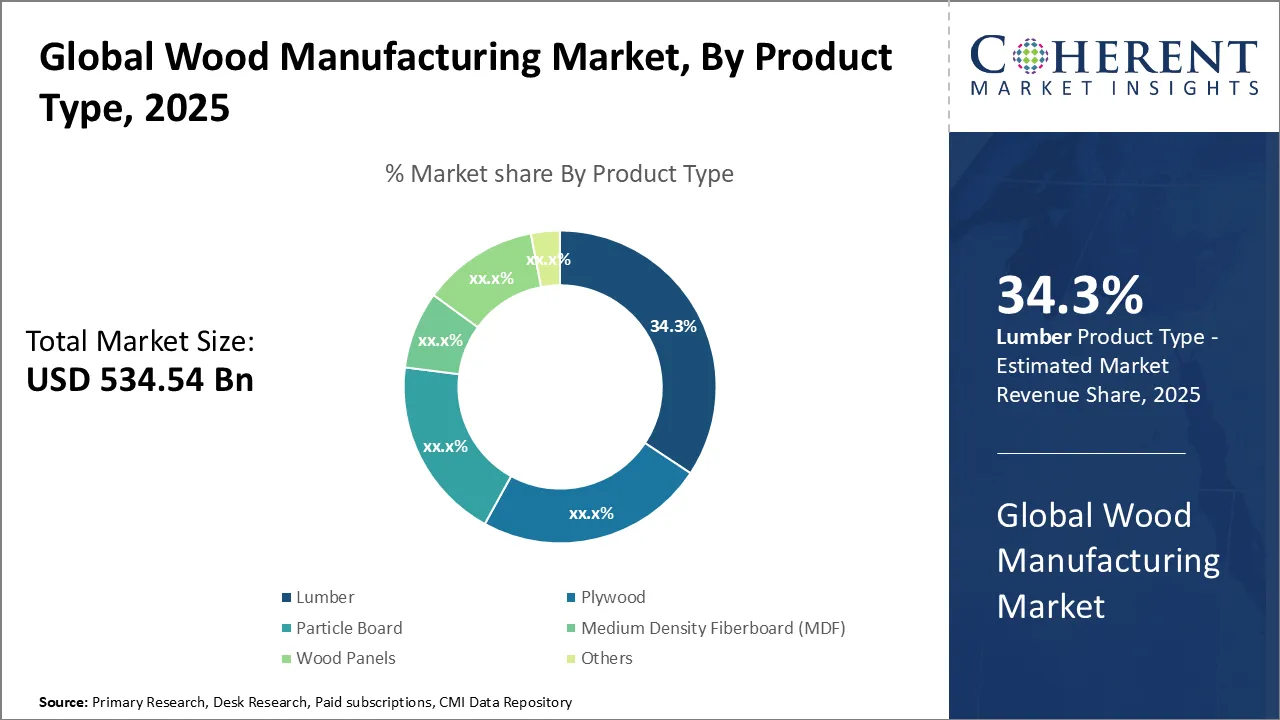
- The lumber segment is projected to account for 35.3 % of the global wood manufacturing market in 2026.
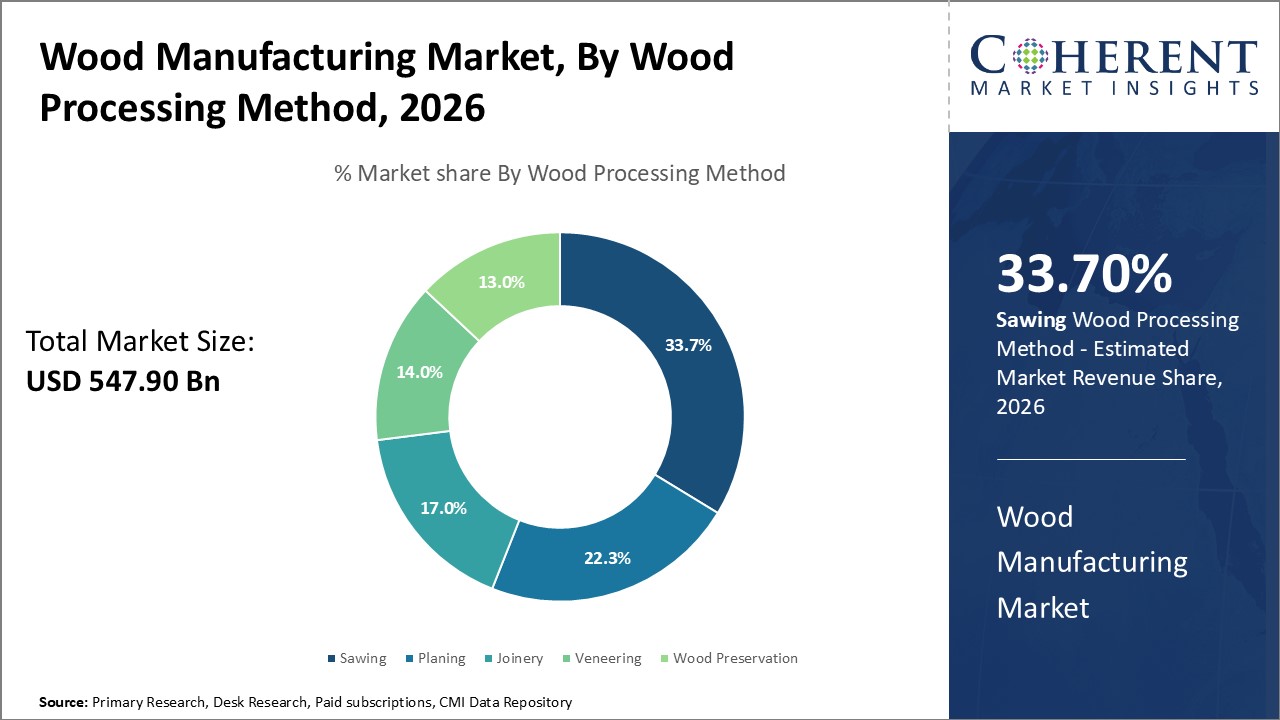
- The sawing segment is expected to capture 33.7 % of the global wood manufacturing market in 2026.
- The furniture segment is projected to represent 30.7 % of the global wood manufacturing market in 2026.
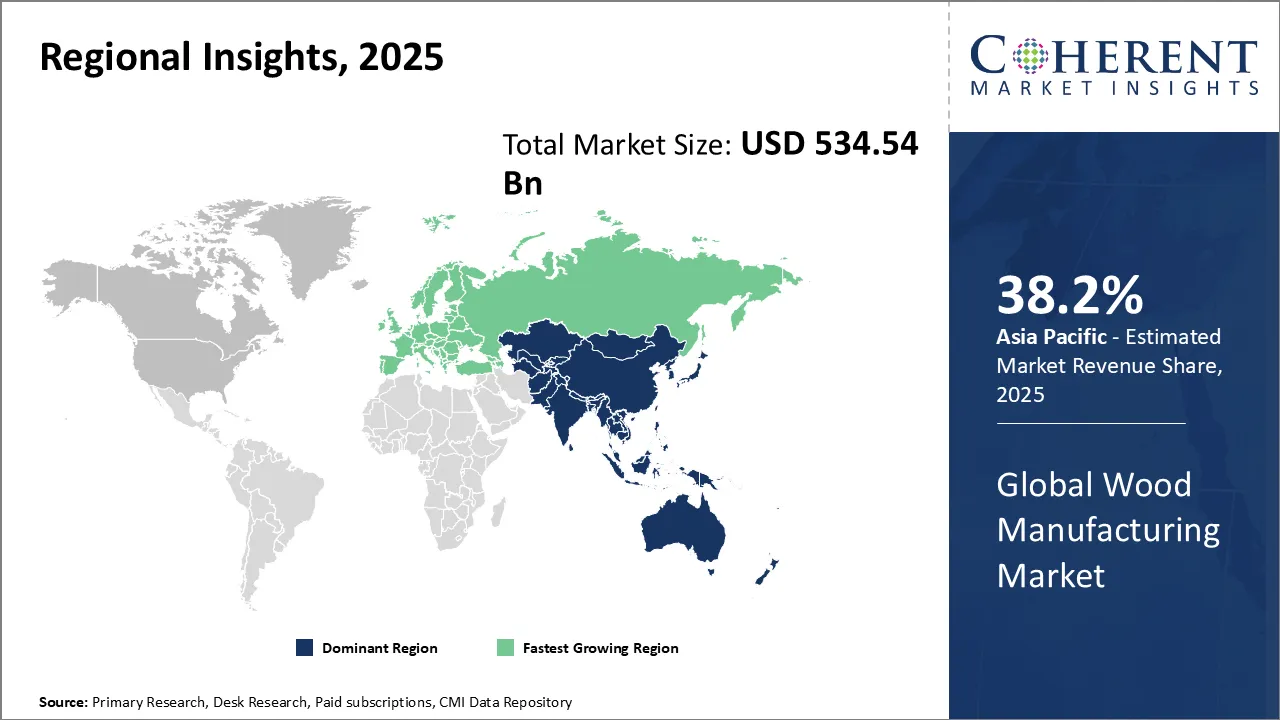
- Asia Pacific is expected to lead the global wood manufacturing market in 2026 with a 38.2 % share. Europe, with a 21.5% share, will be the fastest-growing region.
Market Overview
Current market trends indicate a significant shift towards eco-friendly, renewable, and green building materials, driven by growing environmental awareness and stringent regulations on carbon emissions. Technological advancements in wood processing and the adoption of engineered wood products are enhancing durability and cost-effectiveness, further boosting market growth. Additionally, the rising use of construction materials that prioritize sustainability is reinforcing this shift. Emerging markets in Asia Pacific are also witnessing rapid expansion, creating new opportunities for manufacturers to capitalize on evolving consumer demands and sustainable building practices.
Current Events and Its Impact
Current Events | Description and its impact |
Growing Use of Wood in Green Construction and Furniture (2025) |
|
Policy Changes and Trade Duties – U.S.-Canada Lumber Tariffs (2025) |
|
Segmental Insights
- Current Industry Events of 2026
- Market Size Estimation
- Regional Breakdown
- Competitive Landscape
- Customer Intelligence
- Segmental Analysis
- Pricing Analysis
- Key Market Drivers, Challenges & Future Trends
- Customized Insights Section
Wood Manufacturing Market Insights, By Product Type – Lumber Segment Dominates Due to Its Versatility and Fundamental Role in Construction and Manufacturing
Lumber segment is expected to hold 35.3% share of the global wood manufacturing market in 2026, primarily due to its intrinsic versatility and broad range of applications. As a fundamental raw material, lumber is favored across numerous industries including construction, furniture production, and general manufacturing. One of the key drivers supporting lumber’s significant market share is its natural strength and durability, making it ideal for load-bearing structures such as residential and commercial buildings. The increasing demand for sustainable, renewable building materials has further elevated lumber’s appeal in green construction projects globally.
Wood Manufacturing Market Insights, By Wood Processing Method – Sawing Segment Dominates Due to its Foundational Role in Wood Manufacturing and Efficiency in Preparing Raw Timber
Sawing segment is expected to hold 33.7% share of the global wood manufacturing market in 2026, mainly due to its essential function as the initial stage in converting raw timber into usable wood products. This process involves cutting logs into dimensional lumber or other wood product shapes that serve as the building blocks for further processing activities such as planning, joinery, or veneering.
The prominence of sawing in the market is driven by the widespread demand for precision and consistency in wood dimensions, which are critical for downstream manufacturing and end-user applications. Technological improvements in sawing equipment, including computer numerical control (CNC) machinery and automated sawmills, have revolutionized wood processing by increasing speed, reducing waste, and enhancing dimensional accuracy. These advancements allow manufacturers to maximize raw material utilization, reduce processing costs, and respond quickly to customized orders, which strengthens sawing’s dominant position.
Wood Manufacturing Market Insights, By Application - Furniture Commands the Highest Share Driven by Rising Consumer Demand for Customized, Eco-friendly Wooden Furnishings
Furniture segment is projected to hold 30.7% share of the global wood manufacturing market in 2026, due to enduring consumer preference for wooden furnishings that combine aesthetics, functionality, and sustainability. Wood’s natural warmth, strength, and timeless appeal make it an outstanding choice for furniture that complements a wide variety of interior designs and lifestyles.
One of the main factors driving the large share of the furniture application segment is the increasing trend toward personalized and customized furniture solutions. Advances in woodworking technology, including computer numerical control (CNC) machining and digital design platforms, enable manufacturers to produce intricate designs with greater precision and at scale. This has broadened the market appeal of wooden furniture by making customized pieces more accessible and affordable to a wider consumer base.
Regional Insights
Asia Pacific Wood Manufacturing Market Analysis and Trends
The Asia Pacific region is projected to lead the market with a 38.2% share in 2026, due to rapid urbanization, expanding construction activities, and an increasing shift toward eco-friendly materials. Emerging economies such as China, India, and Indonesia are fueling demand through both infrastructure development and rising consumer awareness of green products. Government initiatives aimed at sustainable resource management and industrial modernization further catalyze growth.
The abundant availability of timber and investments in manufacturing capacity make Asia Pacific a dynamic hub for wood processing and production. Key players like Dongwha, Asia Plywood, and Greenply Industries are driving innovation and expansion, meeting both domestic demand and increasing export opportunities. Trade liberalization policies and regional cooperation through forums like ASEAN also facilitate the growth of the wood manufacturing sector in this region.
Europe Wood Manufacturing Market Analysis and Trends
The Europe region is expected to exhibit the fastest growth in the market contributing 21.5% share in 2026, driven by a well-established industrial ecosystem, stringent environmental regulations, and a robust demand for sustainable building materials. The region boasts a high concentration of advanced manufacturing facilities and extensive access to high-quality raw timber from sustainable forestry operations.
European governments actively promote green construction practices, incentivizing the use of wood through subsidies and supportive policies aligned with climate goals. Countries like Germany, Sweden, and Finland are notable hubs of innovation and production in this sector. Major companies such as Stora Enso, Kronospan, and Södra contribute significantly by integrating technology-driven manufacturing with sustainability standards. Additionally, Europe’s mature trade networks facilitate the export of wood products globally, reinforcing its leading position.
Global Wood Manufacturing Market Outlook for Key Countries
Germany Wood Manufacturing Market Trends
Germany's wood manufacturing market stands as a pillar of the European wood manufacturing sector, supported by cutting-edge technology and sustainable forestry management. The country hosts renowned companies such as Kronospan and Pfleiderer, which specialize in engineered wood products and contribute heavily to exports. Germany’s strict environmental regulations promote the use of certified wood products, creating high market standards that drive innovation in manufacturing processes. The country’s robust industry-academia partnerships further facilitate research in wood composites and bio-based materials.
China Wood Manufacturing Market Trends
China continues to lead the Asia Pacific wood manufacturing market with its vast production capacities and growing domestic consumption of wood products. The nation’s focus on upgrading manufacturing technologies and improving supply chain efficiency has attracted significant investments from global and local players like Dongwha and Zhejiang Liyuan Wood Industry. China’s policy emphasis on sustainable forestry management and circular economy principles supports long-term growth. Furthermore, trade agreements aimed at reducing tariffs encourage wood product exports, strengthening China’s position in global markets.
U.S. Wood Manufacturing Market Trends
The U.S. plays a crucial role in the North America wood manufacturing industry, driven by a combination of abundant raw material resources and high demand from the housing and furniture sectors. Major firms such as Weyerhaeuser and Boise Cascade actively invest in innovation, including engineered wood products and cross-laminated timber (CLT). U.S. government support through infrastructure investments and green building codes has heightened demand for sustainable wood materials. The country’s well-developed logistics and export infrastructure bolster both domestic consumption and international trade.
India Wood Manufacturing Market Trends
India’s wood manufacturing market is rapidly evolving, fueled by surging construction activities and growing urban populations. Domestic players like Greenply Industries and Century Plyboards lead the local market with a focus on plywood and veneer products that cater to both residential and commercial sectors. The Indian government’s initiatives promoting environment-friendly construction and stricter bans on illegal logging encourage growth in sustainable wood sourcing. Investments in modern manufacturing technologies and skill development are expected to further enhance the market’s competitiveness.
Sweden Wood Manufacturing Market Trends
Sweden maintains a strategic position in Europe’s wood manufacturing landscape, known for its sustainable forestry practices and high-quality timber resources. Companies, such as Södra and Holmen Group, are recognized for producing efficient wood-based panels and pulp products that meet both regional and international demand. Sweden benefits from proactive government policies supporting forest conservation and renewable material use. The integration of digital technologies in manufacturing and logistics streamlines production and distribution, helping Swedish companies remain industry leaders on a global scale.
Macroeconomic Factors Impacting Wood Manufacturing Market Growth
- Global Economic Growth and Urbanization: Increasing residential and commercial construction driven by urbanization and global economic expansion elevates demand for wood products as key building materials.
- Sustainability and Environmental Policies: A global shift toward sustainability encourages the use of eco-friendly materials like wood due to its renewable nature and lower carbon footprint compared to steel or concrete. Government policies promoting sustainable forestry and construction further boost market growth.
- Raw Material Supply and Price Volatility: Changes in timber supply caused by environmental factors (climate change, pests), regulatory restrictions, and forest management affect production costs. Rising timber prices impact manufacturing margins and product pricing.
- Technological Advancements and Digitalization: Automation and digital tools improve efficiency, reduce costs, and support advanced wood processing techniques, enhancing the competitive edge of manufacturers.
Microeconomic Factors Impacting Wood Manufacturing Market Growth
- Consumer Preferences and Demand Trends: Rising disposable incomes drive higher demand for wood furniture and decorative products. Trends toward custom, modular, and aesthetically sophisticated wood products expand market opportunities.
- Substitute Product Prices and Availability: Prices and availability of alternative materials like metal, plastic, or synthetic substitutes affect demand elasticity for wood products.
- Technological Developments within Firms: Adoption of innovative manufacturing processes, quality improvements, and procedural modifications directly affect productivity and product offerings.
Market Players, Key Development, and Competitive Intelligence
Key Developments
- In March 2025, the Canadian Wood Council (CWC) welcomed a joint investment of over USD 8.5 million by Natural Resources Canada and Quebec’s Ministry of Natural Resources and Forests to support four wood construction projects across Quebec. The funding includes more than USD 4.7 million from the Government of Canada and USD 3.83 million from the Government of Quebec, underscoring a strong commitment to advancing sustainable wood construction in the province.
- In September 2024, LONGi, in collaboration with Smart Solar Corporation Co., Ltd., introduced the Hi-MO X6 in Thailand to advance clean energy adoption in the wood manufacturing and processing sector. The initiative supports J.U.N. EXPRESS, a leading rubberwood and furniture parts manufacturer with over nine years of experience, in powering its fully automated production line—including woodcutters, sanders, and conveyors—with renewable electricity, thereby reducing reliance on conventional energy sources and enhancing sustainability across operations.
Top Strategies Followed by Global Wood Manufacturing Market Players
- Established market leaders distinguish themselves through significant investments in research and development aimed at innovating high-performance wood products. These incumbents prioritize the creation of durable, sustainable, and aesthetically superior materials that meet stringent environmental regulations and evolving consumer preferences.
- For example, West Fraser Timber Co. Ltd. and Weyerhaeuser Company consistently invest in R&D to produce engineered wood products with enhanced strength and reduced environmental footprint.
- Mid-level players in the wood manufacturing sector pursue a differentiated approach focused primarily on delivering cost-effective solutions without compromising essential quality parameters. These companies strategically target price-sensitive customer segments such as small and medium enterprises, residential developers, and budget-conscious end-users who prioritize functionality alongside affordability.
- For example, Boise Cascade Company offers affordable plywood and engineered wood products, making it a go-to choice for smaller contractors.
- Small-scale manufacturers carve out niche positions by concentrating on specialization and innovation tailored to specific customer needs or regional preferences. These players often embrace cutting-edge technologies such as automated woodworking machinery, sustainable raw material processing, or advanced finishing techniques to differentiate their product portfolios. Their agility enables rapid adaptation to market trends, whether incorporating eco-friendly materials or novel designs that appeal to niche consumer groups.
- For example, Dinesen Floors (Denmark) specializes in bespoke, luxury wooden flooring solutions tailored to architectural projects, focusing on craftsmanship and customization.
Market Report Scope
Wood Manufacturing Market Report Coverage
| Report Coverage | Details | ||
|---|---|---|---|
| Base Year: | 2025 | Market Size in 2026: | USD 547.90 Bn |
| Historical Data for: | 2020 To 2024 | Forecast Period: | 2026 To 2033 |
| Forecast Period 2026 to 2033 CAGR: | 2.5% | 2033 Value Projection: | USD 651.29 Bn |
| Geographies covered: |
| ||
| Segments covered: |
| ||
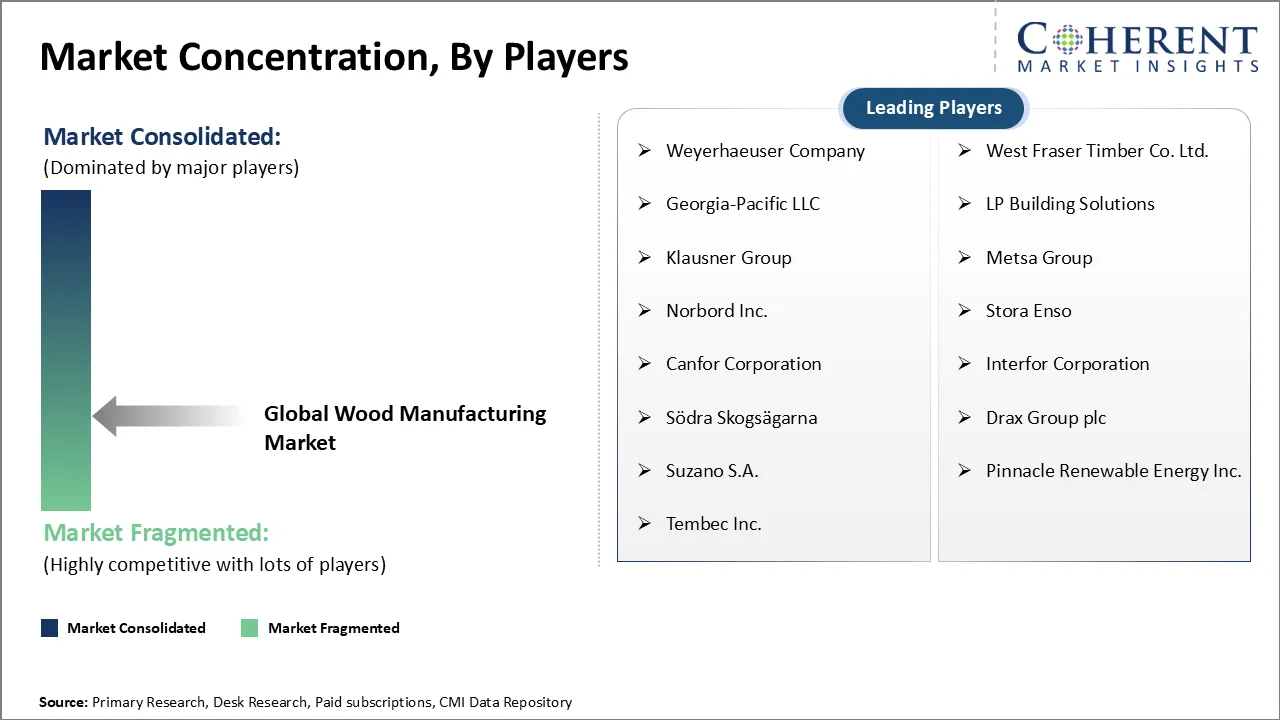
| Companies covered: | Weyerhaeuser Company, West Fraser Timber Co. Ltd., Georgia-Pacific LLC, LP Building Solutions, Klausner Group, Metsa Group, Norbord Inc., Stora Enso, Canfor Corporation, Interfor Corporation, Södra Skogsägarna, Drax Group plc, Suzano S.A., Pinnacle Renewable Energy Inc., and Tembec Inc. | ||
| Growth Drivers: |
| ||
| Restraints & Challenges: |
| ||
Wood Manufacturing Market Dynamics
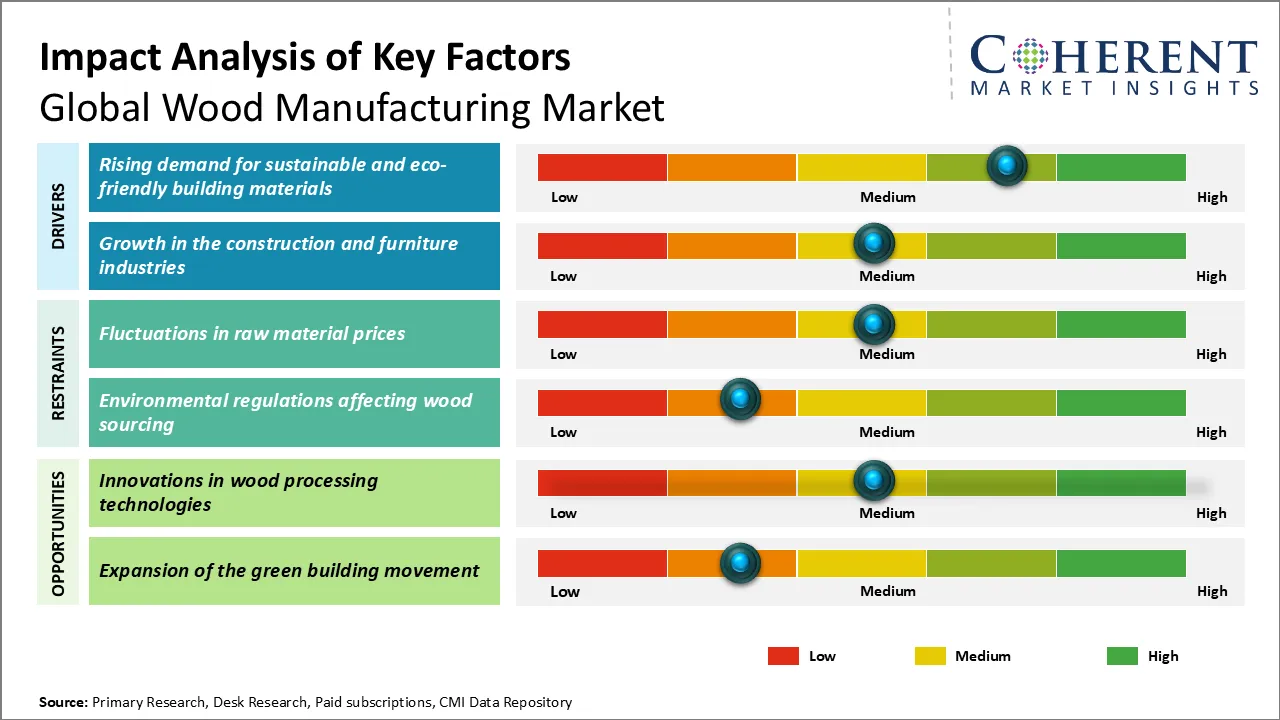
Wood Manufacturing Market Driver - Rising Demand for Sustainable and Eco-Friendly Building Materials
The increasing global emphasis on environmental conservation and carbon footprint reduction is significantly driving the demand for sustainable and eco-friendly building materials, thereby propelling the growth of the wood manufacturing market. As consumers and builders become more conscious of the environmental impact of construction, wood emerges as a preferred material due to its renewable nature, biodegradability, and ability to sequester carbon dioxide throughout its lifecycle. Additionally, advancements in wood treatment and engineered wood products have enhanced durability and performance, making wood a viable alternative to conventional materials like steel and concrete, which are often associated with higher emissions.
The World Green Building Council (WGBC) highlighted that replacing conventional concrete and steel with wood in mid-rise buildings could cut construction-related emissions by up to 40%, which has accelerated the adoption of cross-laminated timber (CLT) in North America and Europe.
Wood Manufacturing Market Opportunity - Innovations in Wood Processing Technologies
The global wood manufacturing market stands to benefit significantly from ongoing innovations in wood processing technologies, creating substantial growth opportunities across the industry. Advanced technologies such as CNC machining, laser cutting, and automated sanding systems are revolutionizing traditional wood manufacturing processes by enhancing precision, reducing waste, and accelerating production timelines. These innovations allow manufacturers to achieve higher levels of customization and intricacy in wood products, catering to increasing demand for bespoke furniture and architectural components in both residential and commercial sectors.
For example, Biesse Group (Italy) has pioneered robotic and laser-based wood cutting systems for advanced furniture design. Their innovations allow for precise architectural wood components that meet the rising demand for complex and aesthetic designs in premium construction projects.
Analyst Opinion (Expert Opinion)
- The global wood manufacturing market is entering a transformative phase, spurred by evolving consumer preferences for sustainable and eco-friendly materials. Insights from the Woodworking Industry Conference (2023) and the International Wood Fair (2022) highlighted significant advancements in sustainable practices, with companies like Norbord and Katerra leading the charge in innovative manufacturing processes.
- For instance, Norbord's recent investment in reclaimed wood technologies underlines the industry's commitment to sustainability and resource efficiency. Moreover, discussions at these conferences emphasized the importance of digitalization and automation in enhancing production efficiency and reducing waste.
- The increasing demand for engineered wood products, driven by the construction sector's shift towards sustainable building solutions, presents a substantial opportunity for growth. However, challenges such as supply chain disruptions and fluctuating raw material costs were also highlighted, necessitating strategic adaptability. Companies that prioritize innovation, sustainability, and technological integration will likely capture significant market share. Ultimately, the future of the wood manufacturing market will depend on its ability to align with sustainability goals while meeting the demands of a rapidly evolving industry landscape.
Speak to the analyst
Want personalized insights?
Take the findings above to one of our principal consultants, or have the report rebuilt around the segments, geographies and competitors you actually track.
Market Segmentation
- Product Type Insights (Revenue, USD Bn, 2021 - 2033)
- Lumber
- Plywood
- Particle Board
- Medium Density Fiberboard (MDF)
- Wood Panels
- Others
- Wood Processing Method Insights (Revenue, USD Bn, 2021 - 2033)
- Sawing
- Planing
- Joinery
- Veneering
- Wood Preservation
- Application Insights (Revenue, USD Bn, 2021 - 2033)
- Furniture
- Construction
- Cabinetry
- Flooring
- Others
- Distribution Channel Insights (Revenue, USD Bn, 2021 - 2033)
- Wholesale Distributors
- Retail Suppliers
- Regional Insights (Revenue, USD Bn, 2021 - 2033)
- North America
- U.S.
- Canada
- Latin America
- Brazil
- Argentina
- Mexico
- Rest of Latin America
- Europe
- Germany
- U.K.
- Spain
- France
- Italy
- Russia
- Rest of Europe
- Asia Pacific
- China
- India
- Japan
- Australia
- South Korea
- ASEAN
- Rest of Asia Pacific
- Middle East
- GCC Countries
- Israel
- Rest of Middle East
- Africa
- South Africa
- North Africa
- Central Africa
- Key Players Insights
- Weyerhaeuser Company
- West Fraser Timber Co. Ltd.
- Georgia-Pacific LLC
- LP Building Solutions
- Klausner Group
- Metsa Group
- Norbord Inc.
- Stora Enso
- Canfor Corporation
- Interfor Corporation
- Södra Skogsägarna
- Drax Group plc
- Suzano S.A.
- Pinnacle Renewable Energy Inc.
- Tembec Inc.
Sources
Primary Research Interviews
- Operations Director – Leading Wood Products Manufacturer
- Procurement Head – Major Furniture Retailer
- Product Development Manager – Engineered Wood Company
- Sustainability Head – Green Building Council
Stakeholders
- Manufacturers
- End-use Sectors:
- Furniture & Furnishings
- Construction Materials (Flooring, Panels, Structural Lumber)
- Green Building Materials (Sustainable Timber, Eco-certified Wood)
- Regulatory & Certification Bodies
- Distributors & Retailers: Furniture Chains, Construction Suppliers, E-commerce Platforms
- Technology Providers: Automation, CNC Machines, Wood Drying & Processing Equipment
Databases
- FAOSTAT – Forestry Production and Trade Data
- UN Comtrade Database – Global Wood Trade Flows
- International Tropical Timber Organization (ITTO) Database – Tropical Timber Market Statistics
- India Import Export (EXIM) Database – Wood and Panel Products
Magazines
- Woodworking Network – Updates on manufacturing processes & technologies
- Furniture Today – Market insights on wood furniture trends
- Construction Week – Use of wood in construction & infrastructure
- Timber Trade Journal – Market updates on wood products
Journals
- Journal of Wood Science – Research on wood properties and processing
- Forest Products Journal – Industry insights and applied research
- Journal of Cleaner Production – Sustainability in wood and building materials
- Construction and Building Materials Journal – Applications of engineered wood
Newspapers
- The Financial Times – Global trade and tariffs on wood products
- The Guardian – Environmental and sustainability concerns in forestry
- Asia Business Times – Wood manufacturing in Asia-Pacific markets
- European Construction News – Wood use in construction and policy updates
- The New York Times – Trends in U.S. furniture and sustainable wood
Associations
- Forest Stewardship Council (FSC)
- Programme for the Endorsement of Forest Certification (PEFC)
- American Wood Council (AWC)
- European Confederation of Woodworking Industries (CEI-Bois)
- Canadian Wood Council (CWC)
Public Domain Sources
- Food and Agriculture Organization (FAO) – Forestry & timber industry data
- OECD – Trade and sustainability in wood products
- European Commission – Timber Regulation and Construction Product Regulation
- U.S. Department of Agriculture (USDA) Forest Service – Forestry and wood product data
Proprietary Elements
- CMI Data Analytics Tool, Proprietary CMI Existing Repository of information for last 8 years.
Get access to 250+ pages report
Every segment, forecast, competitor profile and data table behind the analysis above — available for instant download.
- ESOMAR Member
- ISO 9001:2015 Certified
- D-U-N-S Registered
- GDPR & CCPA Compliant
Missing comfort of reading report in your local language? Find your preferred language:
Transform your Strategy with Exclusive Trending Reports
Frequently Asked Questions
The global wood manufacturing market is estimated to be valued at USD 547.90 Bn in 2026 and is expected to reach USD 651.29 Bn by 2033.
The CAGR of global wood manufacturing market is projected to be 2.5% from 2026 to 2033.
Rising demand for sustainable and eco-friendly building materials and growth in the construction and furniture industries are the major factors driving the growth of the global wood manufacturing market.
Fluctuations in raw material prices and environmental regulations affecting wood sourcing are the major factors hampering the growth of the global wood manufacturing market.
In terms of product type, lumber is estimated to dominate the market revenue share in 2026.
Weyerhaeuser Company, West Fraser Timber Co. Ltd., Georgia-Pacific LLC, LP Building Solutions, Klausner Group, Metsa Group, Norbord Inc., Stora Enso, Canfor Corporation, Interfor Corporation, Södra Skogsägarna, Drax Group plc, Suzano S.A., Pinnacle Renewable Energy Inc., and Tembec Inc. are the major players.
Asia Pacific is expected to lead the global wood manufacturing market in 2026.