

Global Wood Vinegar Market Size and Forecast – 2026-2033
The global wood vinegar market is estimated to be valued at USD 6.49 Bn in 2026 and is expected to reach USD 9.06 Bn by 2033, exhibiting a compound annual growth rate (CAGR) of 4.9% from 2026 to 2033.
Key Takeaways of the Wood Vinegar Market
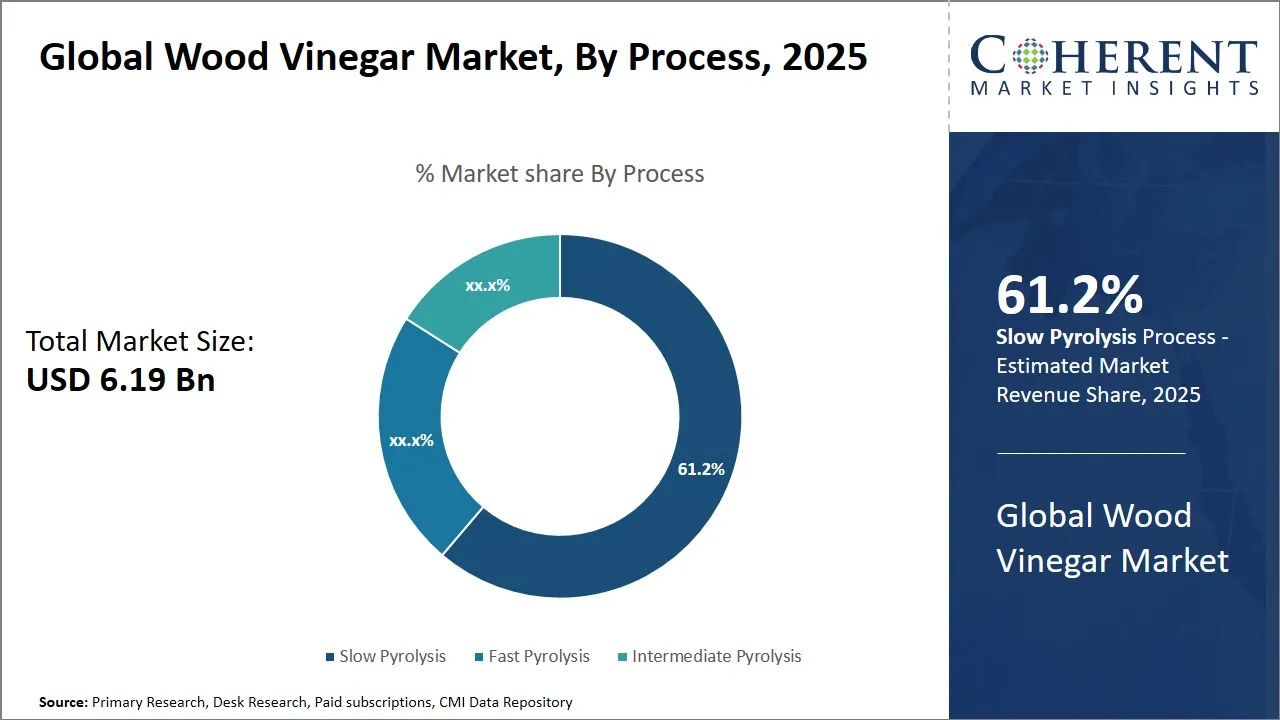
- The slow pyrolysis is expected to accounts for 62.2 % of the global wood vinegar market share in 2026.
- The agriculture segment is projected to captures 35.6 % of the global wood vinegar market share in 2026.
- Asia Pacific is projected to dominate the global wood vinegar market in 2026 with a 41. 3% share in 2026. North America is the fastest growing region and it is expected to account 24.5% of the global wood vinegar market share in 2026.
Market Overview
A current market trends indicate a growing adoption of wood vinegar in both agriculture and environmental management due to its natural insecticidal and soil-enhancing properties. Innovations in production techniques and expanding applications in crop protection and soil conditioning are anticipated to further propel the market demand. Additionally, increasing preference for chemical-free farming and stringent environmental regulations are accelerating the shift towards wood vinegar, highlighting its potential as a key component in sustainable agriculture.
Current Events and Its Impact
Current Events | Description and its Impact |
Surge in organic farming acreage (U.S., EU, APAC) |
|
Biochar-pyrolysis co-product integration |
|
Segmental Insights
- Current Industry Events of 2026
- Market Size Estimation
- Regional Breakdown
- Competitive Landscape
- Customer Intelligence
- Segmental Analysis
- Pricing Analysis
- Key Market Drivers, Challenges & Future Trends
- Customized Insights Section
Wood Vinegar Market Insights, By Process - Slow Pyrolysis Segment Dominates the Market due to its Efficiency and Product Quality
Slow pyrolysis segment holds 62.2% of the global wood vinegar market share in 2026, driven by the process’s ability to produce high-quality wood vinegar with favorable chemical properties. Slow pyrolysis Slows pyrolysis entails pyrolysis of biomass at relatively low temperatures and the residence times, than the fast and intermediate pyrolysis. This is a more in-depth breakdown of the wood material facilitating the production of wood vinegar containing high quantities of organic acids, phenolic compounds, and other bioactive substances, which are in great demand in various applications.
Among the factors that lead to the popularity of slow pyrolysis is the fact that it produces wood vinegar better than other pyrolysis techniques. The technique of slow pyrolysis is economic as it maximizes the liquid fraction yield and thus, producers can maximize volume without compromising the quality. Chemical composition after slow pyrolysis has more uniform antimicrobial and antioxidant characteristics and increases its laxity in the agricultural and industry spheres.
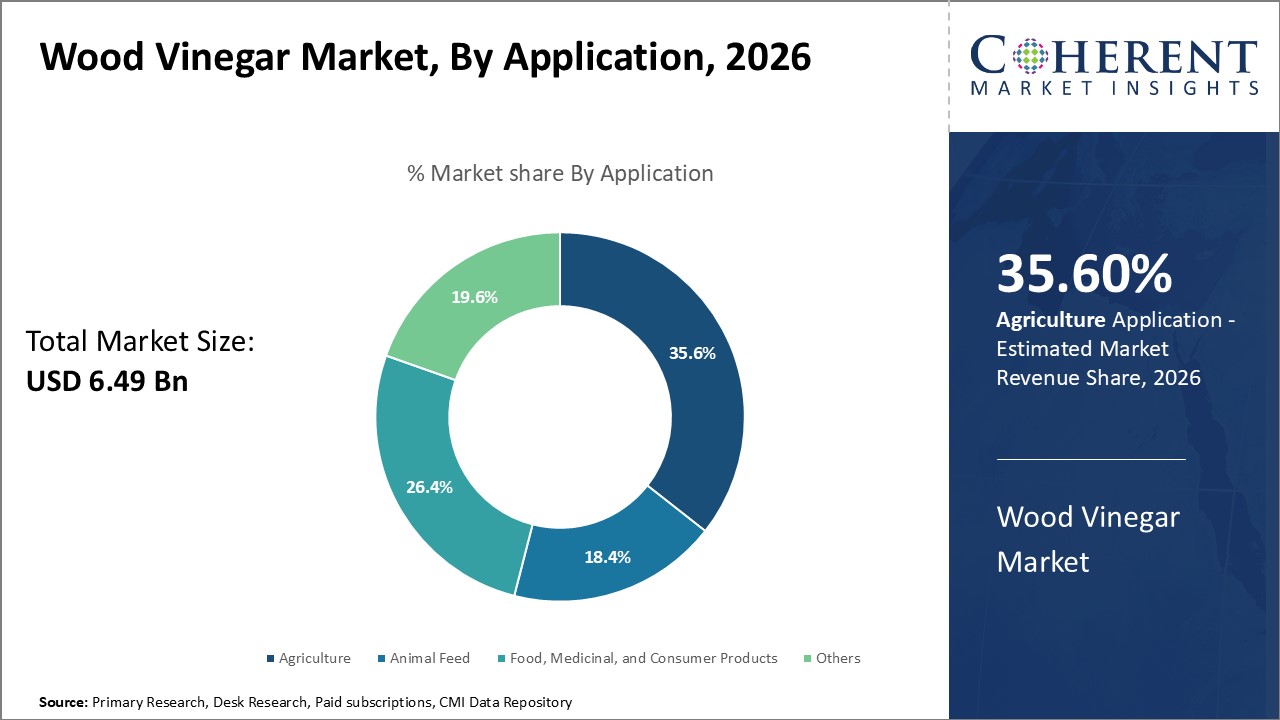
Wood Vinegar Market Insights, By Application – Agriculture Segment Dominates the Market due to Increasing Demand for Sustainable Farming Solutions
The agriculture segment is projected to hold 35.6% share in 2026, because of the growing global emphasis on sustainable and organic farming practices. Wood vinegar, which contains many organic acids and natural growth-stimulating compounds, is becoming a recognized useful bio-stimulant and soil conditioner which enhances the production of healthier crops using fewer synthetic fertilizers and pesticides.
The main factors contributing to the growth of such a segment are the increased awareness of farmers concerning the environmental effects of chemical inputs and the transition to environmentally friendly options that enhance the health of the soil and the productivity of crops without the degradation of the environment. Wood vinegar has shown benefits of increased nutrient uptake, microbial activity in the soil, and resistance against pests and diseases which means that it may be a universal contribution in sustainable agricultural systems.
Regional Insights
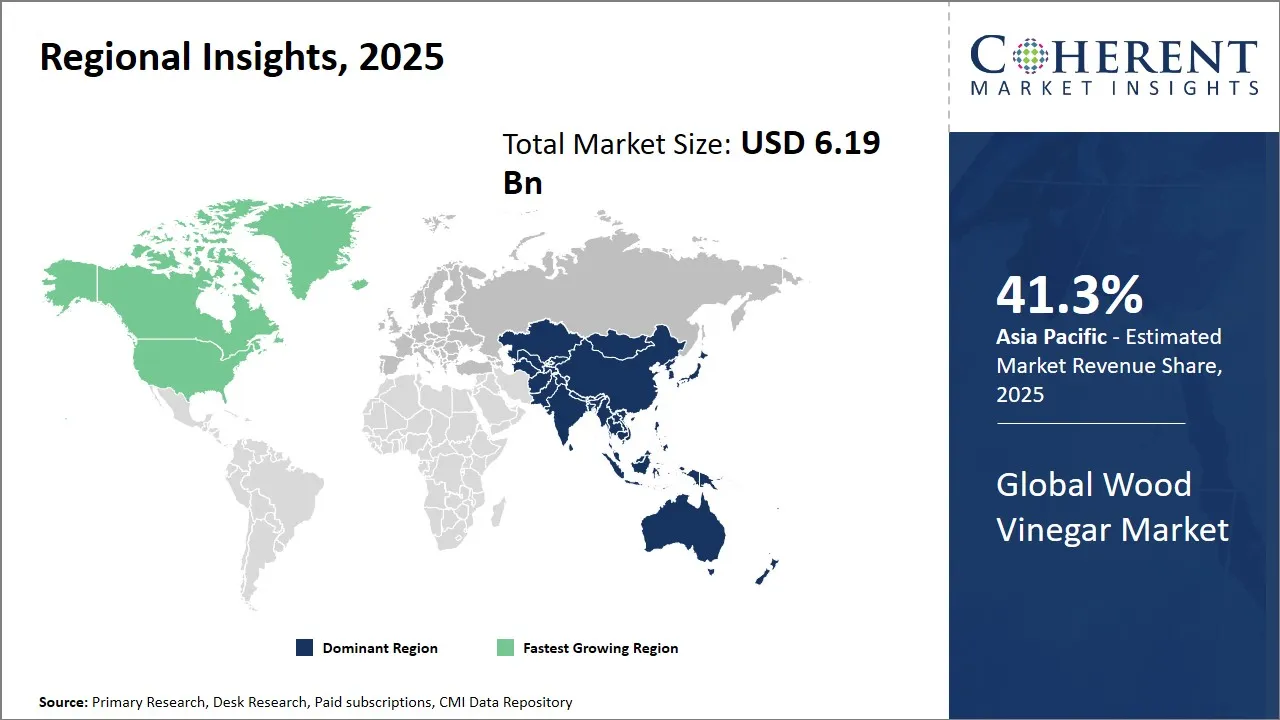
Asia Pacific Wood Vinegar Market Analysis and Trends
The Asia Pacific region is projected to lead the market with a 41.3% share in 2026, driven by the region’s abundant availability of raw materials and a well-established forestry industry. The wood vinegar has been utilized in countries such as China, Japan, and South Korea over a long period in farming and horticulture activities, which has helped in integrating the market. The existence of small to large-scale manufacturers and exporters is also an important factor in maintaining regional dominance.
Additionally, the positive government policies of sustainable agriculture and organic farming also increase the demand of wood vinegar as a natural pesticide and soil conditioner. The trade environment is good because there are established supply chains and export centers that help in the transportation of products both within and outside the region. Some prominent companies like Jiangxi Zanging Forest Resources Development Co., Ltd., and Nichiwa Sangyo Co., Ltd. have their share, as they have been innovative in creating product applications, and increasing the presence in exports.
North America Wood Vinegar Market Analysis and Trends
The North America region is expected to exhibit the fastest growth in the market contributing 24.5% share in 2026. This has been contributed by the increasing consumer awareness on organic farming and pest control solutions that do not harm the environment. The policy of U.S. and Canada supports organic farming that has expedited the use of natural biopesticides like wood vinegar.
The availability of developed R&D organizations is enhancing innovations that raise product efficacy and extend their application such as in animal husbandry and waste management. Growing number of specialized organic farms and well-developed distribution network of the regions makes penetration in the market easy. The major producers, such as Biochar Supreme and Pacific Pyrolysis, are spurring the growth, due to the investment in products and education of farmers and agricultural firms.
Wood Vinegar Market Outlook for Key Countries
China Wood Vinegar Market Analysis and Trends
Wood vinegar market in China is still dominating the Asia Pacific, with a massive forestry base and government pressures on decreasing the use of chemical pesticides. Chinese companies pay much attention to the production of high-quality of wood vinegar to be used in agriculture. The focus of innovation in extraction technologies makes companies like Jiangxi Zanging Forest Resources Development Co., Ltd. focus on enhancing purity and consistency of products. A strong domestic consumption base and export potentials to the Southeast Asia and beyond is also beneficial to the country.
Japan Wood Vinegar Market Analysis and Trends
The market of wood vinegar of Japan can be described as a market that is highly technologically used and has high usage in the practice of organic farming. It is the commercialization of wood vinegar in agriculture and horticulture that has been pioneered by the established companies such as Nichiwa Sangyo Co., Ltd. which contributes to setting the global quality standards. The government subsidies that have been given in support of natural farming practices and sustainability have also led to increased usage of the wood vinegar as a pesticide and a soil enhancer.
U.S. Wood Vinegar Market Analysis and Trends
The U.S. exhibits significant momentum in adopting wood vinegar, driven by a growing market for organic produce and sustainable farming solutions. Biochar Supreme, among other innovators, is at the forefront of formulating wood vinegar blends tailored for crop protection and soil health. Regulatory encouragement from agencies supporting organic farming reinforces market growth, while expanding consumer demand for eco-friendly agricultural products improves adoption rates.
Canada Wood Vinegar Market Analysis and Trends
Canada wood vinegar market growth is propelled by increasing awareness among farmers about eco-friendly alternatives to synthetic chemicals. Companies such as Pacific Pyrolysis focus on integrating wood vinegar production with sustainable waste management processes, creating a circular economy model. Supportive policies targeting reduced pesticide residues and promotion of organic agriculture amplify market expansion opportunities in both crop cultivation and livestock sectors.
Germany Wood Vinegar Market Analysis and Trends
Germany plays a key role in Europe wood vinegar market through a strong emphasis on organic agriculture and environmental sustainability. The country’s regulatory environment favors natural bioproducts, encouraging farmers and distributors to incorporate wood vinegar into pest management tools. German companies like BioAgroTech GmbH drive innovation in product formulations and application techniques, helping integrate wood vinegar into broader sustainable farming frameworks.
Macro and Micro Economic Factors Impacting on Wood Vinegar Market Growth
Macroeconomic Factors
- Sustainable Agriculture Demand: One of the key drivers is the increasing demand in the world today on organic and sustainable agricultural practices. Wood vinegar can be used as a natural pesticide, soil supplement and a growth promoter; this fits well with the eco-friendly farming trend.
- Government Initiatives: Government support and government programs on bio-based goods and organic food products helps in boosting market, particularly in areas of Asia Pacific, Europe, China and emerging markets.
- The Environmental Consciousness: There is increasing environmental and health consciousness among consumers and industries, which are turning towards using natural and environmentally friendly products, and this is likely to increase the demand of the wood vinegar in the world market.
- Economic Development: Market growth in developing economies that have strong agricultural background, like in Asia Pacific, is favored by economic growth because of elevated purchasing power and adoption of technology.
Microeconomic Factors
- Raw Material Availability: Key areas where wood vinegar raw material is produced have plenty of biomass and wood supplies.
- Technological Advancement: Technological development in pyrolysis technology and processes will lower the cost, increase the quality of wood vinegar, a factor that will contribute positively to the development of the market.
- Different Uses: The variety of uses of vinegars made of wood beyond the agricultural sector, in livestock food, food preservation, cosmetics, and pharmaceuticals diversify the demand and market resistance.
- Price Sensitivity: The high cost of production and other substitute synthetic products can limit the rapid adoption in certain price-sensitive applications, though the government incentives and technological advancements tend to close the gap.
Market Players, Company Insights, and Competitive Intelligence
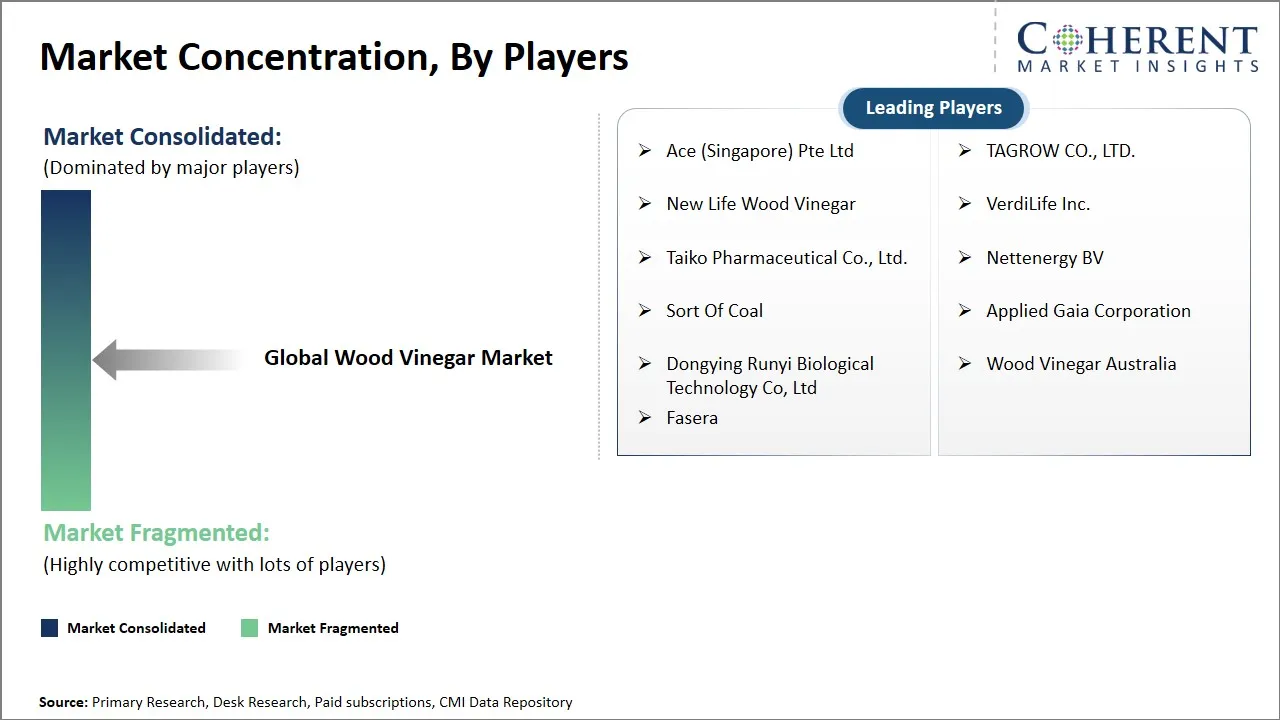
Company Insights
- TAGROW CO., LTD. is a company that deals with special research, production and distribution of special fertilizers. It is concerned with the use of advanced pyrolysis technology in the extraction of high-quality wood vinegar that is well known in their applications in the agricultural, animal feed and food and preservation and other consumer products.
- Fasera will produce about 900 tons of wood vinegar annually. Wood vinegar has approx. 200 organic compounds and combined with biochar, sales of wood vinegar are proving to be a huge income maker to the business.
Top Strategies Followed by Global Wood Vinegar Market Players
- The established market leaders tend to have strong product orientation on research and development (R&D), where they have made huge investment in production of high-performance wood vinegar products that can satisfy changing agricultural and industrial needs. The players use their well-developed technical knowledge to enhance the effectiveness, stability and the versatility of products, hence, retaining competitive advantage.
- For example, Tagrow Co., Ltd spends a lot of money in refining the process of distillation to enhance purity and consistency of wood vinegar to use in organic farming, whereas ACE specializes in the scale-up of sustainable biomass pyrolysis systems in order to produce better-quality vinegar by-products.
- The strategy of the middle players in the market of wood vinegar is slightly different, as it is often aimed at providing customers with relatively low-cost products that are affordable and of high quality at the same time. These players enter the market by focusing on price-sensitive consumers particularly the small to medium sized farmers and the niche agricultural market segments through price competitiveness and value based products creating a stable market share. They work in a manner that mostly incorporates strategic partnership with technology providers and manufacturing partners to optimize production, lower operation expenses and assure the product quality.
- An example is the case of PyroAg Australia which sells cheap farm grade wood vinegar that is applied to the soil to improve its condition and to manage pests, at a price that is affordable to the middle-income farmers.
- The small players in the wood vinegar market survive in the market by targeting the niche markets, with concentration on specialized product attributes or innovative formula that fulfils specific customer needs which smaller players are not able to fulfil due to their large scale market. Such businesses tend to adopt the latest technologies in production, like bioengineering or green extraction processes to make their products unique and sell them to consumers who are environmentally conscious.
- For example, Wakido Co., Ltd, Taiko Pharmaceutical Co., Ltd and BioChar Now use a niche approach based on innovation and sustainability. An example is BioChar Now that combines wood vinegar extraction with biochar production, resulting in two-purpose eco-products with carbon-negative farming programs.
Market Report Scope
Wood Vinegar Market Report Coverage
| Report Coverage | Details | ||
|---|---|---|---|
| Base Year: | 2025 | Market Size in 2026: | USD 6.49 Bn |
| Historical Data for: | 2020 To 2024 | Forecast Period: | 2026 To 2033 |
| Forecast Period 2026 to 2033 CAGR: | 4.9% | 2033 Value Projection: | USD 9.06 Bn |
| Geographies covered: |
| ||
| Segments covered: |
| ||
| Companies covered: | Ace (Singapore) Pte Ltd, TAGROW CO., LTD., New Life Wood Vinegar, VerdiLife Inc., Taiko Pharmaceutical Co., Ltd., Nettenergy BV, Sort Of Coal, Applied Gaia Corporation, Dongying Runyi Biological Technology Co, Ltd, Wood Vinegar Australia, and Fasera | ||
| Growth Drivers: |
| ||
| Restraints & Challenges: |
| ||
Wood Vinegar Market Dynamics
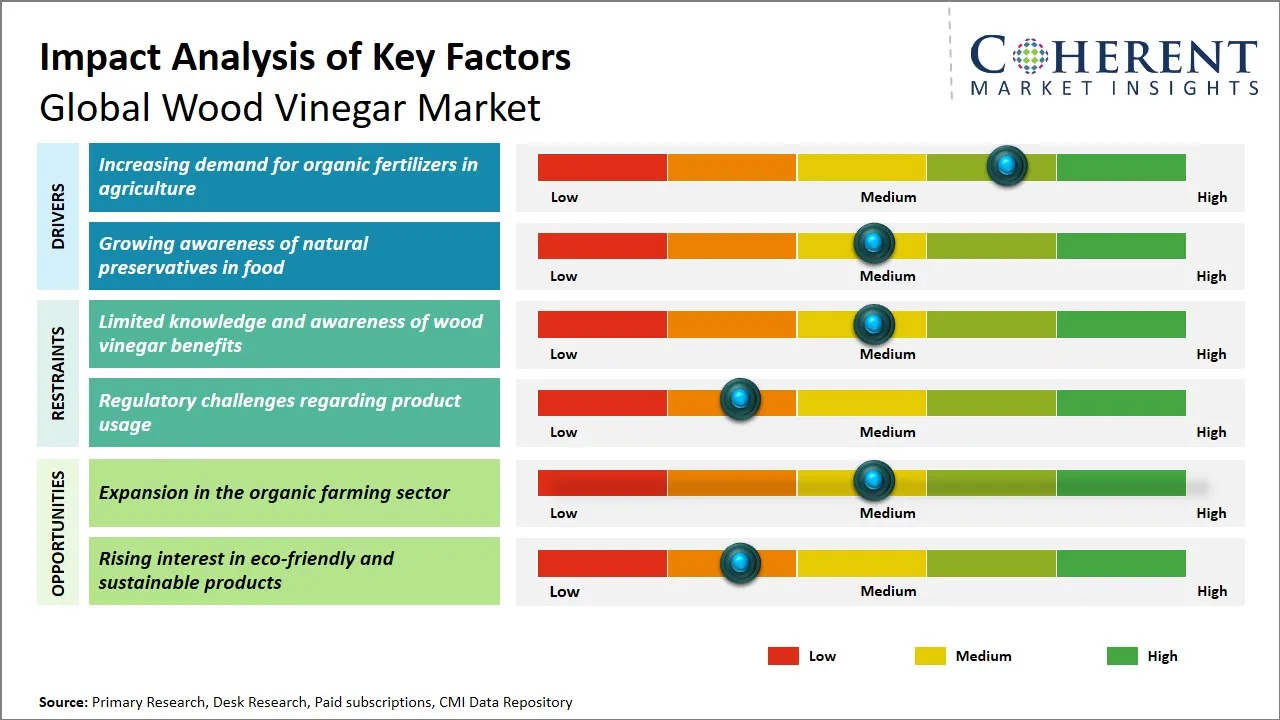
Wood Vinegar Market Driver - Increasing Demand for Organic Fertilizers in Agriculture
Increasing use of organic fertilizers in the agriculture sector is another important source of pressure on the global demand of wood vinegar. With farmers becoming more adaptable to the practice of sustainable farming to minimize the negative environmental impact of chemical fertilizer, wood vinegar will be a natural and environmentally friendly alternative. Wood vinegar is rich in organic compounds and therefore promotes the well-being of the soil by boosting microbial action and intake of minerals that will lead to increased crop production without using chemicals. Also, its capacity to destroy destructive pests and diseases will lower the use of, specialty pesticides, chemical pesticides that are in line with the ethos of organic farming.
For example, in Japan, organic rice cultivators have been managing to use wood vinegar to enhance the aeration of the soil and the suppression of malevolent fungi, thus lessening the application of chemical pesticides. In Thailand, a number of agricultural cooperatives use wood vinegar in bio-fertilizer formulations to make crops more resistant to disease and yield better the sugarcane and vegetables.
Wood Vinegar Market Opportunity - Expansion in the Organic Farming Sector
The above-mentioned projected growth of the organic farming industry in the market means that the global wood vinegar market will improve. Due to increased consumer expectations of natural and sustainable agricultural inputs caused by heightened consumer awareness about environmental and health effects of synthetic chemicals, the demand is skyrocketing. Wood vinegar is a by-product of pyrolysis of wood biomass, which is gaining popularity due to its multifunctional properties such as conditioning soil, repelling pests, and increasing crop production, which all find their place pretty well in the principles of organic farming. Organic farmers are looking to find environmentally friendly application to support the growth of soil and plants without toxic metabolites, which makes wood vinegar one of the viable alternatives to traditional agrochemicals.
As an example, the Indias National Programme for Organic Production (NPOP) and the European Union’s Organic Action Plan 2030 are all promoting organic growing, which is why more trials with wood vinegar as a soil enhancer and a small helper in the fight against pests are performed.
Analyst Opinion (Expert Opinion)
- The wood vinegar market will experience a significant growth as it will have more uses in agriculture and organic farming. The findings of the International Biochar Initiative Conference (2023) and the Global Agroecology Summit (2022) guided to the main progress in the field, where such companies as Sustainable Agriculture Technologies and BioVinegar were inventing production methods. Recent introduction of a premium quality wood vinegar product by Sustainable Agriculture Technologies, which is specifically designed to be used as a pest control, is a strategic reaction to consumer demand to more and more organic products.
- Conferences at the conferences highlighted the need of educating people on the benefits of wood vinegars given that many farmers are not aware of its potential. Nevertheless, issues like poor quality of products and governmental restrictions were often mentioned, and they might hinder the growth of the market.
- Companies that value standardization and invest on research to be proven effective will probably gain competitive advantage. Also, strategic partnerships could be made with agricultural cooperatives in order to penetrate the market. Finally, the success of the wood vinegar market will be conditioned by the possibility to overcome regulatory conditions, improve the quality of the products, and inform more people about the positive impact on the environment of sustainable agricultural activities.
Speak to the analyst
Want personalized insights?
Take the findings above to one of our principal consultants, or have the report rebuilt around the segments, geographies and competitors you actually track.
Market Segmentation
- Process Insights (Revenue, USD Bn, 2021 - 2033)
- Slow Pyrolysis
- Fast Pyrolysis
- Intermediate Pyrolysis
- Application Insights (Revenue, USD Bn, 2021 - 2033)
- Agriculture
- Animal Feed
- Food, Medicinal, and Consumer Products
- Others
- Regional Insights (Revenue, USD Bn, 2021 - 2033)
- North America
- U.S.
- Canada
- Latin America
- Brazil
- Argentina
- Mexico
- Rest of Latin America
- Europe
- Germany
- U.K.
- Spain
- France
- Italy
- Russia
- Rest of Europe
- Asia Pacific
- China
- India
- Japan
- Australia
- South Korea
- ASEAN
- Rest of Asia Pacific
- Middle East
- GCC Countries
- Israel
- Rest of Middle East
- Africa
- South Africa
- North Africa
- Central Africa
- North America
- Key Players Insights
- Ace (Singapore) Pte Ltd
- TAGROW CO., LTD.
- New Life Wood Vinegar
- VerdiLife Inc.
- Taiko Pharmaceutical Co., Ltd.
- Nettenergy BV
- Sort Of Coal
- Applied Gaia Corporation
- Dongying Runyi Biological Technology Co, Ltd
- Wood Vinegar Australia
- Fasera
Sources
Primary Research Interviews
- R&D Director – Leading Wood Vinegar Producer
- Procurement Manager – Major Agricultural Supplier
- Product Development Head – Organic Farming Product Brand
- Sustainability Manager – Eco-Friendly Pesticide Certification Body
Stakeholders
- Manufacturers
- End Use Sectors
- Agriculture (Organic farming, pest control)
- Animal Feed (Growth promoters, health)
- Food Preservation and Additives
- Cosmetics and Personal Care Products
- Regulatory & Certification Bodies
- E-commerce Platforms and Retailers
- Technology Providers: Advanced pyrolysis technology and production automation companies
Databases
- UN Comtrade Database
- Global Trade Tracker EXIM Database
- Regional Agricultural and Organic Product Statistics Databases
Magazines
- Nutrition & Wellness Magazine – Trends in organic and bio-based agricultural products
- Agricultural Industry Insights – Innovations in bio-pesticides and soil health products
- Global Organic Food Journal – Growth in organic farming and natural product demand
- Sustainable Farming Journal – Market updates on natural fertilizers and pesticides
Journals
- Journal of Agricultural and Food Chemistry – Studies on wood vinegar properties and bioactivity
- Journal of Environmental Management – Environmental impact and sustainability assessments
- Journal of Applied Microbiology – Antimicrobial effects of wood vinegar
- Industrial Crops and Products – Production and application trends of bio-based agrochemicals
- Food Chemistry – Preservation and flavoring applications of wood vinegar
Newspapers
- The Financial Times – Market growth of natural agricultural inputs
- The Guardian – Consumer trends in sustainable farming products
- Asia Health Journal – Growth of bio-based pesticide consumption in Asia-Pacific
- European Nutrition News – Regulation and health policies related to bio-based agriculture inputs
- The New York Times – Consumer preference shift to organic and sustainable agriculture
Associations
- Council for Sustainable Agriculture and Organic Farming
- International Society of Bio-based Agrochemicals
- Organic Trade Association
- European Food Safety Authority (EFSA)
- Environmental Protection Agency (EPA) - Bio-pesticide guidelines
Public Domain Sources
- FDA – Guidelines for organic food additives and pesticides including wood vinegar
- European Commission – Food and Agricultural Products Regulation
- World Health Organization – Safety standards and environmental impact studies on wood vinegar
- OECD – Agricultural and Environmental assessments for bio-based products
Proprietary Elements
- CMI Data Analytics Tool, Proprietary CMI Existing Repository of information for last 8 years.
Get access to 250+ pages report
Every segment, forecast, competitor profile and data table behind the analysis above — available for instant download.
- ESOMAR Member
- ISO 9001:2015 Certified
- D-U-N-S Registered
- GDPR & CCPA Compliant
Missing comfort of reading report in your local language? Find your preferred language:
Transform your Strategy with Exclusive Trending Reports
Frequently Asked Questions
The global wood vinegar market is estimated to be valued at USD 6.49 Bn in 2026 and is expected to reach USD 9.06 Bn by 2033.
The CAGR of the global wood vinegar market is projected to be 4.9% from 2026 to 2033.
Increasing demand for organic fertilizers in agriculture and growing awareness of natural preservatives in food are the major factors driving the growth of the global wood vinegar market.
Limited knowledge and awareness of wood vinegar benefits and regulatory challenges regarding product usage are the major factors hampering the growth of the global wood vinegar market.
In terms of process, the slow pyrolysis segment is estimated to dominate the market revenue share in 2026.
Ace (Singapore) Pte Ltd, TAGROW CO., LTD., New Life Wood Vinegar, VerdiLife Inc., Taiko Pharmaceutical Co., Ltd., Nettenergy BV, Sort Of Coal, Applied Gaia Corporation, Dongying Runyi Biological Technology Co, Ltd, Wood Vinegar Australia, and Fasera are the major players.
Asia Pacific is expected to lead the global wood vinegar market in 2026.