Veterinary Vaccines Market Analysis & Forecast: 2026-2033

The Veterinary Vaccines Market is estimated to be valued at USD 11.30 Bn in 2026 and is expected to reach USD 19.36 Bn by 2033, growing at a compound annual growth rate (CAGR) of 8.0% from 2026 to 2033.
To learn more about this report, Download Free Sample
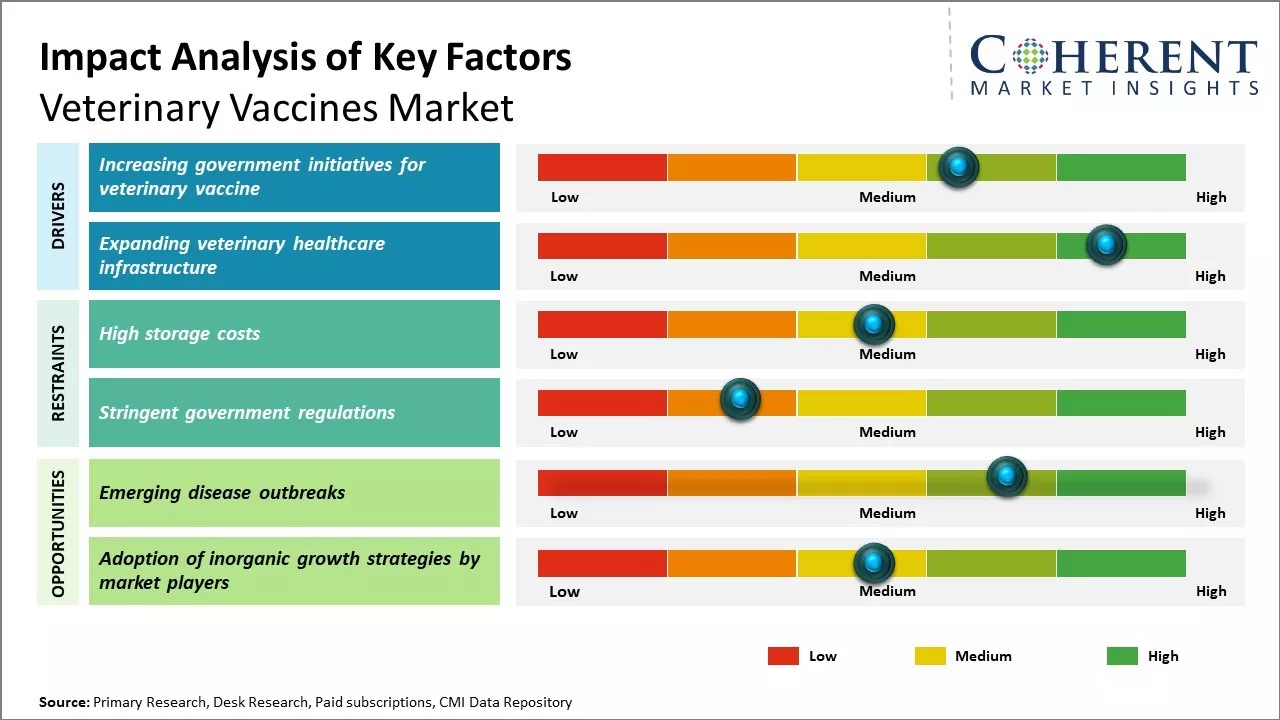
The market is expected to witness positive growth over the forecast period. Increasing pet adoption worldwide and rising awareness about animal health is expected to drive the demand for veterinary vaccines. Growing expenditure on animal health and increasing incidence of zoonotic diseases is further expected to support the market growth. Various initiatives taken by market players and government organizations to provide veterinary healthcare is also projected to boost the sales of vaccines. Wide availability of effective vaccines against various infectious diseases of livestock and companion animals along with increasing demand for vaccine from emerging economies will provide opportunities for expansion of the veterinary vaccines market globally over the coming years.
|
Current Event |
Description and its Impact |
|
Escalating Zoonotic Disease Outbreaks |
|
|
Global Antimicrobial Resistance (AMR) Regulatory Framework |
|
Uncover macros and micros vetted on 75+ parameters: Get instant access to report
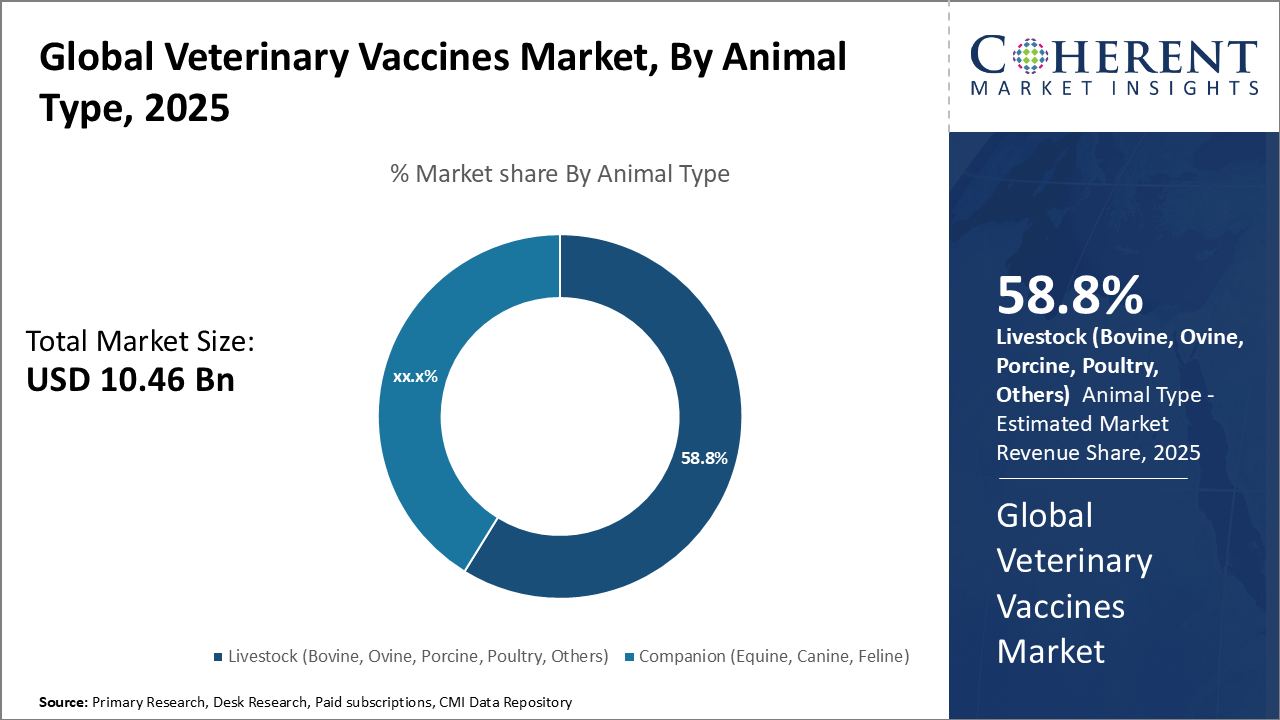
In terms of animal type, the livestock segment contributes the highest share of the veterinary vaccines market demand and is projected to hold 59.8% of the market share in 2026. Vaccines play a critical role in safeguarding productivity and profitability of the meat, dairy, and poultry industries by shielding animals from common illnesses. Mass vaccination is routinely employed to combat pathogens like foot-and-mouth disease virus, avian influenza virus, swine influenza virus that threaten livestock populations. Endemic infections can wipe out entire herds if left unchecked, highlighting the business imperatives for immunization. Farmers depend on steady vaccine supplies to protect their investment and meet the rising global demand for animal proteins. Regulatory support and manufacturing standards have further increased access and reliability of veterinary biologics for large-scale livestock farms. These factors together ensure the sustained importance of vaccines in commercial livestock production systems.
For instance, in September 2025, India launched its first indigenous vaccine against Infectious Bovine Rhinotracheitis (IBR), a major cattle disease affecting productivity. Developed by the National Dairy Development Board and ICAR-NIVEDI, the vaccine aims to curb economic losses in the dairy sector. This milestone strengthens India’s veterinary capabilities and supports livestock health nationwide.
To learn more about this report, Download Free Sample
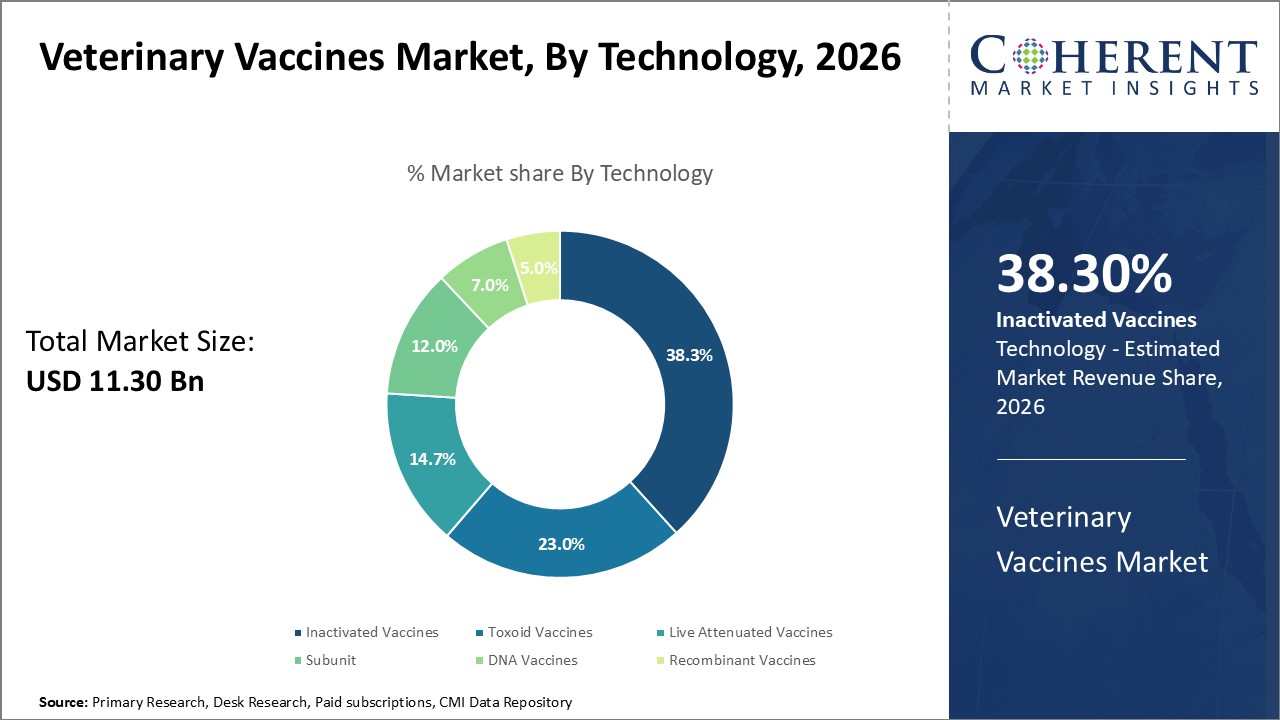
In terms of technology, the live attenuated vaccines segment is anticipated to hold 38.3% of the market share in 2026. Live attenuated vaccines mimic natural infection by using a weakened form of the disease-causing pathogen that cannot multiply in the body or cause disease. They trigger long-lasting immune response in animals by closely mimicking natural infection. As they are genetically similar to wild-type pathogens, they induce both cellular and humoral immunity which provides strong protection. Their ability to induce a self-limiting infection allows for durable immunological memory to develop. Unlike inactivated vaccines, they require only one or two doses to confer lifelong immunity making them very cost-effective. Being non-toxic yet highly immunogenic makes them well-suited for mass vaccination programs in livestock. Their ease of administration also supports large-scale usage. While they pose minimal health risks, necessary quality control and handling precautions are maintained to prevent reversion to virulence. Widespread usage of live attenuated vaccines for rabies, distemper and influenza reflects their acceptance as a reliable technology.
For instance, in May 2025, Bharat Biotech’s subsidiary, Biofabri, launched the world’s first DIVA marker vaccine for Lumpy Skin Disease in India. This innovative vaccine enables differentiation between infected and vaccinated animals, aiding disease control and surveillance. The breakthrough marks a significant advancement in veterinary science and supports India’s efforts to safeguard livestock health.
In terms of route of administration, the subcutaneous injection segment is projected to hold 44.7% of the market share in 2026. Subcutaneous administration enables easy self-administration or assistance by a non-medical person. It causes minimal discomfort to animals as the thin layer of fat beneath the skin forms an absorption site for vaccines. The risk of accidental needle injuries is also reduced compared to intramuscular injections which require precision. Subcutaneous vaccines tend to have fewer local reactions and are more acceptable to pet owners. Advances in formulation technologies have enhanced stability of some vaccines when delivered via this route. It has emerged as a practical option for implementations such as core vaccinations in veterinary clinics or emergency disease outbreak operations that require mass administration. With training and suitable products, subcutaneous delivery offers convenience without compromising efficacy, factors that have increased its popularity among vaccine makers and end users.
For instance, in June 2025, Boehringer Ingelheim introduced VAXXITEK® HVT+IBD+ND, a groundbreaking 3-in-1 poultry vaccine in India. Designed to protect against Marek’s Disease, Infectious Bursal Disease, and Newcastle Disease, the vaccine simplifies immunization protocols and enhances flock health. This launch marks a significant advancement in poultry disease prevention and supports sustainable farming practices.
In terms of distribution channel, the private segment is expected to contribute the highest share of the market in 2026. This dominance is largely attributed to the presence of well-established veterinary infrastructure, which supports efficient supply chains and specialized services. In these regions, high levels of pet ownership and a strong emphasis on livestock productivity drive demand for advanced veterinary solutions. Private channels are better equipped to meet these demands through tailored offerings, faster delivery, and superior customer engagement. Moreover, private distributors often collaborate closely with veterinary clinics, hospitals, and retail outlets, ensuring a more responsive and market-driven approach compared to public systems, which may be constrained by regulatory and budgetary limitations.
For instance, in August 2025, DavaIndia launched the #CareForAll campaign to shelter and vaccinate stray dogs across India, aiming to improve animal welfare and public health. The initiative includes free anti-rabies vaccinations and partnerships with NGOs for rescue and care. This nationwide effort reflects a growing commitment to responsible pet care and humane treatment of stray animals.
To learn more about this report, Download Free Sample
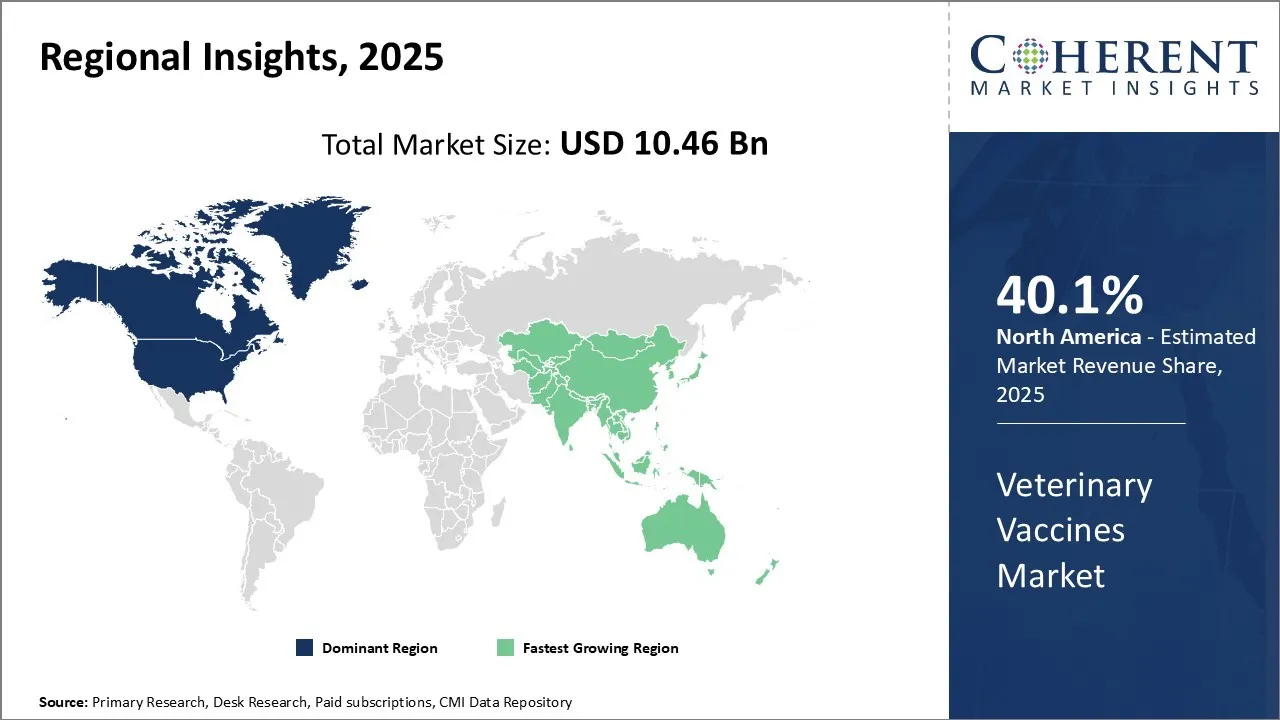
North America has established itself as the dominant regional market for veterinary vaccines and is expected to hold 40.1% of the market share in 2026. With a strong presence of leading vaccine manufacturers and high pet ownership rates, the U.S. and Canada account for the majority of sales. Regulatory approvals are well-established in the region, allowing for a steady pipeline of new product launches yearly. Additionally, North American veterinary practices have deeply ingrained vaccine administration protocols. Combined with large procurement budgets of major buyers like veterinary hospitals and purchase alliances, stable and sizable demand is assured for suppliers. Some key vaccine categories where the region leads include core diseases like rabies, as well as emerging niche segments pertaining to canine and feline therapeutic applications. Export activity from North American players also contributes to their regional supremacy.
For instance, in August 2026, the USDA’s Animal and Plant Health Inspection Service (APHIS) launched its 2026 Oral Rabies Vaccination (ORV) campaign across 13 U.S. states. Targeting raccoons, the initiative uses baited vaccines distributed by air and ground to prevent the spread of rabies into America’s heartland, reinforcing national efforts to protect wildlife and public health.
Among the fastest growing regional markets for veterinary vaccines is Asia Pacific. Rising pet ownership in China and India due to growing affluence as well as a cultural shift toward companion animals is fueling vaccine requirement. The massive scale and sheer number of livestock heads across Southeast Asian nations translates to huge volume potential as well. While regulatory structures and standards are still developing, regional vaccine manufacturing capacities are being established or expanded through partnerships and foreign direct investments. This allows for vaccines to be produced and priced more competitively versus imports. Local manufacturing also overcomes past constraints around reliable supply and cold chain management. Nations like Thailand and Indonesia have emerged as regional export hubs, where vaccines manufactured onshore are distributed farther afield within Asia Pacific and beyond. With continued economic expansion projected across multiple high-growth countries, the Asia Pacific region is viewed as prime for sustained double-digit percentage increases in veterinary vaccine consumption over the medium term.
For instance, in January 2026, Indonesia launched a nationwide livestock vaccination campaign to combat the spread of foot-and-mouth disease (FMD), which has affected thousands of animals. The initiative aims to protect cattle and buffalo populations, safeguard food supply chains, and support rural economies. Authorities are prioritizing high-risk areas to contain the outbreak and prevent further transmission.
The United States leads the veterinary vaccines market, backed by advanced veterinary infrastructure, widespread pet insurance coverage, and robust livestock vaccination programs. High pet ownership and commercial farming drive consistent demand for preventive care. Government support and innovation in animal health technologies further strengthen the country’s position as a global leader in veterinary biologics.
For instance, in September 2026, Elanco announced FDA approval for an updated label of Zenrelia (ilunocitinib) tablets, removing the “vaccine-induced disease” language. This change reflects improved clarity and confidence in the product’s safety profile for canine allergic dermatitis treatment. The revision supports veterinarians in prescribing Zenrelia with greater assurance and aligns with evolving regulatory standards.
China is witnessing surging demand for veterinary vaccines market, driven by rapid expansion in livestock farming and heightened awareness of zoonotic diseases. As the country intensifies efforts to safeguard food security and public health, mass immunization programs and improved veterinary infrastructure are gaining momentum. These trends position China as a key player in the global animal health market.
For instance, in April 2026, China’s AIM Vaccine Co., Ltd. unveiled the world’s first serum-free rabies vaccine following regulatory approval. This breakthrough eliminates serum-related risks and enhances safety for both humans and animals. With market clearance and production underway, the innovation marks a significant advancement in global rabies prevention and vaccine technology.
| Report Coverage | Details | ||
|---|---|---|---|
| Base Year: | 2025 | Market Size in 2026: | USD 11.30 Bn |
| Historical Data for: | 2020 To 2024 | Forecast Period: | 2026 To 2033 |
| Forecast Period 2026 to 2033 CAGR: | 8.0% | 2033 Value Projection: | USD 19.36 Bn |
| Geographies covered: |
|
||
| Segments covered: |
|
||
| Companies covered: |
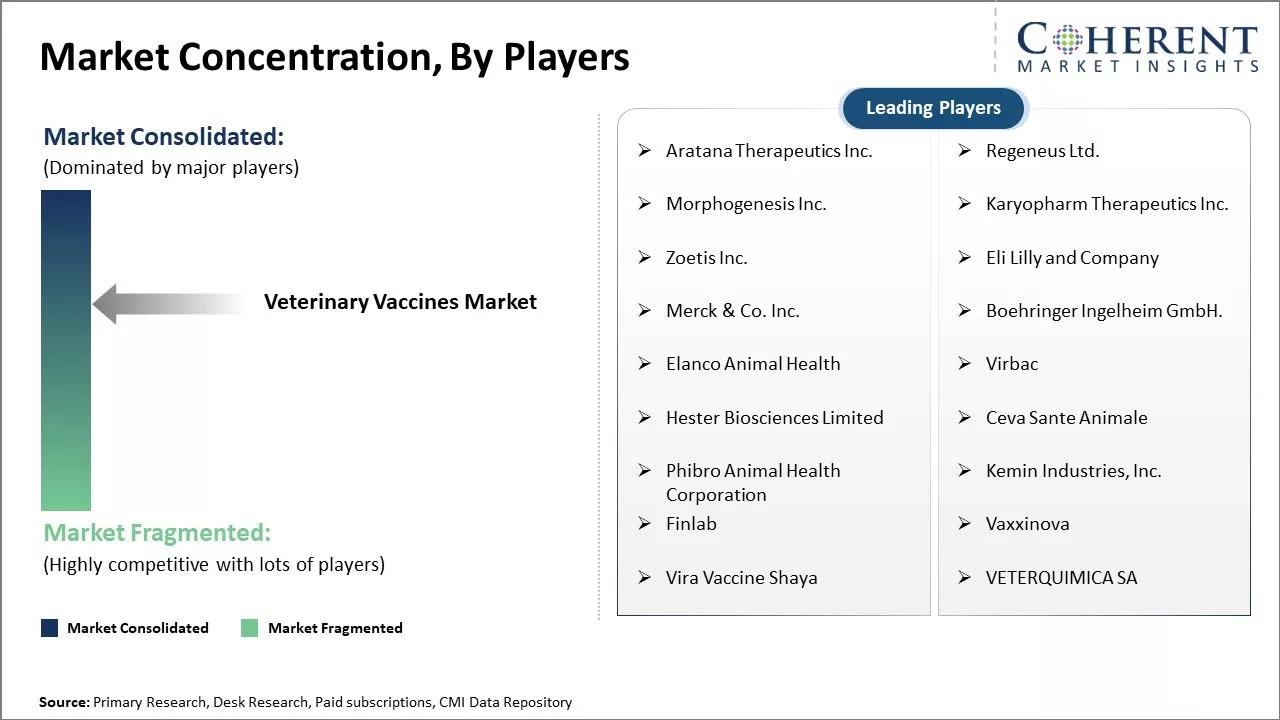
Aratana Therapeutics Inc., Regeneus Ltd., Morphogenesis Inc., Karyopharm Therapeutics Inc., Zoetis Inc., Eli Lilly and Company, Merck & Co. Inc., Boehringer Ingelheim GmbH., Elanco Animal Health, Virbac, Hester Biosciences Limited, Ceva Sante Animale, Phibro Animal Health Corporation, Kemin Industries, Inc., Finlab, Vaxxinova, Vira Vaccine Shaya, and VETERQUIMICA SA |
||
| Growth Drivers: |
|
||
| Restraints & Challenges: |
|
||
Uncover macros and micros vetted on 75+ parameters: Get instant access to report
The Veterinary Vaccines Market share is witnessing notable expansion, driven by a combination of rising awareness about animal health, increasing pet ownership, and the growing demand for livestock productivity. Governments across the globe are actively supporting vaccination programs to curb the spread of zoonotic diseases and ensure food security, which in turn is boosting the adoption of veterinary vaccines. These initiatives, coupled with technological advancements in vaccine development, such as DNA vaccines and recombinant vaccines are enabling manufacturers to capture larger portions of the market. Moreover, regions with robust veterinary infrastructure, like North America and Europe, continue to dominate the Veterinary Vaccines Market share due to their well-established distribution networks and high expenditure on animal healthcare. As emerging economies ramp up their efforts to modernize veterinary services, the global market share is expected to become more evenly distributed, presenting new opportunities for growth and innovation.
Another driver for growth in the veterinary vaccines market is the broadening veterinary healthcare infrastructure in developing nations. In the past, animal health services were relatively underdeveloped in low and middle-income countries. However, recent years have witnessed substantial investments toward improving veterinary facilities, education, and resources. This expanded infrastructure enhances access to routine preventive care like vaccination programs nationally. It also boosts awareness about the importance of vaccinating livestock populations against zoonotic diseases transmissible to humans. Stronger veterinary systems help safeguard public health as well as agricultural development through optimized animal welfare.
The Veterinary Vaccines Market forecast highlights strong global growth driven by rising pet ownership and demand for companion animal vaccines. Technological advances enable tailored immunization, while developing nations expand livestock vaccination programs. Contract manufacturing is on the rise, and emerging disease outbreaks create urgent vaccine needs, favoring companies that can respond swiftly and scale production efficiently.
To learn more about this report, Download Free Sample
The veterinary vaccines sector is at an inflection point where scientific opportunity, commercial concentration, and public-policy priorities intersect.
Leadership remains concentrated among a small set of integrated animal-health groups, but their relative positions are increasingly contestable. Zoetis retains an outsized revenue base compared with peers, underpinning its capacity for large clinical programmes and stockpiling agreements, yet recent analyst commentary and uptake signals point to rising vendor encroachment and margin pressure from rivals (Merck/MSD, Elanco, Boehringer Ingelheim and regional specialists). For context, Zoetis’ animal-health revenues were reported at roughly US$8.5 billion in 2023, and investor commentary in 2025 has highlighted slowing international growth and measurable share-gains for competing portfolios.
The most consequential technical shift is the move toward nucleic-acid and precision antigen platforms (DNA/mRNA) and more sophisticated vectored vaccines that shorten development timelines and permit rapid antigen updates for rapidly evolving pathogens. Conditional and emergency regulatory pathways are already being used for novel veterinary products: the USDA granted conditional clearance for Zoetis’ avian influenza vaccine in 2025, illustrating how regulators will pragmatically deploy conditional licences during outbreaks. This dynamic will reward firms that couple platform IP with scalable manufacturing and cold-chain/logistics capabilities.
*Definition: The veterinary vaccines market involves products such as live attenuated vaccines, inactivated vaccines, recombinant vaccines, and toxoid vaccines that are administered to animals to prevent them from getting infectious diseases. Veterinary vaccines help protect pets and livestock from viral and bacterial diseases and keep animals healthy. Common veterinary vaccines target diseases like rabies, bordetella, leptospirosis, parvovirus, and distemper.
Share
Share
Vipul Patil is a dynamic management consultant with 6 years of dedicated experience in the pharmaceutical industry. Known for his analytical acumen and strategic insight, Vipul has successfully partnered with pharmaceutical companies to enhance operational efficiency, cross broader expansion, and navigate the complexities of distribution in markets with high revenue potential.
Joining thousands of companies around the world committed to making the Excellent Business Solutions.
View All Our Clients