

Advanced Phase Change Materials Market Analysis & Forecast
The advanced phase change materials market is estimated to be valued at USD 2.21 Bn in 2026 and is expected to reach USD 4.73 Bn by 2033, exhibiting a compound annual growth rate (CAGR) of 11.5% from 2026 to 2033.
Key Takeaways
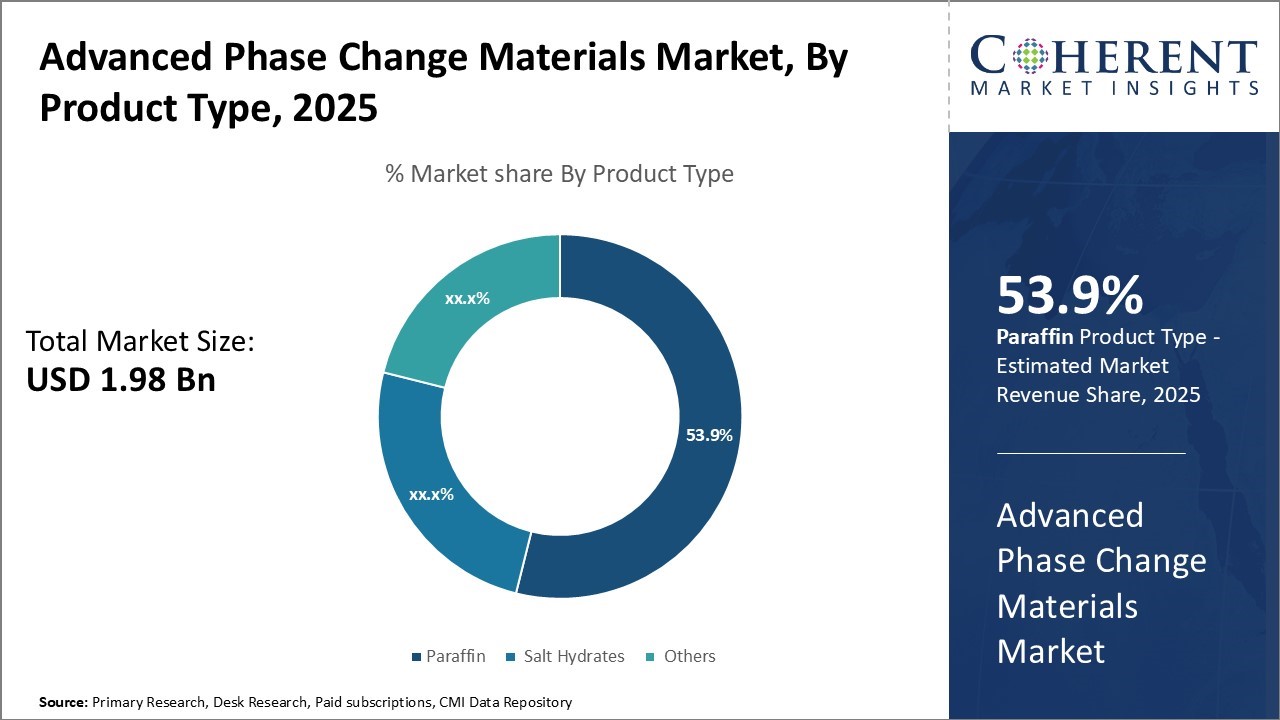
- By Product Type, the Paraffin segment is projected to lead the global advanced phase change materials market in 2026, accounting for 54.9% of the total market share.
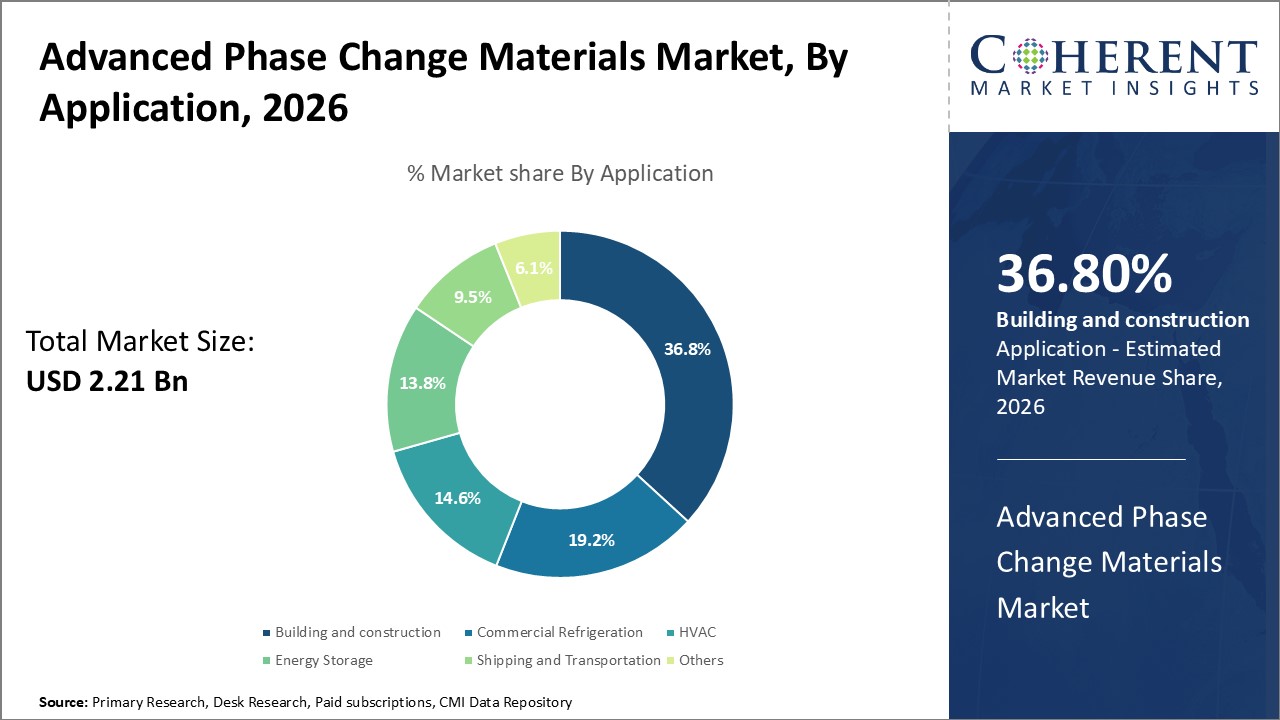
- By Application, the Building and Construction segment is expected to contribute 36.8% of the market share in 2026.
- By Regional Insight North America is poised to dominate the advanced phase change materials market in 2026, holding a commanding 36.0% share.
Market Overview
The global Advanced Phase Change Materials (APCM) Market is experiencing strong growth, propelled by the increasing demand for energy-efficient and sustainable thermal management solutions. Paraffin-based materials dominate due to their superior latent heat properties and versatility. The building and construction sector leads in adoption, driven by the surge in green building initiatives and energy-efficient infrastructure.
Current Events and Its Impact on Advanced Phase Change Materials Market
Current Event | Description and its impact |
Environmental and Regulatory Focus |
|
Technological Advancements in APCM |
|
Pricing Analysis: Advanced Phase Change Materials Market
The advanced phase change materials (APCM) market features a varied pricing structure, largely determined by material type, encapsulation technology, and application-specific performance requirements. Paraffin-based PCMs, which dominate the market, are relatively cost-effective, typically priced between $5 to $15 per kilogram, making them a preferred choice for large-scale thermal energy storage and building insulation applications.
In contrast, bio-based and inorganic PCMs, known for higher thermal stability and fire resistance, command premium prices ranging from $20 to $50 per kilogram, due to more complex manufacturing processes and limited raw material availability. Microencapsulated PCMs—used extensively in textiles, electronics, and packaging—can reach $80 to $150 per kilogram, reflecting their specialized formulation and advanced processing requirements.
Installation and integration costs vary significantly depending on the end-use sector. For example, incorporating PCMs into building materials or HVAC systems can add $5 to $15 per square foot to construction costs. Despite higher initial investments, APCMs offer long-term value by significantly reducing heating and cooling loads, enabling energy savings of 15–30% annually in commercial and residential buildings.
Large-scale users, such as construction conglomerates and automotive manufacturers, often benefit from bulk pricing agreements and custom formulation packages. Meanwhile, smaller firms and emerging economies may face affordability barriers, leading to a preference for conventional materials unless incentivized by regulatory policies or energy efficiency grants.
- Current Industry Events of 2026
- Market Size Estimation
- Regional Breakdown
- Competitive Landscape
- Customer Intelligence
- Segmental Analysis
- Pricing Analysis
- Key Market Drivers, Challenges & Future Trends
- Customized Insights Section
Patent Landscape: Advanced Phase Change Materials Market
The advanced phase change materials (APCM) market features a steadily evolving patent landscape, reflecting continuous innovation in thermal energy storage, material science, and energy-efficient building solutions. Leading industry players such as BASF SE, Henkel AG, Croda International, Rubitherm Technologies, and Phase Change Energy Solutions hold extensive patent portfolios that focus on material formulation, encapsulation technologies, and application-specific integration.
Key patent areas include paraffin and bio-based PCM composites, microencapsulation techniques, shape-stabilized materials, and novel inorganic formulations with enhanced thermal conductivity and fire resistance. Innovations also extend to PCM-embedded construction materials, smart textiles, and passive thermal regulation systems in electronics and packaging.
The rise of green building initiatives and the global push for energy conservation have driven cross-sector patent activity, with automotive, aerospace, and electronics firms increasingly investing in PCM-related IP. Furthermore, research institutions and universities are contributing significantly to patent filings, especially in the development of biodegradable and recyclable PCMs.
As the market matures, the competitive IP landscape is expected to intensify, particularly around sustainable material sourcing, long-term thermal cycling stability, and hybrid PCM systems. This growing patent ecosystem underscores the strategic importance of proprietary technology in gaining a competitive edge and addressing global energy-efficiency demands.
Role of Advanced Technologies: Advanced Phase Change Materials Market
Advanced technologies are playing a transformative role in the evolution of the advanced phase change materials (APCM) market, enabling the development of next-generation thermal energy storage solutions. Nanotechnology is at the forefront, enhancing the thermal conductivity, stability, and encapsulation efficiency of PCMs, thereby improving their overall energy storage performance across building, automotive, and electronics applications.
Microencapsulation techniques allow PCMs to be integrated into diverse substrates such as wallboards, textiles, and concrete without leakage, ensuring consistent performance and durability. Smart materials and adaptive thermal systems are leveraging sensor integration and AI to regulate and respond to temperature changes dynamically, optimizing energy usage in real time.
Advances in bio-based and hybrid material synthesis are enabling the production of sustainable PCMs with reduced environmental impact, while 3D printing is being explored for the customized fabrication of PCM-enhanced components. These technologies, combined with simulation software and AI modelling, are accelerating R&D cycles and enabling tailored solutions across industries.
Together, these innovations are expanding the applicability and efficiency of APCMs, positioning them as critical enablers of global energy conservation and sustainable design.
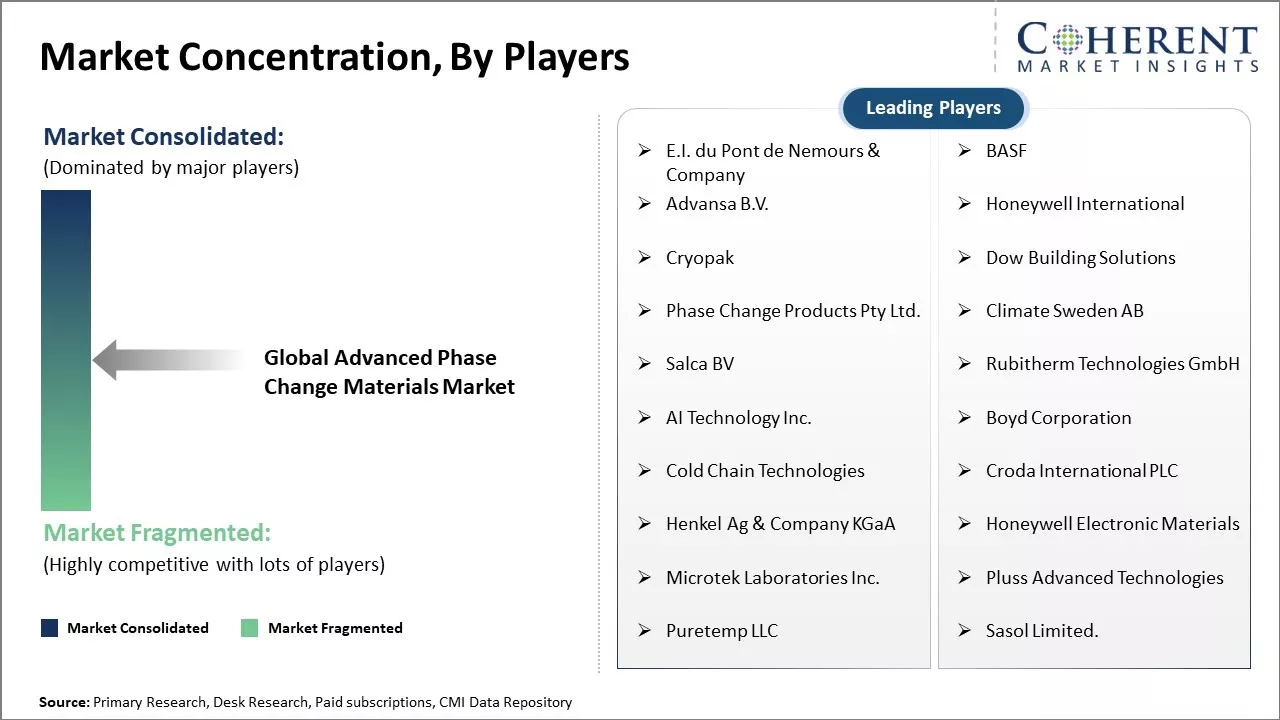
Market Concentration and Competitive Landscape
Advanced Phase Change Materials Market Trends
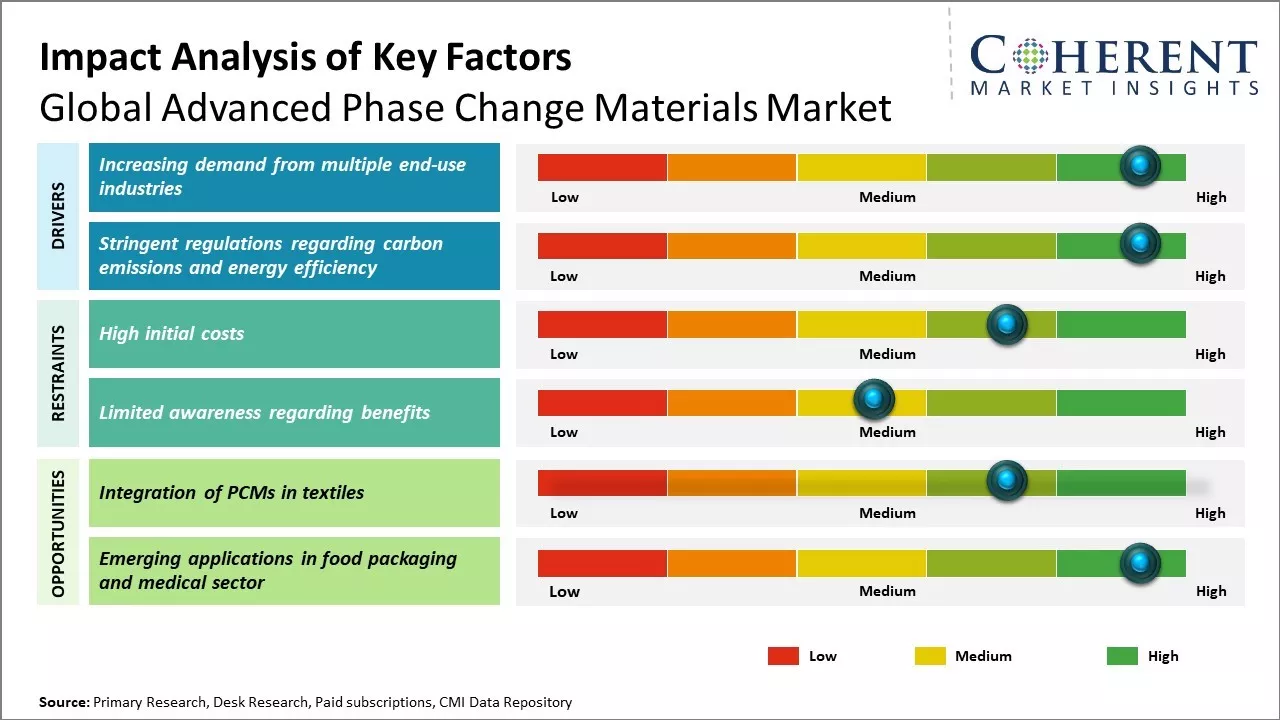
- Increasing demand from multiple end-use industries
The demand for advanced phase change materials is growing rapidly across various end-use industries like construction, transportation, packaging, and electronics. As these industries look for innovative ways to optimize energy usage and enhance efficiency, phase change materials are emerging as a viable solution.
In the construction sector, phase change materials are increasingly being integrated into building designs for passive thermal energy storage. When temperatures fluctuate, these materials absorb, store, and release large amounts of energy in the form of heat or cold, thereby helping regulate indoor temperatures passively without mechanical cooling and heating.
This provides buildings with natural thermal buffering capabilities and minimizes heating/cooling load on HVAC systems. Several commercial and residential construction projects now specify phase change materials in wallboards and coatings to reduce energy costs.
Similarly, the transportation industry is focusing on phase change materials to improve thermal management in vehicle cabins. With rising demand for electric vehicles that run on batteries, efficient thermal regulation of battery packs and passenger compartments becomes crucial. Latent heat storage using phase change allows electric vehicles to maintain optimal operating temperatures. Even conventional vehicles can benefit from its use to quickly heat up or cool interior spaces.
This, in turn, enhances passenger comfort while minimizing mechanical load on HVAC units. In May 2025, The Times of India reported that researchers at the CSIR–Central Leather Research Institute in Chennai and Cairo’s Desert Research Centre developed a smart “cooler” leather using a coating made from n‑eicosane (a paraffin-based PCM) and porous activated carbon derived from leather waste. This innovative material maintains surface temperatures at least 3°C lower than conventional leather—demonstrating PCM applications in apparel, automotive upholstery, and sustainable material reuse.
- Stringent regulations regarding carbon emissions and energy efficiency
Governments around the world are implementing increasingly stringent regulations focused on lowering carbon emissions and enhancing building as well as vehicle energy efficiency. In response to climate change concerns, several nations have adopted policies targeting net zero carbon goals by upcoming deadlines. Compliance with such norms is necessitating the adoption of innovative sustainability solutions across different industry verticals.
In June 2024, Mint reported that India’s Textiles Ministry, in partnership with institutes like IIT Delhi and NIFT Telangana, is developing indigenous encapsulated PCM-based activewear that adapts to seasonal changes—offering thermal comfort in both cold and hot climates across India. The initiative is part of the National Technical Textiles Mission, backed by ₹25.5 crore in funding.
Opportunities In the Advanced Phase Change Materials Market
- Integration of PCMs in textiles
The integration of Phase Change Materials (PCMs) in textiles offers huge potential that can drive advanced phase change materials market towards greater heights. PCMs have the unique ability to absorb and release large amounts of heat during phase transition. By embedding PCMs in fabrics through micro/nano-encapsulation techniques, the fabrics can either release stored heat to keep warm in winter or absorb excess heat to keep us cool in summer.
This thermoregulatory functionality of PCM integrated textiles is finding widespread applications in clothing, bedding, upholstery, and curtains. As people seek durable and comfortable products that can regulate indoor thermal conditions passively, without active electronic devices, the demand for PCM integrated textiles is expected to grow steadily.
Segmental Insights
Advanced Phase Change Materials Market Insights, By Product Type
The Paraffin segment is projected to dominate the global advanced phase change materials market in 2026, accounting for 54.9% of the total market share. This leadership is attributed to paraffin’s superior thermal storage properties, such as high latent heat of fusion, chemical stability, and consistent performance over multiple cycles. Its ease of processing, low cost, and compatibility with microencapsulation techniques have led to widespread adoption in thermal energy storage, packaging, and textile applications.
Continuous advancements to improve paraffin’s fire resistance and phase transition efficiency further solidify its position as the material of choice for industries seeking scalable and sustainable energy solutions.
Advanced Phase Change Materials Market Insights, By Application
The Building and Construction segment is expected to account for 36.8% of the global advanced phase change materials market in 2026, emerging as the leading application area. The surge in demand for energy-efficient and environmentally sustainable buildings has accelerated the use of APCMs in insulation boards, wall systems, and HVAC equipment.
By effectively regulating indoor temperatures, APCMs contribute to significant reductions in energy consumption and greenhouse gas emissions. With increasing global emphasis on green building certifications, net-zero energy targets, and government-backed energy efficiency mandates, this segment is poised for strong, long-term growth.
Advanced Phase Change Materials Market: Regional Insights
North America Advanced Phase Change Materials Market Trends and Analysis
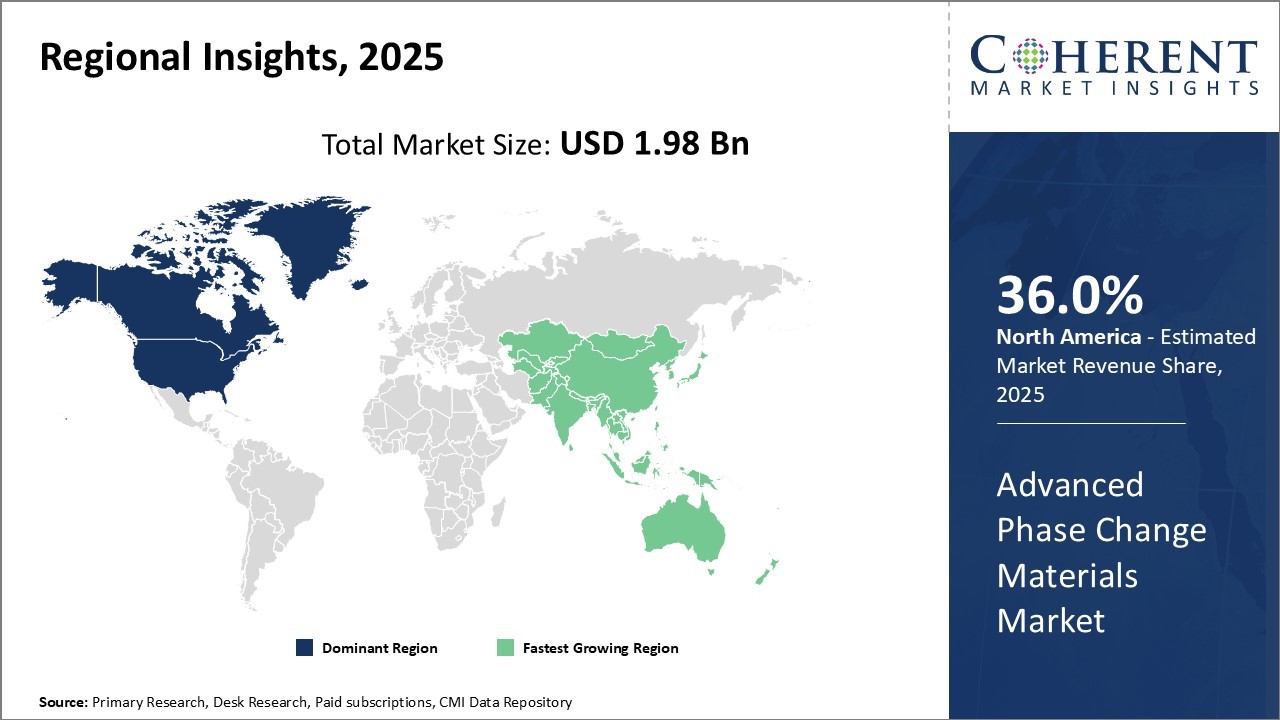
North America is poised to dominate the global advanced phase change materials (APCM) market in 2026, holding a commanding 36.0% share. This regional leadership is driven by early adoption of energy-efficient technologies across sectors such as green buildings, automotive, and electronics. The U.S. stands out due to its strong regulatory framework promoting energy conservation, widespread implementation of thermal management solutions, and rapid uptake of net-zero energy buildings.
Additionally, the presence of leading APCM manufacturers and extensive R&D activities in materials science underpin the region’s innovative edge. With continued government incentives and consumer demand for sustainable solutions, North America remains a global hub for APCM innovation and commercialization.
Asia Pacific Advanced Phase Change Materials Market Trends and Analysis
Asia Pacific is emerging as a high-growth region in the advanced phase change materials market, backed by rapid urbanization, industrial expansion, and growing environmental consciousness. Countries such as China, Japan, South Korea, and India are witnessing increasing adoption of APCMs in construction, packaging, and electronics for thermal regulation and energy savings.
The region benefits from a rising middle-class population, government initiatives promoting energy efficiency, and accelerated development of smart cities and infrastructure. Additionally, Asia Pacific’s strong manufacturing base and expanding R&D investment in clean technologies position it as a critical player in shaping the future of the APCM market.
Advanced Phase Change Materials Market Dominating Countries
United States and Canada
The United States leads the global APCM market, driven by its strong regulatory framework promoting energy efficiency and widespread adoption of sustainable construction practices. As a pioneer in green building initiatives and net-zero energy projects, the U.S. is extensively integrating phase change materials into insulation systems, HVAC components, and thermal packaging. A robust ecosystem of R&D institutions and manufacturers continues to propel innovation in paraffin, bio-based, and inorganic PCMs for various industries.
Canada complements this leadership with its emphasis on eco-friendly infrastructure and cold-climate energy management. APCMs are increasingly being adopted in Canadian residential and commercial buildings to stabilize indoor temperatures and reduce energy loads. Government incentives and partnerships with material science researchers reinforce Canada’s growing influence in the market.
Market Report Scope
Advanced Phase Change Materials Market Report Coverage
| Report Coverage | Details | ||
|---|---|---|---|
| Base Year: | 2025 | Market Size in 2026: | USD 2.21 Bn |
| Historical Data for: | 2020 To 2024 | Forecast Period: | 2026 To 2033 |
| Forecast Period 2026 to 2033 CAGR: | 11.5% | 2033 Value Projection: | USD 4.73 Bn |
| Geographies covered: |
| ||
| Segments covered: |
| ||
| Companies covered: | E.I. du Pont de Nemours & Company, BASF, Advansa B.V., Honeywell International, Cryopak, Dow Building Solutions, Phase Change Products Pty Ltd., Climate Sweden AB, Salca BV, Rubitherm Technologies GmbH, AI Technology Inc., Boyd Corporation, Cold Chain Technologies, Croda International PLC, Henkel Ag & Company KGaA, Honeywell Electronic Materials, Microtek Laboratories Inc., Pluss Advanced Technologies, Puretemp LLC, and Sasol Limited. | ||
| Growth Drivers: |
| ||
| Restraints & Challenges: |
| ||
Analyst Viewpoint – Advanced Phase Change Materials Market
- The rising global emphasis on net-zero energy targets, sustainable construction, and thermal comfort is accelerating APCM integration into both legacy and new infrastructure. Experts highlight the material’s unique ability to store and release thermal energy, making it indispensable for passive heating and cooling systems.
- Industry experts point to ongoing innovations in encapsulation techniques, nanocomposite PCMs, and bio-based alternatives as key drivers of market expansion. These technological advancements are improving thermal conductivity, durability, and safety—broadening the applicability of APCMs across extreme climates and dynamic load conditions. Analysts also note the increasing role of AI-driven material modeling and simulation software in reducing product development time and optimizing performance in real-world scenarios.
- Regionally, North America is seen as the market leader due to strong R&D infrastructure and early adoption in energy-efficient buildings and electronics. Meanwhile, Asia Pacific—particularly China, Japan, and South Korea—is recognized as the fastest-growing region, driven by rapid urbanization, smart city initiatives, and government support for green technologies. Europe remains a sustainability-focused innovator, benefiting from stringent energy codes and public-private collaboration.
- Looking ahead, analysts project sustained double-digit growth for the APCM market, bolstered by climate change policies, rising energy costs, and consumer demand for eco-friendly solutions. The market is expected to become increasingly competitive, with materials science firms, construction technology providers, and smart device manufacturers converging to capture emerging opportunities in thermal energy storage.
Advanced Phase Change Materials Market: Key Development
- In May 2025, Researchers Min Li and Lailai Zhu published a comprehensive theoretical framework that models PCM melting dynamics across diverse configurations, improving predictability and guiding material development. This framework accelerates R&D by providing a quantitative basis for optimizing PCM formulations and system integration, lowering experimentation costs and speeding up commercialization.
- In February 2025, Energy News Today featured an in-depth analysis of PCM use in thermal energy systems including building HVAC, cold-chain logistics, and industrial heat storage emphasizing high-efficiency gains. The piece highlights growing acknowledgment of APCMs beyond traditional sectors, indicating expanding commercial opportunities and increasing interest from utilities and large infrastructure projects.
- In March 2025, although no recent commercial release is noted, a study cited in Wikipedia (April 2025) reports progress in nano-enhanced paraffin-based microcapsules for textile applications, aimed at improving thermal comfort. These advancements suggest APCMs are entering the wearable technology sector, opening new pathways in smart textiles and personal thermal management markets.
- In August 2024, Ahead of the 2024 Paris Olympics, the Korean Olympic Committee utilized PCM cooling jackets and sheets for athletes, demonstrating lightweight and reusable thermal gear. This real-world application underlines PCMs’ performance in extreme environments and enhances their visibility, potentially driving demand in sports, PPE, and personal cooling sectors.
- In April 2024, PLUSS Advanced Technologies unveiled the BrffPluss PCM cooling jacket (~$65–81), along with temperature-controlled shipping pallets for pharmaceuticals. These product launches validate the commercial viability of PCM solutions in wearable and cold-chain sectors. They demonstrate PCM’s adaptability to consumer and industrial markets, reinforcing brand credibility and expanding market reach.
Market Segmentation
- By Product Type (Revenue, USD Bn, 2021 - 2033)
- Paraffin
- Salt Hydrates
- Others
- By Application (Revenue, USD Bn, 2021 - 2033)
- Building and construction
- Commercial Refrigeration
- HVAC
- Energy Storage
- Shipping and Transportation
- Others
- By Region (Revenue, USD Bn, 2021 - 2033)
- North America
- U.S.
- Canada
- Latin America
- Brazil
- Argentina
- Mexico
- Rest of Latin America
- Europe
- Germany
- U.K.
- Spain
- France
- Italy
- Russia
- Rest of Europe
- Asia Pacific
- China
- India
- Japan
- Australia
- South Korea
- ASEAN
- Rest of Asia Pacific
- Middle East
- GCC Countries
- Israel
- Rest of Middle East
- Africa
- South Africa
- North Africa
- Central Africa
- North America
- Key Players Insights
- E.I. du Pont de Nemours & Company
- BASF
- Advansa B.V.
- Honeywell International
- Cryopak
- Dow Building Solutions
- Phase Change Products Pty Ltd.
- Climate Sweden AB
- Salca BV
- Rubitherm Technologies GmbH
- AI Technology Inc.
- Boyd Corporation
- Cold Chain Technologies
- Croda International PLC
- Henkel Ag & Company KGaA
- Honeywell Electronic Materials
- Microtek Laboratories Inc.
- Pluss Advanced Technologies
- Puretemp LLC
- Sasol Limited.
Sources
The Stakeholders Consulted
- HVAC engineers and thermal systems designers
- Manufacturers and suppliers of phase change materials and encapsulation technologies
- Energy efficiency consultants and green building developers
- Regulatory bodies and environmental compliance specialists
- Research institutions focused on thermal energy storage, materials science, and clean technologies
- Government infrastructure and building code authorities
- End-users across sectors such as construction, automotive, packaging, electronics, and textiles
Databases Opened
- U.S. Department of Energy (DOE) – Building Technologies Office Data
- International Energy Agency (IEA) – Energy Efficiency and Buildings Data
- Ministry of New and Renewable Energy (MNRE), India – Thermal Energy Storage Initiatives
- World Bank Open Data – Green Infrastructure and Energy Transition Metrics
Magazines & Trade Publications
- Green Building & Design Magazine
- Energy Efficiency & Technology Review
- Smart Materials Bulletin
- Construction Week Online – Sustainable Materials Section
- Packaging Digest – Temperature-Sensitive Packaging Solutions
Scientific and Industry Journals
- Applied Thermal Engineering
- Journal of Energy Storage
- International Journal of Heat and Mass Transfer
- Renewable Energy Journal
- Journal of Building Performance
Newspapers & Media Outlets
- The Wall Street Journal – Clean Tech & Construction
- Bloomberg – Materials Innovation and Sustainability
- Reuters – Global Energy and Building Technology News
- The Economic Times – Green Infrastructure & Energy Efficiency
- Business Standard – Smart Materials & Thermal Technologies
Associations and Regulatory Bodies
- International Energy Agency (IEA)
- U.S. Environmental Protection Agency (EPA) – Energy Star for Buildings
- American Society of Heating, Refrigerating and Air-Conditioning Engineers (ASHRAE)
- International Code Council (ICC) – Energy Conservation Codes
- Bureau of Energy Efficiency (BEE), India
Public Domain Sources
- U.S. Energy Information Administration (EIA) – Energy Use in Buildings and Industry
- European Commission – Energy Efficiency and Sustainable Building Reports
- World Bank – Green Building, Thermal Efficiency, and Emissions Reports
- International Renewable Energy Agency (IRENA) – Thermal Energy Storage Integration
Proprietary Research Elements
- CMI Data Analytics Tool
- Proprietary CMI Repository of Market Data (covering past 8 years)
- CMI Expert Interviews and Transcripts (focused on PCM applications, building energy efficiency, and material innovation trends)
Get access to 250+ pages report
Every segment, forecast, competitor profile and data table behind the analysis above — available for instant download.
- ESOMAR Member
- ISO 9001:2015 Certified
- D-U-N-S Registered
- GDPR & CCPA Compliant
Missing comfort of reading report in your local language? Find your preferred language:
Transform your Strategy with Exclusive Trending Reports
Frequently Asked Questions
The Advanced Phase Change Materials Market size is estimated to be valued at USD 2.21 Bn in 2026, and is expected to reach USD 4.73 Bn by 2033.
The CAGR of the global Market is projected to be 11.5% from 2026 to 2033.
Increasing demand from multiple end-use industries and stringent regulations regarding carbon emissions and energy efficiency are the major factors driving the growth of the global advanced phase change materials industry.
High initial costs and limited awareness regarding benefits are the major factors hampering the growth of the global advanced phase change materials industry.
In terms of product type, paraffin is estimated to dominate the market revenue share in 2026.
E.I. du Pont de Nemours & Company, BASF, Advansa B.V., Honeywell International, Cryopak, Dow Building Solutions, Phase Change Products Pty Ltd., Climate Sweden AB, Salca BV, Rubitherm Technologies GmbH, AI Technology Inc., Boyd Corporation, Cold Chain Technologies, Croda International PLC, Henkel Ag & Company KGaA, Honeywell Electronic Materials, Microtek Laboratories Inc., Pluss Advanced Technologies, Puretemp LLC, and Sasol Limited. are the major players.
North America is expected to lead the global advanced phase change materials industry.