

Global Anesthesia and Respiratory Devices Market Size and Share Analysis
The Global Anesthesia and Respiratory Devices Market is estimated to be valued at USD 59.60 Bn in 2026 and is expected to reach USD 90.81 Bn by 2033, exhibiting a compound annual growth rate (CAGR) of 6.2% from 2026 to 2033.
Key Takeaways
- By Product Type, The Anesthesia Devices Segment is expected to contribute the highest share of the market with 43.1% in 2026.
- By End User, The Hospitals and Clinics Segment are expected to contribute the highest share of the market with 34.2% in 2026.
- By Gender, The Male Segment is expected to contribute the highest share of the market with 53.3% in 2026.
- North America is expected to top the global market with 42.3% share in 2026.
Market Overview
The anesthesia and respiratory devices industry is witnessing positive growth trends over the past few years. There is increasing adoption of anesthesia machines owing to the rising number of surgical procedures globally. Technological advancements in respiratory care devices with integrated software solutions are further supporting the market growth. Growing prevalence of respiratory diseases due to rising air pollution levels and increasing global geriatric population are key factors driving the demand for respiratory devices. Furthermore, favorable government initiatives for promoting effective respiratory care are expected to boost the anesthesia and respiratory devices market during the forecast period. However, high cost of innovative respiratory devices may hinder the market growth to some extent.
Current Events and Its Impact on Anesthesia and Respiratory Devices Market
Current Events | Description and its impact |
Applied Medical Introduces IntelAir™ Nasopharyngeal Airway |
|
Inogen's SIMEOX 200 Gets FDA 510(k) Clearance (Dec 2024)
|
|
Pipeline Analysis: Anesthesia and Respiratory Devices Market
The respiratory and anesthesia devices pipeline is expanding continuously with increased demand for innovative, user-friendly, and AI-powered solutions. A few of the most important developments are advanced anesthesia workstations, closed-loop systems for automated drug delivery, and next-generation ventilators with lung-protective approaches and personalized configuration. Industry leaders like GE HealthCare, Dräger, Medtronic, and Philips are aggressively developing AI-enabled devices that enable precision dosing, better monitoring, and a decreased clinician workload.
On the breathing side, the pipe comprises portable oxygen concentrators, non-invasive ventilators, and intelligent CPAP and BiPAP devices, commonly having IoT connectivity and patient-monitoring applications embedded to enable chronic care and remote use.
In addition, startups and medium-sized companies are also investing in home-use respiratory products for sleep apnea and COPD recovery that can expect to gain regulatory approval between 2025 and 2027. Low device noise, battery optimization, wearable modalities, and analytics dashboards integrated into the device are some of the major areas of focus. Regulators such as the FDA and CE Mark bodies have provided fast-track approvals to devices aimed at addressing pressing respiratory requirements.
Overall, the pipeline indicates an increasing movement towards tailored, technologically enabled anesthesia and respiratory care for enhancing patient outcomes, minimizing hospitalization, and enabling wider use in high-acuity as well as home care environments.
- Current Industry Events of 2026
- Market Size Estimation
- Regional Breakdown
- Competitive Landscape
- Customer Intelligence
- Segmental Analysis
- Pricing Analysis
- Key Market Drivers, Challenges & Future Trends
- Customized Insights Section
Patent Landscape: Anesthesia and Respiratory Devices Market
The market for anesthesia and respiratory devices exhibits a strong and dynamic patent landscape, commensurate with continued innovation in critical care and home-based solutions. Market leaders Medtronic, GE HealthCare, Philips, ResMed, and Dräger lead the patent filings in areas related to ventilator automation, combined monitoring systems, wireless communication, and closed-loop delivery of anesthesia.
New patents suggest a direction toward the application of artificial intelligence (AI), machine learning, and sensor-based feedback loops to enhance precision in the delivery of drugs, respiratory pattern observation, and device autoregulation.
Patents on respiratory devices increasingly feature portable oxygen concentrators, adaptive positive airway pressure (PAP) systems, and digital health platforms for remote patient management.
Examples of innovations are: noise-reduction technologies, smart alarms, battery optimization, and hybrid wearable formats. Demand post-pandemic has also resulted in a large increase in filings for low-cost and scalable ventilator designs for emergency and home use.
Rising markets such as China and India are also adding to the worldwide patent reservoir, especially for affordable and regionally flexible respiratory products. Regulatory avenues such as FDA Breakthrough Device designation and WIPO global filing trends reflect intensified commercial interest in intellectual property rights. In general, the patent environment is a competitive, innovation-oriented market with an emphasis on performance, connectivity, and affordability.
Prescribers' Preferences
- Anesthesia Devices - Lines of Treatment and Medication Preferences
- In the perspective of anesthesia, the prescribers' choice depends quite heavily on the type, duration, safety profile, and level of complexity of the surgery or procedure. Anesthesia can be generally classified into three categories: General Anesthesia, Regional Anesthesia, and Local Anesthesia.
- General Anesthesia
- In the case of widespread use in extensive surgical procedures, general anesthesia demands close monitoring and full sedation of the patient. Prescribers like anesthetic equipment like ventilators with built-in anesthesia workstation to ensure accurate delivery of the anesthesia agent.
- Common Choices of Medication Include:
- Induction agents: Propofol (Diprivan, Fresenius Kabi), Etomidate (Amidate, Hospira), Thiopental (Pentothal, Abbott).
- Maintenance agents (Inhalation anesthetics): Sevoflurane (Ultane, AbbVie), Isoflurane (Forane, Baxter), Desflurane (Suprane, Baxter).
- Neuromuscular blocking agents (if needed): Rocuronium (Esmeron, MSD), Cisatracurium (Nimbex, AbbVie), Succinylcholine (Anectine, Hospira).
- Regional Anesthesia
- In analgesia required procedures within certain body regions, regional anesthesia is preferred by prescribers. Equipment used is often ultrasound-guided anesthesia equipment, nerve stimulators, and analgesic pumps.
- Medication Options Include:
- Local anesthetics: Bupivacaine (Marcaine, Hospira), Ropivacaine (Naropin, Fresenius Kabi).
- Additives: Fentanyl (Sublimaze, Pfizer), Morphine sulfate (Duramorph, Pfizer).
- Respiratory Devices – Prescribers' Preferences by Disease Stages and Medications
- Prescribers' and clinicians' preferences in respiratory therapy mainly coincide with the severity of respiratory disease and the corresponding clinical guidelines. Hereinbelow is a discussion of the conditions that include asthma, chronic obstructive pulmonary disease (COPD), and obstructive sleep apnea (OSA).
- Asthma – Stage-Based Therapeutic Options
- Treatments for asthma commonly adhere to rigid guidelines like GINA (Global Initiative for Asthma):
- Mild or intermittent Asthma: Prescribers often depend on short-acting beta-agonists (SABAs). Preferred drugs are Albuterol (Ventolin, GSK; ProAir, Teva Pharmaceuticals), and Levalbuterol (Xopenex, Sunovion Pharmaceuticals). Delivery devices employed here are standard inhalers, or metered-dose inhalers (MDIs).
- Moderate Asthma: Inhaled corticosteroids (ICSs) and long-acting beta agonists (LABAs) are usually added. Preferred pairs include combinations such as Fluticasone/Salmeterol (Advair, GSK), Budesonide/Formoterol (Symbicort, AstraZeneca), and Fluticasone/Vilanterol (Breo Ellipta, GSK).
- Severe or Refractory Asthma: Supportive biologics/high-dose steroids can be added. Common biologic agents such as Omalizumab (Xolair, Novartis), Mepolizumab (Nucala, GSK), or Dupilumab (Dupixent, Sanofi & Regeneron) are seen prominently.
- Treatments for asthma commonly adhere to rigid guidelines like GINA (Global Initiative for Asthma):
- COPD – Stages and Treatment Preferences
- COPD management strategies are based on symptom severity, exacerbation frequency, and lung function tests (GOLD guidelines):
- Early-stage COPD: Short-acting muscarinic antagonists (SAMAs) or SABAs like Ipratropium (Atrovent, Boehringer Ingelheim), Albuterol (Proventil or Ventolin)—are commonly prescribed with MDIs or nebulizers.
- Moderate-stage COPD: LABA or Long-acting muscarinic antagonists (LAMAs) like Tiotropium (Spiriva, Boehringer Ingelheim), Umeclidinium bromide (Incruse Ellipta, GSK), or Glycopyrrolate bromide (Seebri Breezhaler, Novartis).
- Severe-stage COPD: Triple therapy drugs in the form of LABA, LAMA, and ICS combination inhalers such as Fluticasone Furoate/Umeclidinium/Vilanterol (Trelegy Ellipta, GSK) are widely utilized.
- COPD management strategies are based on symptom severity, exacerbation frequency, and lung function tests (GOLD guidelines):
- Obstructive Sleep Apnea (OSA) – Devices and Treatment Choices
- Prescribers tend to prefer the Common OSA management of Continuous Positive Airway Pressure (CPAP) devices, Auto-CPAP, or Bi-level PAP machines based on severity and tolerance of the patients.
- Mild or moderate OSA: ResMed CPAP machines (AirSense series) or Philips Respironics CPAP machines (DreamStation series) are usually prescribed.
- Severe OSA or treatment-resistant OSA: Bi-level PAP machines—particularly for those who have co-morbidities such as COPD—such as Philips Respironics DreamStation BiPAP or ResMed AirCurve are usually selected.
- Prescribers tend to prefer the Common OSA management of Continuous Positive Airway Pressure (CPAP) devices, Auto-CPAP, or Bi-level PAP machines based on severity and tolerance of the patients.
- Other Factors Affecting Prescribers' Decisions
- Prescribers decide their preference for anesthesia or respiratory care drugs and devices not merely depending on severity of conditions and stage of disease but also on other key factors:
- Patient compliance and following: Devices that are easy to administer (e.g., patient-friendly inhalers such as Ellipta or Respimat devices) play an important role in prescribers' preference.
- Cost benefit and reimbursement policy: Prescribers choose medications/devices with favorable reimbursement covers to allow patients to stick to treatment as well as to maintain continuity.
- Clinical evidence-based results: Prescribers strongly prefer products supported by strong clinical trials and favorable safety/efficiency histories.
- Device durability in the long run, after-sales assistance, ease of maintenance: Particularly in the case of respiratory care devices (e.g., CPAP equipment or ventilators), reliability and dedicated after-sales assistance favorably affect prescribers' decision.
- Prescribers decide their preference for anesthesia or respiratory care drugs and devices not merely depending on severity of conditions and stage of disease but also on other key factors:
Market Driver - Increasing incidence of respiratory disorders
The global burden of respiratory diseases has been steadily rising over the past few decades. Changing lifestyle patterns, rising air pollution levels, growing prevalence of smoking and tobacco consumption, increased allergen exposure has boosted cases of chronic respiratory conidiations.
Respiratory illnesses like asthma, chronic obstructive pulmonary disease (COPD), pneumonia, and lung cancer have showcased an upward trend worldwide according to the latest WHO data. Respiratory diseases directly impact the functioning of the lungs and respiratory tract. Many conditions require long-term treatment and management of symptoms. The deterioration of lung health also reduces the quality of life for patients.
In April 2024, Royal Philips, a global leader in health technology, announced plans for a new R&D center within its Healthcare Innovation Center (HIC) in Maharashtra, India. Set to be operational within two years, the facility will focus on sleep & respiratory care, precision diagnosis, image guided therapy, and monitoring.
Market Opportunity - Technological advancements in device manufacturing
The global anesthesia and respiratory devices market has strong opportunities arising from continuous technological advancements in device manufacturing. Major players are investing heavily in R&D to develop next-generation innovations with enhanced functionalities, material properties, miniaturization, connectivity, and data analytics capabilities. Advancements such as 3D printing, robotics, and artificial intelligence are enabling automated, digitalized, and personalized care. Device miniaturization allows for greater portability suited to home healthcare settings. Connectivity and integration of devices with health IT systems facilitate remote monitoring while generating valuable real-world data.
Outsourcing production to contract manufacturers in lower-cost regions also helps reduce device prices. Such technologically-advanced products gain more acceptance among customers and expand the potential market reach.
Segmental Insights
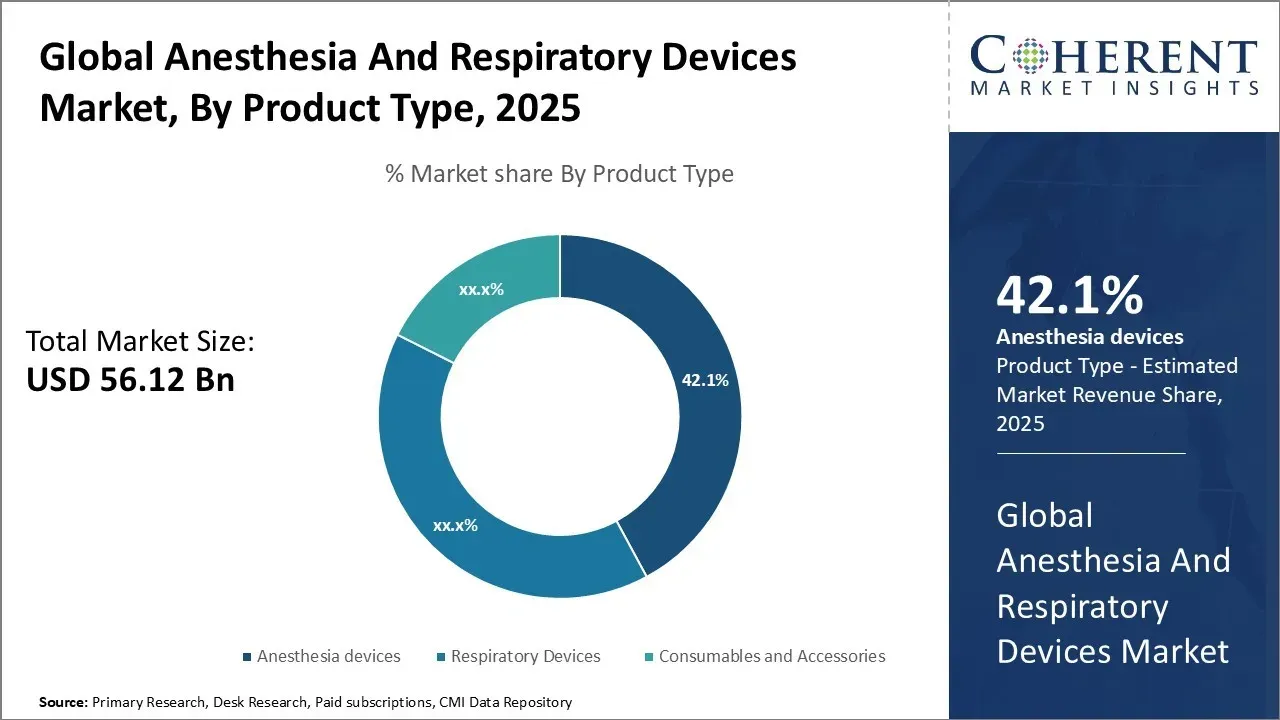
Anesthesia And Respiratory Devices Market Insights, by Product Type
In terms of product type, the anesthesia devices segment is expected to contribute the highest share of the market with 43.1% in 2026 owing to their widespread usage and cost-effectiveness. As anesthesia machines, workstations and monitors are reusable, they prove more economical for hospitals and clinics in the long run compared to disposables. Their versatility also allows anesthesia providers to manage a variety of surgical procedures while ensuring patient safety.
Regular advancements have further increased the functionality of these devices, through added features such as touchscreens and connectivity options. This has augmented their acceptance rate among healthcare organizations. Moreover, the demand continues to rise domestically as well as internationally with growing access to surgical treatments. High disease prevalence also fuels the need for anesthesia devices to support complex surgeries worldwide.
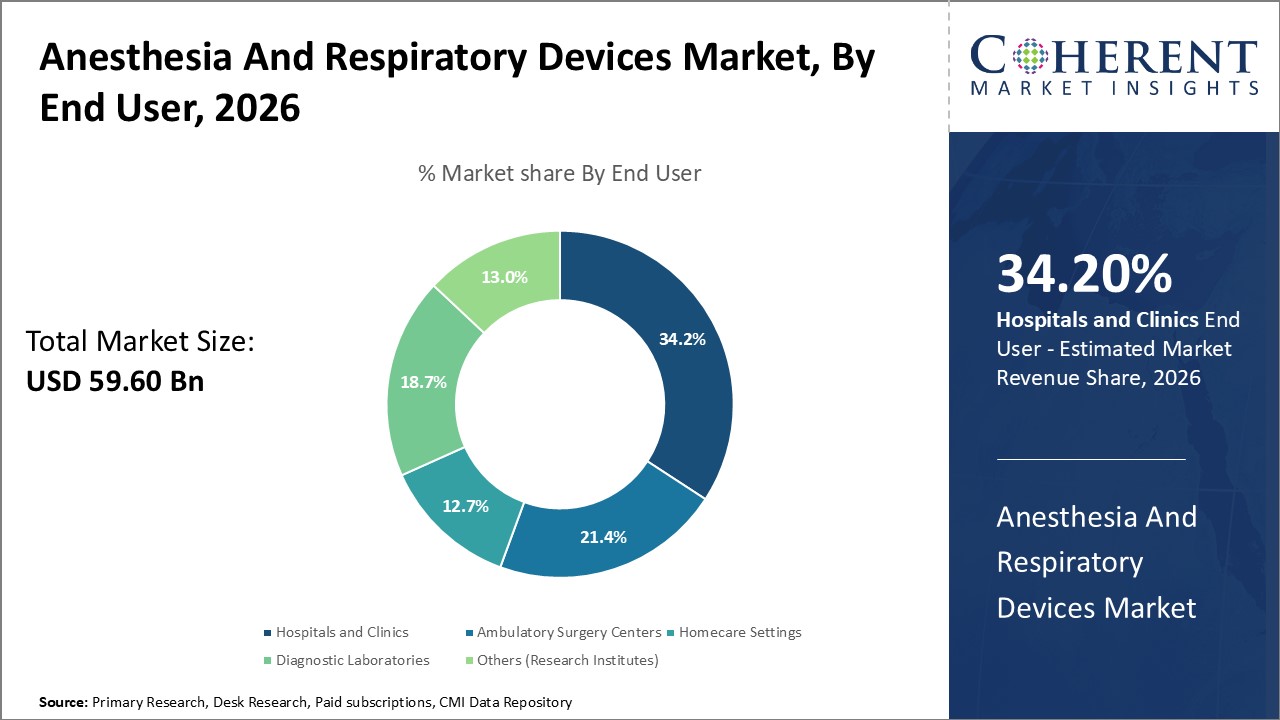
Anesthesia And Respiratory Devices Market Insights, by End User
In terms of end user, the hospitals and clinics segment are expected to contribute the highest share of the market with 34.2% in 2026 given their large-scale infrastructure and expertise. They cater to a high patient inflow requiring surgery or respiratory support daily.
Moreover, hospitals are well-equipped to procure sophisticated anesthesia and respiratory devices. Experienced anesthetists and technicians enable maximizing the benefits of advanced equipment. Comprehensive insurance coverage for in-patient procedures also makes hospitals a favorable option. This ensures continuous demand from top-tier end users who can leverage cutting-edge technology.
Anesthesia And Respiratory Devices Market Insights, by Gender
In terms of gender, the male segment is expected to contribute the highest share of the market with 53.3% in 2026 owing to increased susceptibility to respiratory disorders. Physiological traits like narrower airways make men prone to conditions such as Chronic obstructive pulmonary disease COPD and asthma. Occupational hazards from industries also impact the respiratory health of many male workers.
Moreover, lifestyle factors like smoking and alcohol consumption remain prevalent among men. This elevates the risks manifold. Consequently, diagnostic tests and treatments requiring devices are more frequent for respiratory issues affecting the male population. Even during procedures, men may need personalized settings on anesthesia and ventilation products in light of varied anatomy. All these contribute to their larger consumption of relevant equipment.
Regional Insights
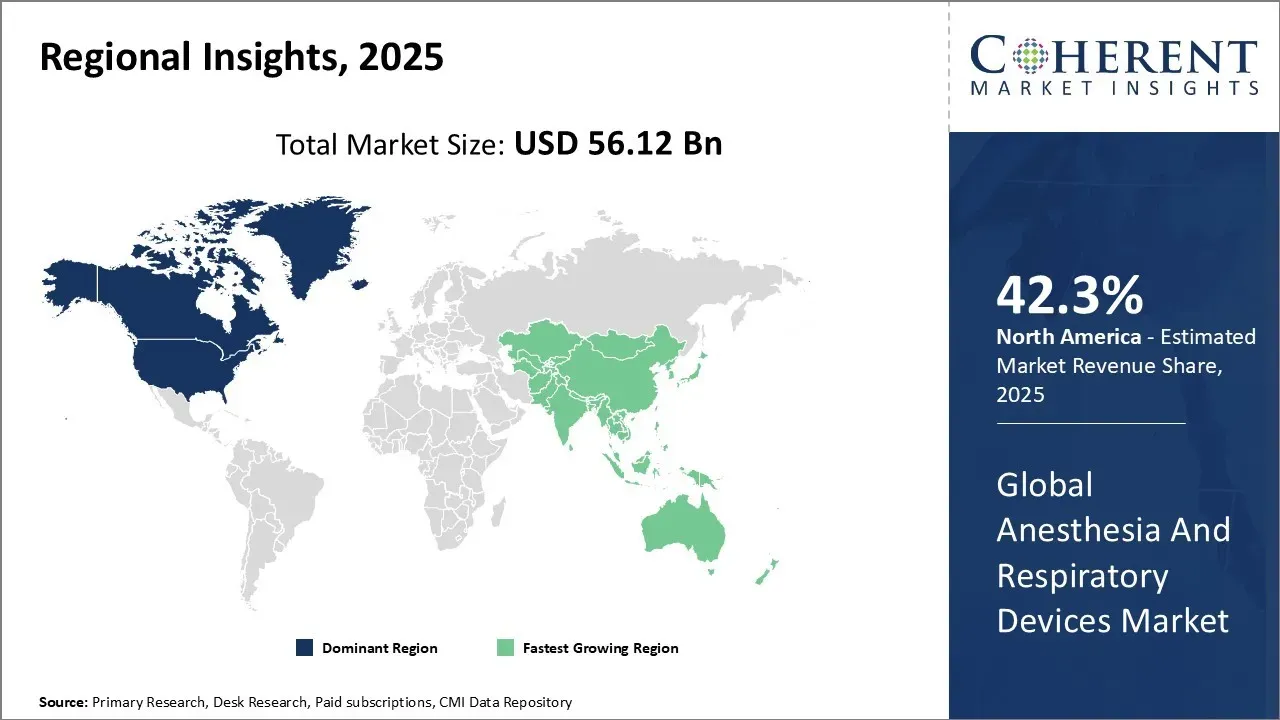
North America Anesthesia and Respiratory Devices Market Trends
In North America, the dominance in the anesthesia and respiratory devices market with a projected share of 42.3% in 2026 can be attributed to factors such as the strong presence of major players, favorable government policies supporting medical technology innovation and adoption, and higher healthcare expenditure. Countries like the U.S. and Canada have seen significant investments from players aiming to develop advanced products.
Asia Pacific Anesthesia and Respiratory Devices Market Trends
Meanwhile, the Asia Pacific region is expected to exhibit the fastest growth with a projected share of 25.5% in 2026, led by countries like China, India, Japan, and South Korea. Rapid economic development and rising affluence have increased access to healthcare in the region.
Governments are focusing on strengthening their healthcare systems to meet domestic demand as well as tap into medical tourism. Leading global companies like GE Healthcare are shifting their low-cost manufacturing base to the region and collaborating with local players.
Anesthesia and Respiratory Devices Market Dominating Countries
U.S. Anesthesia and Respiratory Devices Market Trends
In 2024, the U.S. held the largest share of the global anesthesia and respiratory devices market, driven by favorable reimbursement policies encouraging device adoption. For instance, a key milestone occurred in March 2024 with the introduction of the Supplemental Oxygen Access Reform (SOAR) Act by a U.S. Congressman, aimed at enhancing access to supplemental oxygen for Medicare beneficiaries.
This legislation is expected to significantly boost the nationwide adoption of oxygen concentrators. Additionally, increasing healthcare spending in the U.S. is fueling the anesthesia and respiratory devices market growth.
U.K. Anesthesia and Respiratory Devices Market Trends
The U.K. held a significant share of the anesthesia and respiratory devices market in 2024, driven by active participation from market players and organizations in creating cost-effective respiratory solutions.
Notably, for instance, in February 2022, OxVent, a low-cost, rapidly deployable ventilator developed through a collaboration between the University of Oxford and King’s College London, received approval for large-scale production and adoption as a social enterprise.
Market Players, Key Development, and Competitive Intelligence
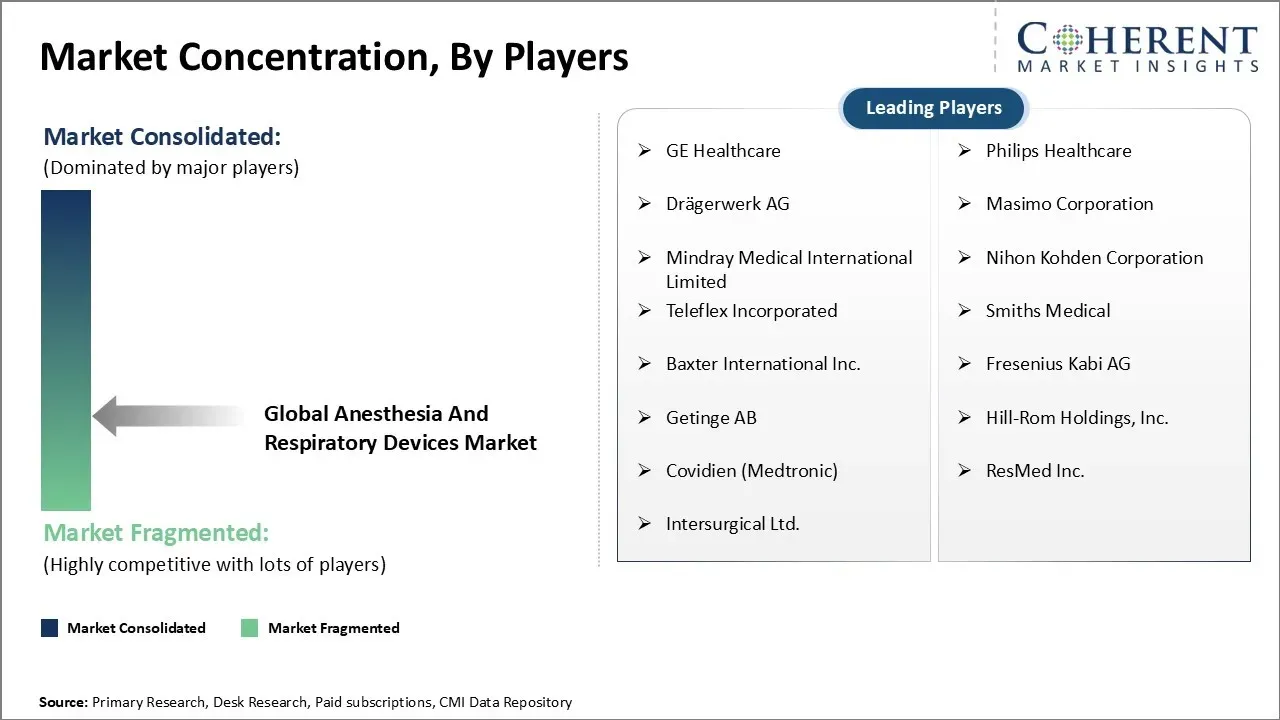
Key Developments
- In November 2024, Mindray, a medical device company, introduced significant upgrades to its A7 and A5 anesthesia systems as part of the A Series Anesthesia lineup. These enhancements feature advanced technologies designed to improve anesthesia precision, boost patient safety, and enhance perioperative efficiency.
- In May 2024, Masimo, a leader in innovative medical technologies, partnered with Medable Inc., a leading healthcare technology company, to incorporate its MightySat Rx pulse oximeter into Medable’s evidence-generation platform. This integration supports eight large-scale pharmaceutical trials focused on breast and lung cancer, involving over 3,000 patients across 25 countries.
Top Strategies Followed by Global Anesthesia and Respiratory Devices Market Players
- Established players focus heavily on R&D investments to innovate high-performance products
- For instance, in October 2024, Finland-based respiratory health innovator, WellO2, introduced its latest breathing exercise device at the Pharmacy Show 2024. Designed for individuals seeking drug-free solutions to improve respiratory function, the device offers proven benefits for managing chronic conditions such as asthma, sleep apnea, COPD, and other breathing disorders.
- Mid-level companies are addressing unique market needs by focusing on specific medical conditions, developing specialized devices that cater to particular patient populations
- For instance, in June 2024, Savara Inc., a clinical-stage biopharmaceutical company, focused on rare respiratory diseases, presented the top-line results from the pivotal Phase 3 IMPALA-2 clinical trial. This trial assessed the efficacy and safety of molgramostim, an inhaled form of recombinant human granulocyte-macrophage colony-stimulating factor (GM-CSF).
- Small players like Ventec Life Systems target niche markets with unique products tailored for specific respiratory conditions, such as portable ventilators for home use. Small-scale companies are adopting cutting-edge technologies. For instance, companies like OxyGo are utilizing advanced oxygen delivery systems to remain competitive in the market.
Emerging Startups - Anesthesia and Respiratory Devices Industry Ecosystem
- In the area of innovative technologies, startups are developing smart ventilators integrated with sensors and AI algorithms to optimize breath delivery. Some examples include Anthropic, which created an AI-powered closed-loop ventilator able to learn patient needs. These advanced ventilators could personalize treatments and reduce physician workload.
- Regarding sustainable solutions, companies like AirXT and Innovo Technology develop recycled or eco-friendly respiratory products. AirXT makes ventilator filters from bioplastics while Innovo produces anesthesia machines with reduced e-waste. Their contributions may help lower costs and cut the industry's carbon footprint over time.
- Startups also address unique niche markets. BioIntelliSense focuses on compact remote monitoring devices for ambulatory and pediatric patients. Other examples are Anthropic and Innovotech, which created transport ventilators tailored for ground and aeromedical evacuation. Through specialized solutions, these emerging companies expand the reach of respiratory and anesthesia care globally.
Market Report Scope
Anesthesia and Respiratory Devices Market Report Coverage
| Report Coverage | Details | ||
|---|---|---|---|
| Base Year: | 2025 | Market Size in 2026: | USD 59.60 Bn |
| Historical Data for: | 2020 To 2024 | Forecast Period: | 2026 To 2033 |
| Forecast Period 2026 to 2033 CAGR: | 6.2% | 2033 Value Projection: | USD 90.81 Bn |
| Geographies covered: |
| ||
| Segments covered: |
| ||
| Companies covered: | GE Healthcare, Philips Healthcare, Drägerwerk AG, Masimo Corporation, Mindray Medical International Limited, Nihon Kohden Corporation, Teleflex Incorporated, Smiths Medical, Baxter International Inc., Fresenius Kabi AG, Getinge AB, Hill-Rom Holdings, Inc., Covidien (Medtronic), ResMed Inc., and Intersurgical Ltd. | ||
| Growth Drivers: |
| ||
| Restraints & Challenges: |
| ||
Analyst Opinion
- The global anesthesia and respiratory devices market is expected to witness steady growth over the forecast period owing to the increasing number of surgical procedures performed worldwide. Rise in chronic respiratory diseases such as asthma and COPD along with growing geriatric population will further propel the demand for anesthesia and respiratory devices.
- On the devices front, anesthesia monitors are likely to remain most widely used products driven by increasing adoption of combined anesthesia systems. Respiratory care devices segment, on the other hand, will gain traction from rising cases of respiratory disorders.
- Key players operating in the market should capitalize on opportunities in emerging economies by partnering with regional hospitals to increase access to advanced respiratory care therapies. Companies should also focus on new product approvals and launches to get an edge over competitors. Development of user-friendly and cost-effective devices holds potential to significantly boost the market growth going forward.
Speak to the analyst
Want personalized insights?
Take the findings above to one of our principal consultants, or have the report rebuilt around the segments, geographies and competitors you actually track.
Market Segmentation
- By Product Type Insights (Revenue, USD Bn, 2021 - 2033)
- Anesthesia devices
- Anesthesia Monitoring System
- Advanced Anesthesia Monitoring
- Anesthesia Gas Monitor
- Depth of Anesthesia Monitors
- Standalone Capnography Monitors
- MRI Compatible Anesthesia Monitor
- Basic Anesthesia Monitor
- Anesthesia machines
- Portable Anesthesia machines
- Standalone Anesthesia machines
- Anesthesia Workstation
- Anesthesia Ventilators
- Anesthesia Disposables
- Accessories
- Respiratory Devices
- Therapeutic Devices
- Positive Airway Pressure (PAP) Devices
- Inhalers
- Humidifiers
- Oxygen Concentrators
- Reusable Resuscitators
- Respiratory Mask
- Nitric Oxide Delivery Units
- Others
- Monitoring Devices
- Pulse Oximeters
- Capnographs
- Gas Analyzers
- Diagnostic Devices
- Spirometer
- Peak Flow Meters
- Polysomnography Devices
- Others
- Consumables and Accessories
- Tracheostomy Tubes
- Others (Nasal Cannulas, etc.)
- By End User Insights (Revenue, USD Bn, 2021 - 2033)
- Hospitals and Clinics
- Ambulatory Surgery Centers
- Homecare Settings
- Diagnostic Laboratories
- Others (Research Institutes)
- By Gender Insights (Revenue, USD Bn, 2021 - 2033)
- Male
- Female
- Regional Insights (Revenue, USD Bn, 2021 - 2033)
- North America
- U.S.
- Canada
- Latin America
- Brazil
- Argentina
- Mexico
- Rest of Latin America
- Europe
- Germany
- U.K.
- Spain
- France
- Italy
- Russia
- Rest of Europe
- Asia Pacific
- China
- India
- Japan
- Australia
- South Korea
- ASEAN
- Rest of Asia Pacific
- Middle East
- GCC Countries
- Israel
- Rest of Middle East
- Africa
- South Africa
- North Africa
- Central Africa
- Key Players Insights
- GE Healthcare
- Philips Healthcare
- Drägerwerk AG
- Masimo Corporation
- Mindray Medical International Limited
- Nihon Kohden Corporation
- Teleflex Incorporated
- Smiths Medical
- Baxter International Inc.
- Fresenius Kabi AG
- Getinge AB
- Hill-Rom Holdings, Inc.
- Covidien (Medtronic)
- ResMed Inc.
- Intersurgical Ltd.
Sources
Primary Research Interviews
- Medical Device Manufacturers and Suppliers
- Healthcare Technology Executives
- Hospital Procurement Managers
- Anesthesiologists and Respiratory Therapists
- Others
Databases
- Global Health Observatory (WHO)
- Medical Device Database (FDA)
- Healthcare Market Research Database
- Medical Technology Database
- Others
Magazines
- Medical Device and Diagnostic Industry (MDDI)
- Anesthesia & Analgesia Magazine
- Respiratory Care Magazine
- Healthcare Technology Magazine
- Others
Journals
- Journal of Medical Internet Research
- Anesthesia & Analgesia Journal
- Respiratory Medicine Journal
- Others
Newspapers
- Healthcare Finance News
- Modern Healthcare
- Medical Device Network
- Healthcare IT News
- Others
Associations
- American Society of Anesthesiologists (ASA)
- American Association for Respiratory Care (AARC)
- Medical Device Manufacturers Association (MDMA)
- International Anesthesia Research Society (IARS)
- Others
Public Domain Sources
- Centers for Disease Control and Prevention (CDC)
- World Health Organization (WHO)
- U.S. Food and Drug Administration (FDA)
- National Institutes of Health (NIH)
- Others
Proprietary Elements
- CMI Data Analytics Tool
- Proprietary CMI Existing Repository of information for last 8 years
Get access to 250+ pages report
Every segment, forecast, competitor profile and data table behind the analysis above — available for instant download.
- ESOMAR Member
- ISO 9001:2015 Certified
- D-U-N-S Registered
- GDPR & CCPA Compliant
Missing comfort of reading report in your local language? Find your preferred language:
Transform your Strategy with Exclusive Trending Reports
Frequently Asked Questions
The global anesthesia and respiratory devices market size is estimated to be valued at USD 59.60 Bn in 2026 and is expected to reach USD 90.81 Bn by 2033.
The CAGR of the global anesthesia and respiratory devices industry is projected to be 6.2% from 2026 to 2033.
Increasing incidence of respiratory disorders and growing geriatric population are the major factors driving the growth of the global anesthesia and respiratory devices industry.
High costs associated with advanced devices and stringent regulatory requirements are the major factors hampering the growth of the global anesthesia and respiratory devices industry.
In terms of product type, the anesthesia devices segment is estimated to dominate the market revenue share in 2026.
GE Healthcare, Philips Healthcare, Drägerwerk AG, Masimo Corporation, Mindray Medical International Limited, Nihon Kohden Corporation, Teleflex Incorporated, Smiths Medical, Baxter International Inc., Fresenius Kabi AG, Getinge AB, Hill-Rom Holdings, Inc., Covidien (Medtronic), ResMed Inc., and Intersurgical Ltd. are the major players.
North America is expected to lead the global market in 2026.