

Global Neuroprosthetics Market Size and Forecast – 2026 To 2033
The global neuroprosthetics market is expected to grow from USD 19,984.8 Mn in 2026 to USD 47,285.9 Mn by 2033, registering a compound annual growth rate (CAGR) of 13.1% from 2026 to 2033. The global market for neuroprosthetics is poised for significant expansion, fueled by the soaring burden of neurological disorders such as Parkinson’s disease, epilepsy, Alzheimer’s disease, hearing impairment, spinal cord injuries, and chronic neuropathic pain conditions.
According to the World Health Organization, over 1 in 3 people worldwide are affected by neurological conditions, making them the leading cause of illness and disability globally. Additionally, a major study released by the Lancet Neurology shows that, in 2021, more than 3 billion people worldwide were living with a neurological condition.
(Source: World Health Organization)
Key Takeaways of the Global Neuroprosthetics Market
- Output neural prosthetics are projected to hold 59.4% of the global neuroprosthetics market share in 2026, making it the dominant type segment, with high penetration in North America due to the wide acceptance of cochlear implants and advanced motor prosthetics in U.S. and Canada. North America is considered as the highest regional market in this sector because of favorable clinical research programs (such as the NIH BRAIN Initiative, Neuralink brain-computer interface trials, and University of Pittsburgh neuroprosthetic research programs) and adequate reimbursement framework for neurostimulation devices (such as Medicare coverage for cochlear implants, Medicaid-supported neurostimulation therapies, and private insurer reimbursement policies from UnitedHealthcare and Blue Cross Blue Shield). For instance, according to the National Institute on Deafness and Other Communication Disorders (NIDCD), about 2 to 3 per 1,000 children in the U.S. suffer from congenital hearing loss either in one ear or in both ears, thereby increasing the demand for cochlear implants and output neural prosthesis devices. (Source: National Institute on Deafness and Other Communication Disorders)
- Spinal cord stimulation devices are projected to hold 41.4% of the global neuroprosthetics market share in 2026, making it the dominant technique segment, with considerable dominance in North America attributed to the high numbers of spinal cord trauma injury and chronic neuropathic pain diseases, particularly in the U.S. For instance, the National Spinal Cord Injury Statistical Center (NSCISC) reports that about 54 spinal cord injuries occur in one million individuals in the U.S. per year, equating to a total of over 18,000 cases per year, driving up the demand for spinal cord stimulation systems and neuro-prosthetic rehabilitation technologies. (Source: National Spinal Cord Injury Statistical Center)
- Motor neuron disorders are projected to hold 49.4% of the global neuroprosthetics market share in 2026, making it the dominant application segment, with substantial demand in Europe because of the increasing burden of neurodegenerative diseases like Parkinson's, amyotrophic lateral sclerosis (ALS), and multiple sclerosis in the aging population. The infrastructure available in neurological care and large-scale brain research projects to develop neurorehabilitation techniques benefit the region. For instance, European Brain Council reports that almost 179 million people suffer from brain disorders in Europe, creating a significant demand for neuroprosthetics such as deep brain stimulation and motor-assistive neural prosthetics to restore motor function. (Source: European Brain Council)
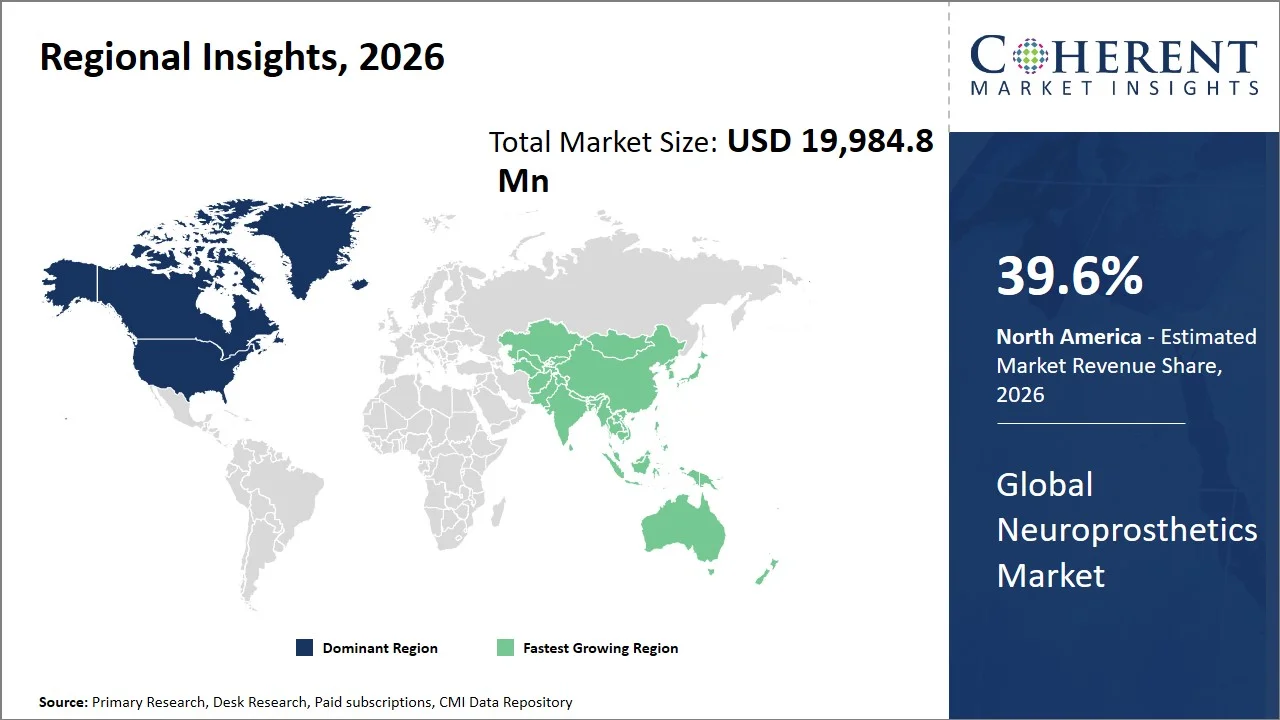
- North America market maintains dominance with an expected share of 39.6% in 2026, attributed to the rapid commercialization and licensing of novel neurostimulation devices in the U.S. The region is witnessing widespread use of adaptive deep brain stimulation (aDBS) devices for treating Parkinson’s disease and other neurological conditions. For instance, in February 2025, Medtronic’s BrainSense Adaptive DBS system was authorized by the U.S. Food and Drug Administration to become the world’s first adaptive deep brain stimulation device that can modify treatment according to brain activity in real-time, thus consolidating North America’s position in the neuroprosthetics industry. (Source: Medtronic)
- Asia Pacific is expected to exhibit the fastest growth with 20.8% share in 2026, owing to increasingly aging populations and growing neurological rehabilitation facilities in nations such as Japan, China, and South Korea. In particular, Japan is increasing its spending on long-term neurological rehabilitation and dementia treatment facilities owing to the escalating burden of neurological diseases amongst older patients. For instance, according to the data provided by the National Center for Geriatrics and Gerontology (NCGG) of Japan, the current number of dementia patients in the country has reached around 4.6 million. Meanwhile, the Ministry of Health, Labor and Welfare of Japan plan to build about 230 centers dedicated to the treatment of dementia patients. In such conditions, the interest in neuro-rehabilitation equipment will increase rapidly. (Source: National Center for Geriatrics and Gerontology)
- Expansion of Brain-Computer Interface (BCI) Technologies in Paralysis Rehabilitation: The ongoing development of brain-computer interface technology, particularly for paralyzed and disabled patients with extreme mobility disabilities, is identified as a large potential growth driver niche for the neuroprosthetics market. By enabling brain to communicate directly with external devices, sophisticated BCIs assist paralysis and motor impairment patients to recover motor and communication functions in cases such as spinal cord injuries, neurodegenerative diseases, etc. Expanding clinical studies, investment from research institutions and neurotechnology manufacturers are speeding up the commercialization of AI-based neuroprosthetics with high accuracy in neural signals and low latency real-time interaction.
- Rising Adoption of AI-Enabled Adaptive Neurostimulation Devices: The increased integration of artificial intelligence and machine learning in neurostimulation devices is an important opportunity to drive the market growth. AI-driven neuroprosthetic devices, such as smart neural stimulators capable of adjusting stimulation parameters based on the neural signal, offer increased specificity for treatment while mitigating side effects associated with non-adaptive stimulation techniques. This, combined with the rising demand for targeted neurological treatment therapies such as Parkinson's disease, epilepsy, and chronic pain, will fuel increased use of adaptive neurostimulation technologies within developed healthcare economies.
Segmental Insights
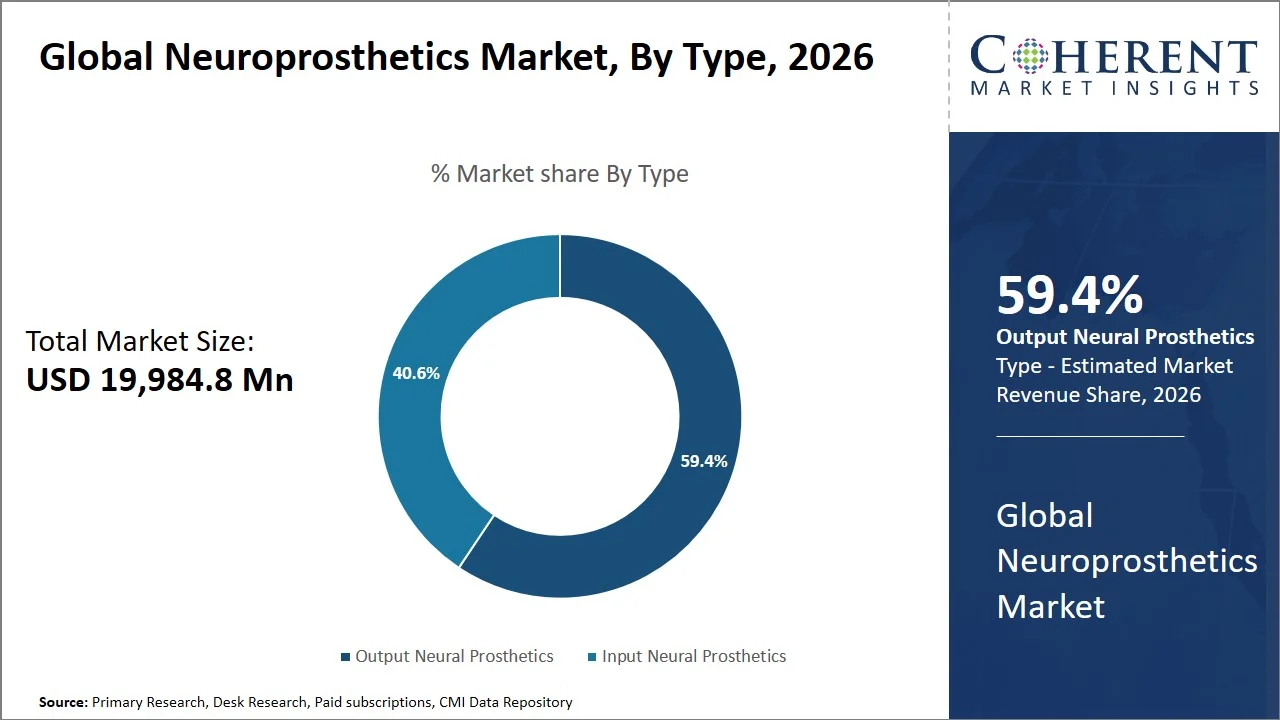
Why Does the Output Neural Prosthetics Segment Dominate the Global Neuroprosthetics Market?
Output neural prosthetics are projected to hold the market share of 59.4% in 2026, driven by a growing application in higher motor recovery and augmentative and alternative communication solutions in paraplegics and those with extreme neurological disability. These devices are increasingly used in combination with brain-computer interfaces (BCIs) that can control robotic external limbs or digital appliances through brain signals. The segment exhibits tremendous clinical and commercial growth, especially in North America, where investments in neurotechnology innovation are escalating.
For instance, the U.S. National Institutes of Health (NIH) continues to grow their BRAIN Initiative program aimed at creating future neural recording technologies and neuroprosthetics for restoring motor function and sensory systems in patients with neurological conditions and spinal cord injury. Such programs are increasing the rate of development and adoption of output neural prosthetics in neurological and rehabilitation environments. (Source: National Institutes of Health)
- Current Industry Events of 2026
- Market Size Estimation
- Regional Breakdown
- Competitive Landscape
- Customer Intelligence
- Segmental Analysis
- Pricing Analysis
- Key Market Drivers, Challenges & Future Trends
- Customized Insights Section
Why Do Spinal Cord Stimulation Devices Represent the Largest Technique Segment in the Global Neuroprosthetics Market?
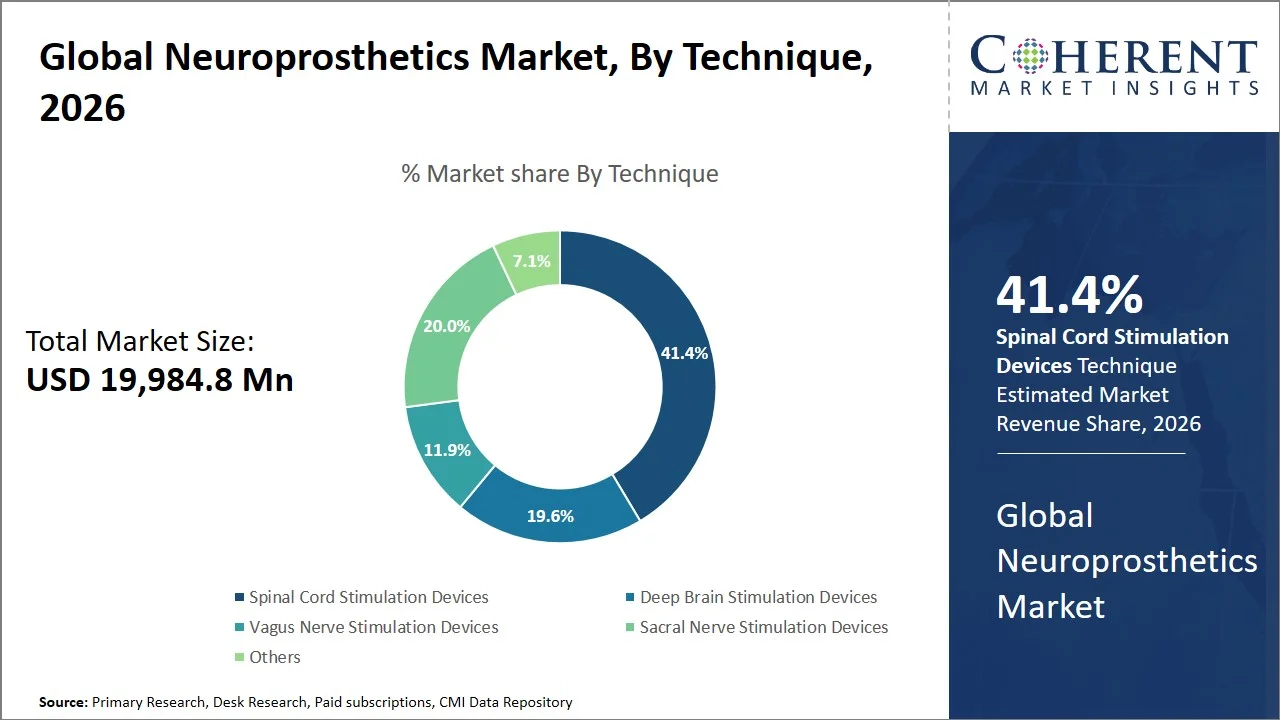
Spinal cord stimulation devices are projected to hold a market share of 41.4% in 2026, attributed to the increased efficiency of neuromodulation techniques for controlling the pain and suffering associated with chronic neuropathic pain, failed back surgery syndrome, and spinal cord injury. These therapies minimize risks by targeting nerves with a less invasive stimulation technique, making it preferable for managing pain compared to the dependence on opioid medications and other traditional treatments that could be detrimental in the long run. Factors that support the growth of the spinal cord stimulation devices segment are enhanced technology such as rechargeable implantable pulse generators and closed-loop stimulation systems that give a finer control to the therapy.
For instance, in February 2024, the WaveWriter Alpha Spinal Cord Stimulator System with Fast Acting Sub-Perception Therapy (FAST) by Boston Scientific, a technology used to treat chronic pain with pain-relief on-demand, received U.S FDA approval for an expanded label. (Source: Boston Scientific) Regulatory breakthroughs like these are helping to drive more rapid adoption of spinal cord stimulation technologies in neurological and pain management applications.
Motor Neuron Disorders Segment Dominates the Global Neuroprosthetics Market
The motor neuron disorders segment is projected to hold a market share of 49.4% in 2026, attributed to growing number of neurodegenerative diseases such as Parkinsons disease, ALS (amyotrophic lateral sclerosis) and multiple sclerosis that cause decreased control and mobility for patients. Neuroprosthetics such as deep brain stimulation, motor-assistive prosthetics and brain-computer interfaces are continuously being used for enabling enhanced control over movements, coordination of muscle and autonomy in patients. The segment is driven by increasing number of neurology rehabilitation programs and growing investment in research related to restoration of motor function.
For instance, a briefing by the European Parliament, "Strengthening Brain Health: Policy Recommendations to Address the Growing Burden of Neurological Disease", states that "Neurological diseases represent one of the most rapidly growing health challenges in Europe. Neurological disease is associated with an estimated annual economic burden in Europe of some USD 418 billion (EUR 368 billion). The growing cost of healthcare and rehabilitation continues to stimulate the demand for more sophisticated neuroprosthetics for restoration of motor function and management of neurological disease. (Source: European Parliament)
Currents Events and their Impact
Current Events | Description and its Impact |
Expansion of FDA Breakthrough Devices Program for Neurotechnology Devices (February 2026) |
|
EU AI Act Implementation for AI-Enabled Medical Devices (January 2026) |
|
(Source: Food and Drug Administration, European Commission)
Global Neuroprosthetics Market Dynamics
Market Drivers
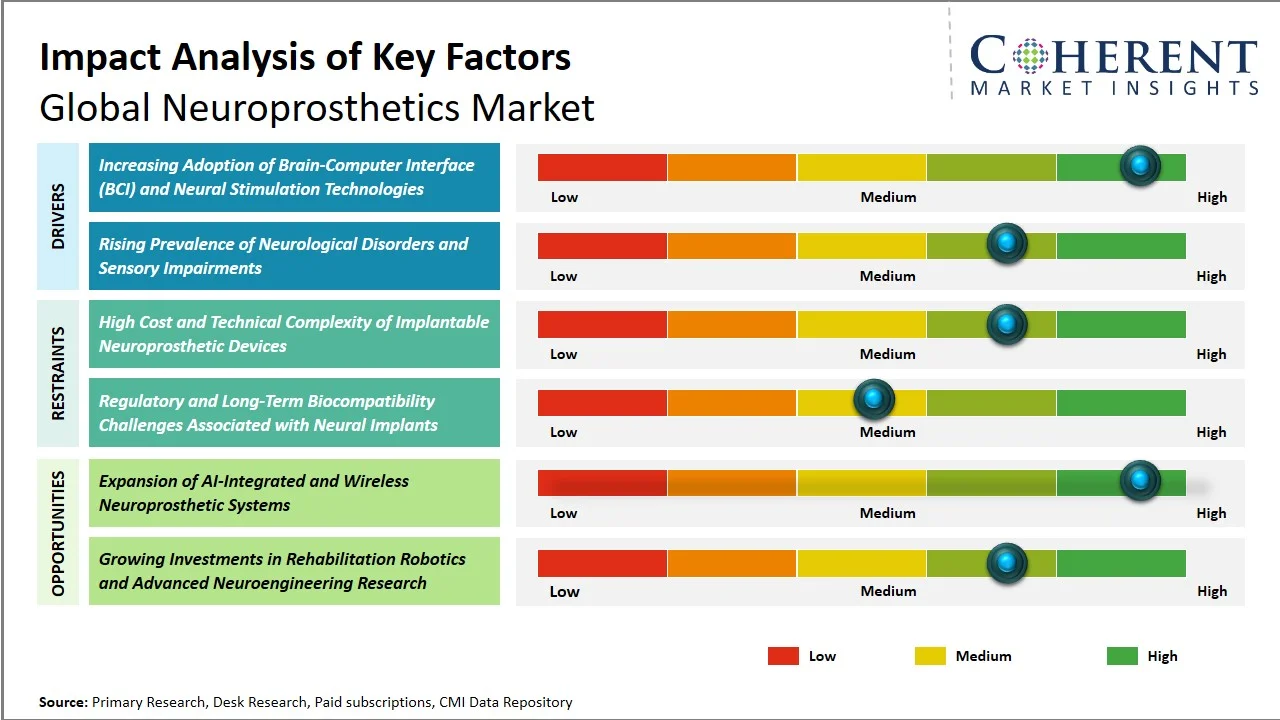
- Increasing Adoption of Brain-Computer Interface (BCI) and Neural Stimulation Technologies: Emerging Brain-Computer Interface (BCI) and neural stimulation technology application is driving the growth in the neuroprosthetics market worldwide. Through direct communication between brain and external devices, these technologies offer hope for restoring movement, communication and sensation in patients with paralysis, spinal cord injury and neurodegenerative diseases. Progress made by AI assisted neural decoding, mini-invasive implants, adaptable neurostimulation devices, etc. is bringing high therapeutic accuracy and better patient recovery. Investment by the health institutions and neurotechnology companies in the latest Brain-Computer Interface (BCI) technologies, used for neurological rehabilitation and communication are also a key driver. For instance, in September 2023, Neuralink reported success in the human trial of its brain-computer interface technology, which enables paralyzed individuals to operate electronic devices through neural impulses. This is helping pave the way for the practical application of such neuro-prosthetics on a global scale. (Source: Neuralink)
- Rising Prevalence of Neurological Disorders and Sensory Impairments: Increasing incidence of neurological disorders and sensory deficits is another major factor pushing the growth of neuroprosthetics demand globally. More incidences of disorders like epilepsy, spinal cord injury, Parkinson's disease, visual impairment and hearing impairment among the people has boosted the requirement for advanced restorative technologies which would help improve locomotion, communication and sensory functioning of the patients. Ageing population as well as more people suffering from chronic neurological disorders is expanding the patient pool which needs long-term neurorehabilitation care. Neuroprosthetic technologies are also gaining more acceptance in the medical field such as cochlear implants, retinal implants, deep brain stimulation for increased independence. For instance, World Health Organization estimates that by 2050, nearly 2.5 billion people are projected to have some degree of hearing loss, and more than 700 million will require hearing rehabilitation (Source: World Health Organization). These trends will likely significantly boost the long-run global demand for sensory neuroprosthetics technologies.
Emerging Trends
- Growing Focus on Closed-Loop Neuroprosthetic Systems: Neuroprosthetics are moving to the realm of closed-loop system whereby, signals from neural activity are read and simultaneously stimulations are provided in real-time based on what's detected. These systems will further enhance treatment specificity and personalization to patients suffering from neurological disorders such as, epilepsy, Parkinson's disease and chronic pain. Additionally, closed-loop system could significantly reduce unwanted stimulation to the neurons and prolong battery life.
- Increasing Integration of Wearable Neuroprosthetic and Rehabilitation Technologies: The growing interest in neuroprosthetics wearable by the stroke patient, coupled with rehabilitation systems that facilitate post-stroke recovery and mobility are in line with development of devices such as smart exoskeletons, wearable neural stimulators, or sensing and monitoring rehabilitation systems that are increasingly entering the neurological care settings owing to their capacity to allow uninterrupted therapy and follow-up remotely, and to the better patient's mobility performance achieved.
Regional Insights
Why is North America a Strong Market for Neuroprosthetics?
North America leads the global neuroprosthetics market, accounting for an estimated 39.6% share in 2026, attributed to widespread utilization of innovative implantable medical devices, a high concentration of neurologically focused treatment centers, and a rise in the number of movement and sensory disorders. The high health care spending and quick integration of digital health technology in neurological rehabilitation plans, plus the increase of cooperation between hospitals, academic institutions and neurotechnology companies further fastens the commercialization of next-generation neuroprosthetics systems.
For instance, in June 2024, Cleveland Clinic, IBM, and the Hartree Centre revealed their partnership aimed at boosting healthcare and life science research by using artificial intelligence and quantum computing technologies in the U.S. and the U.K. (Source: Cleveland Clinic). These efforts are expected to lead an increased pace of innovation in the field of neural data processing, brain health studies and development of next-generation neuroprosthetic devices across North America.
Why Does Asia Pacific Neuroprosthetics Market Exhibit High Growth?
The Asia Pacific neuroprosthetics market is expected to exhibit the fastest growth with an estimated contribution of 20.8% share to the market in 2026, due to the growing healthcare infrastructure, improving neurorehabilitation facilities, and rise in government investment in futuristic healthcare technologies in countries like China, Japan, and South Korea. Additionally, the growing incidence of strokes, neurodegenerative disorders, and mobility problems in the aging population is boosting the demand for neuroprosthetic and neurorehabilitation technologies. For instance, in April 2026, China National Health Commission disclosed several policies targeting reinforced community-based services and widespread rehabilitation services as part of the health care accessibility and tiered treatment approach (Source: The People’s Republic of China). These initiatives are predicted to speed up the use of neurostimulation devices, rehabilitation robotics and neuroprosthetic devices all around Asia Pacific region.
Global Neuroprosthetics Market Outlook for Key Countries
Why is the U.S. Leading Innovation and Adoption in the Neuroprosthetics Market?
The U.S. is emerging as an innovation leader in the market for the neuroprosthetics owing to its mature commercialization environment for neurotechnology and the relatively short lag time between neuroscience research and medical application. Increasing partnerships between medtech organizations, AI innovators and centers of neuroscience are underway in the U.S to advance new generations of BCIs, adaptive neural stimulators and implantable neurodevices. For example, in January 2025, Synchron announced a partnership with NVIDIA, in which NVIDIA Holoscan platform will be implemented in Synchron’s BCI system for real-time neural signal processing and AI supported assistive communication. (Source: Synchron) Furthermore, continued streamlining of U.S. FDA breakthrough device designation and abundant venture capital investment in neurotech startups also help to ensure the U.S.'s dominance in the neuroprosthetic innovation and adoption scene.
Is U.K. a Favorable Market for Neuroprosthetics Market?
The U.K. presents an attractive neuroprosthetics market attributed to its well-established translational neuroscience ecosystem and close integration between universities, clinical establishments and neurotech developers. The U.K. is experiencing increasing development of implantable neural interface technology and neurorehabilitation platforms within focused neuroscience innovation centers, as well as supporting the initial stages of clinical testing and market translation of neuroprosthetic technology through specific medical research initiatives (such as the UK Dementia Research Institute and NIHR Brain Injury MedTech Co-operative) and digital health projects (such as NHS Digital Innovation Hubs and the Imperial Centre for Neurotechnology). Further, the increasing interest in the inclusion of AI and neural engineering into patient care pathways is promoting broader adoption of next generation neuroprosthetics technology within the U.K.
Is China Emerging as a Key Growth Hub for the Neuroprosthetics Market?
China is growing as a major market center of neuroprosthetics market attributed to the nation’s increased effort on the high-end medical technology manufacturing and smart rehabilitation systems and the native enterprises and research institutions. They are putting more funding into brain-computer interface technologies and robotic neurorehabilitation devices and AI-neural engineering devices and it is more common that the neuro-technologies are used in China's digital healthcare systems and smart hospitals to broaden the medical accessibility of neurological diseases. At the same time, widespread application of new rehabilitation technologies and assistive devices in the centers for neurology in China is propelling the utilization of neuroprosthetic technologies and medical appliances for neural rehabilitation in a better way
Why Does Germany Top the Europe Neuroprosthetics Market?
Germany leads the Europe neuroprosthetics market due to its specialized focus in precision medical engineering, advanced neuromodulation, and development of integrated systems among neurological hospitals, rehabilitation centers, and medical device manufacturers specializing in implantable neurostimulation devices and neurological rehabilitation systems. Germany is pushing to enhance its clinical use of robotic assisted neurological rehabilitation and AI powered neurological treatment platforms throughout specialty care centers. The country’s commitment to translation neuroscience and medical device innovation are helping to spur the commercialization of cutting-edge neuroprosthetic technology throughout the Europe neuroprosthetics market.
Is Neuroprosthetics Market Developing in Japan?
Japan is gradually developing into a relevant market for neuroprosthetics with its increasing commitment towards assistive robots, neural rehabilitation systems, and advancements in human-machine interface technology. In addition to wearability of neuro-assisted devices, Japanese healthcare and technology firms are actively investigating robotic mobility assist systems for neural rehabilitation and for the aged care market. The country is moving towards integrating neuro technology into smart healthcare and digital rehab programs within its specialized medical institutions, while ongoing sensor developments and advances in sophisticated rehabilitation engineering facilitate the market penetration of neuroprosthetics.
Regulatory Landscape Governing the Global Neuroprosthetics Market
Region | Authority & Classification | Approval Pathway | Key Regulatory Insight |
North America | U.S. Food and Drug Administration (FDA) – Class II & Class III neurostimulation and implantable neurological devices | 510(k), Premarket Approval (PMA), Breakthrough Devices Program | Neuroprosthetic devices with implantable neural interfaces generally require extensive clinical validation, cybersecurity assessment, and long-term safety monitoring before commercialization. |
Europe | European Medicines Agency (EMA) & EU Medical Device Regulation (EU MDR 2017/745) – Active Implantable Medical Devices | CE Marking through Notified Bodies under MDR compliance | Europe maintains strict post-market surveillance, clinical evidence, and AI transparency requirements for implantable neurotechnology and adaptive neurostimulation systems. |
Asia Pacific | PMDA (Japan), NMPA (China), CDSCO (India), TGA (Australia) | Country-specific medical device approval and local clinical assessment pathways | Regional governments are increasingly streamlining regulatory pathways for rehabilitation robotics, AI-enabled neurotechnology, and implantable neuromodulation systems to accelerate advanced healthcare adoption. |
Latin America | ANVISA (Brazil), COFEPRIS (Mexico) | Medical device registration with local technical documentation and safety review | Regulatory frameworks are gradually evolving to strengthen oversight for high-risk implantable neurological devices and imported neuroprosthetic systems. |
Middle East & Africa | SFDA (Saudi Arabia), UAE Ministry of Health & Prevention (MOHAP), SAHPRA (South Africa) | Import licensing, medical device conformity assessment, and regional registration pathways | Increasing adoption of international medical device standards and digital healthcare reforms is supporting market entry for advanced neuroprosthetic technologies in the region. |
How is expansion of AI-integrated and wireless neuroprosthetic systems creating new growth opportunities in the global neuroprosthetics market?
The growing demand for more accurate, adaptable and user-friendly neurological treatments through the development of wireless and AI embedded neuroprosthetics system is providing a new room of growth in neuroprosthetics market. The wireless devices, offering more mobility and simplified implantation procedure, combined with the signal detection and controlled stimulator of AI-based neuroprosthetic system will offer more efficient, personalized, long-term rehabilitations and interventions.
With remote monitoring of neurological responses and real-time control of rehabilitation therapies at paralyzed and patients with epilepsy and movement disorders, AI driven and wireless neuroprosthetics will also benefit from the accelerating the market growth driven by developing next-generation of neural interface technologies used in the clinical and homecare environments with the tendency of minimally invasive interface development. For instance, in February 2026, Clinical results of neurosurgical focus showed clinical outcomes using the layer 7 micro-electrocorticography interface by neurosurgical focus, which allows high resolution real-time intraoperative neural decoding. (Source: National Library of Medicine) Such developments are likely to bolster the future adoption of smart neuroprosthetic and AI driven neural interface technologies globally.
Market Players, Key Development, and Competitive Intelligence
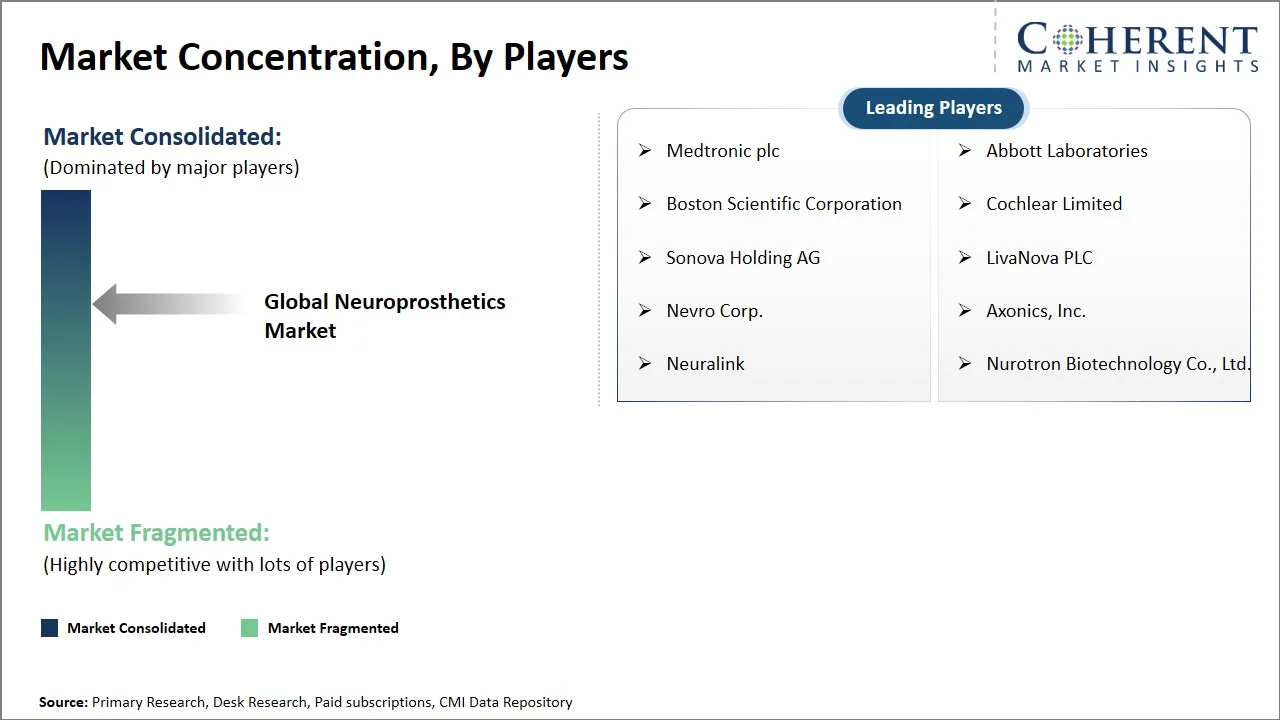
Key Developments
- In February 2026, Blue Arbor Technologies entered into a partnership with Ottobock and raised a capital of USD 5 million for the development of the company’s RESTORE neuromuscular interface. This shows the growing investments in advanced neuroprosthetic devices designed for better signal integration and motor recovery in neurological patients.
- In December 2025, Relief Therapeutics and NeuroX successfully merged to become MindMaze Therapeutics, concentrating on neurorestorative and neurorehabilitation technology. This development underscores the growing strategic investment in neural interfaces and advanced neurotechnological platforms for the advancement of neuroprosthetics and neurological restoration applications.
Competitive Landscape
The global neuroprosthetics market is moderately competitive where companies vie on the basis of the neural interface accuracy, stimulation efficacy, miniaturization of device, wireless connectivity, and incorporating artificial intelligence in neuromodulation platforms. The companies involved in the market are increasingly making investment on enhanced brain-computer interfaces, adaptive neuromodulation systems, and less invasive implantable neurodevices to achieve the enhancement in the recovery results of neurological conditions. The partnerships between the neurotechnology companies, research institutes, and the healthcare professionals will be the catalyst for quick product development and its commercialization of new neuroprosthetics. Additionally, the manufacturers are putting their focus on expansion of new applications in areas such as, paralysis rehabilitation, chronic pain management, restoration of senses, and treatment of neurodegenerative conditions. Key focus areas include:
- Development of AI-enabled adaptive neurostimulation and brain-computer interface technologies
- Expansion of minimally invasive and wireless implantable neuroprosthetic systems
- Innovation in real-time neural decoding and high-resolution neural signal processing
- Strategic collaborations with neuroscience research institutes and rehabilitation centers
- Investments in personalized neurorehabilitation and smart assistive neurological devices
Market Report Scope
Neuroprosthetics Market Report Coverage
| Report Coverage | Details | ||
|---|---|---|---|
| Base Year: | 2025 | Market Size in 2026: | USD 19,984.8 Mn |
| Historical Data for: | 2020 To 2024 | Forecast Period: | 2026 To 2033 |
| Forecast Period 2026 to 2033 CAGR: | 13.1% | 2033 Value Projection: | USD 47,285.9 Mn |
| Geographies covered: |
| ||
| Segments covered: |
| ||
| Companies covered: | Medtronic plc, Abbott Laboratories, Boston Scientific Corporation, Cochlear Limited, Sonova Holding AG, LivaNova PLC, Nevro Corp., Axonics, Inc., Neuralink, and Nurotron Biotechnology Co., Ltd. | ||
| Growth Drivers: |
| ||
| Restraints & Challenges: |
| ||
Analyst Opinion (Expert Opinion)
- It is anticipated that growth within the global neuroprosthetics market will be heavily driven by the synergy between neuroscience, artificial intelligence (AI), wireless telecommunication technologies, and low-invasiveness neural interfaces. Conventional implanted stimulating devices are expected to give way to intelligent neuroprosthetic systems which can process the electrical signals from nerves in real time, decode the signals adaptively and assist neurological rehabilitation in a customized manner. Commercialization of BCIs, wearable neuro-assistive devices and AI driven neuromodulation systems are expected to revolutionize chronic therapy of paralysis, neurological disorders, chronic pain, and sensory deficit. Besides these trends, adoption of neuroprosthetics is expected to boom with integrated digital health and remote rehabilitation systems in both hospital and home care.
- The maximum growth opportunities are predicted in output neural prosthetics integrated with AI, and in brain-computer interfaces that are wireless and applied for rehabilitation from paralysis, as well as for diseases of motor neurons, in China and the U.S. While the U.S. is expected to be an innovation leader thanks to the sophisticated commercialization infrastructure and progressive clinical neurotechnology program development, China is predicted to exhibit high-volume growth as rehabilitation facilities expand, and investments in smart healthcare systems are encouraged. Minimal invasive stimulation systems for spinal cord and wearable neurorehabilitation systems after stroke are also expected to offer significant opportunities in developed health care markets.
- For the market leaders to gain and maintain a competitive advantage, they must focus on the development of less invasive AI and wireless neuroprosthetic platforms that are capable of individualized neuronal stimulation and adaptive real-time therapy. Collaboration between market players, neuroscience research institutes, rehabilitation hospitals and digital health technology developers will be more crucial for driving both clinical validation and commercialization. Investments in closed-loop neurostimulation systems, cloud-based rehabilitation ecosystem, as well as in high-resolution neuronal signal processing techniques will increasingly determine the competitive advantage of the different players in the market. Furthermore, proactive coordination with the emerging regulatory framework for AI medical devices and implantable neurotechnologies will be important for maintain market competitiveness in the long-term.
Speak to the analyst
Want personalized insights?
Take the findings above to one of our principal consultants, or have the report rebuilt around the segments, geographies and competitors you actually track.
Market Segmentation
- Type Insights (Revenue, USD Mn, 2021 - 2033)
- Output Neural Prosthetics
- Input Neural Prosthetics
- Technique Insights (Revenue, USD Mn, 2021 - 2033)
- Spinal Cord Stimulation Devices
- Deep Brain Stimulation Devices
- Vagus Nerve Stimulation Devices
- Sacral Nerve Stimulation Devices
- Others
- Application Insights (Revenue, USD Mn, 2021 - 2033)
- Motor Neuron Disorders
- Physiological Disorder
- Cognitive Disorders
- Others
- End User Insights (Revenue, USD Mn, 2021 - 2033)
- Hospitals and Clinics
- Neurological Centers
- Ambulatory Surgery Centers
- Others
- Regional Insights (Revenue, USD Mn, 2021 - 2033)
- North America
- U.S.
- Canada
- Latin America
- Brazil
- Argentina
- Mexico
- Rest of Latin America
- Europe
- Germany
- U.K.
- Spain
- France
- Italy
- Russia
- Rest of Europe
- Asia Pacific
- China
- India
- Japan
- Australia
- South Korea
- ASEAN
- Rest of Asia Pacific
- Middle East
- GCC Countries
- Israel
- Rest of Middle East
- Africa
- South Africa
- North Africa
- Central Africa
- North America
- Key Players Insights
- Medtronic plc
- Abbott Laboratories
- Boston Scientific Corporation
- Cochlear Limited
- Sonova Holding AG
- LivaNova PLC
- Nevro Corp.
- Axonics, Inc.
- Neuralink
- Nurotron Biotechnology Co., Ltd.
Sources
Primary Research Interviews
- Neurotechnology companies and implantable neuroprosthetic device manufacturers involved in brain-computer interfaces, neural stimulation systems, and rehabilitation technologies
- Neurosurgeons, neurologists, and neurorehabilitation specialists utilizing neuroprosthetic devices for movement disorders, chronic pain, and sensory restoration therapies
- AI and neural engineering researchers working on adaptive neurostimulation, neural decoding, and wireless neuroprosthetic platforms
- Rehabilitation hospitals and neurological care centers implementing spinal cord stimulation and robotic neurorehabilitation systems
- Academic neuroscience researchers involved in neural interface development, cortical mapping, and neuroengineering innovation studies
Stakeholders
- Neuroprosthetic device manufacturers and neurotechnology platform developers
- End-use Sectors
- Hospitals and neurological treatment centers
- Neurorehabilitation and chronic pain management clinics
- Research institutes and neuroscience laboratories
- Homecare and assistive neurological rehabilitation providers
- Regulatory & Health Bodies: U.S. Food and Drug Administration (FDA) – implantable neurodevice and neurostimulation device regulation, European Medicines Agency (EMA) & EU MDR Authorities – active implantable medical device compliance, Pharmaceuticals and Medical Devices Agency (PMDA), Japan – neurological device approval framework, National Medical Products Administration (NMPA), China – neurotechnology and medical device regulation
Databases
- ClinicalTrials.gov – neuroprosthetic and brain-computer interface clinical studies
- WHO Global Health Observatory – neurological disease and disability statistics
- OECD Health Statistics – neurological healthcare expenditure and rehabilitation indicators
- PubMed – neuroscience, neural engineering, and neuroprosthetic research publications
- FDA Medical Device Databases – neurostimulation and implantable neurological device approvals
Magazines
- Neurotech Business Report – neurotechnology and BCI commercialization trends
- Medical Device Network – implantable neurodevice and neuromodulation industry developments
- NeuroNews International – neurostimulation and neurological treatment technology updates
- IEEE Spectrum – brain-computer interface and neural engineering innovation coverage
Journals
- Nature Neuroscience
- Journal of Neural Engineering
- Frontiers in Neuroscience
- Neuromodulation: Technology at the Neural Interface
- Neurosurgery
Newspapers
- Financial Times – neurotechnology investment and digital healthcare developments
- The Wall Street Journal – medical device and neuroscience innovation coverage
- The New York Times (Health Section) – neurological healthcare and assistive technology trends
- The Guardian (Science & Technology Section) – brain-computer interface and rehabilitation technology developments
Associations
- International Neuromodulation Society (INS)
- IEEE Engineering in Medicine and Biology Society (EMBS)
- Brain-Computer Interface Society
- Society for Neuroscience (SfN)
Public Domain Sources
- National Institutes of Health (NIH) – neuroscience and neurotechnology research initiatives
- U.S. Food and Drug Administration (FDA) – neuroprosthetic device regulatory framework
- European Commission – digital health and neurotechnology policy initiatives
- World Health Organization (WHO) – neurological disorder and rehabilitation healthcare initiatives
Proprietary Elements
- CMI Data Analytics Tool, Proprietary CMI Existing Repository of information for last 10 years.
Get access to 250+ pages report
Every segment, forecast, competitor profile and data table behind the analysis above — available for instant download.
- ESOMAR Member
- ISO 9001:2015 Certified
- D-U-N-S Registered
- GDPR & CCPA Compliant
Missing comfort of reading report in your local language? Find your preferred language:
Transform your Strategy with Exclusive Trending Reports
Frequently Asked Questions
The global neuroprosthetics market is estimated to be valued at USD 19,984.8 Mn in 2026 and is expected to reach USD 47,285.9 Mn by 2033.
Output neural prosthetics dominate due to their widespread adoption in cochlear implants, motor-assistive neural devices, and brain-controlled prosthetic systems used for restoring sensory and motor functions in patients with neurological impairments.
Neuroprosthetics refers to advanced medical technologies that interface with the nervous system to restore or enhance sensory, motor, or neurological functions.
The CAGR of global neuroprosthetics market is projected to be 13.1% from 2026 to 2033.
Increasing adoption of brain-computer interface (BCI) and neural stimulation technologies and rising prevalence of neurological disorders and sensory impairments are the major factors driving the growth of the global neuroprosthetics market.
High cost and technical complexity of implantable neuroprosthetic devices and regulatory and long-term biocompatibility challenges associated with neural implants are the major factors hampering the growth of the global neuroprosthetics market.
A brain-computer interface is a system that enables direct communication between the brain and external devices by translating neural signals into digital commands.