

Automated Endoscope Reprocessors Market size and share Analysis (2026-2033)
The Automated Endoscope Reprocessors Market is anticipated to grow at a CAGR of 8.1%, with an estimated market size of USD 780 Mn in 2026 and expected to reach approximately USD 1,350 Mn by 2033. This growth in the market is driven by stricter infection-prevention requirements for endoscope reprocessing, continued FDA focus on AER safety and effectiveness, and rising use of endoscopy in minimally invasive diagnosis and treatment.
Key Takeaways
- In 2026, the Dual Basin AER segment led by Product Type with a 59% market share. High-throughput operations typically use Dual-basin systems, which can perform independent or simultaneous cycles.
- The Standalone AER segment led by a 62% market share in 2026. Standalone AERs are a good option for space-saving installation and workflow efficiency.
- In 2026, Hospitals led the market with a 67% share by End User. The large volume of procedures and prevalence of infection within Hospitals support the demand for automated reprocessing systems. According to the AHA there will be approximately 6,100 hospitals in the U.S. by 2026 while according to the NIDDK, over 20 Mn GI endoscopies will be done in the US each year. (Source: AHA)
- The North America region had the largest segment of the market with 48.8% in 2026 based on its high level of procedure density and a large population of patients that use its services. According to the NIDDK, there are more than 20 Mn GI endoscopes done every year in the U.S., along with 6,100 hospitals in the country as reported by AHA. In addition, the FDA is constantly updating their evaluation standards for complex scopes such as duodenoscopes and determining the safety margins of using AER scopes during or after complex endoscopy procedures.
Segmental Insights
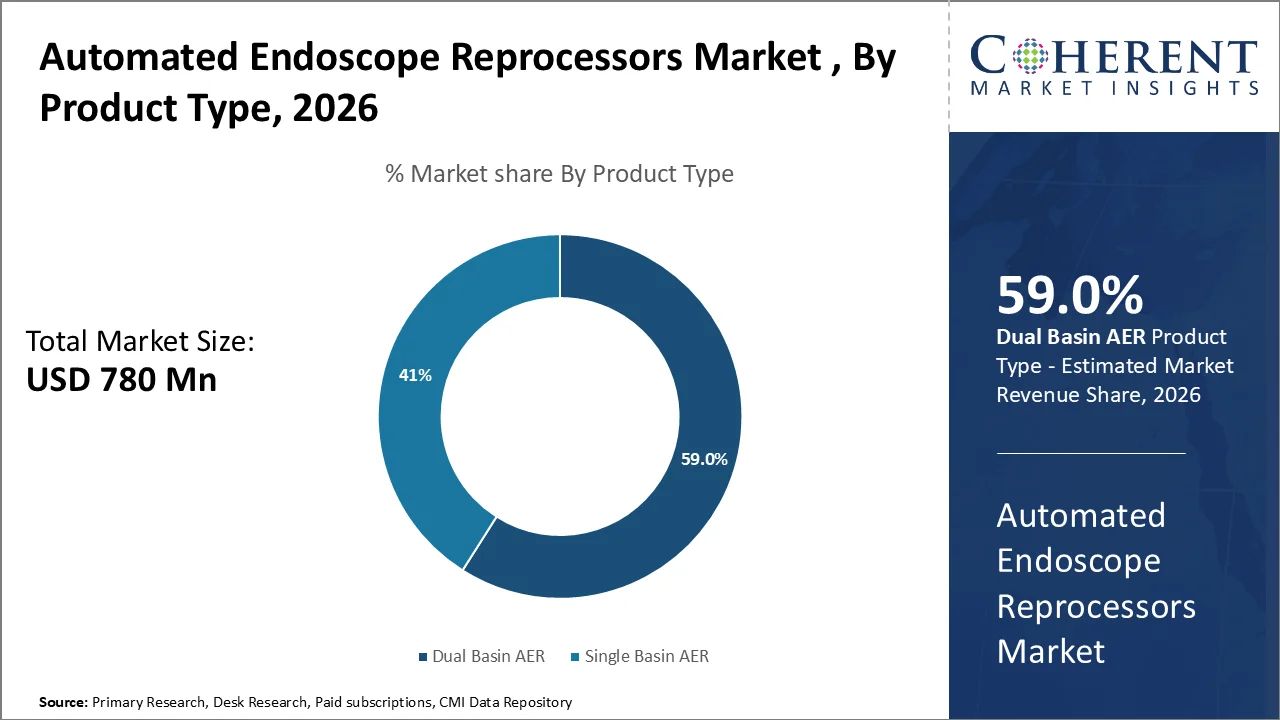
By Product Type, the Dual Basin AER dominates with 59% of market share in 2026.
In 2026, the Dual Basin AER segment dominates overall market share with 59% of total market share, with providers focusing more attentively on reprocessing systems that offer greater throughput, i.e., the ability to handle larger workloads to meet heavy endoscopy workloads. This preference has been further motivated by disease burden and demand for screening. The American Cancer Society predicts that there will be 158,850 new colorectal cancer cases and 55,230 deaths from colorectal cancer in the U.S. by 2026, and the CDC continues to recommend that adults aged 45–75 receive regular screening for colorectal cancer.
The use of dual-basin AER to streamline the sequencing of reprocessing tasks and reduce the pressure on instrument turnaround time at heavily utilized facilities and the emphasis on infection control that is increasing demand for systems that can deliver cleaner workflow separation, a more consistent application of high-level disinfection, and improved reprocessing reliability for complex flexible endoscopes.
- Current Industry Events of 2026
- Market Size Estimation
- Regional Breakdown
- Competitive Landscape
- Customer Intelligence
- Segmental Analysis
- Pricing Analysis
- Key Market Drivers, Challenges & Future Trends
- Customized Insights Section
By Modality, the Standalone AER dominates with 62% of market share in 2026.
As of 2026, Standalone AER systems will continue to dominate the market with a projected 62% market share due to the healthcare providers’ preference for standalone reprocessing systems, which they can deploy within many types of endoscopy facilities and enjoy operational flexibility. In addition, ongoing upper-GI disease burden supports continued increases in demand; The American Cancer Society has projected that, in 2026, there will be 22,530 new cases of esophageal cancer and 31,510 new cases of stomach cancer in the U.S., thereby continuing to support ongoing volumes of endoscopic diagnosis and intervention. (Source: Cancer.org)
The significant growth in the Standalone AER segment can be attributed to fewer challenges in integrating these systems into existing endoscopy departments, particularly in facilities that have not developed highly centralized designs. This situation has made it more practical for administrators to decide on replacing and expanding these systems. Additionally, the ongoing use of automated reprocessing systems drives growth, as there remains considerable potential for enhancing manual reprocessing methods. Consequently, these systems provide facilities with more reliable and validated disinfection processes, enabling them to meet and maintain compliance with standards related to staff consistency and infection prevention.
By End-User, the Hospitals segment dominates with 67% of market share in 2026.
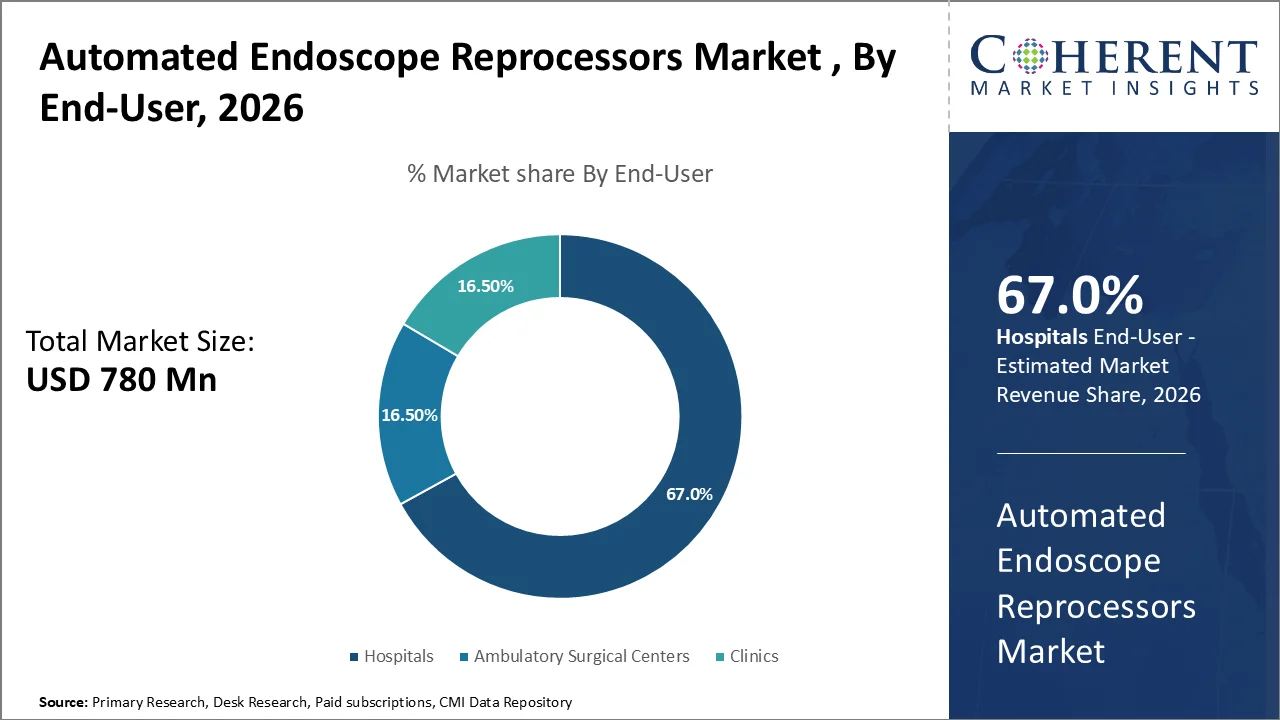
In 2026, hospitals hold the majority share of endoscope reprocessing equipment, accounting for 67%. This is due to their involvement in the highest number of complicated diagnostic and therapeutic endoscopic procedures, which necessitates a large volume of consistent reprocessing capacity. This leading position also reflects the economies of scale highlighted by the American Hospital Association's 2026 Fast Facts, indicating that U.S. hospitals had 907,216 staffed beds and a total of 35,658,583 admissions, thus creating the largest demand base for automated endoscope reprocessors.
There is an increasing reliance on the timely and efficient turnaround of flexible endoscopes, driven by the higher acuity of inpatients and the greater complexity of procedures performed in hospitals. Infection prevention is even more critical in hospitals compared to other healthcare facilities. Consequently, hospitals are investing in automated reprocessing systems that ensure a higher standard of disinfection, enhanced workflow control, thorough documentation, and improved safety for the reuse of flexible endoscopes.
On April 11, 2025, Portsmouth Hospitals University NHS Trust opened its new Elective Endoscopy Centre at Queen Alexandra Hospital. The trust announced that its endoscopy team performs over 15,000 procedures each year. The new facility was financed with £13 million in national funding and features dedicated decontamination space.
Automated Endoscope Reprocessors Market Trends
- The procedure for screening patients is increasing the demand for reprocessing capacity. According to the CDC, a majority of U.S. adults aged 50–75 have recently undergone colorectal cancer screening. The NCI’s Cancer Trends Progress Report reveals that 72.6% of adults are expected to receive their colorectal screenings by 2023, approaching the Healthy People 2030 target of 74.4%. As more patients are screened and require follow-up endoscopies, there will be a heightened need for faster, more reliable automated reprocessing systems to optimize instrument availability and enhance procedure flow. (Source: gov)
- Digital traceability has emerged as a significant purchasing trend in AER (automated endoscope reprocessors) platforms designed for tracking products. Olympus has developed the OER-Pro RFID management system, which records essential information such as the scope's serial and model numbers, operator ID, and reprocessing date. This system establishes a continuous audit trail for each reprocessor, thereby enhancing the reprocessor's ability to provide timely documentation to endoscopy departments.
Current Events and Their Impact on Automated Endoscope Reprocessors Market
Current Events | Description and Its Impact |
Stricter quality-system alignment for medical device manufacturers |
|
Wider acceptance of digital instructions for professional-use medical devices |
|
Regional Insights
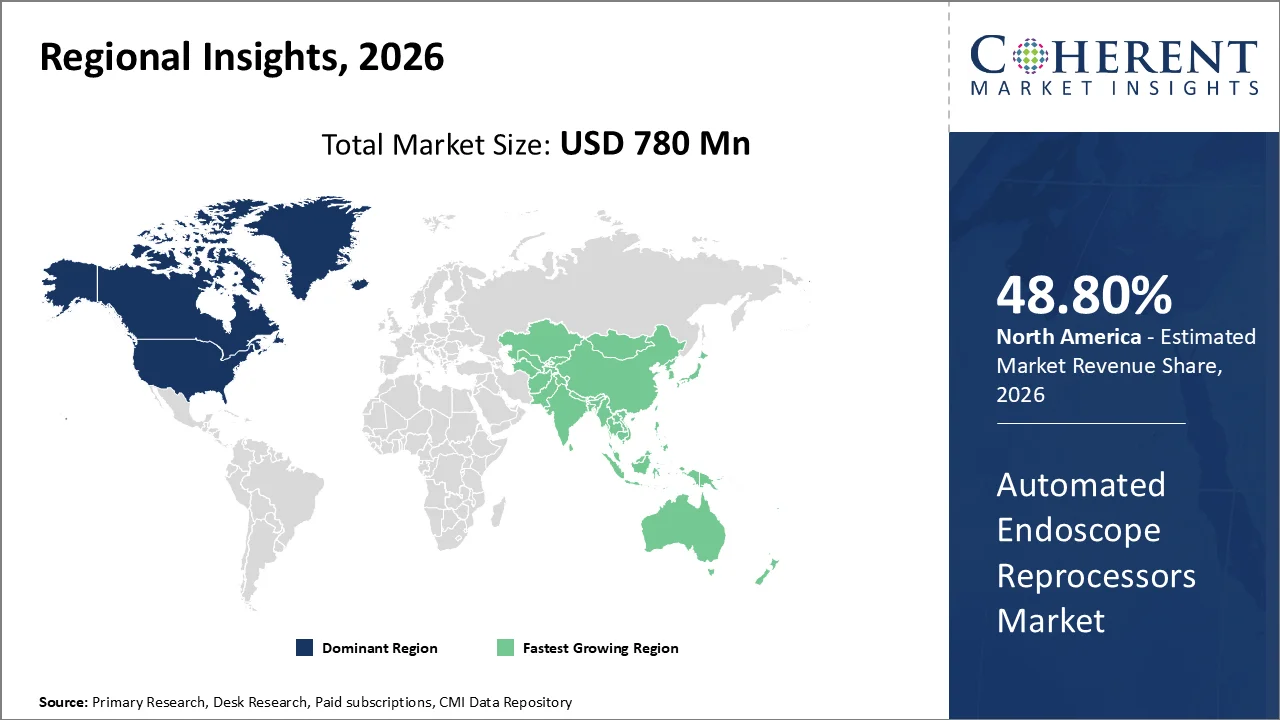
North America Automated Endoscope Reprocessors Market Outlook: Endoscopy Quality Standards and Infection Control Demand
North America is projected to continue as the leading region in the Automated Endoscope Reprocessors Market, holding a share of 48.80% by 2026. The region's well-established endoscopy infrastructure, rising infection-control standards, and increasing adoption of automated reprocessing workflows support this. Additionally, North America upholds higher standards for procedure quality compared to other regions. The American Gastroenterological Association states that the multi-society guidelines utilized by U.S. endoscopists set a minimum standard target level of 90% adequacy for bowel preparation among endoscopists and facilities. Moreover, Ontario’s College of Physicians and Surgeons mandates that facilities performing endoscopic procedures install Automated Endoscope Reprocessors (AERs) and maintain sufficient AER capacity to meet operational requirements. These compliance-driven conditions in North America foster a strong demand for the structural replacement and upgrades of AERs. (Source: GASTRO)
Asia Pacific Automated Endoscope Reprocessors Market Growth: Japan-Led Endoscopy Expansion and Reprocessing Modernization
The Asia Pacific region is projected to experience the highest growth rate in the Automated Endoscope Reprocessors Market, with an expected market share of 14.3% by 2026. This rapid growth is driven by several factors, including the expansion of the endoscopy ecosystem, increased availability of clinical training networks, and greater standardization of procedures throughout the region. For instance, the Japan Gastroenterological Endoscopy Society has reported nearly 35,000 members in Japan. Additionally, the Japan Endoscopy Database recorded 597,707 upper gastrointestinal (GI) procedures, 279,486 colon procedures, and 30,206 endoscopic retrograde cholangiopancreatography (ERCP) procedures in just one year. This significant procedural volume in the region is expected to sustain the demand for automated, high-volume throughput reprocessing systems in healthcare facilities across the Asia Pacific.
Country Analysis
U.S. Automated Endoscope Reprocessors Market Analysis: Colonoscopy Screening Guidelines and Procedure Demand
The United States has the largest and most established market for screening and guiding clinical practices related to reprocessing equipment in North America. This is primarily due to the increasing number of colonoscopies being performed. The American College of Gastroenterology recommends that average-risk adults begin colorectal cancer screening at age 45 and highlights that colonoscopy is the most frequently performed gastrointestinal procedure in the country. Together, these factors create a consistent demand for reliable automated reprocessing capabilities in both outpatient and hospital environments.
Japan Automated Endoscope Reprocessors Market Analysis: JGES Workforce Strength and Endoscopy Capacity
Japan is a significant growth market in the Asia Pacific region, characterized by a comprehensive and systematic endoscopy ecosystem that prioritizes quality. According to the Japan Gastroenterological Endoscopy Society (JGES), there are 20,988 board-certified fellows and 6,754 board-certified trainers, indicating a substantial number of specialists skilled in both routine and advanced endoscopic techniques. With a high concentration of professionals, an active national endoscopy database, and a robust culture of adherence to guidelines, Japan continues to invest in standardized automated reprocessing infrastructure.
Market Report Scope
Automated Endoscope Reprocessors Market Report Coverage
| Report Coverage | Details | ||
|---|---|---|---|
| Base Year: | 2025 | Market Size in 2026: | USD 780 Mn |
| Historical Data for: | 2020 To 2024 | Forecast Period: | 2026 To 2033 |
| Forecast Period 2026 to 2033 CAGR: | 8.1% | 2033 Value Projection: | USD 1,350 Mn |
| Geographies covered: |
| ||
| Segments covered: |
| ||
| Companies covered: | STERIS Plc., Olympus Corporation, Laboratory Anios, Hoya Corporation, Getinge AB, Metull Zug AG, Steelco S.p.A., Cantel Medical Corp., Advanced Sterilization Products, Custom Ultrasonics, and Johnson & Johnson. | ||
Who are the Major Companies in Automated Endoscope Reprocessors Market?
Major companies STERIS Plc., Olympus Corporation, Laboratory Anios, Hoya Corporation, Getinge AB, Metull Zug AG, Steelco S.p.A., Cantel Medical Corp., Advanced Sterilization Products, Custom Ultrasonics, and Johnson & Johnson.
Key News
On March 25, 2025, the FDA granted a first‑ever clearance for Nanosonics’ automated CORIS endoscope cleaning system, designed to clean the complex internal channels of flexible endoscopes and tackle biofilm linked to hospital‑acquired infections. ( Source: Fierce Biotech)
Analysts Opinion
- The market is increasingly shifting focus from price to compliance, driven by the newly introduced 2024 Colonoscopy Quality Indicators from ASGE and ACG. These indicators have raised several thresholds: a 95% Cecal Intubation (CI) rate (up from 90%), a 90% Adequate Bowel Preparation rate (up from 85%), a Withdrawal Time of 6-8 minutes (up from 6 minutes), and an overall Adequate Detection Rate (ADR) of 35% (up from 25%). Consequently, AER systems that can ensure consistency throughout the turnaround process, reduce documentation workload, and facilitate inspection-ready operations in high-volume endoscopy facilities (those performing over 5,000 procedures) are likely to benefit from these stricter indicators.
- The demand for automatic reprocessing is expected to remain robust, as colonoscopy continues to offer a clinical advantage in disease prevention rather than merely disease identification. According to ASGE, colonoscopy demonstrates a sensitivity of 96% across all stages of colorectal cancer (CRC) and 92% for advanced precancerous lesions. In contrast, the sensitivity of the Guardant Blood Test (Guardant Shield) is 83% for all CRC stages, 55% for Stage I CRC, and only 13.2% for advanced precancerous lesions. This disparity in performance should reinforce the ongoing demand for AER systems utilized in hospitals and gastroenterology centers.
Market Segmentation
- By Product Type
- Single Basin AER
- Dual Basin AER
- By Modality
- Standalone AER
- Bench top AER
- By End User
- Hospitals
- Ambulatory Surgical Centers
- Clinics
- By Regions
- North America
- U.S.
- Canada
- Europe
- U.K.
- Germany
- Italy
- France
- Spain
- Russia
- Rest of Europe
- Asia Pacific
- China
- India
- Japan
- ASEAN
- Australia
- South Korea
- Rest of Asia Pacific
- Latin America
- Brazil
- Mexico
- Argentina
- Rest of Latin America
- Middle East
- GCC
- Israel
- Rest of Middle East
- Africa
- North Africa
- Central Africa
- South Africa
- North America
Sources
Primary Research interviews
- Hospital endoscopy department heads
- Sterile processing / CSSD managers
- Infection prevention and control officers
- Gastroenterologists and endoscopy nurses
- Biomedical engineers handling reprocessing equipment
- Procurement managers from hospitals and ambulatory surgery centers
- Product managers from automated endoscope reprocessor manufacturers
- Sales and business development heads from endoscopy reprocessing solution providers
- Service and maintenance specialists for AER systems
- Distributors and channel partners of endoscope reprocessing equipment
- Regulatory affairs and quality assurance professionals in medical devices
Databases
- U.S. FDA 510(k) Database
- U.S. FDA De Novo Database
- U.S. FDA MAUDE Database
- U.S. FDA Medical Device Recalls Database
- PubMed / MEDLINE
- ClinicalTrials.gov
- NIH / NCBI Database
- CMS public data resources
- OECD Health Statistics
- Eurostat
- World Bank Data
- WHO Global Health Observatory
- UN Comtrade Database
- ITC Trade Map
- USITC DataWeb
Magazines
- Infection Control Today
- Healthcare Purchasing News
- Outpatient Surgery Magazine
- GI & Hepatology News
- Medical Product Outsourcing
- Medical Design & Outsourcing
- Becker’s Hospital Review
- Becker’s ASC Review
Journals
- Gastrointestinal Endoscopy
- Endoscopy
- Digestive Endoscopy
- Clinical Endoscopy
- American Journal of Infection Control
- Journal of Hospital Infection
- Infection Control & Hospital Epidemiology
- BMJ Open Gastroenterology
- World Journal of Gastrointestinal Endoscopy
- Journal of Clinical Gastroenterology
Newspapers
- The Wall Street Journal
- Financial Times
- The Economic Times
- Business Standard
- The Hindu BusinessLine
- The New York Times
- The Guardian
- Nikkei Asia
Associations
- Society of Gastroenterology Nurses and Associates (SGNA)
- American Society for Gastrointestinal Endoscopy (ASGE)
- American Gastroenterological Association (AGA)
- European Society of Gastrointestinal Endoscopy (ESGE)
- World Endoscopy Organization (WEO)
- Association for the Advancement of Medical Instrumentation (AAMI)
- Association for Professionals in Infection Control and Epidemiology (APIC)
- Infection Prevention and Control Canada (IPAC Canada)
- Gastroenterological Society of Australia (GESA)
- Japan Gastroenterological Endoscopy Society (JGES)
Public Domain sources
- U.S. Food and Drug Administration (FDA)
- Centers for Disease Control and Prevention (CDC)
- Centers for Medicare & Medicaid Services (CMS)
- National Institutes of Health (NIH)
- National Library of Medicine (NLM)
- World Health Organization (WHO)
- European Commission / EUR-Lex
- Health Canada
- MHRA (U.K.)
- PMDA (Japan)
- TGA (Australia)
- Company annual reports and investor presentations
- Official company product brochures and websites
- Hospital websites and public procurement / tender documents
- Government healthcare statistics portals and screening program websites
Proprietary Elements
- CMI Data Analytics Tool
- Proprietary CMI Existing Repository of information for last 8 years
Get access to 250+ pages report
Every segment, forecast, competitor profile and data table behind the analysis above — available for instant download.
- ESOMAR Member
- ISO 9001:2015 Certified
- D-U-N-S Registered
- GDPR & CCPA Compliant
Missing comfort of reading report in your local language? Find your preferred language:
Transform your Strategy with Exclusive Trending Reports
Frequently Asked Questions
The Automated Endoscope Reprocessors Market is expected to be worth USD 780 Mn in 2026. Stricter rules for preventing infections, more endoscopies, and more attention from regulators on validated reprocessing systems are all helping the market.
By 2033, the market is expected to be worth about USD 1,350 Mn. This growth is due to the fact that more hospitals, outpatient clinics, and endoscopy units are using automated reprocessing systems to make their workflows safer and more consistent.
The Automated Endoscope Reprocessors Market is expected to grow at a CAGR of 8.1% over the next few years. The growth is being driven by more endoscopic procedures, stricter compliance standards, and a greater need for quick instrument turnaround.
Stricter infection control standards, ongoing government oversight of endoscope safety and reprocessing effectiveness, and more use of endoscopy for minimally invasive diagnosis and treatment are all important factors in growth. Healthcare facilities want reprocessing systems that are more reliable, traceable, and efficient for their work, so demand is also going up.
The Dual Basin AER segment has the largest market share by product type, with 59% of the market in 2026. It is the best choice for busy endoscopy settings because it has a higher throughput, can handle multiple cycles at once or on its own, and is better suited for busy settings.
The Standalone AER segment will have the biggest market share in 2026, with 62% of the market. This part is still strong because standalone systems are easier to set up in different facility layouts and have practical benefits in terms of installation flexibility and workflow efficiency.
Hospitals are the biggest end users, making up 67% of the market in 2026. Their leadership is linked to more procedures, more complicated endoscopic procedures, and a greater need for reliable, high-capacity automated reprocessing systems.