

Automotive Drive Shaft Market Analysis & Forecast
Automotive Drive Shaft Market is estimated to be valued at USD 85.69 Bn in 2026 and is expected to reach USD 133.16 Bn in 2033, exhibiting a compound annual growth rate (CAGR) of 6.5% from 2026 to 2033.
Key Takeaways
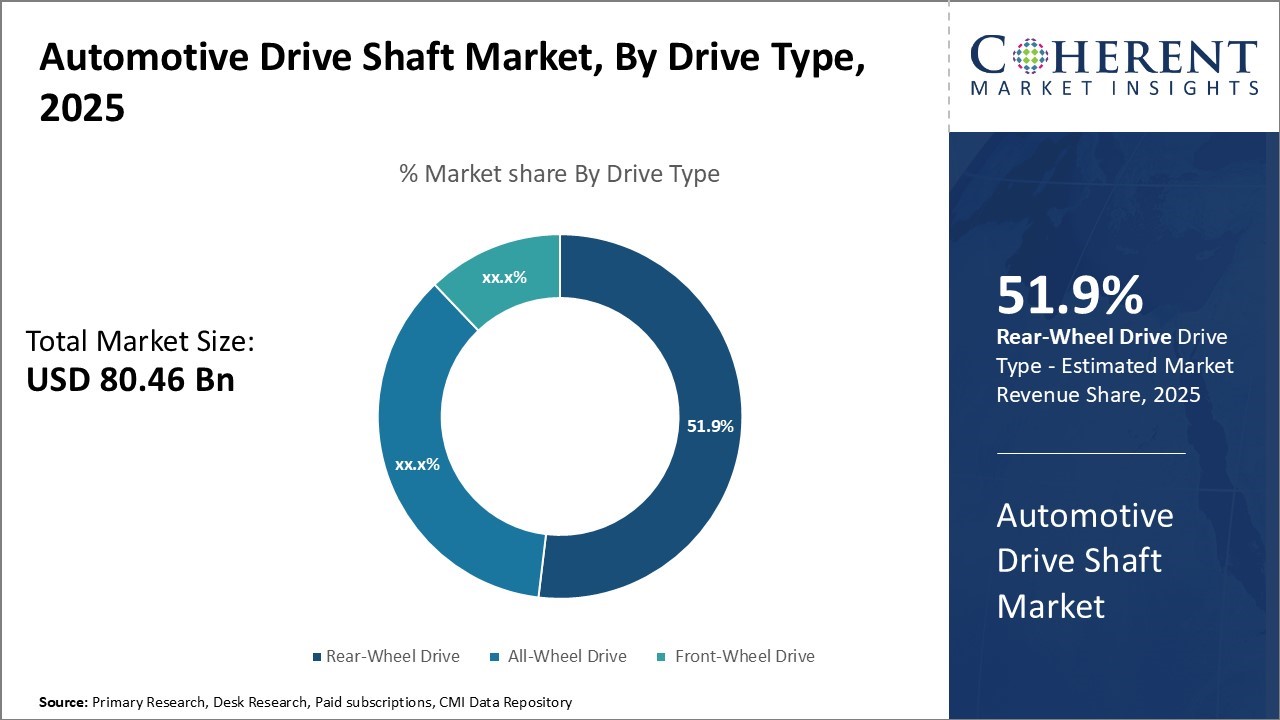
- According to Drive Type, The Rear-Wheel Drive Category is anticipated to account for the largest share of 52.9% for the Automotive Drive Shaft market in 2026.
- According to Vehicle Type, The Passengers Car Segment is anticipated to hold 67.8% share of the Automotive Drive Shaft market in 2026.
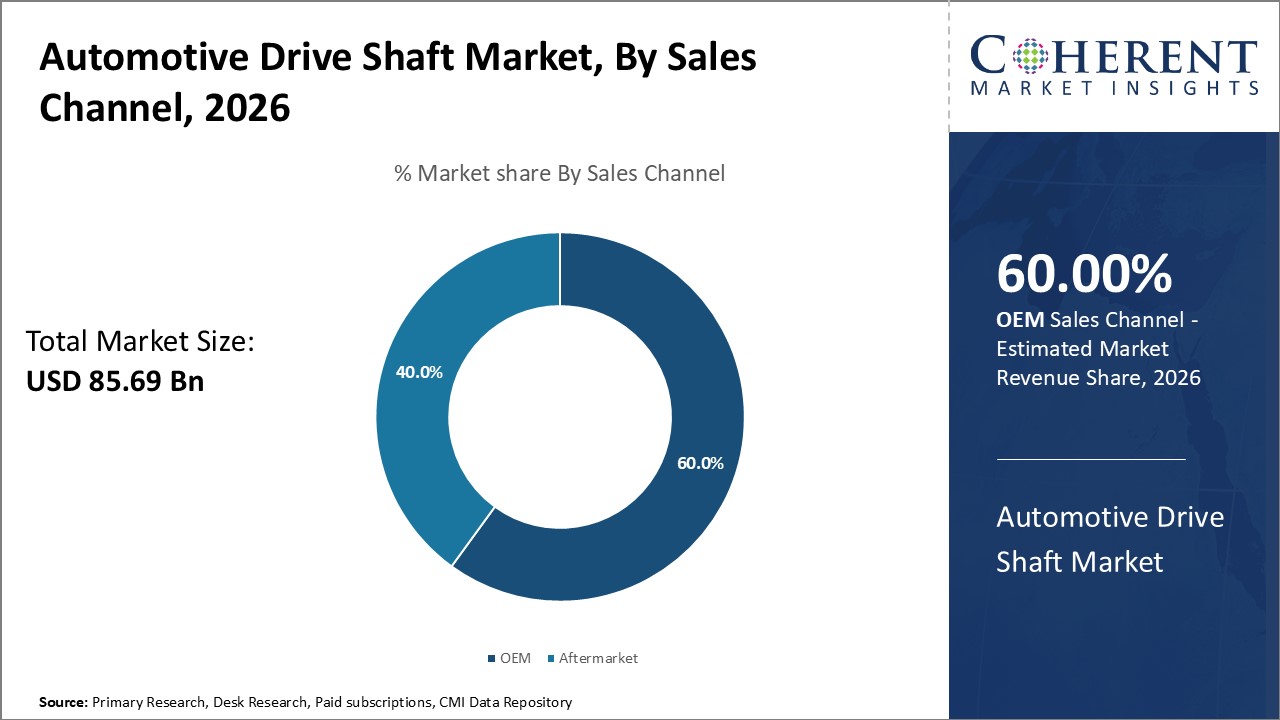
- According to Sales Channel, Original Equipment Manufacturers (OEM) Category holds the major share of 60% in 2026 for automotive drive shaft market.
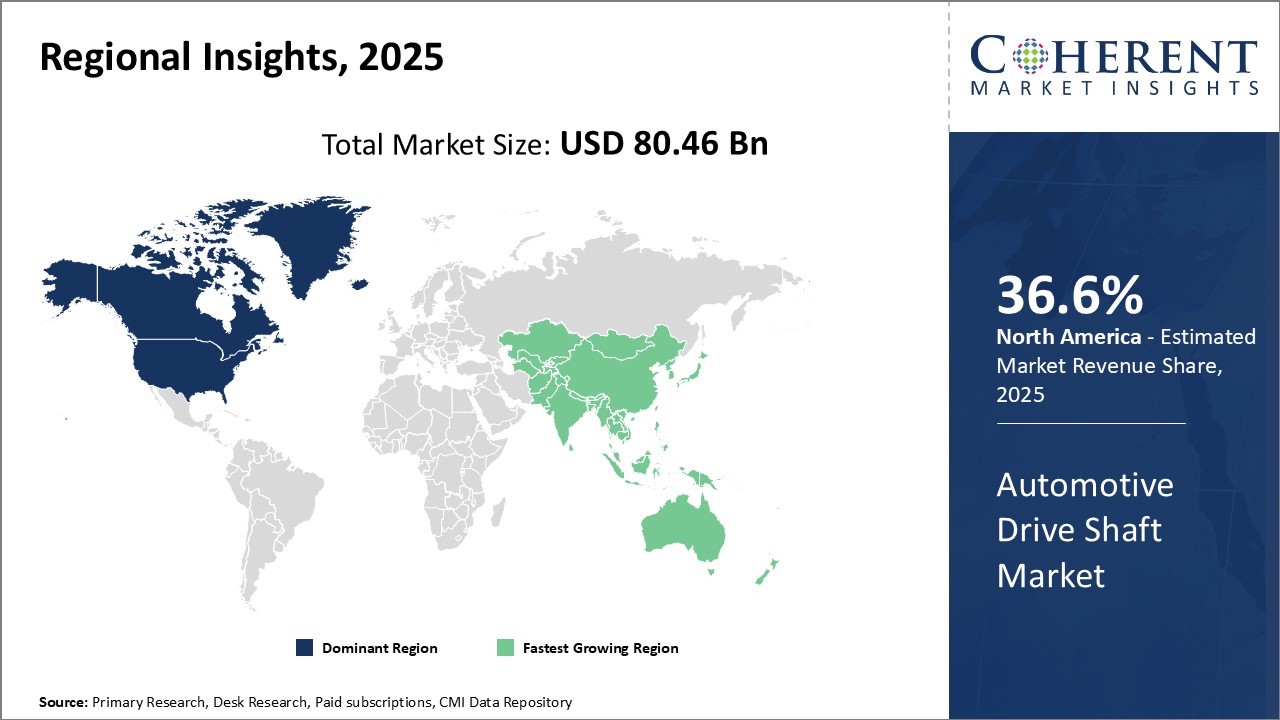
- According to region, North America holds the largest market share of 36.6% for Automotive Drive Shaft market growth by 2026.
Market Overview
The Automotive Drive Shaft Market Size is expanding steadily because to improvements in lightweight materials, growing demand for electric and fuel-efficient automobiles, and increased vehicle production. The growing production of automobiles, the growing popularity of electric vehicles (EVs), and developments in lightweight materials like aluminum and carbon fiber are all contributing to the strong growth of the global automotive drive shaft market.
For instance, in April 2025, Stellantis is set to bring Leapmotor’s global electric vehicle line-up to India, marking a significant step in the company’s commitment to shaping the future of mobility. With this move, Stellantis continues to usher in a new era of smart, sustainable, and accessible electric vehicles for Indian consumers. The entry of the Leapmotor brand into the market aligns with Stellantis’ ambition to drive innovation and expand its electric vehicle (EV) footprint in one of the world’s fastest-growing automotive landscapes.
Current Events and Its Impact on the Automotive Drive Shaft Market
Event | Description and Impact |
Rapid Growth in Electric Vehicle (EV) Sales |
|
Shift to Lightweight and Composite Materials |
|
Pricing Analysis
The pricing landscape of the automotive drive shaft market is shaped by several factors, including raw material costs, manufacturing complexity, and the integration of advanced technologies.
Prices can vary significantly depending on the material used traditional steel drive shafts are generally more affordable, while those made from aluminum alloys or carbon fiber composites command premium prices due to their lightweight and high-strength properties.
Market growth and competition among key players such as Dana Incorporated, GKN PLC, and American Axle & Manufacturing Co. Ltd. also influence pricing strategies, with manufacturers seeking to balance cost efficiency and product innovation to capture market share.
Additionally, regional factors, such as the dominance of Asia-Pacific in production and consumption, contribute to competitive pricing, especially as manufacturers scale up to meet rising demand for both passenger and commercial vehicles.
- Current Industry Events of 2026
- Market Size Estimation
- Regional Breakdown
- Competitive Landscape
- Customer Intelligence
- Segmental Analysis
- Pricing Analysis
- Key Market Drivers, Challenges & Future Trends
- Customized Insights Section
Patent Landscape
- The patent landscape in the automotive drive shaft sector reflects an ongoing emphasis on innovation, particularly in materials engineering, design optimization, and integration of new functionalities.
- Major players are actively filing patents for lightweight composite drive shafts, advanced joint mechanisms, and modular designs that enhance performance and durability.
- The rise of electric and hybrid vehicles has further accelerated patent activity, as manufacturers develop drive shafts capable of handling higher torque and unique powertrain configurations. This competitive patent environment not only fosters technological advancement but also acts as a barrier to entry for new market participants, ensuring that established companies maintain a technological edge through proprietary solutions.
Role of Advanced Technologies
- Advanced technologies are playing a transformative role in the automotive drive shaft market. The adoption of high-strength materials like carbon fiber and aluminum alloys has enabled significant weight reduction, improving fuel efficiency and vehicle handling without compromising durability.
- The integration of advanced sensors and modular designs allows for predictive maintenance and customization to suit various vehicle platforms, enhancing reliability and reducing lifecycle costs.
Segmental Insights
Automotive Drive Shaft Market Insights By Drive Type
The rear-wheel drive segment is expected to accounts for 52.9% share of the global automotive drive shaft market in 2026. Vehicles with rear-wheel configurations are preferred for their enhanced driving dynamics and handling.
Cars with rear-wheel drivetrains have more engaging driving characteristics and better traction off the line due to power being delivered solely to the rear axle. As a result, rear-wheel drive remains the configuration of choice for many performance-focused automakers and enthusiasts seeking a sportier driving experience.
Sports cars and luxury sedans designed for spirited driving make up a major portion of rear-wheel drive sales. Iconic nameplates like the BMW 3 Series, Audi A4, and Mercedes C-Class are still offered predominantly in rear-wheel variants globally.
Similarly, the majority of premium and exotic sports cars from manufacturers such as Ferrari, Lamborghini, and Porsche utilize rear-wheel architectures due to their enhanced dynamics. Even high-performance trims of mainstream cars from Toyota, Honda, and Ford often feature rear-wheel drivetrains tuned for track handling. The emotional appeal of rear-wheel drive remains strong for driving purists and automakers targeting the performance market.
Automotive Drive Shaft Market Insights, By Sales Channel
The automotive drive shaft market is set for substantial growth, with the Original Equipment Manufacturers (OEM) segment anticipated to lead the market, capturing a significant share of 60% in 2026. This dominance is largely attributed to the increasing production of vehicles and the growing demand for high-quality components that meet stringent performance and safety standards.
As the automotive industry evolves, OEMs play a crucial role in the supply chain, providing drive shafts that are integral to vehicle functionality. The shift towards electric and hybrid vehicles is particularly influencing the demand for specialized drive shafts designed to accommodate unique powertrain requirements. OEMs are responding to this trend by innovating and developing lightweight, efficient drive shafts that enhance vehicle performance and fuel efficiency.
Moreover, the rise in consumer preferences for advanced automotive technologies, including all-wheel drive (AWD) systems, is further propelling the OEM segment. These systems require additional drive shafts to distribute power effectively among all wheels, thereby increasing the demand for OEM-supplied components. As vehicle manufacturers focus on improving the driving experience and safety features, the reliance on OEMs for high-quality drive shafts is expected to grow.
The OEM segment's substantial share reflects the critical role these manufacturers play in meeting the needs of the automotive industry, particularly as it adapts to new technologies and consumer demands.
Regional Insights
North America Automotive Drive Shaft Market
North America dominates the global automotive drive shaft market. The region is expected to hold 36.6% estimated share of the market in 2026. The U.S. accounts for the bulk of demand owing to high vehicle production rates and a well-established automotive industry.
Major drive shaft manufacturers such as Dana, Neapco, and Meritor have had a strong foothold in the region with manufacturing plants situated strategically. This helps them cater to the just-in-time requirements of automakers operating there. The presence of Detroit, the epicenter of the global auto industry, further strengthens the automotive supply chain ecosystem and allows companies to provide innovative and customized solutions rapidly.
Additionally, favorable trade policies have allowed OEMs and components makers to source materials locally at competitive prices. This has kept production costs low and boosted profit margins.
Asia Pacific Automotive Drive Shaft Market
The fastest growing regional market has been Asia Pacific over the past five years. China in particular has seen exponential growth in automotive drive shaft demand. This can be attributed to the country's position as both one of the largest auto markets as well as manufacturing hubs globally.
With operations of all major automakers as well as huge two-wheeler segments, the quantity of vehicles manufactured and imported is massive, directly fueling volume growth. Local shaft producers have made huge investments in expanding capacities using the latest technology. This along with competitive pricing and high quality has enabled them to gain market share from international brands.
Countries such as India and Indonesia are also showing potential as their vehicle ownership rises steadily with economic development. Hence Asia Pacific is primed to dominate the global automotive drive shaft landscape in the coming years.
Automotive Drive Shaft Market In Europe
Europe’s automotive drive shaft market is characterized by strong growth and innovation, driven by the region’s advanced automotive manufacturing capabilities and stringent emission regulations. Major economies such as Germany, the United Kingdom, and France lead the market, with Germany holding a significant share due to its robust automotive industry and focus on electric and hybrid vehicle production.
Automotive Drive Shaft Market Dominating Countries
U.S Automotive Drive Shaft Market
The U.S. market is characterized by rising car sales, increasing disposable income, and a growing preference for premium and luxury vehicles, all of which contribute to higher usage of advanced drive shafts. Additionally, strict fuel efficiency regulations and consumer demand for comfort further stimulate the adoption of lightweight and high-performance drive shaft solutions.
India Automotive Drive Shaft Market
India is rapidly emerging as a key growth market for automotive drive shafts, propelled by expanding automobile production, rising urbanization, and increasing disposable incomes. The country’s automotive sector is witnessing robust growth in both passenger and commercial vehicle segments, which directly translates to higher demand for drive shafts.
Automotive Drive Shaft Market In China
China holds a dominant position in the global automotive drive shaft market, largely due to its status as the world’s largest automobile producer and consumer. The country’s market strength is underpinned by the presence of leading domestic manufacturers and a robust supply chain ecosystem.
Market Report Scope
Automotive Drive Shaft Market Report Coverage
| Report Coverage | Details | ||
|---|---|---|---|
| Base Year: | 2025 | Market Size in 2026: | USD 85.69 Bn |
| Historical Data for: | 2020 To 2024 | Forecast Period: | 2026 To 2033 |
| Forecast Period 2026 to 2033 CAGR: | 6.5% | 2033 Value Projection: | USD 133.16 Bn |
| Geographies covered: |
| ||
| Segments covered: |
| ||
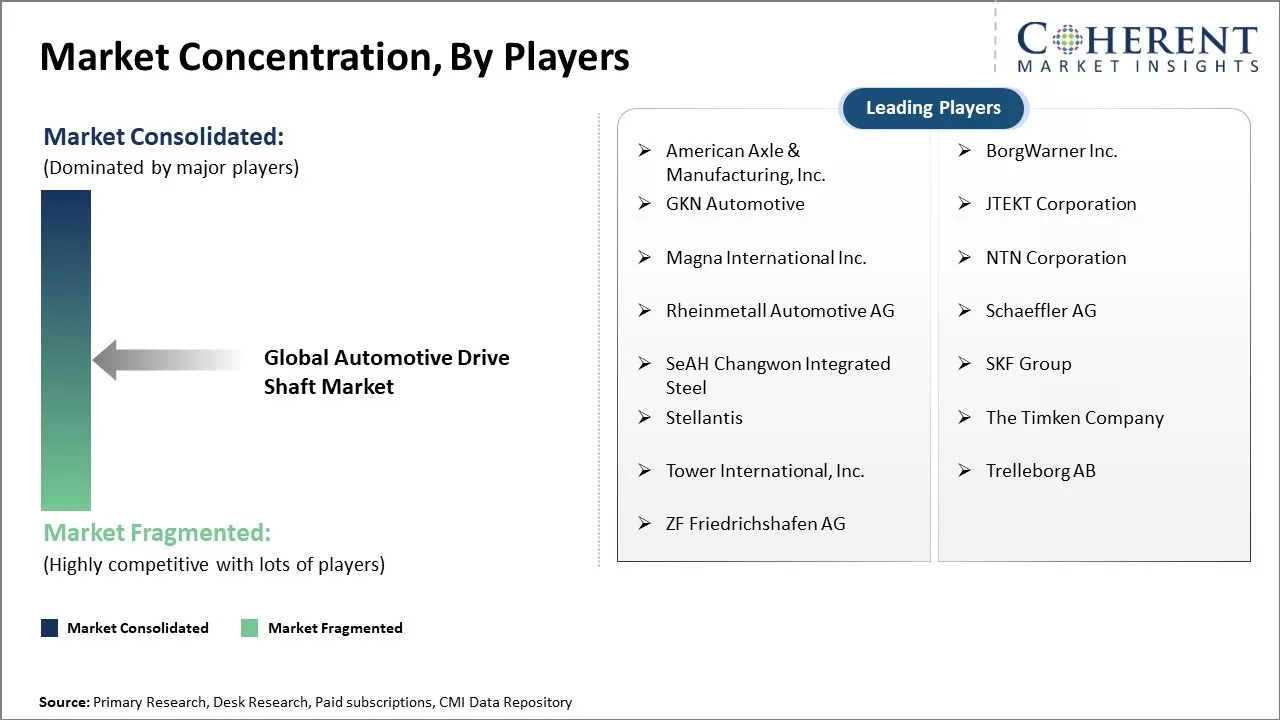
| Companies covered: | American Axle & Manufacturing, Inc., BorgWarner Inc., GKN Automotive, JTEKT Corporation, Magna International Inc., NTN Corporation, Rheinmetall Automotive AG, Schaeffler AG, SeAH Changwon Integrated Steel, SKF Group, Stellantis, The Timken Company, Tower International, Inc., Trelleborg AB, and ZF Friedrichshafen AG | ||
| Growth Drivers: |
| ||
| Restraints & Challenges: |
| ||
Market Concentration and Competitive Landscape
Automotive Drive Shaft Market: Growth Drivers
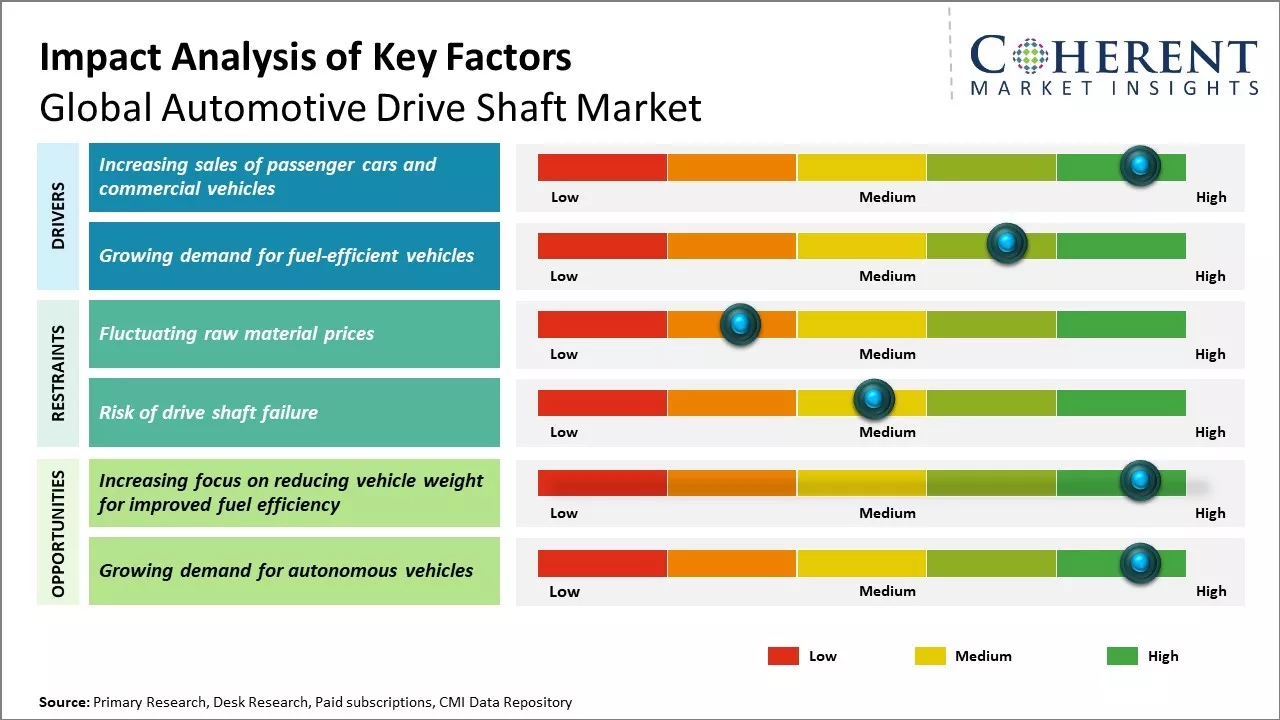
- Increasing sales of passenger cars and commercial vehicles
The automotive industry has witnessed steady growth over the past few years with rising disposable incomes and improving economic conditions worldwide. As people's income levels rise, their ability to invest in personal transportation also increases. Consumer preference for car ownership over public transportation has significantly contributed to the rising global passenger vehicle fleet size.
Meanwhile, commercial vehicles form an important part of economic activity given their widespread use for freight transportation, in industries such as agriculture, construction, and logistics. Growing international trade across different geographies has positively impacted the demand for commercial vehicles over time.
With continuing urbanization and infrastructure expansion programs, the need for transportation of raw materials and finished goods is expected to further boost commercial vehicle procurement. As both passenger and commercial vehicle populations expand on roads globally, it will augment the requirement for drive shafts to be installed in all new vehicle models. Growing automotive production volumes thus bode well for the drive shaft industry.
- Growing demand for fuel-efficient vehicles
Rising environmental awareness among consumers along with stringent government fuel-efficiency and emission norms have made automakers focus on introducing more eco-friendly vehicles. Vehicle electrification through hybrid and electric powertrains is one of the preferred approaches being adopted.
While conventional internal combustion engine (ICE) vehicles rely on a rigid drive shaft to transmit power from the transmission to wheels, hybrids and EVs employ independent electric motors to power individual wheels. However, even such fuel-efficient vehicles still use drive shafts for connecting different components. At the same time, downsizing of ICEs through technologies like turbocharging and direct injection has become common to reduce fossil fuel dependency. Smaller displacement engines with more cylinders help in attaining optimal fuel efficiency but add to the complexity of engine design.
As a result, dual mass flywheels and advanced constant velocity joints have seen higher integration in modern drive shafts catering to smaller, more efficient engines. Furthermore, increasing preference for all-wheel drive vehicles especially in SUV and crossover segments raise the drive shaft count per vehicle. Growing focus on improving vehicle economy and meeting greenhouse gas emission norms thus causes automakers to use re-engineered drive line components, ultimately driving associated demand.
Automotive Drive Shaft Market: Trends
A number of noteworthy trends are influencing the growth and innovation trajectory of the automotive drive shaft industry. One of the most noticeable changes is the industry-wide quest to reduce weight, with producers using materials like carbon fiber composites, aluminum alloys, and high-strength steel more frequently to create drive shafts that are both strong and lightweight.
The desire to improve vehicle agility, fuel efficiency, and adherence to strict emission regulations is what is driving this change. Because of their advantageous strength-to-weight ratios, hollow shafts and aluminum propeller shafts are especially in high demand in the passenger car market.
Automotive Drive Shaft Market: Opportunities
- Increasing focus on reducing vehicle weight for improved fuel efficiency
The global automotive drive shaft market is presented with opportunities owing to increasing focus of automakers to reduce vehicle weight in order to improve fuel efficiency. Drive shafts, being a significant component of automobiles, have huge scope for weight optimization. With growing environmental regulations worldwide mandating lower vehicle emissions, automotive OEMs are under pressure to enhance the fuel economy of their vehicles.
One of the effective ways to boost fuel efficiency is to lessen the curb weight and optimize lightweight components inside vehicles. This is where drive shaft manufacturers can capitalize on their expertise and introduce new lightweight drive shaft designs using advance materials like carbon fiber composite and aluminum.
Development of next-generation lightweight drive shafts can enable automakers to reduce vehicle weight by 10-15 kgs, thereby enhancing fuel efficiency by 4-6%. The drive to engineer lightweight drive shafts is expected to drive new product development activities and growth opportunities for automotive drive shaft market players in the coming years.
- Automotive Drive Shaft Market: Key Developments
- January 2025, American Axle & Manufacturing (AAM) reached an agreement to acquire Dowlais Group plc, the parent company of GKN Automotive, in a transaction valued at approximately $1.4 billion. The move is expected to significantly alter the landscape of global driveline and metal-forming technologies, strengthening AAM’s position in both internal combustion engine (ICE) and electrified vehicle markets.
- April 2025, Volkswagen launched the Tiguan R-Line in India, replacing the existing standard model. The Tiguan R-Line is a notch up from the outgoing model in terms of sporty styling, more power, new tech, and technologies offered. The SUV is powered by a 201bhp, 2.0-litre petrol engine, and here is a summary of the key highlights from the vehicle’s new equipment.
- February 2024, JTEKT Corporation, a leading provider of automotive components and systems, unveiled a new ultra-compact product series designed for eAxle applications. This series includes Differential (JUCD), Ball Bearing (JUCB), Conductive Ball Bearing (JUEB), and Oil Seal (JUCS) components, all engineered to reduce size and weight.
Analyst Opinion
- The global automotive drive shaft market is poised to grow steadily driven by rising vehicle production and sales across major economies. Factors such as growing demand for high-performance vehicles along with increasing adoption of all-wheel and four-wheel drive vehicles will further propel the demand for automotive drive shafts during the forecast period. However, increasing penetration of electric vehicles may limit the growth potential of the drive shaft market in the long run.
- The market is expected to witness fastest gains in the Asia Pacific region owing to rising economic prosperity, growing middle class population and increasing preference of consumers towards personal vehicles over public transportation. China, India and Japan will likely emerge as the major revenue generating countries in Asia Pacific.
- Manufacturers operating in the drive shaft market should focus on developing lightweight yet durable drive shaft assemblies using advanced materials to improve fuel efficiency without compromising on safety and performance. Companies may also gain by expanding their presence in emerging markets and offering value added products with optional features through innovative distribution and marketing strategies. However, rising raw material costs remain a major challenge for profits.
Speak to the analyst
Want personalized insights?
Take the findings above to one of our principal consultants, or have the report rebuilt around the segments, geographies and competitors you actually track.
Market Segmentation
- By Drive Type (Revenue, USD Bn, 2021 - 2033)
- Rear-Wheel Drive
- All-Wheel Drive
- Front-Wheel Drive
- By Vehicle Type (Revenue, USD Bn, 2021 - 2033)
- Passenger Cars
- Commercial Vehicles
- By Sales Channel (Revenue, USD Bn, 2021 - 2033)
- OEM (Original Equipment Manufacturers)
- Aftermarket
- By Region (Revenue, USD Bn, 2021 - 2033)
- North America
- U.S.
- Canada
- Latin America
- Brazil
- Argentina
- Mexico
- Rest of Latin America
- Europe
- Germany
- U.K.
- Spain
- France
- Italy
- Russia
- Rest of Europe
- Asia Pacific
- China
- India
- Japan
- Australia
- South Korea
- ASEAN
- Rest of Asia Pacific
- Middle East
- GCC Countries
- Israel
- Rest of Middle East
- Africa
- South Africa
- North Africa
- Central Africa
- North America
- Key Players Insights
- American Axle & Manufacturing, Inc.
- BorgWarner Inc.
- GKN Automotive
- JTEKT Corporation
- Magna International Inc.
- NTN Corporation
- Rheinmetall Automotive AG
- Schaeffler AG
- SeAH Changwon Integrated Steel
- SKF Group
- Stellantis
- The Timken Company
- Tower International, Inc.
- Trelleborg AB
- ZF Friedrichshafen AG
Sources
Primary Research interviews
- Automotive R&D Managers
- Procurement Heads from Automotive OEMs
- Plant Managers at automotive manufacturing facilities
- Distributors/Dealers of driveline components
- Fleet Managers (for commercial vehicles)
- Aftermarket Service Providers
Databases
- IHS Markit Automotive
- OICA (International Organization of Motor Vehicle Manufacturers)
- SIAM (Society of Indian Automobile Manufacturers)
- JATO Dynamics
- Polk Vehicle Registration Data
Magazines
- Automotive Engineering (SAE)
- Autocar Professional
- Automotive World
- Car and Driver
- AutoTech Review
Journals
- SAE International Journal of Passenger Cars – Mechanical Systems
- International Journal of Automotive Technology
- Journal of Mechanical Science and Technology
- Journal of Automobile Engineering (IMechE)
- International Journal of Vehicle Design
- Journal of Terramechanics
Newspapers
- The Economic Times – Auto section
- Business Standard – Auto
- The Hindu BusinessLine – Automotive
- Mint – Auto Industry
- Financial Express – Automobiles
- Automotive News
Associations
- SAE International
- ARAI (Automotive Research Association of India)
- JSAE (Society of Automotive Engineers of Japan)
- VDA (German Association of the Automotive Industry)
- AIAG (Automotive Industry Action Group)
Proprietary Elements
- CMI Data Analytics Tool, Proprietary CMI Existing Repository of information for last 8 years
*Definition: The global automotive drive shaft market involves the manufacturing and sales of drive shafts used in automobiles. A drive shaft is used to transmit torque and rotation from the transmission or transfer case to the other end, allowing the vehicle to move. It provides a connection between the transmission and the differentials in front-wheel, rear-wheel, and four-wheel drive vehicles.
Get access to 250+ pages report
Every segment, forecast, competitor profile and data table behind the analysis above — available for instant download.
- ESOMAR Member
- ISO 9001:2015 Certified
- D-U-N-S Registered
- GDPR & CCPA Compliant
Missing comfort of reading report in your local language? Find your preferred language:
Transform your Strategy with Exclusive Trending Reports
Frequently Asked Questions
The Automotive Drive Shaft Market size is estimated to be valued at USD 85.69 Bn in 2026, and is expected to reach USD 133.16 Bn by 2033.
The CAGR of the global Market is projected to be 6.5% from 2026 to 2033.
Increasing sales of passenger cars and commercial vehicles and growing demand for fuel-efficient vehicles are the major factors driving the growth of the global market.
Fluctuating raw material prices and risk of drive shaft failure are the major factor hampering the growth of the global automotive drive shaft industry.
In terms of drive type, rear-wheel drive segment is estimated to dominate the market revenue share in 2026.
American Axle & Manufacturing, Inc., BorgWarner Inc., GKN Automotive, JTEKT Corporation, Magna International Inc., NTN Corporation, Rheinmetall Automotive AG, Schaeffler AG, SeAH Changwon Integrated Steel, SKF Group, Stellantis, The Timken Company, Tower International, Inc., Trelleborg AB, and ZF Friedrichshafen AG are the major players.
North America is expected to lead the global automotive drive shaft industry in 2026.