

Blood Collection Tubes Market Size and Forecast — 2026 - 2033
The Global Blood Collection Tubes Market size is estimated to be valued at USD 2.85 billion in 2026 and is expected to reach USD 4.75 billion by 2033, exhibiting a compound annual growth rate (CAGR) of 7.8% from 2026 to 2033.
Overview
Blood collection tubes are essential medical devices used for collecting, storing, and transporting blood samples for diagnostic testing. The product range includes serum separation tubes (SST), plasma separation tubes (PST), EDTA tubes, heparin tubes, and citrate tubes, each designed for specific laboratory applications. Additive-free tubes are used for serum testing, while anticoagulant tubes prevent clotting for hematology and plasma-based analyses. Specialty tubes with gel separators and clot activators improve sample quality and processing efficiency. Advancements in vacuum technology, safety-engineered designs, and color-coded identification systems enhance accuracy, reduce contamination risk, and support efficient workflow in clinical laboratories and hospitals.
Key Takeaways
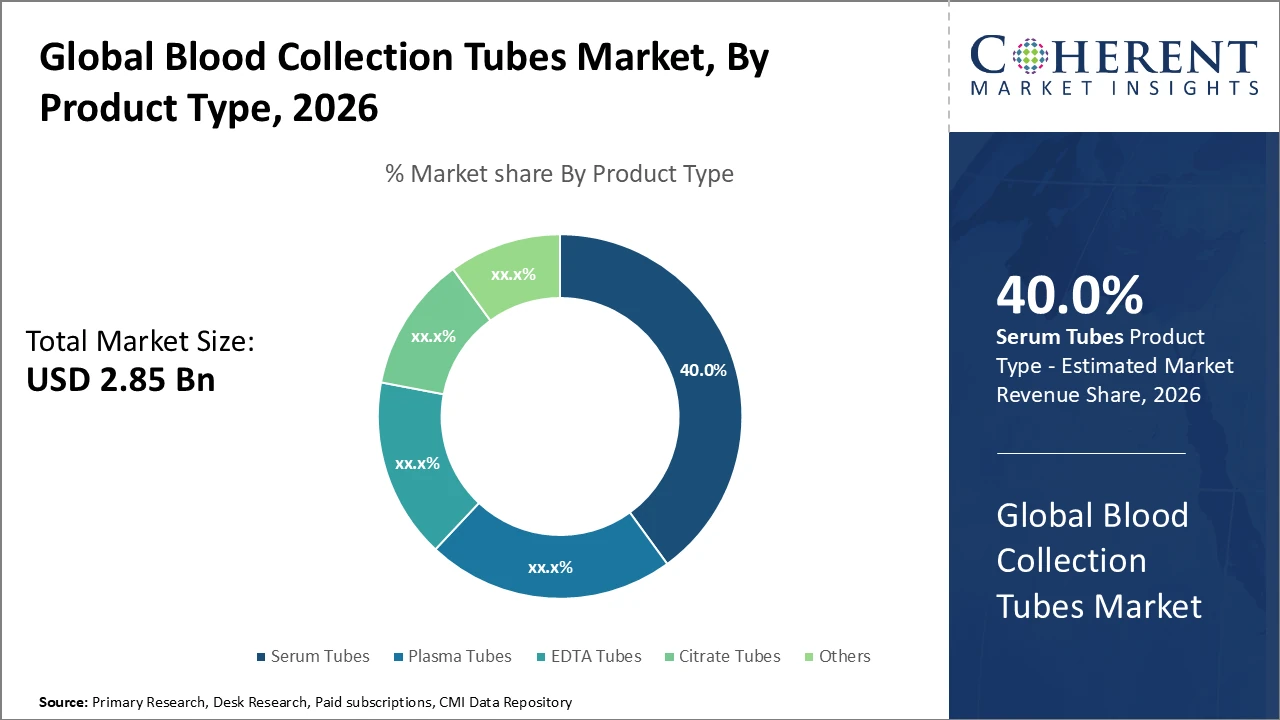
Serum tubes dominate the product type segment with around 40% market share due to their essential role in accurate biochemical and diagnostic assays
Diagnostic laboratories lead the application segment, accounting for about 52% share, driven by increasing demand for point-of-care and routine testing services
Hospital laboratories represent the largest end-user segment with nearly 48% share, supported by high volumes of centralized diagnostic testing
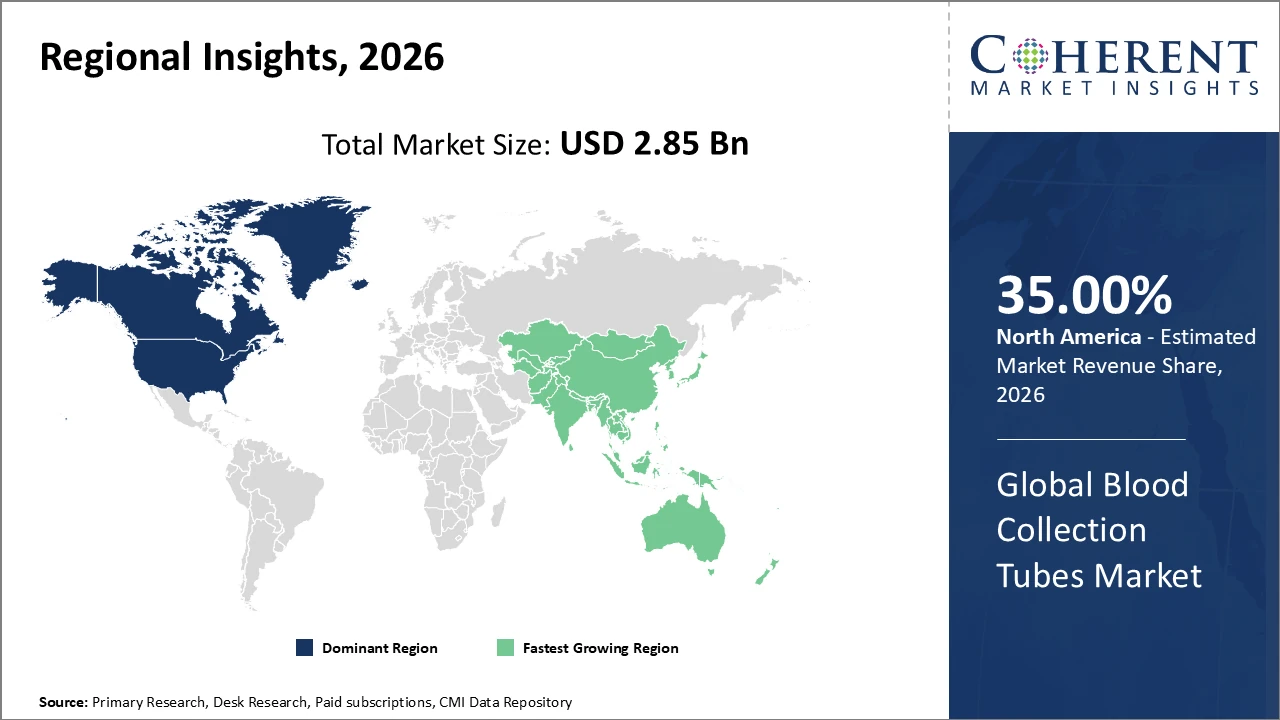
North America holds the largest regional share at over 35%, supported by advanced healthcare infrastructure and strong reimbursement systems
Asia Pacific is the fastest-growing region, registering a CAGR of approximately 9.2%, driven by rising healthcare investments and expanding manufacturing capabilities
Blood Collection Tubes Market Segmentation Analysis
Blood Collection Tubes Market Insights, By Product Type
Serum tubes dominate the market with a 40% share due to their vital role in producing high-quality serum samples required for accurate biochemical and diagnostic testing. Their growing demand is driven by the need for rapid, contamination-free sample processing in clinical and research settings. Plasma tubes are the fastest-growing segment, supported by expanding use in coagulation testing and molecular diagnostics, along with improved anticoagulant formulations that enhance sample stability. EDTA tubes continue to see strong usage in hematology testing, while citrate tubes are essential for coagulation studies and blood cross-matching. Other types include fluoride and heparin tubes for specialized applications.
Blood Collection Tubes Market Insights, By Application
Diagnostic laboratories dominate the market with a 52% share due to the rising volume of clinical testing and the need for reliable and standardized blood sample collection. Increasing prevalence of chronic diseases and the adoption of advanced diagnostic technologies further support this dominance. Research institutes are the fastest-growing application segment, driven by growing investments in biomedical research, personalized medicine, and biobanking, which require high-quality sample preservation for molecular studies. Hospitals and blood banks also contribute significantly through routine diagnostics, transfusions, and emergency care needs. The others segment includes niche uses such as veterinary diagnostics and forensic applications.
Blood Collection Tubes Market Insights, By End User
Hospital laboratories dominate the market with a 48% share, driven by their central role in handling large volumes of daily diagnostic testing and centralized blood sample processing. The adoption of automated collection systems and strict quality control measures further strengthens their position. Independent laboratories are the fastest-growing subsegment due to increasing outsourcing of diagnostic services and the rapid expansion of private lab networks. Blood donation centers maintain steady demand, supported by continuous requirements for safe and efficient blood collection. Research facilities are also growing in importance, driven by rising demand for high-quality samples in biotechnology and pharmaceutical research applications.
Blood Collection Tubes Market Trends
The blood collection tubes market is increasingly shifting toward automation, with smart barcoding and RFID systems improving sample traceability by over 20% in clinical laboratories, especially in North America, and enhancing regulatory compliance
Sustainability is becoming a key trend, with the development of eco-friendly and biodegradable blood collection tubes, supported by notable product launches across Europe and Asia since 2025 to address environmental concerns
Advanced tube designs that preserve nucleic acid integrity are gaining traction, supporting higher adoption in genomics research, molecular diagnostics, and personalized medicine applications
The integration of digital tracking and laboratory automation is improving workflow efficiency, reducing errors, and enhancing overall diagnostic accuracy in healthcare settingsstorage solutions
Blood Collection Tubes Market Insights, By Geography
North Blood Collection Tubes Market Analysis and Trends
North America leads the blood collection tubes market with a share of 35% due to its advanced healthcare infrastructure, well-established reimbursement systems, and strong presence of major industry players such as Becton, Dickinson and Company. The region accounts for over 35% of the global market share, supported by strict regulatory standards that ensure high product quality and safety. Continuous investments in laboratory automation and diagnostic technologies further drive adoption of advanced blood collection solutions. Rising demand for efficient clinical testing, coupled with a high prevalence of chronic diseases and strong R&D activities, continues to strengthen North America’s dominant position in the global market.
Asia Pacific Blood Collection Tubes Market Analysis and Trends
Asia Pacific exhibits the fastest growth in the blood collection tubes market, with a CAGR of approximately 9.2%. This expansion is driven by rapid development of healthcare infrastructure, increasing awareness of clinical diagnostics, and strengthening manufacturing capabilities in countries such as China and India. Government initiatives aimed at modernizing healthcare facilities and improving access to diagnostic services further support market growth. Favorable trade policies and rising export activities to neighboring regions also contribute to expansion. Additionally, increasing investments from both public and private sectors are enhancing production capacity and accelerating adoption of advanced blood collection technologies across the region.
Blood Collection Tubes Market Outlook for Key Countries
USA Blood Collection Tubes Market Analysis and Trends
The USA’s blood collection tubes market is strengthened by its advanced healthcare infrastructure and high adoption of innovative diagnostic technologies. Strong regulatory frameworks and growing focus on precision medicine support consistent market expansion. In 2025, blood sample processing volumes in the U.S. increased by over 7%, reflecting rising diagnostic demand. Leading companies continue to invest heavily in research and development, driving innovations such as automated blood collection systems, safety-engineered devices, and next-generation additive tubes. These advancements improve efficiency, reduce contamination risks, and enhance laboratory workflows, thereby increasing product adoption and contributing to sustained revenue growth across the U.S. healthcare system.
Germany Blood Collection Tubes Market Analysis and Trends
Germany’s blood collection tubes market is characterized by increasing adoption of eco-friendly materials and digital technologies, supporting steady industry growth. The country benefits from strong government investment in healthcare infrastructure and a well-developed diagnostics sector, which enhances efficiency and boosts demand for advanced blood collection products. German manufacturers play a significant role in shaping European market dynamics through innovation and high-quality production standards. Strict regulatory compliance ensures product safety and reliability, while extensive laboratory networks further support market expansion. Additionally, rising focus on sustainable healthcare solutions and automation continues to drive advancements in blood collection technologies across Germany.
Analyst Opinion
Rising prevalence of chronic diseases, especially cardiovascular and infectious diseases, has driven a 12% year-over-year increase in global blood sample collections in 2025, boosting demand for advanced blood collection tubes with improved anticoagulant and preservation features
Expansion of production capacity in Asia-Pacific, particularly in China and India, has increased market supply by about 9% by mid-2026, improving affordability and regional accessibility, while export volumes from these countries rose by approximately 14%
Advancements in additive technologies have improved tube performance, leading to a 15% reduction in pre-analytical errors in clinical laboratories in 2024, enhancing diagnostic accuracy and workflow efficiency
Growing end-user applications across hospitals, diagnostic centers, and blood banks have increased import volumes in Latin America by 11% in 2025, reflecting broader market penetration and diversified healthcare usage
- Current Industry Events of 2026
- Market Size Estimation
- Regional Breakdown
- Competitive Landscape
- Customer Intelligence
- Segmental Analysis
- Pricing Analysis
- Key Market Drivers, Challenges & Future Trends
- Customized Insights Section
Market Scope
| Report Coverage | Details | ||
|---|---|---|---|
| Base Year: | 2025 | Market Size in 2026: | USD 2.85 billion |
| Historical Data for: | 2020 To 2024 | Forecast Period: | 2026 To 2033 |
| Forecast Period 2026 to 2033 CAGR: | 7.8% | 2033 Value Projection: | USD 4.75 billion |
| Geographies covered: |
| ||
| Segments covered: |
| ||
| Companies covered: | Becton Dickinson and Company, Thermo Fisher Scientific Inc., Terumo Corporation, Medline Industries Inc., Danaher Corporation, Nipro Corporation, Newell Brands, Bio-Rad Laboratories, Biogenesis Ltd., Ortho Clinical Diagnostics | ||
| Growth Drivers: |
| ||
Blood Collection Tubes Market Growth Factors
The blood collection tubes market is driven by rising incidence of chronic and infectious diseases across both developed and emerging economies, increasing demand for high-quality tubes with advanced anticoagulants and gel separators. In 2026, diagnostic laboratories recorded a 9.5% rise in blood sample processing, significantly boosting market revenue. Technological innovations, including hemolysis-resistant and contamination-preventing tubes, reduced sample rejection rates by 14% in 2025, improving efficiency. Growing awareness of translational medicine and personalized diagnostics has expanded applications in research institutes and clinical trials, with demand rising 7.3%. Additionally, government investments in healthcare infrastructure and laboratory accreditation further enhance market penetration globally.
Blood Collection Tubes Market Development
In February 2026, Australia-based Q-Sera Pty Ltd announced the first commercial launch of its patented evacuated blood collection technology, introduced in Japan by Terumo Corporation through its VenoJect II RAPClot™ blood collection tubes.
Key Players
Leading Companies of the Market
Becton Dickinson and Company
Terumo Corporation
Nipro Corporation
Newell Brands
Biogenesis Ltd.
Thermo Fisher Scientific
Danaher Corporation
Medline Industries Inc.
Biogenesis Ltd
Bio-Rad Laboratories
Several companies in the blood collection tubes market are focusing on strategic collaborations and technological innovation to strengthen their position. In 2025, Becton, Dickinson and Company (BD) implemented automated blood collection systems, improving operational efficiency by 15% and enhancing workflow in high-volume laboratories. Terumo Corporation expanded its product portfolio by introducing molecular diagnostics-compatible blood collection tubes, which contributed to a 10% revenue increase in 2024. Additionally, firms are increasingly pursuing mergers and localized manufacturing strategies to improve supply chain efficiency, reduce costs, and expand presence in emerging markets, thereby strengthening their global competitive advantage and market reach.
Blood Collection Tubes Market Future Outlook
The future outlook for the blood collection tubes market is positive, driven by rising demand for advanced diagnostic testing, increasing prevalence of chronic diseases, and expanding healthcare infrastructure globally. Technological advancements such as automation, smart labeling systems, and improved additive formulations will enhance sample accuracy and laboratory efficiency. Growing adoption of point-of-care testing and personalized medicine will further expand application scope. Sustainability trends, including eco-friendly and recyclable tube materials, are expected to gain traction. Additionally, rising investments in emerging economies and increasing laboratory outsourcing will support market expansion, ensuring steady growth and innovation across the global healthcare diagnostics landscape.
Blood Collection Tubes Market Historical Analysis
The historical analysis of the blood collection tubes market shows steady growth driven by the expansion of diagnostic testing and healthcare infrastructure over the past decade. Early adoption of basic vacuum tubes for routine blood collection laid the foundation for standardized laboratory practices. Between 2015 and 2020, advancements in additive technologies and safety-engineered designs significantly improved sample integrity and reduced contamination risks. From 2020 onward, rising prevalence of chronic diseases and increased diagnostic demand accelerated market expansion. The introduction of gel separator tubes, automation in laboratories, and improved global distribution networks further supported consistent growth across hospitals, diagnostic centers, and blood banks.
Sources
Primary Research Interviews:
Clinical laboratory scientists, hematologists, and pathologists involved in blood collection, sample processing, and diagnostic testing workflows
Hospital procurement managers, diagnostic laboratory directors, and biomedical engineers using blood collection tubes in clinical and research settings
Executives and technical experts from medical device companies involved in manufacturing vacuum blood collection tubes, safety-engineered devices, and additive-based tubes
Magazines:
Clinical Laboratory News – Developments in diagnostic testing, blood collection technologies, and laboratory automation
MedTech Dive – Innovations in medical devices, blood collection systems, and healthcare diagnostics industry trends
Fierce Biotech – Updates on diagnostic companies, product launches, and laboratory testing advancements
Journals:
Clinical Chemistry – Advances in laboratory diagnostics and blood sample analysis techniques
Journal of Clinical Laboratory Analysis – Research on blood collection methods and pre-analytical variables
Transfusion – Studies on blood collection, storage, and transfusion science
American Journal of Clinical Pathology – Diagnostic innovations and clinical laboratory practices
Newspapers:
The Wall Street Journal – Advanced materials industry trends and nanotechnology investments The New York Times – Healthcare innovation, diagnostic advancements, and medical technology trends
Financial Times – Healthcare industry investments and medical device market developments
Reuters Health – Updates on diagnostic regulations, laboratory innovations, and healthcare technology
Bloomberg Health – Market analysis of medical device companies and diagnostic industry growth
Associations:
World Health Organization (WHO) – Global diagnostic standards and laboratory quality guidelines
Clinical and Laboratory Standards Institute (CLSI) – Standards for blood collection and laboratory testing procedures
American Association for Clinical Chemistry (AACC) – Advances in clinical laboratory science and diagnostics
International Society for Laboratory Hematology (ISLH) – Research and best practices in hematology and blood testing systems
Get access to 250+ pages report
Every segment, forecast, competitor profile and data table behind the analysis above — available for instant download.
- ESOMAR Member
- ISO 9001:2015 Certified
- D-U-N-S Registered
- GDPR & CCPA Compliant
Missing comfort of reading report in your local language? Find your preferred language:
Transform your Strategy with Exclusive Trending Reports
Frequently Asked Questions
Dominance is held by companies such as Becton, Dickinson and Company, Terumo Corporation, and Nipro Corporation, which command substantial market revenue through technology-driven products and global presence.
The market size is forecasted to reach USD 4.75 billion by 2033, driven by evolving clinical demands and enhanced diagnostic capabilities.
Hospital laboratories present the largest growth opportunity due to escalating testing volumes and diversified medical applications.
Market trends will notably evolve through automation, integration of digital sample tracking, and increased use of molecular diagnostic-compatible tubes.
The landscape is highly competitive with innovation-focused strategies. Challenges include regulatory compliances and supply chain volatility impacting market companies.
Collaborations with healthcare providers, portfolio diversification, and regional manufacturing expansion are key go-to-market approaches utilized by market players.