

Bone Growth Stimulator Market Size and Trends – 2026-2033
The Global Bone Growth Stimulator Market is estimated to be valued at USD 1.33 Bn in 2026 and is expected to reach USD 1.96 Bn by 2033, exhibiting a compound annual growth rate (CAGR) of 5.7% from 2026 to 2033.
Key Takeaways of the Bone Growth Stimulator Market
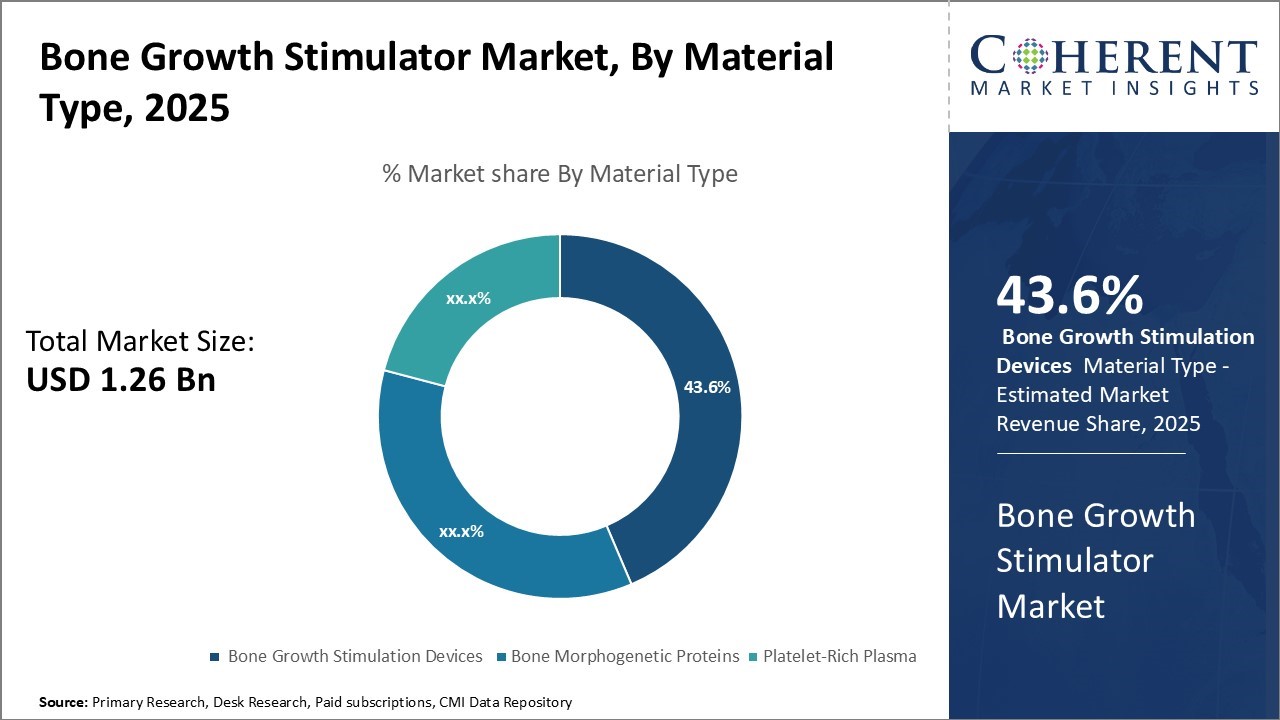
- By Material Type, the Bone Growth Stimulation Devices segment is expected to contribute the highest share of the market with 44.6% in 2026, owing to their consistent and dependable performance.
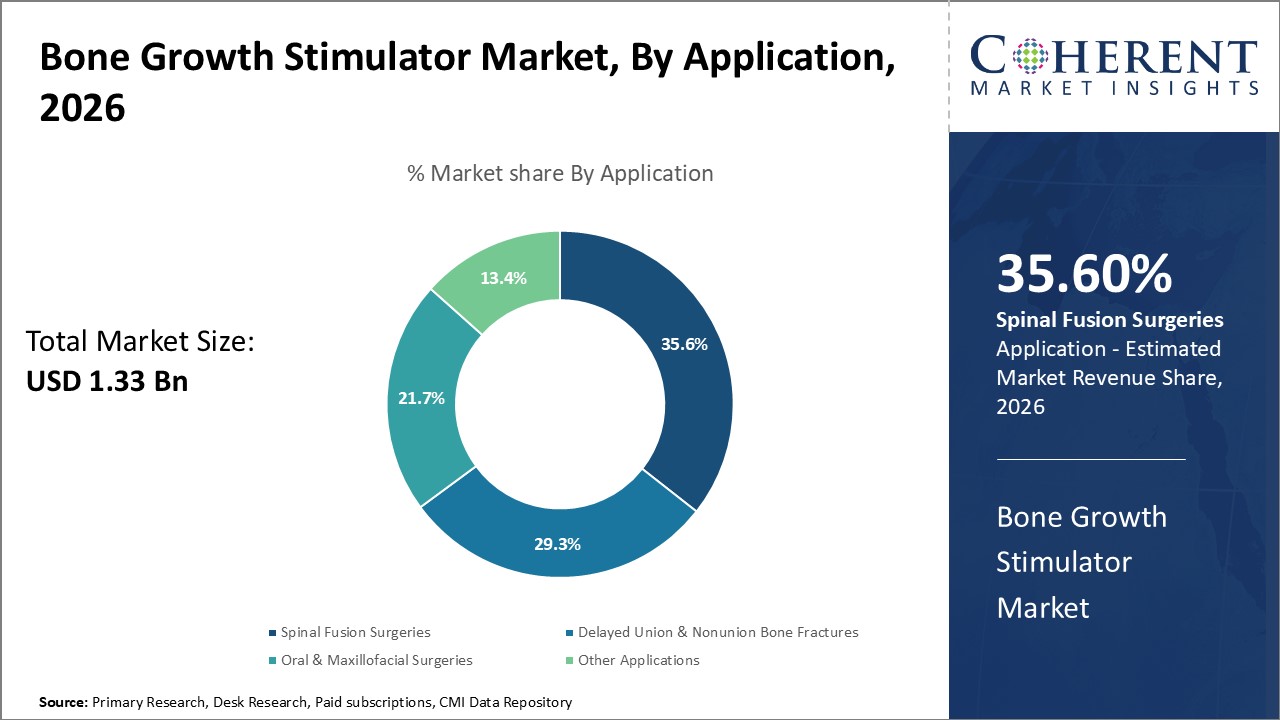
- In terms of Application, the Spinal Fusion Surgeries segment is expected to contribute the highest share of the market with 35.6% in 2026, owing to the extensive clinical research demonstrating their benefits.
- In terms of End User, the Hospitals segment is expected to contribute the highest share of the market with 33.7% in 2026, owing to their infrastructure advantage over alternatives.
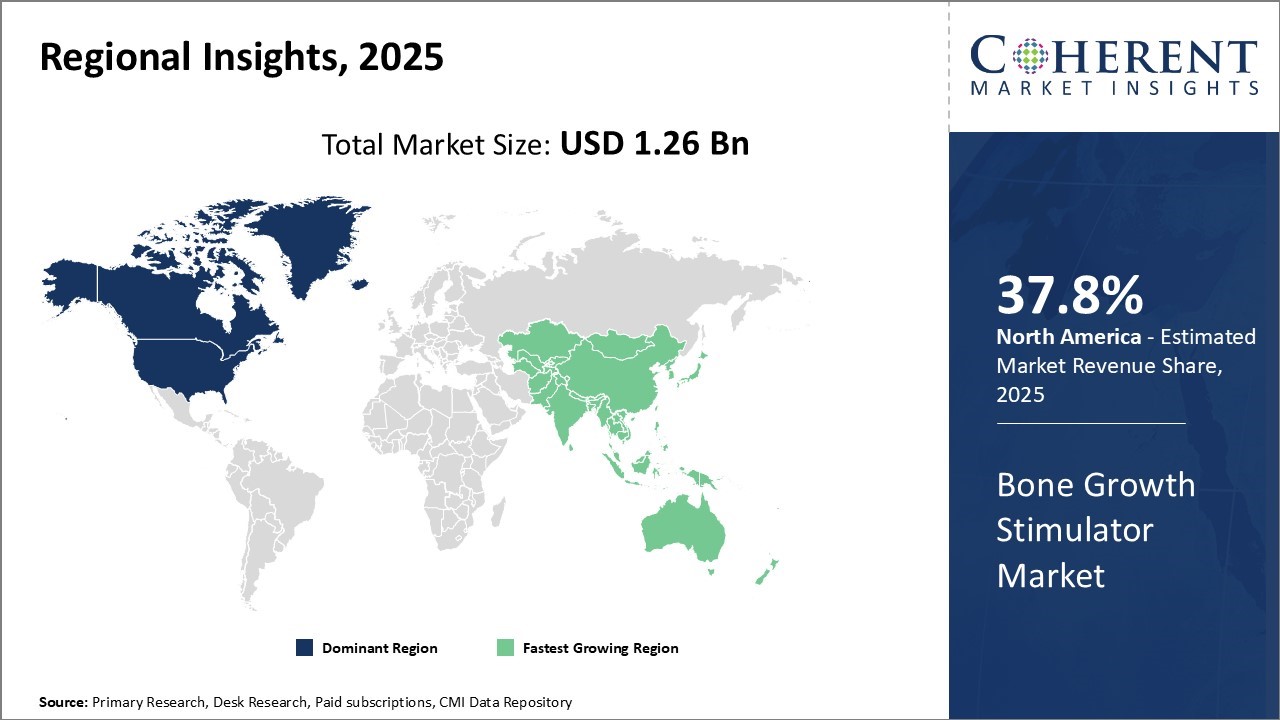
- North America is expected to top the global market with 37.8% share, followed by Asia Pacific with 28.7% share in 2026.
Market Overview
The increasing prevalence of fractures associated with osteoporosis and sports injuries, especially in the geriatric and adult population, is expected to drive the bone growth stimulator market demand globally. This trend is largely attributed to the rising number of spinal fusion surgeries and the growing aging population, which is more susceptible to conditions like osteoporosis. Additionally, the surge in sports-related injuries among younger adults is further boosting demand for effective bone healing solutions. Technological advancements in bone growth stimulator devices, including non-invasive and portable systems, are making these treatments more accessible and efficient. Moreover, rising awareness among patients and healthcare providers about the clinical benefits of bone stimulators is expected to further support market growth over the forecast period.
Current Events and Its Impact on Bone Growth Stimulator Market
Current Event | Description and its Impact |
Regulatory Policy Shifts |
|
Technological Breakthroughs |
|
Reimbursement Policy
Reimbursement policies for bone growth stimulators vary across regions and insurers but remain a critical factor influencing market adoption. In the United States, Medicare and many private insurers to cover bone growth stimulators, though only under specific clinical conditions, typically for nonunion fractures or failed spinal fusions that have shown no healing for at least 90 days. Documentation of delayed bone healing through serial imaging is often required, and the bone gap must generally be less than one centimeter. Coverage is associated with defined CPT and HCPCS codes, but in many cases, the cost of the device is bundled into global payments for orthopedic surgery, limiting separate reimbursement unless the device is used at home. Non-invasive electrical stimulators are more likely to be covered, while semi-invasive or ultrasound-based technologies are sometimes considered experimental and face denials without extensive evidence or prior authorization.
For instance, the Exogen ultrasound stimulator has gained Medicare coverage in some cases due to data supporting its clinical and cost-effectiveness. However, inconsistent approval processes, insurer-specific rules, and documentation demands can lead to coverage delays or denials. As a result, both providers and patients often face administrative burdens when trying to secure reimbursement, underscoring the need for clearer policy alignment and better patient access in the bone growth stimulator market.
- Current Industry Events of 2026
- Market Size Estimation
- Regional Breakdown
- Competitive Landscape
- Customer Intelligence
- Segmental Analysis
- Pricing Analysis
- Key Market Drivers, Challenges & Future Trends
- Customized Insights Section
End User Feedback and Unmet Needs in the Bone Growth Stimulator Market
Patient-Centered Feedback
- Ease of Use: Many patients report that current devices can be bulky, uncomfortable, or difficult to position correctly—particularly for at-home use. Non-invasive external stimulators are preferred over invasive options, but even these require improvements in ergonomics and ease of operation.
- Compliance and Wear Time: Treatment regimens often demand daily usage for extended periods (e.g., several hours per day for multiple months), which can affect patient compliance. Feedback suggests a need for devices that offer shorter treatment durations or more flexible wear schedules.
- Lack of Immediate Perceptible Results: As bone healing is a gradual process, many users report frustration with the lack of immediate feedback on the device's effectiveness, leading to skepticism and reduced adherence.
Technological Limitations
- Battery Life and Portability: External BGS devices are often constrained by short battery life and limited portability, making them less suitable for active patients or those with limited mobility.
- Personalization and Adaptive Therapy: Current BGS technologies offer limited capability for personalization based on patient-specific factors such as age, comorbidities, or bone density. There is an unmet need for AI-enabled or sensor-driven devices that can adapt stimulation parameters in real time.
Segmental Insights
Bone Growth Stimulator Market Insights, By Material Type - Dependable performance drives bone growth stimulation devices’ leadership
In terms of material type, the bone growth stimulation devices segment is expected to contribute the highest share of the market with 44.6% in 2026 owing to their consistent and dependable performance. As the core technology in the non-surgical bone growth stimulation devices provide targeted stimulation to promote natural bone healing without major side effects or risks. The non-invasive procedure allows for use across a broad patient segment. Continuous technical advancements have made modern devices more user-friendly and comfortable. Their established effectiveness has earned medical acceptance and strong compliance among patients. Meanwhile, devices avoid many issues tied to alternatives like BMPs or cell-based modalities. Overall, bone growth stimulation devices have proven ability to efficiently facilitate bone growth treatment fractures and fusion, supporting their leadership position.
In May 2025, Osteoboost Health, Inc. launched Osteoboost, the first FDA‑cleared, wearable prescription device for low bone density, following De Novo clearance and designation as a Breakthrough Device. The belt delivers targeted vibration therapy to the spine and hips for just 30 minutes daily. In a University of Nebraska double‑blind trial, users showed an 85% reduction in spine bone density loss and 83% less strength decline, with no serious adverse events.
Bone Growth Stimulator Market Insights, By Application - Clinical evidence strengthens spinal fusion surgeries’ prominence
In terms of application, the spinal fusion surgeries segment is expected to contribute the highest share of the market with 35.6% in 2026 owing to the extensive clinical research demonstrating their benefits. As one of the most common reconstructive spine procedures, spinal fusions are routinely used to treat complex issues like scoliosis, herniated discs, and spinal instability. Decades of medical practice and studies have established fusion as a reliable solution for improving spine alignment and mobility while relieving pain. The compelling evidence from scientifically-rigorous trials has convinced regulators and practitioner adoption. Meanwhile, demonstrations of fusion’s cost-effectiveness relative to long-term pain management add to its clinical justification. These proofs have made spinal fusion a treatment of choice for various spinal problems, cementing its primary role.
In July 2025, Aurora Spine Corporation announced the successful completion of initial surgeries using its new AERO™ Lumbar Fusion System. The minimally invasive system, recently cleared by the FDA, features intuitive tools and implant technology designed to promote bone fusion while minimizing soft‑tissue disruption. This further accelerating the bone growth stimulator market.
Bone Growth Stimulator Market Insights, By End User- Infrastructure advantage magnifies hospital segment’s dominance
In terms of end user, the hospitals segment is expected to contribute the highest share of the market with 33.7% in 2026 owing to their infrastructure advantage over alternatives. As largest healthcare institutions, hospitals employ specialists across surgical and rehabilitative fields. Their multi-disciplinary teams offer comprehensive evaluation, planning, and execution of complex bone growth stimulation procedures. Hospitals house advanced surgical suites, intensive care units, and physiotherapy setups to handle high-acuity pre/post-operative care. Well-staffed round-the-clock care and monitoring enhances procedural outcomes. Long-standing reputation and brand recognition garner patient trust in hospitals’ clinical expertise. Their scale also aids the procurement of the latest generation bone growth technologies. Collectively, hospitals’ end-to-end services and infrastructure sustain preferred go-to locations, fortifying their top position.
In July 2025, St. Mary’s Hospital launched the Manafuse® Bone Growth Stimulator, a portable, battery‑powered Low‑Intensity Pulsed Ultrasound (LIPUS) device, in its orthopedic department to enhance fracture healing. The unit delivers 20-minute daily treatments and has demonstrated clinical benefits with 38% faster tibial and radial fracture healing and up to 86% success in treating nonunions.
Regional Insights
North America Bone Growth Stimulator Market Analysis & Trends
In North America, the dominance in the bone growth stimulator market with a share of 37.8% in 2026 can be attributed to its advanced healthcare infrastructure and strong research ecosystem, enabling early adoption of cutting-edge therapies. A prime example is: in September 2024, Orthofix Medical Inc., which showcased significant real-world validation at the North American Spine Society Annual Meeting in Chicago. There, Orthofix presented new data on its SpinalStim™ pulsed electromagnetic field (PEMF) therapy, demonstrating improved lumbar spine fusion rates, enhanced pain relief, and better functional outcomes, even in patients with high risk of pseudarthrosis.
These clinical successes are bolstered by Orthofix’s collaborations with leading hospitals and spine centers across the U.S., enhancing access to bone growth stimulation therapies. Furthermore, the company’s STIM‑onTrack™ mobile app, recently awarded “Best Patient Experience Solution” in 2024, supports treatment adherence and remote patient monitoring, critical for outpatient care and long-term follow-up. Such developments are significantly contributing to the bone growth stimulator market share.
Asia Pacific Bone Growth Stimulator Market Analysis & Trends
Meanwhile, the Asia Pacific region exhibits the fastest growth with share of 28.7% in 2026, driven by increasing medical tourism, a rising geriatric population with orthopedic conditions, and proactive awareness campaigns by device manufacturers. Countries like China and India are at the forefront of this surge, supported by a high volume of orthopedic cases and growing investment in healthcare infrastructure.
For instance, hospitals in China and India have seen a spike in trauma-related fractures and spinal fusion procedures, prompting greater demand for bone healing technologies. Additionally, recent product launches such as the Manafuse LIPUS (Low-Intensity Pulsed Ultrasound) bone growth stimulator offer effective, non-invasive options for fracture healing, aligning well with the region's needs for portable, patient-friendly devices.
This momentum is further supported by Asia-Pacific’s strong healthcare sector expansion and improved affordability, which together foster rising Bone Growth Stimulator Market Demand. With both China and India reinforcing domestic manufacturing and clinical adoption, the region is emerging as a powerful engine in driving global bone stimulator usage and innovation.
Bone Growth Stimulator Market Outlook for Key Countries
U.S Bone Growth Stimulator Market Trends
The U.S. leads the Bone Growth Stimulator Market due to its strong healthcare system and high orthopedic case load. In November 2023, the FDA approved the Xstim™ Spine Fusion Stimulator, a non-invasive device supporting spinal bone healing. Also, in July 2026, Enovis launched Manafuse, an ultrasound-based stimulator for treating fractures and non-unions. These innovations highlight the growing demand for advanced bone healing technologies and reinforce the U.S.’s role in shaping market growth.
Japan Bone Growth Stimulator Market Trends
Researchers at Tokyo Medical and Dental University (TMDU) have developed a novel bone regeneration technique using mRNA encoding VEGF and Runx2, proteins essential for bone and blood vessel formation. In preclinical tests, rats with severe jawbone defects showed nearly complete bone restoration after just three weekly injections. The method uses polyplex nanomicelles to deliver the mRNA safely, avoiding inflammation often caused by lipid nanoparticles. This breakthrough highlights the potential of mRNA-based therapies as next-generation bone growth stimulators for faster, more effective healing.
China Bone Growth Stimulator Market Trends
China is experiencing strong growth in the bone growth stimulator market, driven by rising healthcare investments and government support. The 2024 “National Orthopedic Health Improvement Initiative” aims to integrate advanced bone healing technologies into public care. Additionally, Chinese researchers have developed cobalt-infused titanium implants to boost bone regeneration and reduce infection. These efforts reflect China's strategic push to enhance orthopedic care and meet growing domestic demand.
India Bone Growth Stimulator Market Trends
India’s bone growth stimulator market is expanding due to increased government support and improved healthcare access. In December 2024, the government allocated funds for orthopedic research to enhance the availability of bone growth stimulators. This aligns with efforts to upgrade regional healthcare infrastructure and promote advanced treatment options for fractures and spinal conditions. As a result, hospitals and clinics are increasingly adopting these devices, reflecting rising bone growth stimulator market across the country.
Market Players, Key Development, and Competitive Intelligence
Key Developments
- In July 2025, Enovis Corporation launched the Manafuse® Bone Growth Stimulator, a portable, battery-operated device harnessing Low‑Intensity Pulsed Ultrasound (LIPUS) to accelerate fracture healing.
- In June 2024, Johnson & Johnson MedTech, a division of Johnson & Johnson, a global healthcare company announced that DePuy Synthes received U.S. FDA clearance for the VELYS Robotic-Assisted Solution for Unicompartmental Knee Arthroplasty (UKA) procedures, including medial and lateral applications.
- In April 2024, Xstim, a pioneering developer and manufacturer of cutting-edge bone growth stimulation systems, announced that its non-invasive, wearable spine fusion stimulator received premarket approval from the U.S. FDA. This device promotes bone healing after spinal fusion surgery by emitting low-energy signals.
Top Strategies Followed by Global Bone Growth Stimulator Market Players
- Leading companies in the global bone growth stimulator market focus extensively on research and development to innovate high-performance products.
- For example, in January 2024, Medtronic announced a USD 150 million investment aimed at enhancing its regenerative medicine portfolio, which includes advanced bone growth stimulators designed to improve healing times. This allows them to develop novel technologies like implantable and smartphone-controlled bone growth stimulators with improved effectiveness. Sustained investment in R&D helps them strengthen their product portfolios and market dominance.
- Mid-sized companies in the market strive to deliver quality and cost-effective bone growth stimulation solutions targeting price-sensitive consumers. They leverage low-cost production methods and select niche applications to offer budget-friendly products without compromising on quality.
- For example, Ellipse Technologies manufactures affordable ultrasound-based stimulators for home use. Such approaches aid their goal of capturing more market share.
- Small players in the industry often focus on specialized markets by developing innovative products with unique features. A company like Mecta Labs produces 3D-printed, custom-shaped stimulators tailored to individual bone defects. Its expertise in 3D printing helps meet niche needs not addressed by other stimulators. Such specialization strategies assist small companies in gaining a foothold in the competitive market.
Market Report Scope
Bone Growth Stimulator Market Report Coverage
| Report Coverage | Details | ||
|---|---|---|---|
| Base Year: | 2025 | Market Size in 2026: | USD 1.33 Bn |
| Historical Data for: | 2020 To 2024 | Forecast Period: | 2026 To 2033 |
| Forecast Period 2026 to 2033 CAGR: | 5.7% | 2033 Value Projection: | USD 1.96 Bn |
| Geographies covered: |
| ||
| Segments covered: |
| ||
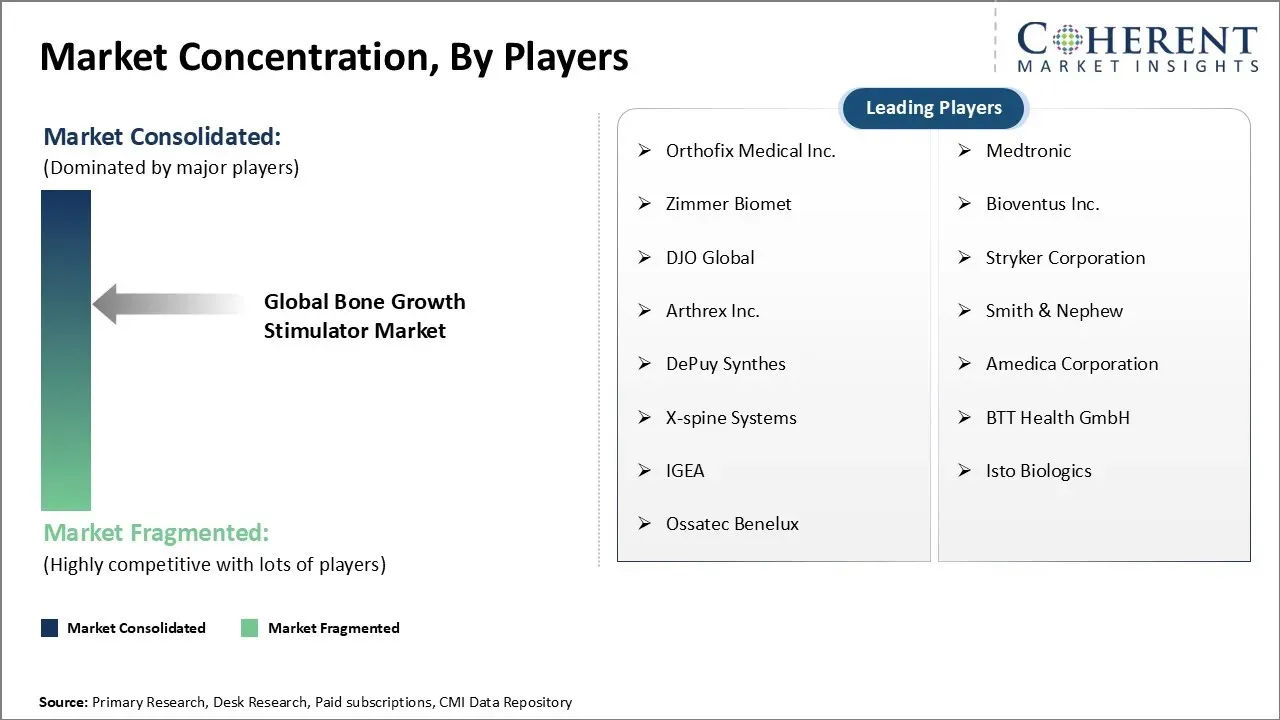
| Companies covered: | Orthofix Medical Inc., Medtronic, Zimmer Biomet, Bioventus Inc., DJO Global, Stryker Corporation, Arthrex Inc., Smith & Nephew, DePuy Synthes, Amedica Corporation, X-spine Systems, BTT Health GmbH, IGEA, Isto Biologics, and Ossatec Benelux | ||
| Growth Drivers: |
| ||
| Restraints & Challenges: |
| ||
Bone Growth Stimulator Market Growth Drivers
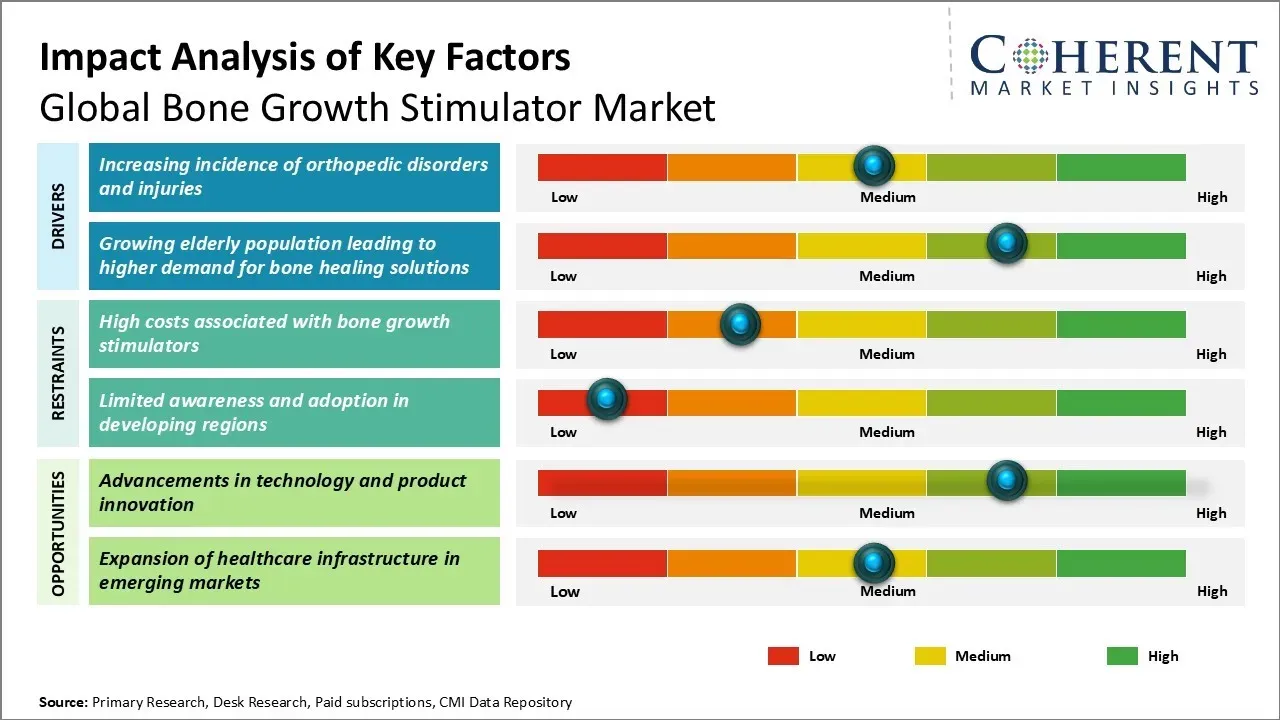
- Increasing incidence of orthopedic disorders and injuries
The global burden of orthopedic disorders and injuries has increased substantially in recent years. A variety of factors have contributed to this rise. Changing lifestyles with increased sedentary habits and obesity have led to a spike in musculoskeletal problems such as osteoarthritis which is a highly common cause of physical disability among older people. According to the OHID Population Health Analysis, in 2024, the prevalence of people aged 16 and over self-reporting a long-term musculoskeletal condition was 17.9%, among which the number is observed to be lower in males (15.6%) than in females (20.0%). The lifelong wear and tear of weight-bearing joints often results in degeneration of cartilage and underlying bone, necessitating surgical interventions and rehabilitation. These trends are significantly boosting the bone growth stimulator market share, as demand rises for non-invasive solutions that accelerate bone healing and improve post-surgical recovery outcomes.
Bone Growth Stimulator Market Opportunity
- Advancements in technology and product innovation
The global bone growth stimulator market is expected to witness numerous lucrative opportunities for players attributed to continued advancements in technology and product innovation. Vendors are increasingly investing in R&D to launch newer generation devices with improved functionalities. They are developing bone growth stimulators that can stimulate targeted areas more efficiently through advanced electrode designs. There is also a scope of developing patch-based non-invasive bone growth stimulation solutions which can benefit out-patients. Furthermore, the integration of digital technologies like IoT and AI into bone growth stimulators can allow remote monitoring of patients. These advancements are likely to shape the bone growth stimulator market forecast, offering new growth avenues for manufacturers and healthcare providers alike.
Analyst Opinion (Expert Opinion)
- The Bone Growth Stimulator market value is on the cusp of a critical transformation driven by shifting patient preferences, payer scrutiny, and increasingly evidence-based clinical adoption.
- Most BGS devices today still use pulsed electromagnetic fields (PEMF), a technology developed in the 1980s and 1990s. Companies like Orthofix and Bioventus continue to push these products with little change. As of 2023, over 70% of U.S. bone healing cases that used BGS involved these older devices.
- Meanwhile, more modern options—like low-intensity pulsed ultrasound (LIPUS)—have shown better results in some cases. A 2022 study showed that LIPUS helped heal tibial shaft fractures 21% faster than standard treatments. Yet this newer tech is barely being used. Why? Because the companies making them aren’t doing a good job proving their value to hospitals and insurers.
- One big issue is insurance. In the U.S., Medicare and private insurers only pay for BGS in very limited cases—mostly long bone non-unions and some spine surgeries that don't heal after many months. This doesn’t reflect how often these devices could help in modern orthopedic surgery.
- For example, in anterior cervical spine fusion procedures (a common neck surgery), up to 15% of patients have healing issues. But BGS isn't covered for these cases, even though surgeons say it could help. Until companies run large, real-world studies to show that newer BGS devices save money and improve outcomes, insurers won’t expand coverage.
Speak to the analyst
Want personalized insights?
Take the findings above to one of our principal consultants, or have the report rebuilt around the segments, geographies and competitors you actually track.
Market Segmentation
- Material Type Insights (Revenue, USD Bn, 2026 - 2033)
- Bone Growth Stimulation Devices
- External Bone Growth Stimulators
- Ultrasonic Bone Growth Stimulators
- Implanted Bone Growth Stimulators
- Bone Morphogenetic Proteins
- Platelet-Rich Plasma
- Application Insights (Revenue, USD Bn, 2026 - 2033)
- Spinal Fusion Surgeries
- Delayed Union & Nonunion Bone Fractures
- Oral & Maxillofacial Surgeries
- Other Applications
- End User Insights (Revenue, USD Bn, 2026 - 2033)
- Hospitals
- Ambulatory Surgical Centers
- Home Care Settings
- Academic and Research Institutes
- Regional Insights (Revenue, USD Bn, 2026 - 2033)
- North America
- U.S.
- Canada
- Latin America
- Brazil
- Argentina
- Mexico
- Rest of Latin America
- Europe
- Germany
- U.K.
- Spain
- France
- Italy
- Russia
- Rest of Europe
- Asia Pacific
- China
- India
- Japan
- Australia
- South Korea
- ASEAN
- Rest of Asia Pacific
- Middle East
- GCC Countries
- Israel
- Rest of Middle East
- Africa
- South Africa
- North Africa
- Central Africa
- North America
- Key Players Insights (Revenue, USD Bn, 2021 - 2033)
- Orthofix Medical Inc.
- Medtronic
- Zimmer Biomet
- Bioventus Inc.
- DJO Global
- Stryker Corporation
- Arthrex Inc.
- Smith & Nephew
- DePuy Synthes
- Amedica Corporation
- X-spine Systems
- BTT Health GmbH
- IGEA
- Isto Biologics
- Ossatec Benelux
Sources
Primary Research Interviews from the following stakeholders
Stakeholders
- Interviews with orthopedic surgeons, rehabilitation specialists, biomedical engineers, procurement heads at hospitals, regulatory officers, and product development teams in medtech companies across North America, Europe, and Asia-Pacific.
Specific stakeholders
- Orthopedic and spine specialists at leading hospitals
- Rehabilitation department heads at specialty clinics and trauma centers
- Medical device procurement managers at private and public hospital networks
- Biomedical researchers at medical institutes and universities
- Product development leads at implant and orthopedic OEMs
- Clinical trial coordinators involved in bone regeneration and spinal fusion studies
- Hospital regulatory compliance officers and quality assurance personnel
- Insurance claims specialists and medical reimbursement consultants
Databases
- U.S. Food and Drug Administration (FDA) Device Registration Database
- European Medical Device Nomenclature (EMDN)
- Central Drugs Standard Control Organization (CDSCO), India
- Ministry of Health, Labour and Welfare (Japan) – Medical Device Approval Records
- World Health Organization (WHO) Medical Devices Data
- National Center for Biotechnology Information (NCBI) – Clinical Trials and Meta-Analysis
- Health Canada – Device Licensing Database
- China National Medical Products Administration (NMPA)
- ClinicalTrials.gov – U.S. National Library of Medicine
Magazines
- MDDI (Medical Device and Diagnostic Industry)
- Orthopedic Design & Technology
- SpineLine – North American Spine Society
- Today's Medical Developments
- Medical Design Briefs
- Medtech Insight
- Bone & Joint Journal News Review
- Innovation in Orthopedics
Journals
- Journal of Orthopaedic Research
- Bone & Joint Journal
- Clinical Orthopaedics and Related Research
- Journal of Biomedical Materials Research
- IEEE Transactions on Biomedical Engineering
- Spine Journal
- Journal of Bone and Mineral Research
- European Spine Journal
Newspapers
- The Wall Street Journal – Health & Medicine
- Financial Times – Healthcare and MedTech Section
- The Hindu Business Line – Life Sciences & Medical Devices
- The Economic Times – BioPharma & Devices
- Business Standard – Healthcare Technology
- Nikkei Asia – MedTech and Life Sciences
Associations
- Orthopaedic Research Society (ORS)
- American Academy of Orthopaedic Surgeons (AAOS)
- North American Spine Society (NASS)
- Biomedical Engineering Society (BMES)
- Asia Pacific Orthopaedic Association (APOA)
- International Society for Technology in Arthroplasty (ISTA)
- Association of Indian Medical Device Industry (AIMED)
- Japan Federation of Medical Devices Associations (JFMDA)
Public Domain Sources
- Ministry of Health and Family Welfare (India)
- Central Drugs Standard Control Organization (CDSCO), India
- U.S. Centers for Medicare & Medicaid Services (CMS) – Reimbursement Data
- National Health Service (NHS), U.K. – Device Procurement Reports
- World Bank – Health Infrastructure and Medical Technology Investments
- National Institutes of Health (NIH) – Musculoskeletal Program Updates
- Reserve Bank of India (RBI) – Health Sector Outlook
- Department of Science and Technology (India) – Biomedical Innovations
- EU Medical Device Coordination Group (MDCG) Publications
Proprietary Elements
- CMI Data Analytics Tool, and Proprietary CMI Existing Repository of information for last 8 years
Get access to 250+ pages report
Every segment, forecast, competitor profile and data table behind the analysis above — available for instant download.
- ESOMAR Member
- ISO 9001:2015 Certified
- D-U-N-S Registered
- GDPR & CCPA Compliant
Missing comfort of reading report in your local language? Find your preferred language:
Transform your Strategy with Exclusive Trending Reports
Frequently Asked Questions
The Bone Growth Stimulator Market is estimated to be valued at USD 1.33 Bn in 2026, and is expected to reach USD 1.96 Bn by 2033.
The CAGR of the Bone Growth Stimulator Market is projected to be 5.7% from 2026 to 2033.
Increasing incidence of orthopedic disorders and injuries and growing elderly population leading to higher demand for bone healing solutions are the major factors driving the growth of the global bone growth stimulator market.
High costs associated with bone growth stimulators and limited awareness and adoption in developing regions are the major factors hampering the growth of the global bone growth stimulator market.
In terms of material type, the bone growth stimulation devices segment is estimated to dominate the market revenue share in 2026.
Orthofix Medical Inc., Medtronic, Zimmer Biomet, Bioventus Inc., DJO Global, Stryker Corporation, Arthrex Inc., Smith & Nephew, DePuy Synthes, Amedica Corporation, X-spine Systems, BTT Health GmbH, IGEA, Isto Biologics, and Ossatec Benelux are the major players.
North America is expected to lead the global bone growth stimulator market in 2026.