

Cannula Market Size and Forecast — 2026 - 2033
The Global Cannula Market size is estimated to be valued at USD 3.2 billion in 2026 and is expected to reach USD 5.5 billion by 2033, exhibiting a compound annual growth rate (CAGR) of 8.4% from 2026 to 2033.
Overview
The Cannula market comprises a wide range of products designed for various medical applications, including intravenous therapy, oxygen delivery, and surgical procedures. Key product segments include intravenous cannulas, arterial cannulas, and specialty cannulas for cardiac, respiratory, and cosmetic procedures. Intravenous cannulas are widely used for fluid administration and medication delivery, while arterial cannulas support hemodynamic monitoring and blood sampling. Specialty cannulas cater to specific clinical needs such as minimally invasive surgeries and aesthetic treatments. Advances in materials, such as biocompatible plastics and flexible polymers, enhance patient comfort, reduce infection risks, and improve procedural efficiency, driving broader adoption across hospitals and home care settings.
Key Takeaways
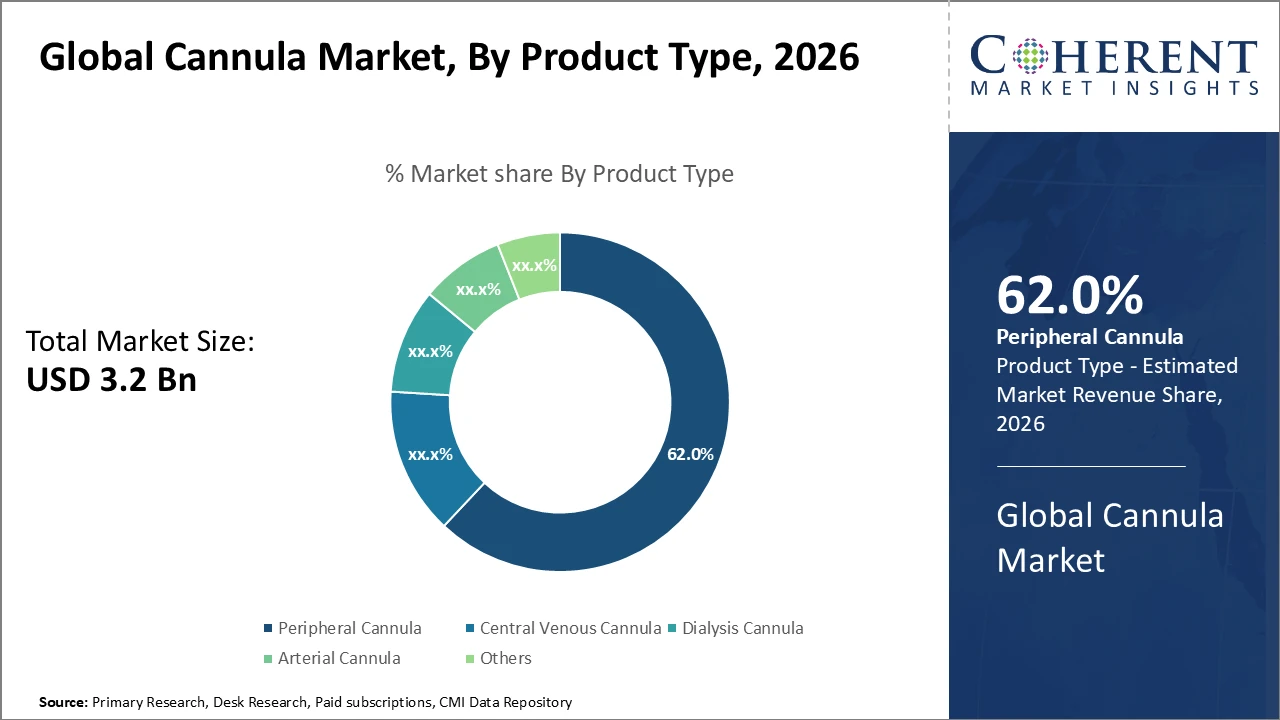
The peripheral cannula segment dominates the market with a 62% industry share, driven by widespread use in oxygen therapy and intravenous treatments.
Polymer-based cannulas are the fastest-growing segment due to innovations in biocompatible materials, improving patient comfort and reducing infection risks.
Cardiology is the largest application segment, supported by the rising prevalence of cardiovascular diseases worldwide.
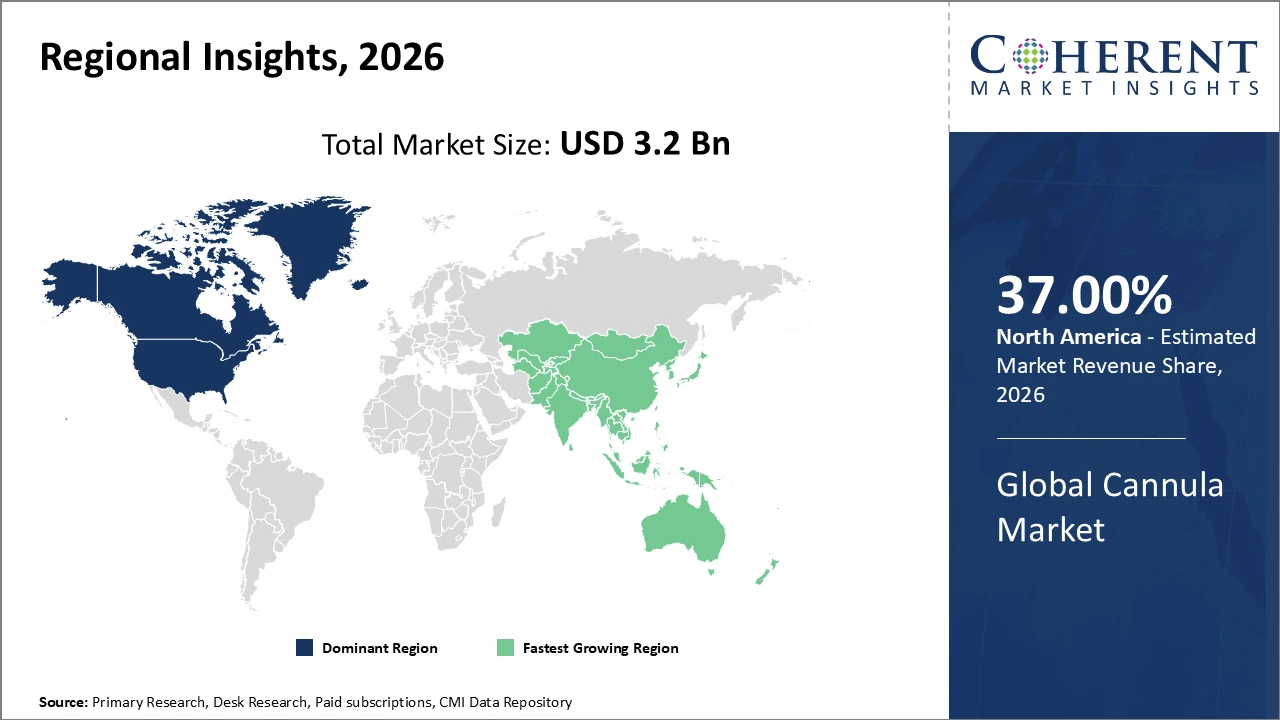
North America holds the largest regional market share, supported by advanced healthcare infrastructure and stringent regulatory frameworks ensuring device safety.
Asia Pacific is the fastest-growing region, driven by rapid adoption of disposable and polymer cannulas, expanding hospital networks, and supportive government healthcare initiatives.
Europe shows steady growth, influenced by an aging population and increasing outpatient surgical procedures.
Cannula Market Segmentation Analysis
Cannula Market Insights, By Product Type
Peripheral cannulas dominate the market with a 62% share, primarily due to their widespread use in intravenous therapy, oxygen delivery, and blood sampling across hospitals worldwide. Their ease of use, affordability, and versatility make them the preferred choice in acute care and outpatient settings. The fastest-growing segment is the central venous cannula, driven by the increasing incidence of chronic diseases requiring long-term vascular access, such as cancer and renal failure, particularly among aging populations and rising oncology treatment volumes. Dialysis and arterial cannulas hold moderate shares, catering to niche applications like hemodialysis and blood pressure monitoring, while the ‘Others’ subsegment, including specialized pediatric and surgical cannulas, experiences steady but slower growth.
Cannula Market Insights, By Application
Cardiology dominates the cannula market, accounting for over 35% of the share, driven by the growing global burden of cardiovascular diseases that necessitate increased vascular access for diagnostic and therapeutic procedures. This segment fuels demand for precision-engineered cannulas featuring high flow rates and infection-resistant coatings. The fastest-growing application is oncology, supported by rising cancer incidences and the need for reliable vascular access devices for chemotherapy administration. Nephrology demonstrates steady growth due to increasing dialysis treatments worldwide. Anesthesiology maintains cannula demand in perioperative care, while the ‘Others’ category, including emergency medicine and pediatric applications, shows gradual but consistent adoption.
Cannula Market Insights, By Material Type
The polymer segment dominates the market with a growing share exceeding 45%, driven by the global shift toward biocompatible, patient-friendly materials that reduce infection risks and enhance flexibility. Polymer cannulas are preferred due to technological advancements enabling disposable, minimally traumatic devices that meet stringent healthcare standards. The silicone segment is the fastest-growing, supported by its superior flexibility and reduced tissue irritation, which is critical for long-term catheterization in cardiology and oncology. Stainless steel cannulas remain important in surgical and emergency settings for their durability and precision, while the plastic segment serves low-cost, disposable needs in emerging markets. The ‘Others’ category includes advanced composite materials under research for future adoption.
Cannula Market Trends
Cannula market trends show increasing integration of automation and sensor technology, enabling real-time patient monitoring, especially in intensive care units.
Adoption of smart cannulas in U.S. hospitals rose by 14% in 2025, reflecting growing clinical reliance on connected devices.
There is a strong shift toward disposable and polymer-based cannulas, improving infection control and aligning with post-pandemic healthcare protocols.
Technological advancements enhance patient safety, device precision, and ease of use, supporting broader adoption in critical care and home healthcare settings.
Fresenius Medical Care expanded its polymer cannula range in 2026, targeting dialysis centers globally and exemplifying market innovation and regional penetration.
Cannula Market Insights, By Geography
 North America Cannula
Market Analysis and Trends
North America Cannula
Market Analysis and Trends
In North America, the cannula market is dominated by strong healthcare infrastructure and stringent regulatory standards that ensure high device quality. The region represents over 37% of the global market, led primarily by the United States, where expansive hospital networks and outpatient facilities drive demand. Key companies such as Becton Dickinson and Medtronic have strengthened their positions through technological innovation, advanced product portfolios, and extensive distribution channels. Supportive government initiatives promoting minimally invasive procedures, coupled with a growing geriatric population, further contribute to market expansion. These factors collectively reinforce North America’s leading role in the global cannula industry.
Asia Pacific Cannula Market Analysis and Trends
The Asia Pacific region is witnessing the fastest growth in the cannula market, with a CAGR exceeding 11% from 2026 to 2033. This growth is driven by expanding healthcare accessibility, rising government investments, and increasing prevalence of chronic diseases. India and China have emerged as key markets, supported by growing production capabilities and adoption of advanced cannula solutions. Local manufacturers have scaled up production to meet domestic demand, while favorable trade agreements have enhanced exports across the region. These factors collectively accelerate market penetration, making Asia Pacific a critical hub for both consumption and manufacturing in the global cannula industry.
Cannula Market Outlook for Key Countries
USA Cannula Market Analysis and Trends
The U.S. cannula market continues to lead globally, driven by innovations in polymer-based cannulas and integration of smart technologies. In 2025, more than 25 million units were utilized across hospitals for applications including cardiology, oncology, and critical care. Companies such as Teleflex and Smiths Medical have launched advanced product lines designed to enhance patient comfort and reduce infection risks, contributing to a 9% increase in market revenue. Supportive regulatory frameworks have also expedited approvals for next-generation oxygen cannulas, further enabling market expansion. These factors reinforce the U.S. as a key driver of innovation and growth in the global cannula industry.
Germany Cannula Market Analysis and Trends
Germany’s cannula market is driven by advanced healthcare infrastructure, high patient care standards, and stringent regulatory requirements ensuring device safety and quality. Hospitals and specialized clinics increasingly adopt polymer-based and precision-engineered cannulas for applications in cardiology, oncology, and dialysis. The market benefits from domestic and international players such as B. Braun Melsungen and Fresenius Medical Care focusing on innovation, localized manufacturing, and sustainable materials. Growing demand in outpatient surgical centers and home healthcare further supports market expansion. Trends indicate increasing use of smart, disposable, and biocompatible cannulas, reflecting Germany’s emphasis on patient safety, infection control, and adoption of minimally invasive medical technologies.
Analyst Opinion
The shift toward minimally invasive surgical techniques has increased demand for specialty cannulas with higher biocompatibility and lower infection risk. Polymer-based cannulas in North American hospitals grew 15% in 2025, reflecting a move from traditional metal designs, improving procedural efficiency and patient outcomes.
Expansion of outpatient surgical procedures drives demand, with ambulatory surgeries rising over 12% globally in 2024. Hospitals and diagnostic centers increasingly use high-flow cannulas for oxygen therapy and infusions, boosting market revenue and expanding market share.
Pricing strategies in emerging economies like India and Brazil led to a 7% reduction in manufacturing costs through local raw material sourcing, increasing affordability and business growth in early 2026.
Asia Pacific’s cannula export volumes grew 18% in 2025 due to expanded production capacity and trade agreements, enhancing market revenue and strengthening global supply chains.
- Current Industry Events of 2026
- Market Size Estimation
- Regional Breakdown
- Competitive Landscape
- Customer Intelligence
- Segmental Analysis
- Pricing Analysis
- Key Market Drivers, Challenges & Future Trends
- Customized Insights Section
Market Scope
| Report Coverage | Details | ||
|---|---|---|---|
| Base Year: | 2025 | Market Size in 2026: | USD 3.2 billion |
| Historical Data for: | 2020 To 2024 | Forecast Period: | 2026 To 2033 |
| Forecast Period 2026 to 2033 CAGR: | 8.4% | 2033 Value Projection: | USD 5.5 billion |
| Geographies covered: |
| ||
| Segments covered: |
| ||
| Companies covered: | Medtronic, Becton Dickinson, Smiths Medical, Teleflex, Terumo Corporation, Cook Medical, Cardinal Health, Nipro Corporation, Baxter International, Fresenius Medical Care | ||
| Growth Drivers: |
| ||
Cannula Market Growth Factors
The growing adoption of minimally invasive surgical procedures is driving significant market growth, as these techniques require specialized cannulas that meet higher precision and safety standards. Additionally, the rising prevalence of chronic diseases, including cardiovascular and renal disorders, has increased demand for cannulas in treatment and diagnostic applications. An expanding geriatric population, particularly in developed countries, further fuels the need for reliable vascular access, supporting market strategies for advanced and durable cannulas. Regulatory approvals emphasizing safety and efficacy have also encouraged innovation, promoting the adoption of novel cannula designs that address infection risk and other market restraints.
Cannula Market Development
In June 2025, Circa Scientific announced the completion of a limited market release of its CrossWise RF transseptal access system. Based in Englewood, Colorado, Circa developed this zero-exchange RF system to deliver energy through a purpose-built cannula that maintains shape and stability during septal crossing. This design enables controlled and precise positioning, helping reduce the risk of unintended movement even in complex anatomies.
Key Players
Leading Companies of the Market
Medtronic
Becton Dickinson
Smiths Medical
Teleflex
Terumo Corporation
Cardinal Health
Nipro Corporation
Baxter International
Fresenius Medical Care
Competitive strategies in the cannula market focus on product innovation and patient-centric designs. In 2025, Teleflex launched a new line of polymer-based cannulas that enhanced biocompatibility, resulting in a 6% increase in their U.S. market share within the first year. Similarly, companies like Medtronic have invested heavily in customization and patient-focused device designs, enabling them to expand their presence in emerging markets such as India and Southeast Asia, where they achieved double-digit revenue growth in 2024. These strategies highlight the importance of innovation and regional market adaptation in maintaining competitive advantage.
Cannula Market Future Outlook
The global cannula market is expected to witness robust growth in the coming years, driven by rising adoption of minimally invasive surgeries, increasing prevalence of chronic diseases, and growing geriatric populations. Technological advancements, including polymer-based, silicone, and smart cannulas with sensor integration, will enhance patient safety, comfort, and procedural efficiency. Emerging economies in Asia Pacific, the Middle East, and Latin America are projected to experience rapid adoption due to expanding healthcare infrastructure and government investments. Additionally, trends toward disposable and eco-friendly cannulas, along with regulatory support for innovation, will further accelerate market growth and broaden accessibility across hospital, outpatient, and home healthcare settings.
Cannula Market Historical Analysis
The cannula market has experienced steady growth over the past decade, driven by increasing surgical procedures, rising prevalence of chronic diseases, and expansion of healthcare infrastructure globally. Initially dominated by metal and basic plastic cannulas, the market gradually shifted toward polymer-based and silicone devices, offering improved biocompatibility, patient comfort, and infection control. North America and Europe led early adoption due to advanced healthcare systems, while Asia Pacific and Latin America saw slower uptake. Key players, including B. Braun Melsungen, Fresenius Medical Care, Teleflex, and Medtronic, focused on product innovation, regulatory compliance, and expanded distribution networks, laying the foundation for current technological advancements and market expansion.
Sources
Primary Research Interviews:
Hospitals, surgical centers, and home healthcare providers
Cardiologists, anesthesiologists, nephrologists, and oncology specialists
Medical device consultants and clinical research organizations
Healthcare procurement managers and biomedical engineers
Magazines:
Medical Device & Diagnostic Industry (MD+DI) – Cannula and Surgical Equipment
HealthTech Magazine – Hospital and Surgical Devices
OR Manager – Operating Room Equipment and Technology
Respiratory Therapy Journal – Cannula Applications in Patient Care
Journals:
Journal of Clinical Anesthesia – Airway and Vascular Access Devices
Respiratory Care – Critical Care and Cannula Applications
American Journal of Surgery – Cannula Use in Surgical Procedures
Critical Care Medicine – Patient Monitoring and Vascular Access
Newspapers:
The Wall Street Journal – Healthcare Equipment and Medical Devices
Financial Times – Medical Technology and Devices
Reuters – Healthcare Equipment & Diagnostics
Bloomberg – Medical Device Industry
Associations:
Association for the Advancement of Medical Instrumentation (AAMI)
American Society of Anesthesiologists (ASA)
American College of Surgeons (ACS)
Medical Device Manufacturers Association (MDMA)
Get access to 250+ pages report
Every segment, forecast, competitor profile and data table behind the analysis above — available for instant download.
- ESOMAR Member
- ISO 9001:2015 Certified
- D-U-N-S Registered
- GDPR & CCPA Compliant
Missing comfort of reading report in your local language? Find your preferred language:
Transform your Strategy with Exclusive Trending Reports
Frequently Asked Questions
The dominant players include Medtronic, Becton Dickinson, Smiths Medical, and Teleflex, which together hold a significant market share due to continuous innovation and strategic expansions.
The market size is expected to reach approximately USD 5.5 billion by 2033, growing at a CAGR of 8.4% due to broader applications and increased clinical demand.
The cardiology segment presents the largest growth opportunity driven by rising cardiovascular disease rates and need for advanced vascular access devices.
Trends will evolve towards enhanced materials, digital integration in device functionality, and eco-friendly product innovations, particularly in developed regions.
The landscape is highly competitive with a focus on innovation and regulatory compliance; challenges include infection risks and cost pressures in emerging markets.
Strategies include product differentiation through R&D, geographic expansion, strategic partnerships, and digitization of sales and service models to enhance market penetration.