

Oxygen Therapy Market Size and Forecast — 2026 - 2033
The Global Oxygen Therapy Market size is estimated to be valued at USD 6.5 billion in 2026 and is expected to reach USD 11.8 billion by 2033, exhibiting a compound annual growth rate (CAGR) of 9.1% from 2026 to 2033.
Overview
The oxygen therapy market focuses on the delivery of supplemental oxygen to patients with respiratory disorders such as chronic obstructive pulmonary disease (COPD), asthma, pneumonia, and sleep apnea. It includes products like oxygen concentrators, cylinders, liquid oxygen systems, and related accessories used in hospitals, clinics, and homecare settings. Market growth is driven by the rising prevalence of respiratory diseases, aging populations, increasing air pollution, and growing demand for home-based healthcare. Technological advancements, portable oxygen devices, and improved reimbursement policies further support market expansion, especially in emerging economies worldwide.
Key Takeaways
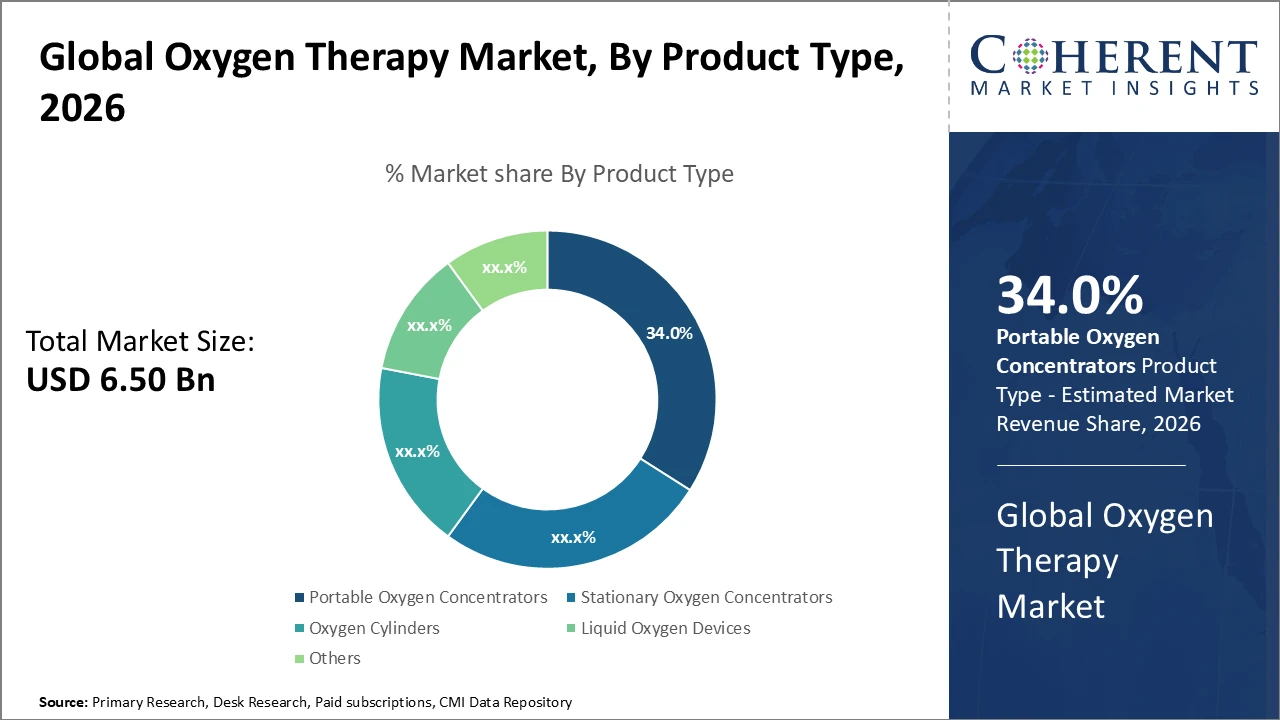
Portable oxygen concentrators dominated the market with a 34% share, driven by increasing demand for mobility and convenience among patients.
The hospital end-use segment leads the market owing to high demand for oxygen therapy in acute and critical care settings.
Homecare settings are experiencing rapid adoption as patients prefer cost-effective, long-term respiratory care at home, supporting overall market growth.
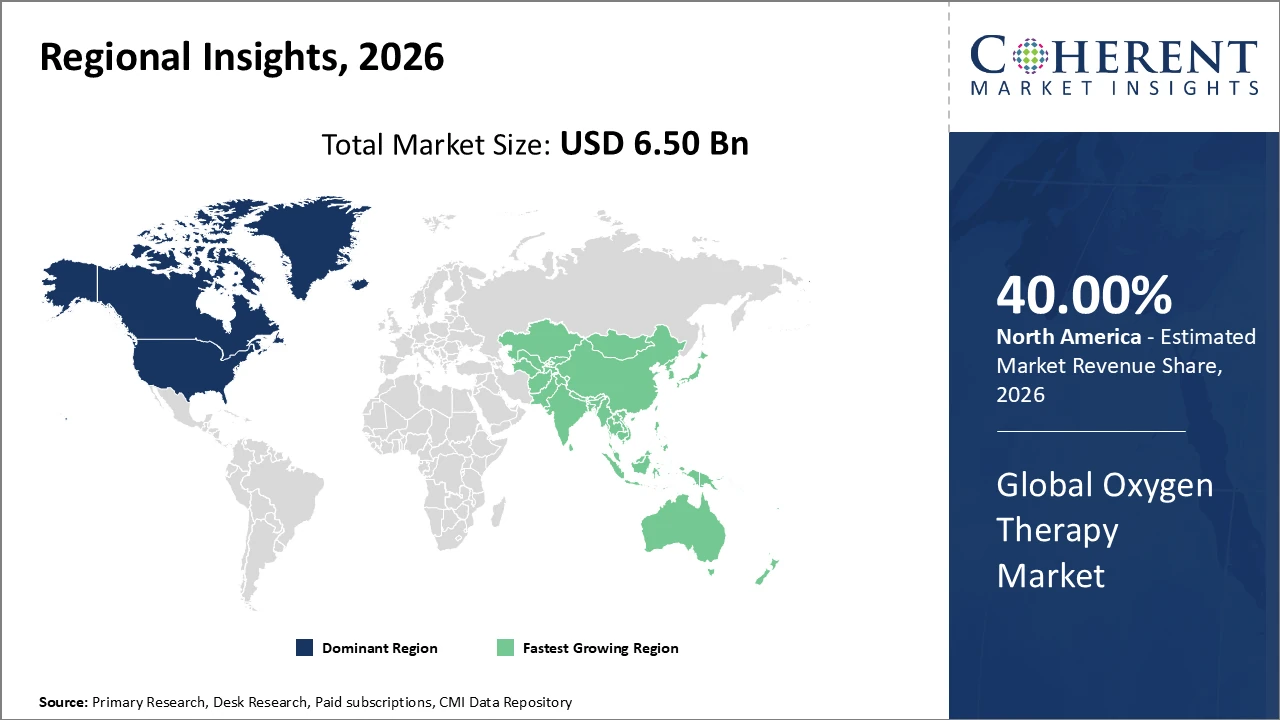
North America holds the largest market share due to advanced healthcare infrastructure and favorable reimbursement policies.
Asia Pacific is the fastest-growing region, supported by government initiatives to expand respiratory care facilities and rising participation of market players.
Europe benefits from strong regulatory support and high adoption of advanced and innovative oxygen therapy technologies.
Oxygen Therapy Market Segmentation Analysis
Oxygen Therapy Market Insights, By Product Type
Portable oxygen concentrators lead the market, holding around 34% share, driven by growing demand for mobility and convenience among patients requiring long-term oxygen therapy. Their suitability for both homecare and ambulatory use makes them a preferred choice. Liquid oxygen devices represent the fastest-growing subsegment due to their high oxygen purity and extended delivery duration, especially in regions with limited healthcare infrastructure. Stationary oxygen concentrators continue to serve hospitals and homecare settings reliably but show slower growth because of limited portability. Oxygen cylinders remain essential for emergency use, while oxygen-conserving devices are gaining traction for energy-efficient oxygen delivery. Continuous innovation in lightweight design and battery efficiency supports sustained segment growth.
Oxygen Therapy Market Insights, By Technology
Continuous flow systems hold a significant market share due to their ability to provide consistent and reliable oxygen delivery, particularly in clinical and hospital settings, supporting their widespread adoption. Pulse dose systems are the fastest-growing technology, as they conserve oxygen by delivering it in synchronized bursts during inhalation, improving patient mobility and extending device battery life. Liquid oxygen technology is gaining momentum, especially in regions facing challenges with oxygen storage and supply infrastructure. The software and services segment is witnessing steady growth with the adoption of data analytics and remote monitoring solutions that enhance patient compliance and operational efficiency. Emerging hybrid technologies focused on personalized oxygen therapy further contribute to market development.
Oxygen Therapy Market Insights, By End-User
Hospitals currently dominate the market due to their central role in managing acute respiratory conditions and postoperative care, resulting in the highest consumption of oxygen therapy products. Their leading share highlights the need for highly reliable and scalable oxygen delivery systems in hospital settings. Homecare settings represent the fastest-growing segment, driven by the increasing prevalence of chronic respiratory diseases and a growing preference for flexible, home-based treatment. Technological advancements in portable oxygen concentrators and supportive reimbursement policies have further accelerated homecare adoption worldwide. Specialized clinics serve specific patient populations, while emergency care units address urgent respiratory needs. Other end users, including rehabilitation centers, are increasingly incorporating oxygen therapy to support patient recovery and rehabilitation.
Oxygen Therapy Market Trends
The transition toward smart oxygen therapy devices integrated with AI and remote monitoring is transforming patient management and care delivery models.
Adoption of pulse dose systems with Bluetooth connectivity increased by 18% between 2024 and 2026, driven by enhanced patient engagement and improved adherence tracking.
Growing use of liquid oxygen technologies in emerging markets reflects their higher efficiency and portability, helping overcome limited healthcare infrastructure.
Rising integration of telehealth platforms with oxygen therapy management highlights the convergence of digital health and respiratory care.
These developments are creating seamless user experiences and supporting better long-term treatment compliance for patients.
Oxygen Therapy Market Insights, By Geography
North America Oxygen Therapy Market Analysis and Trends
North America holds a dominant position in the oxygen therapy market, driven by advanced healthcare infrastructure, supportive government reimbursement policies, and widespread adoption of portable oxygen devices. In 2026, the region accounted for more than 40% of the global market share, supported by the strong presence of major industry players and a well-developed supply chain network. Rising prevalence of chronic respiratory diseases and an aging population further contribute to demand. Additionally, initiatives aimed at expanding home healthcare services and improving patient awareness of long-term oxygen therapy continue to fuel steady revenue growth across the region.
Asia Pacific Oxygen Therapy Market Analysis and Trends
The Asia Pacific region represents the fastest-growing market for oxygen therapy, registering a CAGR exceeding 10%. This growth is driven by rising healthcare investments, increasing prevalence of respiratory diseases, and expanding middle-class populations seeking improved medical care. Supportive government policies aimed at enhancing healthcare access, along with rapid expansion of local manufacturing capacities, are strengthening regional supply chains. Countries such as India and China are emerging as key growth hubs due to large patient populations, improving infrastructure, and growing participation of domestic and international market players.
Oxygen Therapy Market Outlook for Key Countries
USA Oxygen Therapy Market Analysis and Trends
The USA holds the largest share of the global oxygen therapy market, driven by a high prevalence of COPD and strong regulatory support for innovative oxygen devices. In early 2025, the Centers for Medicare & Medicaid Services (CMS) expanded reimbursement policies, increasing insurance coverage for home oxygen therapies by 15%. Leading companies like Philips Respironics and Medtronic have strengthened their market presence through strategic healthcare partnerships and significant R&D investments in AI-integrated oxygen delivery systems. The country’s advanced healthcare infrastructure and patient-focused care models further support the adoption of cutting-edge oxygen therapy technologies nationwide.
Germany Oxygen Therapy Market Analysis and Trends
Germany’s oxygen therapy market is among the leading in Europe, supported by advanced healthcare infrastructure, strong regulatory frameworks, and high patient awareness of respiratory care. Hospitals dominate usage for acute and chronic respiratory conditions, while homecare adoption is rising due to portable and efficient oxygen delivery systems. Technological innovations, including pulse dose devices, AI-integrated systems, and lightweight concentrators, are driving market growth. Reimbursement policies and government initiatives promoting chronic disease management further encourage adoption. Germany also benefits from the presence of major European and global manufacturers, robust supply chains, and a focus on patient-centric care, positioning the market for steady expansion in the coming years.
Analyst Opinion
The rising prevalence of Chronic Obstructive Pulmonary Disease (COPD) is a key demand driver for the oxygen therapy market, with WHO reporting 3.2 million global deaths in 2024, highlighting the need for advanced therapies.
Increasing COPD cases boost adoption of oxygen therapy products and drive innovations in portable oxygen concentrators, improving treatment accessibility.
On the supply side, production capacities and technological integration have improved significantly, with North American and Asian facilities increasing high-flow oxygen device output by over 15% in 2025.
Economies of scale have enhanced price competitiveness, enabling wider penetration in emerging markets.
Diversified end-use applications, from hospital acute care to home oxygen therapy, are fueling revenue growth.
Use of liquid oxygen systems in developing countries grew, with imports rising 12% in 2026, reflecting evolving clinical preferences and infrastructure development.
Innovations such as AI-enabled monitoring in oxygen devices enhance patient adherence and management.
In 2024, Europe saw multiple smart oxygen delivery systems launched with real-time data analytics, setting new standards for personalized therapy and long-term care efficiency.
- Current Industry Events of 2026
- Market Size Estimation
- Regional Breakdown
- Competitive Landscape
- Customer Intelligence
- Segmental Analysis
- Pricing Analysis
- Key Market Drivers, Challenges & Future Trends
- Customized Insights Section
Market Scope
| Report Coverage | Details | ||
|---|---|---|---|
| Base Year: | 2025 | Market Size in 2026: | USD 6.5 billion |
| Historical Data for: | 2020 To 2024 | Forecast Period: | 2026 To 2033 |
| Forecast Period 2026 to 2033 CAGR: | 9.1% | 2033 Value Projection: | USD 11.8 billion |
| Geographies covered: |
| ||
| Segments covered: |
| ||
| Companies covered: | Philips Respironics, ResMed Inc., Medtronic plc, Invacare Corporation, Air Liquide Healthcare, Chart Industries Inc., Linde plc, BOC Healthcare, GE Healthcare, Hamilton Medical | ||
| Growth Drivers: |
| ||
Oxygen Therapy Market Growth Factors
The growing global burden of chronic respiratory and cardiovascular diseases is a major driver of the oxygen therapy market, with COPD and sleep apnea incidences increasing over 7% annually in recent years. Technological advancements in portable oxygen devices have enhanced patient mobility and treatment adherence, particularly benefiting the expanding geriatric population, which grew by approximately 3% globally in 2024. Supportive government initiatives and reimbursement policies, especially in North America and Europe, have accelerated adoption, highlighted by a 15% rise in insurance coverage for home oxygen therapy in 2025. Additionally, rising healthcare infrastructure investments in Asia Pacific countries like India and China have improved accessibility, fueling market revenue growth.
Oxygen Therapy Market Development
In January 2025, HCG Manavata Cancer Centre (HCG MCC) launched its Hyperbaric Oxygen Therapy (HBOT) department to support faster healing and improved patient recovery. The advanced HBOT facility can treat up to four patients at a time, marking a significant advancement over conventional monoplace chambers.
Key Players
Leading Companies of the Market
Philips Respironics
ResMed Inc.
Medtronic plc
Invacare Corporation
Air Liquide Healthcare
Chart Industries Inc.
Linde plc
BOC Healthcare
GE Healthcare
Hamilton Medical
Competitive strategies in the oxygen therapy market focus on innovation, partnerships, and market expansion. Philips Respironics integrated IoT-enabled concentrators, leading to a 10% improvement in home therapy adherence in Q2 2025. Medtronic formed strategic alliances with healthcare providers across North America, boosting its liquid oxygen device market share by 8% in 2024. ResMed expanded its presence in emerging economies by launching cost-effective pulse dose systems, successfully capturing new user segments. These approaches—technology integration, collaborative partnerships, and targeted product launches—demonstrate how leading players are driving growth and strengthening their positions in the global oxygen therapy market.
Oxygen Therapy Market Future Outlook
The oxygen therapy market is poised for robust growth in the coming years, driven by rising prevalence of chronic respiratory and cardiovascular diseases, aging populations, and increasing awareness of home-based care. Technological advancements, including portable and AI-enabled oxygen delivery systems, are enhancing patient mobility, adherence, and personalized treatment. Expanding healthcare infrastructure and supportive reimbursement policies in North America, Europe, and Asia Pacific are expected to further accelerate adoption. Additionally, integration of telehealth and remote monitoring solutions will create seamless care experiences, while emerging markets present significant opportunities for market expansion, positioning the industry for sustained revenue growth globally.
Oxygen Therapy Market Historical Analysis
The oxygen therapy market has experienced steady growth over the past decade, driven primarily by the rising prevalence of chronic respiratory diseases such as COPD, asthma, and sleep apnea. Historically, hospitals dominated the market due to the critical need for acute care oxygen delivery, while homecare adoption gradually increased with the development of portable and stationary oxygen concentrators. Technological innovations, including lightweight devices and improved delivery systems, enhanced patient compliance and accessibility. North America and Europe led early market expansion owing to advanced healthcare infrastructure and favorable reimbursement policies, while emerging economies began contributing to growth as healthcare investments and awareness increased.
Sources
Primary Research Interviews:
Pulmonologists and Respiratory Physicians
Homecare Nurses and Respiratory Therapists
Hospital Administrators and Clinical Technicians
Oxygen Therapy Device Manufacturers and Distributors
Databases:
World Health Organization (WHO) Global Health Observatory
OECD Health Data
International Diabetes and Respiratory Disease Statistics (IDRDS)
Global Health Data Exchange (GHDx)
Magazines:
Medical Design & Outsourcing
Respiratory Care News
Home Healthcare Magazine
HealthTech Magazine
Medical Device Network
Journals:
Journal of Respiratory and Critical Care Medicine
Respiratory Medicine Journal
International Journal of Chronic Obstructive Pulmonary Disease (COPD)
American Journal of Respiratory and Critical Care Medicine
Newspapers:
The New York Times (Health)
The Guardian (Health)
Financial Times (Healthcare)
The Hindu (Health)
Reuters Health
Associations:
World Health Organization (WHO)
American Thoracic Society (ATS)
European Respiratory Society (ERS)
American Association for Respiratory Care (AARC)
International Society for Oxygen Therapy and Pulmonary Care
Get access to 250+ pages report
Every segment, forecast, competitor profile and data table behind the analysis above — available for instant download.
- ESOMAR Member
- ISO 9001:2015 Certified
- D-U-N-S Registered
- GDPR & CCPA Compliant
Missing comfort of reading report in your local language? Find your preferred language:
Transform your Strategy with Exclusive Trending Reports
Frequently Asked Questions
The market is led by companies such as Philips Respironics, ResMed Inc., Medtronic plc, Fisher & Paykel Healthcare, and Invacare Corporation, which maintain strong market positions through continuous product innovation and strategic collaborations.
The market is projected to reach USD 11.8 billion by 2033, growing at a CAGR of 9.1%, driven by rising demand across hospitals, homecare, and emerging regions.
Homecare settings offer the greatest growth potential due to the rising prevalence of chronic respiratory diseases and increased adoption of portable oxygen devices.
Key trends include the rise of AI-enabled oxygen devices, integration with telehealth and remote monitoring platforms, and greater adoption of liquid oxygen technologies to improve patient adherence and flexibility.
The market is highly competitive, driven by product innovation and geographic expansion, while challenges include stringent regulations, high device costs, and limited accessibility in emerging economies.
Companies focus on product differentiation, strategic partnerships, regional expansion, and significant investments in R&D and digital health solutions to enhance market reach and customer engagement.