

Polyclonal Antibody Market Size and Forecast — 2026-2033
Polyclonal Antibody Market is estimated to be valued at USD 1,305.2 Mn in 2026 and is expected to reach USD 1,975.6 Mn in 2033, exhibiting a compound annual growth rate (CAGR) of 6.1% from 2026 to 2033. The global polyclonal antibody market has strong growth potential over the next five years.
Polyclonal Antibody Market Regional Insights
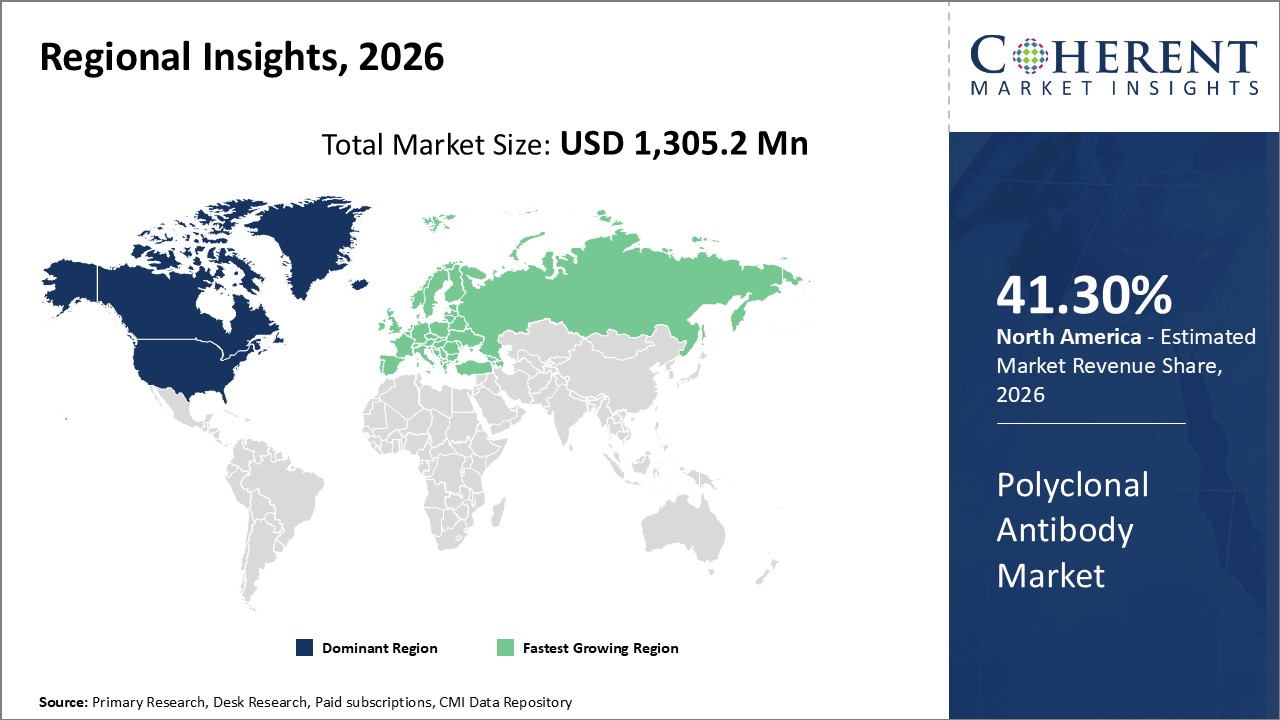
- North America is expected to be the largest market for polyclonal antibody market during the forecast period, accounting for over 41.3% of the market share in 2026. The market growth in North America is due to extensive research activities in the region.
- Europe is expected to be the second-largest market for polyclonal antibody market, accounting for over 23.1% of the market share in 2026. The market growth in Europe is due to strategic developments by companies.
- Asia Pacific is expected to be the third-fastest-growing market, with a CAGR of 7.2% during the forecast period. The market growth in Asia Pacific is due to improving healthcare infrastructure and increasing healthcare expenditure in countries like China and India.
Figure 1. Global Polyclonal Antibody Market Share (%), By Region, 2026
Analyst’s View on Global Polyclonal Antibody Market:
The global polyclonal antibody market has strong growth potential. R&D investment into life science research and disease diagnosis are the key drivers as polyclonal antibodies continue to be critical research tools. The market is also expected to grow due to the increasing application of polyclonal antibodies in drug development and validation studies. North America will continue to dominate due to extensive research activities in the region. However, Asia Pacific is projected to emerge as the fastest-growing region with increasing government funding into healthcare and biotechnology research.
Global Polyclonal Antibody Market Drivers
- Increasing product launch: Increasing adoption of inorganic growth strategies, such as product launch by key market players is expected to drive the global polyclonal antibody market over the forecast period. For instance, in February 2023, F. Hoffmann-La Roche Ltd., a pharmaceutical company, announced the launch of the IDH1 R132H (MRQ-67) Rabbit Monoclonal Primary Antibody and the ATRX Rabbit Polyclonal Antibody to identify mutation status in patients diagnosed with brain cancer.
- Partnerships among key market players: Increasing adoption of inorganic growth strategies, such as partnership is expected to drive the global polyclonal antibody market over the forecast period.
Global Polyclonal Antibody Market Opportunities
- Growing applications of polyclonal antibodies in diagnostics: The growing applications of polyclonal antibodies in diagnostics are having a significant impact on the global polyclonal antibody market. Polyclonal antibodies are seeing increased use in diagnosing a wide range of medical conditions due to their ability to bind to multiple epitopes on an antigen. This allows them to detect antigens more sensitively and accurately compared to monoclonal antibodies. Their multi-specificity also enables them to detect various conformational changes or modifications in antigens. For instance, polyclonal antibodies are indispensable in ELISA-based testing for conditions like rheumatoid arthritis
- Adoption of recombinant polyclonal antibodies: The adoption of recombinant polyclonal antibodies is having a significant impact on the global polyclonal antibody market. Recombinant technology allows for polyclonal antibodies to be produced more consistently and reliably than traditional production methods. Using recombinant techniques, antibodies can be created by isolating antibody-producing immune cell sequences and introducing them into host cells that can mass produce the antibodies. This provides a standardized and scalable method for generating polyclonal antibodies without needing to immunize animals.
- Current Industry Events of 2026
- Market Size Estimation
- Regional Breakdown
- Competitive Landscape
- Customer Intelligence
- Segmental Analysis
- Pricing Analysis
- Key Market Drivers, Challenges & Future Trends
- Customized Insights Section
Polyclonal Antibody Market Report Coverage
| Report Coverage | Details | ||
|---|---|---|---|
| Base Year: | 2025 | Market Size in 2026: | USD 1,305.2 Mn |
| Historical Data for: | 2020 To 2024 | Forecast Period: | 2026 To 2033 |
| Forecast Period 2026 to 2033 CAGR: | 6.1% | 2033 Value Projection: | USD 1,975.6 Mn |
| Geographies covered: |
| ||
| Segments covered: |
| ||
| Companies covered: | Thermo Fisher Scientific Inc., Santa Cruz Biotechnology, Inc., GenScript, Merck KGaA, Bio-Rad Laboratories, Inc., BioLegend, Inc., GeneTex, ROCKLAND IMMUNOCHEMICALS, INC., Abcam plc., Creative Diagnostics, Crown Bioscience, Takara Bio Inc., Geno Technology Inc., IGY Immune Technologies and Life Sciences Inc., EpigenTek Group Inc., Takeda Pharmaceutical Company Limited and SAB Biotherapeutics | ||
| Growth Drivers: |
| ||
| Restraints & Challenges: |
| ||
Global Polyclonal Antibody Market Trends
- Automation in polyclonal antibody production: The trend of increasing automation in polyclonal antibody production processes is having a significant impact on the global polyclonal antibody market. As biotechnology companies look to improve efficiency and reduce production costs, many are investing heavily in automated systems to handle repetitive tasks involved in polyclonal antibody development. Automated liquid handling machines, robotic arms, and advanced imaging systems are helping to standardize and scale up antibody production workflows. This allows individual companies to meet the large and growing demand for polyclonal antibodies from the research, diagnostics, and therapeutics sectors while minimizing the need for additional hiring and facility expansion.
Global Polyclonal Antibody Market Restraints
- The high costs associated with polyclonal antibody production : The high costs associated with polyclonal antibody production pose a significant challenge for the growth of the global polyclonal antibody market. Polyclonal antibodies are produced by inoculating an animal with an antigen, which stimulates the immune system of the animal to produce a diverse range of antibodies against that target antigen. For instance, the average costs of setting up and operating animal housing and healthcare facilities ranged from US$ 0.5-1 million annually for most mid-sized producers in 2020. Collectively, these expenses pose inhibitive entry barriers for new players and restrain the potential growth of the polyclonal antibody market, especially in low and middle-income countries.
Counterbalance: Thus, key market players are focused on meeting these regulatory standards, which further drives up production expenses.
Stringent regulations
Stringent regulations across various countries are indeed restraining the growth of the global polyclonal antibody market to a large extent. Polyclonal antibodies are produced in animals via immunization and hence involve animal testing and experimentation. Many nations have stringent laws in place to curb excessive and unnecessary animal testing in research.
Such stringent norms aim to restrict unnecessary research using animals but end up lengthening product development timelines and increasing costs for market players in the polyclonal antibody market. They have to invest more in developing alternative research methods and ensuring adherence to animal welfare laws. This impacts the overall pace of new product launches and commercialization, thereby restraining the revenue growth potential of this market to a certain extent.
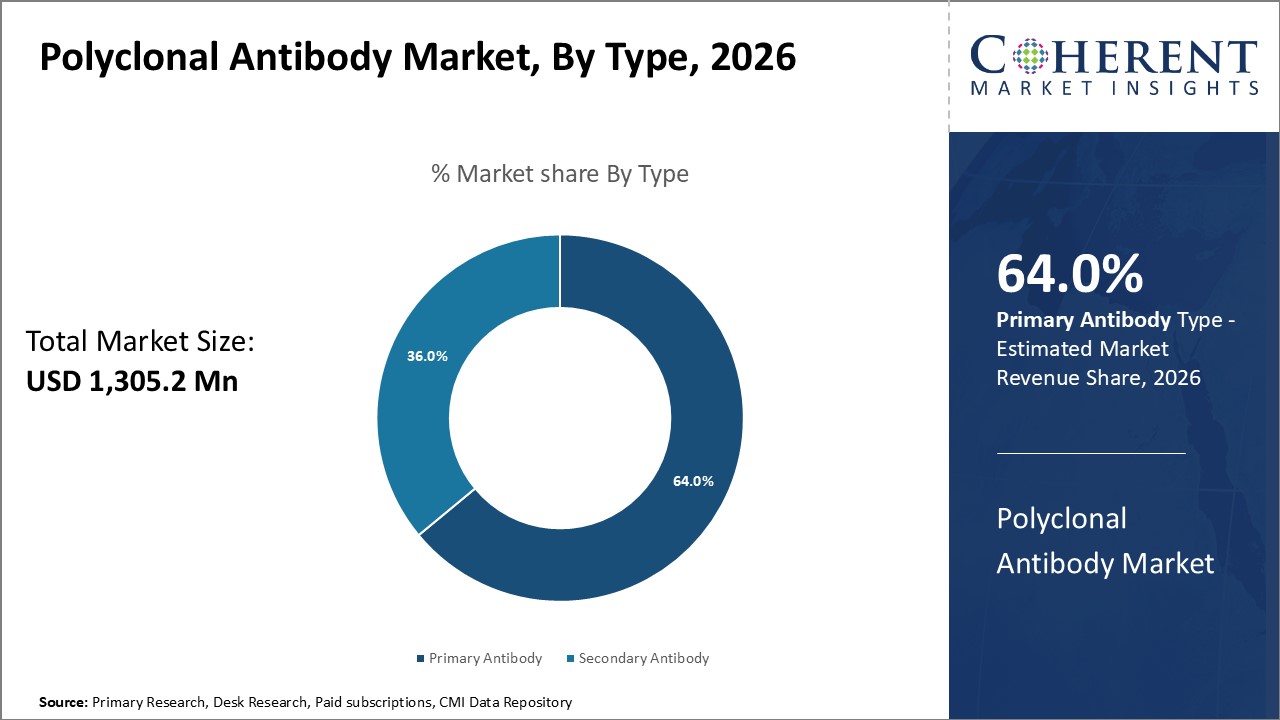
Figure 2. Global Polyclonal Antibody Market Share (%), By Type, 2026
Recent Developments
On January 5, 2023, SAB Biotherapeutics, Inc., a biotechnology company, announced positive results from a project in collaboration with CSL, a biotechnology company, confirming that SAB’s DiversitAb platform can generate functional fully-human anti-idiotype polyclonal antibodies that effectively target and neutralize autoantibodies associated with autoimmune diseases.
Collaborations
In March 2020, Takeda Pharmaceutical Company LimitedThus, these initiatives and collaborations are expected to propel market growth.
Top Companies in Global Polyclonal Antibody Market
- Thermo Fisher Scientific Inc.
- Santa Cruz Biotechnology, Inc.
- GenScript
- Merck KGaA
- Bio-Rad Laboratories, Inc.
- BioLegend, Inc.
- GeneTex
- ROCKLAND IMMUNOCHEMICALS, INC.
- Abcam plc.
- Creative Diagnostics
- Crown Bioscience
- Takara Bio Inc.
- Geno Technology Inc.
- IGY Immune Technologies and Life Sciences Inc.
- EpigenTek Group Inc.
- Takeda Pharmaceutical Company Limited
- SAB Biotherapeutics
Sources
Primary Research Interviews
- Polyclonal antibody providers (e.g., Thermo Fisher Scientific, Abcam, Merck MilliporeSigma, Bio-Rad, Rockland Immunochemicals)
- Academic immunology labs
- Diagnostic and pharma R&D teams
Databases
- NIH RePORTER data
- Antibody Registry (RRID)
- UniProt data
Magazines
- GEN
- The Scientist
Journals
- Journal of Immunological Methods (Elsevier)
- mAbs (Taylor & Francis)
Newspapers
- Reuters Science
- Financial Times – Pharmaceuticals
Associations
- American Association of Immunologists (AAI)
- International Working Group for Antibody Validation
- BIO
Public Domain Sources
- NIH reagent guidance
- U.S. FDA biologics guidance
- ResearchGate publications on polyclonal antibodies
Proprietary Elements
- CMI Data Analytics Tool, Proprietary CMI Existing Repository of information for last 10 years.
Definition: Polyclonal antibodies are produced by inoculating an animal with the immunogen of interest. This triggers an immune response, which leads to the production of antibodies by B-cells against the immunogen. Polyclonal antibodies are widely used in research, diagnostics, and therapeutics as they recognize several epitopes.
Get access to 250+ pages report
Every segment, forecast, competitor profile and data table behind the analysis above — available for instant download.
- ESOMAR Member
- ISO 9001:2015 Certified
- D-U-N-S Registered
- GDPR & CCPA Compliant
Missing comfort of reading report in your local language? Find your preferred language:
Transform your Strategy with Exclusive Trending Reports
Frequently Asked Questions
The Polyclonal Antibody Market is estimated to be valued at USD 1,305.2 Mn in 2026, and is expected to reach USD 1,975.6 Mn by 2033.
The high costs associated with polyclonal antibody production, and stringent regulations are the key factors hampering the growth of the global polyclonal antibody market.
Increasing product launches, partnerships among key market players are the major factors driving the global polyclonal antibody market's growth.
The leading type segment in global polyclonal antibody market is primary antibody.
The major players operating in the global polyclonal antibody market include Thermo Fisher Scientific Inc., Santa Cruz Biotechnology, Inc., GenScript, Merck KGaA, Bio-Rad Laboratories, Inc., BioLegend, Inc., GeneTex, ROCKLAND IMMUNOCHEMICALS, INC., Abcam plc., Creative Diagnostics, Crown Bioscience, Takara Bio Inc., Geno Technology Inc., IGY Immune Technologies and Life Sciences Inc., EpigenTek Group Inc., Takeda Pharmaceutical Company Limited and SAB Biotherapeutics
North America is expected to lead the global polyclonal antibody market
The CAGR of the Polyclonal Antibody Market is projected to be 6.1% from 2026 to 2033.