

Cell Line Development Market Size and Forecast — 2026 - 2033
The Global Cell Line Development Market size is estimated to be valued at USD 5.8 billion in 2026 and is expected to reach USD 14.3 billion by 2033, exhibiting a compound annual growth rate (CAGR) of 13.2% from 2026 to 2033.
Overview
The cell line development market is driven by the rising demand for biologics, including monoclonal antibodies, vaccines, and recombinant proteins used in treating chronic diseases such as cancer, diabetes, and autoimmune disorders. Increasing investment in biopharmaceutical research and growing adoption of advanced therapies like gene and cell therapy are further boosting market growth. Pharmaceutical companies are increasingly outsourcing cell line development to reduce costs, improve efficiency, and accelerate drug development timelines. Technological advancements in genetic engineering, CRISPR, and high-throughput screening enhance productivity and stability of cell lines. Additionally, expanding clinical trials and strong regulatory support for biologics development continue to propel market demand globally.
Key Takeaways
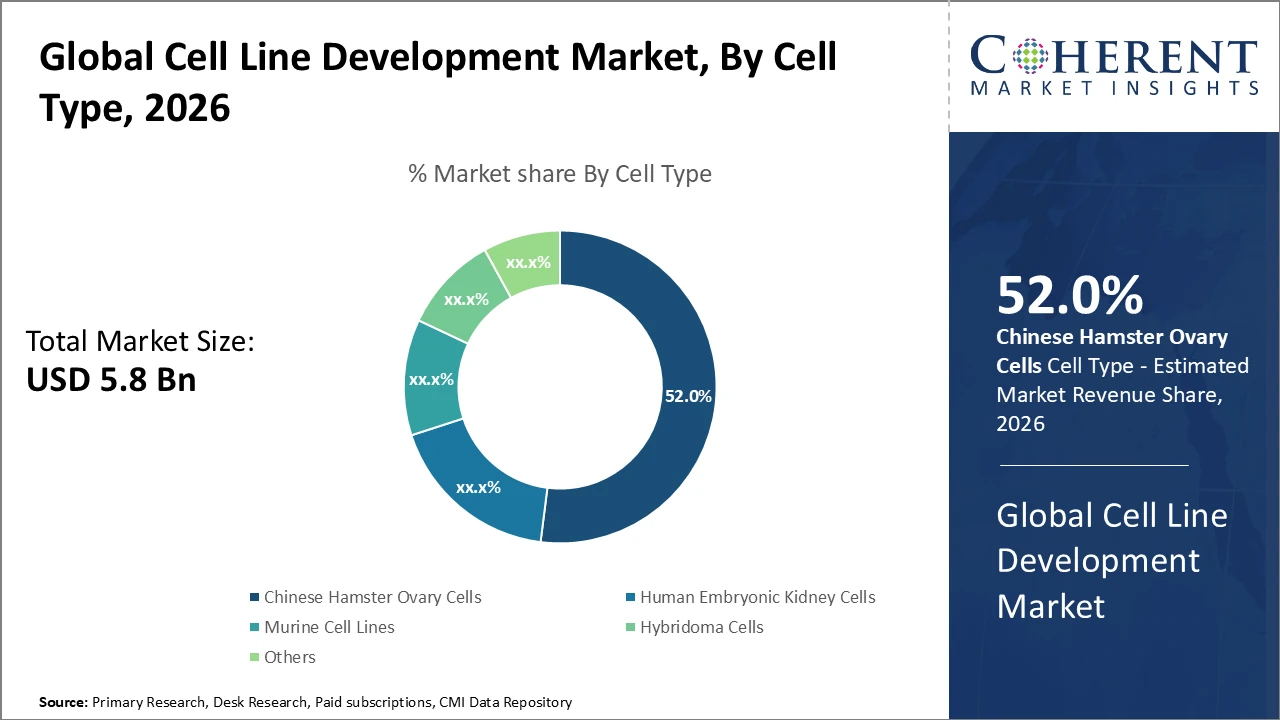
CHO cells dominate with 52% market share due to their proven efficiency in biopharmaceutical production, while human embryonic kidney (HEK) cells are the fastest-growing segment, driven by their increasing use in advanced gene therapy research.
Monoclonal antibody production holds the largest revenue share, supported by rising therapeutic approvals and global demand, whereas gene therapy applications exhibit a strong CAGR due to technological advancements and expanding pipeline development.
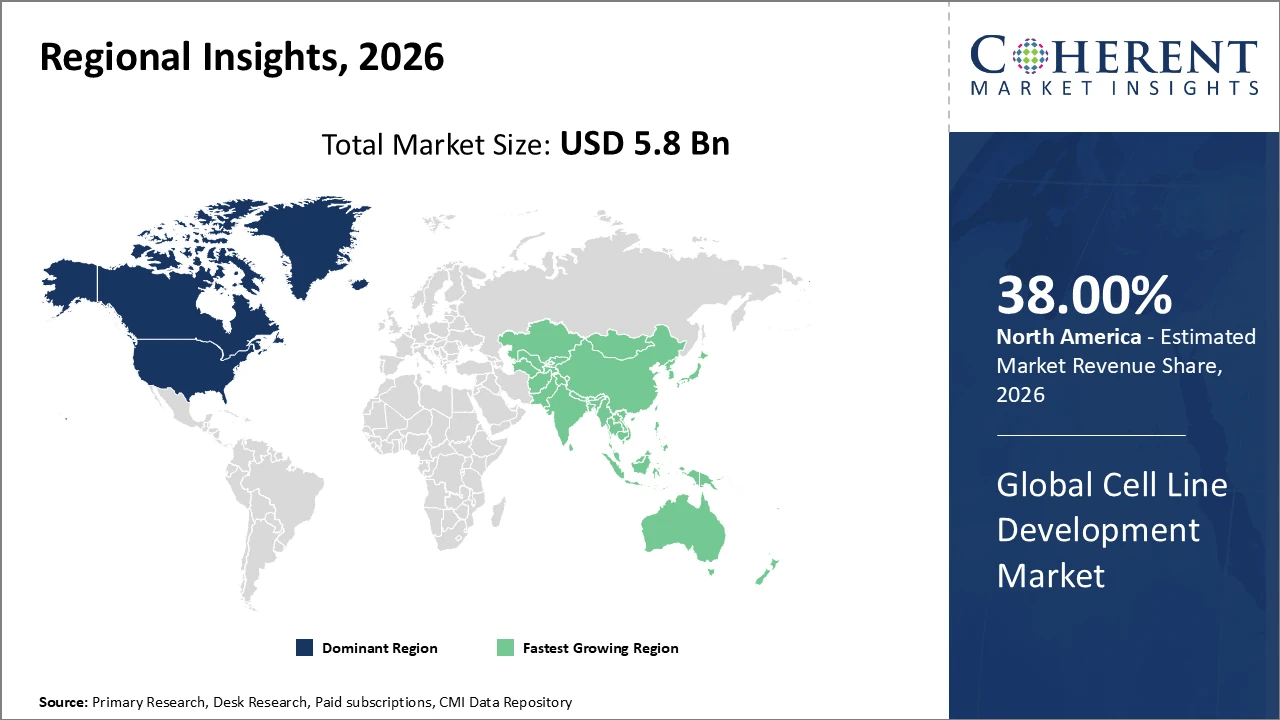
Regionally, North America leads the market, supported by a mature biopharma ecosystem and government funding for biotech research, while Asia Pacific is the fastest-growing region due to increasing investments and rising R&D expenditure in countries such as China and India.
Cell Line Development Market Segmentation Analysis
Cell Line Development Market Insights, By Cell Type
Chinese Hamster Ovary (CHO) cells dominate the Cell Line Development market due to their high-yield, stable expression of recombinant proteins, making them essential for monoclonal antibody production. Their genetic manipulability and scalable production capabilities have reinforced their position, further supported by the growing demand for biosimilars and biobetters. Human Embryonic Kidney (HEK) cells are the fastest-growing segment, driven by applications in gene therapy and viral vector production, offering human-relevant post-translational modifications. Murine cell lines remain important for preclinical antibody generation, while Hybridoma cells support monoclonal antibody discovery. The ‘Others’ category, including NS0 and PER.C6 cells, addresses specialized, niche applications in biologics development.
Cell Line Development Market Insights, By Application
Monoclonal Antibody Production dominates the Cell Line Development market due to its broad therapeutic applications in oncology, autoimmune, and infectious diseases. The approval of over 30 monoclonal antibody drugs annually underscores the growing demand for high-yield, stable cell lines. Gene Therapy is the fastest-growing application, driven by advances in viral vector platforms and increasing clinical trials, supporting precision medicine initiatives and attracting substantial investment. Recombinant Protein Production remains a significant segment in biopharmaceutical manufacturing, while Vaccine Development is expanding, fueled by demand for novel viral vaccines and accelerated programs like COVID-19. The ‘Others’ category includes diagnostics and research applications using cell lines for assay development.
Cell Line Development Market Insights, By Technology
Gene Editing dominates the Cell Line Development market due to technologies like CRISPR-Cas9, TALENs, and ZFN, which offer precise and efficient modification of cell lines to enhance productivity and stability. The growing adoption of multiplexed editing further strengthens this subsegment. Cloning technologies remain essential for establishing monoclonal populations, ensuring consistency and quality in biopharmaceutical production. Transfection methods continue to evolve, with electroporation and lipid-based systems improving gene delivery efficiency. Selection and screening platforms are critical for rapidly isolating high-performance clones, supported by automation and imaging technologies. The ‘Others’ category includes process analytical tools for real-time monitoring of cell growth and viability.
Cell Line Development Market Trends
The Cell Line Development market is increasingly integrating artificial intelligence and automation to enhance precision and reduce development timelines for biopharmaceutical companies.
In 2025, WuXi Biologics implemented AI-driven platforms that improved expression yields by 30%, significantly shortening development phases.
Adoption of humanized cell lines has accelerated, particularly in gene therapy applications, meeting the demand for physiologically accurate models, with North American companies leading innovation.
The rise of 3D cell culture systems supports more in vivo-like environments, enabling complex therapeutic research and complementing advancements in automated and AI-assisted cell line development.
Cell Line Development Market Insights, By Geography
North America Cell Line Development ls Market Analysis and Trends
In North America, the Cell Line Development market is dominated by a well-established biotechnology infrastructure, robust government funding from agencies such as the National Institutes of Health, and the presence of major industry players headquartered in the U.S. and Canada. The region accounts for over 38% of the global market share, driven primarily by the U.S., where regulatory incentives, advanced research facilities, and strong investment in biopharmaceutical R&D support rapid innovation. The demand for high-yield, stable cell lines for monoclonal antibody production, gene therapy, and recombinant protein development further reinforces North America’s leadership, ensuring continued growth and technological advancement in the sector.
Asia Pacific Cell Line Development Market Analysis and Trends
Asia Pacific is the fastest-growing region in the Cell Line Development market, with a CAGR exceeding 16% from 2026 to 2033. Growth is driven by the rapid expansion of pharmaceutical and biopharmaceutical manufacturing hubs in China and India, along with rising investments in R&D and innovation. Increasing adoption of advanced cell line technologies, including humanized and high-yield expression systems, supports the development of complex biologics and gene therapies. Regulatory reforms facilitating clinical research, coupled with strategic partnerships between local and global biotech firms, further accelerate market penetration. The region’s expanding infrastructure and skilled workforce reinforce long-term growth prospects.
Cell Line Development Market Outlook for Key Countries
USA Cell Line Development Market Analysis and Trends
The U.S. Cell Line Development market is driven by a strong pharmaceutical and biopharmaceutical sector, supported by an innovation-friendly ecosystem. In 2025, over 45% of global biologics clinical trials utilized advanced cell line platforms in the country, highlighting its critical role in biologics development. Leading companies such as Thermo Fisher Scientific and Lonza have expanded R&D and manufacturing capacities, enabling faster product development and higher production efficiency. Additionally, supportive government grants and regulatory frameworks facilitate rapid biologics approvals, promoting industry growth. These factors collectively reinforce the U.S. as a dominant and innovation-driven hub in the global cell line development market.
Germany Cell Line Development Market Analysis and Trends
Germany holds a significant position in the Cell Line Development market, driven by its strong biopharmaceutical ecosystem, advanced research infrastructure, and government support for biotech innovation. The country’s focus on monoclonal antibody production, recombinant proteins, and emerging gene therapy applications fuels demand for high-quality cell lines. Leading local and international companies operate R&D and manufacturing facilities in Germany, benefiting from skilled talent and regulatory alignment with the European Medicines Agency. Trends such as automation, AI-assisted cell line engineering, and adoption of humanized and high-yield CHO and HEK cell lines are accelerating, supporting efficient biologics development and reinforcing Germany’s role as a key regional hub.
Analyst Opinion
The surge in therapeutic monoclonal antibody production drives demand, with over 65% of newly approved biologics in 2024 relying on advanced cell line development platforms. In 2025, FDA approvals highlighted the use of CHO cell lines engineered for higher expression yields, accelerating pipeline-to-market timelines.
Global production capacity for recombinant proteins using engineered host cells increased by 22% in 2025, reflecting investments in modern bioreactor technologies and reducing manufacturing scalability bottlenecks, positively impacting market size.
Imports of genome editing tools for precise cell line customization grew by 35% in 2024 in Asia Pacific, signaling rising R&D activity and regional market contributions.
Pricing strategies are increasingly value-based, with proprietary high-stability, high-productivity cell lines commanding a 15% premium in 2026, reflecting market maturity and willingness to invest in quality.
- Current Industry Events of 2026
- Market Size Estimation
- Regional Breakdown
- Competitive Landscape
- Customer Intelligence
- Segmental Analysis
- Pricing Analysis
- Key Market Drivers, Challenges & Future Trends
- Customized Insights Section
Market Scope
| Report Coverage | Details | ||
|---|---|---|---|
| Base Year: | 2025 | Market Size in 2026: | USD 5.8 billion |
| Historical Data for: | 2020 To 2024 | Forecast Period: | 2026 To 2033 |
| Forecast Period 2026 to 2033 CAGR: | 13.2% | 2033 Value Projection: | USD 14.3 billion |
| Geographies covered: |
| ||
| Segments covered: |
| ||
| Companies covered: | Lonza Group AG, Thermo Fisher Scientific Inc., Merck KGaA, WuXi Biologics, Samsung Biologics, Cytiva, AGC Biologics, Selexis SA, UniVec S.r.l. | ||
| Growth Drivers: |
| ||
Cell Line Development Market Growth Factors
The Cell Line Development market is primarily driven by the need for enhanced biologics manufacturing efficiency, with companies investing heavily in advanced cell line technologies to shorten drug development cycles. In 2025, a leading biopharmaceutical firm reported a 25% reduction in antibody production timelines through optimized cell line techniques. The rising prevalence of chronic diseases worldwide is boosting demand for monoclonal antibodies and gene therapies, directly contributing to market revenue. Additionally, the shift toward personalized medicine has accelerated the adoption of customized human cell lines. Supportive regulatory frameworks in North America and Europe further encourage investment in cutting-edge cell line engineering technologies.
Cell Line Development Market Development
In May 2026, ACROBiosystems upgraded its global HEK293 cell line licensing system from a complex approval process to a streamlined purchase-based model. This change integrates IP clearance into procurement, reducing compliance delays and enabling faster, more efficient biopharmaceutical R&D worldwide.
Key Players
Leading Companies of the Market
Lonza Group AG
Thermo Fisher Scientific Inc.
Merck KGaA
WuXi Biologics
Samsung Biologics
Cytiva
AGC Biologics
Selexis SA
UniVec S.r.l
Lonza Group AG expanded its GMP-compliant mammalian cell line development services in 2025, achieving a 20% reduction in development timelines and significantly enhancing its market share. In early 2026, WuXi Biologics implemented AI-powered cell line engineering platforms, resulting in a 30% increase in cell line stability and higher production yields, underscoring rapid innovation-led growth. Meanwhile, Thermo Fisher Scientific prioritized strategic collaborations with biotech startups across North America, optimizing market expansion and strengthening its leadership position in the cell line development market. These initiatives collectively highlight the competitive strategies driving technological advancement and market consolidation.
Cell Line Development Market Future Outlook
The Cell Line Development market is expected to experience robust growth driven by increasing demand for biologics, gene therapies, and personalized medicines. Advances in automation, high-throughput screening, and AI-assisted clone selection will continue to accelerate development timelines and improve efficiency. Emerging trends such as CRISPR-based genome editing and optimized host cell lines are likely to enhance protein yield and stability, supporting complex biologics production. Additionally, the growing adoption of integrated platforms combining cell line engineering, culture optimization, and analytical tools will streamline workflows. Expansion in emerging markets and rising investments in biopharmaceutical research further underscore a positive market outlook through 2033.
Cell Line Development Market Historical Analysis
The Cell Line Development market has witnessed steady growth over the past decade, driven by the rising demand for monoclonal antibodies, recombinant proteins, and other biologics. Historically, the adoption of CHO and HEK293 cells as host systems became standard due to their robust expression capabilities and regulatory acceptance. Early advancements focused on improving vector design, transfection efficiency, and stable clone selection, which enhanced protein yield and reproducibility. Automation and high-throughput screening technologies gradually emerged, reducing development timelines. The market also benefited from increasing investments in biopharmaceutical R&D and rising focus on personalized medicine, laying the foundation for current technological innovations and market expansion.
Sources
Primary Research Interviews:
R&D managers, bioprocess engineers, and cell biologists from companies developing mammalian and microbial cell lines for biologics production.
Quality control managers, production supervisors, and regulatory affairs specialists involved in cell line characterization, stability testing, and compliance.
Industry experts from firms providing automated cell line development platforms, high-throughput screening solutions, and genome editing services.
Magazines:
Genetic Engineering & Biotechnology News – Updates on cell line engineering, biopharmaceutical development, and industry trends.
BioPharm International – Insights on biologics production, process optimization, and cell line applications.
Pharmaceutical Technology – Case studies and analyses on cell line development and regulatory considerations.
Journals:
Journal of Biotechnology – Research on host cell optimization, expression systems, and protein yield enhancement.
Biotechnology and Bioengineering – Studies on cell line stability, bioprocess scale-up, and biomanufacturing efficiency.
Nature Biotechnology – Insights on emerging technologies in genome editing, CRISPR applications, and synthetic biology.
Newspapers:
The Wall Street Journal – Company strategies, mergers, and investments in biopharmaceutical and biotech sectors.
Financial Times – Global R&D spending, regulatory updates, and market trends in biologics and cell line technologies.
Reuters – News on product launches, technological advancements, and industrial adoption in biotechnology.
Bloomberg – Corporate performance and market insights for biotech and pharmaceutical companies.
Associations:
American Society for Cell Biology (ASCB) – Guidelines, research protocols, and best practices for cell line work.
International Society for Pharmaceutical Engineering (ISPE) – Standards and recommendations for cell line development and biologics manufacturing.
Biotechnology Innovation Organization (BIO) – Research, policy guidance, and industry frameworks for biopharmaceutical development.
Get access to 250+ pages report
Every segment, forecast, competitor profile and data table behind the analysis above — available for instant download.
- ESOMAR Member
- ISO 9001:2015 Certified
- D-U-N-S Registered
- GDPR & CCPA Compliant
Missing comfort of reading report in your local language? Find your preferred language:
Transform your Strategy with Exclusive Trending Reports
Frequently Asked Questions
The dominant players include Lonza Group AG, Thermo Fisher Scientific, WuXi Biologics, and Merck KGaA, each securing strong market shares through continuous innovation, strategic partnerships, and advanced service offerings.
The market is projected to reach USD 14.3 billion by 2033, driven by growing demand for biologics, gene therapies, and other advanced therapeutic applications.
Monoclonal antibody, presents the largest growth opportunity due to rising therapeutic approvals and intensive R&D activities.
Trends will focus on AI-enabled cell line engineering, broader adoption of humanized and 3D culture cell lines, and enhanced regulatory frameworks supporting accelerated biologics development.
Competition is driven by innovation and early automation adoption, with challenges including technological complexity, regulatory compliance, and high development costs.Top of Form
What go-to-market strategies are commonly adopted?