

Cargo Bike Market Analysis & Forecast: 2026-2033
Cargo Bike Market is estimated to be valued at USD 2,195.0 Mn in 2026 and is expected to reach USD 5,684.1 Mn in 2033, exhibiting a compound annual growth rate (CAGR) of 14.6% from 2026 to 2033.
Key Takeaways
- By Type Insight: The two-wheeler cargo bike segment is anticipated to dominate the global market in 2026.
- By Regional, Europe will lead the world cargo bike market in 2026 with 42.2% of the total market value.
Market Overview
The global cargo bike market demand is growing prominently as cities are shifting towards green urban mobility solutions. Cargo bikes, particularly electric-assisted cargo bikes, are being increasingly utilized for last-mile delivery, family travel, and company logistics due to their environmentally friendly and cost-effective nature. Increased e-commerce activity, fuel price hikes, and greater concerns over carbon emissions are key drivers of this market.
Current Events and its Impact on the Cargo Bike Market
Current Event | Description and its impact |
Urban Traffic Congestion and Emission Regulations |
|
E-Commerce Boom and Shift to Sustainable Deliveries |
|
Government Incentives and Infrastructure Investments |
|
Pricing Analysis of the Cargo Bike
Type of Cargo Bike
- Two-Wheeled Cargo Bikes: These are the most affordable and easy to handle but the capacity is low as compared with the other three-wheeled version. The price range of these bikes are $1,000 - $3,000.
- Three-Wheeled Cargo Bikes: These bikes are more stable and designed to carry heavy loads, but these are more expensive due to the added complexity. The price of these bikes varies from $2,000 - $5,000.
- Electric Cargo Bikes: These bikes contain a motor to assist with pedalling that makes them ab ideal for carrying heavy loads over long distance. The presence of electric motor adds significantly to the price. The price range may vary from $2,500 - $8,000.
- Current Industry Events of 2026
- Market Size Estimation
- Regional Breakdown
- Competitive Landscape
- Customer Intelligence
- Segmental Analysis
- Pricing Analysis
- Key Market Drivers, Challenges & Future Trends
- Customized Insights Section
Role of AI in the Cargo Bike Market
Artificial Intelligence (AI) is increasingly contributing to future-proofing the future of the cargo bike industry through increased efficiency, safety, and customer satisfaction. AI deployment in cargo bikes is enabling smart route optimization based on real-time traffic information, reducing delivery time and operational costs for logistics operators. AI-based fleet management systems help track and monitor the performance of cargo bikes, battery status, and maintenance needs to ensure high uptime and long vehicle lifespan.
In July 2025, Chinese manufacturer Tarran unveiled the "T1 Pro" cargo bike, a tech-packed prototype featuring AI-assisted support wheels, radar, and three cameras. Debuted at Eurobike, the high-tech bike is slated for release this autumn.
Cargo Bike Market Trends
- Technological Advancements Driving Innovation in Cargo Bikes
Consistent R&D activities, coupled with the introduction of new-generation cargo bike models, are substantially fueling market growth. Advances like extended battery life in electric cargo bikes are improving convenience and attractiveness for city logistics.
- Growing Need for Eco-Friendly and Affordable Transportation
Growing Demand for environmentally friendly and cost-effective ways of transporting goods is also fueling the cargo bike market. Other benefits like lower operating expenses, shorter delivery time, and zero environmental footprint make cargo bikes a viable option to conventional delivery vans.
Cargo Bike Market Opportunities
- Prospects of Manufacturing in Emerging Markets
Rising emphasis of governments in developing economies to carbon footprint reduction is fueling robust growth opportunities for the electric cargo bike market. Multiple nations are promoting green transport with beneficial policies and funding. For instance, the Italian government in 2021 offered EUR 2 million subsidies to support companies that buy cargo bikes, making it easier to diffuse adoption and create manufacturing opportunities.
- Innovation through Research and Development
Relentless R&D with original equipment manufacturers is pioneering new territory in developing cargo bikes. The foldable cargo bike is one of the key focus areas, and it promises ease of convenience as well as storage. The bicycles are ideal for use in urban environments where parking space is a premium.
Segmental Insights
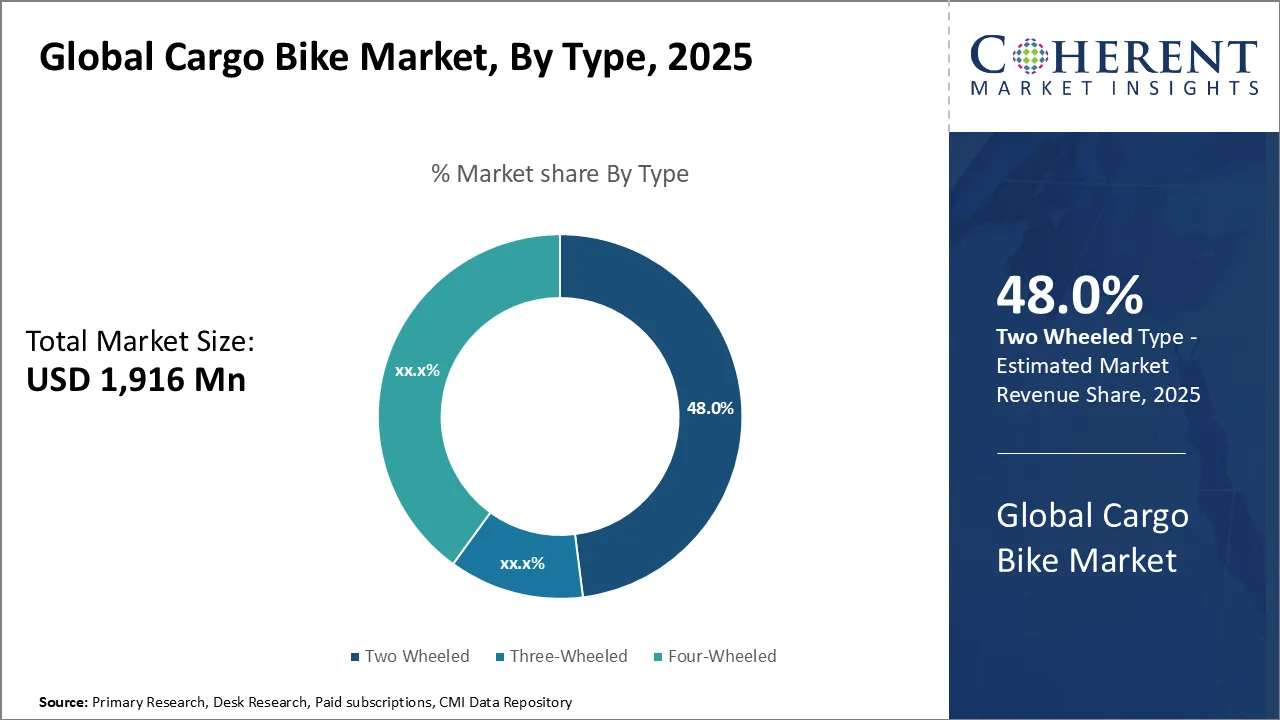
Global Cargo Bike Market Insights, by Type
The two-wheeler cargo bike segment is expected to have the maximum market share in 2026. It is mainly because it is affordable, easy to use, and most suited for the city areas that are densely packed with people and traffic. Two-wheeled freight bicycles are utilized extensively by small enterprises, courier firms, and food delivery businesses due to the low price, minimal maintenance, and convenience of navigating in narrow areas.
Regional Insights
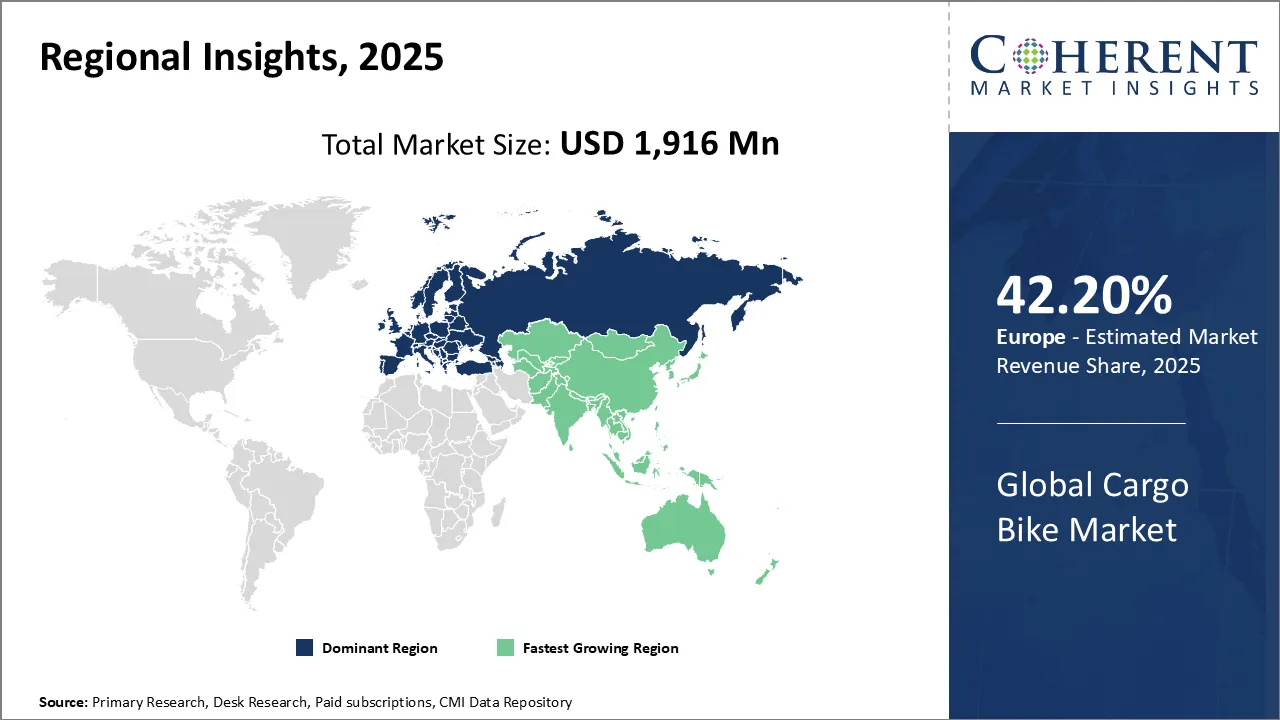
Europe Cargo Bike Market Trends
Europe is dominating the global cargo bike market in 2026 and is expected to continue its leadership over the forecast period (2023–2030). This robust market position largely owes to established high-quality infrastructure supportive of electric cargo bikes. The area is enriched with a high concentration of top cargo bike makers and ongoing e-mobility innovation. Government programs to end urban air pollution have also supported market growth, with many governments launching incentives and subsidies for buying and using cargo bikes.
Cargo Bike Market Top Country
Germany Cargo Bike Market Analysis and Trends
Germany dominates the global cargo bike market, owing to factors such as advanced town planning, immense cycling network, and an exceptional amount of passion towards clean mobility. Berlin and Hamburg are among German cities that have enthusiastically included cargo bikes in their mobility plans for urban areas, particularly last-mile delivery. The sector is boosted by the government through subsidies for the purchase of e-cargo bikes, driving substitution from fossil fuel-powered vehicles.
Market Report Scope
Cargo Bike Market Report Coverage
| Report Coverage | Details | ||
|---|---|---|---|
| Base Year: | 2025 | Market Size in 2026: | USD 2,195.0 Mn |
| Historical Data for: | 2020 To 2024 | Forecast Period: | 2026 To 2033 |
| Forecast Period 2026 to 2033 CAGR: | 14.6% | 2033 Value Projection: | USD 5,684.1 Mn |
| Geographies covered: |
| ||
| Segments covered: |
| ||
| Companies covered: | Accell Group, Bodo Vehicle Group Co., Ltd, Butchers & Bicycles ApS, CERO Electric Cargo Bikes, DOUZE Factory SAS, Dutch Cargo Bike, G & O Family Cyclery, Gessato, Jinhua Jobo Technology Co., Ltd, Tern, Urban Arrow, Worksman Cycles, Xtracycle Inc, XYZ CARGO, and Yuba Bicycles LLC | ||
| Growth Drivers: |
| ||
| Restraints & Challenges: |
| ||
Analyst Viewpoint – Cargo Bike Market
- The global cargo bike market is set for significant growth, driven by increasing urbanization, rising environmental concerns, and the shift towards sustainable transportation solutions. Analysts highlight those innovations in electric cargo bike technology, including enhanced battery life and lightweight materials, are pivotal in expanding market adoption across commercial and private sectors.
- Regionally, Europe leads the market due to well-established cycling infrastructure and strong governmental support promoting green transportation. Meanwhile, Asia Pacific is emerging as a lucrative market fueled by rapid urban growth and rising environmental awareness.
- The rise of shared cargo bike services and integration with smart city initiatives is anticipated to redefine urban logistics and personal transport. Overall, the cargo bike market is on a promising trajectory, with technological advancements and sustainability trends creating ample opportunities for manufacturers, service providers, and city planners committed to reducing carbon footprints and enhancing urban mobility.
Cargo Bike Market: Key Development
- In October 2024, ZADD bikes introduced its first electric cargo bike Utility Hauler and is intended for last mile deliveries.
- In October 2024, Busy Bee introduced its new electric cargo bikes aimed at enhancing last-mile deliveries. These bikes are environmentally friendly and include swappable cargo capsules, along with real-time tracking for all weather conditions.
- In June 2024, Tern announced the introduction of Quick Haul Long, an addition to its compact cargo bike line. Unlike the previous models, this one has a longer wheelbase explaining its name, which also suggests it permits an increased payload volume for better versatility and practicality.
Market Segmentation
- Global Cargo Bike Market, By Type (Revenue, USD Mn, 2021 - 2033)
- Two Wheeled
- Three Wheeled
- Four Wheeled
- Global Cargo Bike Market, By Fuel Type (Revenue, USD Mn, 2021 - 2033)
- Electric Bike
- Lead Based
- Nickel Based
- Lithium Ion
- Hydrogen
- Others
- Global Cargo Bike Market, By Application (Revenue, USD Mn, 2021 - 2033)
- Courier and Parcel service provider
- Retail supplier
- Personal Transportation
- Waste, and municipal services
- Other
- Global Cargo Bike Market, By Region (Revenue, USD Mn, 2021 - 2033)
- North America
- U.S.
- Canada
- Latin America
- Brazil
- Argentina
- Mexico
- Rest of Latin America
- Europe
- Germany
- U.K.
- Spain
- France
- Italy
- Russia
- Rest of Europe
- Asia Pacific
- China
- India
- Japan
- Australia
- South Korea
- ASEAN
- Rest of Asia Pacific
- Middle East
- GCC Countries
- Israel
- Rest of Middle East
- Africa
- South Africa
- North Africa
- Central Africa
- Key Players Insights
- Accell Group
- Bodo Vehicle Group Co., Ltd
- Butchers & Bicycles ApS
- CERO Electric Cargo Bikes
- DOUZE Factory SAS
- Dutch Cargo Bike
- G & O Family Cyclery
- Gessato
- Jinhua Jobo Technology Co., Ltd
- Tern
- Urban Arrow
- Worksman Cycles
- Xtracycle Inc,
- XYZ CARGO
- Yuba Bicycles LLC
Sources
The Stakeholders Consulted
- Urban mobility planners and city transportation officials
- Cargo bike manufacturers and component suppliers
- Logistics and delivery service providers
- Environmental and sustainability consultants
- Government agencies promoting green transportation initiatives
- Research institutions focused on sustainable urban mobility and e-mobility
- Commercial and retail end-users utilizing cargo bikes for goods transport
Databases Opened
- International Transport Forum (ITF) – Urban Mobility Data
- European Environment Agency (EEA) – Sustainable Transport Statistics
- U.S. Department of Transportation (DOT) – Freight and Delivery Data
- Eurostat – Transport and Mobility Data
- World Bank Open Data – Urban Transport and Emissions Metrics
Magazines & Trade Publications
- Urban Mobility Magazine
- Green Fleet Magazine
- Logistics Management – Sustainable Transport Section
- E-Mobility News
- Bike Europe Magazine
Scientific and Industry Journals
- Transportation Research Part D: Transport and Environment
- Journal of Cleaner Production
- Sustainable Cities and Society
- International Journal of Sustainable Transportation
- Energy Policy
Newspapers & Media Outlets
- The Guardian – Environment & Transport
- Bloomberg – Sustainable Transport and Logistics
- Reuters – Global Urban Mobility News
- Financial Times – Green Transportation Initiatives
- The Economic Times – Urban Infrastructure & Mobility
Associations and Regulatory Bodies
- European Cyclists’ Federation (ECF)
- U.S. Environmental Protection Agency (EPA) – Smart Transportation Programs
- International Transport Forum (ITF)
- National Association of City Transportation Officials (NACTO)
- Bureau of Energy Efficiency (BEE), India
Public Domain Sources
- U.S. Energy Information Administration (EIA) – Transport Sector Reports
- European Commission – Urban Mobility and Emission Reduction Policies
- World Bank – Sustainable Urban Transport Reports
- International Renewable Energy Agency (IRENA) – E-Mobility and Energy Transition Data
Proprietary Research Elements
- Internal Market Analytics Platform (IMAP)
- Proprietary Database of Urban Mobility Trends (covering last 7 years)
- Expert Interviews and Panels (focused on cargo bike technology, market adoption, and policy impacts)
Get access to 250+ pages report
Every segment, forecast, competitor profile and data table behind the analysis above — available for instant download.
- ESOMAR Member
- ISO 9001:2015 Certified
- D-U-N-S Registered
- GDPR & CCPA Compliant
Missing comfort of reading report in your local language? Find your preferred language:
Transform your Strategy with Exclusive Trending Reports
Frequently Asked Questions
The Cargo Bike Market size is estimated to be valued at USD 2,195.0 Mn in 2026, and is expected to reach USD 5,684.1 Mn by 2033.
The CAGR of the Cargo Bike Market is projected to be 14.6% from 2026 to 2033.
Major factor driving the growth of the market during the forecast period is growing demand for mobility and efficiency.
Major factors hampering the growth of the market during the forecast period is inadequate design in the market.
Europe Cargo Bike market is expected to generate the highest revenue during the forecast period.