

Chitin Market Size and Forecast — 2026 - 2033
The Global Chitin Market size is estimated to be valued at USD 1.8 billion in 2026 and is expected to reach USD 3.1 billion by 2033, exhibiting a compound annual growth rate (CAGR) of 8.2% from 2026 to 2033.
Overview
The Chitin market comprises a range of products derived from natural sources such as crustacean shells, insect exoskeletons, and fungal biomass. Key product types include chitin powder, chitosan, and derivatives like chito-oligosaccharides, widely used across pharmaceuticals, food, cosmetics, agriculture, and water treatment industries. Chitosan, the deacetylated form of chitin, is particularly significant for its biocompatibility, biodegradability, and functional versatility in drug delivery, wound care, and edible coatings. Innovations in extraction techniques and high-purity formulations are driving product adoption. Growing demand for sustainable and eco-friendly materials, combined with applications in biomedical and industrial sectors, is fueling global market expansion for chitin-based products.
Key Takeaways
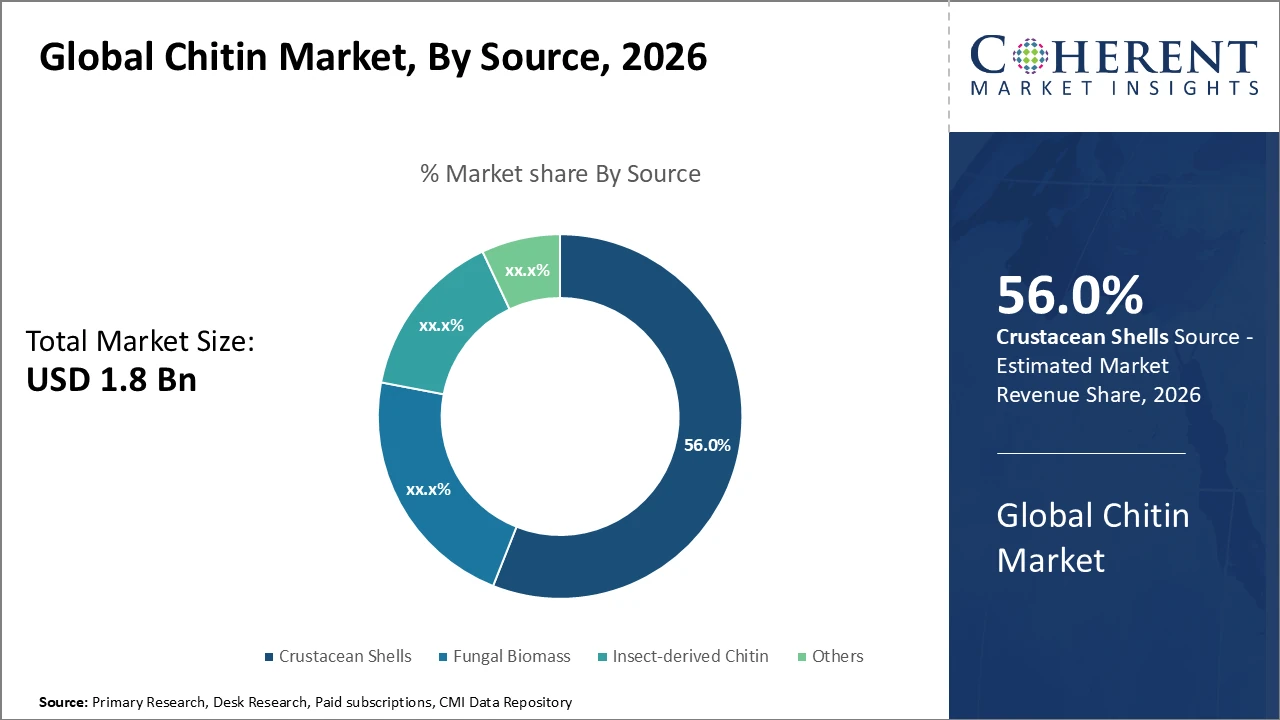
Crustacean shells lead as the dominant source segment, holding 56% of industry share, supported by well-established marine biomass supply chains and processing expertise. Fungal biomass is the fastest-growing subsegment, driven by demand for medical-grade applications due to its high purity and consistency.
Biomedical applications account for the largest market share because of expanding pharmaceutical uses, while water treatment applications are rapidly growing in response to stricter global environmental regulations.
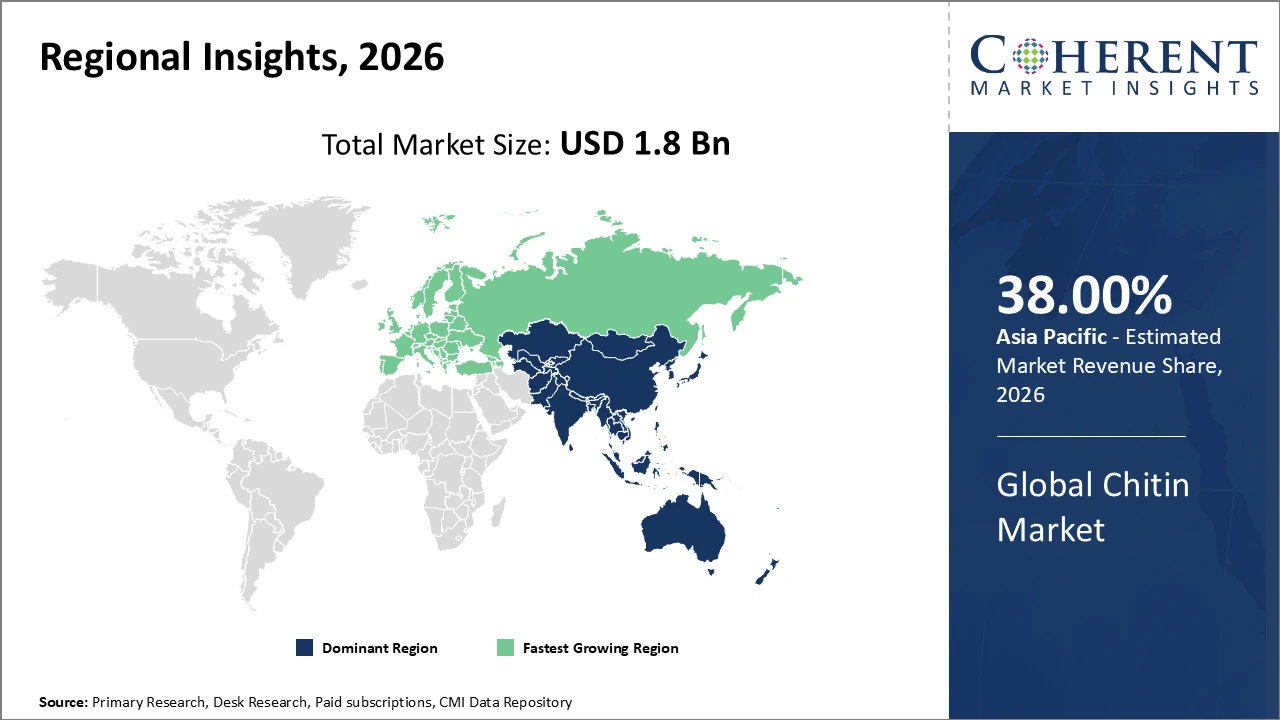
Asia Pacific holds the largest regional market share, supported by abundant raw material availability and growing end-user industries. North America exhibits the highest CAGR, fueled by biomedical innovation and government support for bio-based materials.
Europe continues to invest in regulatory frameworks promoting sustainable materials, accelerating chitin adoption across sectors such as agriculture, packaging, and industrial applications.
Chitin Market Segmentation Analysis
Chitin Market Insights, By Source
Crustacean shells dominate the chitin market with a 56% share, driven by the large volumes of shell waste generated by the seafood industry, providing a reliable and cost-effective raw material source. Fungal biomass is the fastest-growing subsegment, favored for pharmaceutical and high-purity applications due to its allergy-free properties and consistent quality. Insect-derived chitin is emerging as a niche source, offering potential for specialized biomedical uses. Other sources, such as mollusk shells, contribute modestly to the market. Each source segment plays a unique role in supply availability and application suitability, collectively shaping the global chitin market dynamics.
Chitin Market Insights, By Form
Powder form dominates the chitin market, widely preferred across industries for its ease of incorporation into formulations and long shelf life. Liquid chitin is the fastest-growing subsegment, particularly in pharmaceuticals and biomedical applications, due to its superior solubility and functional versatility. Flake forms are mainly used in agriculture and industrial applications, where gradual release and handling convenience are advantageous. Other forms include gels and composite materials designed for specialized or niche uses. Selection of chitin form depends on the intended application, processing requirements, and functional properties, directly influencing product performance, market adoption, and revenue generation across sectors.
Chitin les Market Insights, By Application
Biomedical & pharmaceutical applications dominate the chitin market due to widespread use of chitin- and chitosan-based biomaterials in wound dressings, drug delivery systems, and tissue engineering. Their biocompatibility, biodegradability, and functional versatility make them essential in these sectors. Agriculture and horticulture represent the fastest-growing segment, driven by adoption of natural biostimulants and plant growth enhancers, supported by regulations limiting chemical pesticide use. Water treatment also shows steady growth, leveraging chitin’s capacity to remove heavy metals and contaminants. In the food and beverage sector, chitin is used as a preservative and functional additive, while other applications include cosmetics and textiles.
Chitin Market Trends
The chitin market is increasingly influenced by environmental and health-conscious consumer preferences, driving demand for sustainable alternatives to conventional polymers.
In 2025, several global packaging brands launched chitin-derived biodegradable packaging solutions, utilizing chitin’s natural properties for eco-friendly applications.
Innovations in enzymatic extraction methods have improved chitin purity, enabling expanded use in pharmaceutical and biomedical applications.
R&D investments in high-purity chitin surged by over 15% in 2024 compared to previous years, reflecting growing industry focus on advanced applications.
The shift toward fungal chitin ensures reduced allergenicity and supply chain consistency, supporting regulatory approvals for new products.
Chitin Market Insights, By Geography
Asia Pacific Chitin Market Analysis and Trends
In Asia Pacific, the chitin market is dominated by abundant availability of crustacean shell waste, extensive aquaculture activities, and growing pharmaceutical manufacturing hubs, collectively contributing over 38% of the global market share. Key countries such as India, China, and Southeast Asian nations serve as major supply and demand centers, supporting both raw material sourcing and end-user industries. Government policies promoting sustainable agriculture, bio-based materials, and environmental initiatives further strengthen the region’s leadership. Companies like BioSustain Technologies have capitalized on this ecosystem, optimizing production and distribution networks to meet rising domestic and international demand, driving regional market growth and competitiveness.
North America Chitin Market Analysis and Trends
North America is the fastest-growing region in the chitin market, with a CAGR of approximately 9.1%, driven by extensive R&D focused on biomedical and pharmaceutical applications. Supportive regulatory frameworks promoting bio-based and sustainable materials further encourage market growth. In the USA, leading companies are investing in scalable enzymatic extraction technologies and commercializing chitin-based wound healing and drug delivery solutions. Collaborative initiatives between universities and industry players have accelerated innovation, enhancing product development and adoption. These factors collectively boost market penetration in healthcare and pharmaceutical sectors, positioning North America as a key driver of global chitin market expansion and technological advancement.
Chitin Market Outlook for Key Countries
USA Chitin Market Analysis and Trends
The USA’s chitin market is driven by strong biomedical research institutions and a mature pharmaceutical industry emphasizing advanced wound care and drug delivery applications. In 2025, investments exceeding USD 150 million in chitin biomaterial R&D enabled the successful commercialization of chitin-based medical devices, capturing notable market share. Companies focusing on environmentally sustainable and bio-based materials further strengthen industry adoption, as healthcare providers increasingly prefer biocompatible and biodegradable solutions. A favorable regulatory framework supports faster product approvals, facilitating market expansion. Combined, these factors position the U.S. as a leading hub for innovation and commercialization in the global chitin market.
Germany Chitin Market Analysis and Trends
The Germany chitin market is experiencing steady growth, driven by strong pharmaceutical, biomedical, and sustainable materials sectors. The country benefits from abundant crustacean shell imports and advanced processing technologies, supporting high-purity chitin and chitosan production for medical and industrial applications. Regulatory frameworks encouraging bio-based and eco-friendly materials have accelerated adoption across packaging, agriculture, and healthcare sectors. Biomedical applications, including wound care and drug delivery, remain the largest contributors to market revenue, while water treatment and agricultural uses are expanding steadily. Companies like BASF and Evonik leverage innovation and R&D partnerships to develop high-value chitin products, reinforcing Germany’s strategic position in the global market.
Analyst Opinion
Increasing Production Capacity: Advances in marine biowaste processing and fungal biomass extraction have steadily expanded chitin production. Major aquaculture regions increased export volumes by 15% in 2024, enhancing raw material availability and supporting market growth.
Demand Across Industries: Rising applications in wound care, bioplastics, and water purification have driven chitin demand. In 2025, the biomedical sector accounted for over 30% of market share, highlighting diversified end-use adoption and revenue expansion.
Pricing Trends Influenced by Source Variability: Prices fluctuate based on chitin source—crustacean shells versus fungal biomass. Adoption of fungal chitin for pharmaceuticals led to price stabilization post-2024 due to optimized extraction methods.
Regional Import-Export Patterns: Asia Pacific saw a 20% increase in chitin derivative imports between 2024 and 2026, while North American production grew by 12%, reflecting complementary supply-demand dynamics shaping the market.
- Current Industry Events of 2026
- Market Size Estimation
- Regional Breakdown
- Competitive Landscape
- Customer Intelligence
- Segmental Analysis
- Pricing Analysis
- Key Market Drivers, Challenges & Future Trends
- Customized Insights Section
Market Scope
| Report Coverage | Details | ||
|---|---|---|---|
| Base Year: | 2025 | Market Size in 2026: | USD 1.8 billion |
| Historical Data for: | 2020 To 2024 | Forecast Period: | 2026 To 2033 |
| Forecast Period 2026 to 2033 CAGR: | 8.2% | 2033 Value Projection: | USD 3.1 billion |
| Geographies covered: |
| ||
| Segments covered: |
| ||
| Companies covered: | Marine Biotech Co. Ltd., ChitoTech Solutions, BioMarine Extracts, BioSustain Technologies, Oceanic BioExtraction Inc., SeaGreen Biochem, PureChitin Corporation, AquaPolymers Ltd., GreenBio Extractors, EcoChitosan Ltd. | ||
| Growth Drivers: |
| ||
Chitin Market Growth Factors
Rapid growth in biomedical and pharmaceutical applications continues to drive the chitin market, with chitin-based wound dressings and drug delivery systems demonstrating high biocompatibility and efficacy, resulting in an 18% increase in consumption between 2024 and 2026. Stricter global environmental regulations have spurred demand for biodegradable materials, boosting chitin use in packaging, particularly in Asia Pacific, where bioplastic adoption grew 25% in 2025. Technological advancements in extraction reduced production costs by approximately 12% during 2024–2026, enabling competitive pricing. Additionally, rising agricultural demand for natural bio-stimulants and soil conditioners, supported by 2026 government subsidies, further propels market expansion.
Chitin Market Development
In January 2026, materials scientists developed a bio-based carbon aerogel derived from chitin that enhances thermal energy storage in shape-stabilized phase change materials while preventing leakage during melting.
Key Players
Leading Companies of the Market
Marine Biotech Co. Ltd.
BioSustain Technologies
ChitoTech Solutions
AquaPolymers Ltd.
GreenBio Extractors
PureChitin Corporation
NutraChitin Industries
EcoChitosan Ltd.
Oceanic BioExtraction Inc.
BioMarine Extracts
Leading companies in the chitin market are pursuing strategies focused on innovation and sustainability. For example, BioSustain established a new facility in Taiwan implementing novel enzymatic extraction techniques, improving chitin purity and boosting extraction efficiency by 20% while reducing environmental impact. Similarly, SeaGreen Biochem has formed strategic partnerships across Southeast Asia, leveraging abundant coastal biomass to enhance production and distribution, resulting in a 15% increase in market penetration. These approaches illustrate how technological advancements and regional collaborations are enabling companies to strengthen their competitive positioning and expand their presence across global chitin markets.
Chitin Market Future Outlook
The global chitin market is expected to witness strong growth in the coming years, driven by increasing demand for sustainable, biodegradable, and bio-based materials across pharmaceuticals, packaging, agriculture, and water treatment sectors. Advances in extraction technologies, including enzymatic and microbial methods, will enhance product purity, reduce production costs, and enable new biomedical applications. Rising environmental regulations and consumer preference for eco-friendly products will further support market expansion. Additionally, the adoption of fungal and insect-derived chitin sources is expected to improve supply consistency and reduce allergen concerns. These trends collectively position the chitin market for robust, long-term growth and innovation.
Chitin Market Historical Analysis
The historical growth of the chitin market has been driven by the widespread availability of crustacean shell waste and the increasing recognition of chitin and chitosan’s functional versatility. Early applications focused on water treatment and agriculture, while biomedical and pharmaceutical uses emerged as high-value segments due to biocompatibility and biodegradability. Technological advancements in extraction and purification, particularly from crustacean and fungal sources, improved product quality and enabled expansion into medical devices and drug delivery. Regional developments in Asia Pacific, North America, and Europe, supported by regulatory frameworks and R&D investments, shaped the market landscape, setting the foundation for current global growth trends and diversified applications.
Sources
Primary Research Interviews:
Chitin and chitosan manufacturers
Crustacean processing and fungal biomass suppliers
Pharmaceutical and biomedical product developers
Agricultural and water treatment companies using chitin derivatives
Packaging and bioplastics manufacturers
Magazines:
BioProcess International – Biopolymers & Chitin Innovations
Chemical Engineering – Biopolymer Production & Applications
Bioplastics Magazine – Sustainable Materials & Packaging
Pharmaceutical Technology – Chitosan in Drug Delivery
Journals:
Journal of Cleaner Production – Sustainable Biopolymers
Carbohydrate Polymers – Chitin and Chitosan Research
International Journal of Biological Macromolecules – Biomedical Applications
Bioresource Technology – Extraction & Industrial Applications
Newspapers:
The Wall Street Journal – Biopolymers & Biotechnology News
Financial Times – Sustainable Materials and Industry Trends
Reuters – Chitin Market Updates
Bloomberg – Biopolymer Innovations & Market Developments
Nikkei Asia – Marine Biomass & Industrial Biopolymers
Associations:
International Chitin & Chitosan Society (ICCS) – Industry Standards & Research
European Bioplastics Association – Biopolymer Policy & Advocacy
American Chemical Society (ACS) – Biopolymer Research & Applications
Asia Pacific Biopolymers Association – Regional Market Insights
Get access to 250+ pages report
Every segment, forecast, competitor profile and data table behind the analysis above — available for instant download.
- ESOMAR Member
- ISO 9001:2015 Certified
- D-U-N-S Registered
- GDPR & CCPA Compliant
Missing comfort of reading report in your local language? Find your preferred language:
Transform your Strategy with Exclusive Trending Reports
Frequently Asked Questions
The dominant players include companies such as Marine Biotech Co. Ltd., BioSustain Technologies, and SeaGreen Biochem, noted for their technological advancements and expansive market penetration.
The market is projected to grow from USD 1.8 billion in 2026 to USD 3.1 billion by 2033, with a CAGR of 8.2%, driven by increasing demand across biomedical and environmental applications.
The biomedical and pharmaceutical industries present the largest growth prospects due to enhanced chitin utilization in wound care, drug delivery, and regenerative medicine sectors.
Market trends indicate a shift towards fungal-sourced chitin and increased use in biodegradable packaging and sustainable agriculture, supported by innovation and regulatory incentives.
The competitive landscape encompasses innovation-driven companies focusing on refining extraction technologies and sustainable sourcing, with challenges including raw material variability and regulatory compliance.
Strategies include strategic partnerships to ensure raw material supply, investments in processing technology, and diversification into emerging applications such as bioplastics and water treatment.